AI Feed
Your Website's Protocol for the AI Era


The web was built for humans. We clicked links, opened tabs, read content, and made decisions. Your website was designed for this—pages optimised for people to browse and convert.
But something fundamental is changing.
Today, AI agents are doing the browsing for us.





People are asking ChatGPT
who makes custom industrial valves in Ohio?



who makes custom industrial valves in Ohio?
Searching web...
Here are the top custom industrial valves manufacturers in Ohio:


Best valves manufacturers in Ohio. Get custom solutions designed for your .......


1 in 24 page loads coming from AI agents, not humans.
Cloudflare reports that AI bots now account for 4.2% of all HTML requests. Goldman Sachs estimates that AI agents could represent over 60% of software spend by 2030.

The old playbook is breaking
For the last twenty years, the playbook was simple: optimize your website for Google, create content humans want to read, and drive traffic to convert. You published blog posts occasionally. Maybe a few landing pages. Your homepage told your story. That was enough.
But AI agents don't browse like humans do.
They don't care about your hero image. They're scanning thousands of pages per second for structured, specific answers.
When a buyer asks ChatGPT "what's the lead time for custom CNC machining in the Midwest?" — the AI isn't reading your website. It's looking for a page that directly answers that. No page? You're invisible.
Traditional CMSes weren't built for this. That worked when humans did the searching. It doesn't work when AI does.
So, what do AI agents actually need?
Not 10 pages.
Hundreds.
Hundreds of pages, each targeting a specific query buyers ask on ChatGPT, Claude, or Gemini — every question gets its own optimized page.

Structured, machine-readable data
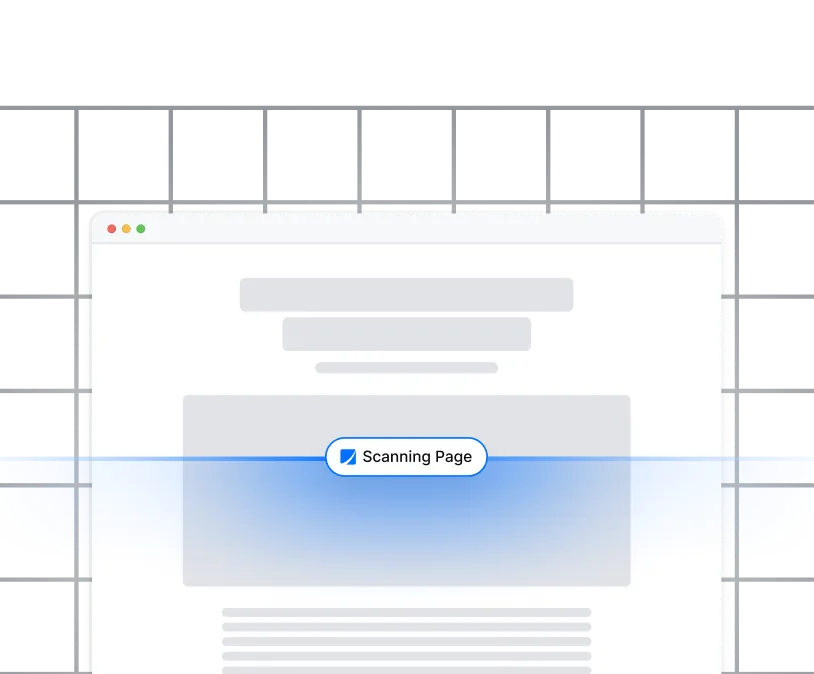
AI agents don't read — they parse. Schema markup, clean HTML, and structured data make your pages citation-ready. Most websites aren't built for that.

Constant updates
AI algorithms change weekly. ChatGPT, Gemini, Perplexity — each one shifts how it crawls and ranks content. Keeping up manually isn't realistic."
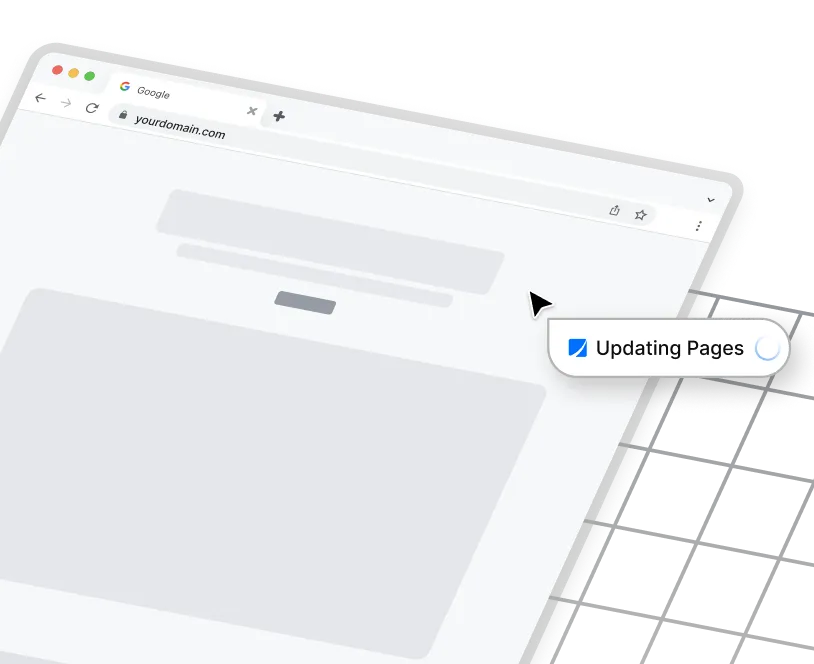

That's where AI Feed comes in

A dedicated section on your website—yourdomain.com/feeds or feeds.yourdomain.com—where AI-optimised content lives.
Think of it like a library built specifically so AI agents can find you, understand what you do, and recommend you when it matters.
It plugs into your existing site. No migration. No replacing your current website. Your homepage, your product pages, your blog—all of that stays exactly as it is. AI Feed is just a new section, optimised for the AI agents your customers are now sending to do research on their behalf.

How it works
Inside AI Feed, we publish landing pages, product pages, category pages, and content pages—each one targeting a specific question buyers ask on AI search engines.
Not generic content. Specific answers.
"What industries does this distributor serve?" gets a page. "Do they offer same-day shipping?" gets a page. "What's their minimum order quantity?" gets a page.
We're talking hundreds of pages, each one optimized to appear when an AI agent is researching on behalf of a buyer. This isn't content you write once and forget. It's a living system that updates automatically as algorithms change.
When OpenAI updates how ChatGPT processes citations, AI Feed adapts your pages overnight. When Google shifts Gemini's crawling behavior, your content adjusts. You're not manually tweaking hundreds of pages every time the rules change. The infrastructure handles it.
And because AI Feed is purpose-built for machine consumption, it includes all the technical optimizations AI agents need: advanced schema markup, llms.txt files, structured data that makes your content instantly comprehensible and citation-worthy.
We're moving toward a world where discovery doesn't just happen on your website—it completes inside the AI interface itself.
AI Feed is the infrastructure that makes this possible. It's not just about being visible. It's about being actionable when an AI agent is making recommendations on behalf of a buyer.

Why this matters now
The businesses winning in AI search today aren't the biggest or the most established. They're the ones that recognized this shift early and built infrastructure for it.
Traditional SEO took years to master. AI discoverability is moving faster. The protocols are still being written. The standards are still emerging. But the direction is clear: discovery is moving from search engines to AI agents, and your website needs to speak their language.
AI Feed is how you do that. It's your protocol for staying discoverable when the web stops being about humans clicking links and starts being about AI agents making recommendations.
The shift is already happening. The businesses that adapt now won't just survive it—they'll own it.
Get AI Feed for your website.