


Home

Resources
Blogs
Blog
Get insights on AI, productivity, and the future of work.


Thank you! Your submission has been received!
Oops! Something went wrong while submitting the form.

Digital Marketing
Jan 5, 2026
5 mins
8 Industrial Manufacturing Marketing Moves Most Ignore
Percy Brown
Industrial manufacturing marketing is the practice of communicating and promoting your products, capabilities, and services to attract qualified buyers through multiple channels, both online and offline.
Done right, it puts your company in front of your buyers when they're actively looking.
Industrial buyers judge manufacturers by trust, clarity, and whether you feel like a safe bet in the long run. That’s why top manufacturers have shifted how they measure success. Instead of celebrating clicks or traffic, they now focus on what actually moves revenue.
In fact, 61% of manufacturing companies now measure marketing success through lead quality, because better leads mean faster revenue and growth.
This guide covers 8 practical strategies to build a system that brings in consistent, high-quality leads. No complicated tasks, just proven moves for small-to-medium manufacturers.
Why Is Industrial Manufacturing Marketing Required?
One simple reason: your buyers can’t choose you if they can’t find you.
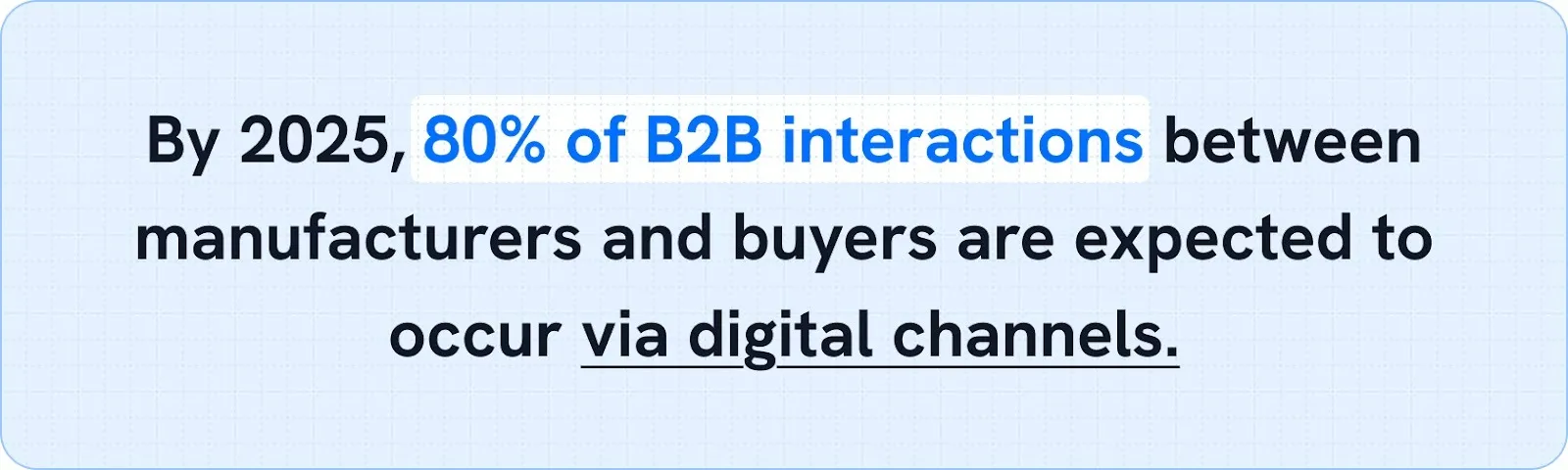
Research shows that 45% of B2B manufacturing buyers conduct online research before making a purchase. A good manufacturing marketing strategy helps you do four things consistently:
- Get found when buyers look for your products.
- Get qualified by showing clear specs, industries served, and past work.
- Build trust through content, case studies, certifications, and technical expertise.
- Get contacted because buyers feel confident you can solve their problem.
When you market the right way, you shorten the sales cycle, attract better-fit leads, and turn your website into a consistent revenue engine—even without a full marketing team.
So what type of marketing should you start with?
Types of Industrial and Manufacturing Marketing You Must Know
There are two major types of marketing: digital and non-digital.
Digital marketing uses online channels, such as SEO, PPC ads, email, Facebook, and LinkedIn, to help buyers find you when they search and to stay in touch with them throughout long sales cycles.
Non-digital marketing includes offline methods such as networking, trade shows, catalogs, referrals, billboards, print ads, cold outreach, and industry publications.
This is how each one of the channels can help:
Together, they create a strong system that compounds growth over time. Before you try everything at once, start with the strategies that actually move the needle.
8 Industrial Manufacturing Marketing Moves You Should Start Now
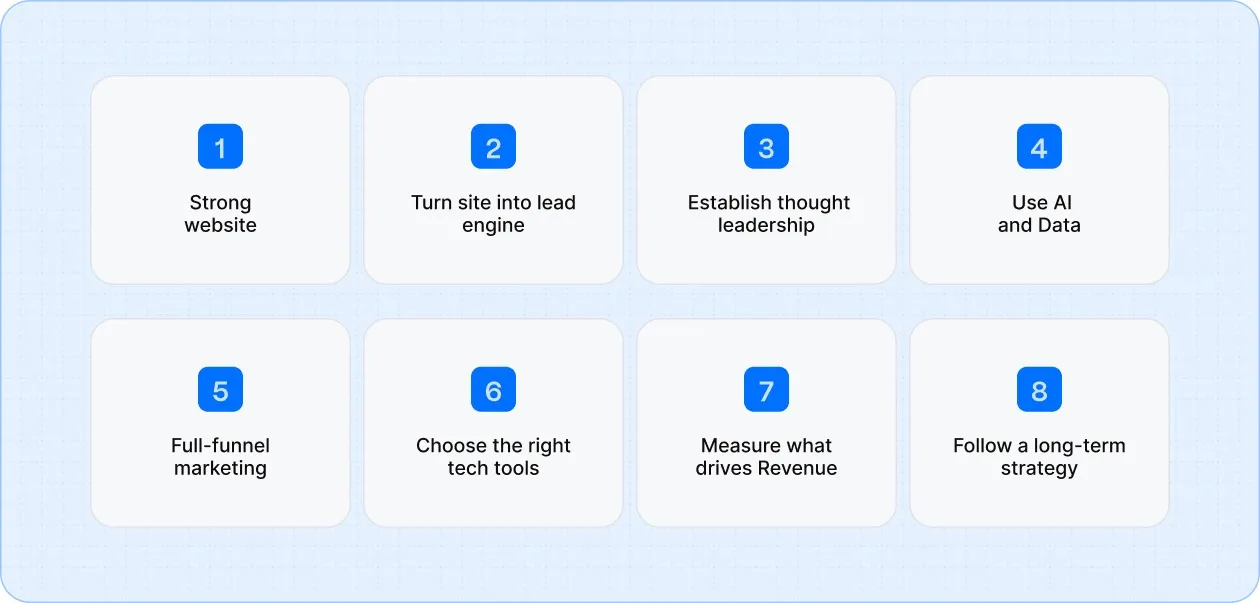
These are proven industrial manufacturing marketing strategies that work reliably for small-to-mid-sized manufacturers — simple enough to start tomorrow, strong enough to bring in better leads.
1. Build a High-Performing Website (Your #1 Sales Tool)
Your website is the one sales rep that never sleeps. It should clearly show what you make, what you’re capable of, who you serve, and how someone can request a quote in seconds. Most manufacturers lose leads simply because buyers can’t find basic information.
Why it works: Your website acts like your online trade show booth. Buyers form an opinion about your capabilities within seconds. A clean, clear website instantly signals professionalism and reduces hesitation.
How to start:
- Design a simple yet impactful website to convey to your buyers that you are a professional.
- Create clean, scannable pages like blogs, product pages, service pages, and capabilities pages.
- List specific details like tolerances, materials, industries, certifications, and machinery.
- Add clear Request a Quote buttons across the site.
- Use real process photos, videos, and customer logos.
- Add a simple “Why Work With Us” or case studies section to build credibility quickly.
What you get: Qualified leads and fewer “Can you do this?” calls because buyers understand your services before they reach out.
Your website is the first step in building a solid marketing strategy. Regular health checks can show how efficiently it’s working every day. See how your site performs today.
2. Become an Inbound Marketing Machine (Attract Buyers, Don’t Chase Them)
Inbound marketing means creating content and resources that pull buyers toward you rather than chasing them.
Industrial buyers don’t trust vendors by default. They need to know expertise, clarity, and proof. When your company consistently shows up with answers, insights, and helpful content, buyers qualify themselves before ever reaching out.
Why it works: Manufacturers conduct quiet research for weeks or months. If you’re the one educating them during this phase, you become the obvious choice when they’re ready.
How to start:
- Publish blogs that answer actual buyer questions (how-to guides, comparison articles, news and updates, FAQs, etc).
- Optimize every page for the keywords your buyers actually search for. (Use tools like Semrush and Ahrefs to find what your buyers are typing)
- Create capability explainers (“How ABC machining works,” “When to choose XYZ process”).
- Build a simple resource library: guides, datasheets, tooling notes, quality checklists.
What you get: A steady stream of inbound leads, fewer cold calls, and buyers who trust you before your first call.
Don’t have anyone doing these for you?
Most manufacturers don’t. You can outsource the heavy lifting (SEO, content, and lead generation) to specialists who work with manufacturers daily.
Know your marketing gaps


3. Establish Thought Leadership (Authority = More Sales)
Thought leadership is when you establish yourself as an expert in a specific field by sharing original insights and innovative ideas.
In manufacturing, the vendor who teaches is usually the one who wins the project. Sharing your expertise, how things are made, what buyers should consider, and how you solve complex problems, is one of the easiest ways to capture more leads.
Why it works: Buyers pick partners who clearly understand tolerances, materials, workflows, and failures before they happen.
How to start:
- Share case studies that show a problem → your process → the result.
- Publish simple “How We Make ___” or “Design Tips for ___” explainers on your website or social media.
- Contribute articles to industry magazines and association websites.
- Post short, technical insights on LinkedIn (tooling tips, material choices, machining challenges) regularly.
What you get: Buyers see you as the expert. More trust, faster decisions, and quality conversions.
4. Use Data and AI to Accelerate Lead Generation (Work Smarter, Not Harder)
AI helps small manufacturing teams work like they have a full marketing department by automating follow-ups, prioritizing high-quality leads, and improving ad performance.
Why it works: Faster responses increase win rates, and data removes guesswork from your marketing.
How to start:
- Set up AI email or chatbot tools for instant replies to your leads (Hubspot or Zapier can help)
- Use AI insights to refine Ads targeting and budgets (Google Ads Smart Bidding / Performance Max are some tools that can help)
- Automate quoting steps or first-response workflows that read lead emails, extract specs, and instantly generate draft quotes or acknowledgment replies. (TIBR, StartProto, Salesforce CPQ are some tools that can help)
What you get: More qualified leads, faster conversions, and less manual effort slowing down your team.
5. Build a Full-Funnel Marketing System (Before, During, After Purchase)
Manufacturing industries deal with long sales cycles, multiple stakeholders, and slow decision-making. A full-funnel system keeps your buyers engaged from first contact to repeat order.
Why it works: Most manufacturers disappear after the first try. A full-funnel system keeps you top-of-mind, making you the safest and most familiar choice when they’re finally ready to place an order.
How to start:
- Add automated email sequences for prospects who downloaded a spec sheet, brochure, or visited key pages (Mailchimp or Hubspot CRM can help).
- Send project updates (progress photos, machining steps, QC checks) to build trust and transparency.
- Share capability upgrades (new CNC, new tolerance capacity, new materials you can machine).
- Create after-purchase nurturing. Ask for feedback, offer re-orders, and notify them of reorder cycles or maintenance reminders.
- Send helpful content like design tips, tolerance guides, material comparisons, or case studies regularly. Create WhatsApp groups to keep them engaged.
What you get: Stronger relationships, more repeat buyers, higher lifetime value, and predictable revenue, without relying only on new leads every month.
6. Choose the Right Tech (Without Wasting Budget)
Most manufacturers burn money on tools they never open. You don’t need 20 platforms; you need a lean stack that actually supports sales.
Why it works: When your tech is connected and straightforward, your team moves faster, and you stop paying for tools that collect dust.
How to start:
- Begin with only the essentials: CRM and Email (HubSpot), publishing content (WordPress), and tracking performance (Google Search Console)
- Skip tools that require a full-time marketer to operate
- Choose software that integrates with your website easily
- Increase your tech budget only after you see real ROI
What you get: A cleaner workflow, fewer subscriptions draining cash, and a tech stack that scales only when your business does.
7. Measure What Drives Revenue (Not Random Metrics)
Most manufacturers track website visitors and clicks, but leads and closed deals pay the actual bills. The goal is to focus on the numbers that directly influence revenue, not marketing noise.
Why it works: When you track the right signals, you finally see which marketing efforts actually drive customer acquisition (and which are wasting budget).
How to start:
- Identify the pages that directly generate sales.
- Track which keywords result in quotes, not just clicks
- Compare first-click vs. last-click to see what actually influenced the sale
- Double down on the channels that consistently lead to revenue conversations
What you get: A predictable, scalable sales pipeline built on real buyer behavior—not guesses.
8. Follow a Long-Term Marketing Strategy (Not Random Tactics)
Real industrial and manufacturing marketing growth doesn’t come from one-off posts or seasonal bursts. It comes from doing the right things every week, consistently.
Why it works: Marketing compounds over time. Changing strategies multiple times frequently will not help you track any success metrics. Stick to one solid strategy and double down on similar methods to perfect it.
How to start:
- Pick 3 core channels and commit (SEO + PPC + Email work best for SMB manufacturers)
- Set clear 90-day and 12-month goals. Define success here.
- Build weekly marketing routines your team can realistically follow.
- Review performance monthly and refine your approach.
What you get: Predictable lead flow, compounding results, and a marketing engine that gets stronger every quarter.
Which marketing move should you start first?
A quick website analysis shows what’s working, what’s missing, and where to focus first.
Run a Free Report
If you apply even half of these strategies consistently, you’ll start seeing what most manufacturers never do. Now the real question every owner eventually asks:
How Much Does Industrial Manufacturing Marketing Cost?
Before you invest in any marketing move, you need to know what it realistically costs in industrial and manufacturing marketing services.
Investing in the right mix of website, SEO, PPC, and content finally gives you control over your lead flow, not luck.
Suggested Read: 15+ Manufacturing SEO Companies That Drive Revenue
Who Can Handle Industrial Manufacturing Marketing For You?
If you don’t have a full marketing team, you can outsource this to:
- Industrial marketing agencies or manufacturing-specific marketing companies
- Freelancers who understand manufacturing content + technical SEO
- Revenue Growth Partners that handle end-to-end content execution, SEO, lead generation, and revenue growth.
- Your in-house sales and marketing team, once you give them the right tools + playbooks.
This way, you stay focused on production, while marketing runs in the background.
What “Smart Industrial Marketing” Really Looks Like in 2026
You’ve read about the eight moves most manufacturers ignore — but there’s a bigger picture beneath them. Industrial manufacturing marketing is about building a system that pulls qualified buyers through research, trust, and clarity, not just generating marketing noise.
Good manufacturing marketing strategies lean into how B2B buyers behave: long research cycles, multiple stakeholders, and technical decision criteria. A marketing plan for manufacturing companies starts with understanding what buyers actually search for — product specs, applications, reliability stories — and then meeting them with clarity and credibility.
The best marketing in the manufacturing industry combines digital funnels (SEO, content, PPC) with offline credibility (case studies, trade shows, technical collaterals). Businesses that treat SEO, content, and nurturing as one cohesive strategy instead of isolated tactics see compounding results.
For example, digital marketing strategy for manufacturing companies is more than clicks — it’s about relevance. Content that answers real use cases and manufacturing marketing ideas tailored to engineers shortens sales cycles. The same applies to industrial marketing services for manufacturers that tie campaigns to real KPIs, such as quote requests, not just pageviews.
A strong manufacturing marketing plan also adapts over time. Industrial markets shift, buyer expectations evolve, and marketing strategy for industrial products must reflect that. Leading teams refine based on what actually moves revenue, not what looks good on dashboards.
Ultimately, effective marketing for manufacturing and industrial companies connects your capabilities with real buyer intent. When your strategy aligns with how buyers think, rather than just what algorithms reward, marketing stops feeling like guesswork and starts driving predictable growth
How a Closet-Door Maker Went from 0 to 113 Qualified Leads in 6 Months
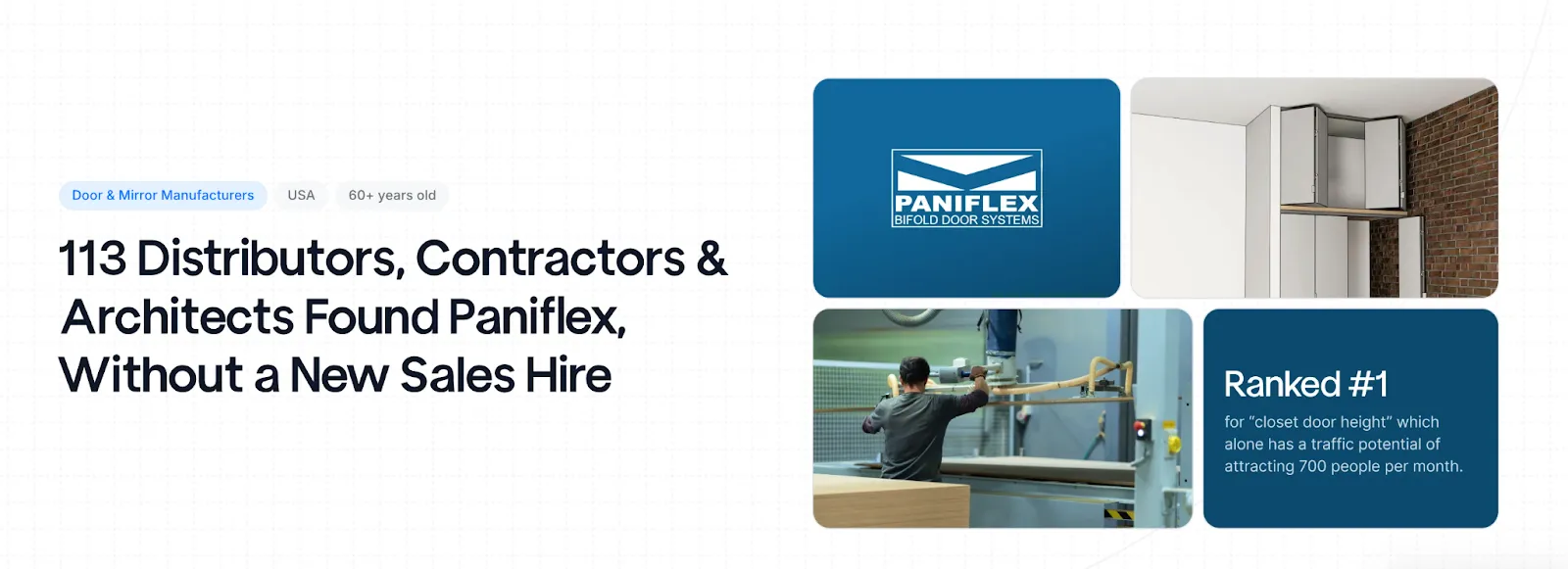
Paniflex, a U.S.-based distributor of closet doors and mirror doors, had quality products, but no one knew about them. Their website wasn’t showing up for the searches real buyers were doing, so contractors, designers, and architects were finding only competitors.
Once Paniflex started publishing helpful, technically detailed content—specs, installation guides, and answers to buyer questions about closet door systems and track hardware—everything changed.
In six months, they attracted 113 qualified buyers without hiring a single salesperson.
Sales calls went from “what is this?” to “we have a requirement, what’s your quote?” Their visibility, authority, and pricing power rose simply because they became findable and credible at the moment buyers were searching.
But here’s the kicker: their success doesn’t end there. Because the content lives online, Paniflex keeps attracting new leads, silently, 24/7, while others are still shouting loudly and paying for ads.

Digital Marketing
Aug 29, 2025
5 mins
Manufacturers Think Automation Is “Advanced” - Until They See How It Helps With Their Pipeline
Batul Beawarwala
You already know how much effort it takes to get a new customer. Trade shows, phone calls, and even running ads all work, but they demand constant time, energy, and money. Once you stop, the leads dry up. That’s why so many manufacturers and distributors feel like they’re always chasing the next deal instead of building a steady pipeline.
This is where marketing automation takes the stage for the manufacturing ecosystem. Think of it as a set of tools that quietly work in the background, nurturing prospects, following up at the right time, and helping your sales team stay focused on closing deals instead of chasing them.
In this guide, we’ll break down marketing automation in the simplest terms, show how it fits alongside the methods you already trust, and explain how it can create a continuous flow of qualified leads for your business throughout the year.
TL;DR:
- Marketing automation for manufacturing turns unpredictable sales into a steady, year-round pipeline.
- It helps capture, nurture, and segment leads while supporting sales teams with timely follow-ups.
- It automates repetitive tasks like landing pages, analytics, and reporting for smarter decisions.
- It boosts ROI, reduces costs, and frees sales reps to focus on closing deals instead of chasing them.
What Marketing Automation Really Means for Manufacturers
When you hear the phrase marketing automation, it might sound like another fancy software term. But for manufacturers, it’s much simpler than that. It means,
- Handling Repetitive Marketing Tasks
At its core, marketing automation is about setting up tools that handle repetitive marketing tasks for you, things like sending follow-up emails, reminding prospects about your products, or keeping track of who showed interest in your website. Instead of relying only on one sales rep to remember every call or follow-up, automation makes sure no lead slips through the cracks.
- Being Your Customer’s Support
Think of it as a support system for your sales team. While your reps focus on building relationships and closing deals, automation quietly works in the background, collecting inquiries, sending timely messages, and warming up prospects until they’re ready to talk to you.
- Scaling Your Growth
And here’s the important part: it’s not just about using new technology. For a manufacturer, marketing automation is a growth tool. It helps you scale your efforts so that leads keep flowing in even when trade shows are months away or your sales team is stretched thin.
In short, marketing automation for manufacturing means building a reliable process that brings in more opportunities without replacing the methods you already trust.
So, why is it better than the traditional methods? Let’s find out.
Manufacturing Marketing: Automation vs. Traditional Methods
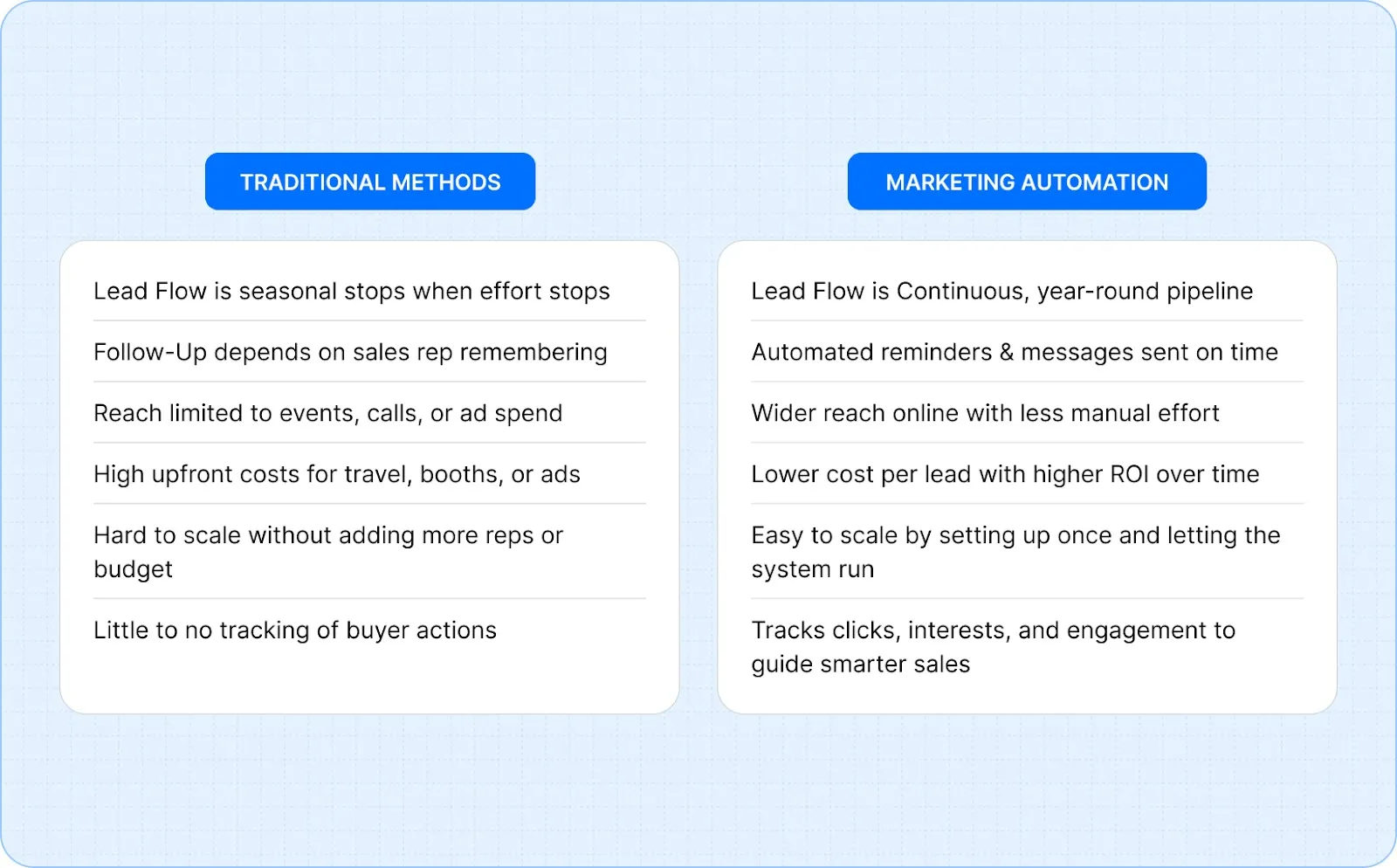
Traditional methods like trade shows, cold calls, and ads have their place, but they often stop producing results once the effort or budget ends. Marketing automation, on the other hand, keeps the process running in the background so your business can keep building leads. Here’s a simple comparison:
Why Marketing Automation Is a Game Changer for Manufacturing Growth
Growth in manufacturing often depends on finding new customers while keeping existing ones engaged. But relying only on trade shows, phone calls, or ads can make this growth unpredictable. Marketing automation changes that by creating a steady, reliable system that supports your sales team and keeps leads moving forward.
Boost Your Revenue Faster Than Before
Marketing automation helps you keep leads warm until they’re ready to buy. Instead of missing out because someone forgot to follow up, the system makes sure every prospect stays engaged. This consistent attention often turns into faster deals and more sales.

Align Marketing and Sales to Work as One Team
Many times, marketing and sales operate separately, which creates gaps. Automation brings both together by sharing the same data, so your sales reps know exactly which leads are most interested. This way, your team works as one unit with the same goal.

Deliver Marketing That Truly Connects with Customers
Customers respond best when you talk about their needs at the right time. Automation sends out messages that feel timely and relevant, rather than random blasts. This builds stronger connections and keeps your company in their mind.

Build a Stronger Brand Reputation That Lasts
Consistent communication creates trust. With automation, your company can regularly show up in front of potential buyers, not just during trade shows. Over time, this steady presence strengthens your brand reputation.

Scale Your Market Reach Without Extra Stress
Reaching more people usually means hiring more staff or working longer hours. Automation changes that by handling routine outreach automatically. You get more reach without burning out your team or stretching your budget.

Cut Costs While Increasing Impact
Traditional marketing often requires high spending on ads or travel. Automation lowers those costs by focusing your efforts on the leads most likely to convert. You spend less while getting better results.

Use Your Team’s Time and Energy More Wisely
Instead of spending hours chasing unqualified leads, your sales team can focus on serious buyers. Automation filters the noise and highlights the best prospects. This makes your team’s workday more productive and rewarding.

Get More Leads and Make Every Lead Count
Marketing automation doesn’t just bring in more leads, it ensures each one is followed up properly. No more lost opportunities because someone got busy. Every lead gets attention, increasing your chances of winning business.
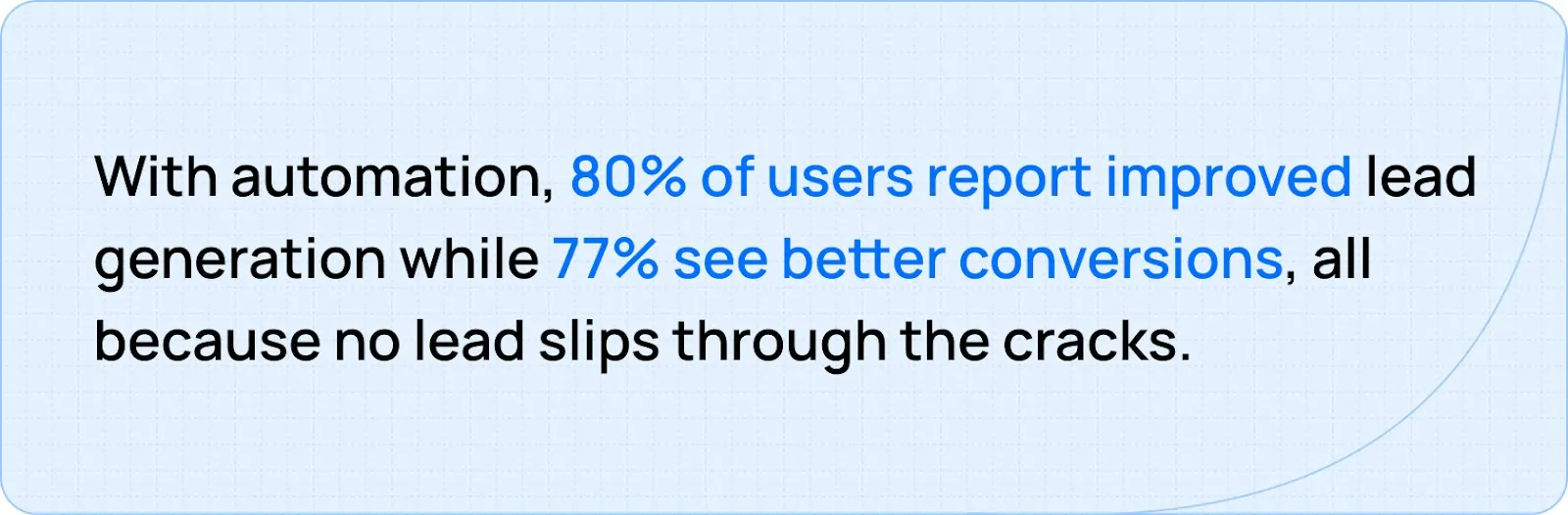
Know Your Buyers Better to Sell Smarter
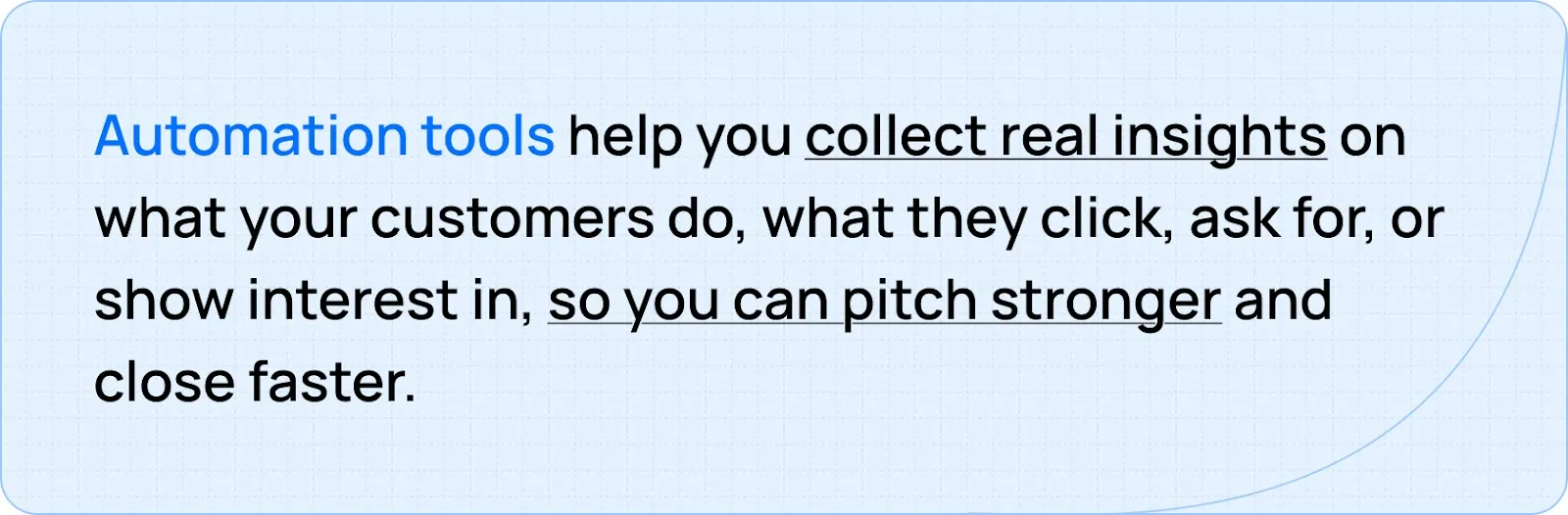
Automation collects useful data on how buyers interact with your company. You learn what they click, read, or request, giving you insights into what matters most to them. Armed with this knowledge, your sales team can pitch smarter and close faster.
Tasks That Can Be Automated: Examples of Marketing Automation For Manufacturers
Marketing automation is not about replacing your sales team, it’s about taking the repetitive tasks off their shoulders so they can focus on real conversations and closing deals. Here are some common tasks manufacturers can automate to keep leads flowing and customers engaged.
Lead Generation: Instantly Capture Website Inquiries Into Your CRM
Instead of waiting only for trade shows or calls, automation can capture inquiries from your website 24/7. For example, when someone downloads a brochure or fills out a quote request, the system automatically records them as a lead. This way, you don’t lose potential customers who are searching online outside business hours.
Lead Nurturing & Personalization: Trigger Personalized Follow-Up Email Sequences

Many prospects aren’t ready to buy right away. Automation gives you the insights that you need to send personalized follow-up emails with useful information, like product guides or industry updates, based on what they showed interest in. Over time, this builds trust and keeps your brand top of mind until they’re ready to move forward.
Lead Management: Automatically Sort Leads Based on Behavior and Search Data

Not every lead is the same. Automation tools can group your leads into categories—such as small buyers, bulk buyers, or repeat customers—based on their actions and details.
Even SEO data can help here.
For example, if a lead came to your site by searching “bulk steel fasteners supplier,” you know they’re likely a large buyer, while someone searching “small stainless bolts for DIY” may be a smaller customer. By combining SEO insights with automation, your sales team can focus their time on the most promising opportunities instead of chasing mismatched leads.
Landing Page Optimization: Run Continuous A/B Tests on Page Versions

A landing page, as you’d know, is simply a page on your website built for a specific product, service, or campaign. With automation, you can test different versions of these pages, like trying two headlines or two “Request a Quote” buttons to see which one brings in more leads. The system tracks results automatically so you know what works best.
Supply Chain Communication: Send Instant Supplier Alerts and Order Updates

Keeping suppliers and distributors updated often eats up valuable time. Automation can take over routine touchpoints, like order confirmations, shipment tracking, and restock alerts, so nothing is missed. For example, if raw material inventory dips below a set level, the system instantly notifies both your team and the supplier, ensuring smooth supply flow without constant phone calls.
Compliance & Documentation: Schedule Smart Compliance Reminders and Generate Reports
Manufacturers operate in a space where compliance deadlines and audit trails can’t be ignored. Automation makes this process stress-free by storing key documents, sending renewal reminders, and generating compliance-ready reports. Instead of chasing paperwork, your team gets timely alerts, whether it’s for ISO, OSHA, or internal quality checks—keeping you audit-ready at all times.
Technical Support Integration: Route Support Tickets to the Right Technician Instantly

When customers face technical issues, a fast response builds confidence. Automation ensures that support requests move seamlessly: an inquiry from your website can automatically create a ticket, trigger an acknowledgment email, and assign it to the right technician. This keeps customers reassured while your team resolves problems quickly and efficiently.
Analytics & Reporting: Generate Real-Time Performance Reports and Metrics
Instead of guessing what’s working, automation tools show you clear numbers: how many people opened your emails, clicked on your product pages, or filled out a form. This gives you a full picture of what’s bringing results and where to adjust. It helps you make smarter decisions with facts, not hunches.

A comprehensive table to understand better:
How can we actually incorporate this into the manufacturing process? Let’s read to find out.
How to Incorporate Marketing Automation into Manufacturing Processes
How to Bring Marketing Automation Into Your Manufacturing Process
1. Set Clear Goals:
Start by defining exactly what you want marketing automation to achieve for your business.
Use Case Example: A CNC machining company set a goal to increase quote requests by 25% within six months. They built automated forms on their website that connected directly to their sales team’s inbox. Every time a new form was filled, the sales team received instant alerts, no delays, no missed leads.
2. Take a Close Look at Your Current Marketing:
Review your existing marketing efforts to find the areas where automation can make the biggest difference. Our manufacturing marketing audit checklist can help with this.
Use Case Example: An industrial valve manufacturer realized that 70% of their cold calls weren’t reaching the right people. By auditing their process, they saw that website visitors often left without filling out the contact form. With automation, they added a pop-up offering a spec sheet in exchange for an email. Suddenly, they had 300+ new contacts each month.
3. Pick the Right Marketing Automation Platform:
Choose a tool that matches your needs - think ease of use, how well it connects with your other systems, and how easily it can grow with you.
Use Case Example: A plastics distributor picked HubSpot because it connected smoothly with their existing Salesforce CRM. Every inquiry from the website went directly into their CRM, with automated reminders for the sales team to follow up. No more leads slipping through the cracks.
4. Clean Up and Organize Your Data:
Make sure your customer info is accurate, current, and sorted so automated campaigns hit the right targets.
Use Case Example: A bearings manufacturer had 8,000 contacts but half were duplicates or outdated. After cleaning the list, automation emails went only to verified, active buyers. Open rates doubled from 15% to 32% because the messages finally reached the right audience.
5. Map Out Your Automation Plan:
Create a clear strategy for which tasks you’ll automate and at what points along the customer journey.
Use Case Example: A sheet metal fabricator mapped out an email sequence for prospects who downloaded their “Capabilities Brochure.” Day 1: send a thank-you email. Day 3: share a customer success story. Day 7: invite them to request a quote. Within two months, they saw a 20% increase in RFQ submissions.
6. Build Your Automated Workflows:
With your plan ready, set up workflows that run in the background. Think of these as rules: “If a buyer does X, then send them Y”. This would handle repetitive tasks automatically.
Use Case Example: A packaging equipment maker set up a workflow: if someone visited their “Shrink Wrapping Machines” page twice, they automatically received an email offering a product demo. This simple rule turned website browsers into sales meetings.
7. Launch, Track, and Improve:
Turn on your automation, watch key results, and make tweaks as needed to get the best return on your investment.
Use Case Example: A precision tools supplier launched their first automated campaign and saw only a 12% open rate. By adjusting subject lines to focus on buyer pain points (“Cut Tool Downtime in Half”), their open rate jumped to 28%. Continuous improvement made the difference.
Common Marketing Automation Pitfalls to Watch Out For
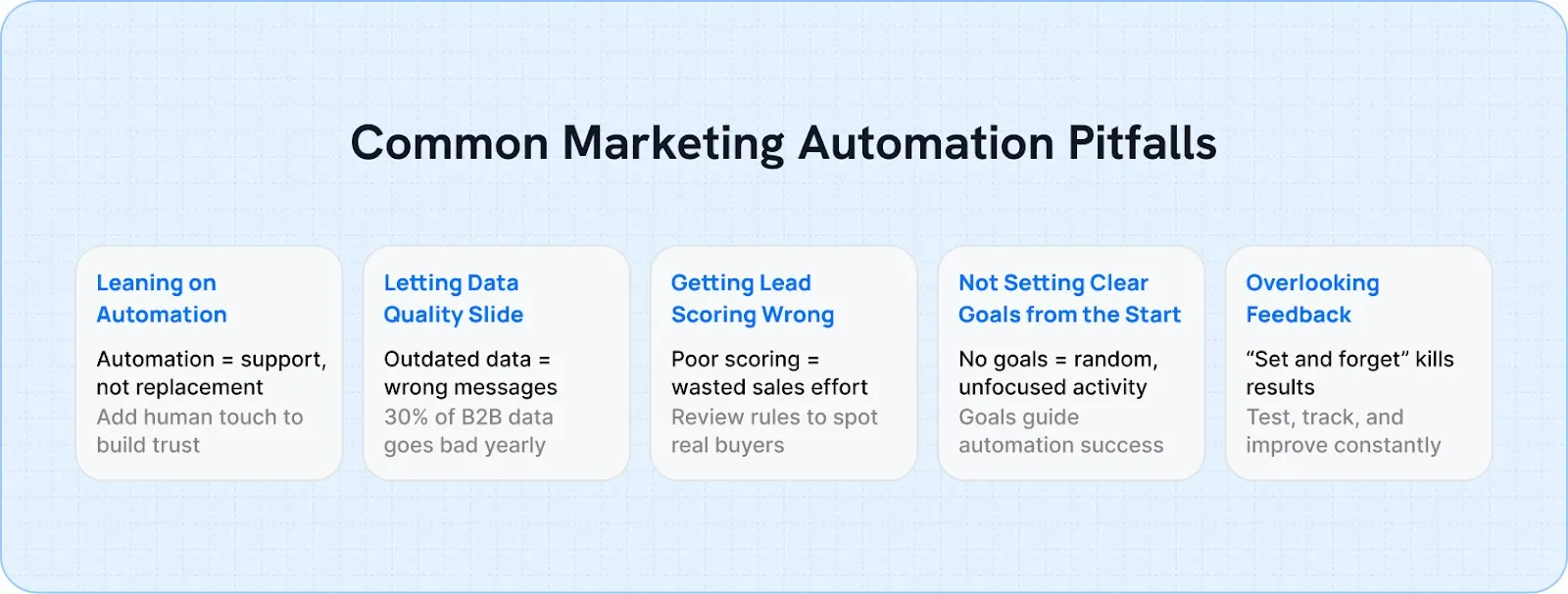
Marketing automation can save time and keep leads moving, but it only works well when the basics are handled. Think of it like a power tool that needs the right settings and a steady hand. If goals are unclear or data is messy, results will suffer. Below are the common slips to watch for and simple ways to avoid them.
1. Leaning Too Much on Automation Alone
Automation works best when paired with human judgment. If you rely only on the system without sales reps adding their personal touch, prospects may feel ignored or treated like numbers. Think of automation as a helper, not a replacement.
2. Letting Data Quality Slide
If your customer data is outdated or incorrect, automation will send the wrong messages to the wrong people. For manufacturers, this can mean sending product updates to old contacts who no longer work at the company. Clean and updated data keeps automation effective.
3. Getting Lead Scoring Wrong
Lead scoring helps your team know which prospects are worth the most attention. But if you set the rules poorly, strong leads may get overlooked while weak ones take up your time. It’s important to review and adjust scoring regularly to match your sales priorities.
4. Not Setting Clear Goals from the Start
Without clear goals, automation can feel like random activity. Are you trying to drive more RFQs, book product demos, or build awareness? Setting specific goals at the start makes sure automation actually supports your business growth instead of just running in the background.
5. Overlooking Feedback and Skipping Optimization
Automation is not “set it and forget it.” You need to track results, listen to customer responses, and fine-tune campaigns. For example, if no one opens your follow-up emails, maybe the subject lines need improvement. Feedback is what turns automation into real results.
While staying vigilant to avoid these pitfalls is ideal, knowing how to resolve them, if a case arises is what will propel you to success.
Also Read: The B2B Manufacturing Marketing System: Build Visibility, Trust, and Sales
How Automation Helps You Work Less and Sell More
We’ve seen how marketing automation helps manufacturers capture leads 24/7, nurture them with the right information, and keep sales teams focused on the most promising opportunities. It simplifies repetitive work, improves communication with suppliers and customers, and gives you real-time data to make smarter decisions. In short, automation makes growth more predictable and less dependent on chance.
This is exactly where Gushwork can support you. By taking care of repetitive tasks, building workflows that run in the background, and showing you clear insights on what’s working, they make sure your sales team spends more time closing deals and less time chasing them. The result? A steady pipeline of leads and a stronger return on your marketing efforts.
Book a demo with Gushwork today and see how automation can keep your business growing all year round.
FAQs
1. What is the biggest challenge manufacturers face with marketing automation?
Aligning sales and marketing teams while managing quality data is often the toughest hurdle.
2. Can small manufacturing businesses benefit from marketing automation?
Absolutely, automation can streamline processes and boost leads at any company size.
3. How quickly can manufacturers see results after automating marketing?
Many see improvements in lead generation and engagement within a few months.
4. Does marketing automation replace personal sales efforts in manufacturing?
No, it complements sales by nurturing leads and freeing up reps to focus on closing deals.
5. What role does data play in marketing automation success?
Clean, organized data drives smarter targeting, personalization, and better ROI.

Digital Marketing
Aug 29, 2025
5 mins
The Ultimate Guide to Contract Manufacturing Marketing
Batul Beawarwala
Would a buyer pick your shop after one quick look at your website? If the answer is anything but a confident yes, your marketing needs to work harder and smarter. Buyers move fast. They scan for proof, timelines, and clear signals that you can meet their specs without a long back-and-forth.
In contract manufacturing, the hardest part is earning a buyer’s trust before they’ve ever stepped into your facility. Most purchasing teams now research suppliers quietly, long before they reach out.
Marketing is what helps you show up in those early moments. It gives buyers a clear picture of what you do, how you work, and why you’re reliable enough for their next run, prototype, or long-term production need.
In this guide, you’ll learn how modern contract manufacturer marketing works, how it supports your sales process, and which simple steps can help you build a steady, qualified pipeline month after month.
What Contract Manufacturer Marketing Involves Today?
Marketing might feel like a different world, but in reality, it’s just the modern version of explaining your capabilities clearly and proving you can deliver.
The part most manufacturers miss is that buyers don’t just compare quotes anymore. They compare information. Before they talk to you, they want to understand your capacity, quality, and fit, and they look for that online.
Here’s what marketing really looks like for a contract manufacturer today:
1. Turning Your Capabilities Into Clear, Usable Information.
It’s not enough to list “CNC machining” or “plastic molding.” Buyers want specifics: aluminum grades, part sizes, tolerances, tooling abilities, finishing options, or certifications. Marketing simply organizes this information so it’s easy to scan and trust.
2. Making Your Strengths Visible In Places Buyers Already Check.
Procurement teams rely on Google, supplier directories, LinkedIn, and industry resources. Marketing ensures your company looks present, active, and credible wherever they look for vendors.
3. Showing How You Solve Common Manufacturing Problems.
Late deliveries, inconsistent quality, unclear communication — these issues shape buying decisions. When your marketing addresses them openly through case studies or short capability breakdowns, buyers see you as a safer choice.
4. Shortening The Evaluation Process For Both Sides.
When buyers can understand you faster, your sales team doesn’t waste time on poor-fit inquiries. The conversations that do happen are clearer, more technical, and closer to a project-ready stage.
Make Your Capabilities Easy for Buyers to Trust
We help contract manufacturers turn technical strengths into clear, simple, buyer-friendly content that attracts qualified inquiries without extra effort.
Show Me How
Contract manufacturer marketing helps the right buyers see you, understand you, and trust you. When that happens, your sales team spends less time explaining the basics and more time closing real opportunities.
5 High-Impact Marketing Strategies for Lead Generation
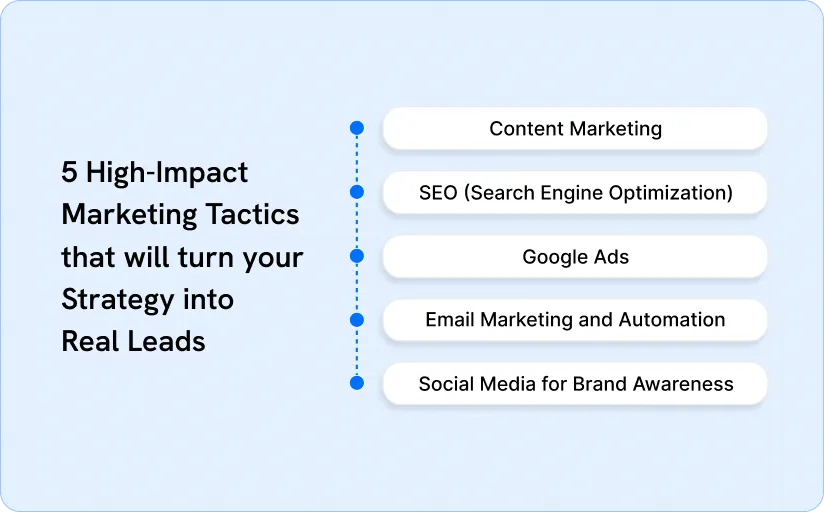
You’ve set the foundation, now it’s time to execute. These five high-impact marketing tactics will turn your strategy into real leads.
Content Marketing
Content marketing acts as your always-on salesperson, delivering value to prospects even when your team is tied up.
Your content becomes a lead magnet. It’s available 24/7, making it easier for clients to find you and trust you as a solution provider. Over time, you’ll build a steady stream of inbound leads from industry-specific queries.
SEO (Search Engine Optimization)
SEO is all about ensuring your business shows up when potential clients search for solutions like yours.
When prospects type in:
- “precision machining for automotive parts” or
- “contract manufacturing for medical devices”,
Your business should be at the top.
How It Works:
- Keyword Optimization: Use tools like Google Keyword Planner to identify industry-specific terms, then optimize your website and service pages with high-intent keywords.
- On-page SEO: Each page on your site should be structured to convert, including the right titles, headers, meta descriptions, and internal links that direct users to relevant service pages.
- Local SEO: If you’re targeting regional clients, make sure your business shows up in Google My Business listings and local search results.
Make Your Factory Easy to Find Online
We help manufacturers set up clear SEO foundations that boost visibility, bring in better-fit inquiries, and get your website working as hard as your production team.
Plan My SEO Strategy
With proper SEO, your contract manufacturing business becomes easy to find, and you start appearing in front of potential clients when they search for solutions. This drives consistent, organic traffic and establishes you as a go-to in your industry.
Google Ads
Google Ads is a tool that gets your business in front of decision-makers instantly. It’s a powerful way to reach potential clients actively searching for contract manufacturing solutions like low-volume production or custom parts fabrication.
How It Works:
- Target High-Intent Keywords: Bid on search terms like “contract manufacturing for electronics” or “custom automotive parts supplier”. This puts you in front of people already interested in your services.
- Geo-Targeting: If you serve specific regions, use location targeting to focus your ads on nearby businesses looking for your manufacturing services.
- Landing Pages: Direct traffic to landing pages that are optimized for conversion, with clear CTAs like “Request a Quote” or “Schedule a Consultation
Email Marketing and Automation
Email marketing nurtures leads over time by providing targeted, valuable content that keeps your manufacturing services top-of-mind.
How It Works:
- Segment Your Audience: Divide your email list based on industry (automotive, medical devices, electronics) and tailor your messaging to each group’s specific challenges.
- Automated Sequences: Set up automated email flows that nurture leads with relevant content, such as case studies, industry updates, and solutions to common manufacturing problems.
- Personalization: Send personalized emails to decision-makers in targeted industries, offering them customized solutions.
As your emails build trust and provide value, you’ll see increased conversion rates and long-term client relationships.
Social Media
Social media is a powerful tool for showcasing your expertise and building relationships with the right people in your industry.
How It Works:
LinkedIn:
- Connect with key decision-makers like procurement managers and operations directors in automotive, medical devices, and aerospace.
- Share relevant content: Post case studies, quality control tips, or industry insights that showcase your manufacturing capabilities.
Twitter:
- Engage in industry conversations by following manufacturing leaders and joining discussions using #manufacturing or #leanmanufacturing.
- Share quick updates on trends or company achievements, establishing your business as an active participant in the industry.
Facebook:
- Join industry-focused groups to engage with other professionals and potential clients.
- Use targeted ads to reach specific manufacturing sectors like electronics or medical devices.
Instagram:
- Show behind-the-scenes content of your production process, custom solutions, or team achievements.
- Post product highlights to give clients a visual representation of your work.
6 Marketing Challenges Contract Manufacturers Face
You’re managing a lot—production, deadlines, client relationships. But when it comes to marketing, it often feels like there’s a missing link. Sales might be unpredictable, and marketing efforts don’t always hit the mark. Let’s break down the real challenges you face:
1. Relying on a Small Client Base
Your business depends on a few key clients to keep things moving. When they cut back or delay projects, it affects your cash flow. Lead generation becomes unpredictable, and filling production gaps feels like an ongoing challenge. While trade shows and cold calls bring in some leads, they don’t provide the steady growth you need.
2. Difficulty in Tracking and Measuring Marketing ROI
Tracking marketing efforts without the right tools is difficult. Referrals and trade shows are tough to measure, which makes it hard to see what’s actually working. Without clear data, you end up spending time and money on strategies that don’t deliver results.
3. Limited Marketing Resources
With a small team and limited budget, marketing efforts often get neglected. Campaigns become rushed or are abandoned altogether. Without consistent marketing, potential clients might forget about you when they’re ready to make their next move.
4. Struggling with the Digital Shift
You understand that SEO, content marketing, and social media are important, but they can feel overwhelming. Without the right expertise in-house, you aren’t tapping into their full potential. This lack of digital visibility means you miss out on clients searching for solutions online, while your competitors stay ahead.
5. Misalignment Between Marketing and Sales Teams
Your marketing and sales teams might not always be on the same page. The content you create might not attract the right leads, or sales reps might struggle because marketing hasn’t provided the right resources. This misalignment wastes time and leads to missed sales opportunities.
6. Focusing Too Much on New Clients
While attracting new clients is important, retaining your existing clients should be just as much of a priority. Ignoring customer retention means missing out on repeat business and referrals. Building strong relationships is key to steady growth, but it requires ongoing effort, not just one-time actions.
How Modern Marketing Benefits Contract Manufacturers
Modern marketing ensures your business stays visible, generates consistent leads, and builds long-term relationships, so you’re never left unprepared when the next slow period hits. Here’s how:
Builds a System for a Year-Round Lead Generation
Contract manufacturing is project-based, which means your lead flow can be unpredictable. Modern marketing fills that gap. By maintaining a consistent presence, you generate leads even during off-seasons.
With marketing efforts running continuously, your business remains top-of-mind for procurement managers, buyers, and engineers—whether you’re producing automotive parts, medical devices, or consumer electronics.
Delivers Higher ROI
Traditional marketing methods, like direct mail or cold calling, often yield low returns and high costs. By focusing on strategies that target qualified leads, you reduce wasted spend and improve your cost-per-lead.

With the right approach, your marketing spend goes further, bringing in more qualified prospects without inflating your budget.
Increases Brand Visibility
As a contract manufacturer, you offer specialized services—whether it's custom packaging, precision machining, or assembly line production. Modern marketing ensures your services are easily found by decision-makers in your target industries.
When a potential client searches for outsourced production or low-volume manufacturing, you’ll be there, ranked and ready to connect.
Based on Targeted Reach
Modern marketing allows you to focus on specific industries and buyer personas. Whether you specialize in electronic assembly or aerospace manufacturing, you can target the exact sectors that need your services.
This approach ensures that your marketing efforts attract the most relevant leads. Instead of wasting time on prospects outside your niche, you drive higher-quality leads that are more likely to convert.
Offers Long-Term Benefits That Keep Compounding
Unlike a one-off sales pitch or seasonal trade show, modern marketing builds long-term value. Once your content and digital presence start generating leads, they continue working for you.
Well-placed marketing efforts, such as industry blogs, case studies, or client success stories, keep bringing in organic leads for months or even years, giving you a steady stream of inquiries while you focus on production. Recent insight:
How Contract Manufacturers Can Build a Marketing System?
You don’t just want more leads; you want the right leads from the right industries that need your manufacturing expertise. Here’s how to get started:
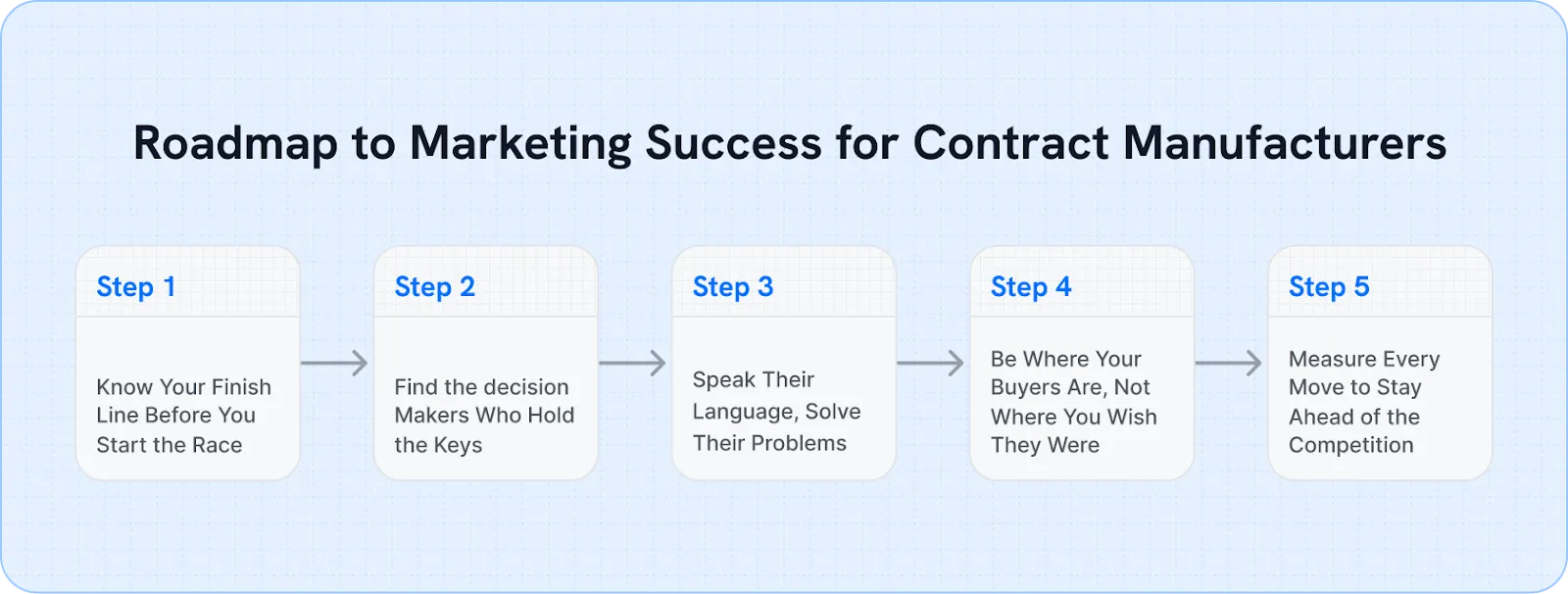
Step 1: Know Your Finish Line
Before getting into tactics, define clear business goals.
- Do you need more qualified leads to fill production gaps or
- Improve brand visibility in new industries?
Without clear objectives, marketing becomes scattered. By targeting specific industries like automotive parts or medical devices, your efforts will be focused and measurable.
Key Focus Areas:
- Increase qualified leads: Example—“Generate 30% more inquiries from medical device manufacturers in 6 months.”
- Expand market presence: Focus on emerging sectors like sustainable manufacturing or electronics production.
- Strengthen client retention: Build strategies that encourage repeat business from existing clients.
Step 2: Locate the Decision-Makers
Your marketing should target high-value industries and decision-makers. Focus on companies that need your specialized services, such as precision machining or custom assembly. By honing in on specific roles, like procurement managers in automotive or medical devices, you can tailor your messaging to directly solve their challenges.
Key Focus Areas:
- Industry focus: Whether it's low-volume production or custom parts fabrication, target the right sector.
- Target decision-makers: Direct your messaging to operations managers, procurement directors, or supply chain managers.
- Understand pain points: Address unique challenges, such as FDA compliance in medical devices or cost-efficiency in automotive manufacturing.
Step 3: Speak Their Language
Address your audience’s pain points directly by crafting content that provides actionable solutions. Whether it’s reducing production costs, enhancing efficiency, or navigating regulatory hurdles, your content should showcase how you solve these problems.
Key Focus Areas:
- Industry-specific challenges: Understand the unique issues your target sectors face, like FDA regulations for medical devices or supply chain disruption in automotive manufacturing.
- Craft targeted content: Create blogs, whitepapers, or case studies that address these challenges.
- Use appropriate content formats: Choose from case studies to whitepapers depending on complexity and depth needed.
Step 4: Be Where Your Buyers Are
Ensure your website is optimized to convert traffic into leads. Then, engage your audience on platforms they frequent, like Google and LinkedIn. Focus on where decision-makers search for solutions, and make sure your website is designed to grab their attention.
Key Focus Areas:
- Website: Optimize for lead conversion with clear CTAs and service pages that address client needs directly.
- Google: Use SEO to ensure decision-makers find you when searching for specific services like precision machining or custom assembly.
- LinkedIn & Industry Platforms: Engage with procurement managers and other decision-makers, sharing relevant content and joining industry discussions.
Step 5: Measure Every Move
Once your marketing strategy is live, tracking performance is crucial. Monitor which tactics are delivering results and refine your approach based on real-time data. Measuring allows you to make data-driven decisions to improve performance and maximize ROI.
Key Focus Areas:
- Lead conversion rates: Track how well your leads are converting into paying clients and adjust your tactics accordingly.
- Website traffic: Use tools like Google Analytics to monitor which sources bring the most valuable traffic.
Client engagement: Track how existing clients are interacting with your content and refine your approach if needed.
How Gushwork Helps You Attract the Right Prospects
You’ve learned the ropes: how to attract leads, boost brand visibility, and get your business in front of the right audience. But here’s the truth: marketing is a lot of work. Especially, when you're already managing production, client demands, and tight deadlines.
The real question is: How do you take all these tactics and make them work for you?
At Gushwork, we specialize in transforming contract manufacturing businesses by integrating AI-powered SEO, content marketing, and sales enablement into a cohesive system that works around the clock. We focus on creating long-term solutions that consistently generate qualified leads.
And that’s how your business is found by the right people at the right time, making sure your marketing keeps working even when you're busy with production.
Let Gushwork Strengthen Your Marketing Efforts
If you want consistent, qualified inquiries, Gushwork can help you set up clear content, stronger SEO, and simple systems that bring the right buyers to your business.
Book a Call
FAQs
1. How can contract manufacturers improve their online visibility?
To improve online visibility, contract manufacturers should focus on SEO optimization for their website, ensuring it ranks for specific, high-intent keywords. Creating high-quality content like blogs and case studies that address industry-specific pain points can further boost organic traffic.
2. Why is content marketing important for contract manufacturers?
Content marketing allows contract manufacturers to showcase their expertise, solve client problems, and position themselves as industry leaders. It also helps to nurture leads by providing valuable, solution-oriented content that builds trust and credibility over time.
3. What are the best marketing strategies for contract manufacturers to generate consistent leads?
Some of the best strategies include creating SEO-optimized content, focusing on industry-specific pain points, using targeted Google Ads, and leveraging social media platforms like LinkedIn for connecting with decision-makers in sectors like automotive or electronics manufacturing.
4. How do I track the effectiveness of my marketing campaigns as a contract manufacturer?
Using tools like Google Analytics and CRM software, contract manufacturers can track website traffic, lead conversion rates, and engagement with content. Monitoring these metrics helps adjust marketing tactics for better performance and ROI.
5. How can contract manufacturers attract clients during slow production months?
By focusing on digital marketing, contract manufacturers can generate steady leads even during off-seasons. SEO, content marketing, and email automation work around the clock, ensuring you're visible and top of mind for potential clients year-round.

Paid Ads
Aug 29, 2025
5 mins
10 Manufacturing Marketing Experts Who Actually Understand Your Pipeline Challenges
Batul Beawarwala
Every time someone searches for your type of product, there's a bidding war happening in milliseconds.
Your competitors are bidding on the exact keywords your prospects are typing. They're paying to appear first, capturing attention, and converting searches into sales appointments, all while you're completely unaware the auction even exists.
Here's the worst part: they're even bidding on your company name. When someone specifically searches for your business, your competitor's ad appears above your own website.
This invisible auction determines who gets seen and who gets ignored. The manufacturers with the best advertising agencies are winning these battles 24/7.
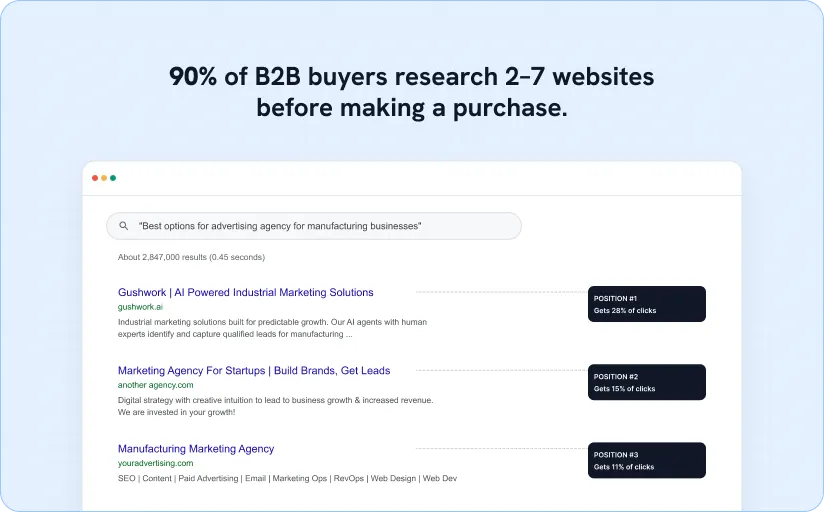
These 10 advertising agencies know how to play and win the search engine auction game that's happening right now in your market.
TL;DR
- The best advertising agencies for manufacturing don't just run ads; they create full lead-generation systems integrating SEO, content marketing, paid ads, and automation.
- Gushwork, Gorilla 76, and FINN Partners offer comprehensive solutions that help manufacturers attract, qualify, and convert high-quality leads.
- Look for agencies with industry experience and proven results tailored to your business goals.
- Ensure the agency is transparent about pricing and provides clear ROI through detailed reporting.
- Choose a partner who understands the long-term value of sustainable growth, not just quick wins.
1. Gushwork
Gushwork offers a comprehensive suite of digital marketing services designed to improve visibility and optimize lead gen operations for manufacturers. The key services include:

- Industrial SEO: Gushwork helps manufacturers improve search engine rankings, making it easier for potential clients to find their products and services online.
- B2B Content Marketing: They create content tailored to the manufacturing sector, driving inbound leads and building thought leadership.
- Paid Search Campaigns: Gushwork helps manufacturers effectively manage paid search campaigns, ensuring they attract the right audience at the right time.
- Automation Tools: They provide AI-powered automation tools that optimize workflows, saving time and reducing operational inefficiencies.
Best For
Gushwork is ideal for manufacturers aiming to modernize their lead generation and marketing strategies. We specialize in helping companies transition from traditional methods like trade shows and cold outreach to a comprehensive digital marketing system that delivers measurable results.
Whether you're a mid-sized manufacturer seeking to enhance your digital presence or a large enterprise aiming to optimize your marketing efforts, Gushwork provides the tools and expertise to help you achieve scalable growth. Our approach focuses on building a strong digital foundation, including AI-assisted SEO, targeted content creation, and strategic use of paid ads, to attract qualified leads and drive repeat business.
By partnering with Gushwork, you can move beyond relying solely on trade shows and traditional sales tactics and instead build a sustainable marketing engine that consistently generates high-quality leads and supports long-term growth.
Noteworthy Clients
Gushwork has built a strong portfolio across various manufacturing sectors, including heavy machinery, automotive, electronics, and industrial equipment. These partnerships reflect Gushwork's ability to deliver tailored solutions that address the unique challenges faced by manufacturers in a competitive digital landscape.
2. M2M Strategies
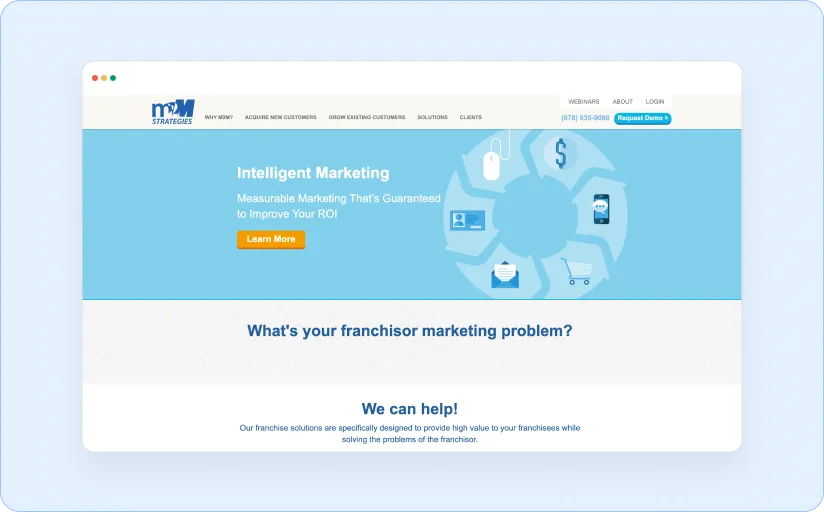
M2M Strategies is a marketing agency that specializes in helping small-to-midsize manufacturers and franchise-based businesses optimize their digital marketing efforts. Their key services include:
- Franchise Marketing Technology & Automation: M2M Strategies offers specialized solutions designed to enhance marketing efforts for franchises, providing tools and strategies to streamline operations and improve customer engagement.
- Digital Advertising Optimization (PPC): They focus on optimizing digital advertising campaigns to attract new customers efficiently, ensuring a higher return on investment for marketing spend.
- Behavior-Driven Automated Campaigns: M2M Strategies implements automated marketing campaigns that are driven by customer behavior, aiming to increase customer retention and lifetime value.
- Franchisee Solutions: They provide tailored solutions to support franchisees, helping them grow their customer base and improve marketing effectiveness.
Best For
M2M Strategies is ideal for small-to-midsize manufacturers, particularly those operating within franchise models or multi-location setups. Their expertise in franchise marketing technology and automation makes them a valuable partner for manufacturers looking to scale operations, enhance marketing efficiency, and improve customer acquisition.
Noteworthy Clients
While specific client names are not publicly disclosed, M2M Strategies has a track record of working with various franchises and multi-location businesses, providing them with marketing solutions that drive growth and improve operational efficiency.
3. Sopro
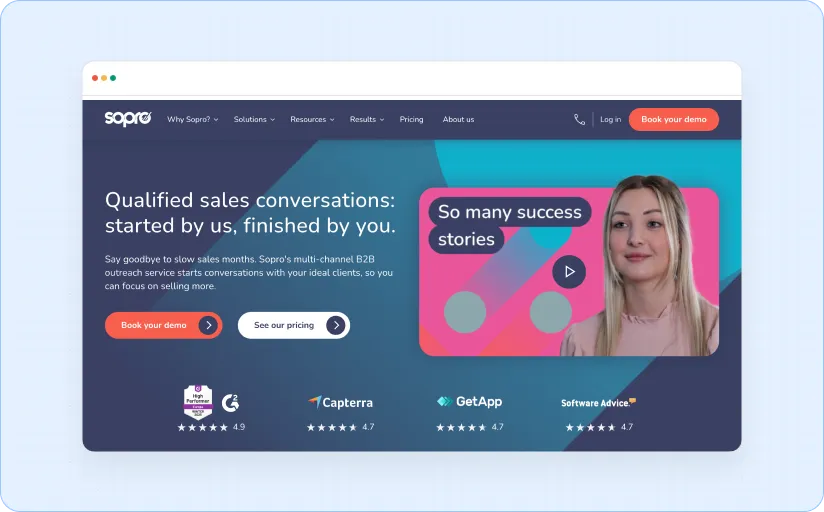
Sopro is a global leader in B2B lead generation, specializing in multi-channel outreach strategies that connect manufacturers with high-intent prospects. Their fully managed service combines data-driven targeting with personalized messaging to drive measurable sales growth. Their key services include:
- Multi-Channel B2B Prospecting: Sopro employs a blend of email, LinkedIn, phone outreach, and display ads to engage prospects across various touchpoints, ensuring comprehensive market coverage.
- Lead Generation & Demand Generation: They focus on identifying and nurturing leads through tailored campaigns that align with your business objectives, fostering long-term relationships and sales opportunities.
- Appointment Setting: Sopro's services include securing meetings with decision-makers, streamlining the sales process and enhancing conversion rates.
- Account-Based Marketing (ABM): They develop targeted strategies to engage high-value accounts, increasing the likelihood of closing significant deals.
Best For
Sopro is ideal for manufacturers seeking to expand their market reach and generate qualified leads without the overhead of building an in-house sales development team. Their services are particularly beneficial for companies aiming to enhance their sales pipeline through efficient and scalable outreach methods.
Noteworthy Clients
Sopro has successfully partnered with various companies across different industries, including:
- Moneyinfo
- Rhodri Andrews
- Frans Swarttouw
These partnerships highlight Sopro's capability to deliver impactful lead generation and sales development solutions tailored to the unique needs of manufacturers.
4. Gorilla 76

Gorilla 76 is a marketing agency focused on providing industrial marketing solutions, helping manufacturers build their brand and generate high-quality leads. Their key services include:
- Industrial Branding: Gorilla 76 helps manufacturers build a strong, distinct brand identity that resonates with their target audience. They ensure that your brand stands out and conveys a clear message across all marketing channels.
- Demand Generation: They specialize in developing campaigns that attract high-intent leads. By combining SEO, content marketing, and paid media, Gorilla 76 helps manufacturers drive qualified leads into the sales pipeline.
- Sales Enablement: Gorilla 76 equips sales teams with the tools and content they need to engage prospects effectively and close deals faster. This includes creating case studies, whitepapers, and sales decks that help manufacturers nurture leads through the buying journey.
- Content Strategy: Their team creates tailored content that speaks directly to the unique needs of the manufacturing sector, enhancing brand authority and positioning manufacturers as thought leaders in their field.
Best For
Gorilla 76 is ideal for manufacturers, especially those in the industrial, engineering, and B2B sectors, who want to refine their brand presence and generate high-quality leads. Their services are best suited for companies looking to implement a comprehensive marketing strategy that combines branding with targeted lead generation and sales enablement.
Noteworthy Clients
Gorilla 76 has worked with several well-known companies across various industries, driving success through tailored marketing campaigns:
- Firma Clinical Research
- Xometry
- Henkel
These partnerships highlight Gorilla 76's ability to deliver impactful marketing solutions tailored to the manufacturing industry, driving business growth through effective branding, demand generation, and sales enablement strategies.
5. Altitude Marketing
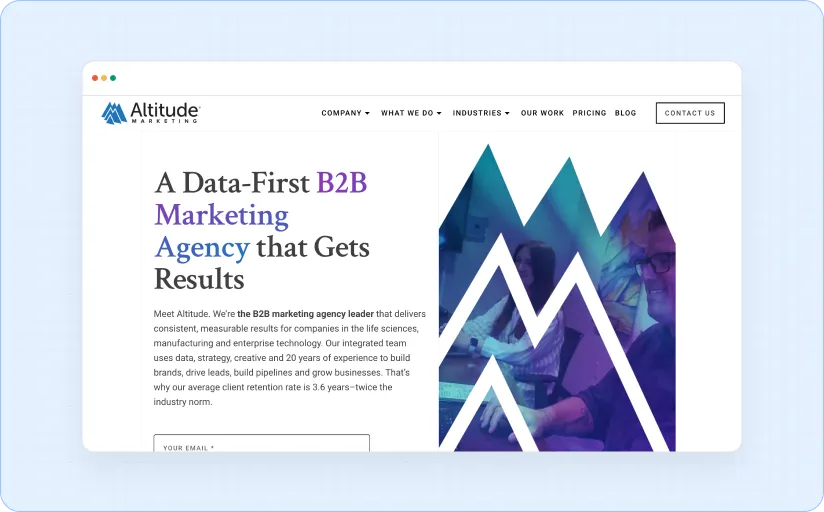
Altitude Marketing is a full-service marketing agency that specializes in helping manufacturers grow through strategic branding, lead generation, and sales alignment. Their key services include:
- Full-Funnel Lead Generation: Altitude Marketing develops integrated campaigns that attract, nurture, and convert leads through targeted messaging and multi-channel outreach.
- Branding & Messaging: They help manufacturers craft clear, compelling brand messages that resonate with their target audience and differentiate them in the marketplace.
- HubSpot Implementation: Altitude offers HubSpot CRM setup and integration, helping manufacturers automate and optimize their marketing and sales processes.
- Trade Show Marketing: They assist with trade show strategies, including pre-show promotion and post-event follow-ups, to maximize lead generation and ROI.
Best For
Altitude Marketing is ideal for mid-sized to large manufacturers looking for a full-service agency that can handle everything from lead generation to CRM implementation. Their approach works best for companies aiming to align marketing efforts with sales goals for more effective lead conversion.
Noteworthy Clients
Altitude Marketing has partnered with several prominent manufacturers, including:
- HID Global
- Gerard Daniel Worldwide
- Universal Industrial Gases
Altitude Marketing’s proven ability to deliver integrated marketing strategies makes it a valuable partner for manufacturers looking to scale efficiently.
6. Vital Design

Vital Design is a digital marketing agency specializing in web design, branding, and marketing strategies for manufacturers. Their key services include:
- Website Design & Development: Vital Design creates user-friendly, responsive websites that reflect your brand and improve customer experience, driving more conversions.
- Branding & Identity: They help manufacturers develop strong, consistent brand identities that stand out in a competitive market.
- SEO & Content Marketing: Vital Design drives organic traffic through optimized content strategies that improve search engine rankings and generate high-quality leads.
- Conversion Rate Optimization (CRO): They use data and testing to improve website performance and increase conversions, ensuring more leads are generated from your digital efforts.
Best For
Vital Design is best for manufacturers looking to modernize their digital presence, improve user experience, and increase conversions through targeted SEO and branding strategies. Their services are particularly beneficial for companies that want to combine creative web design with effective lead generation.
Noteworthy Clients
Vital Design has worked with several manufacturers to drive results, including:
- Whaleback Systems
- Marlin Steel
- Longtail UX
Vital Design’s focus on blending design with strategic marketing makes them a strong partner for manufacturers looking to enhance their digital efforts and drive business growth.
7. Walker Sands
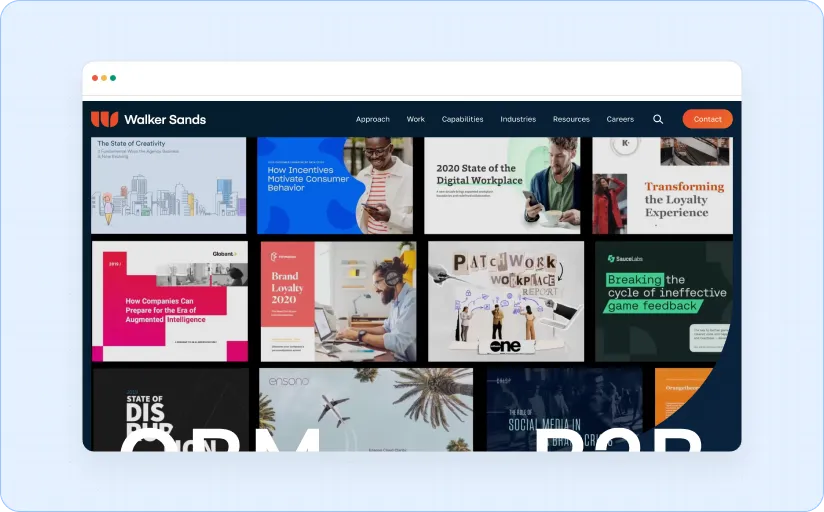
Walker Sands is a full-service marketing agency specializing in B2B marketing for manufacturers. Their key services include:
- SEO & Content Marketing: Walker Sands helps manufacturers increase their organic reach and generate qualified leads through strategic content and SEO campaigns.
- Paid Media & PPC: They manage effective paid media campaigns that target key audiences, ensuring maximum return on investment and lead generation.
- Brand Strategy & Messaging: Walker Sands works with manufacturers to develop clear, compelling messaging that resonates with their target audience and elevates brand visibility.
- Marketing Automation: They implement marketing automation tools that streamline lead nurturing and improve efficiency in converting prospects into customers.
Best For
Walker Sands is ideal for manufacturers looking to improve their digital marketing efforts through data-driven SEO, content strategies, and targeted paid media campaigns. Their services are best suited for companies focused on scaling lead generation and improving conversion rates.
Noteworthy Clients
Walker Sands has partnered with a range of leading manufacturers, including:
- Xometry
- Burlington Stores
- Markforged
Walker Sands’ ability to integrate content, SEO, and paid media strategies makes them an ideal partner for manufacturers looking to enhance their digital marketing efforts and drive significant business growth.
8. FINN Partners
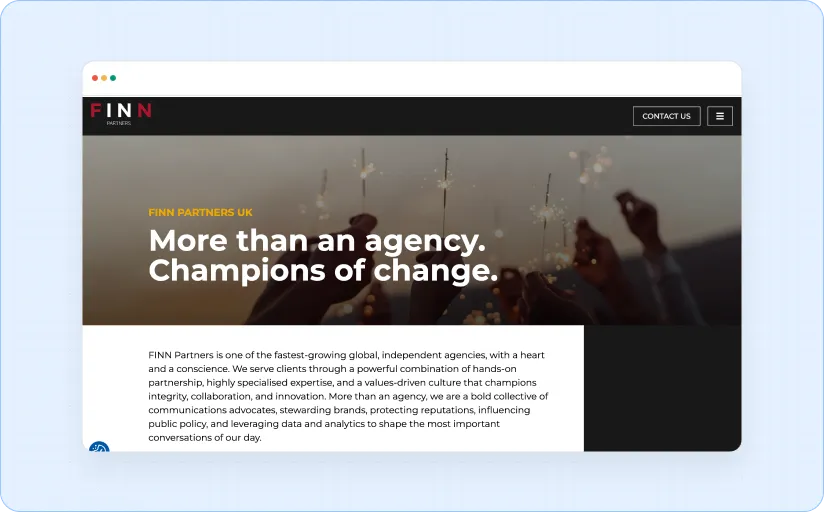
FINN Partners is a global marketing agency with a strong focus on B2B marketing for manufacturers. They specialize in integrated communications strategies that elevate brand presence, drive demand, and deliver measurable results. Their key services include:
- Brand Strategy & Positioning: FINN Partners helps manufacturers build strong brand identities and position themselves as leaders in their industry.
- Public Relations & Media Outreach: They craft compelling PR campaigns that increase media visibility, build credibility, and drive thought leadership for manufacturers.
- Content Marketing & Thought Leadership: FINN Partners creates and distributes valuable content that drives engagement and fosters trust with key decision-makers in the manufacturing sector.
- Digital & Social Media Marketing: They leverage digital and social media channels to build brand awareness and generate leads, reaching the right audiences across multiple touchpoints.
Best For
FINN Partners is ideal for manufacturers looking to strengthen their brand presence, increase media visibility, and generate high-quality leads through integrated PR, content, and digital strategies. Their services are best suited for companies focused on building long-term brand equity and thought leadership.
Noteworthy Clients
FINN Partners has partnered with several high-profile manufacturers, including:
- Thermo Fisher Scientific
- Fujitsu
- Siemens
FINN Partners’ comprehensive approach to branding, public relations, and digital marketing makes them a trusted partner for manufacturers looking to elevate their market presence and achieve measurable growth.
9. Kuno Creative

Kuno Creative is a leading digital marketing agency specializing in inbound marketing strategies for manufacturers. Their key services include:
- Inbound Marketing: Kuno Creative creates comprehensive inbound strategies, using SEO, content marketing, and lead nurturing to attract and convert high-quality leads.
- Website Design & Development: They design and develop responsive, user-friendly websites that enhance the user experience and drive conversions for manufacturers.
- SEO & Content Strategy: Kuno Creative helps manufacturers improve their organic search visibility and create content that resonates with their target audience, driving both traffic and leads.
- Marketing Automation: They implement marketing automation solutions that streamline lead nurturing, improve engagement, and increase sales opportunities.
Best For
Kuno Creative is ideal for manufacturers looking to grow their business through inbound marketing, SEO, and content strategies. Their services work well for companies focused on long-term lead generation and optimizing their website to convert visitors into customers.
Noteworthy Clients
Kuno Creative has partnered with a variety of manufacturers to enhance their digital marketing efforts, including:
- Marlin Steel
- Swagelok
- The Aluminum Association
Kuno Creative’s expertise in inbound marketing, content creation, and web design makes them an ideal partner for manufacturers looking to enhance their online presence and drive sustained growth through strategic marketing efforts.
10. Marwick Marketing

Marwick Marketing is a full-service digital marketing agency specializing in helping manufacturers enhance their online presence through SEO, PPC, and web design services. Their key services include:
- SEO & Organic Search: Marwick Marketing helps manufacturers improve their search engine rankings and organic traffic through tailored SEO strategies that target high-intent keywords and drive qualified leads.
- PPC Management: They create and manage PPC campaigns that target the right audience, maximizing ROI and increasing the flow of high-quality leads to manufacturers’ websites.
- Website Design & Development: Marwick builds responsive, conversion-optimized websites that are designed to engage visitors and convert them into customers.
- Social Media Marketing: They develop effective social media strategies to boost brand visibility, engage with the target audience, and drive traffic to manufacturing websites.
Best For
Marwick Marketing is ideal for manufacturers seeking to improve their online visibility, drive traffic, and generate leads through SEO, paid media, and optimized web design. Their services are particularly beneficial for companies focused on increasing their online presence and improving their conversion rates.
Noteworthy Clients
Marwick Marketing has worked with several prominent clients, including:
- Keystone Electric
- Control Solutions
- RizePoint
Marwick Marketing’s blend of SEO, PPC, web design, and social media strategies makes them a valuable partner for manufacturers looking to improve their digital marketing efforts and achieve measurable growth.
Still Confused? Here's What You Should Look For
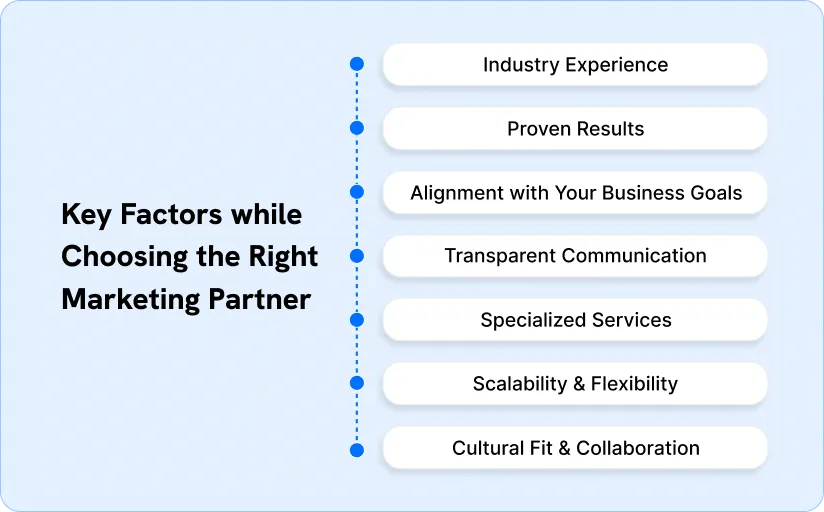
Choosing a marketing partner is a big decision, especially in manufacturing. A long list of agencies is great, but how do you know which one is the right fit for you? The best choice goes beyond just a good resume. Here are some key things to consider when making your final decision:
1. Industry Experience
Look for an agency that understands the unique challenges and opportunities within the manufacturing industry. A marketing partner with experience in your sector will know how to tailor strategies that resonate with your target audience and drive measurable results.
2. Proven Results
Check for agencies that can demonstrate their success through case studies, client testimonials, and clear metrics. Ideally, they should have experience working with businesses similar to yours and a track record of achieving the outcomes you desire, such as increased leads, conversions, or brand visibility.
3. Alignment with Your Business Goals
Ensure the agency understands your specific business goals. Whether it’s growing your online presence, improving lead generation, or expanding into new markets, they should be able to align their strategies with your long-term objectives.
4. Transparent Communication & Reporting
Choose an agency that values transparency in its processes. They should provide regular updates, clear reporting on campaign performance, and be open to feedback and collaboration. Transparent communication fosters trust and ensures you're always in the loop.
5. Specialized Services
Manufacturers often require a mix of specialized services, SEO, content marketing, PPC, and web design, to name a few. Find an agency that offers a comprehensive suite of services that caters specifically to your needs, ensuring they can handle all aspects of your digital marketing strategy.
6. Scalability & Flexibility
Your business needs may evolve, so choose a marketing partner that is adaptable and able to scale its services as your business grows. Whether it’s expanding into new markets or adjusting strategies based on performance, a flexible agency will support your long-term success.
7. Cultural Fit & Collaboration
It’s crucial to work with a team that feels like an extension of your own. A good agency should have a collaborative approach and align with your company culture. This ensures smooth communication and a more productive working relationship.
Take the time to evaluate each agency on these factors, and choose the one that not only meets your immediate marketing needs but also partners with you to drive sustained growth for your manufacturing business.
Will an Ad Agency Solve All Your Lead Problems?
Short answer: probably not. You might think running ads is the fastest way to get leads, and while it's a powerful tool, it's just one part of a bigger system. A complete marketing provider understands this. They know that a one-off ad campaign won't build a sustainable pipeline.
Think of it like this: ads bring people to your door, but what happens when they get there? Is your website clear? Does your content answer their technical questions? Is your sales team ready to follow up effectively? A full-service agency connects all these dots. They make sure your brand, website, and content all work together to turn visitors into profitable, long-term customers. They go beyond just running ads to build a complete lead-generation machine that works for you 24/7.
Here are our top picks for complete manufacturing marketing firms that go beyond just running ads:
- Gushwork: Gushwork builds a full AI-powered lead generation system from the ground up. This includes your website, SEO, ads, and a custom AI engine to help you find and qualify the right leads. They don't just run campaigns; they build a system that can run itself, automating lead generation and qualification for maximum efficiency.
- Gorilla 76: Gorilla 76 takes a revenue-driven approach. They focus on building out your content, website, and overall strategy to attract the right people and convert them into sales opportunities. Their deep understanding of the B2B sales cycle allows them to design marketing strategies that resonate with manufacturers and drive long-term results.
- FINN Partners: As a comprehensive communications firm, FINN Partners looks at the bigger picture. They help with everything from brand strategy and public relations to digital marketing and crisis communications, ensuring that your company is strategically positioned for long-term success.
These agencies go beyond simply running ads; they build sustainable marketing systems that attract, nurture, and convert high-quality leads, providing long-term value for your manufacturing business.
Should I Care about Their Past Clients?
Absolutely. An agency's client list is a window into their world. Do they have experience with companies like yours? Have they worked with businesses in a similar industry or with products that have a similar level of technical complexity?
Don’t just look at the big, flashy names. Ask for case studies from companies that faced similar challenges to yours. This will show you if they can deliver real, tangible results, not just promises.
Past clients can reveal whether the agency understands the nuances of your industry, whether they can handle the complexity of your products, and whether they know how to deliver results that align with your business goals. By reviewing their past work and case studies, you can get a clearer idea of how well they’ll fit into your business and whether they can help you achieve long-term success.
Is the Price Right? (And What Does That Even Mean?)
When evaluating an agency's pricing, it's essential to look beyond just the numbers. Focus on their pricing model, value proposition, and how they align with your long-term business goals.
- Cheapest isn't always best: The lowest-priced agency may not provide the best value. Similarly, the most expensive option doesn’t guarantee better results.
- Focus on the pricing model:
- Do they charge a monthly retainer or a project-based fee?
- Do they understand your budget and how to maximize it?
- View the agency as an investment: A good agency should demonstrate a clear path to return on investment (ROI), such as through:
- Lead generation
- Improved conversion rates
- Increased brand visibility
- Transparent pricing: Look for an agency that clearly outlines what you'll get for your money and how they will measure success.
- Long-term value: Marketing is about creating sustainable growth. The right agency will help you grow your business over time while staying within budget.
Your Final Decision: It's About More Than Just a List
You've got a list of great agencies, and you know what to look for in their case studies and pricing. So, what's the final piece of the puzzle?
The best manufacturing marketing partner won't just run ads or build a website. They will act as a strategic partner who understands your business from the inside out. The future of manufacturing marketing is about creating a complete, self-sustaining system—one that leverages advanced technology to do the heavy lifting.
Look for a provider who can build a full lead-generation engine for you. This means they will not only manage your paid ads, but also integrate your website, SEO, and tracking into a single, seamless platform. Their goal should be to help you find and qualify leads so accurately that your sales team can spend all its time doing what it does best: closing deals.
That’s where Gushwork excels. They specialize in building AI-powered lead generation systems from the ground up, integrating everything from SEO to custom AI engines that help you find and qualify the right leads. Gushwork’s approach goes beyond managing campaigns; they build a marketing system that runs itself, ensuring your efforts are automated, scalable, and efficient.

Choosing the right agency is a big commitment, but it’s a decision that can transform your business. By looking beyond a simple list of names and focusing on a partner who offers a complete, tech-driven system, you'll be well on your way to building a marketing machine that delivers profitable growth for years to come. With Gushwork, you're not just investing in campaigns, but in a sustainable marketing engine designed for long-term success.
FAQs
Q1. How do advertising agencies for manufacturing help generate leads?
A1. Advertising agencies for manufacturing use a mix of SEO, paid ads, content marketing, and lead nurturing strategies to attract high-quality leads. They design customized campaigns that engage your target audience and guide them through the sales funnel to become long-term customers.
Q2. What makes a marketing agency ideal for the manufacturing industry?
A2. The best agencies for manufacturing understand the industry’s specific challenges, such as complex products and longer sales cycles. They offer specialized services like industrial SEO, B2B content marketing, and automation tools that address these challenges and drive measurable results.
Q3. Should I focus only on SEO or include paid advertising in my marketing strategy?
A3. Both SEO and paid advertising are crucial. SEO builds organic, long-term visibility, while paid ads provide immediate, targeted exposure. A combined strategy ensures sustained growth and immediate lead generation, making it more effective for manufacturers.
Q4. How do I choose the right agency for my manufacturing business?
A4. Choose an agency with manufacturing industry experience, proven results with similar businesses, and a transparent pricing model. They should align with your business goals and provide tailored strategies that generate measurable outcomes.
Q5. What is the role of AI in manufacturing marketing?
A5. AI-powered marketing systems, like those offered by Gushwork, automate lead generation and qualification, offering data-driven insights. AI helps identify high-quality leads more efficiently and streamlines marketing efforts, improving scalability and operational effectiveness.
Q6. How do I know if my marketing efforts are working?
A6. A good agency will provide detailed reports and performance metrics, tracking key indicators such as lead volume, conversion rates, and ROI. These insights allow you to evaluate the effectiveness of your campaigns and make necessary adjustments.

SEO
Nov 24, 2025
5 mins
Industrial SEO: An 8-Step Playbook for Manufacturers
Percy Brown
Most manufacturers in the US have heard of SEO, but very few have actually seen real revenue from it. And honestly, it’s not your fault if you failed. Traditional SEO often feels too technical, slow, or disconnected from how your buyers actually search.
Here’s the thing: around 49% of B2B marketers who have tried SEO strategically agree that it delivers better ROI than any other marketing channel. The problem isn’t SEO itself, it’s how it’s usually done.
In industrial markets, buyers aren’t searching for broad marketing phrases like “best-in-class manufacturing” or “comprehensive engineering support.” They search for the exact part numbers, materials, tolerances, and processes. If your website doesn’t match the way they search, you lose deals to competitors who simply show up first.
Industrial SEO becomes simple once you align your pages with real buyer intent. This guide shows you how
Before We Dive In: What is Industrial SEO?
Industrial SEO is the practice of optimizing your website to appear on Google when buyers search for the products or services you offer. If someone types “laser cutting SS304 sheets”, SEO helps your website to show up right when the buyers need you.
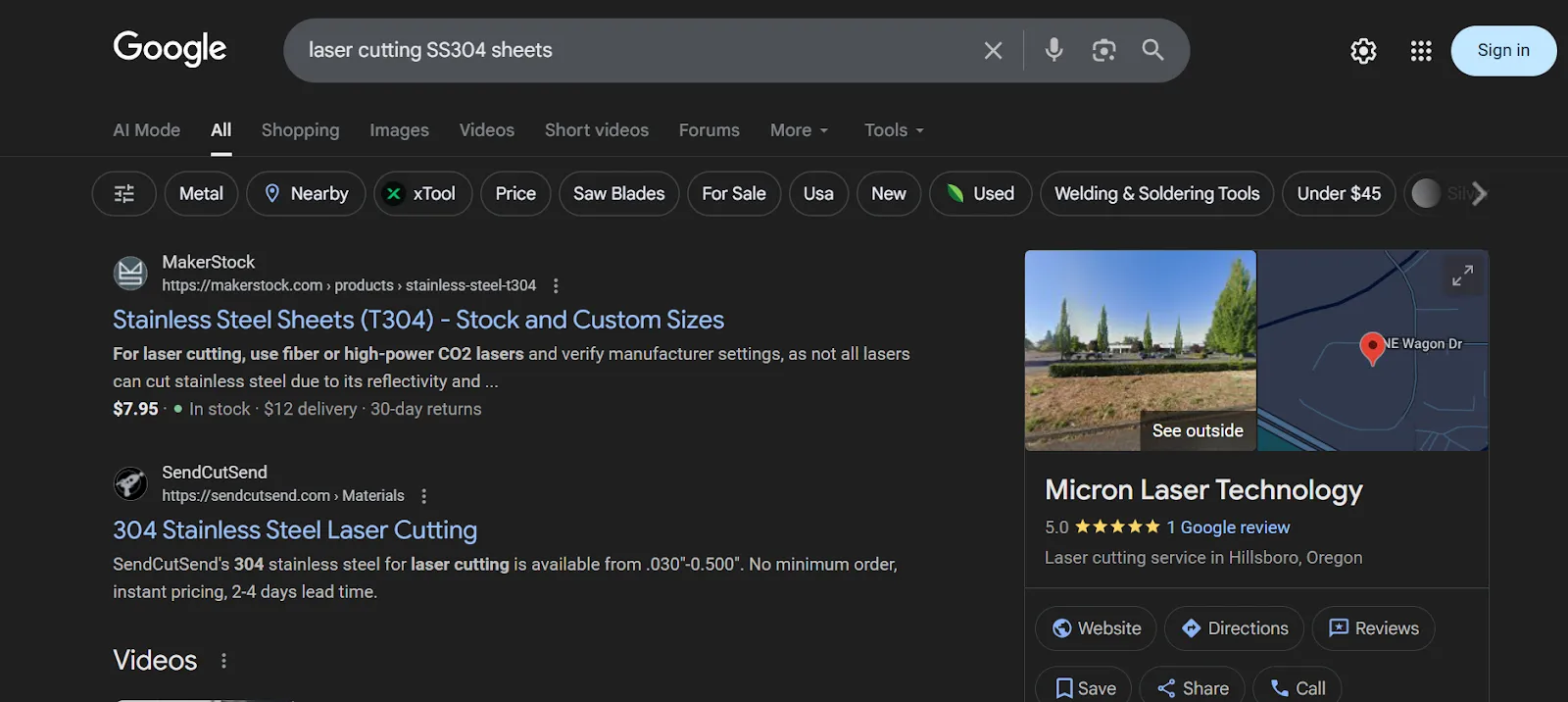
Manufacturers today are using both traditional marketing, such as trade shows, referrals, and cold calls, along with digital marketing channels, such as SEO, paid (sponsored) ads, social media, email marketing, content marketing, and affiliate marketing.
Buyers compare vendors on Google, watch process videos on YouTube, download brochures, and request quotes directly from websites. Therefore, SEO stands out because it captures buyers at the exact moment they search for something specific.
SEO will work for you if:
- You handle high-ticket orders
- You rely on repeat clients
- Buyers ask for materials, product specs, and tolerances
- You don’t have a marketing team or have a small one
- You need steady leads, not seasonal spikes
If you are now ready to do SEO the right way, these are the core concepts you need to understand before anything else.
The Four Core Types of SEO for Industries
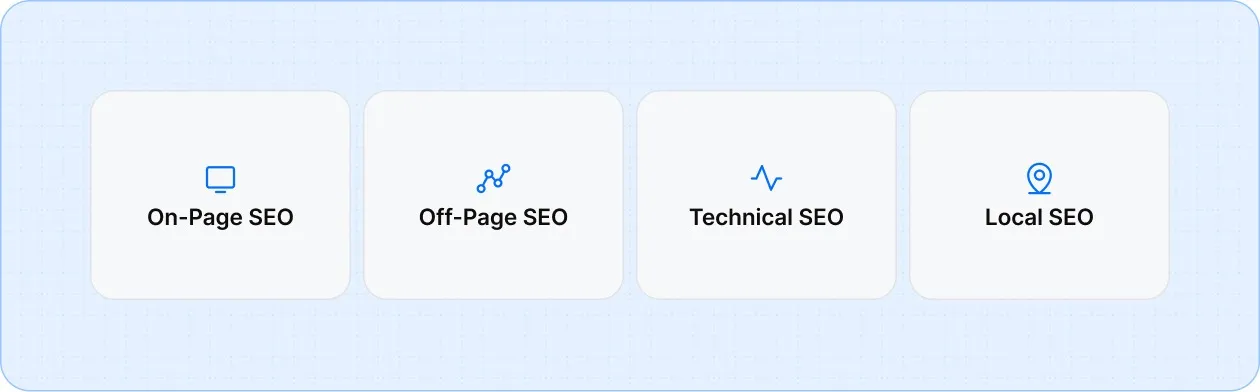
1. On-Page SEO
Optimize each page for buyers and Google.
On-page SEO means optimizing each page of your website for your buyers and search engines (like Google), so it shows up higher in search results (Search Engine Results Pages) and attracts the right buyers. This drives more business organically, meaning directly from Google (and other search engines like Yahoo, Bing, or Safari).
It includes using the right industrial keywords, writing strong titles and meta descriptions (brief info that appears below each title in the results page), structuring content with headings, improving internal linking (links leading to other relevant pages on your site), creating high-quality content, and ensuring the site loads quickly (under 3 seconds).
The research backs it up, too. The top 3 ranking factors of Google’s search results are high-quality content, page experience, and credible links.
2. Off-page SEO
Everything that happens BTS (behind the scenes) for your website.
Off-page SEO means building your company’s reputation and website authority through actions taken outside your site. This is mainly achieved by getting links from other trusted websites, earning mentions, and creating buzz on social media.
The process includes getting backlinks (votes of trust) from other authoritative sites, earning brand mentions, being discussed on social media, working with industry influencers, and building trust through reviews and directories.
3. Technical SEO
The tech behind your website.
Technical SEO is about optimizing the technical aspects of your website so search engines (Google) can easily crawl (read your page), index (store in its database), and understand your content to show it to your readers.
This means ensuring your site loads quickly, is mobile-friendly, uses HTTPS, has a clear site structure and URL format, uses structured data, and avoids issues such as duplicate content or broken links. This improves your site’s search engine visibility and user experience.
4. Local SEO
The “near me” searches
Local SEO focuses on optimizing your online presence to attract customers from specific geographic areas.
It includes managing your business listings (Google My Business), ensuring consistent name, address, and phone information across directories, collecting local reviews, using region-specific keywords, and optimizing for maps and location-based searches. This helps local buyers find and trust your business more easily.
Read more: SEO for Manufacturers: A Complete Guide
How to Improve SEO on an Industrial Website in 8 Simple Steps?
Most manufacturers fail at SEO because they do things the wrong way. Your SEO strategy works only if it follows a simple, yet impactful sequence:
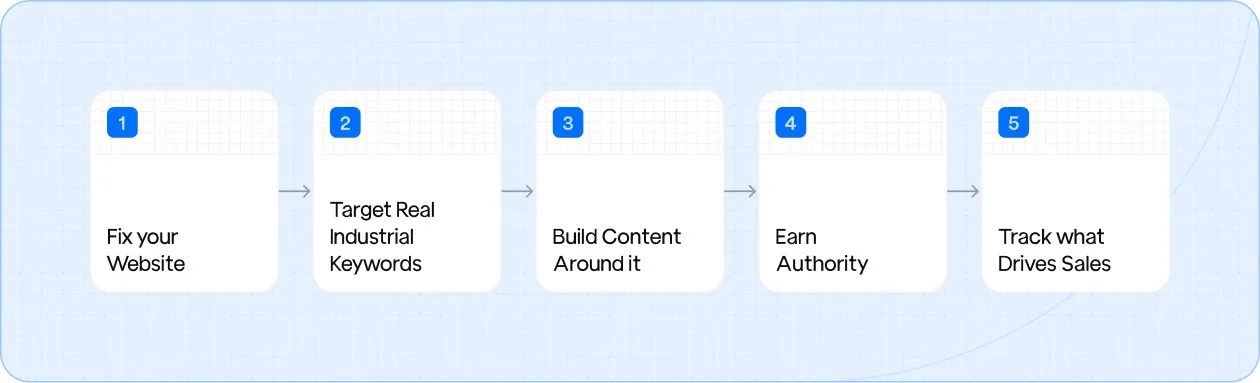
1. Fix the Basics on Your Website (Before Anything Else Works)
Most manufacturers jump into technicalities too early. But SEO only works if your core pages are clean, readable, and fast.
Think of this as checking a machine before hitting “start.”
What you need to fix first:
- Clean page structure: Your homepage, services, capabilities, industries, and contact pages should be easy to read, with clear headings and scannable content.
- Clear messaging: Explain what you do, who you serve, and what materials/processes/capabilities you offer in simple language. (If it sounds too “sales-y,” your buyer won’t trust it). It should add value to your buyers.
- Fast loading (under 3 seconds): Industrial buyers open sites between calls, meetings, or shop-floor tasks. Slow = they bounce.
- Mobile-friendly layout: Many RFQs start from phones (surprisingly common for plant managers & purchasers).
- Simple navigation: Your buyer should find your capabilities, materials, industries you serve, your certifications, and your contact/forms–all in under 2 clicks.
- Strong CTAs (not salesy): Clearly state the Call-to-Action. For example, “Request a Quote”, “Upload Drawing”, “Get a Quick Estimate”, etc.
- Website Design: A clean, organized design builds trust, looks less “spammy” and more professional. It also improves usability, mobile-friendliness, and SEO, turning visitors into qualified leads.
If the foundation is weak, Google won’t show you with your competitors, and even if it does, buyers won’t convert. This fixes both problems at once.
2. Find the Right Industrial Keywords (What Buyers Actually Search)
This is where most manufacturers go wrong: they target broad, marketing-style keywords like “award-winning services” or “premium quality deliverables” instead of technical, buyer-intent keywords that focus on your niche.
SEO for industries only works when you use the exact words your buyers use on Google.
Here’s how you can do it:
- Part numbers: Mention the exact product details on your website. For example, SS304 flange, 6061 aluminum block, A286 fasteners, etc.
- Materials: Mention stainless steel machining, titanium fabrication, brass turning services, etc. – specific details.
- Capabilities/process keywords: For example, 5-axis CNC machining, laser cutting services, TIG welding mild steel
- Tolerances & specs: Mention ±0.01 mm machining, tight tolerance grinding
- Industry-use keywords: Add words like “aerospace machining supplier”, “medical device components manufacturer”, etc, specific to your niche.
These bring buyers who are interested in purchases.
How to find the keywords?
- Google autocomplete: Simply type your process → see what phrases show up.
- “People Also Ask” questions: Pull simple FAQs for blog and capability pages.
- Competitor website analysis: Check what top-ranking industrial competitors use on their pages.
- Use tools (if possible): Ahrefs and SEMrush to get keyword ideas with search volumes (the number of people searching for that keyword).
If you choose the wrong keywords, you’ll get minimal traffic and no leads.
With the right ones, you’ll attract buyers who are already comparing suppliers.
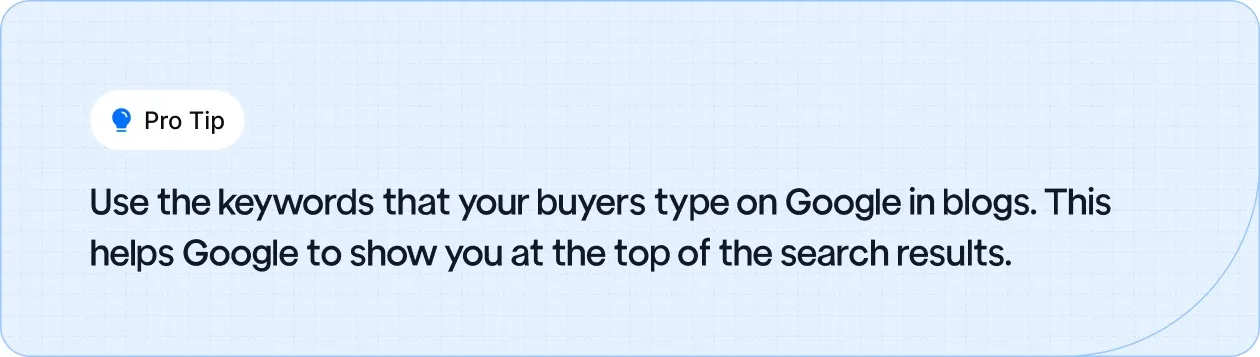
3. Create or Improve Your Service & Capability Pages (Your Biggest SEO Asset)
If keywords tell you what buyers search, capability pages are where those buyers land. These pages are the real lead generators in industrial SEO, not just blogs.
Here’s what every capability/service page must include:
- A clear, simple explanation of the process: Buyers don’t need stories. Just: what you do, materials you handle, and industries served.
- Exact capabilities: This is where industrial SEO shines. Include dimensions, equipment list, volume range (prototype → production), certifications, awards, case studies, etc.
- Real buyer-intent keywords: Add terms like “CNC machining for aluminum 6061”, “Laser cutting mild steel”, “Sheet metal bending services”. This is how Google matches you to technical buyers.
- Strong RFQ placement: CTA buttons should be the obvious next steps for your buyers, like “Request a Quote”, “Upload CAD File”, “Get Pricing”.
- Supporting images/tables: Machine list, material list, tolerance table — buyers love scannable info.
Simple page structure that works: Download this free customizable template
Most of the industrial traffic converts on these pages. Get them right, and SEO starts turning into real sales, not vanity traffic.
4. Build Technical, Industrial Blogs That Actually Rank (Not “Marketing Blogs”)
SEO for manufacturers or blogs isn’t meant for storytelling. Their job is simple: answer the exact technical questions buyers Google before choosing a supplier.
Here’s what industrial blogs should focus on:
- Process explanations: Explain your process of manufacturing. For example, how laser cutting works or what affects welding quality.
- Material comparisons: Write about SS304 vs SS316 for food equipment, Aluminum vs steel fabrication, etc.
- Tolerance & spec guides: Talk about how tight tolerances affect machining cost
- Industry-specific use cases: Mention exactly how things worked out in your industry. Write about the best materials for aerospace brackets and medical-grade machining requirements.
- “Problems buyers face” blogs: Speak about “why parts warp during machining”, or “how to reduce fabrication lead time”.
Simple blog template/dynamic outline that works for manufacturing blogs:
- H1 → exact topic
- Quick intro → 2–3 lines
- Clear sections (H2/H3)
- Specs, tables, examples
- Short FAQs
- CTA → Request a Quote / Upload Drawing
Remember, blogs don’t replace your capability pages; they push more qualified buyers to them.

5. Improve Your Technical SEO (The “Tech” That Makes Everything Smooth)
Think of technical SEO like machine maintenance — if the backend is slow, broken, or confusing, nothing else performs well. Google won’t rank you (show you on top), and buyers won’t stay.
Here are the technical fixes that matter most for manufacturers:
- Fast loading speed (under 3 seconds): Industrial buyers won’t wait. Slow pages = lost sales.
- Mobile-friendly pages: Buyers often search from industrial floors, warehouses, or even while traveling.
- Fix crawl errors & broken links: If Google can’t read (or crawl) your site properly, it won’t show it.
- Clear URL structure:
/services/cnc-machining/
/capabilities/laser-cutting/
Simple, clean, organized.
- Use HTTPS (secure site): Trust symbol for buyers + ranking benefit.
- Avoid duplicate content: Many manufacturers copy-paste product specs from catalogs → Google hates that.
These might seem overwhelming or too difficult in reality. However,
There are simple tools you can use (even if you're not “techy”):
- Google Search Console
- Google PageSpeed Insights
- Screaming Frog (even the free version helps)
You can have the best content in the world, but if your site loads slowly, breaks, or confuses Google, you’ll never rank. Technical SEO removes this friction so your pages can actually show up and convert.
6. Strengthen Your Off-Page SEO & Authority (Earn Google’s Trust Like a Real Supplier)
Off-page SEO is just a fancy way of saying: “Get other trusted websites to vouch for you.”
In the industrial world, it works exactly like vendor verification.
The more credible sources mention or link to you, the higher Google ranks you.
So, where do manufacturers earn high-quality backlinks:
- Industry directories: ThomasNet, MFG, GlobalSpec, Engineering360
(These count as legitimate trust signals.) - Supplier listings & certifications: ISO directories, vendor approval lists, material supplier sites.
- Industry associations & trade bodies: Welding associations, machining groups, metal fabrication forums.
- Guest posts on industrial blogs: Write simple technical explainers (not marketing fluff).
- Case studies & project showcases: When clients share your work on their websites → free backlink.
Simple off-page activities your team can realistically do:
- Get listed everywhere your competitors are listed: If they have 20 directory links and you have 2, they win.
- Ask satisfied clients for a short review: Google reviews, especially with photos, boost local SEO.
- Share technical content on LinkedIn: Engineers reposting your content = natural backlinks.
- Submit your work to niche communities: Machining, fabrication forums — these count as mentions.
Google sees backlinks as proof of reliability, just as buyers check certifications or previous work before placing an order.

7. Optimize your local SEO for “near me” buyers
Many manufacturers often ignore local intent searches like “industrial supplier near me”, losing high-intent buyers who prefer nearby vendors.
Local searches convert faster — nearby buyers usually need quick turnaround, easier logistics, or proven reliability.
Here’s what to fix:
- Optimize your Google Business Profile
- Add clear service areas, categories, and product lists
- Build local citations on credible industrial directories
- Create geo-specific pages (e.g., CNC machining in Dallas)
- Add location keywords naturally in core pages
You show up for local “near me” searches, bringing in fast-moving, high-intent RFQs from buyers who want a supplier they can reach quickly. Look out for industrial SEO companies that can help you with these.
Suggested Read: 15+ Manufacturing SEO Companies
8. Track what brings Sales (and Double Down)
Most manufacturers “do SEO” but never check which pages actually attract leads— so they keep guessing instead of scaling what already works.
When you track performance, you see which keywords, pages, and tweaks bring real buyers… not just traffic.
Here’s what to keep in check:
- Track form fills by page (which URLs generate form fills or calls) – Google Analytics can help.
- Keep track of how your most important pages, those that generate leads or sales, rank on Google for the keywords your buyers type.
- Check page speed, bounce rate, and time on page
- Compare organic leads vs. paid or referral
- Update winning pages monthly to keep rankings climbing
Once you start tracking what’s driving real RFQs, you’re no longer “doing SEO.”
You’re running a 24/7 revenue engine.
Which Metrics Matter the Most for Industrial SEO?
The most important SEO metrics for industrial manufacturers to focus on include:
- Organic Traffic: The number of visitors coming from search engines, without paying for it, shows how well your SEO is driving prospects to your site.
- Keyword Rankings: Tracking how your key products and industry terms rank in search results helps you gauge your visibility.
- Conversions: Measuring quote requests, contact form submissions, or direct sales from organic search reveals the SEO impact on lead generation.
- Click-Through Rate (CTR): The percentage of searchers who click your site after seeing it in results indicates the effectiveness of titles and descriptions.
- Backlinks: The number and quality of external sites linking to you show your site’s authority and trust in the industry.
- Page Load Speed and Mobile Usability: Technical factors that ensure a good user experience and prevent visitors from bouncing due to slow or hard-to-navigate sites.
- Local Search Visibility: For manufacturers targeting specific regions, tracking local listings, map presence, and localized search rankings matters.
Most manufacturers don’t track SEO because analytics dashboards look confusing. But you just need five simple metrics to know whether your industrial SEO is working.
Choose what applies to you:
- Your service pages get more visitors than last quarter
- Your RFQs now mention “found you on Google”
- Your core keywords moved up in search results
- Your buyers spend more time on technical pages
- You get repeat traffic from the same companies
If your answer is 2 or more, your SEO is moving in the right direction.
Simple SEO Tools Manufacturers Can Use (Free or Low-Cost)
- Google Analytics: Traffic, engagement, conversions.
- Google Search Console: Rankings, keywords, page issues.
- Bing Webmaster Tools: Free ranking + keyword insights for Bing (many industrial buyers still use it).
- Ubersuggest (Free Tier): Simple keyword research and content ideas without complex dashboards.
- WordPress SEO Plugins (Yoast/RankMath): Helps small teams fix basic SEO issues directly inside WordPress (titles, meta tags, readability, sitemap, etc.).
With these simple tools, you can manage the basics, but do you know when to call in an SEO professional?
When Should You Hire an Industrial SEO Expert?
Most manufacturing teams can handle the basics of SEO until they hit one of these walls. If any of these sound familiar, it’s time to bring in an industrial SEO agency expert:
- Your rankings just won’t move: You’ve added keywords, fixed your pages, maybe even blogged, but your important pages still sit on page 2 or 3. This usually means you need stronger technical SEO and authority building.
- Your traffic is stuck at the same number: If your organic traffic hasn’t grown in 3–6 months, something deeper is limiting visibility, usually site structure, thin content, or poor keyword targeting.
- DIY (Do-It-Yourself) SEO is taking too much of your time: If the person running SEO is also running operations, sales, or production, SEO becomes inconsistent. Industrial SEO requires steady execution, not once-a-month fixes.
- Your pages get views but don’t convert: If people visit your pages but you get no RFQs, that means the content doesn’t match industrial intent. An expert can fix page structure, offers, and buyer-focused content.
- You need SEO that can actually scale: When you start adding new product lines, service pages, or technical guides, manual SEO becomes too slow. Experts bring systems, processes, and content engines that you can’t quickly build in-house.
Once you know when you need an SEO industry expert, figure out who actually knows industrial SEO and who’s just selling generic marketing services.
SEO Questions Industrial Owners Should Ask
Before you hire anyone, ask yourself (and them) these questions:
1. Do they understand industrial processes?
If they can’t explain in your buyer’s language: tolerances, materials, machining terms, or manufacturing workflows, they cannot create pages your buyers trust.
2. Can they create content that engineers respect?
Buyers want spec-driven pages, not fluffy marketing text. Ask for samples of technical blogs, product pages, and process guides.
3. Do they provide keyword research tied to specs?
They should deliver keyword lists based on your industrial niche. This includes the specifics of your services, like product specs, capabilities, industries, and applications.
4. How fast can they produce pages?
Industrial companies can’t wait 3–6 months for content. Ask how long it takes them to research, write, review, and publish a technical page. There are AI-powered companies that can generate 6 months of industrial content in 4-5 weeks.
5. What KPIs will they track for you?
Look for real metrics tied to revenue:
- Qualified leads from organic (website) traffic
- Ranking movement for priority service pages
- Traffic to capability pages
- Engagement on technical blogs
If they talk only about “likes,” “impressions,” or “brand awareness,” that’s not industrial SEO. They should speak of “clicks”, “conversions”, “leads”, “sales”, “week-on-week growth”, and “revenue”.
How Industrial SEO Is Different From “Regular” SEO
When manufacturers hear terms like industrial marketing SEO, industrial search engine optimization, or SEO for industrial companies, it often sounds like the same SEO everyone else is doing—just with a different label.
It’s not.
Industrial SEO is fundamentally different from generic SEO because industrial buyers search differently. They don’t search by brand slogans or marketing language. They search by process, material, tolerance, industry, and specification.
That’s why SEO for manufacturing companies focuses less on volume and more on precision. For example:
- A consumer SEO strategy might target broad terms.
- Manufacturing SEO targets searches like “CNC machining SS316 tight tolerance” or “industrial laser cutting supplier Texas.”
This is what sets industrial search engine optimization apart from traditional SEO. In industrial markets, fewer searches often mean higher intent and higher deal value.
Because of this, SEO in the manufacturing industry works best when it’s tightly connected to:
- Capability pages (not just blogs)
- Technical accuracy (not marketing fluff)
- Real buyer language used by engineers and procurement teams
This is also why many manufacturers struggle when they work with generalist SEO vendors. An industrial SEO marketing agency must understand how industrial buyers search, or traffic will not translate into RFQs.
In short, SEO for industrial companies isn’t about ranking everywhere. It’s about ranking exactly where buying decisions start.
Remember,
SEO Is Not Complicated. It Just Needs the Right Approach
When you align your pages with how real buyers search, results stack month over month. Industrial niches actually have less competition, which means even a small factory can outrank bigger players with consistent, technical content.
Start simple, stay focused, and SEO becomes one of your most reliable lead engines.
Stop Waiting Months for Traffic and Leads.
See How You Can Achieve More Revenue in Weeks
Start With a Free Website Audit
Gushwork helps industrial manufacturers get more website traffic and sales by creating content that attracts the right buyers, fast and hassle-free. Talk to an expert today!

SEO
Aug 26, 2025
5 mins
Manufacturing Companies Skipping These SEO Phases Are Silently Killing Their Own Rankings
Monish Rao
A strong online presence is no longer optional for industrial manufacturing companies—it's essential. While traditional methods like trade shows and word-of-mouth are still valuable, a well-executed Search Engine Optimization (SEO) strategy can be the most powerful engine for new business, lead generation, and brand authority.
But SEO for industrial manufacturing isn't the same as SEO for e-commerce. It's about precision, technical expertise, and targeting a highly specific B2B audience. It’s about being found not by thousands of casual browsers, but by the handful of engineers, procurement managers, and C-suite executives who are actively searching for your solutions.
Here is a 5-phase SEO strategy designed specifically for the industrial manufacturing sector.
Phase 1: The Foundation - Know Your Buyer Better Than They Know Themselves
Before you write a single word or fix a single line of code, you need to understand who you're talking to. The B2B buyer journey is complex, and your strategy needs to address it at every turn.

Most manufacturers make the mistake of treating all prospects the same. They create generic content for 'engineers' or 'procurement managers' without realizing these roles actually come with very different needs, experience levels, and search behaviors.
Experience Levels Drive Search Behavior
Is your buyer a new engineer fresh out of college or a seasoned plant manager with 30 years of experience? They use completely different language, and your keyword research needs to capture this nuance.
The Seasoned Professional searches with industry shorthand:
- "API 650 tank fabrication specs"
- "ASME B31.3 piping requirements"
- "Hydraulic pump cavitation troubleshooting"
The New Engineer searches more descriptively:
- "What does API 650 mean for storage tanks"
- "How to read ASME piping codes"
- "Why is my hydraulic pump making noise"
Both are valuable prospects, but they need different content paths. The veteran wants quick access to technical specs and compliance documentation. The newcomer needs educational content that builds confidence in your expertise.
Survey your current customers about their search habits. Ask your sales team what questions prospects ask most often. This real-world intelligence beats any keyword tool.
Target the "Money" Keywords That Show Buying Intent
Forget vague terms like "machining services" or "industrial equipment." These broad keywords attract tire-kickers and waste your budget. Instead, go after long-tail keywords that show clear buying intent.
Examples of high-intent manufacturing keywords:
- "5-axis CNC machining services for aerospace aluminum"
- "Stainless steel 316L pump distributor Chicago"
- "ISO 9001 certified injection molding medical devices"
- "Custom HVAC ductwork fabrication Michigan"
These specific phrases might have lower search volume, but the people using them are in the decision phase. They know what they need, they know the specifications, and they're ready to request quotes.
The keyword research process that actually works:
- Start with your sales team's language. How do they describe your services to prospects? What technical terms come up in every conversation?
- Mine your customer support tickets. What problems are customers trying to solve? How do they describe these problems in their own words?
- Use the "People Also Ask" section in Google search results. Type in your core service terms and see what related questions appear. These are real questions from real buyers.
- Check search volume vs. commercial intent. A keyword with 100 monthly searches but high commercial intent beats a keyword with 1,000 searches but no buying signals.
Spy on the Competition
Competitive research is about finding gaps in the market that you can fill with better, more comprehensive content.
Use tools like Ahrefs or SEMrush, but don't just look at what keywords your competitors rank for. Look at the pages that are driving them traffic.
What problems are they solving? What questions are they answering?
Here's what to analyze:
Content gaps: Are they ranking for "stainless steel welding" but missing "stainless steel welding for pharmaceutical equipment"? That's your opportunity.
Weak content: Do their pages just list capabilities without explaining benefits? Can you create more detailed, helpful content that better serves the buyer?
Technical depth: Are they surface-level on complex topics? Manufacturing buyers appreciate technical accuracy and depth.
Local presence: Are they strong nationally but weak in your geographic area? Local SEO might be your competitive advantage.
Recent updates: When did they last update their content? Outdated information is an opportunity for you to provide current, accurate guidance.
Phase 2: Use Content to Educate, Empower, and Build Trust
This is where you stop being a "vendor" and start becoming a "partner." Your content should build trust by answering your audience's most pressing questions at every stage of their buying journey.

80–90% of buyers already have a shortlist of three vendors before they even begin their formal research. They're researching, comparing, and forming opinions about you long before your sales team gets involved. Your content is either building that relationship or losing it to a competitor who provides better answers.
Think of your content strategy like your production line. Each piece of content moves prospects closer to a purchase decision.
1. Be Their Trusted Advisor at the Problem and Awareness Stage
Your potential customer just discovered they have a problem. They don't know the solution yet, and they might not even understand the full scope of the issue. This is your chance to be their trusted resource, not their salesperson.
What they're thinking: "Something's wrong, but I'm not sure what or how serious it is."
What they're searching for:
- "Why is my CNC machine leaving chatter marks?"
- "How to reduce downtime on a production line"
- "Signs of bearing failure in industrial equipment"
- "What causes weld porosity in stainless steel"
Content that works at this stage:
The key: Don't pitch your products. Focus on being genuinely helpful. They want to understand the problem first.
2. Prove You're the Best Option in the Solution and Consideration Stage
They know they have a problem and are now researching solutions. This is where you prove you're the best choice for their specific situation.
What they're thinking: "I know what I need to fix. Now who can do it right, on time, and at a fair price?"
What they're searching for:
- "Best practices for precision CNC machining"
- "How to choose a custom metal fabricator"
- "Stainless steel vs aluminum for food processing equipment"
- "ROI calculator for automation equipment"
Content that works at this stage:
Interactive tools that provide personalized value:
- ROI calculators for automation investments
- Material selection wizards
- Lead time estimators based on project specifications
This content should subtly demonstrate why your approach is superior without being pushy. When you explain the intricacies of achieving tight tolerances, naturally mention your ISO 9001 certification and your coordinate measuring machines.
Close the Deal with Proof On the Decision Stage
They've narrowed down their choices and are looking for that final piece of information to make a purchase. This is where social proof and detailed specifications seal the deal.
What they're thinking: "I'm 90% sure about this supplier. I just need that final confirmation they can deliver."
What they're searching for:
- "[Your company name] reviews"
- "Case studies [your service] [their industry]"
- "Technical specifications [specific product]"
- "[Your company] vs [competitor] comparison"
Content that closes deals:
Your content is your reputation. Every piece should reflect the same quality and attention to detail that you put into your manufacturing. Because in the end, buyers choose suppliers they trust, and trust is built one helpful answer at a time.
Phase 3: Make Your Site Technically Strong
Even the best content won't get found if your website isn't technically strong. Consider technical SEO as the foundation of your factory, if it's unstable, everything built on top of it will eventually fail.

This is especially critical for distributors and manufacturers with large product catalogs. You might have thousands of products, multiple locations, and complex specifications. Get the technical foundation wrong, and Google will penalize your entire site.
After auditing more than 2,000+ websites over the years, we’ve found that most of them suffer from critical technical SEO issues that prevent them from ranking. Your competitors might have inferior products, but if their website has these technical issues, they’ll outrank you every time.
Fix Duplicate Content
This is a massive, often-overlooked problem for distributors and manufacturers. Many companies simply copy and paste product descriptions from manufacturers or suppliers, creating identical content across hundreds of pages. Google sees this as spam and will tank your rankings.
Why does this happen:
- Distributors use manufacturer-provided product descriptions
- Multiple product variations share identical content
- Regional offices copy content from the main site
- Product pages lack unique specifications or applications
How to fix duplicate content issues:
Rewrite product descriptions to be unique and useful:
Instead of: "The XYZ-500 hydraulic pump delivers reliable performance with advanced engineering."
Write: "The XYZ-500 hydraulic pump handles 500 GPM at 2,000 PSI, ideal for injection molding applications requiring consistent pressure. Compatible with mineral oil and synthetic fluids, with self-priming capability up to 8 feet. Popular in automotive parts manufacturing and aerospace assembly lines."
Add industry-specific applications:
- Which industries use this product most often?
- What problems does it solve better than alternatives?
- What maintenance considerations should buyers know?
- Which related products work well together?
Include local relevance for regional distributors:
- Local stock availability
- Regional delivery times
- Area-specific applications or regulations
- Local service and support options
Use canonical tags when you must have similar content (like product variations). This tells Google which version is the "master" page.
Optimize Your Site Speed: Every Second Costs You Money
A slow website kills conversions and rankings. According to Google, 53% of users abandon a site that takes longer than three seconds to load. For manufacturing sites with heavy technical content, images, and PDFs, speed is often a major problem.
Why manufacturing sites are typically slow:
- High-resolution product images and technical drawings
- PDF catalogs and specification sheets
- Complex product configurators
- Multiple plugins and tracking scripts
- Unoptimized hosting for business traffic
The speed optimization checklist:
Compress and optimize images:
- Use WebP format for product photos (can reduce file size by 30-50%)
- Implement lazy loading so images only load when viewed
- Create multiple image sizes for different devices
- Remove EXIF data from photos (unnecessary metadata)
Use a Content Delivery Network (CDN):
- Distributes your content across multiple servers worldwide
- Reduces load time for visitors in different geographic regions
- Critical for manufacturers serving global markets
- Popular options: Cloudflare, AWS CloudFront, or MaxCDN
Clean up your code:
- Minify CSS and JavaScript files
- Remove unused plugins and scripts
- Combine multiple CSS/JS files where possible
- Use browser caching for repeat visitors
Optimize your hosting:
- Choose hosting optimized for business websites, not cheap shared hosting
- Consider dedicated servers if you have high traffic or complex functionality
- Ensure adequate bandwidth for your largest traffic spikes
Database optimization:
- Regularly clean up your database of spam, unused revisions, and plugins
- Optimize database tables and queries
- Use caching plugins
Test your speed improvements:
- Use Google PageSpeed Insights for specific recommendations
- Test on both desktop and mobile
- Check load times from different geographic locations
- Monitor Core Web Vitals in Google Search Console
Use Schema Markup: Speak Google's Language
Schema markup is like a secret language that helps search engines understand exactly what your content represents. For manufacturing companies, this can result in "rich snippets", those enhanced search results with star ratings, prices, stock status, and product details that make your listing stand out.
Why schema matters for manufacturers:
- Product pages can show pricing, availability, and ratings in search results
- Local business schema helps with "near me" searches
- FAQ schema can capture featured snippet positions
- Review schema builds trust and increases click-through rates
How to implement schema markup:
For WordPress sites: Use plugins that add schema automatically based on your content.
For custom sites: Add structured data directly to your HTML or use Google Tag Manager.
Test your implementation: Use Google's Rich Results Test tool to ensure your markup is working correctly.
The payoff: Manufacturing companies using proper schema markup typically see 15-30% higher click-through rates from search results. When buyers see star ratings, stock status, and pricing directly in search results, they're more likely to visit your site over competitors.
Technical SEO Monitoring and Maintenance
Technical SEO isn't a one-time fix, it requires ongoing monitoring and maintenance, especially for sites with frequently changing inventory or product specifications.
Red flags that require immediate attention:
- Sudden drops in indexed pages
- Increases in crawl errors
- Page speed scores below 70
- Mobile usability warnings
- Duplicate meta descriptions or title tags
Technical SEO is the foundation everything else is built on. Your content might be brilliant and your keywords perfectly targeted, but if Google can't crawl, understand, and quickly serve your pages, none of it matters.
A technically sound website doesn't just rank better, it converts better. When prospects can quickly find product specifications, easily navigate your catalog, and trust that your site is professional and reliable, they're more likely to request quotes and become customers.
Phase 4: The Authority Builder - Prove You're an Industry Leader
Backlinks act like endorsements. When another reputable website links to yours, it tells Google (and your prospects) that you're a trusted source.

The goal is establishing your company as the authority that prospects turn to first when they need expertise, not just products.
Turn Business Relationships Into SEO Backlinks
Your existing business relationships are an untapped goldmine for high-quality backlinks. Suppliers, distributors, customers, and industry partners already know and trust you. The key is making it mutually beneficial.
Supplier collaboration opportunities
Joint case studies: Work with your key suppliers to document successful projects. When Acme Steel supplies material for your aerospace project that exceeds specs, both companies benefit from showcasing the partnership.
Technical content partnerships: Co-author technical guides that showcase both companies' expertise.
Supplier directories and partner pages: Most suppliers maintain partner directories. Ensure you're listed with a detailed profile and link back to specific capabilities.
Distributor and dealer relationships
Featured success stories: Many distributors highlight successful customer applications. Provide detailed project information that makes for compelling content.
Training and educational content: Offer to create technical training materials for their sales team. These often get featured on partner websites with attribution.
Regional market insights: Contribute local market knowledge for distributor newsletters and industry reports.
Start with trade association publications and local business journals before targeting national magazines. Smaller publications are more accessible and can help you refine your writing and build credibility.
Create Linkable Assets that People Can Share
Develop unique, valuable resources that other people will want to link to naturally. These assets should solve real problems for your target audience while showcasing your expertise.
Interactive tools that attract links
Engineering calculators:
- Pump sizing calculators for specific applications
- Material stress analysis tools
- ROI calculators for automation investments
- Thread pitch and tolerance calculators
Cost estimation tools:
- Machining time estimators based on material and complexity
- Shipping cost calculators for oversized equipment
- Energy consumption calculators for industrial equipment
Selection guides and configurators:
- Material selection wizards for specific applications
- Equipment sizing tools based on production requirements
- Compatibility checkers for components and systems
Phase 5: The Feedback Loop - Measure, Analyze, and Optimize
The most effective SEO strategies are living, breathing systems that constantly adapt based on real performance data. This phase separates manufacturers who get sustainable results from those who see initial success followed by stagnation.

Measure, test, and adjust. SEO requires a systematic approach to continuous improvement.
Here's what most manufacturing companies miss: they treat SEO like a marketing campaign with a start and finish. But SEO is an ongoing process that requires regular optimization based on actual user behavior and business results.
Tools for tracking manufacturing SEO
Google Analytics 4 (GA4): Set up conversion tracking for quote requests, catalog downloads, and contact form submissions. Create custom audiences for different buyer personas to see which content resonates with each group.
Google Search Console: Monitor your rankings for target keywords, track click-through rates, and identify pages with declining performance. Pay special attention to the "Performance" report showing which queries drive traffic.
CRM integration: Connect your website data to your sales pipeline. Tools like HubSpot, Salesforce, or even simple spreadsheet tracking can show which organic traffic sources lead to closed deals.
Key behavior metrics to analyze
Bounce rate analysis
- High bounce rate on product pages might indicate missing technical specifications or unclear pricing information
- High bounce rate on blog posts could mean the content doesn't match search intent or lacks clear next steps
- Low bounce rate with low conversions suggests content is engaging but missing compelling calls-to-action
Page depth and user flow
- Which pages do prospects visit before requesting quotes? This shows your most effective conversion pathway
- Where do visitors drop off in your sales funnel? These are optimization opportunities
- What content do returning visitors consume? This indicates your most valuable relationship-building content
Search behavior patterns
- What terms do visitors search for on your site? This reveals content gaps and optimization opportunities
- Which pages get the most internal searches? These might need better navigation or more prominent placement
- What do visitors search for right before leaving? This shows unmet needs
Time-based analysis
- How long do prospects spend researching before converting? This helps set expectations for your sales cycle
- Which content keeps visitors engaged longest? Double down on this format and topic
- When do prospects typically convert? Optimize your follow-up timing accordingly
Monthly optimization tasks
Content performance review
- Identify your top-performing content and analyze what makes it successful
- Update outdated information in popular articles (specifications, regulations, industry trends)
- Expand thin content on important pages that aren't ranking well
- Add new sections to successful articles based on user questions and search trends
Technical maintenance
- Fix broken links that could be hurting user experience and SEO
- Update outdated product information and discontinued item pages
- Optimize slow-loading pages that might be losing visitors
- Review and update meta descriptions for better click-through rates
Conversion optimization
- A/B test different calls-to-action on high-traffic pages
- Simplify forms that have low completion rates
- Add social proof to pages with high traffic but low conversions
- Improve mobile experience on pages with high mobile bounce rates
Quarterly strategic reviews
Keyword expansion
- Research new keyword opportunities based on successful content
- Analyze competitor content gaps you can fill
- Review seasonal trends in your industry searches
- Identify emerging topics in your field
Authority-building assessment
- Review backlink growth and identify new link opportunities
- Assess thought leadership impact through mentions and citations
- Plan speaking opportunities and industry participation
- Evaluate partnership opportunities for content collaboration
Your Next Step: Turning SEO Strategy into B2B Results
You don't need to implement everything at once. Start with Phase 1's foundation work, understanding your buyers and fixing critical technical issues, while planning your long-term content strategy. Quick wins, such as optimizing existing product pages and improving site speed, can deliver results within 30-60 days. Meanwhile, building authority through industry content and backlinks will compound over 6-12 months.
Your 90-day implementation roadmap:
- Days 1-30: Complete technical audit, fix critical site issues, and optimize your highest-traffic pages for conversions.
- Days 31-60: Launch your content engine with problem-solving blog posts and technical guides targeting your money keywords.
- Days 61-90: Begin authority building through industry partnerships and guest content while measuring and optimizing based on initial results.
Getting Expert Help for Industrial SEO Success
At Gushwork, we've built this exact 5-phase system for B2B manufacturers and distributors who were tired of marketing that didn't move the needle. Our team handles everything from technical foundation work and buyer-focused content creation to authority building and conversion optimization, so you can focus on what you do best: manufacturing.
Ready to turn your website into a lead generation engine?
Schedule a free SEO audit to see where your current strategy is leaving money on the table, and discover how a focused approach can fill your pipeline
Book a Consultation

Digital Marketing
Aug 26, 2025
5 mins
The Simple Marketing System That Helps B2B Manufacturers 2x Their Qualified Leads
Monish Rao
Ever notice how manufacturers can run a 200-step production line with perfect precision… but when it comes to marketing, everything suddenly turns into guesswork?
One email blast here. A trade show there. A brochure nobody updates. And somehow, this is expected to generate steady leads.
B2B manufacturer marketing works a lot better when you treat it the same way you treat your operations: build a system, keep it simple, measure what matters. Once you do that, leads stop feeling like happy accidents and start feeling like output.
This guide shows you the strategies that actually create that kind of output. Practical. Repeatable. Built for real manufacturing teams.

The Core Basics of B2B Manufacturing Marketing
Before you dive into specific tactics, it helps to understand what “marketing” actually means for a manufacturer. It’s about using a few simple methods to help the right buyers learn who you are, what you make, and why you’re a dependable choice.
At a basic level, B2B manufacturer marketing focuses on three things:
1. Showing your capabilities clearly: Buyers want straight answers. They look for materials, processes, certifications, capacity, and past work. Your marketing needs to present this information in a simple, organized way.
2. Making it easy for buyers to find you: Be it through search engines, industry platforms, or helpful content, your job is to show up in the places where buyers already look for suppliers.
3. Giving prospects a reason to reach out: A clear next step, a helpful resource, or a quick way to request a quote can turn interest into a real lead.
These are the basics every manufacturer can understand. Once you build around them, every strategy you add, from SEO to content to paid outreach, makes a bigger impact because it connects to how buyers actually evaluate suppliers.
Strategy 1: Balancing Digital and Physical Trade Show Marketing
Trade shows are evolving. While everyone debates whether digital marketing is replacing face-to-face events, smart manufacturers are using digital to make their trade show investments work harder.
You already know trade shows work. You've probably closed more business in three days at an expo than most companies generate online all year. But here's what's changed: the buyers walking your booth have already done their homework. They've researched exhibitors online, downloaded case studies, and narrowed their shortlist before stepping foot on the show floor.
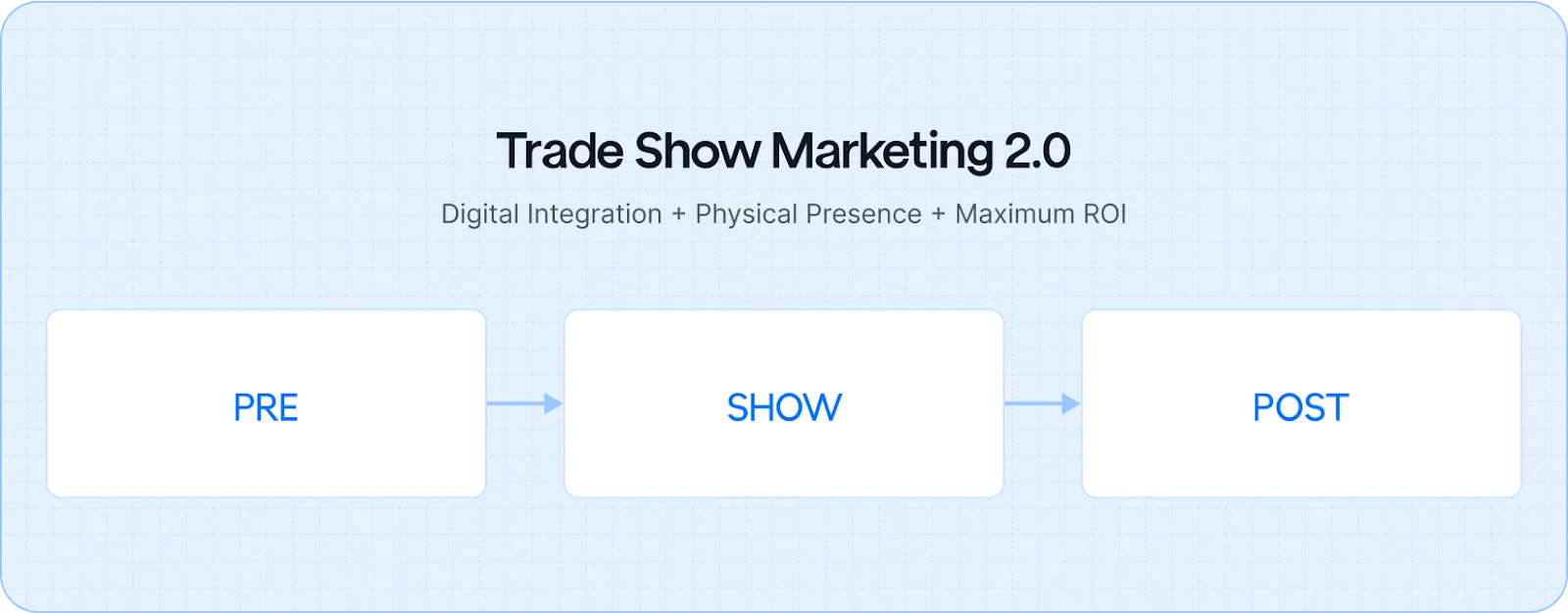
The manufacturers dominating trade shows are using digital marketing to control who visits and how ready they are to buy.
Pre-Show Digital Preparation
Getting on Buyer Research Lists Before the Show
According to the Center for Exhibition Industry Research (CEIR), 76% of trade show attendees research exhibitors online before attending. Your success at the show is decided before the first handshake.
Most manufacturers hope for foot traffic and pray the right buyers find them. Smart manufacturers ensure they're already on the research list of every qualified attendee.
Pre-show visibility strategies:
1. Optimize for "[Trade Show Name] exhibitors" searches: Create dedicated landing pages targeting:
- "IMTS 2024 exhibitors precision machining"
- "Pack Expo automation equipment exhibitors"
- "Fabtech metal fabrication companies"
These pages should highlight what you're showcasing, include booth numbers, and offer pre-show meetings.
2. LinkedIn targeting for show attendees: LinkedIn's event targeting lets you reach people who've indicated they're attending specific trade shows. Run campaigns 4-6 weeks before the show to build awareness.
3. Industry publication partnerships: Many trade publications create exhibitor spotlights or buyer's guides.
4. Email outreach to existing contacts: Your current clients and prospects who'll be attending should know you're exhibiting. Send personalized invitations 6 weeks, 2 weeks, and 1 week before the show.
During-Show Integration
QR Codes to Specific Case Studies
Your booth conversations are limited by time and noise. QR codes let prospects dive deeper into your capabilities without crowding your booth or requiring a sales pitch.

Strategic QR code placement:
Equipment displays: Link to technical specifications, performance videos, or customer testimonials about that specific machine.
Case study posters: Let prospects scan to read the full case study with detailed specifications and outcomes.
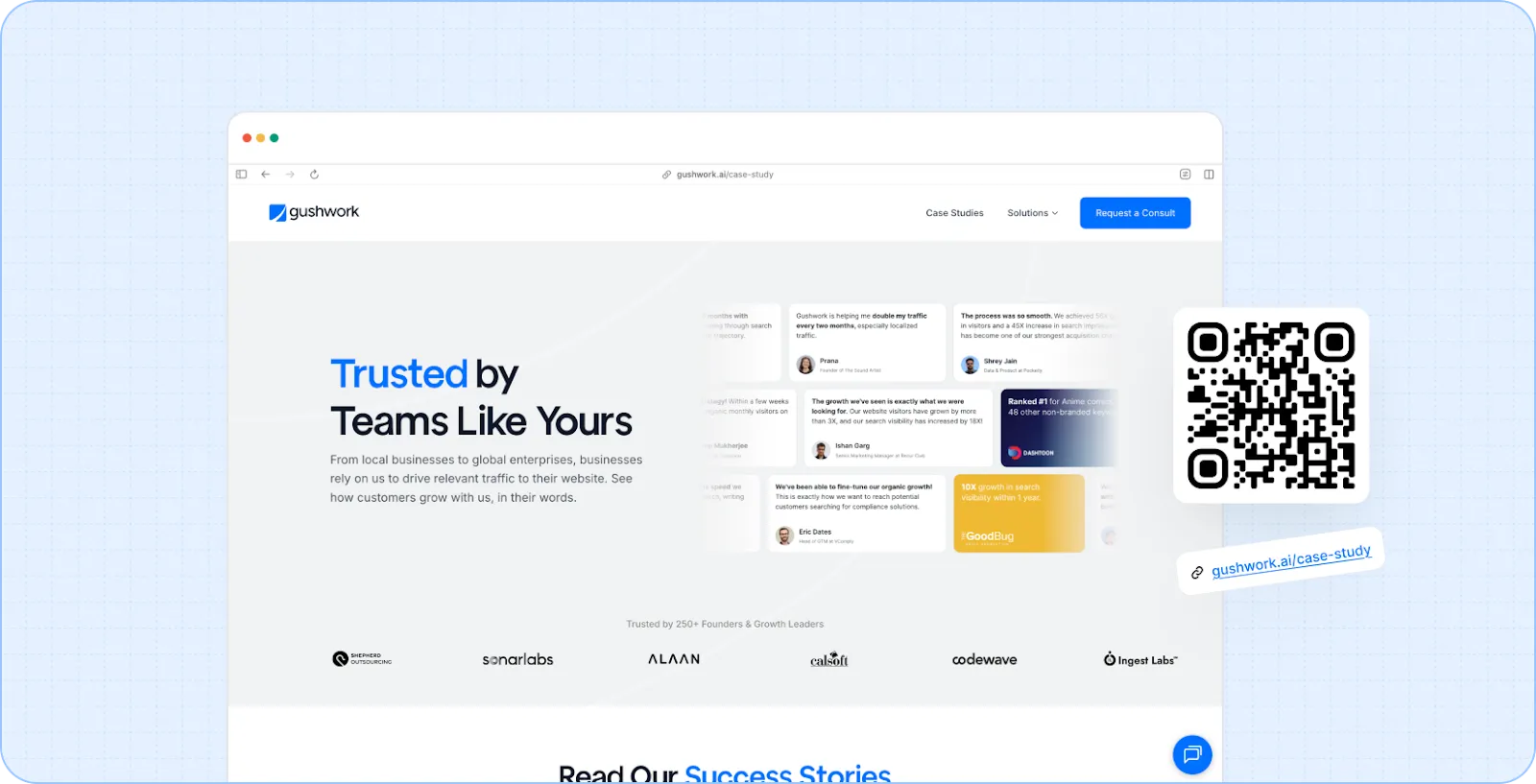
Industry application examples: Create QR codes for different industries you serve, linking to relevant project galleries.
Capability demonstrations: Link to longer videos showing the complete process or installation.
Example QR code strategy: A precision machining company had different QR codes for aerospace, medical device, and automotive applications. Each led to industry-specific case studies and capability overviews. They tracked 847 scans over three days and could see that 60% of interest was in medical devices, leading them to focus booth conversations accordingly.
Real-time qualification:
Instead of collecting business cards and hoping, use your booth conversations to qualify and segment prospects digitally:
Hot prospects: Schedule follow-up calls before they leave your booth. Send calendar invitations immediately.
Warm prospects: Add to nurture sequences with relevant case studies and technical content.
Cold prospects: Include in general company updates and industry news.
Post-Show Nurturing
The real work begins after the show ends. Most exhibitors send generic "thanks for visiting" emails and wonder why nothing happens. Effective post-show nurturing continues the conversation with relevant, valuable content.
48-hour follow-up sequence:
Day 1: Personal thank you email referencing specific booth conversation. Include promised information and clear next steps.
Day 2: Share relevant case study or technical resource based on their expressed interest.
Week 1: Provide additional technical information or invite to facility tour/virtual demonstration.
Segmented nurture campaigns:
For immediate opportunities (projects within 90 days):
- Weekly check-ins with project updates
- Relevant case studies and references
- Facility tour invitations
- Technical consultations
For future opportunities (6+ month timeline):
- Monthly technical newsletters
- Industry trend reports
- New capability announcements
- Quarterly "staying in touch" calls
For general interest (no specific project):
- Quarterly company updates
- Annual capability overview
- Invitation to next year's trade show meetings
Manufacturers who master this digital integration with trade shows dominate them. They're attracting pre-qualified prospects who are ready to discuss specific projects.
Trade Show Marketing 2.0 isn't about choosing between digital and face-to-face, it's about using digital to make every face-to-face interaction count.
Strategy 2: Utilise Website as a Tool to Capture Leads
Your website is where all other marketing strategies converge. SEO drives traffic to it, Google Ads land prospects on it, trade show leads research you through it, and email campaigns direct recipients to it.
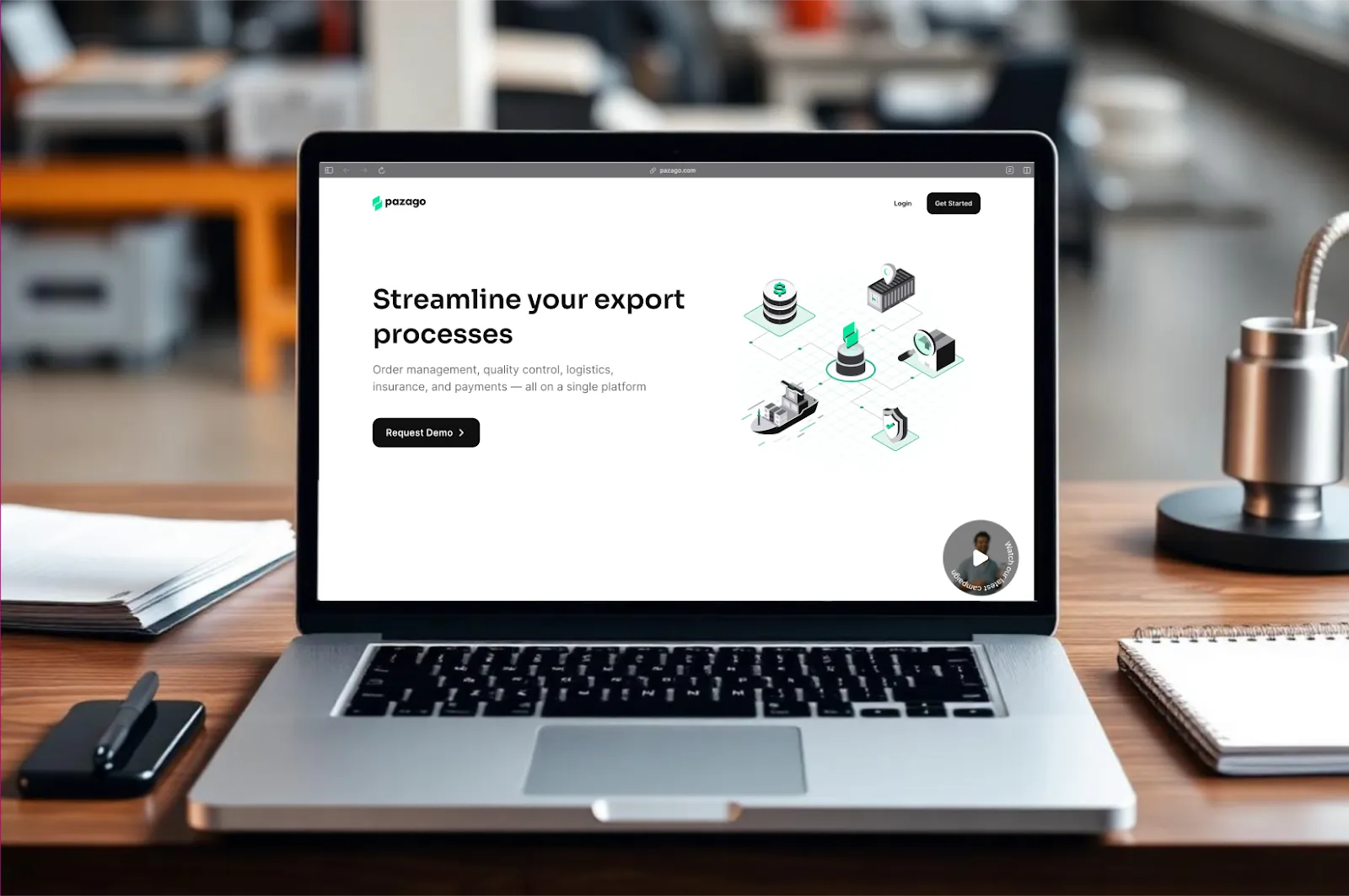
Before diving into optimization, understand that your website serves a different purpose than consumer brands or SaaS companies:
Consumer websites focus on: Impulse purchases, emotional appeals, quick decisions
Manufacturing websites focus on: Technical validation, capability assessment, trust building
Your buyers are asking:
- "Can they handle our specifications?"
- "Do they have the right certifications?"
- "Have they solved problems like ours before?"
- "Are they reliable enough to trust with our production?"
Your homepage has 8 seconds to communicate three things:
- What you make (specific products/services, not "quality solutions")
- Who you serve (industries, company sizes, application types)
- What makes you different (unique capabilities, not generic quality claims)
Capability Pages
Each service or capability needs its own dedicated page that functions like a technical data sheet combined with a case study portfolio.
Essential elements for capability pages:
- Technical specifications: Equipment capabilities, tolerance levels, material options
- Quality certifications: Industry-specific standards and compliance
- Process overview: Step-by-step workflow with quality checkpoints
- Industry applications: Specific examples of parts/products you've manufactured
- Case study gallery: Visual examples with project details and outcomes
- Request quote form: Specific to that capability with relevant fields
Site Speed and Core Web Vitals
Industrial buyers are researching during lunch breaks, between meetings, and on mobile devices. Slow-loading websites lose qualified prospects before they see your capabilities.
Common manufacturing website performance issues:
- Page load speed: Website takes more than 3 seconds to load
- Oversized images: High-resolution facility photos and product images
- Video autoplay: Capability videos that slow initial page load
- Multiple tracking scripts: Analytics, chat widgets, lead capture tools
- Unoptimized PDF downloads: Large capability brochures and spec sheets
Mobile Optimization for B2B Buyers
B2B research also happens on mobile devices, but many manufacturing websites are designed only for desktop viewing. Engineers research suppliers during facility walks, procurement teams review options during commutes, and decision-makers browse capabilities between meetings.
Mobile optimization priorities:
- Touch-friendly navigation: Easy access to key pages and contact information
- Readable content: Proper font sizes and spacing for technical specifications
- Simplified forms: Mobile-friendly lead forms with smart field validation
- Click-to-call functionality: Direct phone access for urgent inquiries
- Compressed images: Fast-loading product and facility photos
Get Found by the Right Buyers
We’ll optimize your website and SEO so you show up when decision-makers search for suppliers.
Get Found First
Strategy 3: Show Up When Buyers Are Looking
SEO is about being found when buyers search “custom conveyor systems food processing” or “precision CNC machining aerospace parts.” In a survey of U.S. manufacturers, SEO was the top-performing channel, because it connects you with buyers already researching solutions.

Why manufacturing SEO is different
Your buyers are searching for specific solutions to specific problems:
High-Intent Manufacturing Keywords:
- "ASME-certified pressure vessel fabrication [location]"
- "Precision CNC machining aerospace parts"
- "Custom conveyor systems food processing"
- "Automated bottling line manufacturers California"
- "ISO 9001 machine shop near me"
Low-Intent Generic Keywords:
- "Industrial equipment"
- "Manufacturing solutions"
- "Quality products"
- "Custom fabrication"
The difference is buying intent. Someone searching "automated bottling line manufacturers California" is likely planning a capital purchase. Someone searching "industrial equipment" could be a student doing homework.
How to find high-intent keywords:
- Start with your sales conversations. What specific problems do prospects describe? What exact phrases do they use?
- Analyze your existing RFQs. Look at the language buyers use in their requests. They're literally telling you what they searched for.
- Use tools like Google's "People also ask" and "Related searches" to find variations of your core terms.
- Think like an engineer, not a marketer. Technical buyers search for specifications, not marketing speak.
Build a Simple Lead System
We’ll help you set up the core marketing steps that bring in steady, qualified buyers.
Grow My Business
Local SEO
Manufacturing is still a relationship business. Buyers want suppliers they can visit, inspect, and build trust with. That's why local SEO drives some of the highest-converting traffic for manufacturers.
Local SEO wins for a Texas-based custom fabricator: After optimizing for "custom stainless steel fabrication Dallas," they jumped from page 3 to position 2 in six months. Result: 40% increase in qualified RFQs from local searches.
Answer Engine Optimization (AEO)
Search is evolving beyond traditional rankings. Google is increasingly pulling direct answers into featured snippets, and AI search tools like ChatGPT and Claude are answering questions without requiring clicks.
This shift toward Answer Engine Optimization (AEO) means your content needs to clearly and completely answer specific buyer questions, not just rank for keywords.
Traditional SEO approach: Target "CNC machining services" with keyword-stuffed content
AEO approach: Answer "What tolerance levels can CNC machining achieve for aerospace parts?" with specific, structured information
How to optimize for Answer Engines:
- Structure content as Q&A. Start with the exact question buyers ask, then provide a direct, complete answer.
- Use clear hierarchies. Headers, bullet points, and numbered lists make content easier for AI to parse and feature.
- Include specific data. Instead of "high precision," say "±0.0001" tolerance." Instead of "fast turnaround," say "48-hour prototyping."
- Cover the complete buyer journey. Answer not just "what" but "how," "why," and "what's next."
Strategy 4: Strategic Google Ads
Google Ads ranked 3rd in manufacturing survey (14% called it most successful), but here's what that statistic misses: the manufacturers using Google Ads correctly aren't treating them as a permanent lead generation engine. They're using them as a testing ground to learn what works, then building sustainable marketing around those insights.
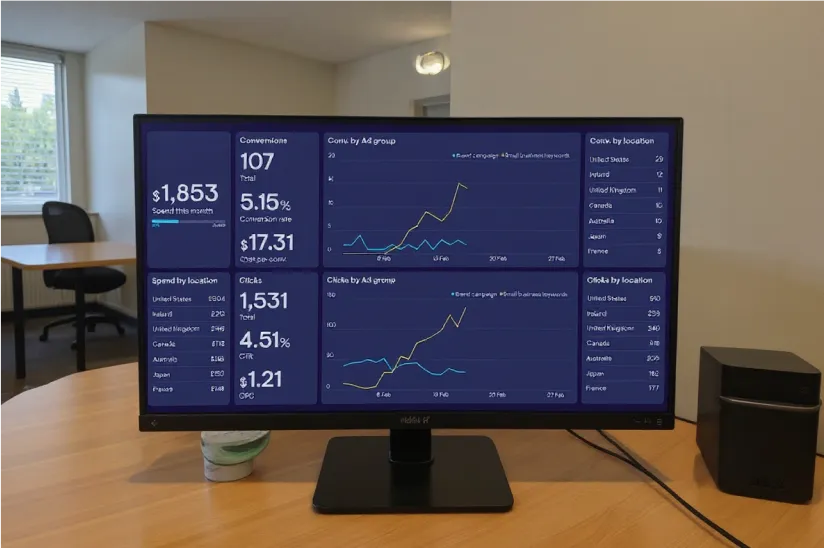
The real value is learning which keywords convert, what messaging resonates, and which value propositions drive action. Then you apply those insights to improve your SEO, website content, and sales process.
High-Intent Keywords That Convert
The difference between profitable Google Ads and budget-burning campaigns comes down to keyword intent. Most manufacturers target broad terms because they seem to offer more volume. But volume without intent is just expensive traffic.
Example: Why High-Intent Keywords Outperform Broad Keywords
Cost per Lead Comparison (Monthly Budget: $5,000)
The "high-intent" keywords delivered nearly 3x more leads at less than half the cost per lead.
How to identify high-intent manufacturing keywords:
- Include location modifiers. "CNC machining California" shows more intent than "CNC machining."
- Target solution-specific terms. "Automated packaging line" is better than "automation equipment."
- Think procurement language. Use terms that appear in RFPs and technical specifications.
Turn Your Capabilities Into Leads
We’ll help you create content, case studies, and pages that make buyers confident enough to reach out.
Build My Content
Competitor Targeting Strategies
Your competitors' brand names can be some of your highest-converting keywords, if you do it right. When someone searches for "Competitor Name + pricing" or "Competitor Name + alternatives," they're actively shopping around.
Effective competitor targeting approaches:
Direct competitor comparisons:
- "[Competitor] alternative"
- "[Competitor] vs [your company]"
- "[Competitor] pricing"
- "[Competitor] reviews"
Competitor targeting best practices:
- Focus on differentiation, not price. Competing only on price commoditizes your service.
- Highlight unique capabilities. If they're a large shop, emphasize your flexibility. If they're small, emphasize your capacity.
- Use landing pages specific to the competitor. Address why buyers might be looking for alternatives.
- Best practice for competitor landing page campaigns: Don't bash the competition. Instead, highlight what makes you different
- Be respectful but confident. Professional confidence wins over defensive comparisons.
Landing Pages That Convert
Your Google Ads might get clicked, but your landing pages determine if those clicks become RFQs.
Fast-Loading, Mobile-Optimized RFQ Forms
Manufacturing buyers research on mobile devices more than you think. Your plant manager might be walking the factory floor when they remember to research that new machining supplier. Your procurement team might be comparing options during their commute.
Essential landing page performance requirements:
- Load time under 3 seconds. Every second of delay costs you 7% of conversions.
- Mobile-responsive design. 40% of B2B research happens on mobile devices.
- Single focus. One offer, one call-to-action, no navigation distractions.
- Above-the-fold RFQ form. Don't make buyers scroll to take action.
Trust signals to strengthen lead conversion:
- Industry certifications (ISO 9001, AS9100, etc.)
- Client logos (when permitted)
- Years in business
- Facility size or equipment list
Provide next steps after they fill out the form like "You'll receive a response within 4 hours during business days. For urgent requests, call [phone number] directly."
Specific Value Props for Different Buyer Types
Manufacturing purchases involve multiple stakeholders with different priorities. Your landing pages need to speak to all of them without becoming unfocused.
For Engineers (Technical Decision Makers):
- Equipment capabilities and specifications
- Tolerance levels and quality standards
- Material certifications and compliance
- Technical case studies and process details
"±0.0001" tolerances on aerospace components. AS9100 certified with full material traceability."
For Procurement (Financial Decision Makers):
- Competitive pricing and value
- Delivery reliability and lead times
- Supply chain stability
- Cost reduction examples
"Reduce part costs 15-30% through design optimization. 99.2% on-time delivery rate over 15 years."
For Operations (Implementation Decision Makers):
- Installation and integration support
- Training and documentation
- Ongoing service and support
- Minimal production disruption
"Complete turnkey installation with operator training. 24/7 service support to minimize downtime."
Using Ads Data to Inform Long-Term Strategy
The real power of Google Ads is the insights that improve everything else you do.
What to track beyond conversions:
- Which keywords generate the highest-quality leads (use this for SEO targeting)
- What ad copy gets the highest click-through rates (apply to website headlines)
- Which value propositions drive the most conversions (emphasize in sales conversations)
- What questions prospects ask most often (create content to answer them)
Monthly ads review checklist:
- Which keywords drove qualified leads vs. junk inquiries?
- What ad copy variations performed best?
- Which landing pages had the highest conversion rates?
- What time of day/week generated the best leads?
- Which geographic areas provided the most opportunities?
When you treat Google Ads as a testing ground for insights, you build a smarter, more profitable marketing engine.
Book a Strategy Call to see how we can help you get more qualified leads using Google Ads.
Strategy 5: Email Marketing
In 2022, email marketing ranked as the best-performing marketing tactic for manufacturers and it delivered stronger ROI than any other channel. Yet despite its top results, many teams still underperform because they run campaigns like consumer brands: generic, promotional, and disconnected from how engineers and procurement teams actually make decisions.

Industrial buyers don’t want glossy product templates. They want technical insights that help them solve problems, justify investments, and run operations smoothly. The payoff comes from steady education from your emails that keeps them top of mind until they are ready to buy.
Segmentation by Industry and Role
Content for Engineers vs. Procurement vs. Operations
Manufacturing purchases involve multiple stakeholders, each with different priorities and information needs. Sending the same email to every contact is like using the same cutting tool for aluminum and titanium: misaligned approach, poor results.
As mentioned in the Google Ads Strategy:
- Engineers: Need specs, compliance, and performance data. Prefer detailed updates monthly or quarterly.
- Procurement: Focus on cost, delivery, and ROI. Prefer concise business summaries quarterly or annually.
- Operations: Care about smooth implementation and support. Prefer practical, process-focused insights bi-monthly.
The same information needs to be presented differently depending on who's reading it. Engineers want the full technical story. Procurement wants the business impact. Operations wants the practical implications.
Educational Nurture Sequences
Problem Identification → Solution Education → Vendor Evaluation
Manufacturing sales cycles are long because the buying process is complex. Your email sequences need to support buyers through each phase of their journey, not just push for immediate action.
Phase 1: Problem Identification (Months 1-3) Buyer thinking: "We have issues, but not sure of the best approach to solve them"
Email sequence goals:
- Help identify symptoms of problems they might not recognize
- Educate about root causes and implications
- Position problems as solvable with proper approach
Phase 2: Solution Education (Months 4-8) Buyer thinking: "We know we need to address this, but exploring different approaches"
Email sequence goals:
- Compare different solution approaches objectively
- Explain decision criteria and evaluation frameworks
- Share educational content that builds trust and expertise
Phase 3: Vendor Evaluation (Months 9-12) Buyer thinking: "We're ready to evaluate suppliers and get proposals"
Email sequence goals:
- Demonstrate specific relevant experience
- Provide evaluation criteria and vendor comparison frameworks
- Make it easy to initiate formal discussions
Automated Follow-Up for Long Sales Cycles
Manufacturing sales cycles often span 12-18 months. Manual follow-up is inconsistent and resource-intensive. Automated sequences ensure consistent touchpoints without overwhelming your sales team.
Stop trying to get immediate responses. Start building relationships with information that makes buyers better at their jobs. When they're ready to make purchasing decisions, you'll be the trusted advisor they call first.
Email marketing does wonders when you are being useful, credible, and top-of-mind when buying decisions happen on industrial timelines. The manufacturers who master this approach build lasting relationships with the technical decision-makers who influence purchasing for years to come.
Thousands of Clicks &Views, Yet Zero Leads: What’s Going Wrong?
You've probably been told that "all B2B marketing is the same." Digital strategies that work for software companies will work for you. Here's why that advice keeps burning your budget without filling your pipeline.
1. The Fast-Cycle Fallacy
Most B2B marketing strategies assume buyers make decisions in 30-90 days with a single decision-maker. SaaS companies love to talk about their "frictionless buyer journey" where someone discovers a problem on Monday and signs up for a trial by Friday.
But when you're selling a $500K automated packaging line or custom-engineered conveyor systems. Your buyers aren't impulse purchasing.
They're planning capital expenditures 12-18 months in advance. The "quick decision" your marketing consultant keeps optimizing for doesn't exist in manufacturing.
A typical manufacturing purchase involves 6-8 stakeholders:
- Engineering wants technical specifications and performance data
- Procurement needs competitive pricing and delivery timelines
- Operations demands minimal downtime during installation
- Finance requires ROI justification and budget approval
- Safety needs compliance documentation
- Maintenance wants service support and spare parts availability
Yet most marketing advice assumes you're selling to one person with one pain point. That's why your "targeted" campaigns feel scattered and your "personalized" content feels generic.
2. Not Giving Strategies Time to Work
The mistake: Quitting too soon because results aren’t immediate.
How it shows up: A company abandons SEO after three months or Ads after one quarter, constantly restarting instead of optimizing.
How to avoid it:
- Set realistic timelines (SEO = 6–12 months, Ads = 2–6 months, Email = 6–12 months)
- Track leading indicators (rankings, engagement, list growth)
- Communicate timelines upfront so leadership doesn’t pull the plug prematurely
3. The "Digital-First" Disconnect
Here's what most marketing experts don't understand about manufacturing: relationships still matter more than algorithms.
Your buyers might research you online, but they're not buying based on your blog posts. They're buying because they trust you to deliver when their production line goes down at 2 AM.
Generic digital marketing advice treats every interaction like a consumer purchase. "Optimize your funnel." "A/B test your CTAs." "Nurture with email sequences."
But manufacturing buyers want to know the problems you've solved for companies like theirs. They want to touch your equipment, meet your engineers, and understand your service capabilities.
4. Poor Website Planning
Walk through most manufacturing websites and you'll see the same conversion-killing mistake: "Contact Us for Custom Solutions."
That's not a call-to-action. That's a barrier.
Your buyers are doing research. They're comparing options. They're building technical specifications. And your website is asking them contact details before you've proven you're worth their time.
What buyers actually search for:
- "Automated bottling line manufacturers California"
- "Custom conveyor systems food processing"
- "ASME-certified pressure vessel fabrication"
- "Precision CNC machining aerospace parts"
What most manufacturers optimize for:
- "Industrial equipment"
- "Manufacturing solutions"
- "Custom fabrication"
- "Quality products"
The mismatch is killing your visibility. When buyers are ready to research, they can't find you. When they do find you, your content doesn't answer their specific questions.
Your website needs to work like a technical resource center. Buyers should be able to assess your capabilities, understand your process, and evaluate fit before they ever contact you.
5. Trying to Be Everywhere at Once
The mistake: Spreading efforts across every channel instead of focusing.
How it shows up: A machining shop launches SEO, Google Ads, email, LinkedIn, and trade shows simultaneously. Three months later, everything is mediocre and the team is exhausted.
How to avoid it:
- Focus on 2–3 proven channels (SEO, Google Ads, trade shows for most)
- Achieve competence before expanding
- Allocate resources realistically
- Add channels sequentially, not simultaneously
6. Confusing Sales Activity with Marketing Strategy
In most manufacturing companies, "marketing" means trade show booths, product brochures, and lead lists for the sales team. That's not wrong, it's just incomplete.
Sales handles:
- Direct engagement with qualified prospects
- Relationship management and deal progression
- Technical discussions and custom proposals
- Contract negotiation and closing
Marketing should handle:
- Building visibility when buyers are researching
- Educating prospects about problems and solutions
- Establishing credibility before sales conversations begin
- Creating content that supports the entire buying process
If marketing is only a support role, it never drives demand. That means the sales team begins every conversation with no awareness, trust, or momentum.
7. Using Google Ads Wrong
Google Ads can work for manufacturers. We've seen precision machining shops generate qualified leads at $150 per lead. But most manufacturers use them as a permanent solution instead of a testing ground.
The rental approach (what most do):
- Run ads indefinitely to maintain lead flow
- Stop paying = leads stop immediately
- No lasting value beyond active campaigns
The building approach (what works):
- Use ads to test messaging and identify winning keywords
- Apply insights to improve SEO and website content
- Build organic visibility that works while you sleep
- Use ads for testing new markets or promoting specific campaigns
Google Ads should tell you what buyers respond to, which keywords convert, and what messaging resonates. Then you use those insights to build something that lasts.
The manufacturers winning in digital marketing are building systems that attract qualified buyers even when they're not actively advertising.
Wrapping Up
Too many manufacturers treat marketing like a repair job: throw money at it, hope for quick fixes, and abandon it when results aren’t instant. But manufacturing marketing is a system that compounds over time. The manufacturers who win stop treating marketing as an expense and start building it as an asset.

Your Next Steps
Foundation Audit Checklist
- Brand positioning: Can you state who you serve and why in one sentence?
- Website conversion: Does your site answer buyer questions and make it easy to request quotes?
- Lead tracking: Do you know where your best customers come from?
90-Day Quick Wins
- Month 1: Fix website conversion and set up lead tracking
- Month 2: Launch Google Ads tests on high-intent keywords
- Month 3: Begin SEO for manufacturing-specific keywords
Long-Term Strategy
- Months 4–6: Build a content engine with technical depth
- Months 7–12: Scale proven channels, integrate with sales
- Year 2+: Optimize and expand to new manufacturing markets
The Cost of Inaction
Every month you delay, competitors gain ground. Buyers are searching online, finding alternatives, and building relationships that exclude you.
A $30K trade show that delivers three qualified leads looks expensive. A $2K monthly marketing investment that generates fifteen looks obvious, but only if you build systems instead of chasing quick fixes.
What Success Looks Like
Eighteen months from now, you could be:
- Generating 20-40 qualified leads monthly from buyers actively searching for your capabilities
- Shortening sales cycles because prospects arrive pre-educated about your expertise
- Attracting larger projects because your content establishes technical credibility
- Reducing customer acquisition costs while improving lead quality
- Building a waiting list for your capabilities instead of chasing prospects
Or you could still be hoping your next trade show generates enough leads to hit quarterly targets.
The blueprint is proven. The strategies work. The question is whether you're ready to execute.
Ready to Bring In Better Leads?
Get a clear plan that fits how manufacturers buy and helps your sales team close faster.
Start My Lead Plan

Digital Marketing
Aug 26, 2025
5 mins
If I Had to Restart Manufacturing Marketing Today, I’d Begin With These 15 Content Strategies
Batul Beawarwala
Manufacturers rarely struggle to explain what they make. They struggle to explain why their business should be trusted.
Buyers don’t just skim product pages anymore. They look for signals.
- How do you solve problems?
- What does your process look like?
- Have you handled challenges like theirs before?
Every piece of content they find shapes whether you feel like a safe, capable choice or just another option on a long list.
Content marketing earns its place by showing competence, building confidence, and starting relationships long before the first enquiry lands in your inbox.
This blog breaks down how manufacturers can use content marketing to build real trust and turn that trust into consistent, qualified leads.
Why Your Manufacturing Business Needs Content Marketing?
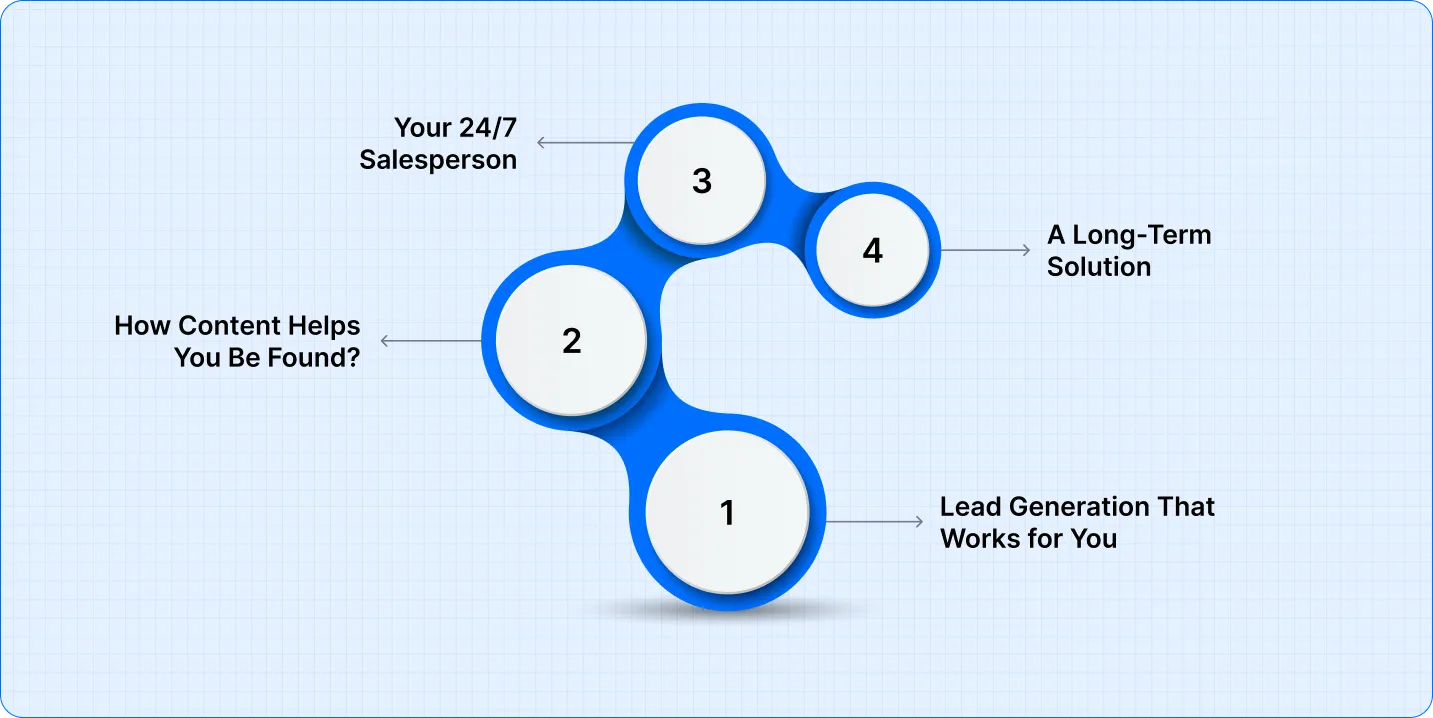
Content marketing for manufacturers is the process of turning your knowledge, experience, and day-to-day operations into material that buyers can judge, learn from, and rely on. Every guide, case study, process breakdown, or technical explainer becomes a quiet proof point.
It’s about creating decision-support material that moves buyers forward without forcing a sales conversation too early. Instead of repeating what you do, strong content handles practical jobs such as:
- Educating Buyers Before They Contact Sales
Content shortens the learning curve around your processes, materials, compliance standards, and capabilities.
- Filtering The Right Leads From The Wrong Ones
High-quality technical content attracts serious buyers and quietly deters those who are not a fit.
- Supporting Sales Conversations With Context
Sales teams use content as reference points to explain workflows, timelines, and outcomes more clearly.
- Reducing Repetitive Explanations
Content answers common questions once, so your team stops repeating the same information across emails and calls.
- Positioning Your Expertise Through Structure And Depth
Long-form guides, case studies, and process breakdowns create authority through detail, not promotion.
In this sense, content marketing becomes an operational asset. It supports sales, educates prospects, and strengthens positioning without demanding constant manual effort from your team. It works in the background, quietly shaping better conversations and stronger leads.
15 Content Marketing Strategies for Manufacturers
Manufacturers are focused on production, deadlines, and delivery — so marketing often takes a back seat. But today's buyers start online, researching suppliers and comparing capabilities before they ever make contact.
That's where content comes in. Clear product pages, helpful articles, and short videos give prospects the confidence to reach out. In fact, 98% of manufacturers are generating sales-qualified leads through digital marketing — including content.
Here are 15 practical strategies you can use to attract more qualified leads, build stronger trust, and keep new opportunities flowing.
1. Optimise Your Website
Your website is not just an online brochure, it's your digital sales floor.
If a buyer or procurement manager visits and can't find what they need quickly, they'll leave. That's like a customer walking into your plant, looking around, and walking right back out.
Here's what matters most:
- Mobile-friendly: Many engineers pull up sites on their phones during site visits.
- Easy to navigate: Organize it like a clean factory floor — RFQ forms, certifications, product catalogues, and machine capabilities should be easy to spot.
- Fast-loading: If your spec sheet takes too long to open, you risk losing the lead.
When your site is clean and optimised, both people and Google can find you easily. That's the foundation of generating steady leads online.
2. Create Customer-Centric Blog Posts
Blogs aren't just for "tech companies." For manufacturers, a blog is a way to answer buyer questions before they even pick up the phone.
For example:
- "How to Reduce Downtime in Automotive Production"
- "What to Look for in a Reliable Machining Partner"
This type of content demonstrates your understanding of industry challenges, including supply chain delays, quality issues, and tight deadlines. The more you solve problems in your writing, the more buyers see you as a trusted partner.
Define the Right Audience
Clarify your ideal customer and match your content to the searches that reflect real buying intent.
Refine ICP and Keywords
And here's the compounding part: a single blog post can show up on Google for months or even years, pulling in new prospects without extra effort.
3. Case Studies to Showcase Results
Customers don't just want promises, they want proof. A case study is basically a story of how you solved a problem for another company.
Example:
- Challenge: An aerospace client was facing delays due to part failures.
- Solution: You used a better alloy and tighter machining tolerances.
- Result: They cut downtime by 40% and saved $250,000 per year.
When prospects read stories like these, they see evidence that you can deliver results, and the case study keeps working for you long after it is published.
4. Invest in Video Content
Your machines and processes are impressive, but buyers won't always travel to see them. A simple video lets you bring the factory to them.
Ideas:
- A short demo of a CNC machine running a complex part.
- A walkthrough of your quality control process.
- A side-by-side comparison of your product vs. the industry standard.
Videos are powerful because they show instead of telling. And once posted on your website or LinkedIn, hundreds of prospects can view them over time.
5. Write How-To Guides and Tutorials
Think of the questions your sales team gets every week. Turn those into guides.
For example:
- "How to Choose the Right Material for High-Heat Applications"
- "Laser Cutting vs. Waterjet Cutting: Which Saves More Time and Money?"
These guides don't just educate your prospects, they also build trust. The more helpful content you publish, the more buyers think, "These people know what they're doing."
Build Content That Earns Trust
Create informative content that positions your brand as a reliable manufacturing partner.
Strengthen Your Content Strategy
6. Create Long-Form Content
When buyers make a big purchasing decision, they want details. That's where long-form content works
Example topics:
- "The Future of Smart Factories in U.S. Manufacturing."
- "10 Ways to Cut Scrap and Reduce Costs in Metal Fabrication."
You can offer these guides for free in exchange for an email address. Now that you've captured a qualified lead, you can nurture it over time.
7. Develop Customer Testimonials and Reviews
In manufacturing, reputation is everything. A short testimonial like "ABC Manufacturing has never missed a deadline in 5 years" carries enormous weight.
Ways to use them:
- Display customer reviews on your homepage.
- Add testimonials to product pages.
- Share them on LinkedIn posts.
This builds instant credibility with new prospects.
8. Optimize for Local SEO
If you're targeting regional industries, local SEO helps buyers nearby find you.
For example, if someone Googles "metal stamping company in Ohio" and you've optimized your site with those words, you'll show up.
Practical steps:
- Claim your Google Business Profile.
- Add city/state keywords on service pages.
- Encourage local clients to leave reviews.
Support Content with Strong SEO
Improve how your content gets discovered by the right buyers through focused SEO practices.
Enhance Your SEO Approach
This makes you visible in the exact area you want to dominate.
9. Use Email Newsletters
Not every buyer is ready to request a quote today. That doesn't mean they won't be in 6 months.
Newsletters keep your business in front of them. Share:
- New case studies.
- Industry updates.
- Helpful tips.
This way, when they are ready, you're the first supplier they think of.
10. Publish FAQ Pages
Your sales team answers the same questions repeatedly. An FAQ page saves them time and helps prospects feel informed.
Examples:
- "What tolerances can you hold?"
- "Do you accept low-volume custom runs?"
- "What certifications do you have?"
Bonus: FAQ pages often rank well on Google, pulling in even more traffic.
11. Promote Your Content on Social Media Platforms
Your buyers are on LinkedIn more than you think. Many engineers, buyers, and plant managers scroll through their feeds daily.
Use this space to share:
- Blog posts.
- Videos of your processes.
- Infographics about efficiency or cost savings.
Even if they don't engage right away, staying visible keeps you in their memory when they're ready to issue an RFQ.
12. Focus on the Benefits
Manufacturers often list features: "Tolerance +/-0.01mm" or "Made of stainless steel."
Instead, explain why it matters:
- Tight tolerance = fewer breakdowns, less downtime.
- Stainless steel = longer part life, reduced replacement costs.
Buyers care about what your product does for them. Shift the focus to results, not specs alone.
13. Create Shareable Infographics
Manufacturing processes can be complicated. Infographics make them easy to understand.
Examples:
- A flowchart of your production process.
- Cost savings from switching materials.
- Stats about industry trends.
Infographics are quick to consume, easy to share, and perfect for LinkedIn or email newsletters.
14. Use Retargeting Ads
Sometimes prospects visit your site, look around, then leave. Retargeting ads remind them to return.
For example:
- If someone visits your CNC machining page, display an ad highlighting your precision capabilities.
- If they've downloaded your eBook, display an ad inviting them to request a quote.
It's like a polite reminder that keeps you top-of-mind.
15. Collaborate with Industry Influencers and Partners
Partnerships in manufacturing build trust and expand reach.
Ideas:
- Co-author an article with a trade association.
- Host a webinar with a supplier or industry expert.
- Share content with a partner serving the same customers.
These collaborations put you in front of new audiences and boost credibility.
Getting started with content marketing can feel overwhelming, and that’s okay. At Gushwork, we make it simple for manufacturers to turn their website into a steady source of leads. Our team combines smart tools with hands-on support, so you can stay focused on production while we help your business stay visible online.
What Needs to Be in Place Before Any Strategy Works?
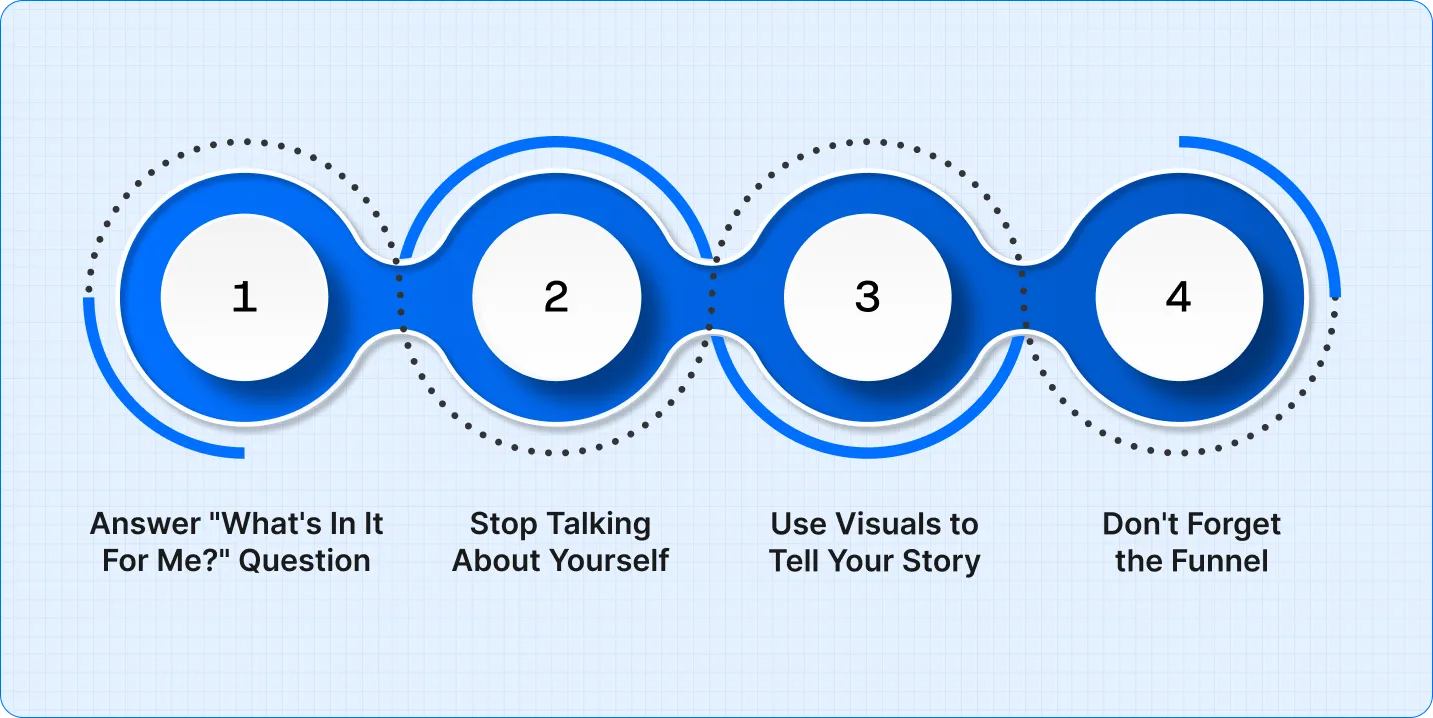
1. Answer the "What's In It For Me?" Question
Your customers aren't just buying a product; they're buying a solution to a problem. Think about the common pain points your clients face. Are they looking for a more efficient process? A more durable material? A more reliable partner?
Your content should directly address these challenges. Write blog posts about how your products solve specific problems. Create case studies that show real-world results. Use videos to demonstrate how your equipment or materials work. This isn't just about showing off; it's about proving you understand their world.
2. Stop Talking About Yourself (Mostly)
While it's tempting to make every piece of content about your company, the most effective content is customer-centric. Instead of a sales pitch, offer a helping hand.
- Educate: Write a guide on how to choose the right materials for a specific application.
- Share expertise: Explain the latest industry trends or regulations and how they impact your customers.
- Provide value: Create a checklist or a calculator that helps them with a common task.
When you consistently provide value without asking for anything in return, you position yourself as a trusted advisor, not just another vendor.
3. Use Visuals to Tell Your Story
Manufacturing is visual. Show off your process! A picture or a short video can do more to build trust than a page of text.
- Take them on a tour: Film a behind-the-scenes video of your facility.
- Showcase your team: Highlight the skilled people who make your products.
- Demonstrate your product: Use a quick video to show how your product is used or the results it delivers.
These visuals make your business feel more human and approachable. They add a level of authenticity that's impossible to fake.
4. Don't Forget the Funnel
While the goal is to build trust, you also need to generate leads. Your content should guide people toward the next step.
- Awareness: Blog posts and social media content that introduces people to your brand.
- Consideration: In-depth guides, webinars, or white papers that require an email address to download. This is where you get a lead!
- Decision: Case studies and product specifications that help them make a final choice.
Content Marketing Ideas for Manufacturers
If your marketing efforts are not generating enough qualified leads or conversions, the issue often lies in the type of content you're using at each stage of the buying journey. Effective content should support prospects from first awareness through final decision.
Below are practical content ideas that help guide buyers through the funnel.
Top of Funnel Content
This stage focuses on visibility and education. The goal is to attract attention and position your brand as a helpful resource.
Effective content types include:
- Blog articles addressing common industry challenges
- Step-by-step guides for everyday operational problems
- Infographics that simplify complex information
- Webinars covering industry trends and emerging technologies
- Downloadable resources such as eBooks and whitepapers
- Social content designed for sharing and reach
- Email campaigns offering gated educational materials
Added value for manufacturers:
- Industry forecasting reports
- Regulatory update summaries
- Trend impact breakdowns for specific sectors
This content builds awareness and encourages early engagement with your brand.
Middle of Funnel Content
At this stage, prospects are evaluating their options and comparing solutions. Your content should reinforce credibility and demonstrate value.
Useful formats include:
- Case studies showing real application results
- Client testimonials that strengthen trust
- Detailed product documentation and specifications
- Comparison charts highlighting differences and strengths
- Demonstration videos explaining usage and benefits
- Live sessions for Q&A and direct interaction
- In-depth educational articles
- Nurture-focused email campaigns
- Interactive tools such as pricing estimators or product selectors
Added value for manufacturers:
- Production process walkthroughs
- Quality control and inspection breakdowns
- Compliance comparison sheets for procurement teams
- Diagnostic content helping buyers validate product fit
This content helps prospects understand why your solution stands out.
Bottom of Funnel Content
Here, the focus shifts to decision-making. Content should remove hesitation and encourage action.
High-impact content types include:
- Product trials or live demonstrations
- Limited-time offers to encourage timely decisions
- ROI tools to show cost efficiency
- Detailed buyer guides for final evaluation
- Success stories with measurable outcomes
- Custom consultations tailored to buyer needs
- Personalised proposals
- Guarantees or warranties that lower perceived risk
- Retargeting ads to stay visible
- Clear and direct calls to action
Added value for manufacturers:
- Risk assessment documents for project managers
- Equipment lifecycle planning guides
- Internal approval support documents
- Cost justification sheets for finance teams
This stage is designed to convert interest into actual business.
Post-Purchase Stage Funnel
Unlike consumer products, manufacturing relationships extend long after the sale. Content should continue to support and retain customers.
Ongoing content ideas include:
- Maintenance schedules and service planning
- Troubleshooting guides and technical FAQs
- Optimisation tips for better performance
- Upgrade planning and expansion guides
- Training resources and operational best practices
This strengthens loyalty, improves repeat business, and positions your brand as a long-term partner, not just a supplier.
Wrapping Up
By creating content for each stage of the buyer's journey, you're not just casting a wide net; you're building a clear path for potential customers to follow.
Content marketing for manufacturers isn't about being flashy. It's about being strategic, helpful, and, most importantly, human. By sharing your knowledge and showing the world what you're made of, you'll build the trust you need to secure a steady stream of high-quality leads.
Ready to Turn Content into Leads
Get expert guidance on building a content strategy that supports trust and qualified inquiries.
Book A Consultation

Digital Marketing
Aug 25, 2025
5 mins
Don't Just Build It, Sell It: How PPC Fuels Growth for Manufacturers
Batul Beawarwala
You build incredible products. Now, let's get the right people to find them.
Pay-Per-Click (PPC) advertising is the fastest, most effective way to put your company in front of the exact people who are ready to buy. We're talking about procurement managers, engineers, and supply chain executives who are actively searching for what you sell.
TL;DR:
- PPC drives immediate visibility and quality leads, with US paid search spending reaching $124.59 billion in 2024.
- Use Google Ads and Microsoft Advertising to target specific keywords and industries for cost-effective lead generation.
- Integrate PPC with SEO, email marketing, and social media for a well-rounded, sustainable marketing strategy.
- Optimize and automate campaigns with platforms like Gushwork to maximize ROI and ensure precise audience targeting.
What Is PPC? A Simple Guide for Manufacturers
Pay-Per-Click, or PPC, is an online advertising model where manufacturers pay a fee each time their ad is clicked. Rather than paying for impressions, manufacturers only pay for actual engagement. This makes it a cost-effective way to drive traffic to their website and generate leads.
Key Platforms Used in PPC:
The most common PPC platforms for manufacturers are Google Ads and Microsoft Advertising.
- Google Ads is the largest and most popular platform, allowing manufacturers to target specific keywords, industries, and locations.
- Microsoft Advertising (formerly Bing Ads) offers similar features with a slightly different audience base, which can be valuable for targeting niche markets.
Impact on Visibility:
PPC has a direct impact on visibility by placing your ads at the top of search results. In industries like manufacturing, where competition is fierce, PPC ensures that your business is seen by potential customers exactly when they are searching for products or services you offer. This targeted approach helps improve lead generation, sales conversions, and overall brand awareness in a highly competitive market.
Benefits of PPC for Manufacturers: Why You Can't Afford to Ignore It
Unlike other marketing efforts, PPC (Pay-Per-Click) delivers immediate, measurable results, making it an essential tool for modern manufacturers. Here's why:
- Instant Visibility: With PPC, you can appear at the top of search results right away for targeted keywords like "manufacturing solutions" or "custom manufacturing services." This eliminates the long wait for organic rankings and puts your business in front of prospects in real-time.
- Reach High-Intent Buyers: Capture buyers who are actively searching for your products or services. Bid on highly specific keywords such as "industrial CNC machines for sale" or "ISO-certified custom metal fabrication" to reach prospects already deep in the sales funnel and ready to convert.
- Rapid Results: Need to fill your sales pipeline quickly or launch a new product? A well-crafted PPC campaign can place you at the top of search results within hours, not months, helping you gain immediate traction.
- Unmatched Targeting and Control: Platforms like Google Ads and LinkedIn Ads allow for precise targeting, reaching key decision-makers such as engineers, procurement officers, and industry specialists. You can filter your audience by job title, company size, location, and more to ensure your ads reach the people who matter most.
- Measurable ROI: Every PPC campaign offers complete transparency. You can track clicks, leads, and conversions, seeing exactly how much your ad spend is generating in real-time. This data allows you to continuously optimize your strategy, lower your cost per lead, and improve results over time.
- Shortened Sales Cycle: Since PPC targets potential clients who are actively searching for solutions, you can bypass lengthy lead-nurturing processes and focus more on closing deals. This means faster conversions and an accelerated sales cycle.
Also Read: Can Industrial Manufacturers Double Sales in 3 Months?
Top 5 PPC Strategies That Will Put Your Manufacturing Business on the Map
Navigating digital advertising can seem overwhelming, but with the right PPC strategies, your manufacturing business can stand out and attract high-quality leads. Here’s how to make the most of your PPC campaigns:
1. Run a Laser-Focused Keyword Research to Drive Quality Leads
Rather than trying to compete for broad terms, focus on highly specific keywords that match what your clients are actively searching for. For example,

This targeted approach increases your chances of conversion and ensures you're not wasting money on irrelevant clicks.
2. Create Compelling, Technical Ad Copy That Speaks to Their Pain Points
Your ad copy needs to grab attention and speak directly to the needs of manufacturers. Focus on the benefits,

When your ad addresses their pain points, you’re more likely to get a click and convert that interest into a lead.
For example, a precision machining company used PPC targeting “CNC milling for aerospace” and saw a 30% increase in qualified leads.
3. Ensure Landing Pages Are Highly Relevant and Optimized for Conversions
The landing page must match the promise in your ad. If your ad promises “custom CNC machining solutions," the landing page should immediately showcase that service with relevant details and a clear call-to-action. This seamless experience ensures higher conversion rates, turning visitors into potential clients.
4. Maximize Your Budget with Smart Bid Management
Smart bidding strategies like,
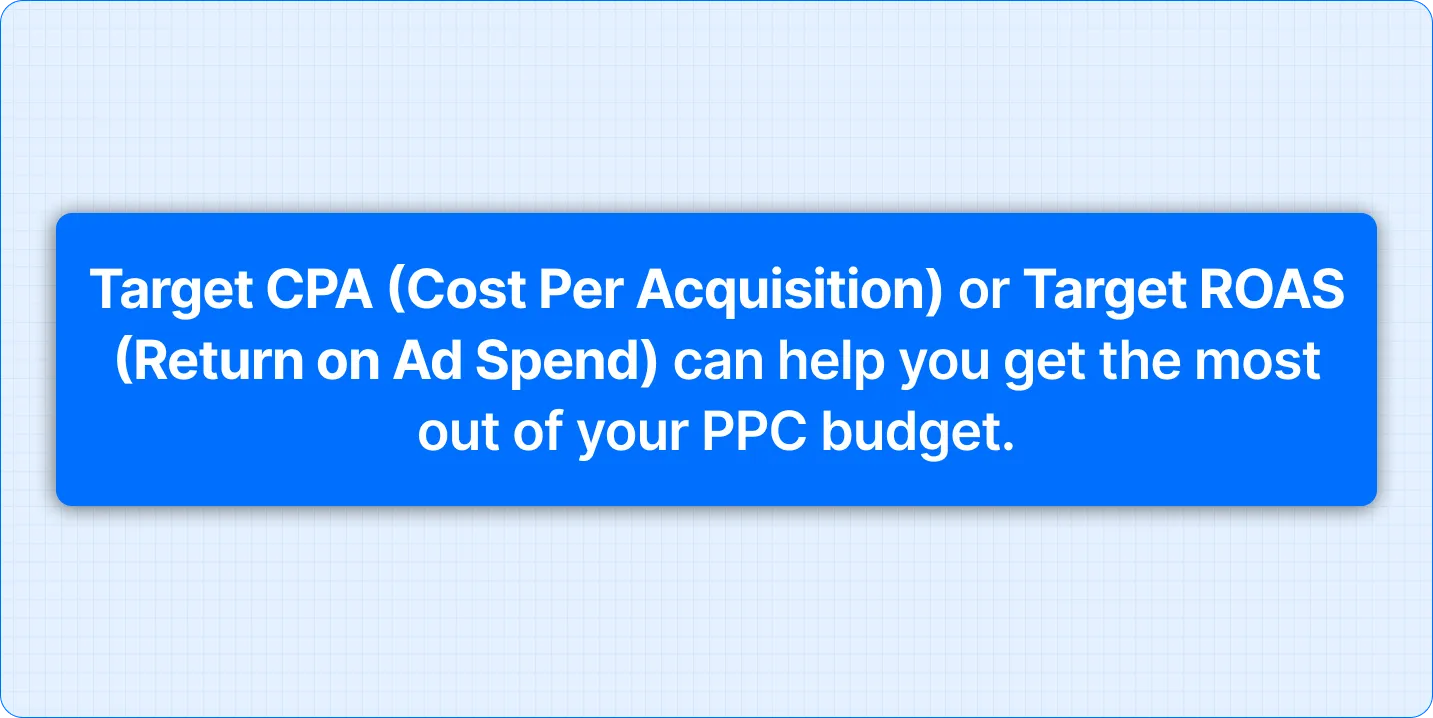
These automated systems adjust your bids in real-time, allowing you to stay competitive without overspending.
5. Refine Your Campaign with A/B Testing
Regular testing is key to continuous improvement. A/B testing different versions of your ads and landing pages, like changing the headline or call-to-action, can help you understand what resonates best with your audience. Even small changes can significantly boost your results over time.
For example,
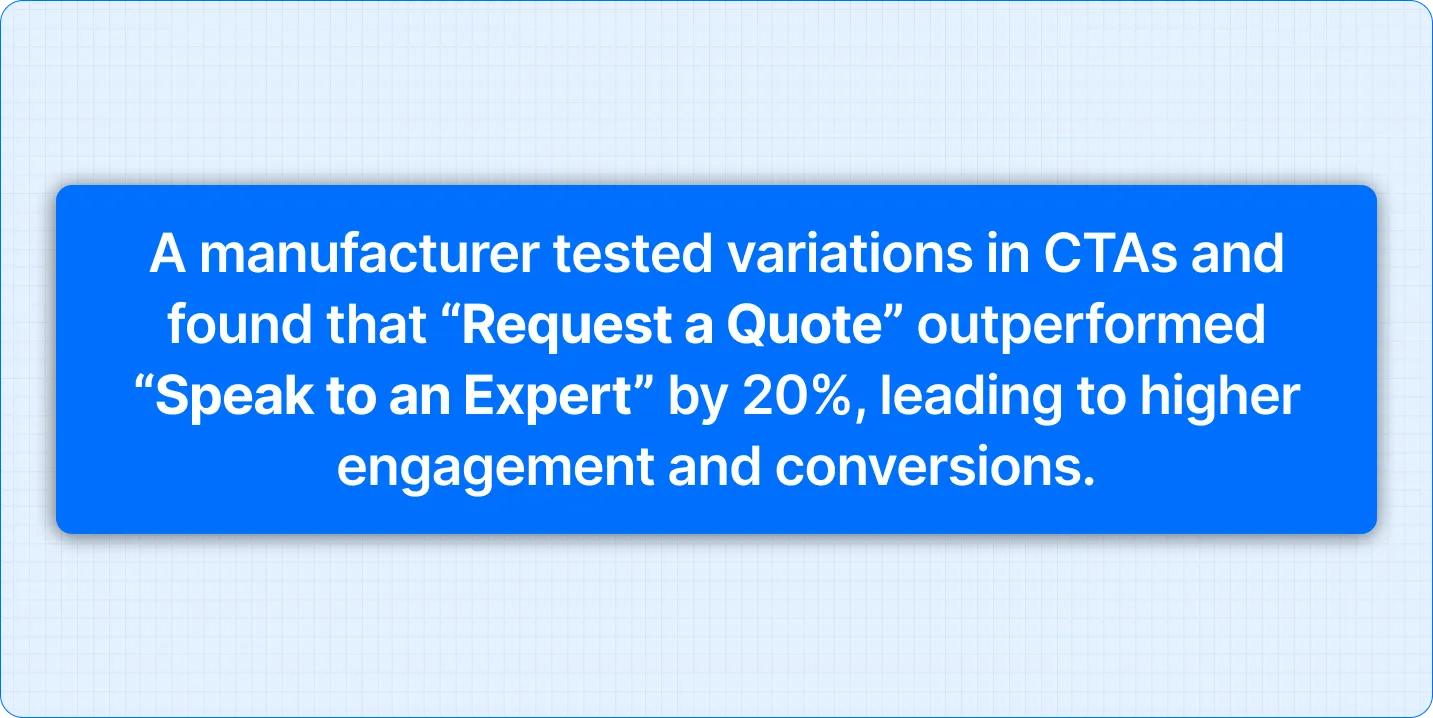
By adopting these strategies, your manufacturing business can achieve real, measurable results with PPC advertising. It’s all about targeting the right audience, refining your message, and optimizing based on real-time data.
Reach the Right Buyers with Targeted PPC Strategies

In the competitive manufacturing industry, targeting the right decision-makers is key. PPC allows precise targeting to connect with key individuals actively seeking your services. Here’s how to leverage it:
- Demographic Targeting: Use platforms like Google Ads and LinkedIn to target decision-makers, such as engineers and procurement officers, based on job titles, industry, company size, and location.
- Geographic Targeting: Focus ads on specific regions or even a radius around your facility, ideal for manufacturers serving regional markets, reducing wasted ad spend.
- Device Targeting: Adjust bids based on device use, engineers on desktops, procurement officers on mobile, ensuring ads appear when and where they're most effective.
By using these targeted strategies, manufacturers can reach the right audience, increasing engagement and driving better ROI.
Boost Your Marketing: Integrate PPC with SEO, Email & Social Media
To maximize your reach and impact, combine Pay-Per-Click (PPC) with SEO, email marketing, and social media.
SEO & PPC: A Winning Combination
By pairing SEO with PPC, you get both immediate visibility and long-term organic growth. Together, they enhance your chances of ranking higher on search engine results pages (SERPs) and increase click-through rates.
Boost Email Campaigns with PPC
Use PPC to drive traffic to your email sign-up forms and grow your subscriber list quickly. Retargeting visitors who interacted with your emails but haven’t converted can also increase engagement and conversions.
Reach Decision-Makers on Social Media
Target decision-makers like engineers and procurement officers on platforms like LinkedIn and Facebook. Running PPC ads on these platforms helps you connect with the right audience and generate qualified leads.
Integrating these strategies creates a seamless marketing approach that boosts visibility, builds trust, and drives conversions.
Also Read: Effective Digital Marketing Strategies for Pulp and Paper Manufacturing
Overcoming PPC Challenges: What Every Manufacturer Needs to Know
PPC advertising can be a game-changer for manufacturers, but it comes with its own set of challenges. Here’s how you can tackle them head-on:
1. Handling High Competition
The manufacturing sector is competitive, and it’s tough to stand out. To compete with industry giants, focus on advanced bidding and precise targeting strategies. Use long-tail keywords and focus on niche markets where larger competitors might not have a strong presence. This approach will help your ads reach the right audience while minimizing the cost of competition.
2. Working With Budget Constraints
If you're working with a limited budget, start small and test different ad variations, keywords, and targeting strategies. Focus on the campaigns that show the best ROI and scale them. This way, you can make the most of your budget without overspending.
3. Fighting Ad Fatigue
Running the same ads for too long can lead to ad fatigue, where your audience stops engaging. Combat this by refreshing your ad copy and creatives regularly. Rotate ads to keep them fresh and aligned with your current campaigns, and always ensure that your messaging remains relevant to your audience's needs.
By addressing these challenges with the right strategies, manufacturers can make the most out of their PPC campaigns and drive quality leads without blowing their budget.
How to Get Started with PPC for Your Manufacturing Business
Getting started with PPC advertising doesn’t have to be overwhelming. Follow these steps to launch effective campaigns that drive results for your manufacturing business:
Step 1. Define Your Objectives
Before you dive into PPC, clearly define your goals. Are you focused on lead generation, brand awareness, or sales conversions? Identifying your primary objectives will help you create a focused strategy and measure your success.
Step 2. Select Platforms and Tools
Choose the PPC platform that fits your industry and budget. For search visibility, Google Ads is a great option, especially for targeting specific product categories. If you're focusing on B2B or targeting decision-makers, consider LinkedIn Ads for more tailored outreach.
Step 3. Structure Your Campaigns
To better target your audience, structure your campaigns based on your product lines or services. Group your ads around specific offerings (e.g., CNC machining, assembly services) to ensure your messaging resonates with the right audience and is relevant to their needs.
Step 4. Monitor and Optimize
Once your campaigns are live, don’t just set and forget. Regularly track their performance using real-time data. Look at metrics like click-through rates (CTR) and conversion rates, and refine your approach based on what’s working and what needs improvement.
By following these simple steps, you can effectively launch and manage PPC campaigns that drive qualified leads, improve visibility, and ultimately grow your manufacturing business.
Finally, is PPC All That You Need?
As a manufacturer, you already know the power of PPC in driving visibility and generating leads. But it’s just one part of the bigger picture. To thrive long-term, your strategy must go beyond PPC.
By integrating SEO, email marketing, content creation, and social media, you build a comprehensive approach that consistently generates leads and nurtures relationships.
PPC plays a vital role in boosting lead generation and conversions, while our team at Gushwork helps automate and optimize your campaigns to ensure they reach the right audience.
Ready to grow your business? Discover how combining PPC with our team's expertise can deliver immediate results and drive sustainable growth for your manufacturing business.
Ready to boost your lead generation?
Let Gushwork optimize your PPC campaigns for immediate results and sustainable growth.
Book A Demo Here
Your PPC Questions Answered: Key Insights for Manufacturers
Q1. How can I measure the effectiveness of my PPC campaigns?
A1. To measure PPC effectiveness, track key metrics such as click-through rate (CTR), conversion rate, and cost-per-lead (CPL). Regularly analyzing these will help you optimize campaigns and improve ROI.
Q2. What are some common PPC mistakes manufacturers should avoid?
A2. Common mistakes include targeting overly broad keywords, neglecting mobile optimization, and failing to track conversions. Avoid these by focusing on specific, industry-relevant keywords and continuously optimizing your campaigns.
Q3. How do I choose the right PPC platform for my manufacturing business?
A3. For B2B manufacturers, Google Ads is ideal for targeting high-intent search queries, while LinkedIn Ads offers excellent targeting for decision-makers. Select a platform based on your target audience and budget.
Q4. Can PPC work alongside my existing marketing efforts?
A4. Yes! PPC can complement SEO, email marketing, and social media campaigns, driving immediate results while enhancing your long-term strategy.
Q5. How can automation platforms like Gushwork improve my PPC campaigns?
A5. Platforms like Gushwork can automate PPC workflows, optimize bidding strategies, and provide real-time insights, ensuring that you reach the right audience and achieve the best possible results.
Q6. What’s the best way to scale my PPC campaigns?
A6. Start small, test different ads, keywords, and targeting options. Once you identify the strategies that deliver results, gradually scale your campaigns while monitoring performance to ensure optimal ROI.

