


Home

Resources
Blogs
Blog
Get insights on AI, productivity, and the future of work.


Thank you! Your submission has been received!
Oops! Something went wrong while submitting the form.

Digital Marketing
Nov 27, 2025
5 mins
Your Chimney Sweep Marketing Should Be Closing Deals. Steal These 9 Strategies Used By Top Brands
Ishani Mitra
Chimney sweep businesses explain the same things over and over again.
- Why is an inspection different from a cleaning?
- Why is soot not the only problem?
- Why “it worked last year” is not a safety check?
- Why do repairs cost more than people expect?
Most of that explaining happens on calls, at the job site, or after a quote has already been shared. Content marketing changes where that explanation happens. It moves it earlier, so homeowners arrive informed instead of confused, and conversations start at a better place.
In this blog, we walk through how chimney sweep businesses can use content to answer real homeowner questions, structure their website and local presence properly, distribute content without wasting time, and measure whether content is actually supporting booked work.
Understanding Content Marketing for Chimney Sweep Businesses
Chimney sweep businesses operate in a space where trust is earned slowly but lost quickly. Homeowners invite you into their homes to inspect, clean, or repair something they rarely see and barely understand. That alone changes how marketing needs to work.
Content marketing fits this industry because it allows a business to demonstrate competence and care before any direct interaction happens. Instead of pushing services, it helps homeowners feel informed and reassured. When done well, it supports decision-making rather than interrupting it.
Traditional Mistakes Chimney Businesses Make Where Marketing Helps
These are not execution mistakes. They are assumption mistakes. Content marketing addresses them by changing how the business shows up in the decision process.
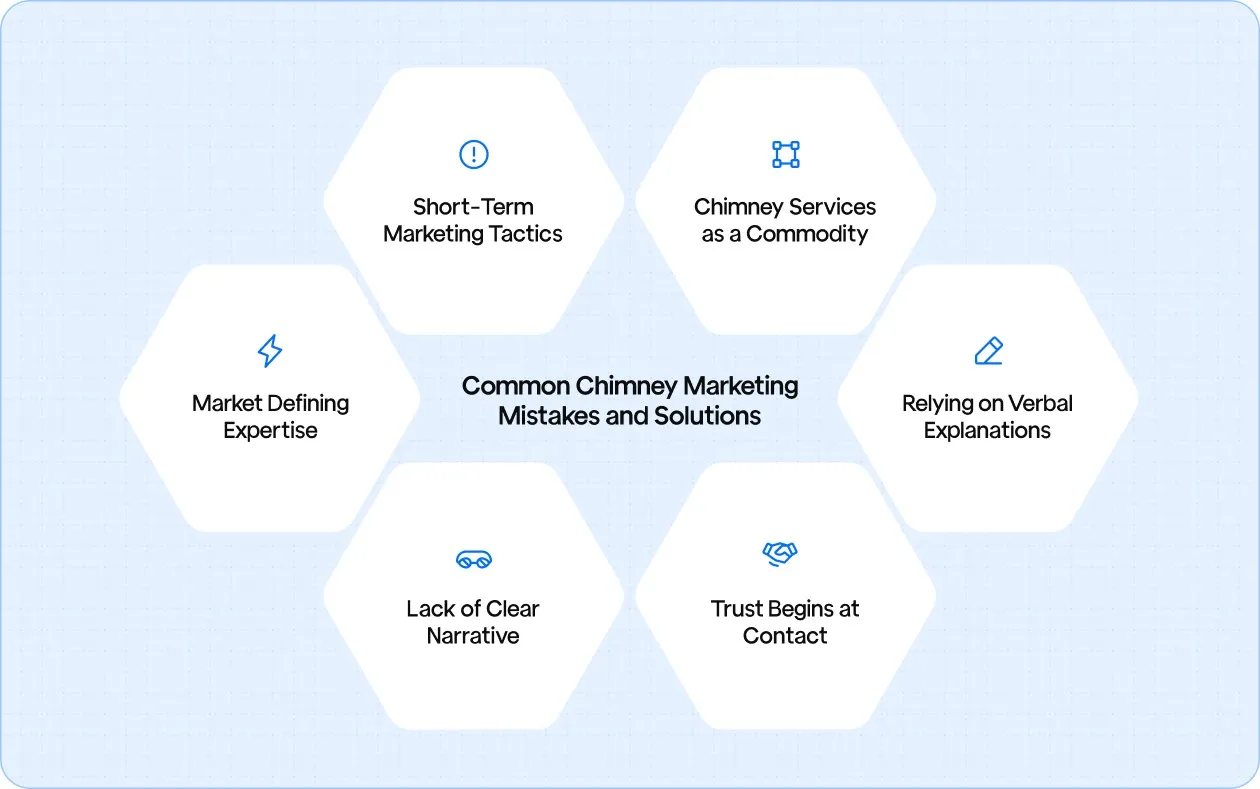
- Treating chimney services as a commodity
Many businesses market as if chimney work is interchangeable. This mindset leads to generic messaging and price-led decisions. Content marketing reframes the service as skilled, risk-sensitive work that requires judgment.
- Relying on verbal explanations at the point of sale
Chimney businesses often explain risks, repairs, or recommendations only during inspections or calls. By that point, homeowners may already be skeptical or overwhelmed. Content shifts that explanation earlier, reducing friction before contact ever happens.
- Assuming trust starts with a phone call
Traditional marketing assumes trust begins when a homeowner reaches out. In reality, trust forms much earlier through what people read, see, and understand. Content allows that trust-building to happen privately, at the homeowner’s pace.
- Operating without a clear narrative
Many chimney businesses have experience, certifications, and standards but no consistent way to communicate them. Content creates a coherent narrative around how the business works, what it prioritizes, and why that matters.
- Letting the market define their expertise
Without content, businesses are defined by reviews, directories, or competitors’ claims. Content allows a chimney business to define its own expertise, scope, and standards instead of reacting to external perception.
- Treating marketing as a short-term lever
Traditional tactics are often used reactively when bookings slow down. Content marketing works differently. It compounds over time, reducing reliance on last-minute promotions and inconsistent lead flow.
When these foundational issues are addressed, content marketing becomes the layer that makes every other marketing and sales effort easier, clearer, and more effective.
Core Content Marketing Strategies for Chimney Sweep Growth
Content marketing for chimney sweep businesses only works when it is built around how people actually choose a provider. Homeowners are cautious, often uncertain, and usually motivated by safety or risk rather than curiosity. The strategies below are about producing the right content, in the proper structure, for the right reasons:
Audience-First Content Planning for Chimney Services
Content planning should start with a clear understanding of who is searching and what problem they are trying to solve. Chimney services attract different audiences with very different motivations, and treating them the same weakens relevance.
- Define your primary customer groups clearly. Homeowners usually search for safety concerns, visible issues, or seasonal reminders. Landlords and property managers focus on compliance, documentation, and reliability. Realtors search with urgency tied to inspections and closing timelines.
- Match content to the type of service being searched. Chimney cleaning searches often indicate routine maintenance intent. Inspection-related searches are commonly tied to safety checks or property transactions. Repair searches usually signal risk or existing damage.
- Account for urgency and risk in how topics are framed. Repair-related searches are often driven by fear or visible damage, while inspection searches are driven by safety and compliance. Content should match the emotional context of the search.
- Plan content around seasonal behaviour. Homeowner concerns shift with weather and usage. Planning content around these patterns keeps your business visible when questions start forming.
- Avoid broad messaging that tries to cover every service at once. Vague content attracts unfocused enquiries and weakens trust. Specific content builds confidence.
Keyword Strategy for Chimney Sweep Content
Keywords are not just SEO inputs in chimney services. They are signals of fear, uncertainty, and readiness. A strong keyword strategy helps you understand what homeowners are worried about before they ever call.
- Group keywords by intent, not just volume. Informational keywords signal early concern. Service keywords signal readiness. Emergency keywords signal urgency. Content should be built differently for each.
- Separate cleaning, inspection, and repair keywords deliberately. Each service has its own risk profile and emotional weight. Combining them weakens relevance and confuses search engines and users alike.
- Prioritise problem-based keywords homeowners actually use. Many users search for symptoms, smells, cracks, leaks, or smoke issues before they search for “chimney repair.” Content should meet them at that level.
- Use location modifiers naturally within context. Keywords should reflect how homeowners talk about their area, weather, and housing style, not just mechanically repeating city names.
- Avoid chasing broad, generic keywords. High-volume terms often attract research traffic with low booking intent. Long-tail, intent-driven keywords convert better in chimney services.
Attract the Right Homeowners
Identify the questions, safety concerns, and local searches that lead to serious chimney service enquiries.
Map My ICP and Keywords


High-Impact Content Types for Chimney Sweep Businesses
Not all content formats build trust equally. The most effective content for chimney businesses that perform is not chosen for how well they reduce doubt and justify professional involvement in something the homeowner cannot see themselves.
- Service pages must explain the necessity. Each service page should clearly describe what the service addresses, the situations in which it is required, and the risks of delaying it. Avoid listing inclusions without explaining why they matter to the homeowner.
- Educational blog content should address safety. Blog topics should focus on warning signs, fire hazards, structural risks, inspection frequency, and consequences of neglect. Avoid writing generic “tips” content that does not influence a decision.
- Inspection-focused content should visualise invisible problems. Use annotated photos, diagrams, or step-by-step explanations to show what inspectors look for and why those findings matter. This helps homeowners trust recommendations before a quote is discussed.
- Repair and high-cost services require a long-form explanation. For relining, rebuilds, or structural repairs, create detailed guides that explain causes, options, timelines, and expected outcomes. Short pages create skepticism for expensive work.
- Short-form content should be used only for urgency-driven queries. Concise explanations work best for emergency symptoms or time-sensitive concerns. Do not oversimplify complex services into short formats.
Explain Before You Quote
Create content that answers homeowner doubts early and builds trust before the first call.
Build My Content System
Local SEO-Driven Content Strategy
Chimney services are inherently local, and content should reflect an understanding of local housing conditions, climate impact, and regional risk patterns to earn trust and rankings.
- Create location-based content only when local context changes the advice. Write city or area pages when housing age, heating systems, weather patterns, or building codes affect chimney usage and risk. Do not create pages where nothing changes except the city name.
- Anchor local content to real, area-specific problems. Reference common issues seen in local homes, such as older masonry chimneys, frequent storm damage, or heavy seasonal usage. This makes content useful, not just searchable.
- Use the service-plus-location structure intentionally. Pair services with locations only where the service demand is proven and recurring. Avoid spreading every service across every location without justification.
- Maintain a unique structure and examples on every local page. Each page should have distinct explanations, examples, and recommendations. Reused templates weaken authority and ranking potential.
- Avoid thin local pages that exist only for rankings. Pages without practical guidance, safety context, or local insight should be consolidated or removed.
Get Found When Safety Matters
Strengthen SEO so your chimney services appear when homeowners search with urgency or concern.
Strengthen My Local SEO
Website Content That Converts Chimney Traffic into Leads
Once visitors arrive, content should help them feel confident enough to take action without pressure. Conversion happens when uncertainty is reduced.
- Homepage content should establish safety and competence immediately. Clearly state what problems you solve, who you serve, and why your process is reliable. Avoid vague claims that do not address homeowner concerns.
- Service pages should follow a problem-to-solution structure. Start by describing the issue homeowners face, explain why it matters, then introduce the service as the solution. Do not begin with pricing or booking prompts.
- Trust elements should appear at decision points. Place certifications, reviews, and safety credentials near explanations of risk or recommendations.
- Calls to action must match the decision stage. Inspection and maintenance pages should encourage consultation or assessment, while urgent repair pages can push direct booking or calls.
- Forms and contact paths should minimise friction. Ask only for the information necessary to start the conversation. Long or generic forms increase abandonment.
- All conversion content must be optimised for mobile behaviour. Assume visitors are searching on phones, often during moments of concern. Prioritise readability, load speed, and clear contact options.
Video and Visual Content for Trust and Education
Because chimney issues are often hidden, visuals play a critical role in understanding and trust.
- Use inspection-based videos to explain findings. Record short walkthroughs showing what inspectors look for, what damage looks like, and why certain issues matter. Avoid scripted sales language.
- Create safety-focused visuals for common homeowner concerns. Use images or diagrams to explain fire risks, blockages, cracks, and moisture damage so homeowners can connect symptoms to causes.
- Limit promotional video content to brand clarity. Company introduction videos should explain who you serve, how you work, and what standards you follow. Avoid exaggerated claims or offers.
- Match video length to decision complexity. Use short videos for FAQs and urgent issues. Use longer videos only when explaining inspections, relining, or structural repairs.
- Ensure visuals support written content. Videos and images should reinforce explanations already present on service or blog pages, not exist without context.
Content Distribution Beyond the Website
Content should be distributed where homeowners already spend time looking for reassurance, updates, and local service signals. Distribution should reinforce credibility.
Use Google Business Profile posts to support service readiness. Publish updates tied to seasonality, safety reminders, inspection timing, and service availability instead of generic promotions.
Turn Visibility Into Trust
Optimize your Google Business Profile to support credibility, education, and local decision-making.
Optimize My Google Profile
- Share visual and educational content on social platforms selectively. Post inspection visuals, safety explanations, or real work examples that demonstrate competence. Avoid reposting blog links without context.
- Use email to support repeat and preventive services. Send maintenance reminders, inspection timing guidance, and seasonal risk alerts rather than frequent promotional emails.
- Adapt content to fit the platform it is shared on. Rewrite captions, summaries, and visuals for each channel instead of copying content unchanged.
- Avoid publishing content across channels without a clear purpose. Every distribution action should support visibility, trust, or recall, not activity for its own sake.
Reputation, Reviews, and Content Alignment
In chimney services, reputation is a continuous input to content, not a separate marketing function. Reviews and feedback should actively shape messaging and topics.
- Analyse customer reviews to identify recurring trust drivers. Look for repeated mentions of safety, cleanliness, explanations, punctuality, or professionalism, and reflect those themes in content.
- Use reviews to reinforce service explanations. Integrate relevant customer language into service pages where homeowners are evaluating credibility.
- Respond to negative reviews with factual clarity and restraint. Address the issue directly, explain resolution steps, and avoid defensive or promotional responses.
- Treat customer questions and objections as content gaps. Publish content that addresses misunderstandings or hesitation revealed during calls, inspections, or reviews.
- Avoid isolating reputation management from content strategy. Reviews should influence what you publish, not just how you respond.
Strategic Partnerships and Co-Marketing Content
Chimney businesses benefit from shared authority within the local home-services ecosystem. Partnerships should be used to expand trust and visibility.
- Identify partners who influence homeowner decisions early. Focus on roofers, home inspectors, builders, and real estate professionals who interact with customers before chimney work is booked.
- Create educational content that serves both audiences. Collaborate on guides, checklists, or safety resources that explain shared risks or inspection considerations.
- Publish co-created content on both businesses’ platforms. Share resources across websites, email lists, or local profiles to extend reach without duplicating content.
- Use partnerships to build credibility. Content should strengthen your own authority even if partner referrals fluctuate.
- Avoid promotional-only co-marketing. Educational content builds trust and longevity, while referral-driven promotions tend to underperform over time.
Measuring Content Marketing Performance for Chimney Sweeps
Measuring content marketing for chimney businesses is about understanding whether your content attracts the right homeowners and supports real booking decisions over time.
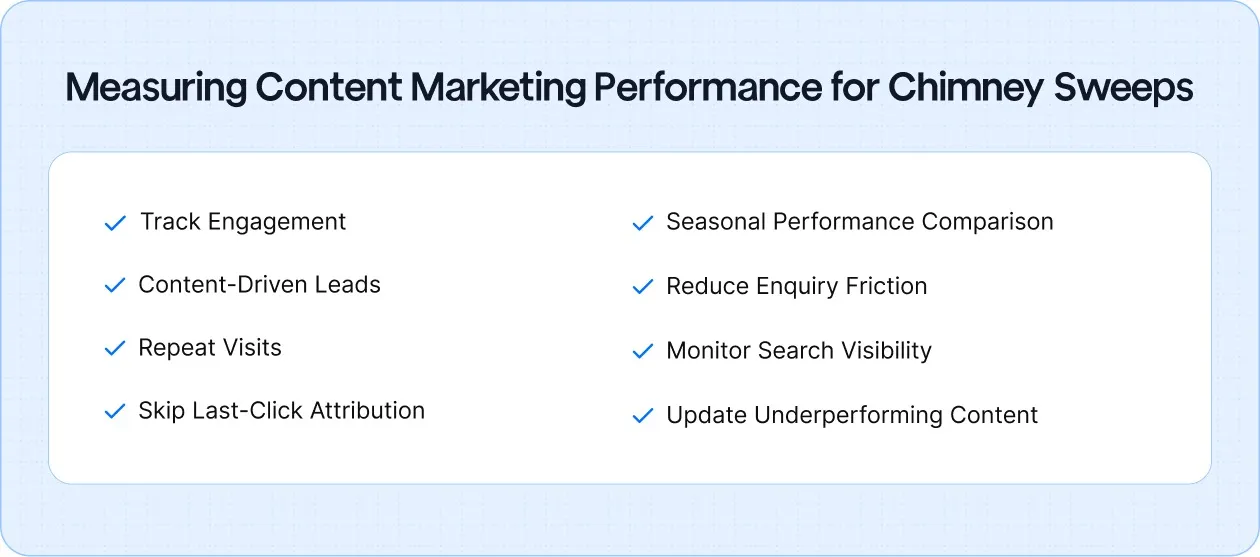
Because chimney services are safety-driven and seasonal, performance should be evaluated with context:
- Service page engagement and navigation paths: Track time spent on core service pages and whether visitors move toward contact or booking actions.
- Content-assisted enquiries and calls: Identify which blog posts, guides, or videos appear in the journey before a form submission or call.
- Repeat visits and return users: Multiple visits often signal trust-building and research behaviour before contacting a provider.
- Avoid last-click attribution models: Content often supports decisions earlier in the journey rather than closing them.
- Compare performance seasonally: Year-over-year comparisons during similar periods offer more accurate insight.
- Look for reduced friction in enquiries: Better-informed calls and fewer objections often indicate effective content.
- Monitor search visibility for service-related topics: Rising impressions usually indicate growing relevance before traffic increases.
- Improve or consolidate underperforming content: Update pages that rank but do not engage, and remove content that adds no value.
Here’s a short, practical tool list, focused only on what actually helps chimney businesses measure content performance:
- Google Analytics (GA4): Use it to track service page engagement, user paths, repeat visits, and content-assisted conversions.
- Google Search Console: Monitor search impressions, queries, and page performance to understand which content aligns with homeowner intent.
- Call Tracking Software (CallRail or similar): Attribute phone enquiries to specific pages or content paths, especially important for mobile-driven local searches.
- Google Business Profile Insights: Measure how posts, updates, and profile activity contribute to calls, direction requests, and website visits.
- CRM or Booking Software: Track enquiry quality, booking outcomes, and repeat customers to understand content’s real business impact.
Advice for New Contractors
If you are new to running a chimney sweep business, content marketing can feel overwhelming because it looks like something established companies do after everything else is “set.”
In reality, content is most effective when it is built early, alongside how you want your business to be perceived and chosen.
These advices focuses on what to prioritise first, what to avoid early on, and how to build momentum:
- Start by documenting what you already explain every day. Write down the questions homeowners ask you during calls, inspections, and estimates. Those explanations are the foundation of your content. Do not invent topics; capture real conversations.
- Focus on a small number of core pages before expanding. Ensure your main services are clearly explained and accurate before publishing blogs, videos, or social posts. A weak foundation multiplies confusion as traffic grows.
- Avoid trying to “look big” through content. Overly polished language, exaggerated claims, or broad service positioning can hurt trust. Clear, honest explanations build credibility faster than professional-sounding marketing.
- Build content consistency. Publishing one strong piece per month that stays relevant is more valuable than publishing frequently and stopping altogether. Consistency signals reliability.
- Expect content to work quietly at first. Early content may not generate immediate calls. Its role is to support decisions when homeowners are ready, not to create instant demand.
- Resist copying competitors’ content structure. Matching what others publish rarely creates differentiation. Your early advantage is clarity and specificity.
- Treat content as part of your operating system. The habits you build early around documentation, explanation, and transparency will compound as your business grows.
For new contractors, content marketing is less about growth tactics and more about setting the tone for how your business communicates.
Conclusion
Good content marketing does something very simple for chimney sweep businesses. It makes the business easier to choose.
When homeowners land on your site or profile and understand what you do, how you work, and what to expect, the decision becomes lighter. That ease shows up in better conversations, smoother jobs, and customers who are aligned from the start.
Over time, content also changes the rhythm of the business. Fewer spikes driven only by emergencies. More planned work. More repeat customers who already trust your process. That kind of growth is quieter, but it lasts longer.
SEO
Nov 25, 2025
5 mins
Take Your Junk Removal Business to the Next Level: SEO Hacks to Get Found and Booked Fast
Batul Beawarwala
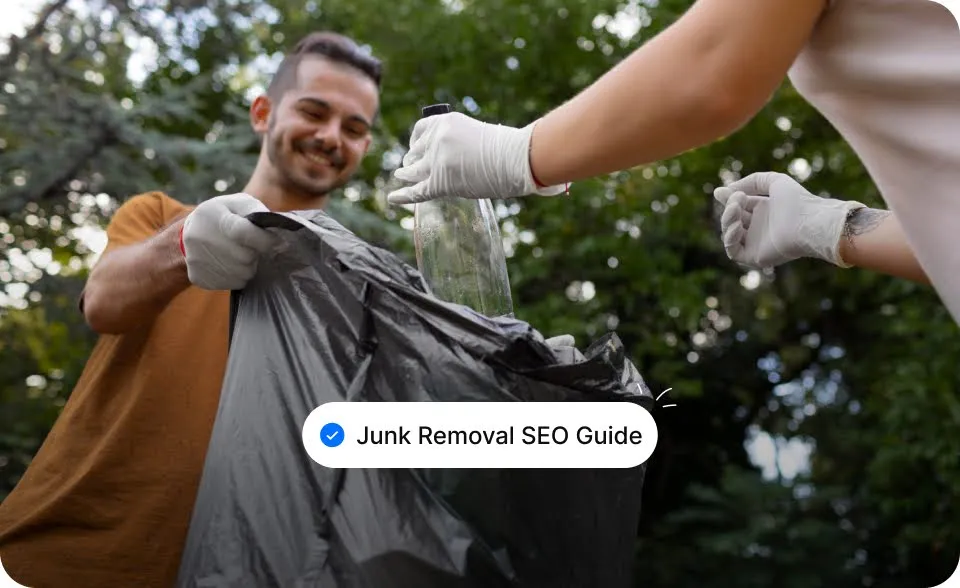
A homeowner moves into a new place, only to find the garage filled with unwanted items. They search for "junk removal near me" on Google, hoping to find help. If your junk removal business doesn’t appear in those results, you miss the opportunity to connect with potential customers at the moment they need you.
Junk removal SEO ensures your business shows up when it matters, helping you attract inquiries and build lasting customer relationships.
This blog will guide you through the most effective SEO strategies to help your junk removal business rank higher in search results and attract more residents.
What is Junk Removal SEO?
Junk removal SEO is the process of improving your online presence so that your business ranks higher when potential customers search for services you offer. It involves optimizing your website, content, and local listings to ensure you appear in relevant search results.
Effective SEO is about creating high-quality content, ensuring your site is technically sound, and building trust through backlinks.
With search engine algorithms constantly changing, a personalized, expert approach helps you adapt and stay visible, ultimately driving more customers and increasing your credibility.
Key SEO Strategies for Junk Removal Businesses
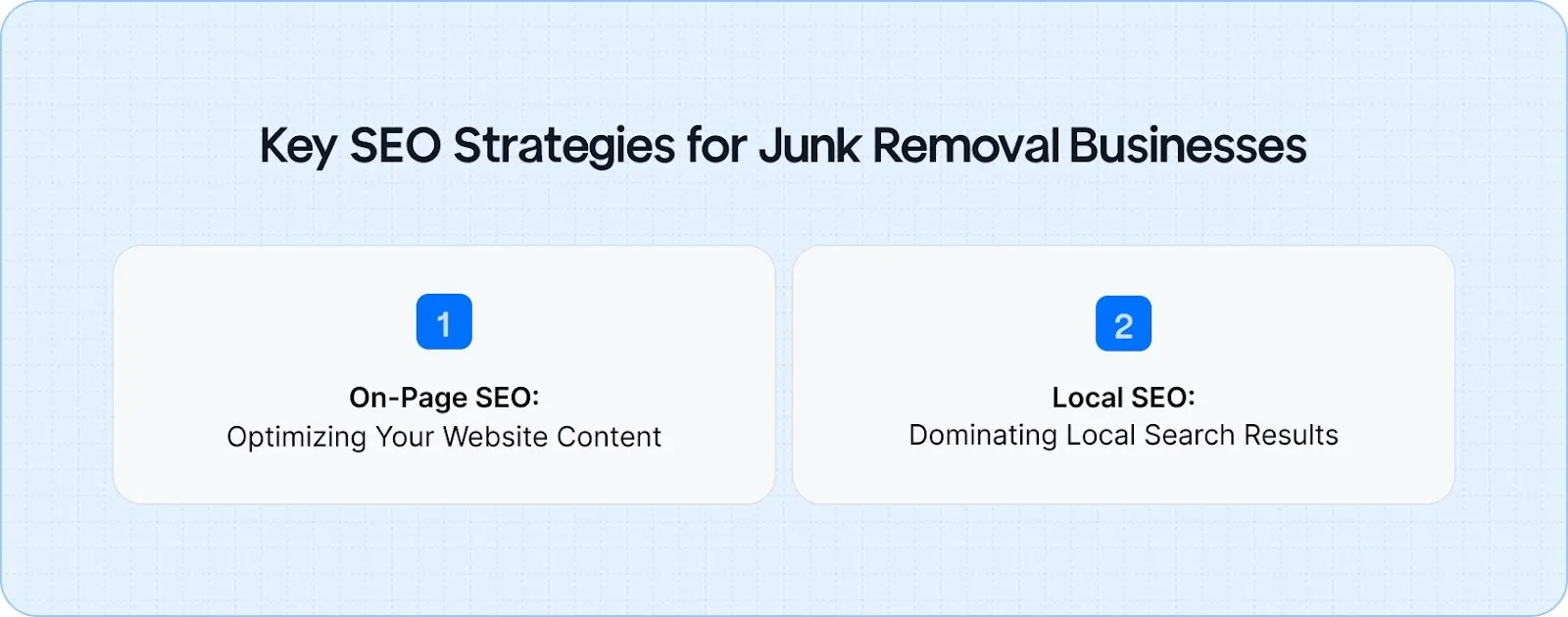
When it comes to junk removal, attracting the right customers at the right time is key. But optimizing your online presence is not as simple as just adding a few keywords.
SEO is a dynamic strategy that requires ongoing effort, an understanding of best practices, and the ability to adjust quickly to changes in search engine algorithms.
Let’s break down the key strategies that will ensure your business stands out in search results and brings in the inquiries you need.
On-Page SEO: Optimizing Your Website Content
On-page SEO ensures your website content is both customer-friendly and search engine-friendly. Below are key components to optimize:
Keyword Research: Finding the right keywords is crucial, but relying on broad terms like “junk removal” won’t bring the most qualified customers. Focus on long-tail, service-specific keywords to attract customers actively looking for what you offer.
- Examples of long-tail keywords:
- “furniture removal in Los Angeles”
- “appliance disposal in Miami”
Tools for keyword research:
- Ubersuggest
- Google Keyword Planner
Once you find your keywords, knowing how to integrate them effectively into your website is essential for maximizing their impact.
Content Optimization: Personalize each page to address specific customer needs, and ensure the content is optimized for SEO.
- Service-Specific Content: Each junk removal service page should focus on a specific need (e.g., appliance removal, hoarding cleanouts, furniture disposal) in every location you serve.
- Localizing Content: Include city names, popular neighborhoods, and local landmarks to make your content more relevant to area-specific searches.
- Optimize Metadata: Ensure that meta tags, headers, and image alt text are all optimized for SEO. These small tweaks can significantly improve click-through rates (CTR).
Page Speed: Ensure your site loads quickly on all devices. Search engines favor fast-loading websites, and potential customers won’t stick around if your site is slow.
As you continue optimizing your website, staying ahead of keyword trends and adapting your strategy to changing SEO practices is essential.
Improve your content to reach the right customers.
Get the insights to create better content that helps your junk removal business show up when customers search for services like yours.
Enhance Your Content Strategy
Local SEO: Dominating Local Search Results
When customers search for junk removal services in their area, appearing in local search results is essential. Local SEO ensures that your business ranks high in searches like “junk removal near me” or “affordable junk removal in Boston”.
Google Business Profile (GBP) Optimization: Your Google Business Profile is the foundation of your local SEO. Here’s how to optimize it:
- Complete all fields: Ensure your business name, address, phone number, services, and business hours are accurate and up-to-date.
- Customer Reviews: Positive reviews from customers significantly impact your local SEO. Encourage happy clients to leave feedback.
- Service Areas: If you serve multiple cities or regions, optimize your profile for each location to show up in local searches across your service areas.
Apple Business Connect: Optimizing your business for Apple Business Connect ensures visibility in Apple Maps, which is an increasingly popular tool for iPhone users searching for local services.
- Ensure accuracy: Make sure your business information is correct across both Google and Apple platforms for consistent visibility.
- Maximize reach: Many customers use Apple Maps to find services; don't miss the opportunity to be found.
Local Keywords and Citations:
- NAP Consistency: Your Name, Address, and Phone Number (NAP) must be consistent across online directories like Yelp, Angie’s List, and Yellow Pages.
- Building Citations: Get your business listed in reputable local directories to improve your authority and local SEO rankings.
By effectively implementing on-page SEO and local SEO strategies, you can ensure your junk removal business ranks higher and attracts more customers in your area.
SEO is an ongoing process, and adapting to trends and optimizing your content continuously is key to maintaining a competitive edge.
Advanced SEO Tactics for Junk Removal Websites
To truly stand out and stay visible in search results, advanced strategies like targeting featured snippets, building authority, and establishing trust are essential. Implementing these strategies requires skill and careful planning.
Without the right approach, your business could miss out on valuable opportunities.
Let’s take a deeper look at these advanced tactics and how they can help your junk removal business rank higher and drive more inquiries.
Targeting Featured Snippets
Featured snippets are the boxed answers that appear at the very top of the search results, often in position zero.
They are a powerful tool for driving traffic because they place your business in the most visible spot on Google’s results page.
Why Featured Snippets Matter?
Appearing in a featured snippet means that Google sees your content as the best answer to a specific question. For junk removal businesses, this can lead to a significant increase in website traffic, as your services will be placed in front of customers actively searching for help.
How to Optimize for Featured Snippets:
- Provide clear and concise answers to commonly asked junk removal questions (e.g., "How much does junk removal cost?" or "What items do junk removal services take?").
- Structure your content to answer these questions directly, using bullet points or short paragraphs, which are easy for Google to pick up as snippets.
Achieving featured snippets requires continuous content updates and optimizations. With the right expertise, your website can maintain its position at the top of search results, driving traffic and generating inquiries.
Featured snippets rely on targeted keywords and well-structured content.
With expert-driven SEO writing, your pages can consistently earn those top positions.
Improve Your Content Strategy
E-A-T (Expertise, Authoritativeness, Trustworthiness) for SEO
For your junk removal business to succeed in SEO, you need to demonstrate your expertise. This means creating high-quality content that answers questions, provides solutions, and shows real-world experience.
- Use case studies and client testimonials to reinforce your authority in the field.
- Offer detailed and actionable content that reflects your understanding of the industry.
Building Backlinks for Authority
To be recognized as an authority by search engines, you must build high-quality backlinks.
- Guest blogging and partnerships with other reputable businesses in your industry can help you earn these valuable links.
- Local business directories and industry-specific platforms can also serve as sources for strong backlinks.
Trust Signals
Trust is vital in SEO. Google favors websites that appear credible and reliable.
- Customer reviews, industry certifications, and security badges are all important trust signals.
- Highlight these elements prominently. Featured on your site to build confidence with potential customers and improve your rankings.
Backlink building is a time-consuming effort, but without a strategy, it can be overwhelming. Keeping up with new opportunities and ensuring you’re following the right techniques is critical for success.
Building authority requires a steady hand and ongoing effort.
With the right guidance, your SEO strategy can continue evolving, gaining valuable backlinks and trust signals for your junk removal business.
Strengthen Your Credibility
How to Track and Measure SEO Success
Tracking and measuring the success of your SEO efforts is essential to ensure you’re on the right path and making the right adjustments. Without proper tools and metrics, it’s hard to gauge the effectiveness of your strategies and see where improvements are needed.
Here’s how you can track your SEO success with clarity and confidence.
Google Search Console
Google Search Console is one of the most powerful, free tools available to understand how your website is performing in search. It provides valuable insights into how Google views your site and where you stand in search results.
- Monitor keyword performance: See which search terms bring people to your site and how they rank over time.
- Track impressions and click-through rates (CTR): Understand how often your site appears in search results and how often users click through to your site from search results.
This can help identify content that resonates with users and content that needs improvement.
Search Console helps you pinpoint which pages are performing well and which need optimization to better meet your customers' needs.
Track Conversions with Google Analytics
Once visitors arrive at your site, tracking what they do next is crucial. Google Analytics lets you measure the effectiveness of your SEO campaigns by tracking specific actions, such as form submissions or phone calls.
- Set up conversion goals: Track how many visitors are completing important actions (e.g., filling out a contact form, calling your business, requesting a quote).
- Understand user behavior: Analytics gives you insights into how users navigate your site. You can see which pages they visit the most, how long they stay, and where they drop off. This helps you understand where your content is effective and where improvements are needed.
By setting up these conversion goals, you can measure the true impact of your SEO efforts in terms of actual customers and sales.
Keyword Tracking Tools: SEMrush and Moz
To truly stay ahead of the competition, you need to know where your site ranks for important keywords.
Tools like SEMrush and Moz provide in-depth keyword tracking and insights that help you adjust your SEO strategy as needed.
- Track keyword rankings: Monitor how your rankings evolve and spot opportunities for improvement.
- Comprehensive website performance: Both tools offer insights into backlinks, on-page SEO issues, and even competitor analysis.
Knowing how you stack up against competitors allows you to tweak your strategy and improve your chances of outranking them.
Dominate Local Search with Junk Removal SEO
Junk removal SEO works best when every part of the strategy fits together: service-focused content, strong local signals through Google Business Profile and Apple Business Connect, technical improvements, and steady authority building through backlinks.
When these elements align, search visibility improves, more local customers discover the business, and inquiries flow becomes far more consistent.
The next step is simple: begin applying these tactics, track performance regularly, and refine what works. SEO success compounds over time, and businesses that stay committed often see remarkable long-term gains.
For businesses aiming for stronger rankings and higher-quality inquiries, Gushwork delivers expert SEO content, targeted keyword research, and strategies built specifically for junk removal success.
Book a Consultation
SEO
Nov 25, 2025
5 mins
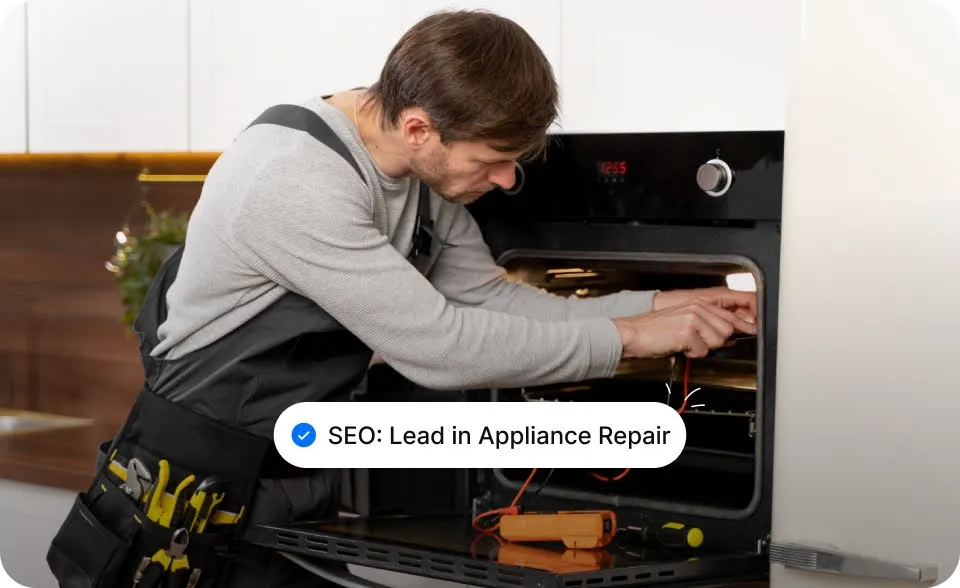
Want to Be the Customer's First Choice for Appliance Repair Services? SEO Can Get You There
Batul Beawarwala
Running an appliance repair business means you’re always on the go, fixing appliances, managing clients, and staying on top of everything. But how do you ensure your business gets noticed when people need you most?
Appliance repair SEO helps your business show up at the exact moment potential customers are searching for what you offer. It’s a simple, cost-effective way to bring in more leads, get noticed by more people, and connect with local customers, without piling on more work.
Let’s talk about how SEO can help you attract the right customers and grow your business.
Why Your Appliance Repair Business Needs SEO and How It Can Make a Difference
In the appliance repair industry, visibility is everything. SEO will help you achieve it.
If your business doesn’t appear in the top search results when people need your help, you’re missing out on valuable leads.
Here’s why SEO matters:
- More Exposure: SEO ensures your business is found by people who are actively looking for the services you provide.
- Increased Trust: Ranking higher on search engines signals to customers that you’re a trusted and credible business.
- Consistent Growth: SEO doesn’t require ongoing ad spend. It builds long-term visibility, so your business stays in front of customers over time.
4 Essential SEO Strategies to Make Your Business Stand Out
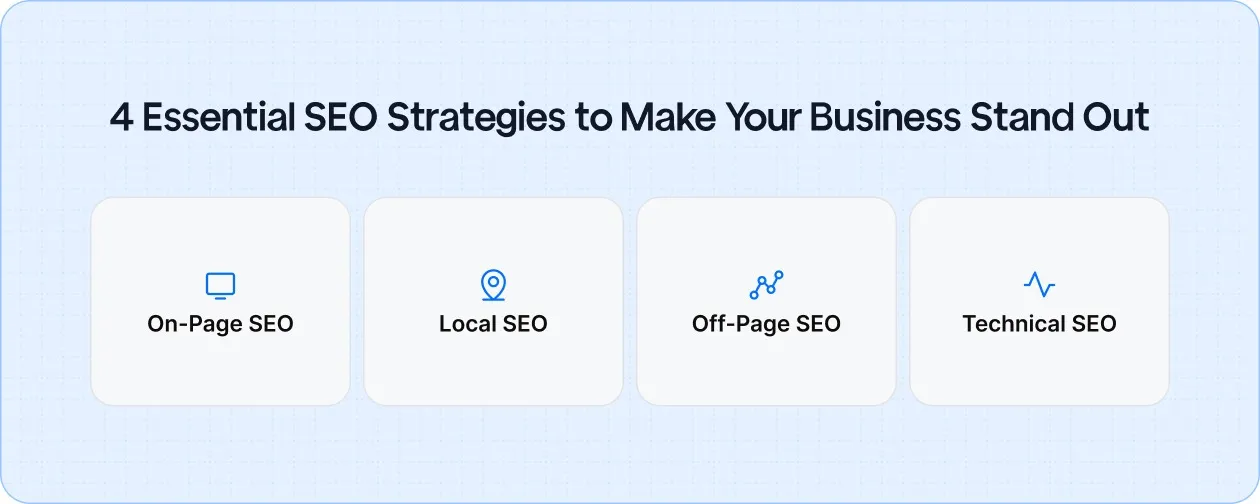
Let’s break down the essential SEO strategies that will help you get found, grow your business, and stay ahead of the competition.
1. On-Page SEO
On-page SEO is the foundation of your online presence. If your website doesn't match what customers are looking for, it won't appear in search results.
You need to ensure you’re using the right keywords and creating content that connects with the people actively looking for help.
Here’s how you can make it work for you:
- Focus on service-specific pages: Address specific customer needs with dedicated pages (e.g., "Refrigerator Repair," "Emergency Appliance Service").
- Target the right keywords: Use tools to find the search terms people use when looking for your services.
- Create valuable content: Write content that answers customers’ questions and builds trust.
Creating this content can be time-consuming, and it’s easy to miss key opportunities. Having the right strategy ensures you're reaching the people who need your help right when they're ready to make a decision.
2. Local SEO
Local SEO is the game-changer for appliance repair businesses. Most of your customers are nearby and looking for a local provider. If you’re not showing up when they search for appliance repair services in your area, you’re missing out on a big chunk of potential business.
Here’s how to make the most of local SEO:
- Optimize your Google My Business profile: Make sure all your details, name, address, and phone number (NAP), are consistent and up-to-date.
- Apple Business Connect: Ensure your business is listed on Apple’s platform for local search, helping you reach customers on Apple Maps and more.
- Claim local business listings: Get your business listed in local directories like Yelp, Angie's List, and others.
- Build local partnerships: Collaborate with other businesses to get local backlinks and mentions.
By focusing on local SEO, you ensure your business shows up when people in your area need appliance repairs, helping you grow your customer base without competing with national companies.
3. Off-Page SEO
Off-page SEO is about establishing your business as an authority in your field. One of the best ways to do this is by acquiring backlinks, links from trusted websites that point back to your site.
These backlinks show search engines that your business is reputable and worth ranking higher.
To get the right backlinks:
- Partner with local businesses: Work with other businesses in your area to create backlinks.
- Contribute guest posts: Share your expertise on industry blogs and include links back to your site.
- Get listed in relevant directories: Being listed in trusted online directories helps build credibility.
While these strategies can take time to develop, they’re vital for improving your site’s authority and search rankings. And, doing it right can bring long-term growth for your business.
4. Technical SEO
Technical SEO focuses on the behind-the-scenes work that helps your website run smoothly. While it might seem less important than content or keywords, getting these technical aspects right is essential for your site’s performance and search visibility.
Here’s what to focus on:
- Site speed: A slow-loading site can turn visitors away. Speed up your site to keep people engaged.
- Mobile-friendliness: More and more people search for services on their phones. Make sure your website is easy to navigate on mobile devices.
- Fix broken links: Ensure there are no broken links or redirects on your website that can hurt your rankings.
These small changes can have a big impact on your rankings and user experience. But getting them right can be tricky without the right technical knowledge.
Let’s help your appliance repair business get the attention it deserves.
We optimize every aspect of your technical SEO, along with on-page, off-page, and local SEO strategies, so your appliance repair business stands out.
Start Your SEO Journey
How to Measure SEO Success and Know What’s Actually Working
You’ve put in the work, optimized your website, focused on keywords, and built those local citations. But how do you know it’s all paying off?
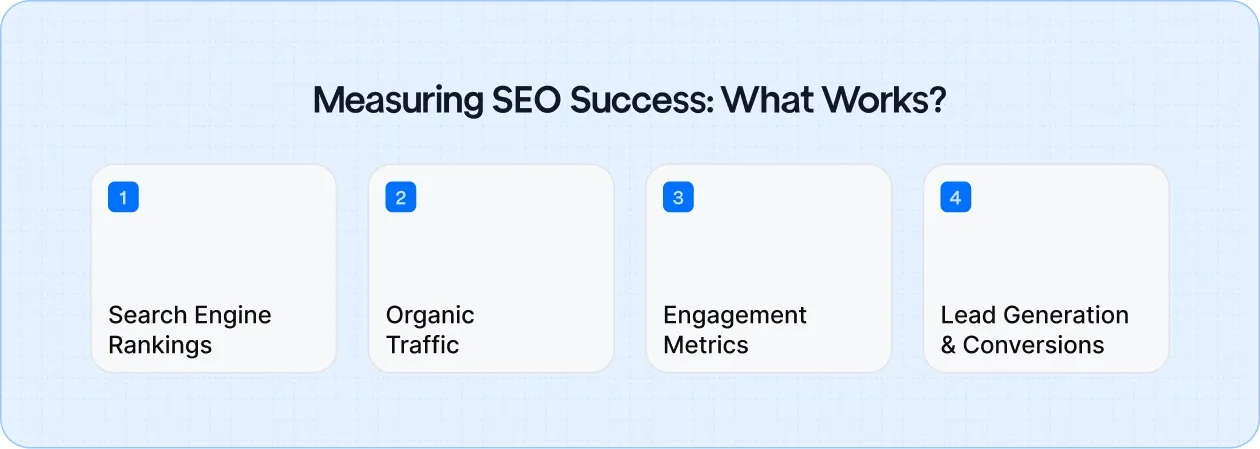
Tracking the right metrics gives you the clarity you need to understand what’s actually working and where you need to adjust.
Here’s what you should be keeping an eye on:
- Search Engine Rankings: Are you moving up the ranks for the keywords that matter? Tracking this shows if your content is hitting the mark or if your efforts need tweaking.
- Organic Traffic: More visitors means more people are finding your site. Watch this number grow as your SEO efforts start reaching the right audience.
- Engagement Metrics: Metrics like bounce rate, time on site, and pages per session show if visitors are sticking around and engaging with your content.
- Lead Generation & Conversions: At the end of the day, you want action. Tracking how many visitors turn into leads or actual customers is your true measure of SEO success.
Using the right tools, like Google Analytics and Search Console, gives you a clear picture of where your efforts are succeeding and where you can improve.
You need to track the data, make informed tweaks, and watch your results improve.
Why Hiring an SEO Expert Is the Smart Move for Your Appliance Repair Business?
Hiring an SEO expert ensures your appliance repair business stays visible, attracts more customers, and grows without taking time away from what you do best.
SEO is always evolving, and staying on top of the latest strategies, trends, and search engine updates can be overwhelming. Without the right expertise, it’s easy to fall behind, missing valuable opportunities to attract more customers.
That’s why many appliance repair businesses choose to partner with SEO experts who can ensure they stay visible online while focusing on delivering quality service to customers.
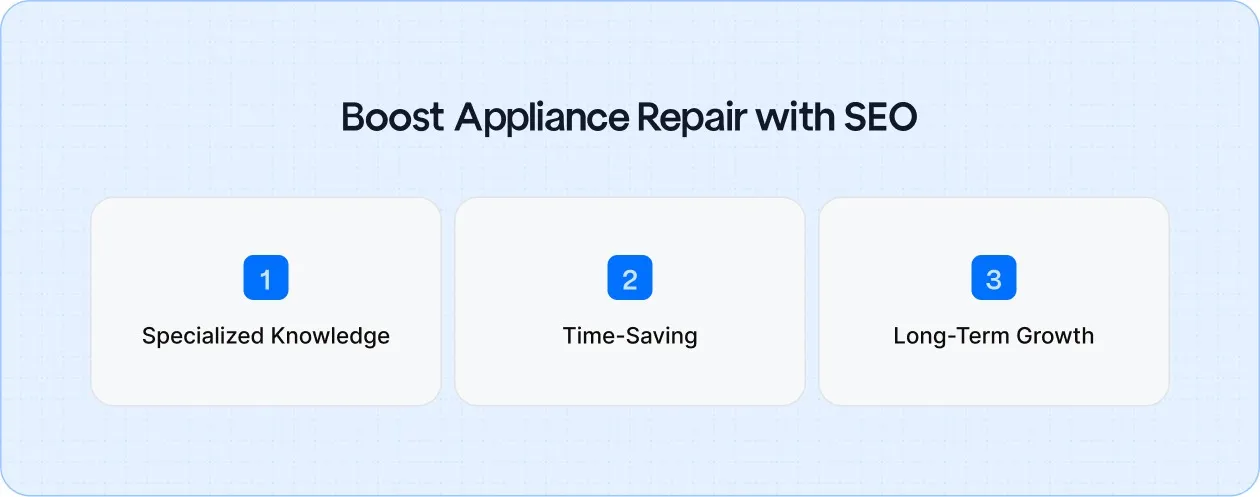
An expert helps build a sustainable, long-term strategy that drives growth for your business. Here’s why hiring an SEO expert makes sense:
- Specialized Knowledge: SEO requires an understanding of complex algorithms and strategies. Experts have the skills to implement the most effective methods for your business.
- Time-Saving: With SEO being a continuous process, delegating it to professionals lets you save time and avoid the stress of figuring it out on your own.
- Long-Term Growth: A solid SEO strategy leads to sustained visibility, ensuring your business shows up when local customers need appliance repair services.
At some point, it makes sense to let the professionals handle the heavy lifting. Teams like Gushwork specialize in SEO strategies that are personalized to small businesses like yours.
With their expertise, you can feel confident that your online presence is in good hands, allowing you to focus on delivering the best service to your customers without the added stress of SEO management.
Trying to manage SEO on your own can quickly become overwhelming.
Let the experts handle it, so you can keep focusing on what you do best.
Talk to an Expert
FAQs
Q1. What exactly are “appliance repair SEO services”?
A1. These services involve optimizing your online presence so people who need repairs can find you when they search. It covers things like improving your website content, making sure your business shows in local results, and helping search engines understand what services you offer.
Q2. How long will it take before I see results from SEO?
A2. SEO isn’t instant, but if you stick with the strategy and keep your site updated, you’ll usually start seeing more visibility and inquiries within a few months. The exact timeframe depends on how competitive your area is, how many reviews you have, and what your website looks like now.
Q3. My budget is tight. Can I afford SEO?
A3. Absolutely. Many service‑based businesses that don’t have huge marketing teams invest in tailored, cost‑effective SEO plans. The key is focusing on the services your customers are searching for and optimizing the parts of your business site that matter most.
Q4. Can SEO replace my paid advertising campaigns?
A4. Paid ads bring immediate visibility, but SEO builds lasting presence. For many appliance repair businesses, combining both works best, with ads for urgent jobs and SEO to consistently attract customers over time.
Q5. Do I need to update my website content regularly for SEO to work?
A5. Yes. Fresh, relevant content helps search engines understand your services and shows you’re active. But it doesn’t mean you need a full blog every week; just a few useful updates, service pages, and local content can make a big difference.
Q6. What makes a good SEO specialist for an appliance repair business?
A6. Look for someone with experience in local services, especially home repair or technicians. They should understand your service area, your customers’ needs, and how people search for quick, trustworthy appliance repair help.
Q7. How do I know if my SEO strategy is working?
A7. You’ll see signs like more visits to your website, more phone calls or form submissions, and better visibility when you search keywords related to your services. The right expert will show you the data clearly and help you decide what to improve next.
SEO
Nov 25, 2025
5 mins
Carpenters Are Missing These SEO Hacks - Here’s How to Get Noticed and Grow Your Business
Batul Beawarwala
The key to grow your carpenter business lies in making sure the right clients can easily find you when they're ready to bring your expertise into their homes or projects.
SEO for carpenters makes sure your business shows up when potential clients are searching for what you offer. With the right strategies, your business can stand out online and attract the customers who need your expertise.
Let’s explore how SEO can help your carpentry business grow by connecting you with customers actively searching for your services.
What SEO for Carpenters Actually Means for Your Business?
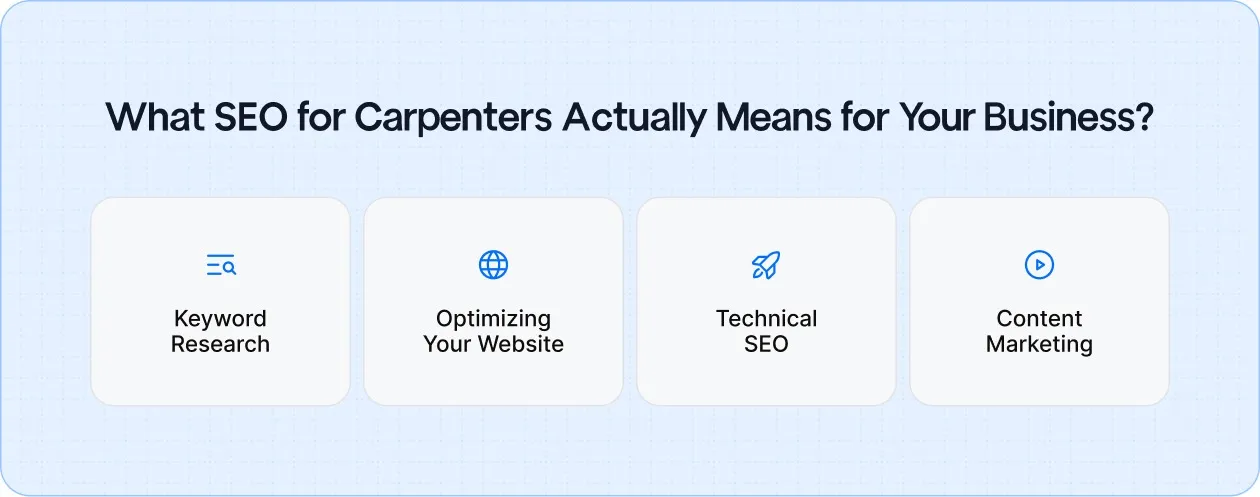
SEO is the key to making sure your skills are seen by the customers who need them. By implementing the right strategies, you can increase your online presence and make it easier for people to find your services when they search.
a) Keyword Research to Know What Your Customers Are Searching For
Start targeting the terms your potential customers are actually using. Learn how to identify the words and phrases that lead customers directly to your business, so you’re not wasting time on the wrong searches.
b) Optimize Your Website to Make It Work for You and Your Customers
Your website is a tool to connect with customers. Learn how to make sure it’s set up to be found by search engines and designed to turn visitors into leads.
c) How Technical SEO Affects Your Visibility
Website speed, mobile compatibility, and structure are essential for ensuring customers have a smooth experience when they visit. Get the inside scoop on how these factors impact your SEO rankings.
d) Content Marketing to Establish Your Expertise and Get Found
Your content is a chance to show your expertise and attract the attention of both Google and your potential clients. Learn how to create content that resonates with your audience and gets you noticed.
Local SEO and Getting Found in Your Area
Local SEO is essential for carpenters aiming to attract customers in their community. If your business isn’t appearing in local searches, you’re losing out on valuable opportunities.
Here’s how to make sure you stand out when customers nearby need your services:
a) Google My Business and Apple Business Connect - Claim Your Spot
Optimizing your Google My Business and Apple Business Connect profiles is critical for local visibility. These platforms make it easier for customers nearby to find you when they’re searching for carpentry services.
Action Steps:
- Claim and verify your profiles on Google and Apple.
- Update your business details, including NAP (Name, Address, Phone Number), hours, and services offered.
- Add photos that showcase your work and encourage customers to leave reviews.
For some, keeping up with these updates and making sure everything is optimized can become overwhelming. It’s easy for small businesses to miss key details that would improve visibility and trust.
b) NAP Consistency - Don’t Confuse Google (or Your Clients)
Consistency in your NAP (Name, Address, and Phone Number) across all platforms is crucial. Google values uniformity, and your customers rely on it to contact you easily.
Action Steps:
- Double-check that your NAP is consistent on your website, Google My Business, Apple Business Connect, Yelp, and any other directory.
- Consider using professional tools to manage your listings and avoid errors that can impact your SEO performance.
Small mistakes or inconsistencies can easily slip through the cracks without expert help.
Ensuring your NAP is aligned across the web may take some effort, but it can make a significant difference in search results.
c) Targeting Local Keywords - Speak the Language of Your Neighbors
Local keywords help your business appear when customers in your area search for carpentry services. These terms show Google that you serve a specific location and are ready to take on nearby projects.
Action Steps:
- Use location-specific keywords like “Best carpenter in Chicago”, “Custom woodworking in Los Angeles”, “Top deck builder in New York”, “Affordable kitchen cabinet maker in Dallas”, “Chicago carpentry services for home renovations” in your content.
- Add these keywords to your website’s meta tags, blog posts, and service pages.
Identifying the right keywords and ensuring they’re strategically placed can require a comprehensive strategy that targets the right terms. This often needs a professional approach to really make it work for your business.
Backlinks and Authority - How Google Knows You’re Legit
Backlinks are a key factor in SEO, signaling to Google that other reputable websites trust your content. These backlinks improve your authority and show search engines that your business is credible and worth ranking.
How to Get Noticed by Google Through Backlinks
High-quality backlinks are essential for getting noticed by Google. These links act as "votes of confidence" from reputable sites, showing that your business and content are trusted.
Action Steps:
- Build relationships with local businesses and partners to earn backlinks.
- Get featured on relevant platforms like industry blogs, local directories, or business networks.
- Reach out to influencers in your niche for guest posts or collaborations that include links back to your site.
How Customer Reviews Improve Your Reputation and Rankings
Customer reviews do more than build trust; they directly impact your SEO. Google values fresh, positive reviews, which can improve your visibility in search results.
Action Steps:
- Encourage satisfied clients to leave reviews on Google, Yelp, and other trusted platforms.
- Respond to reviews, showing both gratitude and professionalism to potential customers and Google alike.
Backlinks and reviews are essential for ranking higher, but getting them right can be tricky.
A well-aligned SEO strategy, combined with the right content, can make a big difference.
Build Powerful Backlinks Now
Measure Your SEO Performance and Track Results
SEO is a continuous process that requires constant monitoring. If you’re not tracking your progress, how will you know if your efforts are truly working?
Here’s how to ensure your SEO strategy is driving the results you need.
a) Use Google Analytics to Track Traffic and Engagement
Google Analytics is like a treasure map for your website. It shows you exactly where your visitors are coming from and what they’re doing once they arrive. Understanding this flow is crucial for refining your strategy.
Action Steps:
- Monitor which pages are attracting the most visitors and how long they stay.
- Track where visitors drop off, so you can adjust your content or website flow to keep them engaged.
- Use this data to find out what’s working and what needs more attention.
b) How to Track Your Keywords and Rankings with Google Search Console
Google Search Console gives you a behind-the-scenes look at how Google views your website. It’s your best tool for understanding which keywords are driving traffic and where your rankings are improving, or falling short.
Action Steps:
- Check which search queries bring people to your site and track which ones are performing the best.
- Look at your site’s overall health, from indexing issues to mobile usability, and resolve any problems that could hurt your rankings.
- Use this data to optimize your content and focus on the keywords that matter most.
Knowing how to turn your SEO data into actionable steps is what sets successful businesses apart.
With the right strategies, you can turn insights into growth and see real results.
Improve Your SEO
SEO Mistakes Carpenters Should Avoid
Even with the best craftsmanship, your business can hit a wall if your SEO isn’t on point. The digital world is competitive, and small missteps in SEO can put your carpentry business at a disadvantage.
Let’s look at the common mistakes carpenters make, and why avoiding them is crucial for staying ahead of the competition.
1. Ignoring Local SEO
It’s easy to overlook local SEO when you’re focused on perfecting your craft, but not optimizing for your local area can seriously impact your business.
If you aren’t using location-based keywords like "carpenter in Chicago or setting up your Google My Business profile, you’re missing out on clients right in your neighborhood.
2. Using the Wrong Keywords
Keyword research is key to understanding exactly what potential clients are searching for. Using vague or irrelevant keywords might attract traffic, but it won’t be the kind of traffic that converts into leads.
3. Neglecting Website Speed and Mobile Optimization
A slow website or one that’s hard to navigate on mobile is a fast way to lose clients. People expect your site to load quickly and work seamlessly on any device. If your website doesn’t meet these expectations, visitors will leave, and Google will lower your rankings.
4. Forgetting About Quality Content
You need to showcase your expertise and provide value to your audience. A lot of carpenters neglect content marketing, focusing only on their services. Without consistent, well-crafted content, you won’t build the authority needed to rank on Google.
5. Overlooking Backlinks
Backlinks are one of the most important aspects of SEO. Without them, your website won’t gain the authority it needs to rank highly.
Many carpenters ignore the value of backlinks or don’t know how to get them.
How to Avoid These Mistakes
SEO takes time, strategy, and often the expertise of professionals to ensure your carpentry business is positioned for success in search results. As you fine-tune your website and strategy, remember that taking a holistic, ongoing approach is key.
With the right support, you can overcome these common mistakes and start driving the qualified traffic that turns into customers.
If you’re unsure where to start, consider working with a team that understands the ins and outs of SEO, so you don’t have to do it alone.
Wrapping Up Your Carpentry SEO Strategy: Let's Get You Found
SEO is an essential tool for increasing your carpentry business's online visibility. When you optimize your website, you make it easier for customers to find you exactly when they need your services.
By applying these SEO strategies, you can improve your rankings and connect with clients who are searching for your expertise.
SEO can be challenging and time-consuming, especially when you're focused on your work. Gushwork specializes in content-driven SEO strategies that help small businesses like yours grow and get noticed online.
Want to improve your SEO?
Let Gushwork help you enhance your online presence and attract more customers with content-driven SEO strategies.
Book Your Free SEO Consultation
FAQs
Q1. What does “SEO for carpenters” actually involve?
A1. SEO for carpenters means making sure your business appears when local customers search for services you offer. It involves choosing the right keywords, optimizing your website and listings for search engines, and creating content that reflects your craftsmanship and service area.
Q2. How long before I see results from SEO for my carpentry business?
A2. The timeframe varies depending on competition and the work required, but most small carpentry businesses begin seeing improved visibility and inquiries within 3 to 6 months, provided the SEO is consistent and well‑focused on local search and service‑specific keywords.
Q3. Do I need to update my website frequently for SEO to work?
A3. Yes, regular updates help. While your site’s core services pages might stay the same, adding new content, such as project case studies, service updates, or blog posts, signals activity and relevance. This keeps search engines more confident that your business is active and trustworthy.
Q4. Can I manage SEO on my own with a small budget?
A4. You can handle some basic SEO elements yourself, such as claiming your local listings and making sure your address and service descriptions are consistent. But to get lasting results, there are technical, content and backlink factors that often require a level of expertise or external support.
Q5. What’s the most common SEO mistake made by carpentry businesses?
A5. The most frequent error is using generic or overly broad keywords (like “carpenter” or “woodwork”) instead of service‑and‑location focused terms (e.g., “custom kitchen cabinets in Chicago”). Without targeting what your customers are actually searching for, you'll miss the most relevant traffic.
Q6. How important are customer reviews and local listings for my SEO?
A6. Extremely important. Listings such as Google My Business and Apple Business Connect, combined with genuine customer reviews, strengthen your business’s local presence and trustworthiness. They help you show up in local search results when customers are looking for carpentry services near them.
Q7. Should I worry about website speed and mobile friendliness?
A7. Absolutely. If your website loads slowly or doesn’t work well on mobile devices, you risk losing prospects right away, and your search visibility can suffer. These technical aspects are often overlooked but make a meaningful difference in how you’re seen online.
SEO
Nov 20, 2025
5 mins
13 SEO Hacks Every Flooring Company Needs to Know to Stand Out
Batul Beawarwala
To grow your flooring business, gaining visibility online plays a key role in reaching new customers. As more people turn to the internet to find services, you need to be easy to find and relevant to your target audience. The right SEO strategies can help with that.
By improving your position on search engines, you increase the chances that potential customers will find your business. This attracts more qualified visitors, those actively searching for flooring services.
Once they arrive, the goal is to convert these visitors into loyal clients. This guide will explore practical SEO techniques to help your flooring business expand and succeed.
Strategy 1: Map How Homeowners Actually Search for Flooring
Understanding how homeowners search for flooring services is crucial for aligning your SEO strategy with their needs. Homeowners typically go through a journey, starting with research on flooring options, then comparing prices, and finally seeking trusted professionals.
This search behavior is predictable and actionable, and by mapping out this journey, you can tailor your SEO efforts accordingly.
Actionable Steps:
- Map out the different stages of the homeowner's search journey, from initial research to final decision-making.
- Research the specific search terms and queries homeowners use at each stage of their journey.
- Focus on the intent behind these searches to ensure your SEO strategy aligns with what homeowners are looking for at each step.
- Prioritize long-tail keywords that reflect specific homeowner needs and pain points throughout their decision-making process.
- Plan your SEO approach to address each stage of the customer journey, ensuring your business is visible and relevant at every touchpoint.
Target the right keywords to increase inquiries.
Leverage AI to create content that directly aligns with homeowner search intent, driving more targeted engagement.
Optimize Your Keyword Strategy
Strategy 2: Fix Technical SEO So Your Flooring Site Stops Losing Visibility
A flooring business's website needs to load quickly, be mobile-friendly, and optimize for images to stay competitive. Many flooring sites overlook key elements such as page speed, mobile optimization, and image SEO, all of which can result in lost traffic and potential customers.
Flooring websites are often heavy with images of products; it's crucial to optimize page speed. If your website is slow to load, you risk losing potential customers to competitors who offer a faster, smoother experience.
Customers expect fast-loading websites, especially when browsing for services they need immediately.
Key Focus Areas for Technical SEO:
- Page Speed: Compress large images, use caching, and minimize JavaScript to improve load times.
- Mobile Optimization: Ensure your website is fully responsive and works seamlessly across all devices.
- Image SEO: Use descriptive file names, alt text, and image compression to help Google index your images properly.
Strategy 3: Dominate Local SEO (Maps Pack + “Near Me” Searches)
Local SEO is a must for flooring businesses. Google prioritizes businesses that are geographically close to searchers. Without proper local optimization, you miss out on customers actively searching for flooring services in their area.
Apple Business Connect also plays a role in local visibility. As more people use Apple Maps to search for local services, ensuring your business is listed correctly on both Google and Apple is critical.
Local SEO is a vital strategy that includes optimizing your Google Business Profile, Apple Business Connect and ensuring that your NAP (name, address, phone number) details are consistent across directories.
Key Steps for Dominating Local SEO:
- Google Business Profile: Ensure your profile is complete, with accurate service areas, operating hours, and up-to-date contact info.
- Apple Business Connect: Claim and update your business profile on Apple Maps to reach Apple users who are searching for flooring services.
- Local Keywords: Include location-specific terms like “flooring company in Chicago” or “carpet installation near Nasherville.”
- Reviews: Actively encourage satisfied customers to leave reviews. Positive reviews build trust and improve local rankings.
Strategy 4: Design Flooring Service Pages That Rank and Convert
Flooring customers want detailed, specific information. The key is to create service pages that rank and convert visitors into leads.
Each service page should be highly targeted and organized to answer the exact questions your customers are asking. This approach improves SEO and enhances the user experience by giving visitors exactly what they need to make a decision.
Components of a High-Converting Service Page:
- Problem Statement: What problem are you solving? (e.g., “Need to replace your worn-out carpet?”)
- Service Overview: Briefly describe the flooring service and how it benefits the customer.
- Process: A step-by-step guide to your service, from consultation to installation.
- Areas Served: Highlight specific neighborhoods or cities you serve to help with local SEO.
- Gallery: Showcase your work with before-and-after images.
- FAQs: Answer common questions that help customers make informed decisions.
- Clear CTA: Include an obvious, action-driving CTA like "Request a free estimate" or "Book an in-home consultation."
Strategy 5: Turn Your Flooring Product Catalog into an SEO Powerhouse
Each product in your catalog is a ranking opportunity. Flooring products like hardwood, tile, and vinyl each provide unique opportunities to target specific searches. When your product pages are optimized with relevant keywords and useful information, you transform your catalog into an SEO tool that generates traffic.
You can make each SKU a potential lead generator by adding useful content like specifications, use cases, installation methods, and maintenance tips.
How to Optimize Product Pages for SEO:
- Title & Descriptions: Use descriptive titles that include key product features and benefits.
- Detailed Specs: Include room suitability, installation methods, and care instructions.
- Brand/Collection Pages: Create location-based brand pages to rank for region-specific searches.
- Internal Links: Link to related products or services (e.g., installation, maintenance) to improve page authority and SEO.
Strategy 6: Build a Content Engine That Answers Real Flooring Questions
Blogs like “SEO tips for flooring companies” rank well because they answer real, actionable questions homeowners and businesses have. When you provide valuable, targeted content that addresses your audience's specific needs, your site becomes a trusted resource, driving both traffic and conversions.
To build a content engine that attracts the right customers, start by focusing on 7 core blog categories:
- Material Comparisons: Help potential customers choose between hardwood, tile, vinyl, etc.
- “Best for X” Guides: Offer advice on what flooring type is best for various rooms or conditions (e.g., “Best Flooring for High-Traffic Areas”).
- Cost Breakdown: Provide clear, transparent pricing guides to educate homeowners.
- Cleaning & Maintenance: Share tips for keeping floors in good condition.
- Design Ideas: Help clients envision how different flooring types will look in their spaces.
- Local Case Studies: Showcase your past work, specifically in the local area, to build trust and relevance.
- Troubleshooting: Address common flooring issues and solutions.
How to Map It Out:
- Plan a 12-month calendar with 3-4 posts each month, ensuring content aligns with the awareness, consideration, and decision stages of the customer journey.
- Repurpose content: Turn projects into case studies, FAQs into blog posts, and blogs into social media updates or Google Business Profile posts.
Content that addresses your customers' real needs is key to ranking and converting.
Want to create a content plan that works for you?
Start Your Content Engine
Strategy 7: Optimize Every Visual Asset for Search
Visual content, such as images and videos, plays a key role in a flooring business’s online presence. When optimized properly, visual assets can enhance engagement and support your SEO goals.
Key Areas to Focus On:
- Video Content: Create engaging video tours or project showcases, ensuring descriptive titles, transcripts, and embedding these on relevant service pages.
- Visual Search Readiness: Make sure your visuals are high-quality and contextually relevant, allowing tools like Google Lens to properly interpret them for better visibility in search results.
Strategy 8: Use Smart Keyword Research
Many flooring businesses focus too much on high-volume and broad keywords. While those keywords can help with visibility, they don’t always capture the intent of customers ready to make a purchase.
To truly rank and attract qualified leads, focus on intent-led keyword clustering.
Steps to Enhance Keyword Research:
- Seed Keyword Sources: Use tools like Google Autocomplete, People Also Ask, competitor sites, and Google Search Console to uncover the most relevant keywords for your business.
- Cluster Keywords by Intent: Group keywords based on customer intent (e.g., informational, navigational, transactional). This allows you to create more targeted pages that meet specific needs.
- Quarterly Refresh: Regularly prune outdated keywords and invest more effort in the terms that bring the best ROI.
Relying on outdated keyword strategies is costly.
Optimize your keyword research process and target your ideal customers with precision.
Improve Keyword Research
Strategy 9: Elevate User Experience (UX) So Google Wants to Rank You
User experience (UX) plays a significant role in SEO. Google’s algorithms prioritize websites that provide a seamless, engaging experience for users.
A poor UX leads to higher bounce rates and missed opportunities. Making sure your website is mobile-friendly, easy to navigate, and fast is crucial for keeping visitors on your site longer and for encouraging them to convert.
Key Areas to Focus On:
- Mobile-First Layout: Ensure your website is responsive and offers sticky call buttons, easy navigation, and visible pricing/financing options.
- Above-the-Fold Framework: Optimize what visitors see first, an engaging headline (e.g., "Flooring Installers in Chicago"), proof (e.g., reviews, awards), and a clear CTA.
- Heatmaps & Scroll Maps: Use heatmaps to track where visitors click and scroll. Analyze this data to adjust weak CTAs and strengthen trust signals that drive conversions.
Strategy 10: Get More Local Backlinks
Backlinks remain a key ranking factor in SEO, but it’s important to focus on quality over quantity. Local backlinks from trusted sources in your community can help elevate your authority and visibility.
These backlinks signal to search engines that you’re a credible business serving the local community.
Effective Ways to Build Local Backlinks:
- Local Partnerships: Build relationships with builders, designers, realtors, and property managers to get backlinks from their websites or blogs.
- Community Involvement: Sponsor local events, charity projects, or workshops. These activities often come with opportunities for backlinks from reputable local sites.
- Content-Based Link Magnets: Create valuable content like cost guides, “best flooring for rentals,” and maintenance checklists that encourage other local websites to link to your site.
Quality backlinks can drastically improve your local SEO rankings.
Let’s develop a strategy to help you build strong partnerships and earn valuable links.
Build Backlinks Now
Strategy 11: Capture Featured Snippets and “People Also Ask” Boxes
Featured snippets and the "People Also Ask" (PAA) box are prime opportunities to increase visibility. These sections appear at the top of search results, often driving a significant portion of the click-through traffic.
However, many flooring businesses overlook how to capture them. It’s time to systematize this process and make it a key part of your SEO strategy.
Identify Snippet-Worthy Questions:
- “How long does vinyl plank flooring last?”
- “Is laminate flooring waterproof?”
Content Structure for Featured Snippets:
- Start with a 40-60 word direct answer to the question.
- Follow up with a detailed explanation, including bullet points, visuals, and examples to enhance the content’s value and provide thorough information.
- Embed the FAQ schema on your service and blog pages to make sure Google recognizes and indexes your answers for rich snippet opportunities.
Why It Works: Google favors content that directly answers common questions, especially when paired with clear, well-structured explanations.
By addressing these queries and using structured data, you set yourself up to claim top spots in search results.
Strategy 12: Bring AI into Your Flooring SEO Workflow
AI is transforming how we approach SEO, but it’s important to understand that AI should support, not replace, human effort. Flooring businesses can use AI-driven tools to enhance their SEO workflow while ensuring quality control remains in place.
Use Cases for AI in SEO:
- Drafting Meta Titles & Descriptions: Generate initial drafts for titles and descriptions, then fine-tune them with your brand's tone and focus.
- Generating Blog, City Page, and Product Descriptions: Use AI to suggest structure and keywords, ensuring content aligns with search intent and local SEO needs.
- Suggesting Internal Links & Content Gaps: AI can analyze your existing pages to recommend internal linking opportunities and identify content gaps that need to be filled for better performance.
Guardrails for AI Use:
- Always conduct a human review to ensure the content is accurate and aligned with your brand voice.
- Double-check for accuracy and avoid generic language or overused phrases that AI tools might generate.
- Keep quality control in place, ensuring that the content resonates with your audience and isn’t too robotic.
Maintain control over quality and tone every step of the way.
Use AI to enhance your SEO workflow and create content that truly resonates with your audience.
Improve Content with AI
Strategy 13: Scale SEO for Multi-Location and Franchise Flooring Brands
For flooring brands with multiple showrooms or service territories, scaling SEO effectively is crucial. Having two locations or fifty requires a personalized SEO strategy for multi-location optimization, all while maintaining a consistent brand message.
Key Considerations for Multi-Location SEO:
- Site Architecture: Organize your website to clearly delineate different locations or services with URL structures like:
- /locations
- /city
- /city/service
This structure allows search engines to index your pages more effectively and ensures local searchers easily find each location or service.
- Consistent Brand Messaging: While each location may have unique offers, your core messaging, tone, and CTAs should remain consistent. Localize the offers, but keep your brand’s voice the same across all pages.
- Centralized vs. Local Content: Decide which aspects of content are controlled by HQ and which are customizable by local teams. This ensures consistency but also allows flexibility to adapt to regional preferences or needs.
- HQ Content: General flooring tips, company policies, brand values.
- Local Content: Location-specific promotions, local testimonials, and neighborhood-specific case studies.
Why It Works: Scalable SEO for multi-location businesses requires a balance of consistency and local relevance.
A structured approach to site architecture and content will help you rank across multiple locations without losing your brand’s core identity.
If you manage multiple locations, streamlining your SEO for each service area can make a huge impact.
Let’s create a strategy that scales with your business growth.
Create Your SEO Strategy
Incorporate SEO to Achieve Lasting Success for Your Flooring Business
By now, you've got 13 solid strategies in your toolkit to help your flooring business climb the ranks on Google. Attracting the right customers starts with refining your content to address their questions and optimizing your local presence.
Each step moves you closer to building a reliable, consistent flow of leads.
The key to lasting SEO success is having the right tools and approach. When you align your efforts with the right strategies, you'll see how much smoother the process becomes, leaving you with more time to focus on growing your business and serving your clients.
Let Gushwork guide you in refining your SEO strategy.
We’ll help you create content that will show your business at the top of search results on Google.
Book a Free SEO Consultation
FAQs
Q1. How quickly should I respond to a “flooring services near me” lead?
A1. Aim to respond within 15-30 minutes if possible. Homeowners often decide quickly when they start searching. A prompt response increases your chances of booking the job.
Q2. Which online platforms are worth paying for when seeking flooring leads?
A2. Platforms like local directories and lead marketplaces can help, but they charge per lead, and you’ll still be competing with others. Many professionals see better ROI by improving their own website, Google Business Profile, Apple Business Connect and leveraging referrals.
Q3. What keywords should I prioritize for flooring SEO beyond “flooring installer near me”?
A3. Focus on intent‑rich phrases like:
- “hardwood flooring cost Chicago”
- “vinyl plank installation time”
These capture users deeper in the decision process, not just those window‑shopping.
Q4. Can images really impact how many leads I get for flooring services?
A4. Absolutely. Flooring is visual by nature, so high‑quality before/after images, optimized file names, and alt text help your SEO and build trust with potential customers. Contractors have reported better engagement after focusing on visual content in local listings.
Q5. Does having multiple service areas hurt my SEO if I only have one physical showroom?
A5. Not if you structure your site correctly. Create dedicated pages for each service area, and ensure your service‑area details, NAP (name, address, phone number), and local content are consistent across all pages. This approach works well even with a single physical location.
Q6. Are referrals still effective for flooring businesses, or is online marketing the only way?
A6. Referrals remain one of the strongest sources of quality leads. A recommendation from a friend or trusted contractor carries built‑in credibility. Combining referrals with a strong online presence can help keep a steady flow of business.
Q7. How do I track which lead‑generation channels (ads, organic search, referrals) are actually working?
A7. Use distinct tracking mechanisms:
- Assign unique phone numbers or tracking links to each channel
- Ask leads how they found you
- Regularly check your CRM or job‑management system to compare which channels bring in the most bookings and revenue
This data helps optimize your marketing efforts and prevent wasted spend.
SEO
Nov 20, 2025
5 mins
Your Social Media Marketing for Landscaping and Lawn Care is Slacking - Let’s Fix That
Batul Beawarwala
Social media marketing can be a powerful tool for landscapers and lawn care providers, even for small businesses with limited resources.
By consistently sharing photos of your work, offering helpful tips, and engaging with your local community, you can connect with potential customers and grow your business.
This guide will show you how to make the most of social media to get noticed and turn online interactions into real customers, without needing a large marketing team.
1. Start with the Right Social Media Platforms
Choosing the right platforms ensures your time and money are spent reaching the right people. Facebook, Instagram and TikTok provide cost-effective opportunities for local businesses like plumbing.
- Target the Right Audience: These platforms let you target specific areas and customer types.
- High Engagement: People often use these platforms to find services, making them perfect for your business.
- Low-Cost Marketing: You can get great results with a modest ad spend.
2. Flaunt Your Work with Before-and-After Photos
Before-and-after photos grab attention and demonstrate your expertise. It’s a visual way of proving your worth to potential customers.
- Immediate Impact: These photos make your work stand out and show real results.
- Builds Trust: Seeing transformation in action builds customer confidence.
- Tangible Proof: It’s an easy way to show your capability without needing much explanation.
3. Engage Locally by Geo-Tagging Your Post
Local engagement is vital, and geo-tagging ensures that people in your area find your posts when searching for services.
- Improves Local Discoverability: Geo-tagging puts your posts on the radar of people nearby looking for plumbing services.
- Strengthens Community Ties: It connects your business directly to your local area, helping to build community trust.
- Increases Engagement: People are more likely to reach out if they see you’re local and available.
Geo-tagging improves local visibility, but it works best with other strategies to drive local leads.
Let’s help you elevate your local SEO game with the right content strategies.
Improve Your Local Reach
4. Let Your Clients Do the Talking with Customer Testimonials
Positive customer feedback reassures potential clients that you’re a trustworthy choice for their needs.
- Proves Reliability: Testimonials act as third-party endorsements, increasing trust.
- Authentic Connections: Sharing real stories helps you connect with potential customers.
- Encourages Referrals: Happy customers are more likely to spread the word about your services.
Customer testimonials are powerful when presented right.
create an SEO content plan that draws more customers to your business.
Optimize Your Content Strategy
5. Post-Seasonal Tips to Position Yourself as an Expert
Offering helpful tips keeps followers engaged while positioning you as an expert.
- Showcase Your Knowledge: Seasonal advice demonstrates that you understand your clients’ needs throughout the year.
- Build Client Loyalty: Helpful tips encourage customers to keep coming back for more.
- Position Yourself as a Go-To Expert: People will turn to you for advice and services.
6. Stay on Track with a Simple Content Calendar That Works
A content calendar ensures your social media remains active without overwhelming your team, helping you maintain consistent engagement.
- Organized Posting: A calendar helps you stay on track and ensures that you never run out of content ideas.
- Timely Engagement: It helps you post at the right times for maximum impact, such as during peak seasons or before major holidays.
- Prevents Stress: Planning ahead makes managing your social media much easier.
Having a well-planned calendar can make a world of difference. An expert can ensure your strategy is well-aligned with your business goals and helps you maintain consistent content.
7. Use Instagram Stories, Facebook Reels and TikTok to Engage with Your Audience
These short-form content formats help create a more personal connection with your audience.
- Builds Connection: These formats let people see the human side of your business, making them more likely to trust you.
- Great for Quick Updates: They let you post quick, engaging content that doesn’t require a lot of time or effort.
- Increases Engagement: Short, snackable content encourages more interactions from your followers.
8. Paid Ads on a Budget Can Work and Work Well

Paid ads allow you to target the right people, ensuring your marketing budget is spent efficiently.
- Target the Right Audience: Paid ads allow you to focus on people most likely to need your services.
- Scalable Campaigns: You can increase your reach based on your goals, from expanding locally to targeting specific services.
- Control Your Budget: You control how much you spend, making paid ads a flexible option.
9. Create Engaging Calls-to-Action (CTAs)
Clear CTAs encourage your followers to take action and contact you for your services.
- Directing Action: CTAs tell people exactly what they should do next, from calling to booking an appointment.
- Encourages Responses: Well-placed CTAs increase the likelihood that your followers will get in touch.
- Helps Measure Success: You can track how well your posts are converting followers into leads.
Creating the right CTAs takes practice. An expert can help you optimize them to ensure they resonate with your audience and lead to more business.
10. Measure Your Success and Keep Improving Like a Pro
Monitoring results ensures your efforts are paying off and helps you refine your strategy for better performance.
- Track What Works: Analytics show which posts are resonating with your audience, helping you focus on what’s working.
- Refine Your Strategy: You can adjust your strategy based on what the data tells you, making sure your content stays relevant.
- Prove ROI: Analytics help you see how your time and money are translating into results.
Take Your Social Media Strategy to the Next Level
Social media is a powerful tool for attracting local leads, building trust, and driving business growth.
By focusing on the right strategies, even small landscaping and lawn care businesses can increase their visibility, engage with their community, and turn online interactions into real-world results.
Want to grow your business and attract more customers?
Let Gushwork help you with personalized SEO and content strategies that drive meaningful results and connect you with the right audience.
Book a Free Consultation
FAQs
Q1. What’s the easiest social media platform for small lawn-care businesses?
A1. For many small businesses, Facebook is the most approachable platform. You can set up a business page, share photos of your work, and join local community groups without a large budget. Instagram comes next, especially if you have strong visuals. Pick one platform to start with, post consistently, and engage with your local community.
Q2. How often should I post so I don’t waste time?
A2. Posting 2-3 times a week is a realistic goal for a small team. Focus on quality, share a recent project photo, a tip for homeowners, or a behind-the-scenes look at your crew.
Consistency matters more than daily posts. A smaller schedule you can manage is better than a big plan you can’t keep up with.
Q3. What kind of content will get attention from homeowners?
A3. Visual proof of your work works well: before-and-after shots, short videos, or a quick post about how you solved a common yard issue. Some clients also like seeing your team in action; people hire people. Add location tags or mention neighbourhoods you serve to help local folks find you online.
Q4. Can I use paid ads with a small budget, and will they help?
A4. Yes, you can run small-budget ads that target your service area. For example, spend $5–$10/day aimed at homeowners in a specific ZIP code who might need lawn or landscaping services. Clear calls like “Get a free quote” or “See our recent work” help make your ad more effective. Track results and pause what doesn’t work.
Q5. How do I know if my social media work is paying off?
A5. Use built-in tools in Facebook or Instagram to look at basic numbers: how many people saw your post, how many interacted, and how many reached out. Count how many messages or quote requests you get after certain posts. If one type of post consistently brings in more inquiries, do more of that.
Q6. How can I engage with my local audience without being too “salesy”?
A6. Share helpful tips (e.g., how to choose grass type, how to clean up leaves) or answer common questions homeowners ask. Join local Facebook groups and reply when people ask about yard problems; they’ll see your expertise. Avoid hard-selling in every post; helpful content builds trust and leads to business.
Q7. What mistakes should small lawn-care businesses avoid on social media?
A7. Common mistakes include: posting rarely or irregularly, using only generic stock images, ignoring comments or messages, and choosing too many platforms at once (which dilutes your effort). Focus on one or two platforms you can manage well, show real work, engage, and update regularly.

Paid Ads
Dec 22, 2025
5 mins
Plumbing PPC in 2026 - Know How to Turn Clicks Into Quality Leads and Real ROI
Batul Beawarwala
If you're a plumber looking to reach more customers online, PPC can help. With plumber PPC advertising, you don’t have to wait for customers to find you; instead, you show up when they're actively searching for services like yours.
It's a straightforward way to get your business in front of potential clients. Plus, with plumber PPC services, you only pay when someone clicks on your ad, making it an affordable option to get your phone ringing with potential customers.
For plumbing businesses that want to grow their online presence, PPC is an easy and effective solution.
What is Plumber PPC and Why Should You Use It?
PPC, or Pay-Per-Click advertising, helps your plumbing business show up in front of customers when they need a plumber urgently.
PPC also allows plumbers to highlight their Return on Investment (ROI) by tracking the cost per lead (CPL) and conversion rates. By understanding how much each lead costs and how many convert into customers, you can ensure your advertising budget is being spent effectively.
Studies show that a higher click-through rate (CTR) directly correlates with better ad performance, helping you reach more of the right customers at a lower cost.
Must Read: How to Effectively Market Your Plumbing Business: 10 Proven Strategies
Why PPC Works: The Benefits for Your Plumbing Business?
PPC is particularly helpful for plumbing businesses because the jobs you handle are often urgent. When someone has a burst pipe or a broken water heater, they search for help right away.
With PPC, you can make sure your business is visible when those searches happen, getting you in front of customers who are ready to call and book your services.
For a plumbing business, geo-targeting and location-specific ads ensure your services reach customers within your service area. This method helps reduce wasted ad spend and maximizes the chance of attracting customers who are most likely to need your services.
Plus, targeting specific locations allows you to focus your efforts on the areas that matter most.
How Can PPC Help You?
- Target Local Customers: You can show your ads only to people in your area, which makes sure you’re getting in front of the right audience without wasting money.
- Control Over Costs: PPC is an affordable way to attract attention.
To get the most out of your PPC efforts and ensure long-term success, you must consider AI-assisted SEO services that can help drive organic traffic and optimize your strategy for even better results.
4 Types of PPC Ads Every Plumber Should Know
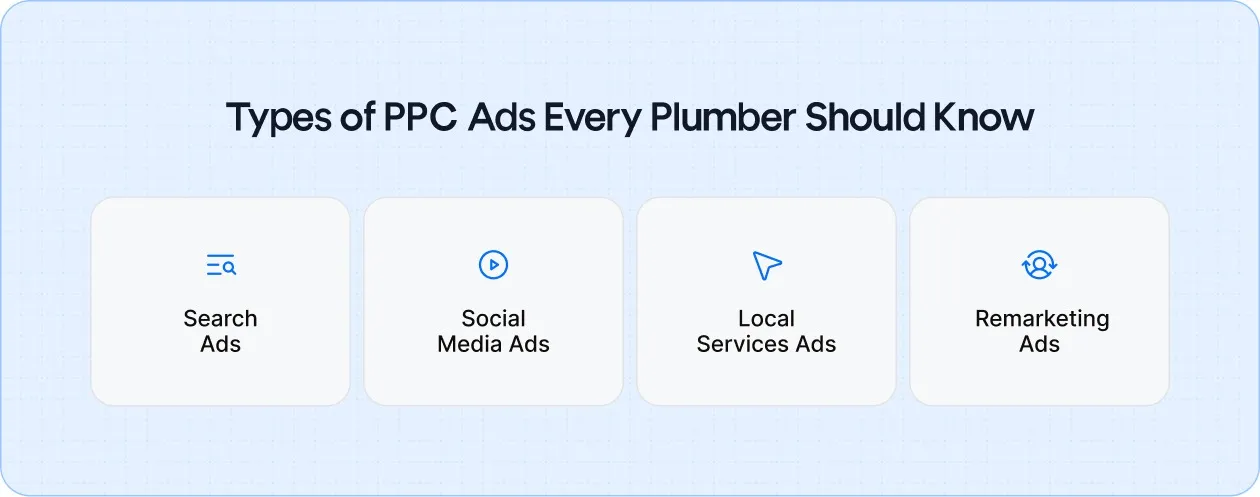
There are different types of PPC ads you can use to help your plumbing business gain visibility, attract leads, and grow. Each type targets a unique audience and serves a specific purpose in your marketing strategy.
Let’s take a look at the key types of PPC ads every plumber should consider:
1. Search Ads: Capture Ready-to-Buy Customers
Search ads are perfect for reaching customers who are actively looking for plumbing services right now. These ads appear at the top of Google search results when someone types in high-intent keywords like "plumber near me" or "emergency pipe repair Chicago".
These searchers are looking for help and are ready to hire.
Why it works:
- High intent: People searching for specific plumbing services are usually ready to book.
- Immediate visibility: Get your business seen in the search results instantly without having to wait for SEO rankings.
- Targeted audience: You’re reaching people who need your services at the exact moment they’re searching.
2. Social Media Ads: Engage and Build Relationships
Social media ads, especially on platforms like Facebook, Instagram, TikTok, YouTube, and Snapchat, are perfect for getting your business in front of potential customers, even if they aren’t actively searching for a plumber.
Incorporate automation tools and AI-driven solutions like ServiceTitan or Google Smart Bidding to make your social media ads smarter. These tools help optimize your bids, saving you time and money while ensuring your ads are shown to the right people at the right time.
These ads allow you to build brand awareness, showcase your work, and engage with your community.
Why it works:
- Target specific audiences: Use filters like location, age, and interests to show your ads to the right people.
- Show your work: Share before-and-after photos, customer testimonials, and quick tips to showcase your expertise.
- Build trust: Social media gives you the chance to interact with followers directly, creating a sense of connection before they need your services.
3. Local Services Ads (LSA): Capture Local, High-Quality Leads
Local Services Ads (LSAs) are an excellent tool for plumbers. These ads appear at the top of Google search results when people search for plumbing services in your area.
The key advantage is that you only pay when someone contacts you directly, either by phone or message.
Why it works:
- Hyper-local targeting: Only pay for leads that come from your specific geographic area.
- Pay-per-lead: You’re charged only when someone takes the next step and contacts you, making it cost-effective.
- Trust-building: LSAs display a Google Guaranteed badge, which can increase trust and encourage potential customers to choose your services over others.
4. Remarketing Ads: Re-engage Potential Customers
Remarketing ads allow you to target people who have previously visited your website or interacted with your ads but didn’t take action.
Remarketing ads can also benefit from time-of-day bidding adjustments. If you’re offering emergency plumbing services, adjusting your ads to show more frequently during late nights or weekends can capture customers who need help immediately but may not think to search for a plumber outside of regular business hours.
These ads keep your plumbing business top-of-mind, giving those visitors another chance to convert into customers.
Why it works:
- Warm leads: You're targeting people who have already shown interest in your services.
- Cost-efficient: You’re focusing on people who are already familiar with your business, improving your chances of conversion.
- Improve conversions: Offering a special discount or reminder about your services can help nudge people to take action.
Simple Steps to Set Up a Plumbing PPC Campaign That Works
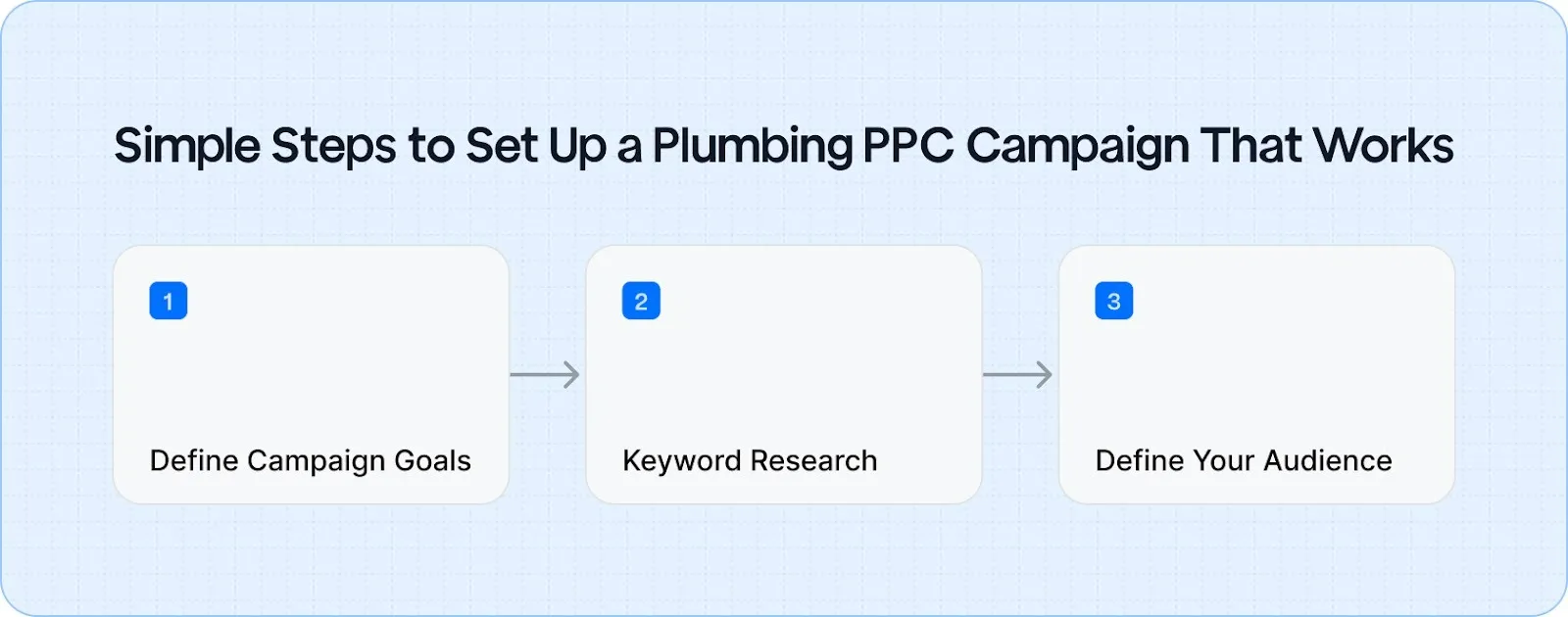
Follow these steps to create a campaign that drives results:
Step 1: Define Campaign Goals
Before diving into your ads, decide what you want to achieve. Are you looking for more calls? Want to generate leads directly? Or maybe your goal is to increase brand awareness? By defining your goals, you can shape every part of your campaign to serve your business objectives.
Having a clear goal means you can measure success and adjust along the way. You'll quickly see what's working, what's not, and where to focus your budget for the best results.
Step 2: Keyword Research
Effective keyword selection is crucial for your plumbing PPC management. Focusing on the right keywords ensures your ads reach the people who need plumbing services most.
When selecting keywords, use advanced tools like SEMrush or SpyFu to analyze what your competitors are targeting. These tools can help you find low-competition, high-conversion keywords that may not be immediately obvious but are highly effective in bringing in quality leads.
Here's how to do it right:
a) Long-Tail Keywords: Target Ready-to-Buy Customers
Long-tail keywords like “emergency plumber near me” or “drain repair in Boston” are more specific and show clear intent. These customers are ready to book, and these keywords usually have less competition, making them more cost-effective.
b) Location-Specific Keywords: Go Local
Target keywords that include your service area. Phrases like “plumber in Dallas” help you connect with people looking for services in your area, increasing conversion rates and reducing wasted spend.
c) Service-Specific Keywords: Get Detailed
Use specific keywords related to the exact plumbing services you offer, such as “pipe leak repair” or “water heater installation.” This ensures your ads show up for people looking for exactly what you provide.
d) Branded vs. Non-Branded Keywords
- Branded Keywords: Target people already familiar with your business (e.g., “XYZ Plumbing services”).
- Non-Branded Keywords: Reach new customers by targeting general terms like “emergency plumbing services.”
e) Competitor Keywords: Stay Competitive
Look at the keywords your competitors are targeting. This can reveal opportunities to target underused keywords and areas where your competition is excelling.
f) Seasonal Keywords: Stay Relevant Year-Round
Target keywords that reflect seasonal plumbing needs, like “frozen pipe repair in winter.” This keeps your business top-of-mind when customers need you most.
Step 3: Define Your Audience
Targeting the right audience is key to making your PPC ads work for you. Geo-targeting allows you to focus your ads on people in your local area, so you’re only paying for clicks from potential customers who are close enough to use your services.
Time-of-day adjustments let you control when your ads show up, such as during peak hours for emergency plumbing issues or in the early morning for routine repairs.
This helps make sure you’re not wasting money on ads when people aren’t likely to be looking for plumbing services.
By narrowing your focus to the right local area and time frame, you can ensure your ad spend is as efficient as possible, getting in front of people when they need you most.
How to Create Ads That Drive Immediate Action
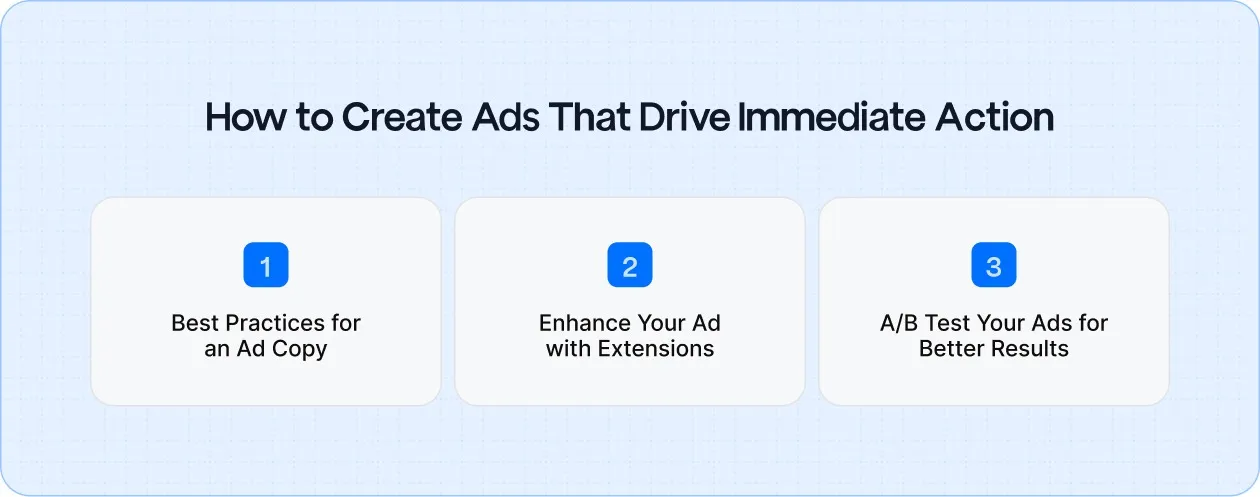
Creating PPC ads that stand out in a crowded space can be the difference between getting a click and getting lost in the shuffle. It’s about making sure your ads speak directly to people’s needs and encourage them to take action.
Here’s how to create ads that work:
Best Practices for an Ad Copy
When potential customers search for plumbing services, they’re often in a time-sensitive situation. Maybe their pipes just burst, or their water heater stopped working in the middle of the night.
Align your ad copy with customer intent and local needs. Just like how AI models must be trained on accurate data to avoid bias, your PPC ad copy should be personalized to solve the specific plumbing problem your local audience faces. If you’re running ads for a water heater repair, make sure your ad copy clearly communicates that you provide emergency repair services, especially during off-hours.
This is where your ad copy needs to speak directly to their urgency. Use words that evoke a sense of immediacy, like “24/7 Emergency Plumbing, Call Now” or “Same-Day Service Available, Call Us Today”.
Why it works:
- Urgency encourages immediate action. People want solutions fast, and your ad needs to show them that you can provide exactly that.
- Relevance is key. Make sure your ad directly addresses the problem your customers are facing. If they're searching for "plumbing repairs," they want a plumber who can come right away.
Remember, you’re offering a solution to a problem. The clearer and more urgent your message, the more likely people are to call.
Make Your Ad More Informative Using Ad Extensions
Ad extensions are a simple and powerful way to provide more information in your ad without cluttering the main copy. These extra details, like phone numbers, location, and site links, make it easier for potential customers to reach you and find exactly what they need.
- Phone numbers: Including a phone number in your ad makes it easy for customers to call directly with a single click. For a plumber, this is huge. People often want to call right away to get service scheduled.
- Location extensions: Show customers your physical address or service area, making it clear you're nearby and ready to help. This adds credibility, especially for local searches.
- Site link extensions: Provide additional links that take people directly to specific pages like “Emergency Plumbing” or “Free Estimates.” This improves Click-Through Rate (CTR) and gives potential customers a clear path to conversion.
Why it works: These extensions add more touchpoints for customers to engage with your ad. The more accessible and informative your ad is, the more likely people are to click through.
Pro Tip: Include ad extensions to provide more information, like contact numbers or direct links to emergency services pages, making it easier for users to reach out.
A/B Test and Improve Your Ads to Get Better Results
By testing different variations of your ads, including headlines, calls-to-action (CTAs), and visuals, you can discover which versions resonate most with your target audience.
What you should test:
- Headlines: Does your audience respond better to "Emergency Plumbing – Available 24/7" or "Fix Your Plumbing Today, Call Now"?
- CTAs: Try different phrases like “Request a Quote” vs. “Call for Immediate Service” to see which drives more action.
- Visuals: Test images of your team in action vs. simple before-and-after photos. Which one prompts more engagement?
Why it works: By testing and optimizing your ads, you can ensure that each ad you run is fine-tuned to perform its best. Even small tweaks can make a big difference in conversion rates.
Manage Your PPC Budget and Bidding Strategy
Smart budgeting is key to maximizing your ROI. Breaking up your budget, similar to a "data chunking" method, ensures that each dollar spent is efficient. Consider setting aside a portion of your budget for experimental campaigns or for specific services, like drain cleaning or water heater installation.
This method allows for a more controlled and effective ad spend, ensuring you get the best possible results for each type of service.
Set a Realistic Budget
Knowing your budget range is key to effective PPC. For most plumbing businesses, this can range from $1,500 to $10,000 per month, depending on size and competition. Start small, track results, and scale based on what works.
Bidding Strategies
Choose the right bidding strategy to get the best value for your spend.
- CPC (Cost-per-Click) works for initial tests.
- CPA (Cost-per-Acquisition) is great for focusing on leads.
- Maximize Conversions automatically adjusts for the highest ROI.
Adjust for High-Performing Keywords
Monitor which keywords are bringing in quality leads and increase your budget for those high performers. This ensures your ad spend is focused on what drives results.
DIY PPC vs. Hiring an Expert: Which Is Right for Your Business?
When it comes to managing your PPC campaigns, the decision to handle them in-house or bring in a professional can significantly impact your results. For small plumbing businesses, DIY PPC can be a cost-effective solution if you're willing to dedicate time and effort.
However, hiring a plumber PPC agency can provide specialized knowledge and lead to better results as your business grows.
Here's a breakdown of the key differences to help you decide which option best suits your needs.
Supporting Your Efforts with Optimized Content
While plumber PPC services are effective for immediate visibility, building a strong foundation with SEO-driven content can enhance your results over time. Creating high-quality, optimized content that ranks well in search engines can naturally draw more traffic to your website, reducing your reliance on paid ads.
This long-term strategy strengthens your overall online presence, increasing the chances that paid clicks lead to conversions.
Suggested Read: SEO Strategies for Plumbing Businesses to Rank Locally
Want to take your PPC and SEO efforts to the next level?
Combine PPC strategies with SEO-driven content to maximize your results and grow your business.
Drive Results Now
Key Takeaways to Make Your Plumbing PPC Campaigns Work for You
PPC for plumbers can deliver fast results by turning clicks into valuable leads. With the right ad types, a clear budget, and continuous optimization, your plumbing business can experience real growth.
PPC helps you connect with local customers who are actively looking for plumbing services, and with regular adjustments, you can make sure your investment continues to pay off.
A well-planned plumbing PPC campaign ensures you’re getting the most out of your advertising efforts. Starting out or aiming to expand, taking a strategic approach will help you reach more qualified customers.
Want to make sure your content is working hand-in-hand with your PPC efforts?
Get in touch with Gushwork to explore how content strategies and SEO optimization can help maximize your results.
Get Your Free Consultation
Digital Marketing
Nov 20, 2025
5 mins
Electricians Lose Dozens of Good Projects Each Month Because They Skip These Lead Basics
Batul Beawarwala
A steady stream of high-quality leads can make all the difference between a busy month and a slow one.
For those in the electrical industry, finding the right projects at the right time is crucial for keeping business flowing smoothly. However, many electricians struggle with outdated methods or miss valuable opportunities due to unclear lead generation strategies.
This guide will walk through practical, proven strategies to help you generate more electrician leads, so your schedule stays full and your business continues to grow.
1. Get Clear on the Electrician Leads You Actually Want
To grow your business, you need to attract the right leads, those who are genuinely interested in your services. Without a clear understanding of the type of work you want, you could end up wasting time on calls that don't turn into paying customers.
By focusing on the right type of leads, you can create content and marketing strategies that are more effective in bringing in the customers who truly need your services.
- Residential Emergency Calls vs. Planned Work
Emergency calls tend to be urgent and can come with higher pricing, but planned work is generally more predictable. Knowing what kind of work you want to focus on can help you decide how to market your services.
- Commercial, Industrial, and Maintenance Contracts
These contracts often involve fewer but larger projects. The sales cycle may be longer, but the contracts are typically more stable and offer bigger returns. Focusing on these can lead to better and steadier work for your business.
- High-Value Projects vs. Low-Margin Time Sinks
It's crucial to know the difference between high-value work that pays well and low-margin projects that take up too much time without offering much profit. Focusing on high-value projects means better returns on your efforts.
Is your current strategy bringing in the projects you actually want?
Adjusting your content to target the right customers can make a big difference.
Create Perfect Growth Strategy
2. Build Strong Foundations Before You Add More Leads
Before you start focusing on getting more people to visit your website, make sure that your website and online presence are set up to convert those visitors into customers.
Having a strong digital foundation ensures you're getting the right traffic that can turn into actual business.
- Clear Service Area, Hours, and Promise on Every Touchpoint
Make sure that your service areas, business hours, and what you offer are clearly visible on your website and other online platforms. This helps potential customers know exactly what you offer and when you're available.
- A Website Designed to Turn Visitors Into Inquiries
Your website should make it easy for visitors to contact you. This means having prominent call-to-action buttons, simple forms, and trust-building elements like reviews and certifications that reassure potential clients.
- Phone Handling, Call Scripts, and Voicemail Rules
Make sure you never miss an important call. Having clear phone scripts and a system in place to manage voicemails ensures that even if you’re unavailable, potential clients can still reach you.
3. Turn Satisfied Customers Into a Steady Stream of Referrals
Word-of-mouth from happy customers is one of the most reliable ways to get new business. When your clients are satisfied, they're more likely to recommend you to others.
Encouraging this can create a cycle of referrals that helps you grow without having to spend extra on ads.
- Simple Referral Asks at the End of Each Project
After completing a job, ask your customers if they know anyone else who might need similar services. A simple and direct request is often all it takes to get new leads.
- Referral Rewards That Still Protect Your Margins
Offering small rewards, like gift cards or priority booking, can motivate customers to refer others without hurting your bottom line. It’s a win-win: you get more leads, and your customers get something in return.
- Building Referral Loops with Industry Partners
Work closely with realtors, property managers, and general contractors. When they see how easy you are to work with, they’ll be more likely to recommend your services to their clients.
4. Local Profiles That Bring You Leads Weekly
Having complete and accurate profiles on platforms like Google Business Profile and Apple Business Connect is key to showing up where your customers are searching.
These profiles are often the first thing potential customers see when looking for local services. Keeping them updated helps increase your visibility and builds trust.
- Google Business Profile and Apple Business Connect
Both of these platforms should include up-to-date service areas, hours, and contact information. This ensures customers know exactly where you are and how to reach you.
- Reviews That Keep Inquiries Coming In
Positive reviews play a significant role in your online visibility. Encourage customers to leave reviews, and always respond to them to build trust with future customers.
- Photos, Posts, and FAQs to Answer Questions Before the Call
Use photos of your work, post regular updates, and answer frequently asked questions on your profiles. This helps potential clients make decisions quickly without having to call first.
5. Drive Relevant Traffic with Local SEO for Electricians
Local SEO ensures that your business shows up when people search for specific services in their area. By targeting the right search terms and creating pages that meet those needs, you’ll attract traffic that’s more likely to convert into real business.
- High-Intent Keywords for Electrical Work in Your Service Area
Focus on specific keywords like “emergency electrician near me” or “electrical repair in Chicago” that show people are ready to book a service.
- Service Pages for the Work You Want More Of
Create dedicated pages for the services you want to focus on, such as “EV charger installation” or “panel upgrades,” so customers know exactly what you offer.
- Location Pages Built Around Real Projects and Testimonials
Use real project examples, photos, and testimonials from clients in specific locations to build trust and improve your local SEO.
Want to ensure your content gets found by the right customers?
Strong content starts by addressing the real problems and decisions your customers face.
Optimize Your Local SEO Strategy
6. Create Content That Attracts the Right Projects
Attracting the right electrical projects starts with creating content that speaks directly to the needs of your potential clients. By answering their questions and providing valuable insights, you position yourself as an expert, ready to solve their problems.
The goal is to ensure that when customers search for electrical services, your content is what they find.
- Blog Topics Homeowners Actually Search Before They Hire
Homeowners are likely to search for practical information before making a decision. Your content should focus on topics such as:
- “How to ensure your electrical system is safe” (Safety checks)
- “Should I repair or replace my circuit breaker?” (Repair vs. Replace)
- “What is the cost to upgrade my panel?” (Cost breakdowns)
These questions should guide your blog topics, positioning you as the go-to expert in your area.
Want to ensure your blog topics stand out to homeowners?
With expert guidance, your content can speak directly to your target audience's needs.
Create Engaging Content
- Short How-To and Explainer Videos That Move Viewers to Call
Videos are a great way to showcase your expertise. Short how-to videos or explainer videos help homeowners understand their issues and your services.
For example, a video on “How to identify a faulty breaker” or “The steps involved in a panel upgrade” can build trust and encourage viewers to reach out for help.
- Project Case Studies for Commercial and Industrial Buyers
Case studies are especially valuable for larger projects. Sharing before-and-after photos, timelines, and outcomes helps commercial and industrial clients understand what they can expect from working with you.
This builds credibility and makes it easier for decision-makers to choose your business over competitors.
7. Use Social Channels to Directly Drive Work
Social media is often overlooked as a serious lead-generation tool. However, platforms like Facebook, Instagram, and Nextdoor can help you connect with homeowners and local businesses who need electrical services.
When done right, social media can bring in a steady flow of qualified leads.
- What to Post Weekly on Facebook, Instagram, and Nextdoor
Keep your social media feeds engaging with a mix of content, such as:
- Completed project photos
- Client testimonials and reviews
- Behind-the-scenes looks at your work
- Answers to frequently asked questions (FAQs)
This kind of content shows potential clients that you’re active, trustworthy, and capable of handling their electrical needs.
- Joining Local Groups Without Spamming the Feed
Engage with local Facebook and Nextdoor groups by answering questions, providing safety tips, and offering advice, without pushing your services too aggressively.
Position yourself as an expert by providing helpful, insightful responses that demonstrate your knowledge.
- Tracking DMs and Comments So No Inquiry Gets Ignored
DMs and comments are easy to miss if you’re not careful. Set up a simple system to track all social inquiries and move them into your CRM for follow-up. This ensures no opportunity slips through the cracks.
8. Paid Channels That Work for Electricians
Paid ads can bring in a lot of leads, but they need to be carefully managed. When used correctly, they can target people who are actively looking for electrical services in your area. Here’s how to make the most out of paid advertising.
- When Google Local Services Ads Are Worth the Effort
Google Local Services Ads (LSAs) are a great way to get your business in front of people who are actively searching for services like yours.
Make sure you meet Google’s requirements for verification and reviews, and track the results to ensure it’s a good investment.
- Smart Google Ads for Emergency, High-Margin, and Seasonal Work
Google Ads can be especially useful for emergency work or high-demand services like panel upgrades or seasonal projects.
Consider running call-only campaigns to let potential clients contact you immediately, or landing-page campaigns to direct them to detailed service information.
- Social Ad Campaigns to Stay Visible Between Emergencies
Even when there isn’t an emergency, you can use social media ads to keep your business top of mind. Promote your services, offer seasonal discounts, or retarget previous visitors with special offers.
This way, your business is always visible when someone needs an electrician.
9. Get the Most from Lead Marketplaces
Lead marketplaces like Angi, HomeAdvisor, and Thumbtack can be helpful for finding new customers, but you need to approach them carefully to ensure you're getting the best return on investment.
- Pros and Cons of Angi, HomeAdvisor, and Similar Sites
These platforms can connect you with potential clients, but they come with fees and often require you to compete with other service providers.
It’s important to evaluate if these platforms are bringing in quality leads and adjust your strategy accordingly.
- Response Speed and Scripts That Help You Win Shared Leads
Being quick to respond is crucial when using lead marketplaces. A prompt reply, combined with well-crafted scripts and personalized quotes, can make the difference between winning the lead and losing it.
By addressing the potential customer's needs right away, you increase your chances of turning inquiries into actual jobs.
- When to Scale Back or Drop a Marketplace Based on the Numbers
Track your ROI carefully. If a marketplace isn’t delivering quality leads or if the cost per lead is too high, it may be time to scale back your investment or drop it altogether.
10. Offline Tactics to Generate Electrician Leads
Offline marketing, when combined with your online efforts, can create a powerful, multi-channel lead-generation strategy.
- Vans, Uniforms, and Yard Signs That Act as Moving Ads
Your branded service vehicles, uniforms, and yard signs are all opportunities to market your business wherever you go. Make sure they include your contact details and are easily visible.
- Door Hangers, Mailers, and QR Codes Tied to Tracking Links
Traditional marketing methods like door hangers and mailers still work, especially when paired with QR codes or unique tracking links that direct customers straight to your website or booking page.
- Community Events, Workshops, and Sponsorships That Lead to Calls
Sponsoring local events or hosting workshops is a great way to build awareness and establish trust with your community. These efforts can turn into valuable leads without much upfront cost.
11. Systems to Ensure Fast Response to Every Inquiry
A delay could lead to losing the job to a more responsive competitor.
- Speed-to-Lead Targets for Phone, Forms, Email, and Chat
Establish clear goals for how quickly you respond to each type of inquiry. The faster you respond, the more likely you are to convert the lead into a customer.
- SMS and Email Templates for Quotes, Follow-Ups, and Reminders
Having pre-written templates for quotes, follow-ups, and reminders can save time and ensure your communication is always consistent and professional.
- Call Routing, Voicemail Rules, and After-Hours Options
Set up a system for routing calls and managing voicemails to ensure potential customers can always reach you or get the information they need, even outside of business hours.
A 90-Day Plan to Steady Your Lead Flow
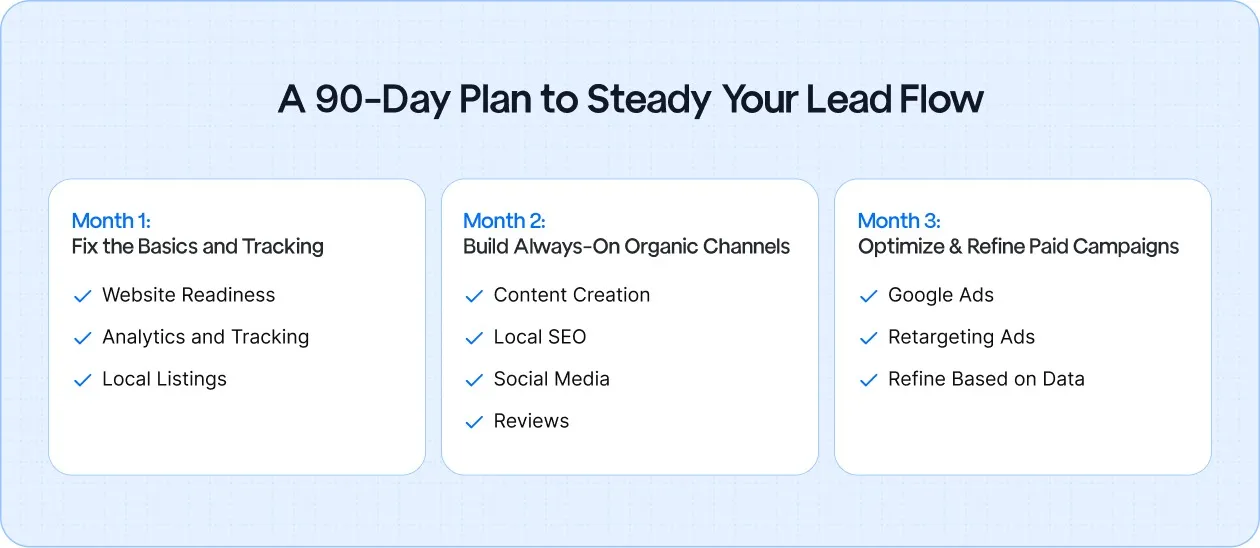
Building a steady flow of leads takes time and a structured approach. This 90-day plan will guide you through the key phases to ensure that your efforts are focused and effective.
Weeks 1-2: Fix the Basics and Tracking
Start by setting up the foundations of your digital presence:
- Website Readiness: Ensure your site is easy to navigate and mobile-friendly. Include clear contact options to make it simple for potential clients to reach out.
- Analytics and Tracking: Set up Google Analytics and tracking tools to measure what’s working and where your leads are coming from.
- Local Listings: Update your Google Business Profile and Apple Business Connect for accurate, consistent information that helps local customers find you.
These steps ensure you're prepared for the next phases and can track the success of your efforts.
Month 1-2: Build Always-On Organic Channels
Once your basics are in place, focus on organic lead-generation channels:
- Content Creation: Publish blog posts that answer common customer questions or showcase your services. This will help drive organic traffic.
- Local SEO: Optimize for local keywords and create location-specific pages to improve your search visibility.
- Social Media: Engage with your community through regular posts, sharing customer testimonials and project photos to build trust.
- Reviews: Encourage customers to leave reviews, which can improve your local rankings and provide social proof.
This phase will help build lasting, cost-effective channels that continue to bring in leads over time.
Month 3: Add Paid Campaigns and Refine What Works
Now that your organic channels are in place, complement them with paid campaigns:
- Google Ads: Target high-intent keywords such as “electrician near me” with paid ads to bring in qualified leads quickly.
- Retargeting Ads: Reach out to past visitors who didn’t convert by showing them targeted ads, keeping your business top of mind.
- Refine Based on Data: Analyze the results from both your organic and paid efforts. Focus on the strategies that are driving the best results and adjust your campaigns accordingly.
This phase helps accelerate your lead flow, driving more immediate results while refining your ongoing strategy.
Strengthen Your Lead Generation for Sustainable Growth
Consistent lead generation is the key to keeping your electrical business growing, especially in a competitive market. By focusing on building long-term, reliable lead streams, you ensure that your business remains visible and relevant to the right customers.
A balanced approach of free strategies like referrals, SEO, and social media, paired with paid methods such as Google Ads and Local Services Ads, can help you build a sustainable and scalable lead generation system.
This combination ensures you're attracting high-quality leads while optimizing your resources for maximum efficiency.
Looking to improve your lead generation strategy and achieve tangible results
Let Gushwork help you in creating a content strategy that attracts and converts high-quality leads consistently.
Book a Free Consultation
FAQs
Q1: How can I generate more leads for my electrical business?
A1: Generating leads starts with ensuring your business is easy to find. Focus on local SEO, optimize your Google Business Profile, and encourage satisfied customers to leave reviews. Content marketing, like blog posts and videos, also helps attract organic traffic. Paid ads and lead services can bring in quick results, but a strong, consistent organic presence is key to long-term growth.
Q2: What is local SEO, and how can it help my electrical business?
A2: Local SEO helps your electrical business show up in searches specific to your service area. By optimizing your Google Business Profile, using location-based keywords, and encouraging reviews, you increase your chances of appearing at the top of local search results. This can lead to more calls and visits from people looking for electricians nearby.
Q3: Should I focus on organic or paid marketing for my electrical business?
A3: Both are important. Organic marketing, such as SEO and social media engagement, builds long-term, sustainable traffic. Paid marketing, like Google Ads and Local Services Ads, can give you quick visibility for high-demand services. A balanced approach that combines both is often the most effective strategy.
Q4: How do I create content that will attract more electrical leads?
A4: Focus on creating content that answers common questions and addresses the pain points of your target customers. Blog about topics like safety tips, cost breakdowns, and how to choose the right electrical services. Video content and project case studies are also great for showcasing your expertise. Ensure your content includes location-specific keywords for better local visibility.
Q5: What are the best strategies for converting leads into customers?
A5: Quick follow-ups are crucial—responding to inquiries within minutes can significantly increase your chances of closing the deal. Make sure your website is designed to convert, with clear CTAs (calls to action), easy contact options, and trust signals like testimonials. Also, offer incentives for referrals and repeat business to keep customers coming back.
Q6: How can social media help my electrical business generate leads?
A6: Social media platforms like Facebook and Instagram allow you to showcase your work and engage with your community. Posting before-and-after photos, customer testimonials, and helpful electrical tips keeps your audience engaged. You can also use social media ads to target specific customer demographics, further driving leads.
Q7: How do I track the performance of my lead generation efforts?
A7: Use tools like Google Analytics to monitor website traffic and conversion rates. Track key metrics such as click-through rates (CTR) for ads, number of calls generated, and form submissions. Set up tracking for all paid campaigns and organic channels to understand which efforts are bringing in the most valuable leads, so you can adjust your strategy accordingly.
SEO
Nov 20, 2025
5 mins
Empty Order Book? You’re 6 Strategies Away From Winning Carpet Cleaning SEO
Ishani Mitra
You could be the best carpet cleaner in your city, punctual, polite, and thorough, but if no one can find you online, your phone stays quiet. That’s the frustrating part: your quality isn’t the problem. Visibility is.
Today, people don’t ask neighbors first; they ask Google. And if your business doesn’t show up there, someone else gets the job, usually a company that’s not even half as good as you.
Carpet cleaning SEO ensures your business shows up when someone nearby searches for what you do best. It helps your name, your reviews, and your work get seen by the right people at the right time.
In this blog, we’ll walk through what carpet cleaning SEO really is, what a proper setup looks like, and how you can use simple steps to get found, trusted, and booked more often.
What Is Carpet Cleaning SEO?
Carpet cleaning SEO is the process of helping your carpet cleaning business show up in local search results when people nearby look for services.
In plain terms, it’s how you make sure potential customers find your business first when they’re ready to book a cleaning.
Here’s what it really means:
- Local Visibility: Google uses your location, reviews, and business info to decide who shows up in the “map pack.” A complete and active Google Business Profile gets you there faster.
- Website Clarity: When your website clearly explains what you do like stain removal, deep cleaning, or upholstery work and uses the right local keywords, it helps search engines understand your services and show them to the right people.
- User Trust: Real reviews, before-and-after photos, and clear contact details tell potential customers they can rely on you.
- Performance & Accessibility: A fast, mobile-friendly website keeps people from bouncing and tells Google your business is reliable.
How Does It Work?
When someone searches for a local carpet cleaner, Google checks a few things before showing results:
- Relevance: Does your business clearly mention carpet cleaning services?
- Distance: Are you close enough to the searcher’s location?
- Prominence: Does your business look credible; through reviews, photos, and activity?
Your SEO efforts strengthen these signals. Most homeowners start their search online before calling a carpet cleaner. They want someone nearby, available soon, and trustworthy.
Understanding how SEO works is one thing, but seeing it in action is where the picture gets clear.
What Does a Good Carpet Cleaning SEO Setup Look Like?
Here’s what makes an effective setup and how to get each part right:
1. A Google Business Profile (GBP)
If SEO had a front door, this would be it. Your Google Business Profile is what most people see first, even before your website. It’s your online business card, review hub, and map pin all in one.
What to do:
- Choose Carpet Cleaning Service as your main category and add all related services like Upholstery Cleaning, Pet Odor Removal, or Rug Cleaning.
- Fill in every detail: hours, service areas, phone number, and your website link.
- Upload real photos: before-and-after shots, your team, your van, your equipment.
- Post short updates weekly (special offers, cleaning tips, or seasonal reminders).
- Ask every happy customer for a Google review and respond to each one politely.
2. A Clear, Simple Website
Your website should be built for humans first and then for Google. For that, your website needs to help people understand what you do and make it easy to call or book.
What to include:
- A dedicated page for every service you offer like “Deep Carpet Cleaning,” “Stain Removal,” or “Upholstery Cleaning.”
- Each page should have:
- A short intro explaining the service.
- A few benefits (e.g., “removes tough stains,” “safe for pets and kids”).
- Before-and-after photos.
- A clear call to action (like “Book a Cleaning” or “Call for a Free Quote”).
- Add one page per main service area.
3. Local Keywords
SEO keywords should sound like something your customers would actually type. That’s how Google connects your pages to the right people.
Examples:
- “Carpet cleaning in [City]”
- “Best carpet cleaner near me”
- “Pet odor removal service”
- “Steam cleaning carpets in Wisconsin”
Use these naturally in your page titles, subheadings, and a few times in the text. Also, write short meta descriptions (the small text under your page title in search results) that tell people what you offer and where.
4. Technical Basics
Behind every good website is a bit of clean, technical work that keeps it fast and smooth. It’s about making sure nothing gets in the way of a good user experience.
Here’s what to check:
- Speed: Your site should load in 3 seconds or less. Large photos or videos slow it down, compress them.
- Mobile-Friendly: Over 70% of searches come from phones. Make sure your text is readable, buttons are easy to tap, and your phone number is clickable.
- SSL Certificate (HTTPS): This adds the little lock icon in the address bar and makes your site secure.
- Sitemap: It’s a file that helps Google understand your site layout. Your developer (or tools like Yoast SEO on WordPress) can generate one.
5. Real Photos, Reviews, and Local Proof
The best marketing is proof. When people see your real work, they trust you. When they read your reviews, they believe you. When both live on your website, they choose you.
What to do:
- Take photos from every job: before-and-after shots work great.
- Add them to your website and your Google Business Profile regularly.
- Highlight customer reviews directly on your site (with permission).
- Show a short intro about your team or your experience: “10+ years in carpet cleaning across Texas.”
6. Links, Listings, and Local Mentions
If your name, address, or phone number (NAP) is inconsistent online, Google gets confused, and so do customers. A clean online footprint helps you appear trustworthy.
What to do:
- List your business on platforms like Yelp, Angi, Thumbtack, HomeAdvisor, and Facebook.
- Make sure your Name, Address, and Phone Number (NAP) match exactly everywhere.
- Partner with other local businesses like property managers, cleaners, or realtors and ask to be mentioned or linked on their sites.
- Sponsor a local event or post about community involvement on your blog or social media.
Bonus: when local partners (like realtors, cleaners, or landlords) mention your business online, those mentions help your SEO grow faster and improve your visibility across your service area.
Turn Searches Into Real Bookings
Get a clean, effective SEO setup that helps your carpet cleaning business show up, get clicked, and get booked.
Build My SEO
The Main Types of Carpet Cleaning SEO
SEO becomes much easier to understand when you break it into three parts. Each one helps your carpet cleaning business get found and trusted in a different way:
Be the First Name Homeowners See
Stay visible, trusted, and busy, without spending on ads.
Boost My Local SEO
The next step is turning that visibility into something measurable, such as calls, bookings, and long-term customers. That’s where strategy comes in.
Practical Carpet Cleaning SEO Steps That Grow Your Business
Once your website, service pages, and Google Business Profile are set up, the next step is to turn those tools into steady jobs. A good carpet cleaning SEO strategy helps you move beyond just being visible. It helps you attract better customers, get more calls, and build trust that lasts.
Here’s how to do that:
1. Track Which Calls Turn Into Real Jobs: Keep a small log of where each call comes from and whether it becomes a paying job. Over time, you’ll see which sources bring real customers and which ones don’t. This helps you focus on what’s actually working instead of guessing.
2. Test Small Changes on Your Website: Try changing a headline or button text and see if more people call. Simple tweaks like “Same-Day Cleaning” or “Get a Quick Quote” often boost results without needing more traffic.
3. Share Pricing and Availability Clearly: Most people hesitate because they don’t know the cost or timing. Add lines like “Starts at $79 per room” or “Same-day slots available before 11 AM.” Clear info makes calling easier and builds trust.
4. Automate Review and Referral Requests: Set up automatic texts or emails after each job. Ask for a review, then follow up with a small referral offer. This keeps new reviews and word-of-mouth leads coming in without extra effort.
5. Improve How Calls Are Answered: Listen to a few recorded calls (with notice). You’ll hear what customers worry about. Create a short script that covers price range, timing, and next steps. Confident answers lead to more bookings.
6. Offer Simple Maintenance Plans: Give customers the option to book yearly or twice-a-year cleanings at a small discount. It keeps business consistent and increases repeat work, which helps both revenue and SEO.
7. Add the Right Schema Tags: Ask your web person to install a few small codes like AggregateRating, Offer, and ImageObject. They don’t change your site visually, but they help Google understand your business better.
8. Get Mentioned Locally: Share small updates or stories with local community pages, neighborhood groups, or business partners. These mentions are strong local SEO signals and help you stay top-of-mind in your area.
9. Focus on High-Value Neighborhoods: Some areas bring better jobs. Test small ZIP-code-based promotions or posts, then create short pages for the neighborhoods that bring the best work.
10. Review Your Numbers Monthly: Check three things: calls from Google, booked jobs, and top-visited service pages. If something drops, adjust the photo, headline, or pricing. Small, steady improvements add up over time.
Check those numbers once a month. If one page or area drops, don’t panic. Tweak a photo, headline, or price. SEO is about small, steady changes that add up over time.
Wrapping Up
Mastering SEO for your carpet cleaning business is not a one-time task but an ongoing process. By optimizing your website, creating valuable content, and building your local presence, you’re setting your business up for long-term success.
Remember, the goal is to make sure your potential customers find you when they need you the most. With the right SEO strategies in place, you can turn search engine traffic into loyal clients who keep coming back.
So, take the steps today to elevate your business’s visibility, and watch your leads, and your reputation, grow. The right SEO approach is your key to staying ahead of the competition. Let’s get started!
Your Skills Deserve the Attention
Build steady calls, better reviews, and stronger visibility with a proven SEO plan for carpet cleaners.
Talk to an SEO Expert
FAQs
1. What’s the difference between SEO and Google Ads for carpet cleaners?
SEO helps your business appear organically in search results without paying for each click, while Google Ads are paid listings that show up instantly but disappear once your budget runs out. With SEO, you build long-term visibility; with Ads, you get quick visibility that stops when you stop spending. A healthy business often uses both together.
2. How do photos and videos help my SEO?
Photos and short cleaning videos show Google (and customers) that your business is active and real. Uploading before-and-after pictures, job-site clips, or customer testimonials regularly helps your profile stay fresh and can boost your visibility in local searches. It also helps people trust you faster than words alone.
3. Should I list my carpet cleaning business on more than one website?
Yes, but do it carefully. Being listed on trusted platforms like Yelp, Angi, Thumbtack, Facebook, and local directories gives Google more proof that your business exists. Just make sure your name, address, and phone number (NAP) match exactly across all sites. Inconsistent listings confuse search engines and hurt your ranking.
4. Can I do carpet cleaning SEO myself, or do I need to hire someone?
You can handle the basics yourself like claiming your Google Business Profile, adding keywords, and collecting reviews. But if you want faster, more consistent results (especially across multiple service areas), hiring an SEO professional can help with technical fixes, content planning, and tracking progress properly.
5. Does posting on social media help my carpet cleaning SEO?
Indirectly, yes. Social media posts, especially those tagged with your city or showcasing your work, create extra signals for Google that your business is active and locally relevant. They also drive visitors to your site, which helps improve engagement metrics that search engines consider when ranking local businesses.

“For the first time, we’re proud to add SEO services. Six months in, impact evident.”
Read Case Study

In Conversation with

Abhijith HK
Founder & CEO of Codewave
Want us to do the same for your business?
Talk to an Expert
.svg)
.svg)

