









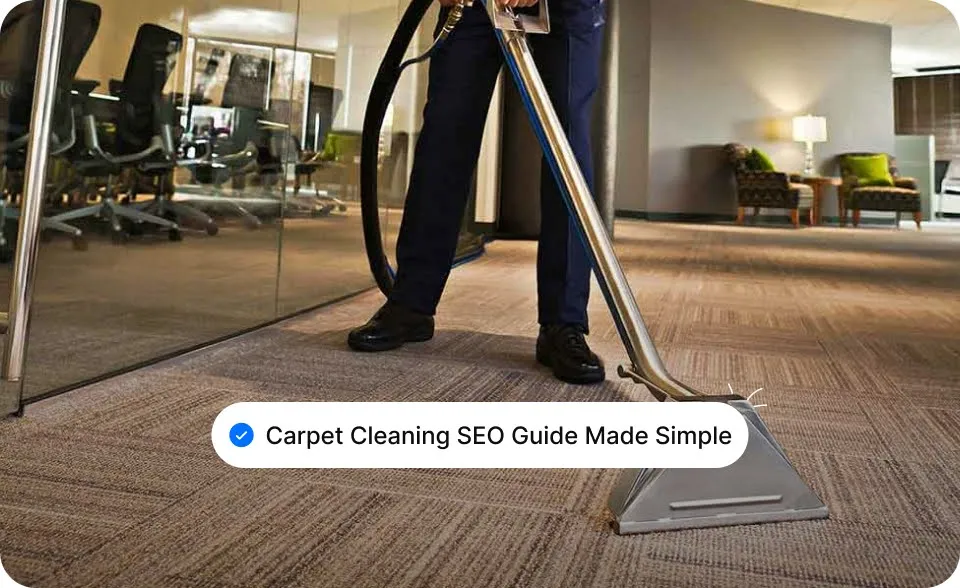
You could be the best carpet cleaner in your city, punctual, polite, and thorough, but if no one can find you online, your phone stays quiet. That’s the frustrating part: your quality isn’t the problem. Visibility is.
Today, people don’t ask neighbors first; they ask Google. And if your business doesn’t show up there, someone else gets the job, usually a company that’s not even half as good as you.
Carpet cleaning SEO ensures your business shows up when someone nearby searches for what you do best. It helps your name, your reviews, and your work get seen by the right people at the right time.
In this blog, we’ll walk through what carpet cleaning SEO really is, what a proper setup looks like, and how you can use simple steps to get found, trusted, and booked more often.
What Is Carpet Cleaning SEO?
Carpet cleaning SEO is the process of helping your carpet cleaning business show up in local search results when people nearby look for services.
In plain terms, it’s how you make sure potential customers find your business first when they’re ready to book a cleaning.
Here’s what it really means:
- Local Visibility: Google uses your location, reviews, and business info to decide who shows up in the “map pack.” A complete and active Google Business Profile gets you there faster.
- Website Clarity: When your website clearly explains what you do like stain removal, deep cleaning, or upholstery work and uses the right local keywords, it helps search engines understand your services and show them to the right people.
- User Trust: Real reviews, before-and-after photos, and clear contact details tell potential customers they can rely on you.
- Performance & Accessibility: A fast, mobile-friendly website keeps people from bouncing and tells Google your business is reliable.
How Does It Work?
When someone searches for a local carpet cleaner, Google checks a few things before showing results:
- Relevance: Does your business clearly mention carpet cleaning services?
- Distance: Are you close enough to the searcher’s location?
- Prominence: Does your business look credible; through reviews, photos, and activity?
Your SEO efforts strengthen these signals. Most homeowners start their search online before calling a carpet cleaner. They want someone nearby, available soon, and trustworthy.
Understanding how SEO works is one thing, but seeing it in action is where the picture gets clear.
What Does a Good Carpet Cleaning SEO Setup Look Like?
Here’s what makes an effective setup and how to get each part right:
1. A Google Business Profile (GBP)
If SEO had a front door, this would be it. Your Google Business Profile is what most people see first, even before your website. It’s your online business card, review hub, and map pin all in one.
What to do:
- Choose Carpet Cleaning Service as your main category and add all related services like Upholstery Cleaning, Pet Odor Removal, or Rug Cleaning.
- Fill in every detail: hours, service areas, phone number, and your website link.
- Upload real photos: before-and-after shots, your team, your van, your equipment.
- Post short updates weekly (special offers, cleaning tips, or seasonal reminders).
- Ask every happy customer for a Google review and respond to each one politely.
2. A Clear, Simple Website
Your website should be built for humans first and then for Google. For that, your website needs to help people understand what you do and make it easy to call or book.
What to include:
- A dedicated page for every service you offer like “Deep Carpet Cleaning,” “Stain Removal,” or “Upholstery Cleaning.”
- Each page should have:
- A short intro explaining the service.
- A few benefits (e.g., “removes tough stains,” “safe for pets and kids”).
- Before-and-after photos.
- A clear call to action (like “Book a Cleaning” or “Call for a Free Quote”).
- Add one page per main service area.
3. Local Keywords
SEO keywords should sound like something your customers would actually type. That’s how Google connects your pages to the right people.
Examples:
- “Carpet cleaning in [City]”
- “Best carpet cleaner near me”
- “Pet odor removal service”
- “Steam cleaning carpets in Wisconsin”
Use these naturally in your page titles, subheadings, and a few times in the text. Also, write short meta descriptions (the small text under your page title in search results) that tell people what you offer and where.
4. Technical Basics
Behind every good website is a bit of clean, technical work that keeps it fast and smooth. It’s about making sure nothing gets in the way of a good user experience.
Here’s what to check:
- Speed: Your site should load in 3 seconds or less. Large photos or videos slow it down, compress them.
- Mobile-Friendly: Over 70% of searches come from phones. Make sure your text is readable, buttons are easy to tap, and your phone number is clickable.
- SSL Certificate (HTTPS): This adds the little lock icon in the address bar and makes your site secure.
- Sitemap: It’s a file that helps Google understand your site layout. Your developer (or tools like Yoast SEO on WordPress) can generate one.
5. Real Photos, Reviews, and Local Proof
The best marketing is proof. When people see your real work, they trust you. When they read your reviews, they believe you. When both live on your website, they choose you.
What to do:
- Take photos from every job: before-and-after shots work great.
- Add them to your website and your Google Business Profile regularly.
- Highlight customer reviews directly on your site (with permission).
- Show a short intro about your team or your experience: “10+ years in carpet cleaning across Texas.”
6. Links, Listings, and Local Mentions
If your name, address, or phone number (NAP) is inconsistent online, Google gets confused, and so do customers. A clean online footprint helps you appear trustworthy.
What to do:
- List your business on platforms like Yelp, Angi, Thumbtack, HomeAdvisor, and Facebook.
- Make sure your Name, Address, and Phone Number (NAP) match exactly everywhere.
- Partner with other local businesses like property managers, cleaners, or realtors and ask to be mentioned or linked on their sites.
- Sponsor a local event or post about community involvement on your blog or social media.
Bonus: when local partners (like realtors, cleaners, or landlords) mention your business online, those mentions help your SEO grow faster and improve your visibility across your service area.
Turn Searches Into Real Bookings
Get a clean, effective SEO setup that helps your carpet cleaning business show up, get clicked, and get booked.


The Main Types of Carpet Cleaning SEO
SEO becomes much easier to understand when you break it into three parts. Each one helps your carpet cleaning business get found and trusted in a different way:
Be the First Name Homeowners See
Stay visible, trusted, and busy, without spending on ads.
The next step is turning that visibility into something measurable, such as calls, bookings, and long-term customers. That’s where strategy comes in.
Practical Carpet Cleaning SEO Steps That Grow Your Business
Once your website, service pages, and Google Business Profile are set up, the next step is to turn those tools into steady jobs. A good carpet cleaning SEO strategy helps you move beyond just being visible. It helps you attract better customers, get more calls, and build trust that lasts.
Here’s how to do that:
1. Track Which Calls Turn Into Real Jobs: Keep a small log of where each call comes from and whether it becomes a paying job. Over time, you’ll see which sources bring real customers and which ones don’t. This helps you focus on what’s actually working instead of guessing.
2. Test Small Changes on Your Website: Try changing a headline or button text and see if more people call. Simple tweaks like “Same-Day Cleaning” or “Get a Quick Quote” often boost results without needing more traffic.
3. Share Pricing and Availability Clearly: Most people hesitate because they don’t know the cost or timing. Add lines like “Starts at $79 per room” or “Same-day slots available before 11 AM.” Clear info makes calling easier and builds trust.
4. Automate Review and Referral Requests: Set up automatic texts or emails after each job. Ask for a review, then follow up with a small referral offer. This keeps new reviews and word-of-mouth leads coming in without extra effort.
5. Improve How Calls Are Answered: Listen to a few recorded calls (with notice). You’ll hear what customers worry about. Create a short script that covers price range, timing, and next steps. Confident answers lead to more bookings.
6. Offer Simple Maintenance Plans: Give customers the option to book yearly or twice-a-year cleanings at a small discount. It keeps business consistent and increases repeat work, which helps both revenue and SEO.
7. Add the Right Schema Tags: Ask your web person to install a few small codes like AggregateRating, Offer, and ImageObject. They don’t change your site visually, but they help Google understand your business better.
8. Get Mentioned Locally: Share small updates or stories with local community pages, neighborhood groups, or business partners. These mentions are strong local SEO signals and help you stay top-of-mind in your area.
9. Focus on High-Value Neighborhoods: Some areas bring better jobs. Test small ZIP-code-based promotions or posts, then create short pages for the neighborhoods that bring the best work.
10. Review Your Numbers Monthly: Check three things: calls from Google, booked jobs, and top-visited service pages. If something drops, adjust the photo, headline, or pricing. Small, steady improvements add up over time.
Check those numbers once a month. If one page or area drops, don’t panic. Tweak a photo, headline, or price. SEO is about small, steady changes that add up over time.
Wrapping Up
Mastering SEO for your carpet cleaning business is not a one-time task but an ongoing process. By optimizing your website, creating valuable content, and building your local presence, you’re setting your business up for long-term success.
Remember, the goal is to make sure your potential customers find you when they need you the most. With the right SEO strategies in place, you can turn search engine traffic into loyal clients who keep coming back.
So, take the steps today to elevate your business’s visibility, and watch your leads, and your reputation, grow. The right SEO approach is your key to staying ahead of the competition. Let’s get started!
Your Skills Deserve the Attention
Build steady calls, better reviews, and stronger visibility with a proven SEO plan for carpet cleaners.
FAQs
1. What’s the difference between SEO and Google Ads for carpet cleaners?
SEO helps your business appear organically in search results without paying for each click, while Google Ads are paid listings that show up instantly but disappear once your budget runs out. With SEO, you build long-term visibility; with Ads, you get quick visibility that stops when you stop spending. A healthy business often uses both together.
2. How do photos and videos help my SEO?
Photos and short cleaning videos show Google (and customers) that your business is active and real. Uploading before-and-after pictures, job-site clips, or customer testimonials regularly helps your profile stay fresh and can boost your visibility in local searches. It also helps people trust you faster than words alone.
3. Should I list my carpet cleaning business on more than one website?
Yes, but do it carefully. Being listed on trusted platforms like Yelp, Angi, Thumbtack, Facebook, and local directories gives Google more proof that your business exists. Just make sure your name, address, and phone number (NAP) match exactly across all sites. Inconsistent listings confuse search engines and hurt your ranking.
4. Can I do carpet cleaning SEO myself, or do I need to hire someone?
You can handle the basics yourself like claiming your Google Business Profile, adding keywords, and collecting reviews. But if you want faster, more consistent results (especially across multiple service areas), hiring an SEO professional can help with technical fixes, content planning, and tracking progress properly.
5. Does posting on social media help my carpet cleaning SEO?
Indirectly, yes. Social media posts, especially those tagged with your city or showcasing your work, create extra signals for Google that your business is active and locally relevant. They also drive visitors to your site, which helps improve engagement metrics that search engines consider when ranking local businesses.

.webp)







.webp)



.svg)


