









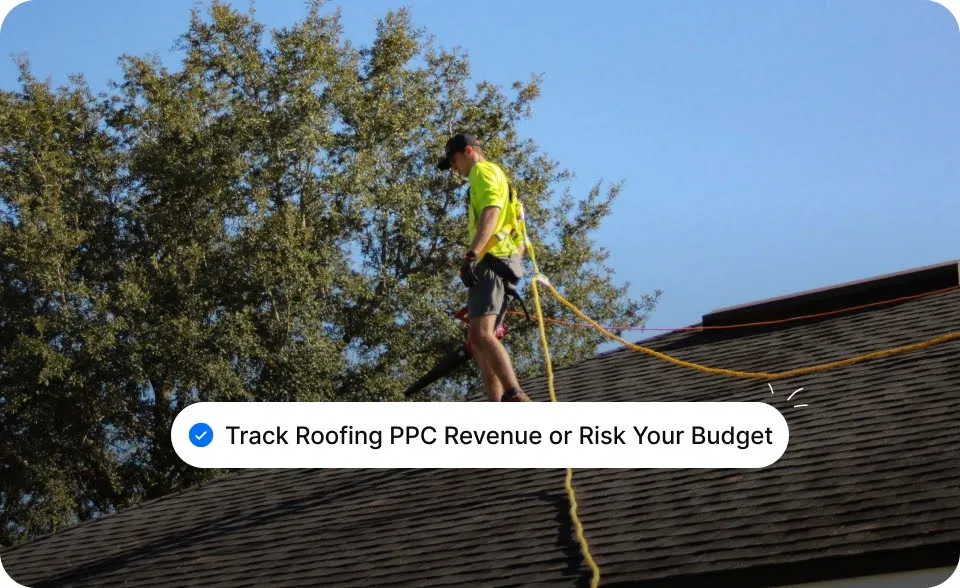
Ever feel like roofing jobs come in waves? One week the phone won’t stop ringing, the next week it’s dead quiet. Most roofing companies chalk this up to “seasonality,” but a lot of it actually comes down to visibility. Homeowners only call the roofers they notice first. Today, the visibility factor is decided by Google.
This is where roofing PPC becomes your competitive edge. PPC gets you in front of motivated homeowners in the critical “I need a roofer right now” moment, long before they scroll to another company or ask a neighbour for a referral. Master it, and you’ll never have to rely on unpredictable seasons to keep your crews busy.
In this blog, we’ll break down what roofing PPC really is, how it drives steady, high-intent leads, and the exact steps to build campaigns that produce real revenue, not just impressions and clicks.
What is Roofing PPC?
When you need a new customer, you need to be where they are looking for you.
When a roof starts leaking or shingles come loose, homeowners don’t wait. They grab their phone and search something like “roof repair near me.” In that moment, the companies that show up right at the top, often with a small “Sponsored” label, instantly become the first options they consider.
That’s the power of Pay-Per-Click (PPC) advertising for roofing businesses. It puts you in front of real people with real intent, at the exact time they need help.
Instead of crossing your fingers with slow organic methods or outdated referrals, PPC gives you a direct line to ready-to-hire customers. You only pay when someone actually clicks, meaning every dollar goes toward a genuine opportunity to win the job.
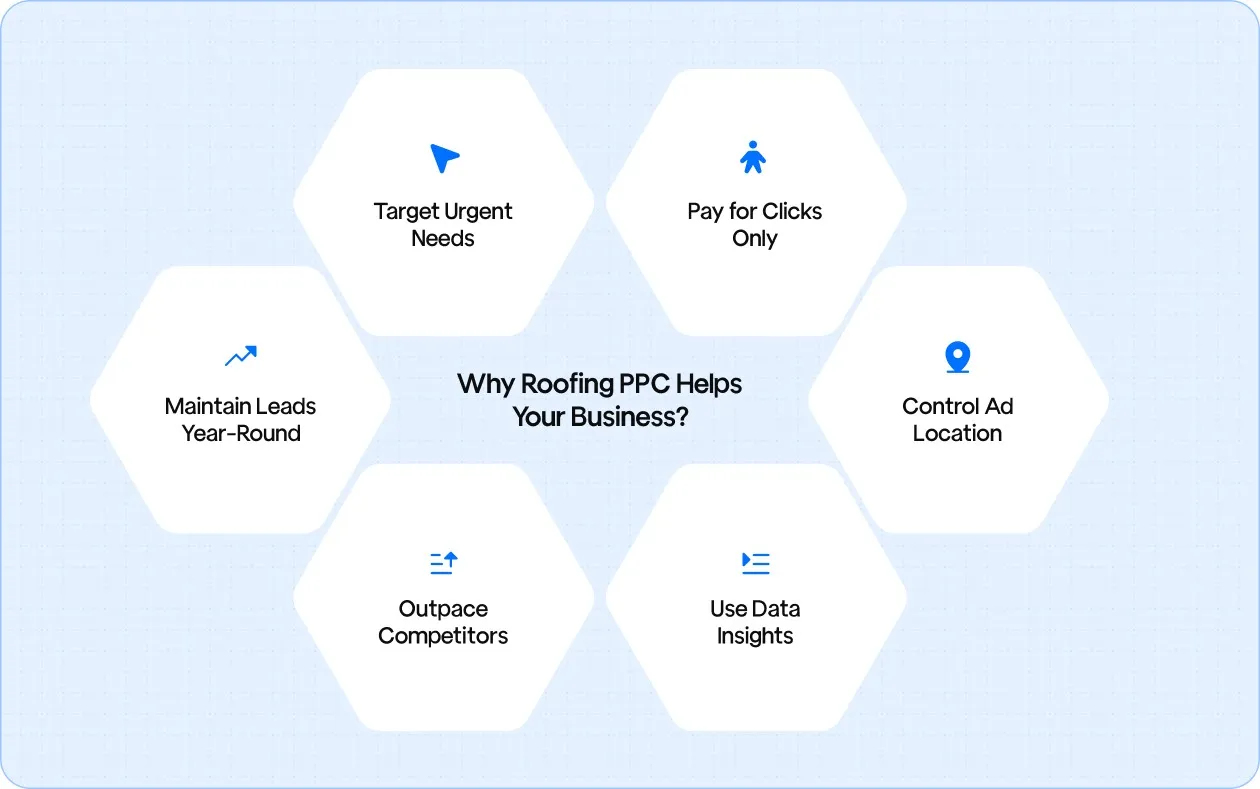
Why Roofing PPC Helps Your Business?
Roofing PPC is simply using this PPC system specifically to advertise your roofing services.
It's different from general advertising because it is incredibly focused.
1. You show up at the exact moment someone needs a roofer
Most roofing jobs come from urgent situations: leaks, storms, missing shingles, insurance claims. When people need help, they grab their phone and type the problem into Google. Roofing PPC puts your business right at the top of those results.
2. You only pay when someone is actually interested
Unlike billboards or mailers, PPC doesn’t charge you just for showing your ad. You pay only when someone clicks because they want to learn more.
3. You get to choose exactly who sees your ads
You can choose the towns, ZIP codes, or neighbourhoods you want more jobs from, and block the areas you don’t want.
So if a certain ZIP code brings better customers or easier jobs, you can focus all your ads there.
4. You learn what customers want based on real data
PPC tells you which messages get clicks, which towns bring better customers, and which services people search for most. You don’t need to guess.
5. You stay ahead of competitors
Competitors who run ads often show up first, but the good news is that a clever PPC campaign can help you claim that top spot whenever it matters most.
PPC helps you stay visible so homeowners see you first instead of them.
6. PPC works even during slow seasons
Roofing often slows down in winter or in months without storms. PPC helps keep calls steady so your business doesn’t go silent.
PPC gives your roofing company an immediate voice on the first page, directly connecting you with the highest-quality, most urgent leads in your area.
How To Build A Roofing PPC Campaign?
Roofing PPC only delivers results when every piece of the setup is handled correctly. This section breaks it down:
Start With Clear Goals And A Simple Budget
Roofing PPC clicks often cost more not because the jobs are high value, but because many contractors compete for the same keywords. When more people bid on a specific keyword, Google raises the price; it’s pure supply and demand. This is why starting without a clear plan can burn money fast.
Your goals tell Google the type of customers you want.
Your budget tells Google how aggressively it should go find them.
Put these two together and your ads reach people who are ready to book a job instead of casual browsers.
What this looks like:
- Decide what you count as a “real lead.” For roofing, that’s usually a 60-second call, a form submission, or a booked inspection.
- Start with a test budget that won’t stress you out while you learn.
- Pay attention to cost per booked job, not cost per click. Roofing owners often panic at high click costs, but clicks don’t pay you, jobs do.
Choose The Right Ad Types For Roofing Jobs
Someone with a roof leak at 9 PM isn’t reading 10 websites. They want the first roofer who can show up. Someone replacing a 20-year-old roof wants estimates and comparisons.
Different ad types help you reach each type of customer. If you use only one, you lose half of the market.
The roofing ad types:
- Search Ads: These appear when people type things like “roof repair near me.” Great for repair and replacement leads.
- Call Ads: These show only on phones and push people to call you right away. Best for emergency jobs.
- Local Services Ads (LSAs): These sit at the very top of Google with a “Google Guaranteed” badge. You pay only when the lead calls.
For most roofing businesses, a mix of all three works best.
Organize Your Campaigns Around Real Roofing Needs
People don’t search for roofing in the same way. A “roof leak fix” customer wants someone today. A “roof replacement estimate” customer wants pricing and options. An “inspection” customer wants safety and certifications.
When you group your ads by the type of job, each ad becomes more relevant and more likely to convert.
Simple structure that always works:
- Emergency Roof Repairs
- Full Roof Replacements
- Roof Inspections & Certifications
- Storm Damage Insurance Claims
Each group gets its own ads, keywords, landing page, and call-to-action.
Pick Roofing Keywords That Bring Real Buyers
Keywords tell Google who to show your ad to. Some keywords look good but bring the wrong crowd. You want the keywords that signal someone is looking for a contractor.
Good roofing keywords sound like buyers:
- “roof repair [city]”
- “emergency roof repair near me”
- “roof replacement estimate”
- “storm damage roofing repair”
- “licensed roofer [city]”
Add negative keywords to protect your budget:
(These stop Google from showing your ad for bad searches)
- “DIY”
- “jobs”
- “free labor”
- “supplies”
- “cheap materials”
This one step alone can cut your wasted spend by 30–50 percent.
Find the Right Roofing Keywords
We’ll identify the exact search terms homeowners use so your ads show up for real roofing jobs.


Write Ads That Solve Problems At A Glance
Your ad has one job: say the problem, promise the fix, and tell them what to do next.
A Roofing PPC ad that works looks like this:
- Headline: “Same-Day Roof Repair in [City]”
- Description: “Leaks fixed today. Licensed, insured crews. Free on-site estimate.”
- Call-to-action: “Call for fast service.”
- Extensions: warranties, years in business, emergency hours, financing options
Short, clear, reassuring. That’s what wins roofing clicks.
Use Landing Pages Built To Convert Roofing Leads
A landing page is where the ad sends people. If it’s confusing, slow, or cluttered, they leave. You need a page that speaks directly to the exact service they clicked on.
A roofing landing page should have:
- A bold headline: “Roof Leak Repair in [City]: Available Today”
- Tap-to-call button right at the top
- Real photos of your crew and real roof jobs
- Clear list of what’s included (estimate, inspection, materials, timeline)
- Trust signals (insurance, license number, certifications, warranties)
- A simple form with 3–4 fields max
- FAQ about pricing, timing, insurance claims
If you fix only your landing pages, your PPC results can double.
Track Calls And Real Leads
Roofing PPC fails when companies judge success by “traffic.” You need to see which calls turned into real jobs. That’s how you stop wasting money and put your budget behind what’s working.
What simple tracking looks like:
- Every campaign gets its own phone number
- Each call gets tagged: “Booked,” “Quote,” “Unqualified,” “Spam”
- Listen to call recordings to understand why some callers hesitate
- Update your scripts based on real questions callers ask
Roofing PPC becomes profitable when you learn what’s actually bringing jobs.
Optimize Weekly And Scale Slowly
Roofing PPC changes week to week: storms, seasons, competition, cost spikes. A simple routine helps you stay profitable without spending hours inside Google Ads.
Weekly check
- Pause keywords that wasted money
- Add new negative keywords (the biggest money-saver)
- Test one new ad headline or callout
- Check which page got real calls
Monthly check
- Review your cost per booked job
- Update photos and trust badges on landing pages
- Adjust budget based on your slow or busy season
The more consistent you are, the easier you can reach your desired audience.
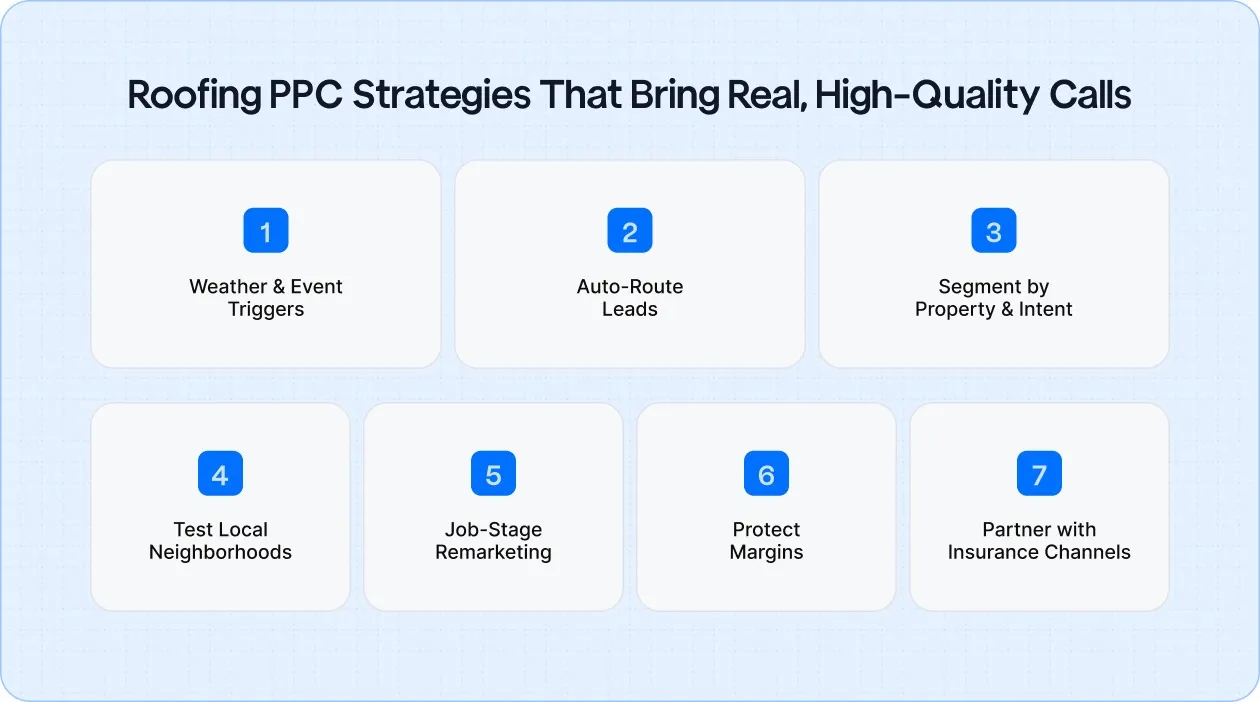
7 Roofing PPC Strategies That Bring Real, High-Quality Calls
A roofing PPC campaign works best when each part is built with clear intent. Your strategy must match the way they think, search, and decide. Here’s a simple, practical breakdown:
1) Use Weather And Event Triggers To Turn On Urgency
Roof problems spike with storms and temperature shifts. Let the weather decide when you push ads harder, not guesswork.
How to do it:
- Connect a weather feed to a simple rule: if heavy rain or hail is forecast in your ZIPs, increase budget for emergency ads that day and the next two.
- Run separate emergency creatives that say “Storm damage inspections today” with a short booking form.
- After the storm window, switch to follow-up ads for repairs and insurance claims.
2) Auto-Route Leads By Job Type And Crew Availability
Don’t send every call to one general line. Match the lead to the right crew automatically so you can accept more jobs without chaos.
How to do it:
- Add a short form or IVR question: "Is this emergency repair or a replacement quote?"
- If emergency, forward to your on-call number. If replacement, send to sales team number.
- Show real-time capacity: if crews are full, pause heavy ad types to avoid missed calls and refunds.
Why it helps: You reduce canceled appointments and avoid paying for clicks you can’t serve.
3) Segment Audiences By Property Type And Buyer Intent
A homeowner and a commercial property manager search differently. Treat them separately.
Segments to use:
- Residential owners: focus on trust, local reviews, and scheduling ease.
- Property managers: highlight contracts, multi-unit pricing, and credentials.
- Real estate agents: emphasize quick inspections and repair turnarounds.
How to action this:
- Build short ad sets for each segment with different messaging and thank-you flows.
- Use separate phone numbers and forms so you can measure performance by segment.
4) Use Small Local Budgets To Test New Neighborhoods
Rather than broad city targeting, test 3 to 5 micro-areas with small daily budgets to find profitable pockets.
How to test:
- Run identical creatives in each ZIP for two weeks.
- Measure booked jobs per ad dollar, not just clicks.
- Expand budgets where jobs and margins are best.
5) Layer Remarketing With Job-Stage Messaging
People often research before they call. Remarketing brings them back with messages that match where they are in the buying cycle.
Remarketing plan:
- Visitor browsed emergency content: show ad for immediate inspections.
- Visitor looked at replacement pages: show financing offers and gallery of completed jobs.
- Visitor abandoned booking form: show a single-step booking link and phone number.
6) Protect Margins With Rules And Alerts
Ads can burn money fast. Set automatic rules so you aren’t surprised.
Practical rules:
- Pause keywords with more than three clicks and zero conversions in 7 days.
- Lower bids if cost per booked job exceeds your target.
- Alert by SMS if daily spend spikes 30 percent above planned.
7) Partner With Insurance And Storm Restoration Channels
Some leads come through insurance channels and restoration partners. Build simple referral ads and landing pages for them.
How to do it:
- Create a short landing page for insurance claim help with required documentation checklist.
- Run a small PPC campaign targeting terms like “roof claim help” and “insurance roof repair.”
- Offer a referral fee or joint-marketing material for restoration partners.
Strengthen Your Roofing SEO
We’ll improve your pages so you rank for searches that bring steady roofing enquiries.
Wrapping Up
A good roofing PPC setup doesn’t rely on luck. It works because every part of it speaks directly to the way homeowners search, decide, and book.
When your ads reach the right people, your landing pages answer their questions, and your tracking shows which jobs came from where, PPC becomes predictable instead of stressful. Over time, that predictability turns into steady calls, better-quality jobs, and a system you can control instead of chasing leads from week to week.
Ready to Grow Your Roofing Leads?
Get a focused plan that brings in more calls and better-quality roofing projects.


.webp)




.webp)


.svg)


