When someone’s drain is clogged, they don’t waste time. They grab their phone and search for help. But how do they find you?
With the right SEO, your business can show up when people nearby need drain cleaning.
These simple steps can help bring in the calls you want.
How Customers Search for Drain Cleaning Services
As a drain cleaning business, understanding how your customers search for help is crucial to making sure you’re there when they need you the most. The way people search for services online can vary greatly depending on their situation.
Here’s a breakdown of the four key types of search behavior you should be ready to address:
4 Types of Search Behavior You Should Plan For
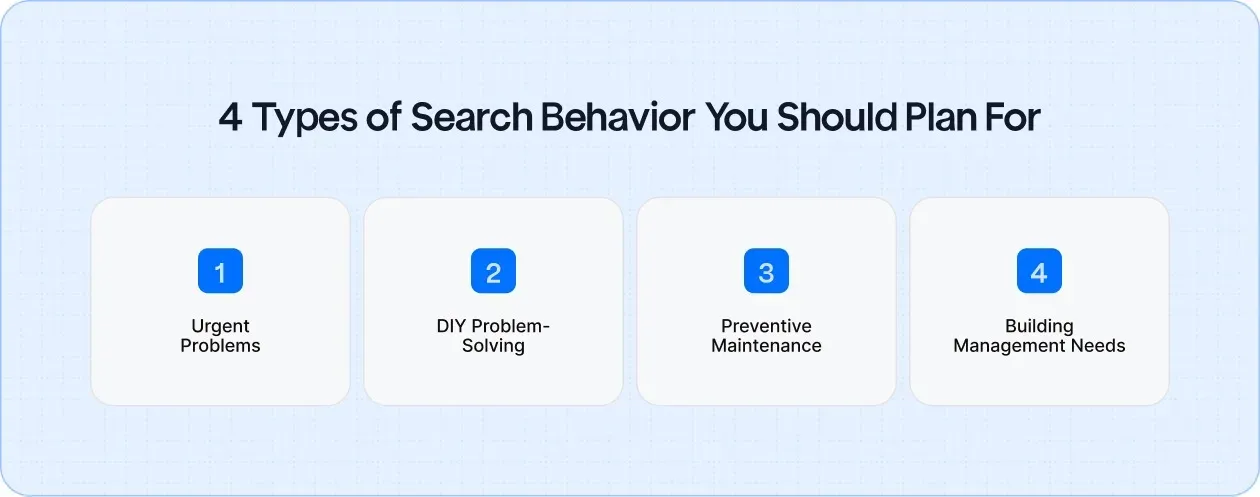
Understanding these four types of search behavior helps you tailor your SEO strategy to match the needs of different customers.
1. Urgent Problems
When a drain is overflowing, or there's a sewage smell in the house, there’s no time to waste. These customers need a solution immediately. They’ll search for "emergency drain cleaning" or “24/7 plumber near me,” looking for businesses that can provide quick fixes.
The challenge here is showing up at the right time, with the right message.
2. DIY Problem-Solving
Some customers may try to solve the problem themselves first. They’ll look up things like "how to unclog a drain" or "drain cleaning tips." While they might not always book right away, this is an opportunity to offer helpful content that builds trust and positions you as the go-to expert when DIY fixes don't work.
3. Preventive Maintenance
Not all searches are emergency-driven. Many customers search for ways to prevent future drain issues, like "how to keep drains clean" or "drain maintenance services." If you’re able to rank for these terms, you can help establish long-term relationships by offering regular services.
4. Commercial or Building Management Needs
Businesses or property managers often need commercial drain cleaning services. They might search for terms like "restaurant drain cleaning" or “property management plumbing services." These searches have a higher lifetime value and can lead to ongoing contracts.
High-Value Drain Keyword Groups to Target for Drain Cleaning SEO
To make sure your business shows up for these different types of searches, you’ll need to target the right keywords. Here's a breakdown of the keyword groups that are key to getting noticed:
1. Kitchen, Shower, Tub, Basement, and Floor Drain Issues
These are the types of drains that people commonly need cleaned. Focusing on specific drain types can help you target customers who need help with these recurring problems.
2. Problem-Driven Searches
Keywords like “slow drain,” “standing water,” or “foul smell in drain” are common when someone is experiencing a blockage or issue. These keywords indicate a direct need for your services, making them high-value terms to target.
3. Services
Think of the services you offer: "snaking,” “jetting,” and “camera inspections.” Customers searching for these specific services are already further down the sales funnel, ready to book a solution.
4. Local Modifiers
Customers will also search for local terms like “drain cleaning in Chicago” or “plumber near me.” Optimizing your site with local keywords ensures you’re visible when someone nearby needs help. These searches are typically the most urgent and the easiest to convert into booked jobs.
Build a Keyword Map That Matches Search Intent
It’s time to create a keyword map that matches their intent. This helps you organize your content in a way that meets their needs, turning searches into service calls.
1. Assign One Core Keyword Per Page
Each page should be focused on one main topic or service. This way, you ensure that your page ranks for the specific search someone is making, such as kitchen drain cleaning or emergency snaking.
2. Group Sub-Topics for Future Blogs
Create a list of related keywords to build blogs around. For example, if you have a main page on drain cleaning, you can create blogs for common problems like “How to Prevent Clogs in Your Kitchen Sink” or “Signs Your Shower Drain Needs Cleaning.” These blogs will help you capture even more searches and build authority.
Technical SEO Setup That Helps Drain Cleaning Pages Perform Well
A single misstep in structure, speed, or navigation could cost you visibility.
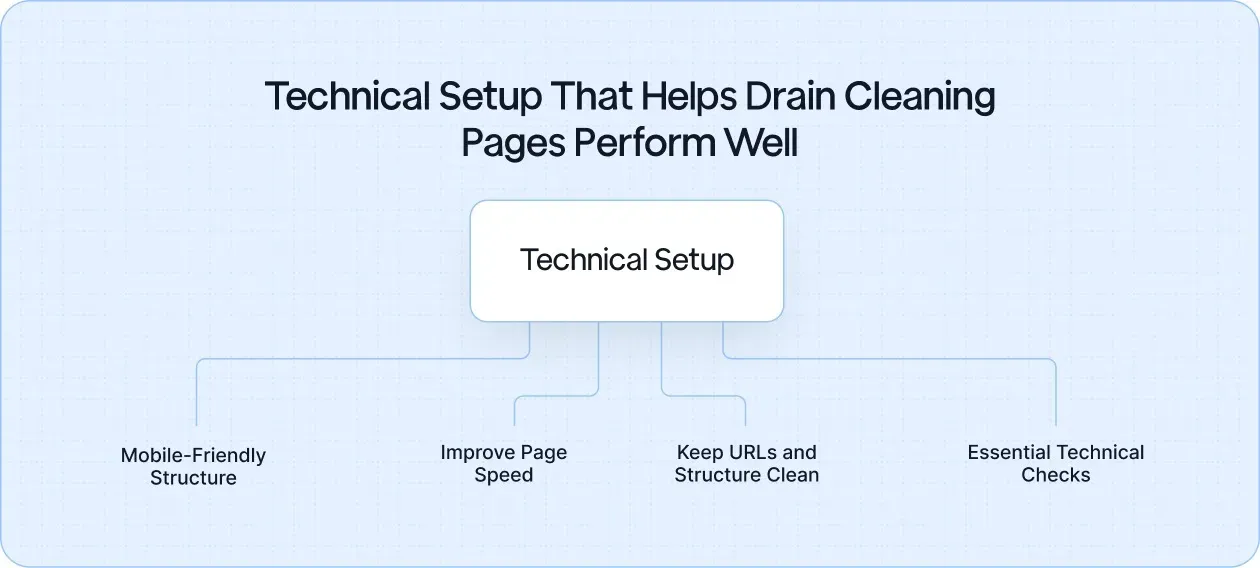
Let’s break down the key technical elements you need to perfect, and why trying to handle them alone can slow your growth.
Mobile-Friendly Structure
More people search for drain cleaning services on their phones than ever before, and if your site isn’t optimized for mobile, you’ll lose potential customers. Here’s what you need:
- Short, Simple Forms: Don’t make users work to get in touch. Forms should be quick to fill out, especially when someone needs help fast.
- Easy to Skim: Mobile users don’t read every word. Your content should be easy to navigate and scannable with clear headings and short paragraphs.
Improve Page Speed
Speed matters. If your page takes too long to load, visitors will leave before they even get to see your services. Here’s how to speed things up:
- Compress Media: Large images and videos can slow your site down. Optimizing them for fast loading speeds ensures a smoother user experience.
- Remove Unused Scripts: Every unnecessary line of code adds to load time. Clean your site to make it faster and more efficient.
- Host on a Dependable Server: Choosing the right hosting service can make or break your site’s performance. A slow or unreliable server will lead to constant issues.
Keep URLs and Structure Clean
The structure of your website’s URLs and internal pages should reflect the services you provide. Here’s what you should focus on:
- Service-First URLs: Your URLs should clearly reflect the service offered. For example, “www.yourbusiness.com/drain-cleaning” tells both users and search engines exactly what to expect on the page.
- No Duplicate Pages: Duplicate content confuses search engines and lowers your page performance. Keep each page focused on a unique service or location.
- No Cluttered Menus: Keep navigation simple and intuitive. A clean structure helps both search engines and users find what they’re looking for without frustration.
While it may seem simple, creating an organized, user-friendly structure that works for both search engines and customers requires careful planning and often, expert input to get it right.
Build a High-Converting Drain Cleaning Service Page
Your service page is often the first impression customers get of your business. A well-optimized, customer-friendly page can make the difference between a visitor moving on or calling for immediate help.
Here's how to build a page that attracts customers and convinces them to book your service.
Above-the-Fold Essentials
The top part of your service page is the first thing people see, so it needs to grab attention and make the next steps clear:
- Clear Headline: A headline that directly addresses the customer’s need is key. It should immediately tell them what you offer and how you can solve their problem.
- Prominent Call Button: Your contact button should stand out and be easy to find. For urgent services, like drain cleaning, you want customers to be able to reach you instantly, without having to search for the number.
- Trust Elements: Adding reviews, ratings, and even photos of previous work can make your business feel more reliable and professional. Trust is crucial in the service industry, and customers want to know they're in good hands.
Core Information Customers Expect
Once visitors are engaged, the next step is providing them with exactly what they’re looking for. Clarity and transparency here will help build confidence:
- What the Visit Includes: Customers want to know what they’re getting for their money. List the services you provide during a drain cleaning visit, such as snaking, jetting, or camera inspections.
- Price Ranges: People appreciate transparency. While drain cleaning costs can vary, offering a price range (or starting prices) can help customers decide if they’re in the right place.
- Arrival Window: Let them know when to expect you. Customers will appreciate knowing exactly when you plan to arrive, especially when they’re dealing with a clogged drain or other urgent issue.
- Temporary Safety Tips: Offer helpful advice they can follow while they wait for your arrival. It shows you care about their safety, and it can prevent further damage to their plumbing system before you get there.
On-Page SEO Checklist
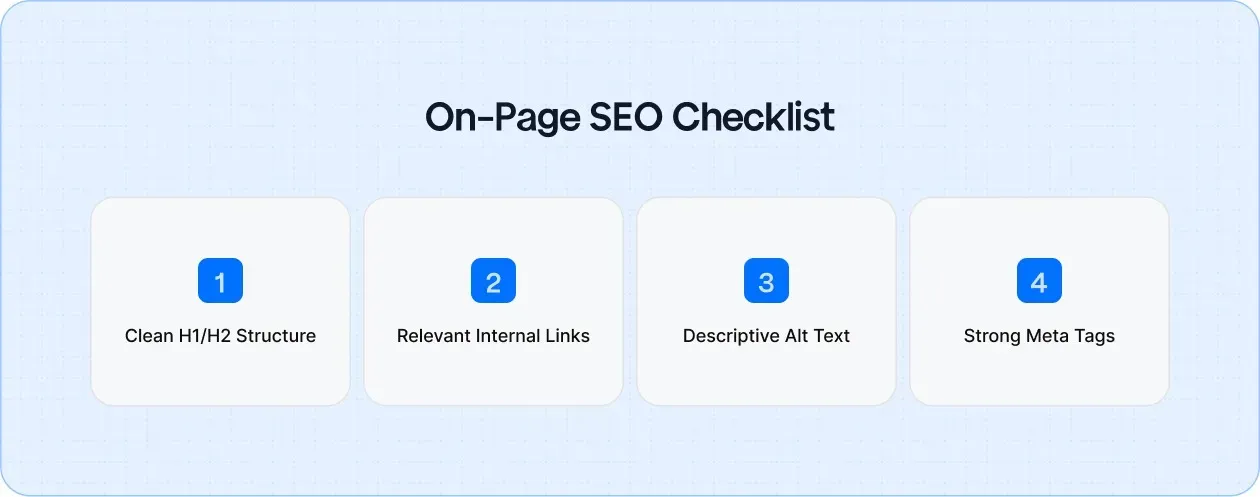
Optimizing your page for both users and search engines is essential for driving more traffic and conversions. Here’s your must-do checklist for a high-converting page:
- Clean H1/H2 Structure: Search engines rely on well-structured headings to understand what your page is about. Ensure you use clear H1 and H2 tags that align with the main topics of the page.
- Relevant Internal Links: Linking to other related services or blog posts helps visitors find more of what they need while also keeping your SEO on track. It also improves the overall user experience.
- Descriptive Alt Text: Alt text for your images helps search engines understand the content of your photos, while also making your site accessible to all users. Be sure to describe the image while naturally integrating keywords.
- Strong Meta Tags: Titles and descriptions play a big role in driving traffic. Make sure your meta tags accurately describe your page content and include relevant keywords to attract potential customers from search results.
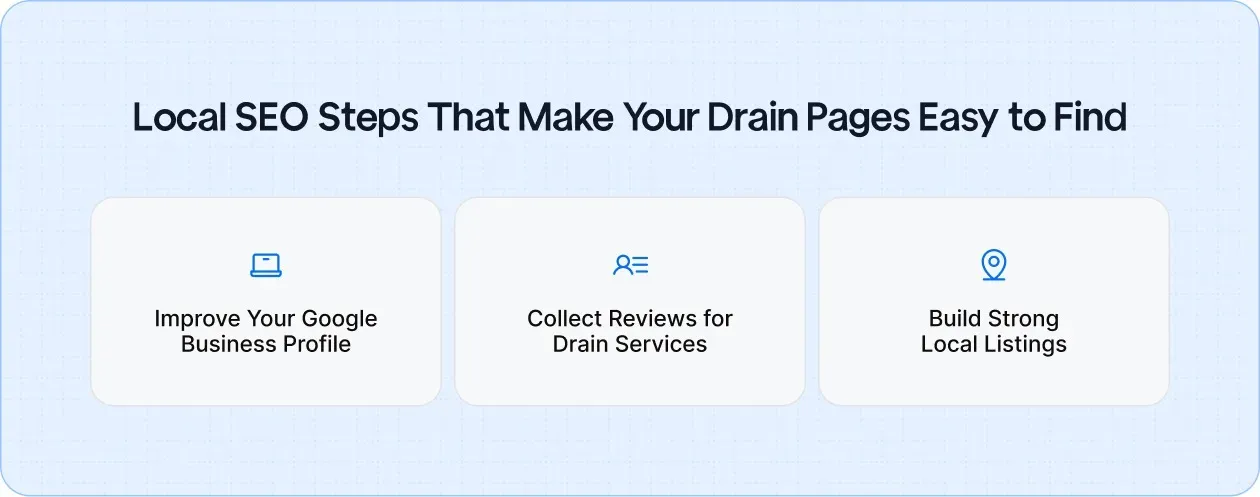
Local SEO Steps That Make Your Drain Pages Easy to Find
If you want your drain cleaning business to pop up when someone nearby needs help, local SEO is your secret weapon. It’s about keywords, making sure search engines know you're the go-to option in your area.
Here’s how you can do it without breaking a sweat:
Improve Your Google Business Profile
Your Google Business Profile is one of the first places customers look when searching for a local service. Let’s make it stand out:
- Update Your Services List: Ensure your full range of drain cleaning services is listed, so potential customers know you cover everything they need.
- Add Real Job Photos: Show off your work! A picture speaks a thousand words, and it builds trust.
- Add Hours + Service Area: Make it easy for customers to see when you’re available and exactly where you serve. No one likes to waste time guessing.
With these simple updates, you’ll be putting your best foot forward on the platform that counts most for local searches.
Collect Reviews That Support Your Drain Services
Nothing builds trust faster than a good review, especially when it’s from someone who has experienced your service firsthand. Here's how to get them:
- Ask After Each Job: Don’t wait! After you’ve done a great job, ask for a review. A happy customer is usually happy to help.
- Encourage Natural Descriptions of the Issue: When requesting reviews, guide customers to mention specific issues you solved. This helps with SEO and builds credibility.
- Reply to Every Review: Responding to reviews shows you care. Take the time to acknowledge the feedback, positive or negative. It’ll make customers feel valued and encourage others to leave their thoughts.
Build Strong Local Listings
Consistency is key for local SEO, especially when it comes to directory listings. Here’s how to ensure you’re properly represented across the web:
- Add Accurate NAP to Directories: NAP (Name, Address, Phone Number) needs to be consistent everywhere, across Yelp, Angie’s List, or any other local business directories. One mismatch can confuse search engines and potential customers.
- Keep Details Consistent: Ensure your business info is up-to-date and the same on every platform. Inconsistent details hurt your credibility and rankings.
- Mention Drain Services in Descriptions: Take advantage of every opportunity to describe what you offer and use relevant keywords that speak directly to what people search for.
When your details are consistent across platforms, search engines can confidently tell potential customers, “This is the business you need.”
Location Pages for Multiple Cities or Neighborhoods in Drain Cleaning SEO
If you're operating in several cities or serving distinct neighborhoods, creating specific pages for each can help you rank for local searches and meet potential customers where they are.
Location pages also improve your chances of appearing in voice search, which is increasingly common as customers use voice assistants like Siri and Google Assistant to find nearby services.
When Do You Need Location Pages?
Not every business needs a location page for every city or neighbourhood, but if you’re in one of these situations, it’s essential:
- Multi-City Operations: If you cover several cities, each should have its own page with personalized content that speaks to that area.
- Suburbs with Distinct Drain Patterns: Some areas might have unique drain issues or common problems (e.g., older homes with more pipe blockages). Create pages that speak to those specific needs.
- Regions with High Drain Blockage Cases: If certain regions tend to experience more frequent drainage issues (e.g., due to weather or older plumbing systems), dedicate a page to highlight your expertise in that area.
Structure for a Drain Cleaning Location Page
Once you've decided where you need location pages, structuring them right is the next step. A strong page should focus on these core elements:
- Local Intro: Start with a friendly introduction that shows your familiarity with the area. Mention the local drain issues people face and how you can help.
- Local Reviews: Add a few reviews from customers in that area to build trust. Seeing positive experiences from neighbours can push potential customers to take action.
- Embedded Map: Including an embedded map helps both customers and search engines know exactly where you’re located and which areas you serve. It’s a small touch that improves both user experience and SEO.
Internal Linking for Better Coverage
Don’t let your location pages exist in isolation. Here’s how to help your pages work together to build better coverage across your site:
- Link Each City Page to the Drain Cleaning Hub: Ensure that your city pages are linked back to your main drain cleaning service page so that search engines can understand the connection.
- Link Nearby Suburbs to Each Other: If your services span across multiple nearby areas, link those location pages together. This helps customers navigate and improves your site's relevance for those regions.
- Keep Navigation Clean: Simple, easy-to-follow navigation between pages ensures visitors can quickly find what they need without feeling overwhelmed.
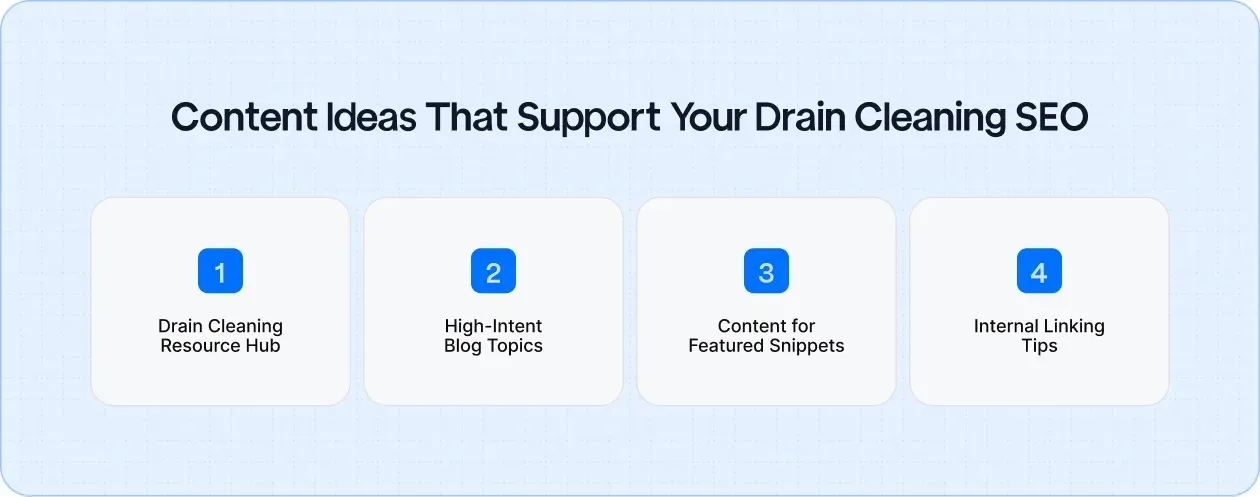
Content Ideas That Support Your Drain Cleaning SEO
Creating content that speaks directly to the problems your customers face is one of the best ways to drive traffic and trust.
To truly support your SEO efforts and convert visitors into customers, you need a strategy that builds authority and answers the most common questions.
Create a Drain Cleaning Resource Hub
A resource hub acts as the backbone of your content strategy. It helps you organize your blog posts, cover all essential topics, and makes it easier for visitors to find exactly what they need.
- Organize Blogs into Clusters: Group related topics together to create a clear structure for your content. For example, group all your sewer-related articles in one cluster and drain cleaning tips in another. This makes your site more navigable and improves your SEO.
- Cover One Specific Problem Per Article: Don’t try to tackle everything in one post. Each article should focus on solving a single problem, such as unclogging a sink or fixing a leaking pipe. This helps both readers and search engines quickly understand what each page is about.
Blog Topics That Bring in High-Intent Visitors
To drive high-quality traffic, focus on topics that answer real questions homeowners are asking when they need drain cleaning services. Here are some topic ideas that bring in high-intent visitors:
- Signs of a Sewer Line Clog: This type of article speaks to homeowners who are noticing warning signs and are looking for immediate solutions.
- Jetting vs. Snaking Comparisons: Helping customers understand the difference between these services can guide them toward booking the right option with you.
- Cost Expectations: A blog discussing average drain cleaning costs sets clear expectations and positions your business as transparent and trustworthy.
- Safe Steps Before Calling a Pro: Offering DIY tips for minor issues can help build trust, showing you care about the customer even before they book your services.
Format Content for Featured Snippets
A featured snippet is that neat, boxed answer that appears at the top of Google search results. It’s a great way to get more visibility and drive traffic to your website.
- Short Answers: Provide clear, concise answers to common questions; Google loves these for snippets.
- Q&A Blocks: Structure your content in a Q&A format, addressing specific queries that homeowners might have, like “How often should you clean your drains?” or “What causes slow drains?”
Measure and Improve Your Drain SEO Results
Once you've set up your SEO strategy for your drain cleaning business, the real work begins: tracking, reviewing, and refining. SEO is an ongoing process that requires regular attention.
By measuring the right metrics, you can ensure your efforts are paying off and make adjustments to stay ahead. Here’s how you can track your results and keep improving.
Track the Metrics That Matter
To gauge the success of your SEO efforts, focus on the metrics that directly impact your business. Tracking the right data helps you understand what’s working and what needs tweaking.
- Calls from GBP: Google Business Profile (GBP) is a vital tool for local businesses. Track how many calls come directly from your profile to understand its effectiveness.
- Form Submissions: Keep an eye on how many people are filling out your contact or service request forms. More submissions mean more potential customers.
- Booked Jobs: Ultimately, booked jobs are the best indicator that your SEO strategy is working. Track this metric closely to understand how many visitors are turning into paying customers.
- Page Performance: Regularly check how your service pages are performing. Look at metrics like bounce rate and time on page; these will give you insights into how well your content is resonating with visitors.
Monthly Review Checklist
Reviewing your performance regularly helps you stay on track and fine-tune your approach. Here’s what you should include in your monthly review to keep your drain cleaning SEO efforts sharp:
- Check Rankings: See where you stand for your target keywords. If you’ve slipped in rankings, it’s time to review your content or technical setup.
- Review GBP Insights: Look at the data from your Google Business Profile. Are you getting enough views? Are users clicking to call or visit your site? This can tell you if your GBP needs optimization.
- Refresh Underperforming Content: Not all content will perform as expected. If certain pages are lagging, update them with fresh information or optimize them for better performance.
Build Steady Growth Through Smarter SEO Content
Driving growth for your drain cleaning business with SEO requires creating content that speaks directly to your customers’ needs and building pages that are easy to find and navigate.
By focusing on a clear structure, addressing real problems, and using the right SEO tactics, you can ensure that your business stays visible and relevant.