









Most car buyers don’t start their journey on a dealership lot anymore. They start with a search. Sometimes it’s for a specific model. Sometimes it’s for reviews, financing options, or the closest dealership they can trust.
What matters is this: the dealerships that show up early and often are the ones that stay in the buyer’s consideration set.
Local automotive SEO is about making sure your dealership appears at the exact moments buyers are comparing, shortlisting, and deciding where to visit.
In this blog, we break down practical local automotive SEO strategies that help dealerships improve visibility, attract qualified local buyers, and support sales across the buying journey.
What is Local SEO for the Automotive Industry?
Local SEO for the automotive industry connects your inventory, services, and location to how people actually look for vehicles, repairs, or dealerships in their area. Unlike general SEO, local automotive SEO is tightly tied to geography, timing, and buyer readiness, so it must support all stages of the decision-making journey.
Local SEO builds three core outcomes for automotive brands:
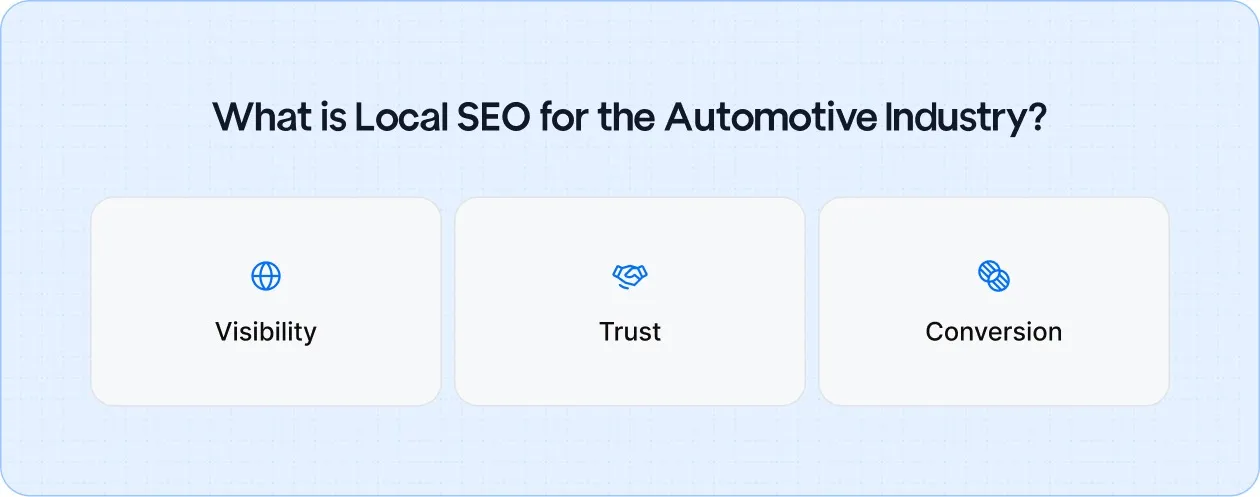
- Visibility: You consistently appear where customers are searching
- Trust: Reviews, content, and authority signals reassure buyers
- Conversion: Clear information, strong UX, and credibility convert searches into appointments, test drives, and bookings
And most importantly, it helps you win high-intent, local customers before they ever see your competitors.
SEO Across The Automotive Customer Journey
Local SEO is most effective when it aligns with the actual journey automotive customers follow, from awareness, to research, to decision. Structuring SEO content and strategy around this funnel ensures you're visible, relevant and persuasive at every stage.
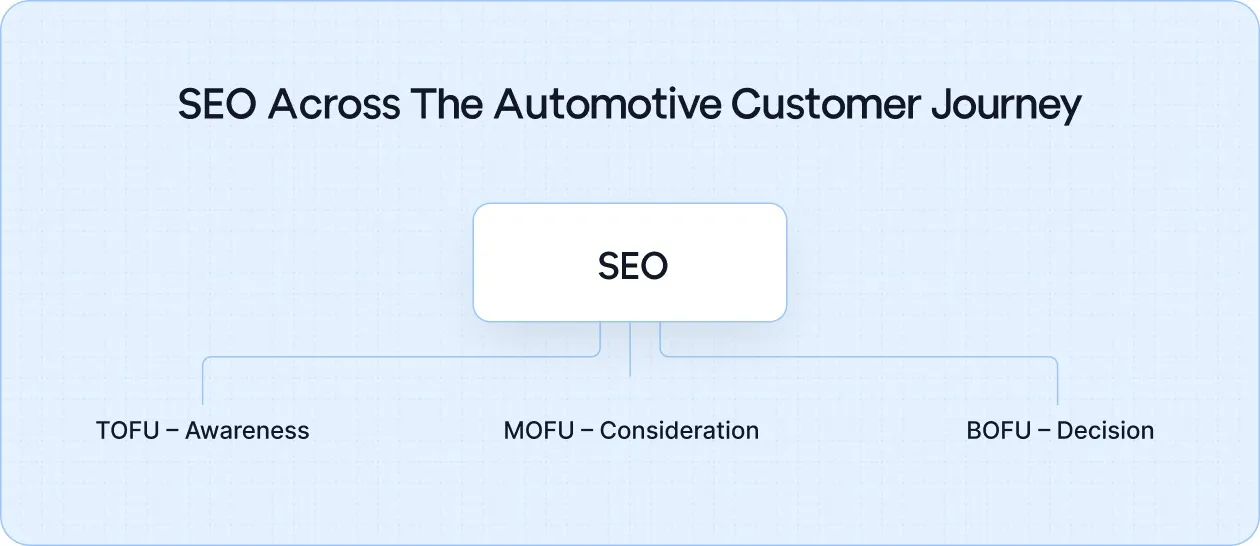
TOFU – Awareness
At the top of the funnel, customers aren’t always ready to book. They’re identifying a problem, learning, and gathering information. Here, the goal is to educate, attract, and position your brand as knowledgeable and trustworthy.
This stage builds brand familiarity so when the problem becomes urgent, your name is already in their head.
MOFU – Consideration
Here, the customer knows they need help. They’re actively researching solutions, comparing providers, and deciding who they can trust. Your job is to prove capability, reliability, and relevance.
This stage moves customers from considering providers → shortlisting your business.
BOFU – Decision
Now urgency is high. The customer wants help now. This is where Local SEO converts interest into appointments, calls, test drives, and service bookings.
This is where Local SEO stops being “marketing” and becomes revenue-driving, appointment-generating, real-world business impact.
Be Easy to Choose
Clarify what your dealership is known for so buyers understand why you’re the right option locally.


8 Core Local Automotive SEO Strategies
Core local automotive SEO strategies are the foundation that determines whether your dealership shows up when real buyers are actively searching for vehicles or service nearby. Here are our 8 strategies:
Google Business Profile
Your Google Business Profile (GBP) is the single most important local SEO asset for any automotive business. It drives the majority of calls, direction requests, and dealer visits because shoppers rarely scroll past the map section when they’re ready to act.
How to make GBP work like a demand engine:
- Complete every GBP field with intent-focused detail, including primary category, secondary services, dealership types, service offerings, financing options, and accessibility details. This helps Google match you to more search variations.
- Upload real dealership and service photos frequently, including service bays, showroom, inventory lots, technicians, and customer delivery moments. Visual freshness signals activity, trust, and real-world proof.
- Use GBP Posts strategically to promote specials, seasonal service offers, event announcements, EV service, and featured inventory. Posting regularly strengthens relevance signals and gives customers reasons to click.
- Actively collect and respond to reviews because review count, frequency, recency, and tone influence map pack rankings. Meaningful responses also increase trust and can push hesitant buyers to visit.
- Ensure your NAP (Name, Address, Phone) is consistent everywhere so Google confidently associates online mentions with your dealership, improving ranking stability.
A strong GBP does not just get seen. It consistently converts high-intent local searchers into phone calls, walk-ins, and booked service jobs.
Integrating Local SEO With Paid Media
SEO and paid media reinforce one another. When aligned, they improve market share, reduce wasted spending, and accelerate results.
Using SEO Data To Improve Paid Campaigns
SEO uncovers how buyers search naturally. That intelligence makes PPC smarter, cheaper, and more effective.
Practical ways to use SEO insights in paid strategy:
- Identify highest-converting organic queries, then duplicate them in PPC with optimized messaging.
- Focus ad spend where SEO is weakest, instead of blindly advertising everywhere.
- Use high-ROI pages discovered via SEO, as landing destinations for paid campaigns.
- Test messaging alignment, ensuring consistency between organic listings, ads, and landing pages.
- Reduce PPC waste, using SEO data to avoid irrelevant or weak-intent keywords.
SEO teaches PPC how to win profitably.
Google Vehicle Ads And Local Search Synergy
Vehicle ads place inventory directly in front of active shoppers. When combined with SEO, they dominate both awareness and action.
When and how to use Vehicle Ads effectively:
- Run vehicle ads for competitive segments, like trucks, EVs, SUVs, or high-turnover models.
- Ensure inventory feeds are accurate, with clean pricing, photos, VINs, and availability. Poor data kills performance.
- Use paid ads to accelerate early demand, while SEO builds long-term organic strength.
- Align creative with your SEO messaging, reinforcing brand recognition rather than fragmenting it.
Paid exposure accelerates what good SEO already sets up.
Website Relevance For Local Search
Even when buyers start on GBP, ads, or third-party listings, most eventually land on your site to validate credibility and explore options. Google also evaluates relevance using your website content.
How to make your website work effectively for local automotive SEO:
- Align inventory, service, and dealership pages into one connected system, not isolated silos. This helps both Google and buyers understand your dealership structure and services quickly.
- Create separate, well-built pages for each key offering, including New Inventory, Used Inventory, Finance, Service, and each major repair category. The more precisely you map services, the more queries you qualify for.
- Show proof that you serve your local community, using city names, real photos, customer stories, and references to local driving habits or climate conditions that impact vehicle ownership.
- Make calls-to-action clear and consistent, such as Book Service, Schedule Test Drive, Get Pre-Approved, and Contact Sales. Confusing CTAs reduce conversion, even if rankings are strong.
- Ensure structured internal linking, connecting inventory to trims, trims to finance, service pages to related maintenance guides, and city pages to relevant services. This improves crawlability and user experience at the same time.
When your website reflects real buyer behavior and local needs, Google interprets it as highly relevant and ranks it accordingly.
Turn Searches Into Visits
Build a dealership website that clearly guides buyers from research to test drive or service booking.
On-Page Local SEO Strategies
On-page SEO ensures Google understands exactly what each page offers and who it serves. When structured well, it also improves user clarity, reducing bounce rates and increasing inquiries.
Local Keyword Targeting That Matches Buyer Intent
Keyword strategy should mirror how real car shoppers and service customers think. Automotive buyers search based on model interest, needs, and geography.
How to target the right local automotive keywords:
- Balance branded and non-branded searches, such as “Toyota dealership near me” and “best used trucks in Dallas.” Both drive valuable traffic but with different intent types.
- Prioritize long-tail, decision-driven searches, like “certified pre-owned Honda CR-V Dallas financing” or “same-day brake repair Austin.” These increase purchase intent and drive faster conversion.
- Include service-specific keyword targeting, like “oil change near me,” “EV battery service [city],” and “wheel alignment [city],” instead of one generic service page.
- Map keywords to the correct stage of the buyer journey, ensuring informational phrases go to content pages, while purchase-intent phrases go to inventory, finance, or booking pages.
When your keywords genuinely reflect buyer thought patterns, ranking quality and conversion both rise.
Optimizing Inventory And Service Pages For Local Visibility
Inventory and service pages must be more than placeholders. Google evaluates depth, uniqueness, and helpfulness when ranking these highly competitive pages.
How to strengthen inventory and service SEO:
- Avoid thin, duplicate descriptions from templates. Add localized insight, actual vehicle conditions, package highlights, and lifestyle relevance.
- Create individual service pages for major repairs, such as brakes, tires, diagnostics, AC repair, EV services, inspections, transmission, and general maintenance.
- Include pricing transparency where appropriate, or at least explain pricing logic clearly to build trust.
- Use structured FAQ sections, addressing common objections about timing, warranty, parts, service process, and convenience.
- Include local proof elements, such as images of your technicians, real vehicles serviced, and satisfied local customers.
These pages should feel written for humans first. Search engines reward that naturally.
Show Up When Buyers Decide
Strengthen local SEO so your dealership appears during high-intent searches across sales and service.
Technical SEO Strategies
Technical SEO ensures your automotive website is fast, accessible, crawlable, and structurally clear so Google can confidently index and rank it. Automotive sites are often large, dynamic, and inventory-heavy, so small technical issues can quietly hurt visibility and conversions if left unchecked.
Mobile-First Optimization For Dealership Websites
Most automotive research now happens on mobile, searching for cars, checking service options, comparing pricing, and booking appointments. If your mobile experience isn’t smooth, Google demotes you, and buyers leave.
How to ensure the mobile UX really works:
- Prioritize fast, friction-free navigation, so users can browse inventory, services, and financing without endlessly scrolling or dealing with clutter.
- Design mobile inventory views that load fast, showing key info first: price, mileage, condition, monthly estimate, and availability.
- Minimize intrusive pop-ups, especially those blocking inventory content. They hurt experience and rankings.
- Test mobile UX regularly using real devices, not just emulators, because real behavior exposes issues analytics won’t.
Mobile usability directly influences both SEO rankings and lead generation performance.
Page Speed, Core Web Vitals, And Crawl Efficiency
Automotive websites often struggle with speed because of large inventory images, tracking scripts, third-party widgets, and heavy design elements. Google uses Core Web Vitals to judge whether your site delivers a comfortable browsing experience.
How to improve speed and crawl performance:
- Compress and optimize inventory photos, since high-resolution images are often the biggest cause of slow load times.
- Reduce unnecessary scripts and third-party plugins, which slow interaction and delay useful content from loading.
- Use lazy loading for media, so images and videos load only when users scroll to them, not all at once.
- Ensure stable layouts to prevent content shifting while loading. This improves perceived quality and ranking.
- Improve crawl paths with clean linking, so Googlebot can efficiently discover pages, especially constantly changing inventory and offers.
Speed helps you rank higher, convert better, and reduce visitor frustration.
Schema Markup For Automotive Businesses
Schema markup helps Google understand your dealership better, making your listings richer, more visible, and more trustworthy in search results.
Essential schema to implement correctly:
- LocalBusiness schema to define dealership identity, service areas, location accuracy, and core visibility signals.
- Vehicle schema to help Google better understand inventory listings, which supports richer search appearance and relevance for specific model searches.
- Review schema to display rating information, helping click-through rates and confidence in competitive markets.
- Service schema for major offerings like repairs, maintenance, diagnostics, EV servicing, and inspections.
- Offers schema when promoting special pricing, financing deals, or seasonal campaigns.
Schema makes your dealership easier for Google to trust, which directly improves local SEO performance.
Local Authority Building
Authority tells Google that your dealership is real, reliable, and embedded in the local community. Strong local authority improves map rankings, credibility, and brand preference before a visitor ever lands on your site.
Local Citations And Directory Consistency
Citations are mentions of your dealership name, address, and phone number across the web. Accurate, consistent listings across trusted platforms signal stability and legitimacy.
How to build useful citation authority:
- Prioritize automotive-specific directories, like Cars.com, Autotrader profiles, dealer associations, and industry portals, to strengthen relevance.
- Claim dealership profiles wherever they exist, even if you didn’t create them. Ownership prevents errors and helps trust.
- Keep hours, services, and branding updated, especially during seasonal schedule changes or relocations.
- Audit and clean outdated listings regularly, especially if the business has rebranded, changed phone numbers, or relocated historically.
Consistency removes doubt, and doubt is the biggest ranking killer in local SEO.
Review Strategy As A Ranking Lever
Reviews are a ranking signal, a conversion trigger, and proof of experience. Automotive decisions require trust, and Google heavily weighs both review quality and review behavior.
How to build a review engine that strengthens SEO:
- Focus on continuous review flow. Google values frequency and recency.
- Encourage keyword-rich, experience-focused reviews that mention services, locations, or vehicles when natural.
- Respond to every review thoughtfully, because engagement signals reliability and improves click confidence.
- Develop structured review requests, via service staff, drip emails, SMS reminders, and post-purchase automation.
- Address negative reviews correctly, showing accountability and professionalism. Google values this behavior.
More than visibility, reviews turn visibility into belief.
Local Backlinks And Industry Mentions
Local backlinks prove that your dealership is part of the regional ecosystem. They strengthen domain trust and improve map pack competitiveness.
How to earn meaningful local authority links:
- Build partnerships with local businesses and organizations, such as sports teams, charities, and community events.
- Collaborate with local media, submitting dealer news, EV education pieces, safety guides, or economic contribution stories.
- Engage in sponsorships and community involvement, ensuring proper mentions and website links.
- Strengthen connections with manufacturer associations, OEM listings, dealer networks, and industry press mentions.
- Publish content that others naturally reference, like buyer guides, seasonal maintenance insights, or market insights.
Backlinks are not about volume. They’re about relevance and authenticity.
Content Strategies
Content marketing for the automotive industry shows Google what you know and shows buyers why they should trust you. The right content strategy supports rankings, nurtures interest, and shortens decision time.
Content For Each Stage Of The Buyer Journey
Automotive buying isn’t instant. Buyers research, compare, validate, and only then convert. Your content should guide them through every phase instead of expecting immediate action.
How to map content to real buyer behavior:
- Top-of-funnel educational content, like first-time buyer guides, EV safety explanations, maintenance timelines, financing basics, and local driving advice.
- Mid-funnel comparison and evaluation content, including model comparisons, feature breakdowns, cost-of-ownership explanations, and “which vehicle is right for you?” content.
- Bottom-of-funnel conversion content, such as inventory pages, service pages, local offers, finance pre-approval content, and dealership differentiators.
When content mirrors the journey, buyers feel informed.
Answer Buyer Questions Early
Create content that helps local buyers research, compare, and trust your dealership before they show up.
Video And Visual Content For Local Search
In automotive, people want to see, not just read. Video and imagery build realism, reduce uncertainty, and strengthen local trust in ways text alone can’t.
How to use visuals effectively for SEO:
- Create walkaround and feature videos to help buyers imagine ownership before stepping into the dealership.
- Publish educational service videos, explaining repairs, maintenance needs, and EV care, building authority.
- Use short-form clips strategically, for social proof, delivery moments, and community involvement.
- Optimize video metadata, including locations, models, services, and dealership brand markers for better discovery.
- Embed video intelligently on key pages, increasing dwell time and engagement, which indirectly strengthens SEO.
Visual proof builds emotional confidence and search performance benefits naturally.
Location-Based Content Without Keyword Stuffing
Expanding service reach requires geographic relevance, but poorly executed “city pages” create duplication problems and harm rankings. The goal is meaningful local relevance, not artificial repetition.
How to build strong geographic coverage:
- Create useful nearby-city pages, focusing on real driving relevance rather than duplicate templates with swapped city names.
- Tie content to real local context, climate effects on vehicles, seasonal behavior, driving environments, local regulations, and buyer habits.
- Include genuine signals, such as regional testimonials, local photos, and community involvement.
- Link these pages naturally. Let them support the main structure rather than overshadow it.
Location relevance should feel authentic, not manufactured.
Measuring The Success Of Local Automotive SEO
A profitable demand measures success. Automotive SEO should always be measured in impact on calls, showroom visits, service bookings, and car sales.
SEO Metrics That Matter For Dealerships
Not all metrics are useful. Dealership SEO success should directly connect to business outcomes.
Focus on what actually reflects success:
- Quality of organic traffic, not just volume. Are visitors relevant? Are they engaging with inventory and service pages?
- Lead actions, such as calls, form submissions, service bookings, test drive requests, and finance pre-approvals.
- Map pack performance, since GBP plays a massive role in real-world dealership traffic.
- Engagement depth, including dwell time, return visits, and multi-page journeys, showing buyer seriousness.
- Revenue influence, where possible, tying leads to deals and service orders.
If a metric can’t help a dealership make a better decision, it doesn’t matter.
Tools For Tracking And Optimization
Good measurement requires the right tools, configured correctly. Automotive businesses must go beyond basic analytics.
Core SEO tools worth using properly:
- Google Analytics, to monitor user behavior, engagement quality, and conversions.
- Google Search Console, for query insights, indexing performance, click behavior, and technical health.
- Professional SEO platforms, such as SEMrush, Ahrefs, or Moz, can be used to analyze competition, ranking trends, and backlink strength.
- Call tracking software is necessary because many dealership conversions happen by phone, not form.
- Heatmaps and session recording tools, to see where friction occurs and where users hesitate.
Benchmarking Against Local Competitors
Automotive SEO is a competition against nearby dealers, used car lots, and large dealer groups. Understanding where you stand determines where to push harder.
How to benchmark intelligently:
- Compare domain authority and backlink health, understanding who Google currently trusts more.
- Study competitor GBP performance, including review profile strength, posting activity, and engagement.
- Analyze ranking coverage, seeing which dealers own which keywords: inventory, service, branded, and location-based.
- Identify gaps and untapped opportunities, such as missing service content, underserved nearby towns, or ignored EV niches.
Great SEO strategies don’t just improve your site, they strategically outperform everyone else.
Preparing Your Dealership For The Next Phase of Local Search
Local search is entering a new phase where discovery is driven less by traditional keywords and more by understanding, context, and intent.
Dealerships that prepare now will adapt smoothly as search shifts toward AI-powered results, conversational interactions, and entity-based trust signals.
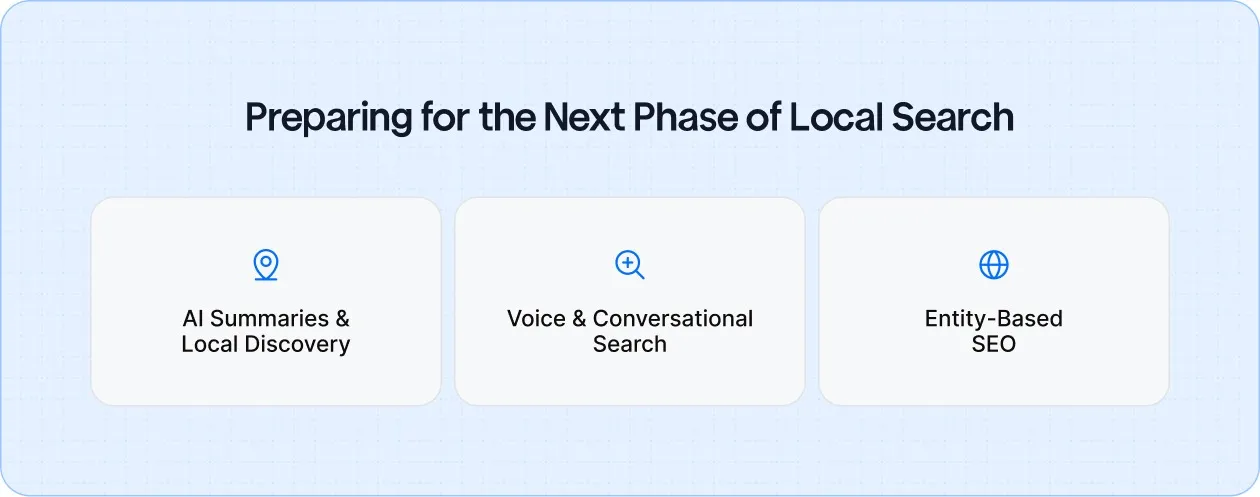
AI Summaries And Local Discovery
AI-driven search results are already reshaping how buyers see dealership information. Instead of listing websites, search engines are summarizing answers, comparing options, and recommending providers directly within results.
What this means for dealerships:
- Content clarity matters more than volume, because AI surfaces businesses that provide the clearest, most structured answers.
- Well-structured service, inventory, and “why choose us” content increase your chance of being included in AI-generated overviews.
- Local credibility signals like reviews, consistency, and expertise heavily influence which dealerships AI selects as “trusted results.”
Dealers that communicate clearly and consistently will appear more often when AI serves the answer before a user clicks.
Voice And Conversational Search For Dealerships
As voice assistants and conversational interfaces grow, customers are using more natural, question-based search behaviors.
To prepare for that shift:
- Write content in natural, problem-based language, reflecting how real customers ask questions.
- Add FAQ structures across key pages, covering buying, financing, servicing, EV support, and brand-related questions.
- Ensure local signals are strong, so conversational systems can confidently recommend your dealership.
Being conversational-ready helps you stay visible as search becomes more human.
Increasing Importance Of Entity-Based SEO
Google is shifting from ranking pages to understanding entities, businesses, brands, locations, and credibility relationships. For dealerships, that means Google cares more about who you are than just what you publish.
How to strengthen entity trust:
- Ensure your dealership identity is consistent everywhere, across GBP, citations, manufacturer listings, and auto directories.
- Build strong connections between your brand and your services, such as EV expertise, certified servicing, financing reliability, or specialty vehicle categories.
- Invest in real-world authority signals, like media mentions, manufacturer recognition, community partnerships, and high-quality reviews.
Entity strength helps Google “know” your dealership.
Conclusion
Local automotive SEO is an ongoing advantage that compounds when your dealership consistently answers buyer questions, appears in local searches, and builds trust through accurate information and strong signals.
When local SEO is treated as a core growth strategy rather than a marketing add-on, it becomes one of the most reliable ways to stay competitive in an increasingly digital automotive market.
Ready to Compete Locally?
Build a local SEO system that supports visibility, trust, and real showroom and service traffic.


.webp)






.webp)


.svg)


