









Chimney sweep businesses explain the same things over and over again.
- Why is an inspection different from a cleaning?
- Why is soot not the only problem?
- Why “it worked last year” is not a safety check?
- Why do repairs cost more than people expect?
Most of that explaining happens on calls, at the job site, or after a quote has already been shared. Content marketing changes where that explanation happens. It moves it earlier, so homeowners arrive informed instead of confused, and conversations start at a better place.
In this blog, we walk through how chimney sweep businesses can use content to answer real homeowner questions, structure their website and local presence properly, distribute content without wasting time, and measure whether content is actually supporting booked work.
Understanding Content Marketing for Chimney Sweep Businesses
Chimney sweep businesses operate in a space where trust is earned slowly but lost quickly. Homeowners invite you into their homes to inspect, clean, or repair something they rarely see and barely understand. That alone changes how marketing needs to work.
Content marketing fits this industry because it allows a business to demonstrate competence and care before any direct interaction happens. Instead of pushing services, it helps homeowners feel informed and reassured. When done well, it supports decision-making rather than interrupting it.
Traditional Mistakes Chimney Businesses Make Where Marketing Helps
These are not execution mistakes. They are assumption mistakes. Content marketing addresses them by changing how the business shows up in the decision process.
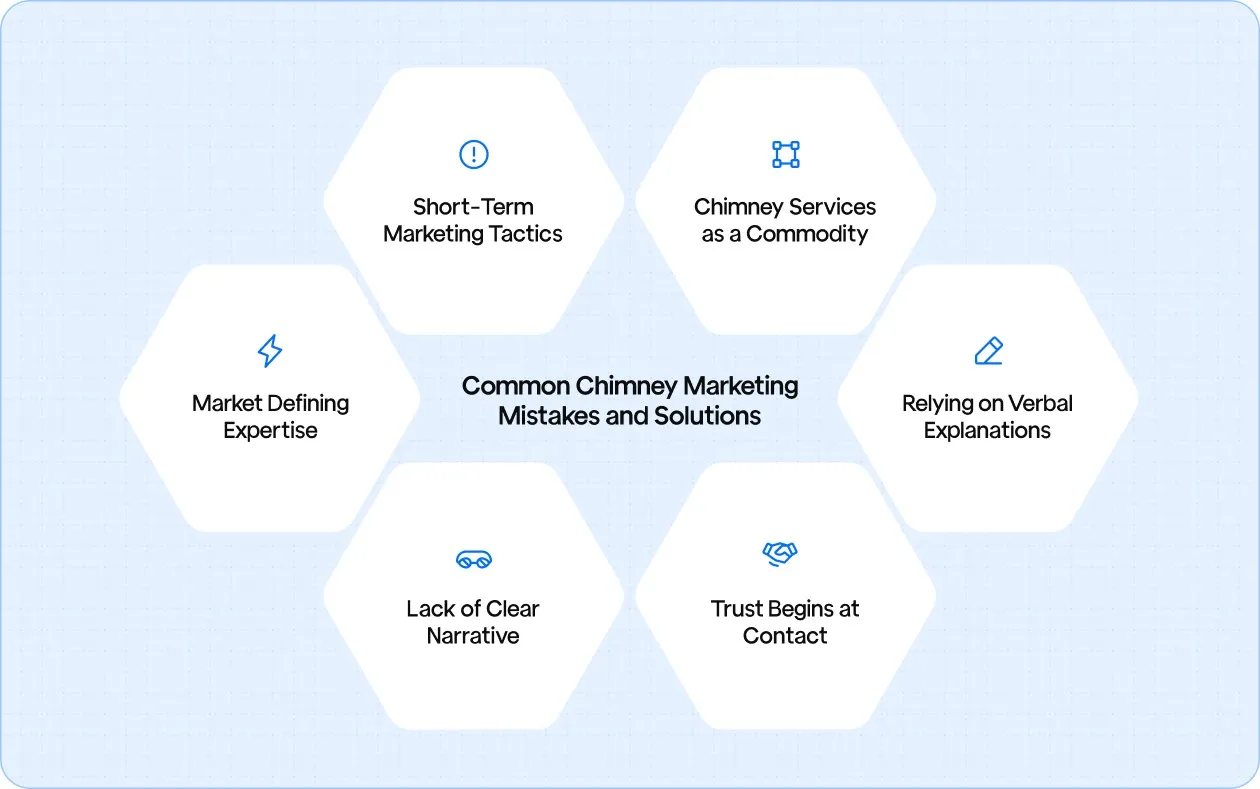
- Treating chimney services as a commodity
Many businesses market as if chimney work is interchangeable. This mindset leads to generic messaging and price-led decisions. Content marketing reframes the service as skilled, risk-sensitive work that requires judgment.
- Relying on verbal explanations at the point of sale
Chimney businesses often explain risks, repairs, or recommendations only during inspections or calls. By that point, homeowners may already be skeptical or overwhelmed. Content shifts that explanation earlier, reducing friction before contact ever happens.
- Assuming trust starts with a phone call
Traditional marketing assumes trust begins when a homeowner reaches out. In reality, trust forms much earlier through what people read, see, and understand. Content allows that trust-building to happen privately, at the homeowner’s pace.
- Operating without a clear narrative
Many chimney businesses have experience, certifications, and standards but no consistent way to communicate them. Content creates a coherent narrative around how the business works, what it prioritizes, and why that matters.
- Letting the market define their expertise
Without content, businesses are defined by reviews, directories, or competitors’ claims. Content allows a chimney business to define its own expertise, scope, and standards instead of reacting to external perception.
- Treating marketing as a short-term lever
Traditional tactics are often used reactively when bookings slow down. Content marketing works differently. It compounds over time, reducing reliance on last-minute promotions and inconsistent lead flow.
When these foundational issues are addressed, content marketing becomes the layer that makes every other marketing and sales effort easier, clearer, and more effective.
Core Content Marketing Strategies for Chimney Sweep Growth
Content marketing for chimney sweep businesses only works when it is built around how people actually choose a provider. Homeowners are cautious, often uncertain, and usually motivated by safety or risk rather than curiosity. The strategies below are about producing the right content, in the proper structure, for the right reasons:
Audience-First Content Planning for Chimney Services
Content planning should start with a clear understanding of who is searching and what problem they are trying to solve. Chimney services attract different audiences with very different motivations, and treating them the same weakens relevance.
- Define your primary customer groups clearly. Homeowners usually search for safety concerns, visible issues, or seasonal reminders. Landlords and property managers focus on compliance, documentation, and reliability. Realtors search with urgency tied to inspections and closing timelines.
- Match content to the type of service being searched. Chimney cleaning searches often indicate routine maintenance intent. Inspection-related searches are commonly tied to safety checks or property transactions. Repair searches usually signal risk or existing damage.
- Account for urgency and risk in how topics are framed. Repair-related searches are often driven by fear or visible damage, while inspection searches are driven by safety and compliance. Content should match the emotional context of the search.
- Plan content around seasonal behaviour. Homeowner concerns shift with weather and usage. Planning content around these patterns keeps your business visible when questions start forming.
- Avoid broad messaging that tries to cover every service at once. Vague content attracts unfocused enquiries and weakens trust. Specific content builds confidence.
Keyword Strategy for Chimney Sweep Content
Keywords are not just SEO inputs in chimney services. They are signals of fear, uncertainty, and readiness. A strong keyword strategy helps you understand what homeowners are worried about before they ever call.
- Group keywords by intent, not just volume. Informational keywords signal early concern. Service keywords signal readiness. Emergency keywords signal urgency. Content should be built differently for each.
- Separate cleaning, inspection, and repair keywords deliberately. Each service has its own risk profile and emotional weight. Combining them weakens relevance and confuses search engines and users alike.
- Prioritise problem-based keywords homeowners actually use. Many users search for symptoms, smells, cracks, leaks, or smoke issues before they search for “chimney repair.” Content should meet them at that level.
- Use location modifiers naturally within context. Keywords should reflect how homeowners talk about their area, weather, and housing style, not just mechanically repeating city names.
- Avoid chasing broad, generic keywords. High-volume terms often attract research traffic with low booking intent. Long-tail, intent-driven keywords convert better in chimney services.
Attract the Right Homeowners
Identify the questions, safety concerns, and local searches that lead to serious chimney service enquiries.


High-Impact Content Types for Chimney Sweep Businesses
Not all content formats build trust equally. The most effective content for chimney businesses that perform is not chosen for how well they reduce doubt and justify professional involvement in something the homeowner cannot see themselves.
- Service pages must explain the necessity. Each service page should clearly describe what the service addresses, the situations in which it is required, and the risks of delaying it. Avoid listing inclusions without explaining why they matter to the homeowner.
- Educational blog content should address safety. Blog topics should focus on warning signs, fire hazards, structural risks, inspection frequency, and consequences of neglect. Avoid writing generic “tips” content that does not influence a decision.
- Inspection-focused content should visualise invisible problems. Use annotated photos, diagrams, or step-by-step explanations to show what inspectors look for and why those findings matter. This helps homeowners trust recommendations before a quote is discussed.
- Repair and high-cost services require a long-form explanation. For relining, rebuilds, or structural repairs, create detailed guides that explain causes, options, timelines, and expected outcomes. Short pages create skepticism for expensive work.
- Short-form content should be used only for urgency-driven queries. Concise explanations work best for emergency symptoms or time-sensitive concerns. Do not oversimplify complex services into short formats.
Explain Before You Quote
Create content that answers homeowner doubts early and builds trust before the first call.
Local SEO-Driven Content Strategy
Chimney services are inherently local, and content should reflect an understanding of local housing conditions, climate impact, and regional risk patterns to earn trust and rankings.
- Create location-based content only when local context changes the advice. Write city or area pages when housing age, heating systems, weather patterns, or building codes affect chimney usage and risk. Do not create pages where nothing changes except the city name.
- Anchor local content to real, area-specific problems. Reference common issues seen in local homes, such as older masonry chimneys, frequent storm damage, or heavy seasonal usage. This makes content useful, not just searchable.
- Use the service-plus-location structure intentionally. Pair services with locations only where the service demand is proven and recurring. Avoid spreading every service across every location without justification.
- Maintain a unique structure and examples on every local page. Each page should have distinct explanations, examples, and recommendations. Reused templates weaken authority and ranking potential.
- Avoid thin local pages that exist only for rankings. Pages without practical guidance, safety context, or local insight should be consolidated or removed.
Get Found When Safety Matters
Strengthen SEO so your chimney services appear when homeowners search with urgency or concern.
Website Content That Converts Chimney Traffic into Leads
Once visitors arrive, content should help them feel confident enough to take action without pressure. Conversion happens when uncertainty is reduced.
- Homepage content should establish safety and competence immediately. Clearly state what problems you solve, who you serve, and why your process is reliable. Avoid vague claims that do not address homeowner concerns.
- Service pages should follow a problem-to-solution structure. Start by describing the issue homeowners face, explain why it matters, then introduce the service as the solution. Do not begin with pricing or booking prompts.
- Trust elements should appear at decision points. Place certifications, reviews, and safety credentials near explanations of risk or recommendations.
- Calls to action must match the decision stage. Inspection and maintenance pages should encourage consultation or assessment, while urgent repair pages can push direct booking or calls.
- Forms and contact paths should minimise friction. Ask only for the information necessary to start the conversation. Long or generic forms increase abandonment.
- All conversion content must be optimised for mobile behaviour. Assume visitors are searching on phones, often during moments of concern. Prioritise readability, load speed, and clear contact options.
Video and Visual Content for Trust and Education
Because chimney issues are often hidden, visuals play a critical role in understanding and trust.
- Use inspection-based videos to explain findings. Record short walkthroughs showing what inspectors look for, what damage looks like, and why certain issues matter. Avoid scripted sales language.
- Create safety-focused visuals for common homeowner concerns. Use images or diagrams to explain fire risks, blockages, cracks, and moisture damage so homeowners can connect symptoms to causes.
- Limit promotional video content to brand clarity. Company introduction videos should explain who you serve, how you work, and what standards you follow. Avoid exaggerated claims or offers.
- Match video length to decision complexity. Use short videos for FAQs and urgent issues. Use longer videos only when explaining inspections, relining, or structural repairs.
- Ensure visuals support written content. Videos and images should reinforce explanations already present on service or blog pages, not exist without context.
Content Distribution Beyond the Website
Content should be distributed where homeowners already spend time looking for reassurance, updates, and local service signals. Distribution should reinforce credibility.
Use Google Business Profile posts to support service readiness. Publish updates tied to seasonality, safety reminders, inspection timing, and service availability instead of generic promotions.
Turn Visibility Into Trust
Optimize your Google Business Profile to support credibility, education, and local decision-making.
- Share visual and educational content on social platforms selectively. Post inspection visuals, safety explanations, or real work examples that demonstrate competence. Avoid reposting blog links without context.
- Use email to support repeat and preventive services. Send maintenance reminders, inspection timing guidance, and seasonal risk alerts rather than frequent promotional emails.
- Adapt content to fit the platform it is shared on. Rewrite captions, summaries, and visuals for each channel instead of copying content unchanged.
- Avoid publishing content across channels without a clear purpose. Every distribution action should support visibility, trust, or recall, not activity for its own sake.
Reputation, Reviews, and Content Alignment
In chimney services, reputation is a continuous input to content, not a separate marketing function. Reviews and feedback should actively shape messaging and topics.
- Analyse customer reviews to identify recurring trust drivers. Look for repeated mentions of safety, cleanliness, explanations, punctuality, or professionalism, and reflect those themes in content.
- Use reviews to reinforce service explanations. Integrate relevant customer language into service pages where homeowners are evaluating credibility.
- Respond to negative reviews with factual clarity and restraint. Address the issue directly, explain resolution steps, and avoid defensive or promotional responses.
- Treat customer questions and objections as content gaps. Publish content that addresses misunderstandings or hesitation revealed during calls, inspections, or reviews.
- Avoid isolating reputation management from content strategy. Reviews should influence what you publish, not just how you respond.
Strategic Partnerships and Co-Marketing Content
Chimney businesses benefit from shared authority within the local home-services ecosystem. Partnerships should be used to expand trust and visibility.
- Identify partners who influence homeowner decisions early. Focus on roofers, home inspectors, builders, and real estate professionals who interact with customers before chimney work is booked.
- Create educational content that serves both audiences. Collaborate on guides, checklists, or safety resources that explain shared risks or inspection considerations.
- Publish co-created content on both businesses’ platforms. Share resources across websites, email lists, or local profiles to extend reach without duplicating content.
- Use partnerships to build credibility. Content should strengthen your own authority even if partner referrals fluctuate.
- Avoid promotional-only co-marketing. Educational content builds trust and longevity, while referral-driven promotions tend to underperform over time.
Measuring Content Marketing Performance for Chimney Sweeps
Measuring content marketing for chimney businesses is about understanding whether your content attracts the right homeowners and supports real booking decisions over time.
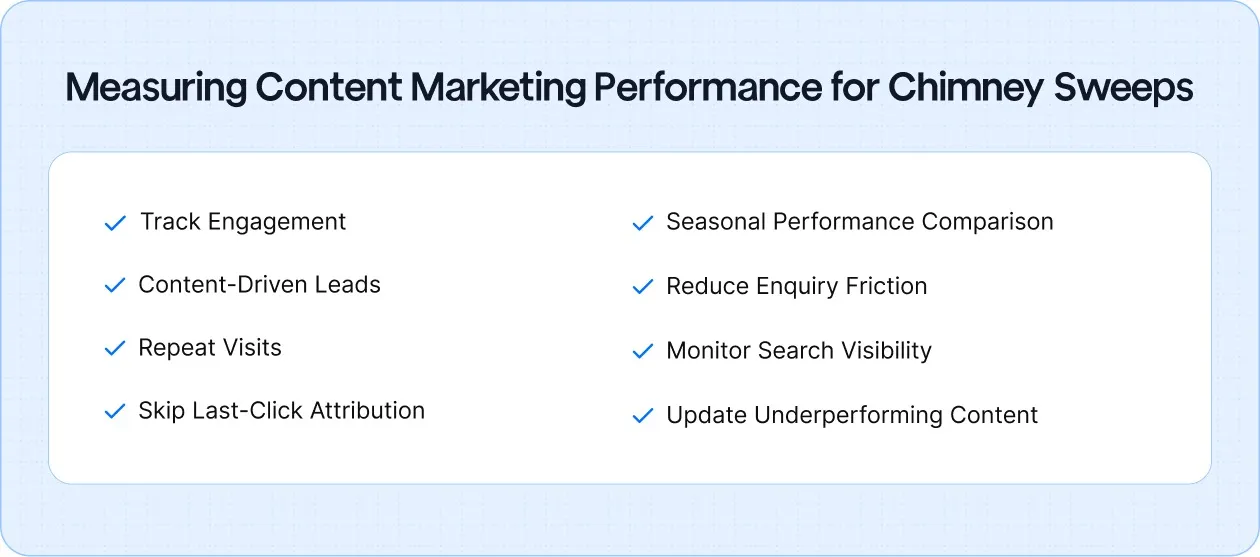
Because chimney services are safety-driven and seasonal, performance should be evaluated with context:
- Service page engagement and navigation paths: Track time spent on core service pages and whether visitors move toward contact or booking actions.
- Content-assisted enquiries and calls: Identify which blog posts, guides, or videos appear in the journey before a form submission or call.
- Repeat visits and return users: Multiple visits often signal trust-building and research behaviour before contacting a provider.
- Avoid last-click attribution models: Content often supports decisions earlier in the journey rather than closing them.
- Compare performance seasonally: Year-over-year comparisons during similar periods offer more accurate insight.
- Look for reduced friction in enquiries: Better-informed calls and fewer objections often indicate effective content.
- Monitor search visibility for service-related topics: Rising impressions usually indicate growing relevance before traffic increases.
- Improve or consolidate underperforming content: Update pages that rank but do not engage, and remove content that adds no value.
Here’s a short, practical tool list, focused only on what actually helps chimney businesses measure content performance:
- Google Analytics (GA4): Use it to track service page engagement, user paths, repeat visits, and content-assisted conversions.
- Google Search Console: Monitor search impressions, queries, and page performance to understand which content aligns with homeowner intent.
- Call Tracking Software (CallRail or similar): Attribute phone enquiries to specific pages or content paths, especially important for mobile-driven local searches.
- Google Business Profile Insights: Measure how posts, updates, and profile activity contribute to calls, direction requests, and website visits.
- CRM or Booking Software: Track enquiry quality, booking outcomes, and repeat customers to understand content’s real business impact.
Advice for New Contractors
If you are new to running a chimney sweep business, content marketing can feel overwhelming because it looks like something established companies do after everything else is “set.”
In reality, content is most effective when it is built early, alongside how you want your business to be perceived and chosen.
These advices focuses on what to prioritise first, what to avoid early on, and how to build momentum:
- Start by documenting what you already explain every day. Write down the questions homeowners ask you during calls, inspections, and estimates. Those explanations are the foundation of your content. Do not invent topics; capture real conversations.
- Focus on a small number of core pages before expanding. Ensure your main services are clearly explained and accurate before publishing blogs, videos, or social posts. A weak foundation multiplies confusion as traffic grows.
- Avoid trying to “look big” through content. Overly polished language, exaggerated claims, or broad service positioning can hurt trust. Clear, honest explanations build credibility faster than professional-sounding marketing.
- Build content consistency. Publishing one strong piece per month that stays relevant is more valuable than publishing frequently and stopping altogether. Consistency signals reliability.
- Expect content to work quietly at first. Early content may not generate immediate calls. Its role is to support decisions when homeowners are ready, not to create instant demand.
- Resist copying competitors’ content structure. Matching what others publish rarely creates differentiation. Your early advantage is clarity and specificity.
- Treat content as part of your operating system. The habits you build early around documentation, explanation, and transparency will compound as your business grows.
For new contractors, content marketing is less about growth tactics and more about setting the tone for how your business communicates.
Conclusion
Good content marketing does something very simple for chimney sweep businesses. It makes the business easier to choose.
When homeowners land on your site or profile and understand what you do, how you work, and what to expect, the decision becomes lighter. That ease shows up in better conversations, smoother jobs, and customers who are aligned from the start.
Over time, content also changes the rhythm of the business. Fewer spikes driven only by emergencies. More planned work. More repeat customers who already trust your process. That kind of growth is quieter, but it lasts longer.


.webp)




.webp)


.svg)


