When homeowners start noticing cracks in their walls or uneven floors, they want answers, and they want them fast.
To provide those answers, your foundation repair business needs to be easy to find when they're searching for help. Foundation repair SEO ensures that your business shows up at the exact moment a homeowner needs assistance.
By optimizing your website and online presence, you make sure your business is visible when it matters most, helping homeowners see you as the trusted expert they can count on.
Key Components of Foundation Repair SEO
Foundation repair SEO works when search systems clearly understand three core signals about your business. These signals shape how often your company appears and how confident homeowners feel when they see your name.
Local SEO for Foundation Repair Contractors
Foundation issues are tied to place. Search systems look for signs that your business truly serves specific areas and understands local conditions.
Local SEO focuses on:
- Clear service area signals tied to cities and nearby towns
- Consistent business details across local listings
- Strong geographic relevance linked to real homes and neighborhoods
When these signals are aligned, your business appears more connected to nearby homeowners searching for foundation help.
Foundation Specialist Website Optimization
Your website sets the tone for trust and clarity. It shows how well your business explains problems and guides homeowners toward the next step.
Website optimization centers on:
- Clear service explanations based on real foundation concerns
- Logical page structure that’s easy to scan and understand
- Smooth paths from problem awareness to contacting your team
A well-optimized site reduces hesitation by answering questions without overwhelming the reader.
Foundation Specialist SEO
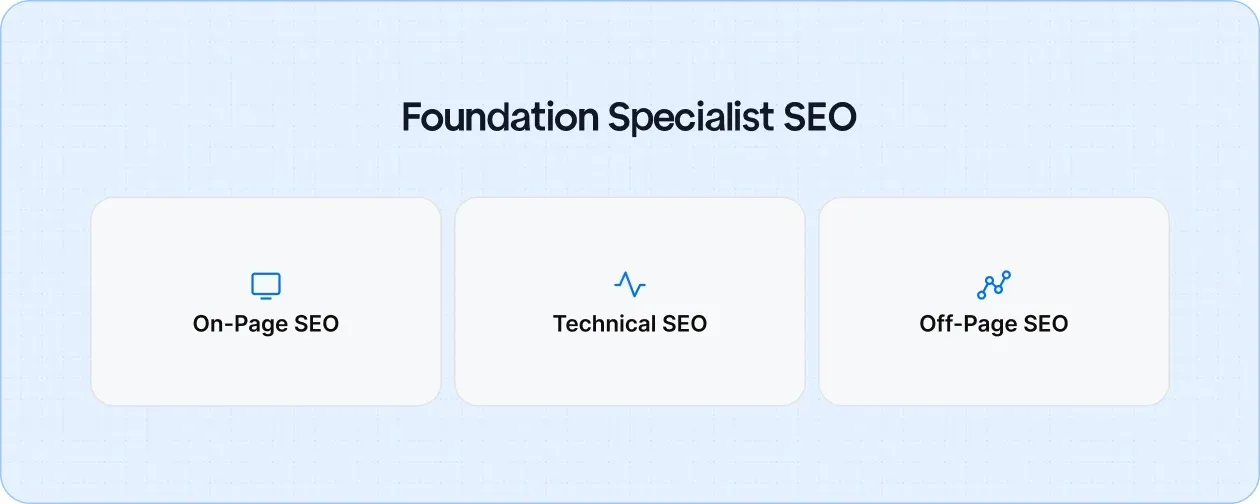
SEO brings structure to how your business is interpreted online. Each part supports a different layer of credibility.
- On-page SEO clarifies what each service covers
- Technical SEO ensures pages load smoothly and work well on all devices
- Off-page SEO reflects how often and where your business is referenced elsewhere online
When these layers support one another, search systems gain confidence in showing your business to homeowners who need foundation repair.
Suggested Read: Grow Your Drywall Business with Mobile Marketing: The Fast Track to More Projects and Bigger Profits!
Top 8 Foundation Repair SEO Strategies That Homeowners Respond To
Foundation repair SEO works best when it reflects how homeowners search, evaluate, and decide during moments of concern. These strategies focus on building clarity and trust across every touchpoint, from first discovery to final decision. When aligned correctly, they help your business feel present, reliable, and relevant in the areas you serve.
1. How to Optimize Your Google Business Profile and Apple Business Connect for Maximum Impact
For many homeowners, your business profile is their first real interaction with your company. Before they visit your website or call, they scan your business details to decide one simple thing: Does this company feel reliable for a serious foundation issue?
Google Business Profile and Apple Business Connect shape that decision.
a) Why These Profiles Influence First Decisions?
These platforms act as verification layers. They confirm that your business is active, local, and prepared to help homeowners nearby.
They influence:
- How confidently your business appears for local foundation-related searches
- How complete and current does your business information feel at a glance
- How quickly homeowners understand what you do and where you operate
When both profiles are accurate and consistently updated, your business appears more established and dependable before anyone clicks through.
b) How to Set Up Both Profiles the Right Way
Optimization here is less about tricks and more about clarity and consistency.
Focus on:
- Accurate business details: Name, phone number, service areas, and hours should match everywhere
- Clear service descriptions: Explain what foundation problems you handle in plain language
- Real photos: Work in progress, completed jobs, equipment, and team presence
- Ongoing updates: Small changes over time signal that your business is active and attentive
Each update reinforces trust and helps search platforms understand that your foundation repair business is current and responsive.
c) Consistency Between Platforms
Homeowners may see your business on different devices and apps. Google Business Profile and Apple Business Connect should tell the same story.
That means:
- Matching service areas and categories
- Similar wording around your services
- Consistent contact details
When both profiles align, your business feels steady and intentional, qualities homeowners look for when dealing with structural concerns.
2. Effective Keyword Research for Foundation Repair SEO
Keyword research for foundation repair starts with listening, not tools. Homeowners rarely search using technical terms. They search using what they see, feel, and worry about inside their homes.
Effective keyword research captures those exact moments.
a) How Homeowners Actually Search for Foundation Help
Most searches begin with a symptom, not a service name. Cracks, uneven floors, doors that won’t close, or water showing up where it shouldn’t, these phrases reveal intent long before a homeowner decides whom to call.
Strong keyword research focuses on:
- Problem-based phrases tied to visible signs
- Location-specific wording that homeowners naturally include
- Simple language that reflects concern, not expertise
When your content mirrors how homeowners describe their situation, your business feels immediately relevant.
b) Turn Search Language Into Clarity
Long-tail keywords work because they reflect specific situations, not broad ideas. These phrases help your content align with what homeowners want to understand next.
Use keyword research to:
- Separate urgent concerns from general questions
- Identify patterns in how people describe foundation issues
- Match services to real homeowner language
This creates a stronger connection between what someone searches and what your page explains.
c) Tools That Help Spot Real Search Patterns
Tools like Google Keyword Planner and SEMrush help confirm how often certain phrases appear and how variations differ by location. They support decisions, but they don’t replace judgment.
Use tools to:
- Validate common problem phrases
- Compare similar terms homeowners use interchangeably
- Spot local wording differences across service areas
3. Create Service Pages That Directly Address Homeowner Problems
Service pages work best when they mirror how a homeowner thinks the moment they land on your site. At that point, they are not comparing companies. They are trying to confirm one thing: Is this page talking about what I’m seeing in my home?
a) Why One Page Per Problem Matters?
Foundation issues show up in very different ways. A homeowner with stair-step cracks is asking different questions than someone noticing sloping floors or moisture in a crawl space. Combining everything into one page blurs that clarity.
Dedicated service pages help by:
- Matching one visible problem to one clear explanation
- Reducing confusion about which repair applies
- Making it easier for homeowners to stay and read instead of bouncing back
Each page should feel like it was written for a single concern, not a general service list.
b) What Makes a Strong Foundation Repair Service Page?
Effective service pages follow a simple logic that reassures homeowners without overwhelming them.
Each page should clearly cover:
- What the problem looks like: Common signs homeowners notice first
- Why it happens: Simple causes explained without technical overload
- How it’s usually fixed: A clear overview of the repair approach
- What happens next: Inspection, evaluation, and follow-up steps
This structure helps homeowners move from concern to confidence.
c) Writing That Feels Clear
Service page writing should explain, not persuade. The goal is understanding.
Good SEO writing here focuses on:
- Short paragraphs that are easy to scan
- Plain language that avoids industry-heavy terms
- Natural use of problem-based phrases that homeowners already recognize
When a page feels calm and specific, it builds trust without trying to push a decision.
4. Use Schema Markup to Enhance Local SEO
Search systems don’t read a page the way people do. They scan for structure, labels, and signals that confirm what a business actually does. Schema markup helps remove ambiguity by clearly defining your foundation repair business in a language that search platforms understand.
a) What Schema Markup Really Does?
Schema markup is structured information added behind the scenes. It does not change how your site looks, but it changes how clearly your business is interpreted.
Schema helps search systems:
- Confirm your business type and services
- Understand where you operate and how homeowners can contact you
- Connect service pages to real-world foundation repair work
When this information is clearly defined, your business appears more reliable and consistent across local results.
b) Where Schema Makes the Biggest Difference?
Schema works best when it reinforces what already exists on your site and profiles.
Focus on:
- LocalBusiness schema: Defines your business name, location, service areas, and contact details
- Service schema: Clarifies the specific foundation problems you handle
- Review signals: Helps surface trust indicators tied to real customer experiences
These elements give search systems confidence in presenting your business for relevant local searches.
c) Keep It Simple and Accurate
Schema is not about adding more data. It’s about adding the right data once and keeping it consistent.
Best practices:
- Match schema details with your website and business profiles
- Avoid overloading pages with unnecessary markup
- Update schema when services or service areas change
5. Build Trust Through Customer Reviews and Local Citations
For foundation repair, trust is rarely built through promises. It’s built through what others say about you and how consistently your business shows up across the web. Reviews and citations work together to quietly confirm that your business is real, active, and dependable.
a) Customer Reviews as Proof of Real Work
Reviews matter because they reflect lived experiences, not marketing claims. Homeowners dealing with structural issues look for reassurance that others with similar concerns felt confident after choosing your business.
Strong review signals come from:
- Recent feedback that shows ongoing work
- Reviews that mention specific problems or outcomes
- Responses that show you acknowledge and address concerns
Search platforms also read this activity as a sign that your business is trusted locally. Reviews tied to your Google Business Profile and Apple Business Connect strengthen that trust further by linking feedback directly to your verified listings.
b) Local Citations and Business Consistency
Citations are mentions of your business details across local directories, industry listings, and mapping platforms. Their role is simple but critical: confirming your identity everywhere your business appears.
Citations support clarity by:
- Reinforcing your business name, phone number, and service location
- Reducing confusion caused by outdated or mismatched details
- Helping search systems connect your website, profiles, and listings
Consistency is more valuable than volume. A smaller number of accurate listings carries more weight than dozens of conflicting ones.
c) Why Reviews and Citations Work Best Together?
Reviews show how people feel about your work. Citations confirm who you are and where you operate. Together, they create a stable foundation of trust that supports local visibility without relying on tactics or trends.
6. Optimize Your Website for Mobile Devices and Fast Load Times
Most homeowners look for foundation help on their phones, often while standing inside the problem area itself. At that moment, patience is limited. A slow or awkward website quietly pushes them away before they ever read a single line.
a) Why Mobile Experience Shapes First Impressions?
A mobile-friendly site requires making sure information is easy to access when someone needs it quickly.
Mobile optimization ensures:
- Text is readable without zooming
- Buttons are easy to tap with one hand
- Phone numbers and contact options are visible right away
When a site feels simple on a phone, homeowners are more likely to stay long enough to understand your services.
b) Why Load Speed Shapes First Impressions?
Speed sets the tone for trust. A slow-loading page can feel unreliable, especially for a service tied to safety and structure.
Fast load times help by:
- Letting pages open without delay
- Keeping attention focused on the content, not the wait
- Making your site feel steady and professional
Search systems also favor sites that load smoothly, especially on mobile devices, because they signal a better overall experience.
c) Keep It Lightweight and Focused
Speed improves when a site avoids unnecessary clutter.
Simple fixes include:
- Compressing large images
- Limiting heavy animations or scripts
- Keeping page layouts clean and consistent
7. Advanced Local SEO Strategies for Foundation Repair
Once the basics are in place, local SEO grows through depth. This means showing clear relevance to specific areas you serve and earning recognition from trusted local sources that already matter in those communities.
a) Location-Specific Pages That Reflect Real Local Conditions
Location pages work best when they explain why foundation problems show up differently in different places. These pages are not copies with a city name swapped in. They exist to show local understanding.
Strong location pages usually include:
- Common foundation concerns seen in that area
- Soil, drainage, or weather patterns that affect homes locally
- A brief example of work completed nearby
- Clear confirmation that inspections are available in that location
When pages reflect real local conditions, they feel grounded and credible instead of generic.
b) Local Backlinks That Reinforce Community Presence
Local backlinks act as third-party confirmation that your business is known and referenced beyond its own website. These links don’t need to come from large national sites to matter.
Useful local sources include:
- Home inspectors, realtors, and property managers
- Local business associations or trade groups
- Regional home services directories
- Community publications or contractor listings
Each mention helps reinforce your place within the local home services network.
c) Why These Signals Matter Together?
Location pages show where you work and what you see on the ground. Local backlinks confirm that others in the area recognize your business. Together, they strengthen your connection to the places homeowners care about most.
8. How to Tell If Your Foundation Repair SEO Is Actually Working
SEO for foundation repair should create clear signs that your business is becoming easier to find, easier to understand, and easier to trust. Tracking success is less about chasing numbers and more about confirming that the right signals are strengthening over time.
a) Signals That Show Your SEO Is Moving in the Right Direction
Instead of watching isolated numbers, focus on patterns that reflect homeowner behavior and search system confidence.
Look for signs such as:
- More visits are arriving on the service and location pages
- Homeowners are spending time reading problem-specific pages instead of leaving quickly
- Increased activity on your business profiles, such as calls, direction requests, or photo views
- Service pages are being surfaced for a wider range of foundation-related searches
These shifts indicate that your content and local signals are aligning with real search intent.
b) Pages and Profiles That Deserve the Most Attention
Not every page needs equal tracking. The most useful insights come from monitoring areas where homeowners make decisions.
Pay close attention to:
- Individual service pages tied to specific foundation problems
- Location pages connected to nearby cities or neighborhoods
- Google Business Profile and Apple Business Connect interactions
- Pages that receive repeat visits before contact
When these areas improve steadily, it’s a sign your SEO foundation is holding up.
c) Tools That Help You Spot Trends Without Overthinking
Tools like Google Analytics and Google Search Console are helpful when used to observe direction.
Use them to:
- Compare month-over-month growth in key pages
- Identify which pages are being shown for new search terms
- Spot technical issues that interrupt page access or loading
- Confirm that search systems are regularly crawling and indexing your site
Must Read: Home Improvement SEO Strategies That Will Get Your Phone Ringing Nonstop
Furniture Page Quality Checklist
Strong furniture SEO often comes down to page quality. When key pages feel clear and complete, shoppers move with confidence and search systems understand your site without extra effort. Use this checklist as a quick way to spot gaps before moving on.
Category Pages
- Clearly explain what the category includes
- Group products by how people browse, not internal naming
- Use simple filters that match real shopping needs
- Keep URLs short and easy to follow
- Link naturally to related subcategories or guides
Product Pages
- State the product type and key detail upfront
- Explain usage and fit before listing specifications
- Show multiple images that clarify scale and placement
- Add short videos where depth or movement matters
- Keep layout consistent across similar products
- Include structured data for price and availability
Location Pages
- Display the full address with nearby landmarks
- Clarify which furniture types are available locally
- Include visit details like parking or delivery
- Use the original copy written for that area
- Link to relevant categories or collections
Build a Sustainable SEO Strategy for Long-Term Growth
Foundation repair SEO works when everything aligns around one goal: helping homeowners feel confident choosing your business at the moment they need help. Clear local signals, well-structured service pages, consistent business profiles, real-world proof, and steady improvements all work together to create that confidence.
None of these elements works in isolation, and none require shortcuts. The businesses that see lasting results are the ones that stay consistent, clear, and grounded in how homeowners actually search and decide.
When done right, SEO becomes part of your daily presence rather than a one-time effort. Small refinements over time, clearer explanations, stronger local relevance, and better visibility where homeowners look, add up to steady progress you can rely on.