










Dry cleaning is a competitive, margin-sensitive business. New stores open, delivery apps enter the market, and customers switch providers more easily than before. In that environment, being good at the service is no longer enough. Visibility plays a direct role in whether your business grows, plateaus, or slowly loses ground.
SEO, with its new and best upcoming trends, have become one of the few channels that compounds over time for dry cleaners.
In this blog, we break down what the best SEO for dry cleaners looks like in 2025, the strategies that actually influence local growth, and which SEO services are best positioned to support long-term, organic performance.
Understanding Why SEO Matters for Dry Cleaners in 2026
SEO for dry cleaners in 2026 is still about one core goal: getting nearby customers to choose your store when they need cleaning services. What has changed is how search engines decide who gets shown and why. Search is more contextual, more local, and more selective about which businesses it trusts.
To compete today, dry cleaners need to focus more on clarity, accuracy, and real usefulness at the exact moment a customer is ready to act.
What’s New in SEO for 2026?
2025 accelerated three trends you can’t ignore: AI-driven result summaries, stricter helpful-content signals, and an even stronger emphasis on mobile and local signals.
- AI-influenced search results: Search engines increasingly summarize and recommend businesses using structured, easy-to-understand information. Clear service pages and well-organized content matter more than ever.
- Stronger emphasis on helpful content: Pages that directly answer customer questions about turnaround time, pricing ranges, pickup options, and garment care perform better than vague marketing copy.
- Greater weight on local signals: Local Pack algorithms now weigh relevance, distance, reviews, and real-time signals. Up-to-date business listings, proximity, and consistent local mentions play a larger role now.
- Mobile-first expectations: Most searches happen on phones. Fast load times, click-to-call buttons, and simple navigation are now basic requirements.
For dry cleaners, these changes reward businesses that are easy to understand, easy to trust, and easy to contact.
Key SEO Trends for Dry Cleaners in 2026
In 2026, SEO for dry cleaners is shaped by one reality: search engines are trying harder to behave like customers.
These trends reflect how search engines now assess local service businesses and what dry cleaners must prioritize to remain visible and competitive:
Local SEO Strategies for Dry Cleaners
Local SEO remains the primary driver of discoverability for dry cleaners. Most searches are immediate, and customers typically choose from a small set of nearby options surfaced in Maps or local results.
- Google Business Profile (GBP)
- Complete every field: primary category, secondary categories, services, business hours (include holiday hours), and appointment link.
- Use service-level entries (e.g., “wedding dress cleaning”, “same-day shirt press”) so Google can match queries to exact services.
- Upload fresh photos weekly and post short updates (promotions, turnaround times, service changes).
Get Chosen in Local Search
Turn your Google Business Profile into clear decision points that drive calls and walk-ins.


- Local content and keywords
- Create short, focused pages.
- Use neighborhood names, nearby landmarks, and route/pickup areas in copy and meta tags.
- Add a small pickup-route page or calendar that shows neighborhoods and pickup windows.
- Reviews and reputation process
- Automate a post-service review prompt (SMS/email) within 24 hours; ask for specific details (service, turn-around).
- Respond to every review within 48 hours; for negative reviews, offer a clear remediation step.
- Track review velocity and average rating monthly; aim to keep recency and response time high.
AI-Powered Search & Conversational Queries
AI now shapes and surfaces question-type and comparison queries. Clear, structured, question-and-answer content is more likely to be pulled into AI overviews and conversational results.
- Write for conversational intent
- Add concise FAQ blocks with single-sentence answers (good for AI extraction).
- Use natural phrasing. Write the questions people actually ask.
- Optimize for voice searches
- Include full-phrase long-tail queries and “near me” variants in FAQs and schema.
- Create a short “quick answers” section on each service page for mobile/voice consumption.
- Monitor AI visibility
- Use rank-tracking tools that report AI / “People also ask” visibility.
- If AI overviews surface for your keywords, test short fact-driven content to get cited.
Content Quality, Authenticity, and E-E-A-T
Google prioritizes content that shows real experience, expertise, authority and trust. For dry cleaners that means practical, local, and experience-led content.
- Demonstrate Experience and Expertise
- Publish short case studies (before/after + what was fixed and why).
- Create a credentials section: certifications, years in business, handling special fabrics.
- Authoritativeness and trust signals
- Link to or cite manufacturer care instructions or textile associations when relevant.
- Collect and display third-party reviews (Google, Yelp, Trustpilot) and badges (Better Business Bureau, local chamber).
- Content formats that win
- Well-structured answers can appear in Featured Snippets
- Clear Q&A content helps surface in People Also Ask results
- Concise explanations are more likely to be referenced by AI summaries
Answer What Customers Ask
Create content that explains turnaround times, garment care, and services in plain language customers trust.
Website Performance, Mobile UX and Core Web Vitals
Search rewards pages that load fast and behave predictably, on mobile first. Core Web Vitals are still central: faster pages convert better and keep rankings stable.
- Mobile-first checks (immediate wins)
- Ensure tap-to-call is front-and-center on every page and booking forms are one-screen on phones.
- Remove intrusive interstitials and reduce heavy slider galleries.
- Core Web Vitals optimization
- Prioritize LCP (largest contentful paint) and CLS (visual stability): compress hero images, reserve space for images/ads.
- Use lazy-loading for below-the-fold images and server-side caching or CDN.
- Tools and cadence
- Run PageSpeed Insights and Lighthouse; focus on mobile results.
- Track Core Web Vitals in Search Console and fix pages with poor field data first.
Make Your Website Convert
Help customers understand your services, pricing cues, and pickup options the moment they land.
Schema & Structured Data
Structured data helps search engines and AI understand your services and increases eligibility for rich snippets, hours, and FAQ cards.
- Priority schema types for dry cleaners
- LocalBusiness (with openingHours, geo, address)
- Service / Offer (for service types and price cues)
- FAQ and HowTo (for quick answers and voice/AI extraction)
- Review (connects rating to rich snippets)
- Implementation steps
- Generate JSON-LD with a schema helper for one service page; test in Rich Results Test.
- Add structured data for your GBP using the same details to keep consistency.
- Monitor Search Console for structured data errors and fix promptly.
On-Page & Technical SEO (long-tail, speed, UX)
Technical hygiene and targeted on-page optimisation are how you convert local visibility into bookings.
- Long-tail and service-specific pages
- Build pages for phrases that convert: “wedding dress cleaning in [neighborhood]” or “same-day suit press [city]”.
- Keep each page focused on one intent and avoid thin, duplicated content.
- Page speed & resource management
- Replace large background videos with stills; serve images in modern formats (WebP/AVIF).
- Remove unused plugins and consolidate tracking scripts via Google Tag Manager.
- Responsive, accessible UX
- Use large CTAs, clearly labelled pickup options, and an easy booking flow (name + phone minimal).
- Provide visible trust signals (ratings, guarantees) above the fold on mobile.
Off-Page SEO: Link Building & Local Citations
Local links, contextual mentions, and accurate directory listings still matter — but quality beats quantity. A few relevant local links move the needle more than dozens of unrelated directories.
- Local link targets
- Tailors, bridal shops, dry-clean-friendly hotels, local event pages, community charities.
- Get featured in “local services” guides and neighborhood blogs.
- Tactics that work
- Co-create a short guide with a bridal boutique (“how to prepare your gown for cleaning”) and earn a link.
- Sponsor a community event and secure an event page mention/backlink.
- Citation hygiene
- Audit NAP across top directories (GBP, Yelp, Apple, Yellow Pages, local chamber) and fix inconsistencies.
Show Up When It Matters
Capture local search demand from customers already looking for dry cleaning near them.
Trust Signals and Conversion Triggers
Trust elements are ranking signals and conversion drivers. Treat them as a single system.
- Critical trust elements
- Consistent NAP, SSL, visible reviews, clear refund/repair policy, and staff credentials.
- Conversion placements
- Place 1–2 trust elements (rating, guarantee badge) next to CTAs and booking forms.
- Use short social proof lines: “3,200 garments cleaned in 2025 — 4.8★ average.”
Measure, Report, and Iterate
Track a small set of high-value KPIs and review them weekly. Metrics should tie back to revenue and repeat business.
- Primary KPIs
- Calls/bookings attributable to organic & GBP traffic (use call tracking)
- Conversion rate by page (service pages, pickup form)
- Average order value and repeat-customer rate
- Tools and setup
- Google Analytics + GA4 events for form submissions and phone clicks
- Google Search Console for queries and indexing issues
- Call-tracking (CallRail/Twilio) with UTM tagging for campaign attribution
- Review cadence
- Weekly: GBP insights, calls, and urgent site errors
- Monthly: organic traffic, conversions, review velocity, Core Web Vitals trends
- Quarterly: backlink profile, local market share, pricing/offer tests
5 Best SEO Services That Can Help Dry Cleaners Grow Organically Online
The services below stand out for their ability to support local service businesses and drive steady, organic growth when executed correctly.
1. Gushwork
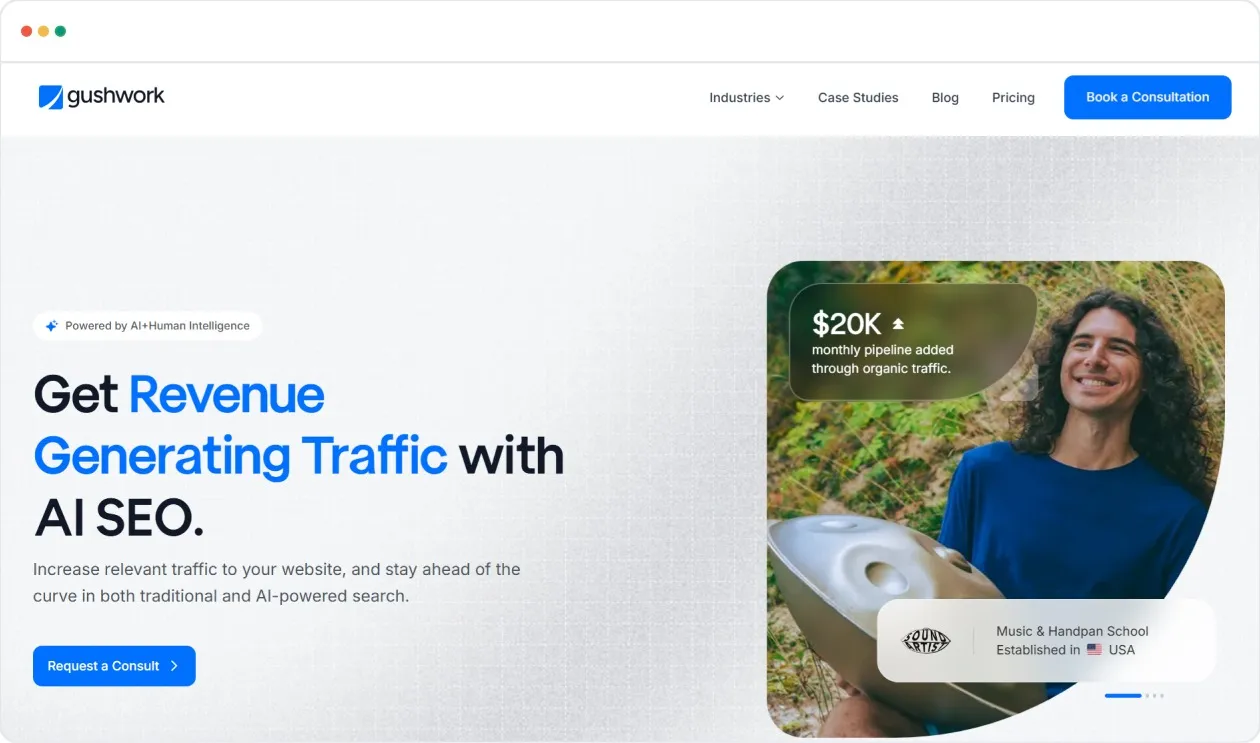
Gushwork focuses on SEO that is built around how local service businesses actually get customers. For dry cleaners, that means showing up at the exact moment someone searches nearby, understands the service quickly, and takes action without friction.
What makes Gushwork a strong fit for dry cleaning businesses:
- Local-demand–driven SEO strategy: Gushwork structures SEO around real search behavior. The goal is to capture demand that already exists, not manufacture traffic that doesn’t convert.
- Deep Google Business Profile optimization: GBP is treated as a primary acquisition channel, not a checkbox. Gushwork actively works on service categorization, profile content, posting cadence, review signals, and visibility factors that influence Maps rankings and call volume.
- Conversion-focused content: Pages are written to answer practical questions customers care about: turnaround time, garment types, pickup options, and pricing cues. This reduces hesitation and increases conversion, especially on mobile.
- Strong technical and local SEO foundation: Site speed, mobile usability, indexing, and local schema are handled, so rankings are not lost to technical gaps. This ensures SEO improvements actually stick and compound over time.
- Clear connection between SEO and revenue: Reporting focuses on calls, bookings, and customer actions. This makes it easier for dry cleaners to understand what’s working and where growth is coming from.
- Built for sustainable growth: The approach prioritizes steady local visibility and repeat demand, helping dry cleaners reduce reliance on paid ads and promotions over time.
For dry cleaners that want SEO to translate into predictable foot traffic and pickup requests, Gushwork offers a focused, practical approach grounded in how local service businesses really grow.
2. WebFX
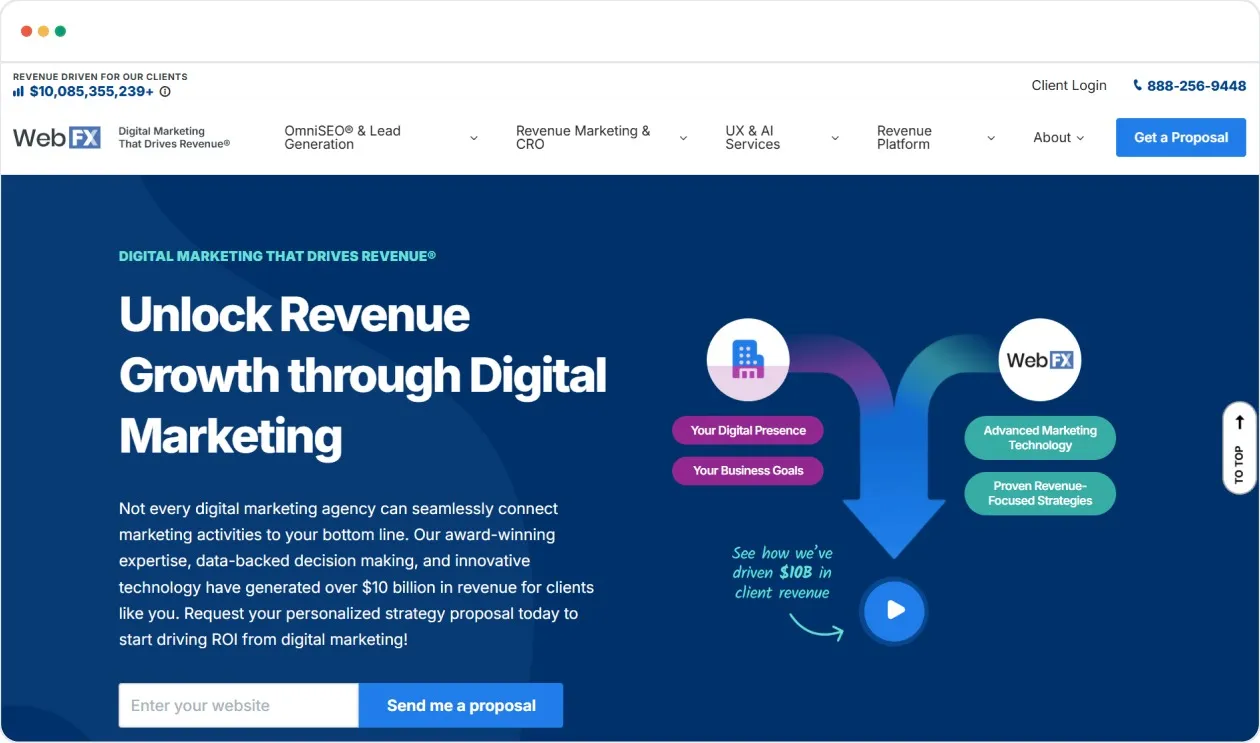
WebFX is a well-known digital marketing agency with experience across multiple local service industries. Their SEO services are structured and scalable, making them suitable for dry cleaning businesses with multiple locations or expansion plans.
Strengths include:
- Structured local SEO and on-page optimization
- Strong technical SEO capabilities
- Access to proprietary reporting tools
However, their approach can feel standardized, which may require additional customization for niche local services.
3. Thrive Internet Marketing Agency
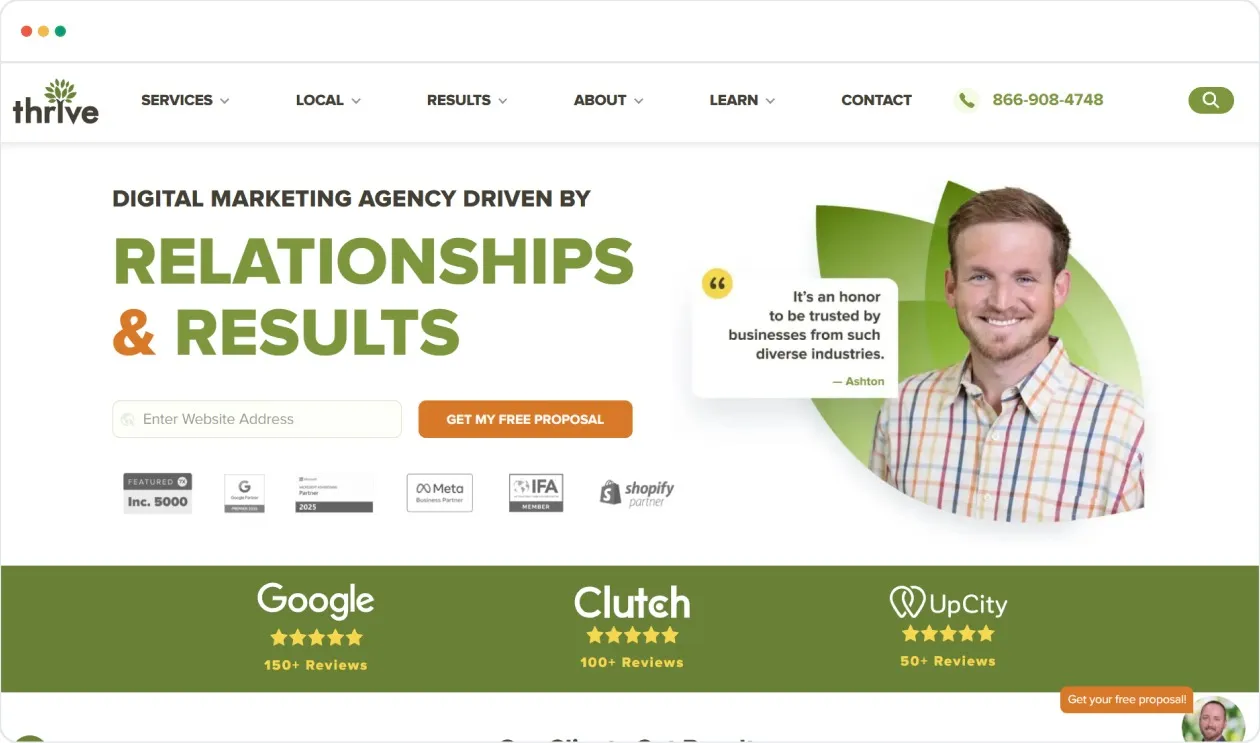
Thrive focuses on local SEO and reputation management, which aligns well with dry cleaners that rely heavily on local trust and visibility.
Notable areas:
- Google Business Profile optimization
- Review generation and management
- Content and citation-focused local SEO
Thrive works best for businesses that want consistent local presence improvements rather than aggressive growth experimentation.
4. Straight North
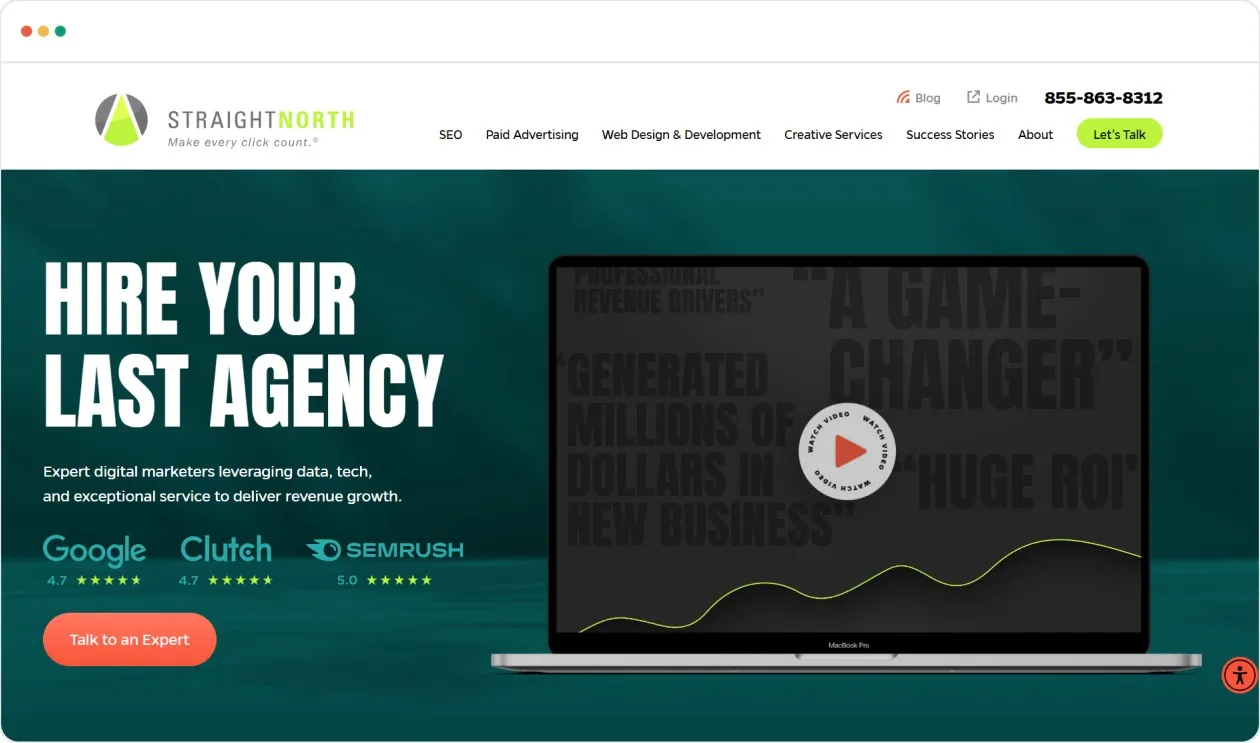
Straight North specializes in lead-driven SEO and works with service businesses that prioritize inbound inquiries. Their approach is data-heavy and conversion-focused.
Key offerings:
- SEO strategies tied to lead generation
- Strong emphasis on tracking and attribution
- Balanced focus on content and technical SEO
This can be a good fit for dry cleaners that already understand their funnel and want to optimize performance.
5. Victorious SEO
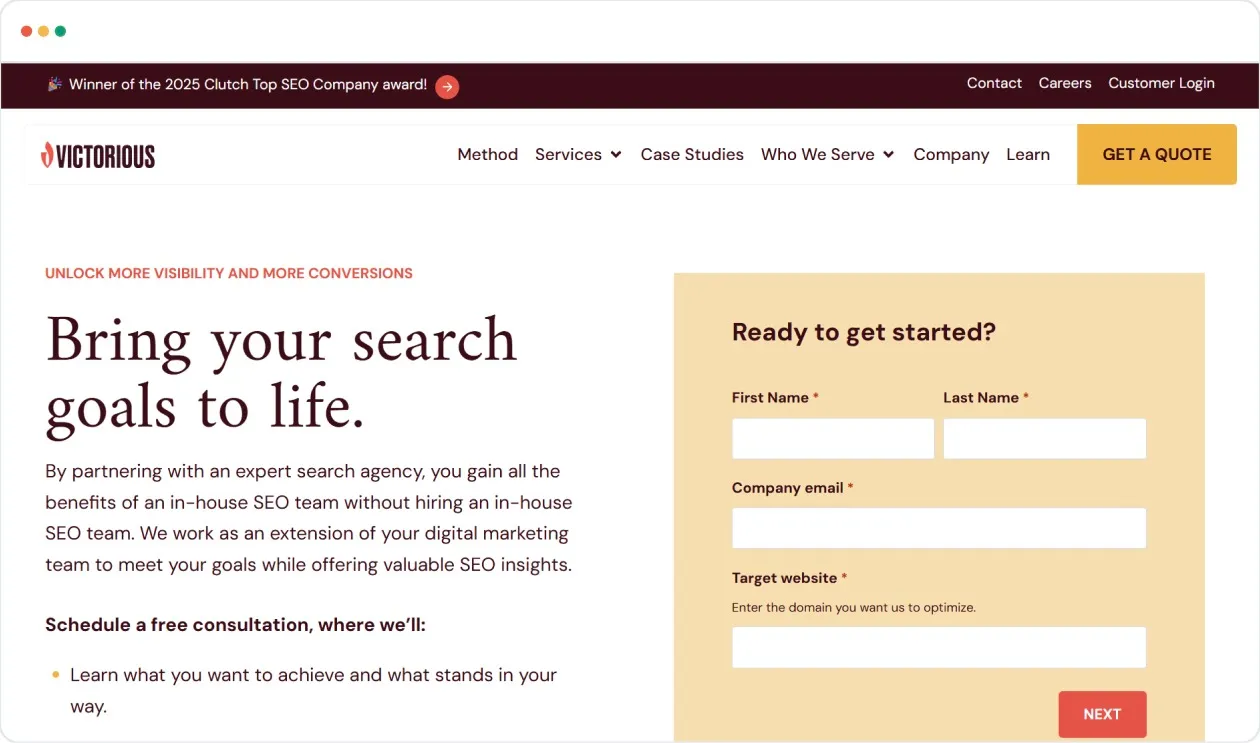
Victorious SEO is known for its technical depth and enterprise-grade SEO execution. While not exclusively focused on local services, their strategies can benefit larger or multi-location dry cleaning operations.
Where they perform well:
- Advanced technical SEO and audits
- Keyword strategy and competitive analysis
- Scalable SEO frameworks
For smaller dry cleaners, their services may feel more complex than necessary, but they can be effective at scale.
Conclusion
The best SEO for dry cleaners is about building a strong local presence that holds up over time. Accurate listings, clear service pages, solid technical foundations, and steady trust signals create an advantage that competitors can’t easily copy.
As search continues to evolve, dry cleaners that invest in SEO as a long-term growth channel will rely less on discounts, paid ads, and one-off promotions. Instead, they’ll benefit from consistent demand and stronger brand recognition in their local market.
When SEO is treated as an asset rather than an experiment, it becomes one of the most reliable ways to grow a dry cleaning business organically.
Ready to Grow Organically
Get a clear SEO plan built around local visibility, conversions, and repeat customers.


.webp)





.webp)


.svg)


