










Some weeks your phone keeps ringing non-stop, and other weeks it slows down without warning. It feels confusing because you know homeowners still need duct cleaning, yet your business doesn't get a steady flow of calls.
What often makes the difference is how visible and responsive you appear to customers. Air duct cleaning marketing automation is what helps you stay present when people search, follow up before they forget, and stay top-of-mind when they need you again.
This guide breaks down how simple systems can make your work more predictable, without hiring extra staff or dealing with complicated tools.
What Does Air Duct Cleaning Marketing Automation Mean for Your Business?
Air duct cleaning marketing automation is a way to keep your business visible, responsive, and remembered without doing every task by hand. It supports everyday actions such as:
- Following up after someone calls
- Asking for reviews once a job is done
- Sending reminders when service is due
- Sharing useful information that keeps you on a customer’s mind
Most duct cleaners know these steps matter, but small teams often struggle to keep up. When you’re out on jobs, paperwork and follow-ups fall behind. When work slows, outreach happens too late.
Automation gives these tasks structure so they run even when you are busy or understaffed. The harder part is to set it up, write messages that people respond to, choose timing that works, and know what to prioritize.
Automation works only when your words do
Most duct cleaning systems send messages; the difference is turning automation from something you “try” into something that actually drives steady work.


The Customer Journey and Three-Pillar Automation Framework
Duct cleaning demand moves between businesses. The gap usually lies in how consistently a company shows up, responds, and stays remembered.
A typical buyer path looks like:

Automation supports each step, so work becomes steady rather than unpredictable.
To make this run smoothly, use a simple structure built on three pillars.
Pillar 1: Attract
The Attract Phase is about being visible and appealing to the right customers at the right time. It's the first impression that can make the difference between a customer reaching out or moving on to the next option.
a) Meta Ads Done the Smart Way
Meta (Facebook and Instagram) ads can be incredibly effective when done the right way. Here’s how to maximize them:
- Messaging-first campaigns: These ads are about building a conversation, not just collecting details.
- Pre-qualification questions: Ask questions like location, service needs, or urgency to better filter potential customers.
- Focus on offer & creative: Let Meta’s algorithm target the audience; focus on crafting an offer and creative that resonate with your audience.
- $4-$10 inquiries: It's realistic to generate quality inquiries within this range when the ad speaks clearly to customer needs.
- Urgency & limited-time pricing: Special pricing with an expiration date can motivate quicker decisions.
Want more people to ask for your service instead of your competitors?
Make sure you build strong and relevant content that makes you the top choice.
b) Local Visibility That Scales
SEO plays a huge role in local visibility. Here are simple but powerful strategies:
- Google Business Profile and Apple Business Connect: Keep these profiles updated and optimized to show up when customers search nearby.
- Area-based landing pages: Creating location-specific service pages helps you rank better for region-specific searches.
- Automated reviews: Collecting positive reviews consistently can increase trust and visibility, especially on platforms like Google.
c) Google Local Services Ads (LSA)
LSAs are powerful for high-intent calls:
- You pay only when someone calls, ensuring your ad spend is tied directly to actual leads.
- A strong review count can drive better visibility on LSAs, so keeping reviews high and consistent is key.
- For example, a $500 investment in LSAs could potentially bring in $10,000 in booked jobs with effective follow-through.
d) Referrals and Partner Networks
Referrals are often the most powerful leads. To get them, consider partnering with:
- HVAC companies
- Property managers
- Realtors
- Restoration firms
When you position your service as supporting their customer relationships, partnerships stick, and referrals become regular.
Pillar 2: Respond & Convert
Respond & Convert focuses on turning inquiries into bookings. Fast response times and clear communication are crucial.
a) Lead Capture Triggers
Automating lead capture ensures that no inquiry slips through the cracks, enabling a smooth and responsive customer experience.
- Multiple touchpoints: Capture leads from forms, calls, chats, and text messages, making sure all channels are covered.
- Instant automated replies: Acknowledge inquiries right away, signaling to customers that you’re responsive and reliable.
This automation ensures that you never miss an opportunity to connect with potential customers, keeping your pipeline full.
b) Missed Call & After-Hours Recovery
Missed calls or inquiries outside of business hours can often be lost opportunities, but auto-responses help maintain customer interest until you’re able to follow up.
Auto-responses let customers know their inquiry was received and when to expect a response, keeping the connection intact.
By automating this process, you reduce missed opportunities and keep potential leads engaged, even when you're unavailable.
c) Quote Follow-Ups That Work
An automated quote follow-up system ensures you stay on top of leads without overwhelming them.
- Day 1: Acknowledge the inquiry and express gratitude for their interest.
- Day 3: Send a gentle reminder, offering additional information or assistance.
- Day 7: A final nudge to encourage a response.
Stopping the sequence once they engage prevents over-communication and helps close deals without pressuring customers.
d) CRM Pipeline for Small Teams
For small teams, simplicity is key when managing leads.
- Stages: New → Contacted → Quote Sent → Booked → Job Done → Review Sent
- Automated alerts: Notify you if leads stall, ensuring no opportunity is missed.
This streamlined process ensures that no lead is left behind and provides a clear path from initial inquiry to repeat customer.
Pillar 3: Retain & Grow
The goal is to turn one-time clients into repeat customers and generate referrals that fuel ongoing business.
a) Review Automation
Automating review requests is key to maintaining a strong online presence and building trust.
- Immediate requests right after job completion increase the chances of getting timely feedback.
- Gentle reminders ensure that reviews continue to roll in, improving your online credibility and local visibility.
By automating this process, you keep reviews coming consistently without manual follow-up, helping you stay top-of-mind for future work.
b) Referral Automation from Happy Customers
Automating referral requests is a great way to expand your customer base without additional effort.
- Timing is key: Ask for referrals shortly after completing a job while the customer is still happy with your service.
- Automated follow-ups: Make the process easy, turning satisfied clients into repeat customers and referral sources.
This structured approach ensures you get consistent referrals with minimal input, growing your business organically over time.
c) Seasonal and Service Interval Reminders
Seasonal and service interval reminders are automatic prompts that keep your business top-of-mind without extra effort. They are an effective, low-maintenance way to ensure that your customers remember to book their next service, even after the job is done.
- Allergy season: Remind customers to clean their ducts to reduce allergens during peak allergy times, improving indoor air quality.
- Dryer vent safety: Send safety reminders for dryer vent cleaning to prevent potential fires and maintain system efficiency.
- Peak HVAC periods: A timely reminder before summer or winter helps customers prepare their ducts for the busy HVAC season, improving air quality and system performance.
Automating these reminders ensures that you stay relevant year-round and helps retain customers with minimal effort.
d) The Organic Snowball
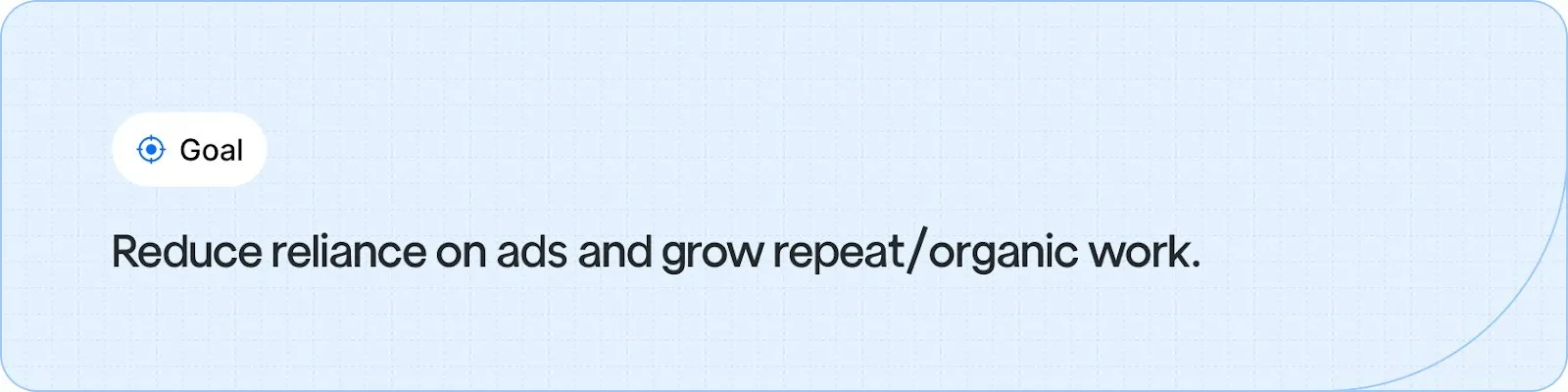
As you collect reviews and referrals, your business gradually shifts from reliance on paid ads to organic growth.
- Repeat work rises: Satisfied customers are more likely to return for future services.
- Recommendations increase: Happy clients refer others, creating a steady stream of new business.
- Ad dependence shrinks: As reviews and referrals grow, your organic visibility increases, reducing the need for paid ads.
Many larger duct cleaning businesses spend under 1% on ads once this momentum builds. Small businesses reach this stage sooner when they have automation and clear messaging instead of trying to do everything manually.
Your Marketing Automation Stack
Your marketing automation stack doesn’t need to be strategic. The following tools are critical in keeping your workflow smooth and your marketing efforts effective:
- CRM (Customer Relationship Management): Tracks leads, inquiries, and follow-ups to ensure no potential business slips through the cracks.
- SEO-driven content: Converts website visitors into inquiries. Content that answers your customers’ questions and provides value builds trust and authority, ensuring you show up when they search for air duct cleaning.
- Review systems: Automates requests for reviews after a job, helping to build trust and increase visibility.
- Booking tools: Confirm appointments and send reminders to reduce no-shows and cancellations, making sure your schedule stays full.
These tools work best when integrated with SEO efforts, making sure that customers are contacting and finding your business consistently, organically, and reliably.
Tools fail when the words behind them fall flat.
Companies often buy software but still miss growth because their content does not attract or persuade; expert guidance bridges that gap.
Residential vs Commercial Automation
Residential duct cleaning buyers act fast: they search, compare, and book within days. Commercial buyers take longer, involve multiple decision-makers, and often require documentation or proposals before approving work. The automation you use should match the way these audiences behave.
Residential Automation Priorities
For homeowners, the goal is speed and convenience:
- Fast acknowledgment when they inquire
- Quote reminders within days and not weeks
- Simple review requests right after job completion
- Seasonal reminders for allergens, HVAC stress periods, and dryer vent safety
These touchpoints help households choose you quickly and remember you next time.
Commercial Automation Priorities
Commercial clients operate differently. They value clarity, reliability, and professional follow-through:
- A pipeline that includes proposal sent → site visit → approval → scheduling
- Follow-ups spaced further apart
- Job documentation, before-and-after reporting, and invoice records
- Renewal or contract-based reminders tied to building schedules or compliance dates
Commercial buyers hire based on trust, detail, and consistency.
Here’s What Both Have in Common
Service apartments, manufacturing facilities, and more, automation works best when:
- Quotes don’t sit unanswered
- Reviews get asked for instead of forgotten
- Past clients hear from you before they shop elsewhere
The difference is timing, language, and structure; residential needs faster nudges, commercial needs organized multi-step engagement.
Getting both systems right often requires expert planning because the messaging, follow-up pace, and workflows aren't interchangeable. Most businesses that try to build one sequence for everyone end up missing both audiences.
Tracking & Optimization
Automation only pays off when you can see which efforts bring actual booked work. Many duct cleaning companies assume ads are the only way to get noticed, but SEO sits quietly in the background to shape who finds you, what they read, and how they decide.
With a variety of channels, from Meta ads to LSAs, you need to track which sources are actually bringing in booked jobs.
- Meta ads are excellent for quick inquiries, but they require refined targeting and strong follow-up to be effective.
- LSAs are ideal for capturing high-intent calls, but success here depends on maintaining high review counts and visibility in local search.
- SEO and content are slow but steady; over time, they’ll help you stay visible even when customers aren’t urgently searching for duct cleaning.
Regularly review your SEO pages, ads, and content to ensure you’re attracting qualified leads and high-conversion customers rather than just aiming for traffic numbers. Optimize your content based on what customers are asking about and what leads to booked jobs.
Instead of comparing channels by volume alone (how many leads or inquiries each source generates), judge them by outcomes:
- Which source leads to booked jobs and happy customers?
- Which one produces homeowners who trust your pricing and your services?
- Which source results in repeat work or long-term customer relationships?
When you focus on quality over quantity, you’ll see how channels like SEO and content can outperform paid channels in the long run, delivering sustained growth.
Why SEO Often Wins?
While SEO might seem like a slow burn compared to instant advertising results, it brings long-term benefits that paid ads can’t match. Here are some ways SEO-driven content helps duct cleaning businesses:
- Customer education: When you create educational content, your customers get the information they need before they even reach out to you. Content that addresses pain points like "how to improve indoor air quality" or "when to schedule duct cleaning" builds trust and positions you as an authority in your field.
This drives organic traffic and sets the stage for a more qualified audience.
- Higher average job value: SEO-driven content helps customers make more informed decisions, meaning they’re often more willing to spend on higher-value services. By clearly explaining the benefits of your services and the value you provide, you can justify higher prices and increase your average job value.
- Long-term repeat business: By continuously adding high-quality SEO content to your website, you’ll build a reputation and attract returning customers over time.
In fact, businesses that invest in SEO often see organic growth leading to a reduction in ad spend. Once the organic snowball is rolling, you’ll find that you can rely more on repeat work and referrals than on paid channels.
A Simple Monthly SEO Optimization Routine
Most small teams adjust ads but ignore their content footprint. A balanced monthly review includes:
- Updating offers and messaging on your website and landing pages
- Refreshing content so your keywords match how customers speak
- Adding regional phrases that customers type into search
- Reviewing which SEO pages or articles bring high-quality calls
- Reinforcing sources that lead to booked jobs rather than filling inboxes
Without proper guidance, duct cleaning companies often waste time:
- Changing the wrong messages without a clear direction.
- Rewriting pages without a solid strategy.
- Chasing views instead of booking jobs.
Support from specialists helps you prioritise changes that make SEO do more of the heavy lifting, so your business shows up organically instead of racing behind ads forever.
90-Day Automation Roadmap (Built for Small Teams)
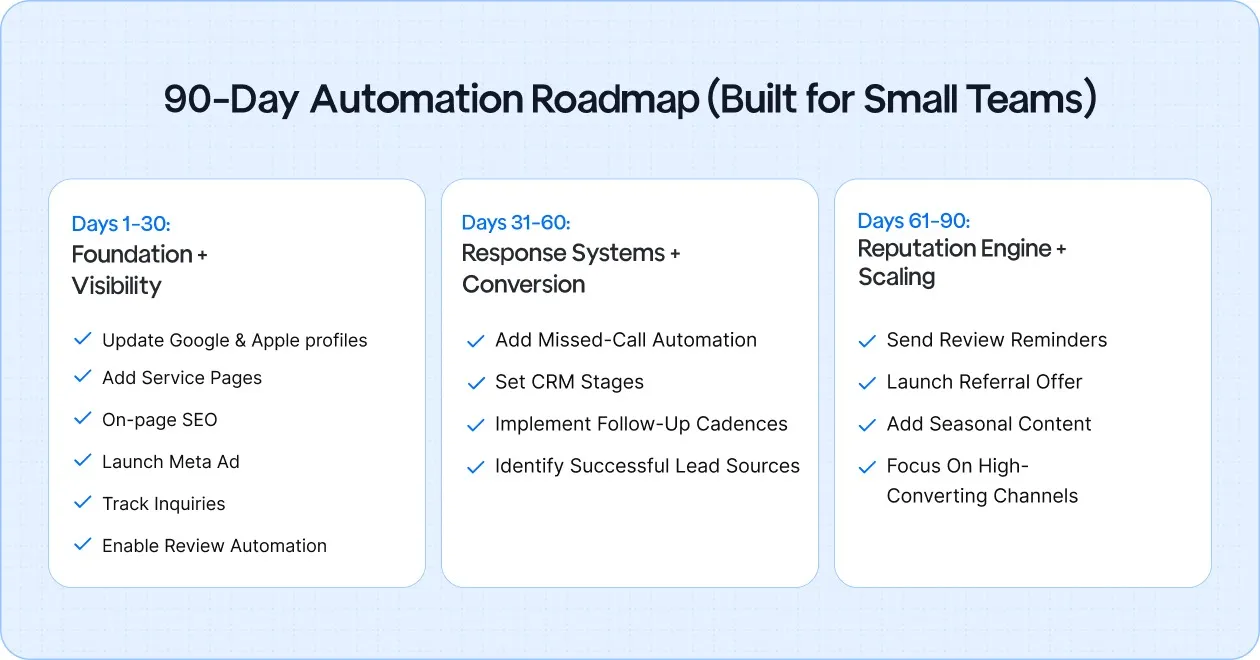
The fastest wins come from organising what drives work, then reinforcing it month after month.
This 90-day plan is simple enough for duct cleaners to follow, yet strategic enough to create momentum without hiring large teams.
Days 1-30: Foundation + Visibility

- Claim/update profiles on Google Business Profile and Apple Business Connect
- Add service pages targeting each city or neighbourhood you actually serve
- Write customer-focused website messaging (simple language, clear offers)
- Turn on review request automation after each job
- Launch one messaging-first Meta ad campaign with a clear offer
- Track incoming calls and inquiries by source
Your output at the end of Month 1 should be:
- A stronger online footprint
- Calls reaching you from multiple entry points
- Messages and offers aligned with what customers search for
SEO note: Month 1 requires you to ensure presence and clarity so searchers understand why you exist.
Days 31-60: Response Systems + Conversion

- Add missed-call response text automation
- Set a simple CRM pipeline stage sequence
- Implement quote follow-up cadences (Day 1, Day 3, Day 7)
- Identify which keywords, pages, or ads led to booked work
- Make small content edits based on what callers asked about
During Month 2, most duct cleaners realise a hard truth: the words used in follow-ups matter more than automations themselves.
That’s where outside expertise helps shape messaging that people respond to.
SEO note: Your website and service pages should start reflecting real customer objections; this is what turns SEO traffic into booked jobs.
Days 61-90: Reputation Engine + Scaling
- Send segmented review reminders (job type, property type, timing)
- Launch a referral follow-up offer after positive reviews
- Add seasonal educational content or FAQs to your website
- Review lead quality across channels, Meta vs LSAs vs referrals vs SEO
- Increase focus on organic pages that generate “good callers,” not volume
- Pause wasted ad spend and shift effort to what compounding channels are producing
By the end of 90 days, you should begin seeing:
- Faster, more consistent call-backs
- Higher success rate per inquiry
- Early signs of organic demand increasing
- A structure where your business shows up even when ads slow down
This is where many small teams hit a wall; they know what to do, but the execution and content creation become too heavy without help.
That’s exactly the gap expert partners bridge, refining messaging, strengthening SEO pages, and maintaining consistent improvements while you handle jobs.
Stop Letting Good Work Go Quiet
Air duct cleaning marketing automation requires having a simple system that helps people find you, get responses fast, and remember you when they need help again. The three pillars you saw, attract, respond & convert, retain & grow, work best when they run consistently.
Most teams learn this the hard way: software does nothing without messages, timing, and follow-through. Once you organise how inquiries are handled, quotes are chased, and reviews are collected, your business feels less random and steadier.
Pick one pillar, improve it, and build momentum. Small steps compound when your business becomes easier to find and easier to choose.
Growing your duct cleaning business shouldn't be a trial and error.
Gushwork helps duct cleaning companies stand out with expert SEO-led content that brings more enquiries, explains your services clearly, and supports steadier bookings.


.webp)




.webp)


.svg)


