










Most gardening businesses spend their days outdoors solving very real, hands-on problems. Overgrown lawns, unhealthy soil, drainage issues, seasonal planting. Online marketing often feels abstract by comparison, disconnected from the actual work. As a result, SEO is either ignored or treated as a one-time checklist task.
But search engines don’t reward businesses for being online. They reward clarity. Clear services. Clear locations. Clear proof that you know what you’re doing. For gardening companies, SEO becomes less about promotion and more about translating real-world expertise into signals search engines can recognize and trust.
In this blog, we break down how SEO actually works for gardening businesses, from local visibility and seasonal keywords to content, technical foundations, and conversion tactics that turn search traffic into booked work.
What SEO Actually Does for Gardening Businesses?
Most gardening businesses already do good work. SEO decides whether that work compounds into steady inbound leads or stays invisible outside referrals.
Centrally, SEO turns your services, expertise, and past work into an always-on acquisition channel that works even when you’re not actively marketing.
- SEO as a Demand Stabilizer: Gardening demand is uneven. Weather, seasons, and local competition all affect how busy a business feels month to month. SEO helps smooth those fluctuations by ensuring your business appears whenever intent arises. This makes SEO more about the landscaping’s operational predictability.
- SEO as a Credibility Filter in a Crowded Local Market: Most homeowners cannot easily judge the quality of a gardener before hiring. They rely on digital signals to make that decision. SEO strengthens those signals. In competitive areas, SEO often decides who gets shortlisted and who never gets considered.
- SEO as a Long-Term Asset: Unlike ads or promotions, SEO builds value over time. Every optimized page, review, and backlink adds to a growing footprint that competitors cannot easily copy. This is why SEO behaves more like infrastructure than marketing spend.
Why Gardening SEO Is Different from Other Local Services?
Gardening, as a niche business, sits at the intersection of design, maintenance, and local conditions. Generic local SEO frameworks often fall short here.
- Services vary widely even within the same city.
- Search intent changes by season, not just by location.
- Visual proof and project depth matter more than generic claims.
Effective SEO for gardening needs to reflect that complexity.
SEO Strategies That Actually Grow Gardening Businesses
SEO for gardening businesses works best when it mirrors how the work itself happens.
The strategies below focus on building visibility where homeowners actually look, earning trust before the first call, and turning search demand into booked jobs:
Why Local SEO Matters For Gardeners
Gardening and landscaping services are inherently local. Customers' search is based on whether a provider understands local soil conditions, climate, and property types. Local SEO ensures your business appears where these decisions are actually made.
Key local SEO priorities include:
- Optimizing for map and local pack visibility so your business appears when homeowners search for services nearby
- Aligning your website and listings with specific service areas rather than broad city-level targeting
- Reinforcing proximity and credibility signals that Google uses to rank local service providers
Core Local SEO Elements
Local SEO has a few non-negotiable building blocks. If these are solid, every other effort works better.
- Google Business Profile (GBP) setup: Claim your profile, pick the right primary category, and list all core services like garden maintenance, hedge trimming, or planting. Add your service area, opening hours, and contact details.
- Local keywords and region tags: Use regional phrases in your titles, headings, and body copy. This helps Google match you with local searches.
- Service area and city pages: Create focused pages for key towns or districts you serve. Include local photos, nearby projects, and references to parks, streets, or neighborhoods.
- Citations and directory consistency: Add your business to trusted home-service and gardening directories. Make sure your name, address, and phone number match across every listing.
- NAP hygiene: If you change your phone number or move, update it everywhere. Inconsistent details confuse both people and search engines.
Reviews And Reputation Signals
For gardening, reviews are often the deciding factor. People want proof that you show up on time, protect their property, and leave things clean.
- Treat reviews as ranking and trust fuel: Frequent, recent reviews help your map listing win more visibility and clicks.
- Collect reviews in the right places: Focus first on Google. Then add platforms that rank for your service, such as Yelp or trusted trade sites in your region.
- Benchmark against local competitors: Search “gardener near me” or “garden maintenance + city” and count how many reviews top competitors have. Aim to match and then pass that number slowly.
- Make reviews part of your process: Request a review after a tidy job, and send a direct link. Mention specific services so keywords appear naturally in the review text.
Keyword Strategy For Gardening SEO
Keyword strategy determines whether your site attracts casual readers or real buyers. For gardeners, this means aligning keywords with seasonality, service intent, and local demand.
A strong keyword approach focuses on:
- Capturing demand when homeowners are actively planning work, not just researching
- Balancing informational content with service-driven searches that lead to bookings
- Assigning each keyword group to a clear page purpose instead of overlapping topics
Five-Keyword Optimization Strategy
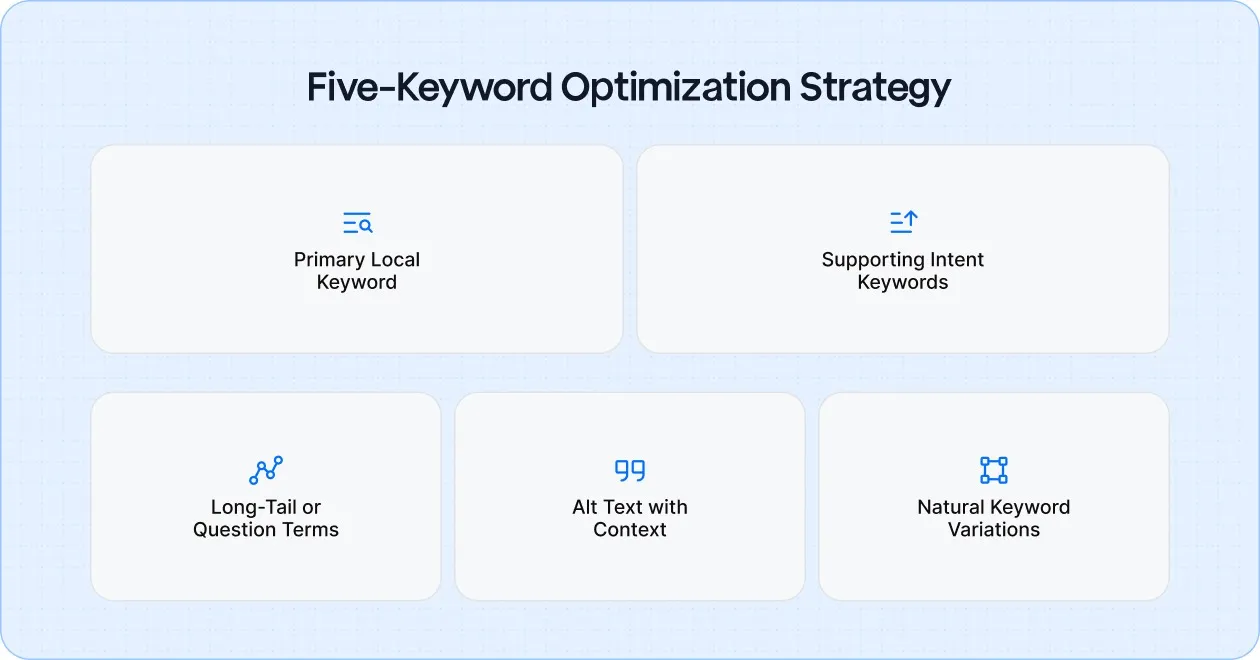
Every important service page can work with a small, focused keyword set rather than random phrases.
- Pick one primary local keyword: Use something like “garden maintenance in Austin” as the main focus. Place it in the title tag, H1, and early in the text.
- Add two or three supporting intent keywords: Include phrases like “regular garden tidy ups,” “planting and pruning service,” or “lawn edging and mulching.”
- Include one or two long-tail or question terms: Add lines that cover questions such as “how often should I book garden maintenance” or “do you remove green waste.”
- Write alt text for images with real context: Describe photos as “backyard planting project in East Austin with new beds and mulch” instead of generic labels.
- Use natural variations: Sprinkle related phrases like “yard care,” “garden cleanups,” or “hedge shaping” so content reads like a human conversation, not a keyword list.
Long-Tail And Buyer-Driven Keywords
Short keywords like “gardener” bring mixed traffic. Longer phrases show clearer intent and often convert better.
- Problem-driven questions: Build content around searches like “how to fix waterlogged garden soil” or “how often to prune hydrangeas.” Add clear calls to book help if they feel stuck.
- Match keywords to pages: Give each main service and city its own cluster of long-tail keywords. Avoid trying to rank one page for every topic.
Know What Homeowners Search
Identify the services, seasons, and local phrases that actually bring gardening leads.


On-Page Optimization That Actually Supports Gardening SEO
On-page SEO is where most gardening websites quietly lose ground. Search engines read structure, clarity, and intent. Visitors read confidence, relevance, and ease.
Strong on-page optimization does both at the same time.
Decision Flow
One overlooked factor is decision flow. A strong page guides the reader from recognition to reassurance without friction. That means structuring content around progression.
Here’s what that looks like in practice:
- Objection-aware copy placement: Weave answers to common doubts directly into the page where hesitation usually happens.
- Service boundaries stated clearly: Pages that perform well explain what the service does and does not include. Clear boundaries reduce mismatched enquiries and improve conversion quality.
- Trust signals embedded mid-page: Reviews, credentials, or short proof points placed near decision moments tend to work better than badges stacked in the footer.
- Conversion cues without pressure: Gentle prompts like “this is usually needed when…” or “most homeowners contact us after…” help normalize action.
Effective on-page optimization for gardening SEO is about alignment.
Technical On-Page Elements
Small technical details on each page affect how fast it loads and how easily it gets indexed.
- Improve load speed: Compress photos, use modern formats, and avoid heavy sliders. Faster pages rank and convert better, especially on phones.
- Make pages mobile-friendly: Use readable fonts, simple layouts, and buttons that are easy to tap.
- Keep clean, descriptive URLs: Use addresses like /garden-maintenance-austin instead of long, cryptic strings. It helps both users and search engines understand the topic.
Content That Builds Long-Term Gardening SEO Authority
Gardening SEO rewards consistency and usefulness more than volume. The goal is to become the site people return to when they’re unsure about a decision.
Blogging And Evergreen Content Strategies
Blog posts and guides can drive traffic for years if they answer timeless questions.
- Use “People Also Ask” questions: Search your main services and note the questions Google shows. Build detailed posts that answer those with photos and examples.
- Write how-to and seasonal guides: Topics can include “how to plan a low-maintenance garden,” “spring yard checklist,” or “best shrubs for privacy in small yards.”
- Cover soil, tools, and plant choices: Explain differences between soil types, basic tools every homeowner needs, and plant choices for shade, sun, or drought.
- Group FAQs smartly: Create FAQ pages for each service with short, direct answers. This also helps you target question-based searches.
Becoming An Information Hub
Instead of random posts, build topic clusters so search engines see clear depth around your main services.
- Pick core topics aligned with services: Examples are “lawn care,” “hedge and shrub care,” “garden design,” and “seasonal maintenance.”
- Create pillar pages with supporting posts: Write a broad guide on “complete garden maintenance,” then link out to focused posts on mowing, pruning, mulching, and watering.
- Link between related articles: Internal links help users read more and help search engines understand page relationships.
Video SEO Integration
Video works very well for gardening, because people like seeing results and processes.
- Embed short videos on key pages: Add clips showing before-and-after cleanups, planting days, or pruning techniques. This keeps visitors on your site longer.
- Post how-to videos on YouTube: Optimize titles with phrases like “how to prune roses in spring” plus a city tag when relevant. Add links back to your site in descriptions.
- Use video on service pages: A simple walkthrough where you explain your process can raise trust and conversion rates.
Turn Expertise Into Visibility
Create service and seasonal content that shows real gardening knowledge and builds homeowner trust.
Off-Page SEO And Authority Signals For Gardeners
Search engines look beyond your site to decide whether it should rank. For gardening businesses, authority often comes from proximity, reputation, and industry alignment.
Earning Relevant Links
Not all backlinks help equally. Gardeners benefit most from links tied to real-world credibility.
- Partner with local businesses: Swap links or features with nurseries, garden centers, hardware stores, or home organizers. Offer to write short tips for their blogs.
- Join gardening and home-service directories: Add listings on respected local sites, trade associations, and gardening groups. Check which directories rank for your service keywords.
- Study competitor accreditations: Look at badges or memberships on competitor sites. Many accreditation bodies include a member profile with a link back to your site.
Digital PR for Gardening Visibility
You can build authority by sharing expert input where your audience already reads. You must try social media for that.
- Pitch seasonal stories to local media: Suggest pieces to neighborhood news sites or radio stations.
- Write guest advice posts: Offer simple “how to pick a gardener” or “low water yard ideas” articles to home and garden blogs.
- Share before-and-after transformations: Strong visual project stories often interest local lifestyle outlets.
Technical SEO Essentials
Technical SEO is like irrigation for your site. If it fails, nothing grows well, no matter how good the content is.
Crawlability, Indexing, And Sitemaps
You want search engines to find, read, and index every important page quickly.
- Maintain a clean XML sitemap: Include only live, important pages. Submit it in Google Search Console and refresh it after major site changes.
- Use robots.txt wisely: Block only pages that should stay private, such as admin areas. Avoid blocking sections you want to rank.
- Avoid duplicate content issues: Use canonical tags correctly when similar pages exist, for example across nearby towns with similar service descriptions.
Core Web Vitals And UX Signals
Google now measures key user experience metrics that influence rankings.
- Watch Largest Contentful Paint (LCP): Ensure the main content loads quickly by compressing images and avoiding heavy scripts.
- Keep layout stable: Prevent elements from jumping around as the page loads by setting image sizes and avoiding sudden banner insertions.
- Test regularly: Use tools like PageSpeed Insights and Search Console reports to track issues.
Schema Markup That Speaks Search Engines’ Language
Schema markup adds extra tags to your HTML that explain what each page and section means. With correct schema, you can qualify for rich results like review stars, FAQ boxes, and better local panels.
Recommended Schema Types
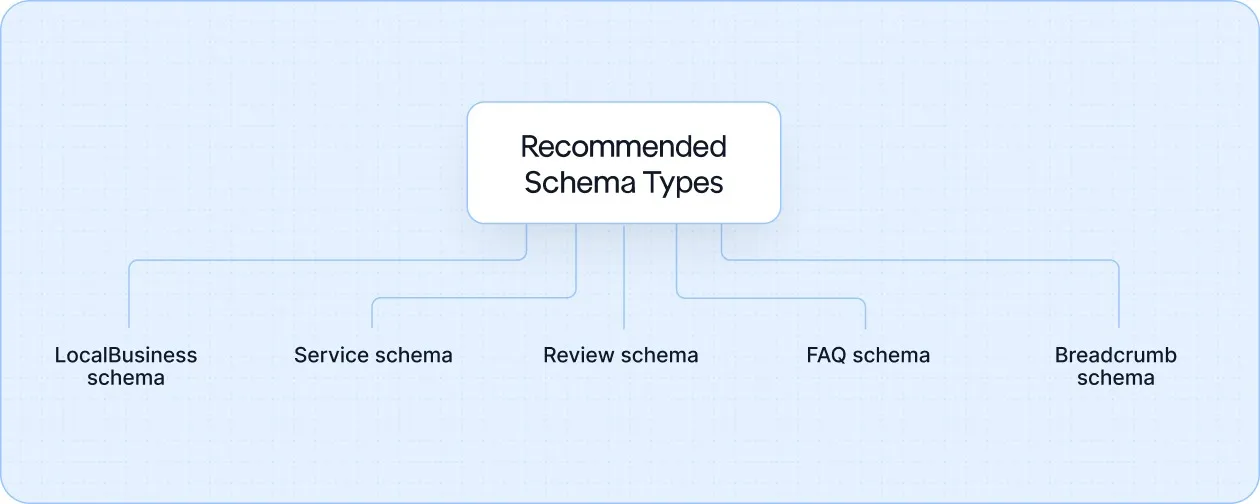
Focus on simple, high-impact schema first.
- LocalBusiness schema: Mark up your business name, address, phone, opening hours, and service area so search engines read them clearly.
- Service schema: Tag pages for services like lawn care, hedge trimming, or garden design, including descriptions and pricing ranges.
- Review schema: Mark up reviews you host on your site so stars may appear in search results.
- FAQ schema: Add schema to FAQ sections for a chance to appear directly in “People Also Ask” style views.
- Breadcrumb schema: Help search engines understand how your pages relate in your site structure.
Crucial technical implementation can be:
- Using generators or plugins: Many CMS tools can add basic schema without coding. Always test output.
- Validating with Google’s tools: Run pages through rich result testing tools to confirm that schema is valid and readable.
Measuring SEO Performance For Gardening Businesses
SEO only works when it’s measured consistently.
Metrics That Reflect Real Progress
Gardening SEO should be evaluated based on:
- Organic traffic to key pages: Watch visits to your home page, main service pages, and location pages.
- Local rankings for priority keywords: Track how often you appear in the top results for “gardener + city” and similar terms.
- Click-through rates (CTR): If impressions rise but clicks stay flat, improve titles and descriptions.
- Conversions: Count calls, contact form submissions, and quote requests from organic visitors.
Tools For Tracking
Start with free tools, then add more only if needed.
- Google Analytics: Measures how visitors arrive, which pages they view, and which actions they complete.
- Google Search Console: Shows which queries bring impressions and clicks, and flags indexing or technical issues.
- Rank trackers: Use simple tools to monitor your main keywords by city over time.
Advanced Gardening SEO Tactics
Once your basics run well, you can push for stronger authority and visibility.
Competitor Benchmarking
You do not need to guess where you stand in your market.
- Check domain strength: Use SEO tools to compare your domain rating with local competitors. This shows how big the gap is.
- Study backlink differences: Identify sites that link to competitors but not to you. These are outreach targets.
- Find content gaps: Look for questions and topics competitors cover that you do not. Decide which ones make sense to add.
Video and Visual Content Optimization
Gardening is visual, which gives you an advantage.
- Optimize YouTube channels: Use clear titles, descriptions, and tags with local phrases and service names.
- Embed video smartly: Place videos near calls to action on service pages to build trust and keep people engaged.
- Use strong visuals in galleries: Compress images for speed but keep them sharp. Add captions with neighborhoods and service types.
Accreditations and High Authority Signals
Third-party trust badges help both visitors and search engines.
- Join gardening or trade bodies: Apply to local or national gardening groups that list members on their sites.
- Show badges clearly: Place accreditation logos near reviews and guarantees so visitors see them fast.
Seasonal SEO Planning For Gardeners
Gardening is not flat across the year. Search interest rises and falls with the seasons.
Seasonal Content Calendars
Plan content and promotion around predictable seasonal peaks.
- Spring: Focus on planting, bed preparation, and full yard cleanups. Publish and promote content early, before demand peaks.
- Summer: Cover watering, mowing schedules, weed control, and pest issues. Refresh service pages with current photos.
- Fall: Push leaf removal, pruning, and winter preparation. Share checklists and before-and-after fall cleanups.
- Winter prep and planning: Use slower months to publish design ideas, garden planning tips, and book early projects for spring.
Flexible Keyword Mapping by Season
Keywords do not stay constant. You should:
- Track seasonal search shifts: Use keyword tools and Search Console to see when “spring clean up” or “fall pruning” starts rising.
- Adjust internal links and promos: During each season, feature relevant services higher on your home page and menus.
Conversion Optimization
SEO brings visitors. Conversion optimization turns those visitors into booked jobs.
High-Performing Landing Page Elements
A good gardening page should make it very easy to decide and act.
- Clear primary call to action: Use one main action, such as “Request a garden quote” or “Call for a visit,” repeated in several spots.
- Visible proof and trust badges: Add review snippets, star ratings, and badges from trade bodies or local awards.
- Strong before-and-after photos: Show clear project transformations. Mention city or neighborhood in captions to build local trust.
Chat And Lead Capture Add-Ons
Small tools can help catch visitors who would otherwise leave.
- Simple chat or message widgets: Allow quick questions without a phone call. Keep responses short and human.
- Short, focused forms: Ask only for name, contact info, location, and a brief description. Longer forms often drop completion rates.
- Nudge messages and follow-ups: Use gentle reminders like “Got questions about your yard?” instead of aggressive pop-ups.
These strategies together give gardening businesses a clear, practical road map. You build visibility, authority, and trust step by step, then refine based on real data instead of guesswork.
What To Expect From SEO?
SEO is powerful for gardening businesses, but it is not instant. It behaves more like growing a healthy garden than switching on a light. The more consistent, strategic, and patient you are, the stronger and more predictable the results become:
3–6 Months
The first few months of SEO focus on building foundations: fixing technical issues, optimizing service and location pages, strengthening Google Business Profile, and creating useful content. During this stage, Google learns who you are, what you do, and whether you can be trusted to rank.
What typically happens in this phase:
- Improved Google Business Profile visibility: More impressions in the local map pack, more views on your listing, and increased discovery searches for your services.
- Early engagement signals: More website visits, higher click-through rates, and customers spending longer on pages instead of bouncing away quickly.
- Initial conversion lift: Calls, form fills, and quote requests start increasing gradually, especially in the areas where you have strong local optimization.
This stage is about momentum. You may not dominate rankings yet, but you should feel clearer visibility and more qualified inquiries.
6–12 Months
Once the basics stabilize and search engines consistently recognize your brand, SEO shifts from “getting noticed” to “becoming a trusted local authority.” This is where compounding benefits begin to take shape.
What businesses typically see in this window:
- Stable first-page and map pack rankings: For your main city and highest-value services, rankings become steadier instead of fluctuating.
- Growth beyond your primary location: Service area pages begin performing, helping you attract leads from surrounding towns and neighborhoods.
- Authority signals strengthening: More organic backlinks, more reviews, better engagement metrics, and clearer brand trust cues.
- Consistent organic lead flow: Instead of unpredictable surges, you start seeing steady inquiries from organic search, often reducing dependency on paid ads.
By this stage, SEO becomes a real revenue engine rather than a marketing experiment.
Show Up When Demand Hits
Strengthen local SEO so your gardening business appears when homeowners are ready to book.
Benchmarks And Realistic ROI Expectations
SEO should always be judged on business impact. Rankings matter, but only because they lead to profitable work. A realistic measurement mindset keeps decisions grounded.
What to track and expect:
- Keyword rankings: Aim for top-3 positions for priority local terms over time, not just page one visibility.
- Organic traffic growth: A steady upward trend matters more than sudden spikes. Seasonal gardening demand will create natural waves.
- Meaningful engagement: Higher click-through rates, longer time on page, repeat visits, and users viewing multiple pages indicate that your content is working.
- Conversions and lead quality: Calls, quote requests, bookings, and messages should rise. Focus on the quality of leads.
- Cost efficiency compared to ads: As SEO matures, the cost per lead usually drops significantly compared to PPC or paid directories, and leads feel “warmer” and more trust-driven.
- ROI window: Most gardening businesses see clear financial returns within 6–12 months when SEO is done consistently, with results strengthening every season thereafter.
In simple terms, SEO starts as visibility, matures into authority, and ends as a dependable source of ongoing work. With realistic expectations, disciplined execution, and patience, it becomes one of the most valuable long-term marketing assets a gardening business can build.
Conclusion
SEO for gardening isn’t a campaign you launch and move on from. It’s an operating system that quietly supports every part of your business. Your services become easier to understand. Your location becomes easier to trust. Your expertise becomes easier to find.
Once those foundations are in place, SEO stops feeling like marketing. It becomes infrastructure. Something that compounds as your reputation grows, your portfolio expands, and your local authority deepens.
The sooner it’s treated that way, the harder it becomes for competitors to catch up.
Ready to Grow Consistently
Build an SEO system that supports steady demand across seasons and service types.


.webp)








.webp)



.svg)


