









Here’s something most cabinet businesses don’t realize. Homeowners don’t start their search by asking, “Who installs the best cabinets?” They start by asking, “Who looks competent enough that I won’t regret hiring them?”
And the place they make that judgment isn’t your workshop, gallery, or referral network. It’s your search results.
Before someone ever steps into your showroom or books a consultation, Google is already shaping their opinion of your business.
This is where strong cabinet installation SEO pays off.
In this blog, you’ll learn the complete SEO framework that helps cabinet installers to attract better clients, win higher-value jobs and appear as the most trustworthy choice the moment someone searches.
What Is Cabinet Installation SEO?
Cabinet installation SEO is the process of improving your online presence so homeowners can find your business when they search for services. It helps search engines understand what you do, the styles you offer and the areas you serve so you show up in the exact moments buyers are ready to compare, shortlist and request quotes.
Why SEO Matters for Cabinet Dealers?
SEO directly affects how many people discover your business and how many of them turn into real projects. Here’s why it matters:
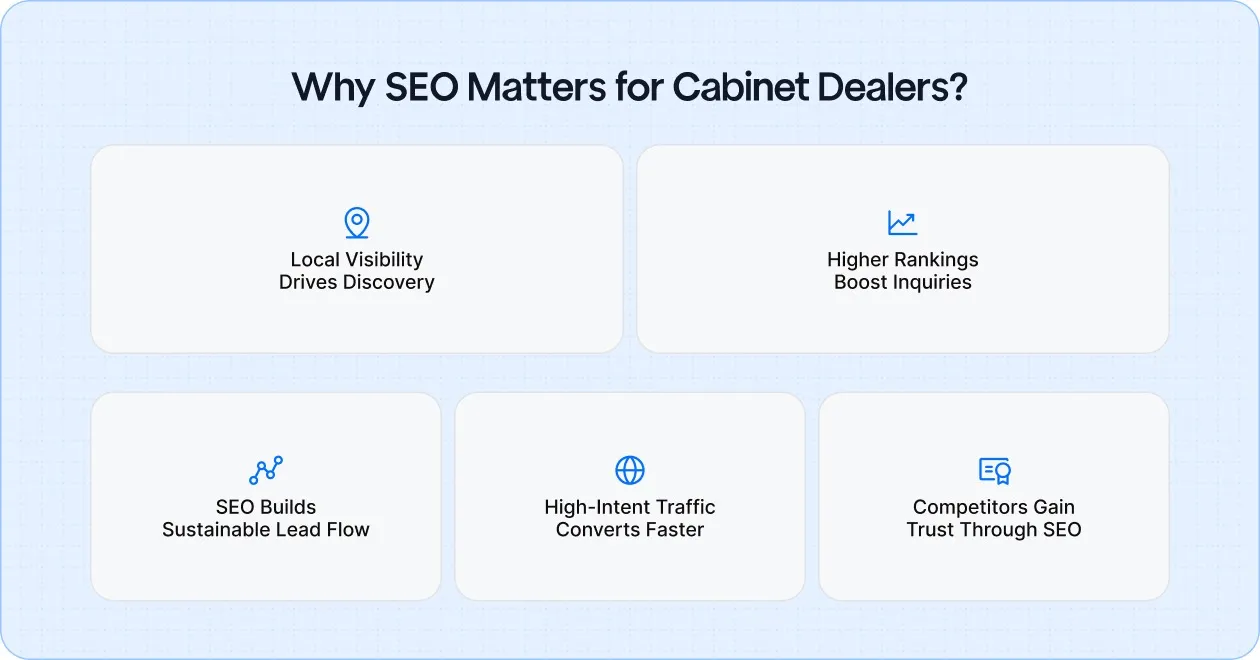
- Most buyers begin their cabinet search on Google or Bing. If you don’t show up locally, they won’t find you.
- Strong rankings bring more quote requests, showroom visits, calls and catalog downloads.
- SEO delivers steady leads without the constant cost of paid ads once your foundation is set.
- Searchers comparing cabinet styles, installers and pricing are already close to buying, so SEO attracts high-intent traffic.
- Competing showrooms invest in SEO because it gives them an edge. If you skip it, they look more established and win the trust you could have earned.
SEO for Cabinet Makers: How to Increase Visibility, Traffic and High-Intent Leads
This section breaks down the core elements that help cabinet installers, makers and dealers get found by qualified buyers.
1. Know Your Ideal Client Before You Optimize
Before you touch keywords or service pages, you need to understand who you actually want to attract. A homeowner planning a kitchen makeover has very different expectations from a contractor looking for a reliable installation partner. When you get clear on each group, your SEO becomes sharper, more relevant and far more profitable:
Your Main Customer Groups
These are the audiences most cabinet businesses work with. Each one searches differently, compares differently and has different priorities.
- Homeowners: Usually searching for kitchen or bathroom upgrades, cabinet refacing, full replacements or custom builds. They want clarity on style, price range, timeline and trust.
- Contractors and builders: Looking for reliable installation partners who can handle consistent work, meet deadlines and maintain quality. They often search locally and prefer straightforward service pages.
- Interior designers: Interested in custom cabinetry, modern styles, unique finishes and craftsmanship details. They want portfolios and case-study style content.
Map Their Buying Behaviour
Each type of buyer enters SEO at a different point.
- Remodeling customers: Often researching styles, timelines and pricing ranges before calling anyone. They respond well to educational guides and galleries.
- Refacing and refinishing customers: Want fast answers and price clarity. They search for problem-specific terms like “cabinet refacing cost” or “cabinet repainting near me.”
- New cabinet customers: Often replacing old layouts entirely. They want installation details, before/after photos and material explanations.
- Custom build customers: Want inspiration galleries, craftsmanship details and deeper explanations about materials and construction.
Get Clear On Who You Want To Attract
Build a keyword and buyer strategy that brings the right projects, not random traffic.


2. Build a Cabinet-Focused Keyword Strategy
Cabinet buyers search with clear intent. They know their style, their budget and the type of work they need. Your job is to match your pages to those specific searches so Google can pair you with real, ready-to-buy customers.
Long-Tail Keywords That Capture Real Buyer Intent
Long-tail keywords are longer, more specific search phrases like “modern shaker cabinet installation in Austin.” They bring far better leads than broad terms because they reveal what the customer actually wants. Each category below aligns with a real buyer decision, which makes them incredibly valuable for cabinet businesses.
1. Style-based keywords
These attract homeowners who already have a look in mind.
- Shaker cabinets
- Modern cabinets
- Rustic or farmhouse cabinets
- Custom-built cabinetry
These searches signal high intent because people searching by style are often close to making a design decision.
2. Service-based keywords
These bring in people who know the exact type of work they need.
- Cabinet installation
- Cabinet refacing
- Cabinet refinishing
- Custom cabinet building
Service terms match bottom-of-funnel intent, meaning buyers are ready to talk to someone soon.
3. Location-based keywords
Cabinet installation is a local service. Using city or neighborhood terms helps you show up for local searches.
- “cabinet installer in [City]”
- “custom cabinets [Neighborhood]”
- “cabinet refacing near me”
These improve map rankings and help you appear for high-intent local jobs.
4. High-converting bottom-of-funnel terms
These are the searches people make when they’re almost ready to hire.
- “kitchen cabinet installer cost”
- “cabinet refacing quote”
- “best cabinet installer in [City]”
- “custom cabinet maker near me”
These keywords bring the most profitable leads because the customer is close to making a decision.
How to Use Google Search Console to Identify Keyword Gaps
Search Console is one of the simplest ways to see which keywords you’re already showing up for and where you’re losing potential traffic. It helps you spot pages that need improvement so you can climb into the top results where the calls actually happen.
Check Impressions, CTR and Average Position
Look at the keywords getting impressions but low clicks. This means you're being seen but not chosen.
- Low CTR usually means your titles or descriptions need rewriting.
- A position of 8–20 means you're almost ranking well but need refinement.
Identify Underperforming Pages
Search Console shows which service or location pages appear on page 2 or 3.
- These are your fastest wins.
- Small updates can move them into page 1.
Fix Title and Description Mismatches
Sometimes your page ranks for something you never optimized for.
- Rewrite titles and meta descriptions to match the keyword people are using.
- Make them simple, clear and action-driven.
Rewrite Underperforming Pages Stuck on Google Page 2 & 3
Pages already indexed for the right keywords just need better content.
- Add 150–300 words addressing real buyer questions.
- Improve clarity, structure and visuals.
- Add internal links from related pages.
This alone can move rankings quickly because Google already considers your page relevant.
3. Local SEO Strategies
Cabinet installation is a location-based home service. Homeowners rarely hire outside their immediate area, which means Google Maps, local search signals and nearby credibility matter more than anything else.
These work together to build strong local visibility.
Google Business Profile (GBP)
Your Google Business Profile is often the first place customers see your business. When optimized well, it brings in a steady flow of calls without paying for ads.
What to focus on:
- Complete your profile fully. Add business hours, service areas, a clear description and a full list of cabinet services.
- Upload real project photos. Before/after shots, style close-ups and installed cabinets build trust immediately.
- Use the Services section. Add terms like cabinet installation, refacing, refinishing, custom cabinets, etc.
- Post updates weekly. Share small project highlights or FAQs (“How long does cabinet refacing take?”).
- Keep details consistent. Your name, address and phone must match your website exactly.
Fix Your GBP So More Local Buyers Choose You
Make your GBP work harder with clearer details, better photos and consistent updates that attract ready-to-book homeowners.
Apple Business Connect
Many homeowners search from iPhones, which means Apple Maps plays a bigger role than most cabinet businesses realize. If your listing isn’t claimed or updated, you miss out on high-intent local traffic.
What to focus on:
- Claim and verify your listing. This ensures your business shows up correctly across Apple Maps, Siri voice searches and iOS navigation results.
- Match your details to your website and GBP. Keep your name, address and phone identical to avoid mixed signals.
- Add your core cabinet services. Include installation, refacing, refinishing and custom cabinetry so Apple can match you with the right searches.
- Upload real photos. Crisp project shots boost credibility, especially for users checking visuals before calling.
- Keep hours and service areas updated. Apple heavily weighs accuracy, so timely updates help you appear more often.
A polished Apple listing strengthens your local presence and captures buyers who never check Google but rely entirely on their iPhone for nearby services.
4. On-Page SEO
On-page SEO is everything you adjust on your website to help Google understand your services and help homeowners understand why they should choose you.
Below are the most important on-page practices for cabinet installers, dealers and makers:
Optimize Your Website
A strong cabinet website speaks to two audiences at once: homeowners and Google. The key is clarity. The easier it is for both to understand what you offer, where you work and why you're the right choice, the better your results.
What to do:
- Use short, clear explanations. Homeowners shouldn’t have to guess what services you provide.
- Put your main services in the navigation. Installation, refacing, refinishing, custom cabinets.
- Include your service areas directly on your pages. Google uses this to match you with local searches.
- Create simple calls to action. Buttons like “Request a Quote” or “Book a Visit” guide visitors easily.
A clean, straightforward site builds trust quickly and strengthens your rankings at the same time.
Want to improve your site but don’t know where to start? Let our AI Analyzer review it and show you the changes that matter most.
Landing Pages That Convert
Landing pages are built for one purpose: turning visitors into leads. They remove distractions and highlight the one action you want people to take. For cabinet businesses, strong landing pages can drastically increase quote requests.
What to include:
- Clear CTAs: Quote requests, catalog downloads, showroom visits, design consultations.
- Short process explanation: Outline how installation or refacing works in simple steps.
- Before/after galleries: These instantly show craftsmanship and build trust faster than any paragraph.
- Social proof: Add a few specific reviews related to cabinet installations.
Good landing pages help turn ad clicks, email traffic and SEO visitors into actual customers.
Turn Your Website Into A Lead Engine
Make every page clear, fast and built to convert real cabinet installation buyers.
Write Useful, Engaging Content
Helpful content attracts qualified traffic and positions you as an expert. Homeowners search for answers before they commit to a project. If your website provides those answers first, you win the lead.
Content types that work best:
- Homeowner guides: “How to Choose the Right Cabinet Style” or “Installation vs Refacing.”
- Transformation showcases: Before/after write-ups with photos and a short overview of the project.
- FAQs: Simple explanations for common questions like timelines, costs, materials and maintenance.
- Style inspiration articles: Modern vs traditional, shaker vs slab, color choices, layout tips.
The goal is to educate, not oversell. When you teach well, buyers trust you naturally.
Essential On-Page Elements
These are the technical pieces that tell search engines what your page is about. They might sound complex, but they’re easy once you know what to do.
What to include:
- Clean H1s: One clear headline per page.
- Strong metadata: Titles and descriptions that match what the page is really about.
- Schema markup: Add structured data for your services, reviews and business info so Google can read your site more accurately.
- Internal links: Connect related pages so your site structure is clear and easy to crawl.
These elements help your pages appear for the right searches and improve ranking stability.
Optimize Images for Search
Cabinet projects rely heavily on visuals. Google also uses images to understand your work and match you with style-based searches. Proper optimization improves both rankings and conversions.
How to optimize:
- Rename image files clearly: “shaker-cabinet-installation-boston.jpg” instead of “IMG_239.”
- Write simple alt text: Describe what the photo shows in plain language.
- Compress image sizes: Smaller files load faster, which improves user experience and SEO.
- Use before/after galleries: These signal transformation quality and attract high-intent traffic.
Images are some of your strongest SEO assets. Optimizing them helps homeowners trust your work instantly.
Publish Content Buyers Trust
Share guides, galleries and proof that help homeowners choose you with confidence.
5. Technical SEO for Cabinet Websites
Technical SEO is the behind-the-scenes work that helps your website load fast, stay accessible and get properly indexed by search engines. Homeowners won’t see these elements directly, but they absolutely affect whether your pages rank and whether visitors stay long enough to contact you.
Improve Page Speed and Core Web Vitals
A slow website costs you leads. Homeowners leave quickly if pages take too long to load, especially on mobile. Google also prioritizes sites that feel fast and stable.
What to do:
- Compress images: Cabinet project photos are large, so reducing file size helps dramatically.
- Use modern formats: WebP or AVIF load faster without losing quality.
- Limit heavy scripts: Remove unnecessary plugins or widgets that slow the page.
- Test your speed: Use PageSpeed Insights to see what needs improvement.
Fast websites convert more visitors and signal professionalism.
Ensure Full Mobile Compatibility
Most homeowners search for cabinet installers on their phones, especially during remodeling research. If your site doesn’t look clean and simple on mobile, they leave instantly.
What to do:
- Use large, readable text and buttons. Your call button should be visible without scrolling.
- Test every page on mobile. Make sure forms, photo galleries and menus work smoothly.
- Avoid horizontal scrolling. Layouts should fit cleanly on any screen size.
A mobile-ready site helps you capture traffic from people browsing on the go.
Fix Indexing Errors and Broken Links
Indexing means Google can successfully read and list your pages. If important pages aren’t indexed or links are broken, your rankings suffer and customers may hit dead ends.
What to check regularly:
- 404 monitoring: Remove or redirect pages that no longer exist.
- Redirects for high-volume errors: If lots of users hit the wrong URL, create a redirect to the right page.
- Robots.txt checks: Ensure you’re not accidentally blocking important service pages.
- Sitemap health: Keep your XML sitemap updated and submitted in Google Search Console.
Track Performance With GA4 and Google Search Console
SEO only improves when you know what’s working. GA4 and Google Search Console (GSC) give you clear insights into traffic, engagement and ranking performance.
What to monitor:
- Traffic acquisition: See where visitors come from (Google, social media, ads).
- Engagement metrics: Track which pages people stay on and which they leave quickly.
- Page-level analysis: Identify pages that bring the most leads and the ones that need improvement.
- Bounce rate insights: High bounce rate on a service page may mean unclear messaging or slow load times.
Regular tracking helps you make better decisions and spot issues before they become bigger problems.
6. Off-Page SEO and Local Credibility
Off-page SEO includes all the signals that live outside your website but help search engines and homeowners see you as a credible, established cabinet installation business.
Link Building
Quality backlinks tell Google that reputable sites trust your business.
What works best:
- Local partners: Contractors, remodelers, designers and builders often link to trusted installers they collaborate with.
- Home improvement blogs: Offer expert tips or before/after stories; they frequently accept guest content.
- Showcase transformations: Publishing project features increases your chance of earning organic links.
- Supplier mentions: Many cabinet material suppliers maintain partner directories.
These links help you appear more authoritative in your niche and improve local rankings significantly.
Customer Reviews as Ranking Power
Reviews are one of the strongest trust signals for cabinet installation. Search engines reward businesses that collect steady, authentic feedback.
How to make reviews work for you:
- Ask at the right moment: After installation or a reveal walk-through works best.
- Showcase reviews on service pages: Add them next to related projects.
- Respond to every review: It shows customers that you care and improves trust signals.
A steady flow of recent reviews boosts both conversions and local map rankings.
Pair SEO With Other High-ROI Marketing Channels
SEO becomes even stronger when supported by complementary channels that build visibility and trust over time. These channels capture homeowners who are comparing options, browsing for ideas or planning remodels months in advance:
Paid Ads
Paid ads like Google PPC and Local Service Ads are useful when you want fast visibility or want to target high-value areas.
Why they help:
- PPC captures people actively searching for installation or cabinet upgrades.
- Local Services Ads show the Google Guarantee badge, which boosts trust.
- You can target specific cities or neighborhoods with strong demand.
Paid ads work best when paired with strong landing pages and a solid SEO foundation.
Social Media for Visual Proof
Cabinet installation is a highly visual service. Your transformations often sell the service better than words.
Where to focus:
- Instagram for before/after showcases.
- Facebook for local reach and neighborhood visibility.
- Pinterest for design inspiration and remodel planning.
- YouTube or TikTok for short transformation videos.
Each platform helps different types of buyers discover your work early in their research.
Email Marketing and Lead Nurturing Systems
Many homeowners take weeks or months to decide on cabinets. Email helps you stay top-of-mind during this decision window.
How it helps:
- Share project highlights, remodeling tips or pricing guidance.
- Send catalogs or style guides to build inspiration.
- Follow up with leads who asked for quotes but haven’t booked yet.
Email nurtures slow-moving leads that SEO brings in.
Choosing the Right SEO Agency
When you’re investing in SEO for a cabinet installation business, the right agency should make growth feel simpler, not more confusing. You need a partner who understands home improvement buyers, local search and how homeowners actually choose cabinet installers.
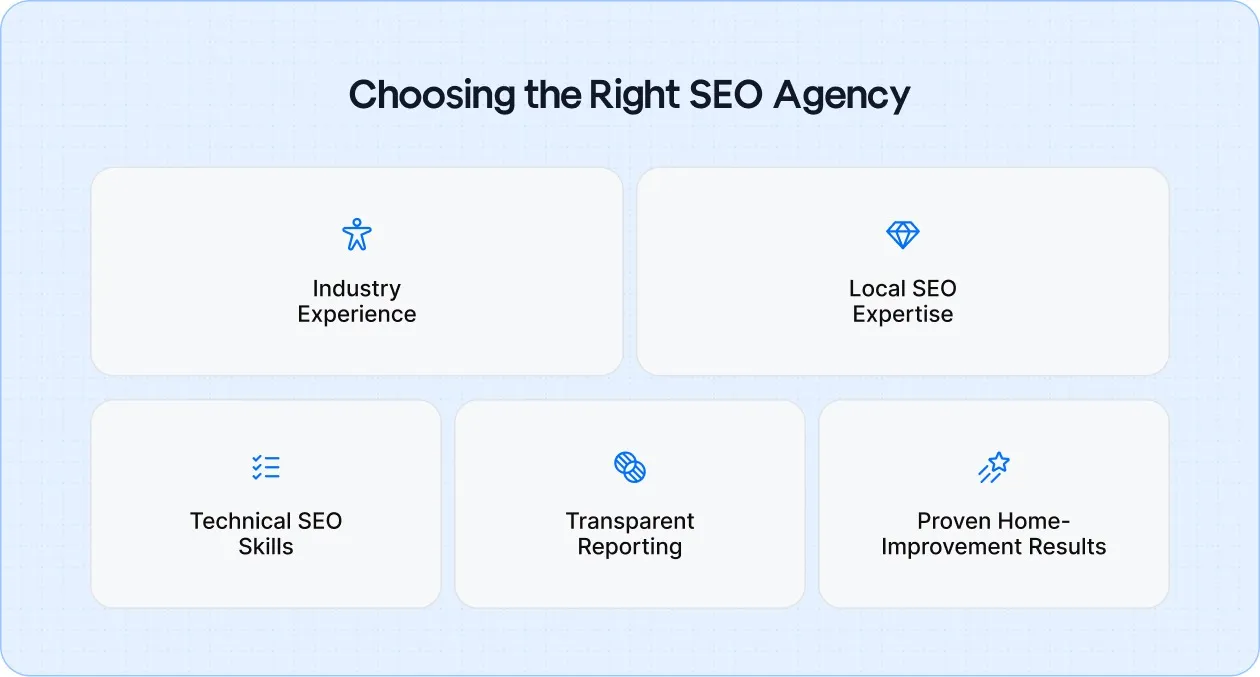
Here are the qualities that matter most in an SEO agency:
- Industry Experience: Pick an agency that has worked with contractors, remodelers or home-service brands. They’ll already understand service pages, local SEO and visual proof, which speeds up results.
- Strong Local SEO Skills: Cabinet installation depends heavily on appearing in Maps and local searches. Your agency should know how to optimize GBP, build location pages and generate consistent local visibility.
- Technical SEO Knowledge: Slow websites, indexing issues and poor mobile performance hurt rankings. A good agency should handle these quietly in the background and explain them simply when needed.
- Clear Reporting and Communication: You should receive reports that show what’s improving and how it affects leads. No vague promises. Just traffic, rankings, calls and booked jobs.
- Proven Work in Home-Improvement SEO: Look for case studies, before/after SEO results or references in related industries. Agencies that have built growth for service-based companies will have a stronger playbook for your needs.
Heading: Strengthen Your Local Visibility
Subheading: Boost rankings with better structure, speed, GBP optimisation and clear service pages.
Button Text: Fix My SEO
Conclusion
Strong SEO doesn’t just help people find your business. It helps them understand what makes your craftsmanship worth choosing. When your pages answer real questions, your service details are organized and your location signals are clear, homeowners feel more certain about moving forward.
Over time, this creates steadier inquiries, higher-value project opportunities and a reputation that grows beyond word of mouth. SEO becomes the structure that supports your marketing, your sales process and the way homeowners perceive your brand long after that first search.
Ready To Grow Your Cabinet Business?
Get a tailored SEO and marketing plan built around your services and ideal clients.


.webp)








.webp)


.svg)


