









Home improvement SEO is how your business gets found by homeowners looking for services like roof repairs, kitchen remodeling, plumbing, fence installation, window replacements, or even landscaping.
If you’re a small or bootstrapped business, SEO helps you grow your online presence without the need for a large marketing budget. The more your site shows up in search results, the more potential customers you’ll attract.
Driving traffic involves attracting people to your site through search, converting those visitors into real customers, and keeping costs low without relying on expensive ads or complicated strategies.
What Exactly is Home Improvement SEO?
SEO might sound like one of those complicated marketing terms that only big companies deal with. But it’s not. In fact, SEO is one of the most affordable and effective ways for small home improvement businesses, like yours, to stand out.
SEO, or Search Engine Optimization, is what helps your business get found online. This means that the people looking for your home improvement services can find you without you having to spend on ads.
The goal of SEO is simple: help people discover you, get them interested in what you do, and turn that interest into actual calls, emails, or bookings.
Home improvement SEO covers a wide range of services, including:
- Roofing Installation and Repair
- Plumbing Services
- HVAC Installation and Maintenance
- Electrical Services
- Home Remodeling and Renovation
- Garage Door Installation and Repair
- Pool Installation and Maintenance
- Handyman Services
- Painting and Decorating
By optimizing your website for these services, you increase the chances of being found by potential customers who are actively searching for your expertise.
Build a Home Improvement Website That Actually Works for SEO
A well-structured website is key to helping you get found online, capture inquiries, and keep visitors engaged, all while being optimized for search engines. Here’s how to make sure your site works for SEO and drives conversions:
a) Simple Site Structure for Better SEO
Your website doesn’t need to be complex to rank well. Keep things clear and organized for both users and search engines.
- Service Pages: Each service should have its own dedicated page, like "Roofing Services" or "Plumbing Repairs." Focus on one service per page to avoid overwhelming visitors.
- Location Pages: If you serve multiple areas, create a separate page for each one, such as “Roofing in Austin,” to help local customers find you.
- Mobile Optimization: Ensure your site loads quickly and looks good on mobile devices, as most searches now happen on phones.
b) Basic Technical SEO Tips
A few small technical improvements can greatly boost your site’s performance.
- Site Speed: Slow websites hurt your rankings. Use free tools to check and improve loading times.
- Secure Browsing: Add an SSL certificate to secure your website, which benefits both rankings and customer trust.
c) Turn Your Website Into a Conversion Machine
The goal is to convert visitors into clients. Simple changes can help make that happen:
- Clear CTAs: Use straightforward calls-to-action like “Get a Free Quote” or “Book a Consultation.”
- Before/After Images: Show off your work to build trust with potential customers.
- Social Proof: Display reviews and testimonials from past clients to build credibility.
Create a Keyword Strategy That Gets Results
Keywords are the bridge that connects your business to potential customers. A targeted keyword strategy helps your business show up in search results when people are actively looking for the services you offer.
This strategy is all about choosing the right terms that bring in high-intent customers while avoiding overly competitive keywords.
a) Keywords for Home Improvement
When it comes to SEO, keywords are what connect your business with the people who need you.
Here's how to choose the right ones:
- High-intent keywords: These are phrases like “emergency roof repair near me,” used by people who are ready to hire a professional right now.
- Long-tail keywords: Think more specific searches, like “affordable bathroom remodel near me.” These are often less competitive and easier to rank for.
- Local keywords: Adding your service areas to keywords, like “plumber near me,” helps your business get found by people searching nearby.
b) Keyword Tools for SMBs
You don’t need a fancy SEO tool suite to start. You can find useful keyword ideas without breaking the bank:
- Google Keyword Planner: A free tool to help you identify search terms related to your services.
- Ubersuggest: Another tool for discovering keyword ideas and getting an overview of keyword difficulty.
c) Optimizing for Voice Search
As more people use voice assistants, optimizing for voice search is becoming essential. Homeowners are asking questions like:
- “Where can I find a good roofer?”
- “Best plumbing services near me?”
Ensure your content answers these questions directly and conversationally to increase visibility in voice searches.
Picking the right keywords is crucial to SEO success.
Strategic adjustments to your content and setup can save you time and make your SEO efforts more effective.


Quick Wins for On-Page SEO
On-page SEO gives you immediate control over how your website ranks. By optimizing your service pages, blog posts, and location-specific content, you can see quick improvements in your site’s performance and search rankings.
a) Service Page Optimization That Gets Results
One of the best ways to improve your SEO is by optimizing service pages. Each page should be:
- Clear and specific about the service offered.
- Focused on customer pain points, like “How to Know if You Need Roof Repair”.
- Actionable with a clear CTA, such as “Get Your Free Estimate Today!”
b) Blog Content That Drives Traffic
Blogs are a great way to connect with customers and improve your SEO. Start with these questions:
Here are some blog topic ideas to get you started:
- “How much does a bathroom remodel cost?”
- “What’s the difference between roof repair and replacement?”
These blog posts improve your search rankings by addressing common customer queries and including targeted keywords. The more relevant content you produce, the more chances your site has to show up in search results, driving more traffic.
SEO blogging can be simple and efficient with the right approach.
Streamline your content creation with SEO blog experts, delivering high-quality, optimized content without the hassle.
c) Geo-Targeted Pages: How to Win Your City
If you serve multiple areas, create location-specific pages for each one. Example: “Roofing Services in Your Area”. These pages make it easier to find local searches, helping you grab more customers from your service area.
Win Local SEO Without a Big Budget
Local SEO is one of the most effective ways to attract customers without breaking the bank. Optimizing for local search means getting your business on the map (literally and figuratively), making it easy for homeowners in your area to find you when they need your services most.
a) Google Business Profile
You don’t need a big marketing budget to dominate Google Business Profile (GBP). Here’s how to optimize it:
- Fill out every section: Add services, working hours, and contact details.
- Post updates: Share promotions or new services to stay active.
- Collect and respond to reviews: Positive reviews increase trust and improve your ranking.
b) Apple Business Connect
In addition to GMB, make sure to claim and optimize your Apple Business Connect profile. Apple Maps is another powerful search tool for local customers looking for services near them.
By ensuring your business is listed and updated, you improve your chances of showing up when people search via Apple’s platform. This helps you reach a broader audience, especially those using Apple devices to find services.
c) Building Local Citations the Easy Way
Local citations, listings on trusted local directories, are a solid tool for SEO. Focus on getting listed in reputable platforms like Yelp, Houzz, BBB, and Apple Business Connect. The more places your business is listed, the better.
d) Getting Reviews the Smart Way
Ask happy customers to leave reviews on Google and Yelp, and make sure to respond. This shows potential clients you’re active and reliable.
Encouraging reviews on your Apple Business Connect profile is also a great way to build trust with local customers who are searching via Apple Maps.
Advanced SEO for Small Contractors: Answer Engine Optimization (AEO)
As AI-driven search engines become more prominent, Answer Engine Optimization (AEO) is critical for small contractors who want to show up in those valuable Answer Boxes at the top of search results.
AEO gives you the chance to be the answer customers are looking for, even before they click on your website.
AEO Best Practices
To rank in Answer Boxes (the little snippets that appear at the top of Google), follow these tips:
- Answer common questions directly: “How much does a roof repair cost?”
- Use structured data (schema markup) so search engines understand your content better.
- Focus on conversational queries that customers might ask using voice search.
You don't have to figure out SEO all on your own.
The right platform can help streamline the process, making it easier to stay on track with your content and SEO needs.
Link Building: The Low-Key Strategy for Big Gains
Link building is a powerful SEO tool for improving your website’s authority and search rankings.
But you don’t need to overcomplicate it, focus on the right partnerships and directories, and you’ll start seeing the benefits.
Link Building Best Practices
Link building is crucial for improving your SEO, but it doesn’t have to be complicated.
Here’s what you can do:
- Guest blog on local or industry sites to get backlinks.
- Partner with suppliers or other local businesses for mutual backlinks.
- Get listed in trusted local directories to improve your credibility and local SEO.
Content Marketing That Doesn’t Break the Bank
Content marketing is a great way to build trust, drive traffic, and improve your SEO, all without spending a fortune.
With the right approach, you can create valuable content that resonates with potential customers and helps you rank higher.
a) Simple Blog Ideas That Will Actually Bring in Customers
You don’t need complex topics to drive results. Start with these simple ideas:
- “How much does a roof replacement cost?”
- “5 things to know before hiring a contractor”
These blogs provide value to potential clients and help you rank better in search results.
b) Using Video to Rank Higher
Video content is a powerful SEO tool. Try recording:
- Before-and-after project videos
- Customer testimonials
Make sure to optimize these videos for YouTube and embed them on your site for better engagement.
Your 12-Month SEO Plan (Step-by-Step)
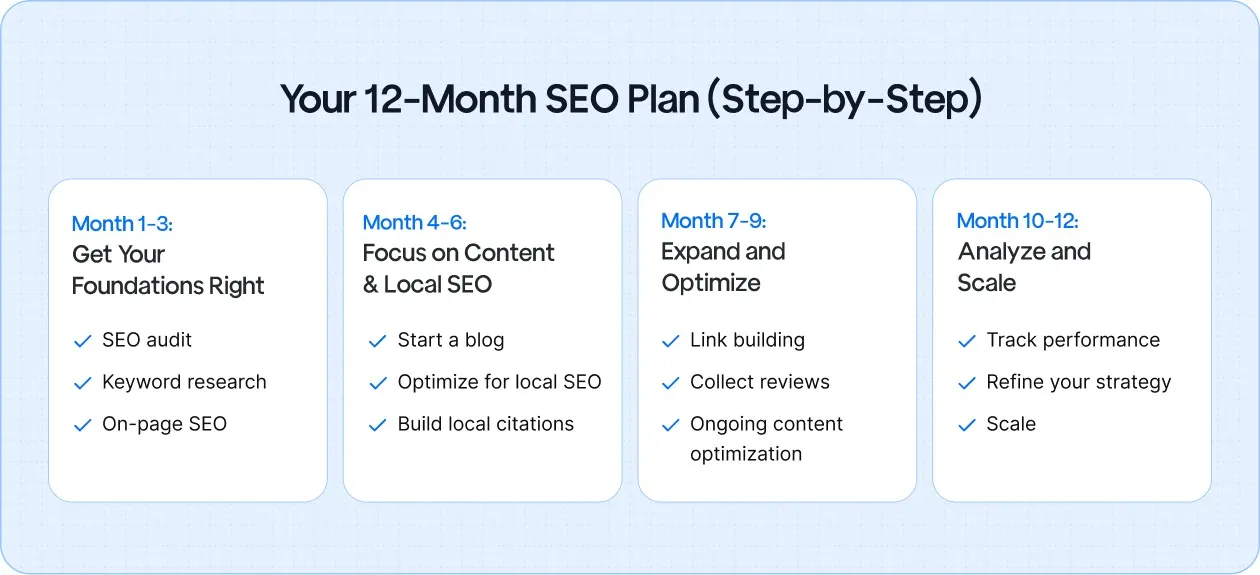
SEO is a long-term effort that builds momentum over time, and while it’s possible to get started on your own, the right tools and support can help accelerate your growth.
Here’s a step-by-step guide to take your SEO from the ground up.
Month 1-3: Get Your Foundations Right
The first step is to get your website in shape. Without the right foundation, even the best content won’t help you rank.
- SEO audit: Start by identifying and fixing any technical issues on your site, like slow loading speeds or broken links. You can perform basic audits with free tools, but ongoing checks are necessary to stay ahead.
- Keyword research: Identify the right keywords that will attract the customers you want. Aim for a balance between high-intent and local keywords, terms your audience is already searching for.
- On-page SEO: Update your page titles, meta descriptions, and headers with your target keywords to help search engines understand what each page is about.
While these tasks can be done manually, using tools and getting expert advice can streamline the process, helping you avoid missing crucial details.
Month 4-6: Focus on Content and Local SEO
Once your foundation is solid, it’s time to create valuable content and optimize for local search.
- Start a blog: Provide helpful content that answers common questions. This positions you as an authority in your field and helps improve rankings.
- Optimize for local SEO: Add geo-specific keywords and create location pages to target nearby customers. Make sure your Google Business Profile and Apple Business Connect are updated and complete.
- Build local citations: Get listed in relevant local directories (e.g., Yelp, Houzz) to improve your local visibility.
At this stage, consistency is key, and you may need tools to track performance and adjust your content strategy for maximum impact.
Month 7-9: Expand and Optimize
As you start to attract more visitors, the next step is to expand your reach and optimize your content.
- Link building: Start acquiring backlinks from reputable sites within your industry. Backlinks help improve your website’s credibility, but they need to come from trusted sources.
- Collect reviews: Encourage customers to leave positive reviews on Google and other platforms. Respond to reviews to show you care and to improve your local rankings.
- Ongoing content optimization: SEO isn’t a set-it-and-forget-it process. Update your existing content and focus on keeping your site relevant to search engines.
At this stage, things can get complex, and having the right tools to track your backlink profile and optimize on-page elements will keep your efforts focused.
Month 10-12: Analyze & Scale
With a solid strategy in place, it’s time to analyze your progress and scale your efforts.
- Track performance: Use tools like Google Analytics and Google Search Console to measure your SEO success. Track key metrics like organic traffic, keyword rankings, and conversions to see what’s working.
- Refine your strategy: Based on the data, adjust your strategy. Double down on what’s driving the most traffic and inquiries.
- Scale: Once you’ve identified your most successful strategies, scale them with more content, additional backlinks, or by targeting more locations.
Scaling your SEO strategy requires a systematic approach and tools that will help you stay on top of the changes and refine your tactics for even greater success.
Home Improvement SEO for Long-Term Success
Home improvement SEO is one of the most cost-effective ways for small businesses to grow.
By following the steps outlined above, you’ll enhance your website’s visibility, attract more qualified inquiries, and start climbing higher in search results.
SEO keeps working for you around the clock, constantly bringing in fresh opportunities for growth. The more effort you invest now, the bigger the rewards down the road.
Power up your SEO with solutions designed for success
Gushwork makes scaling your SEO strategy effortless, providing smart solutions that streamline content management and help your business grow.


.webp)








.webp)



.svg)


