









As a demolition contractor, your success depends on being visible when potential clients are ready to act.
From tearing down old houses to clearing construction sites or handling commercial renovations, people search for demolition services when they need them most. If your business isn't showing up in those searches, you're missing the opportunity to connect with clients who truly need your expertise.
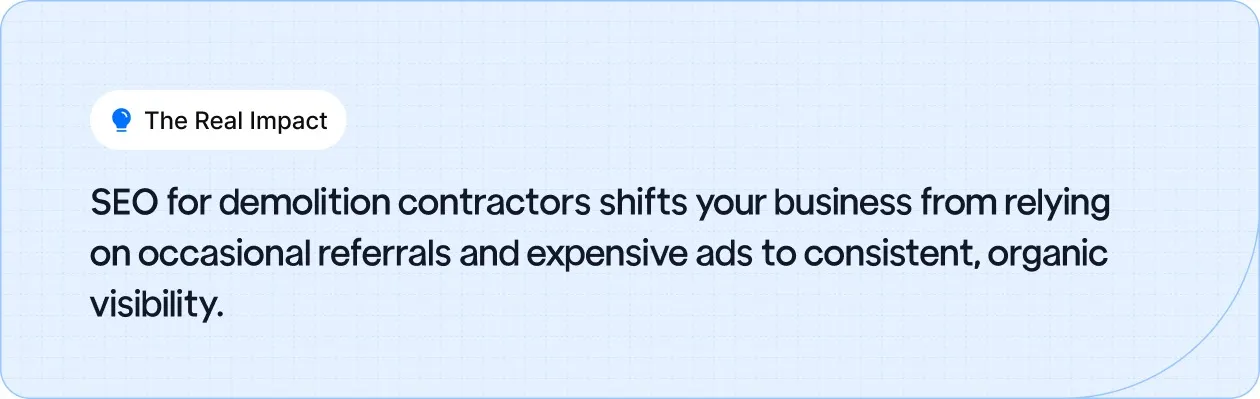
SEO for demolition contractors ensures your business is visible when clients are searching, allowing you to focus on delivering top-quality results.
What is SEO for Demolition Contractors?
SEO, or Search Engine Optimization, is the practice of making your demolition business easier to find online when potential clients search for services you offer. It’s about connecting with people actively seeking your expertise.
Why It Matters:
- Local Focus: Most people look for demolition services near them, so local SEO is crucial for getting noticed.
- Immediate Need: Demolition services often come up during urgent situations. SEO helps ensure you’re visible when people need your services the most.
Here’s how:
- Increased Trust: Clients find you through organic search, giving your business credibility.
- Ongoing Visibility: Once optimized, your site keeps showing up for relevant searches, driving steady inquiries.
- Cost-Effective Lead Generation: SEO offers long-term value, with a higher ROI compared to traditional ads.
Now that we understand why SEO is vital, let's explore the core strategies that can make it work effectively for your demolition business.
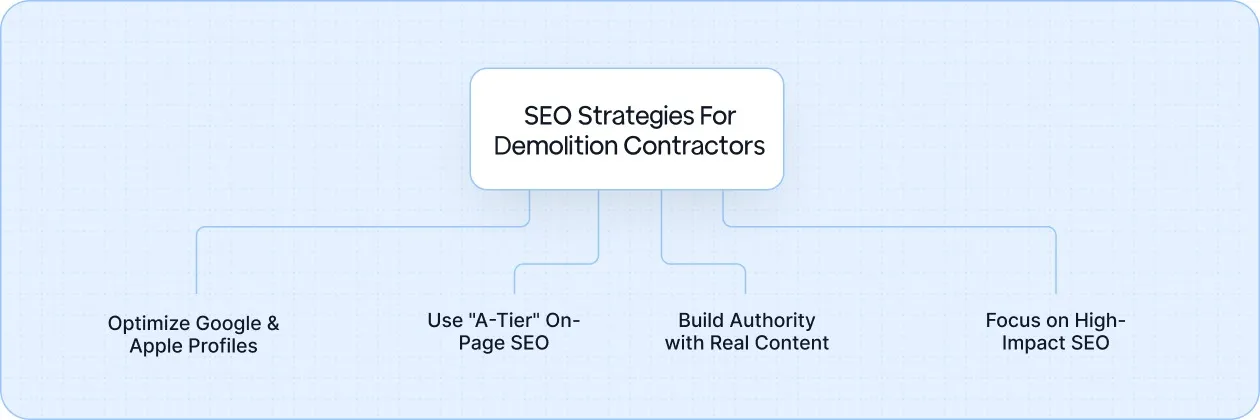
4 Key SEO Strategies for Demolition Contractors
The right SEO strategies are crucial to ensure your demolition business is visible to local clients when they need your services. From optimizing local profiles to structuring your website with targeted content, these strategies will help drive relevant traffic and build long-term visibility.
Let’s dive into the key actions that will make SEO work for you.
1. Maximize Your Google Business Profile and Apple Business Connect
Your Google Business Profile and Apple Business Connect are vital to being found by local clients. These profiles directly influence how your business shows up in search results, especially in the local “Map Pack.” Without optimized profiles, your business could be invisible when people need your services most.
Optimization Steps:
- Primary and Additional Categories: Ensure your primary category accurately reflects your core service, like “Demolition Contractor,” and add relevant secondary categories to increase discoverability.
- Completeness Is Key: Fill in every section, services, contact details, hours, photos, and business descriptions. This improves your chances of appearing in search results.
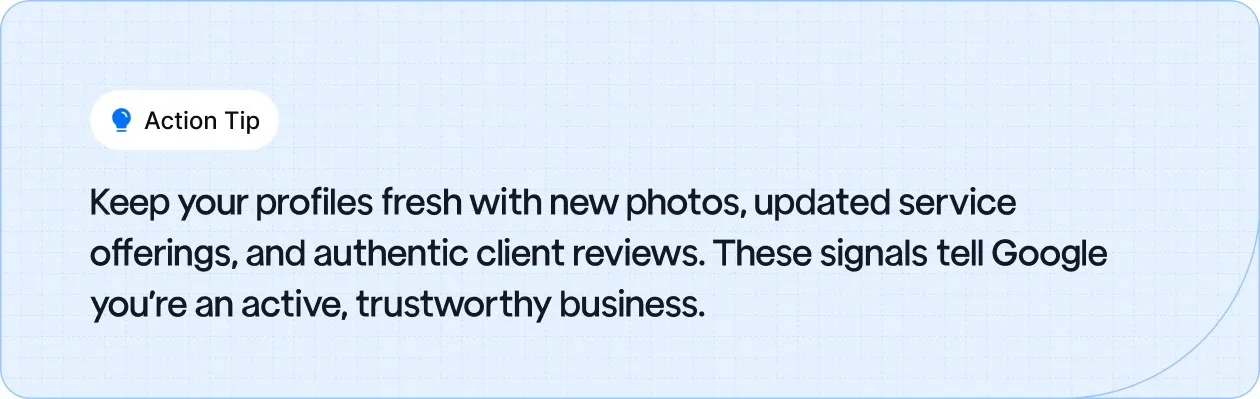
- Consistency: Keep your details consistent across platforms and regularly updated to stay relevant.
Want your business to appear when clients need it most?
Local optimization begins with accurate and detailed business profiles. A well-maintained profile is key to being seen by potential clients at the right moment.


2. Implement "A-Tier" On-Page SEO Tactics
Optimizing your website’s on-page elements allows both users and search engines to understand exactly what services you offer and where. This is essential for targeting local customers actively searching for demolition services.
Key Focus Areas:
- Keyword Placement: Integrate your primary keywords (like “Demolition Contractor Chicago”) into your page titles, headers, and URLs to help Google understand your focus.
- Location-Specific Content: Infuse your content with location-specific terms (e.g., city names, neighborhood mentions) to align your services with local search intent.
- Dedicated Service Pages: Each of your services (e.g., “Concrete Demolition,” “Asbestos Removal”) should have its own detailed page. This increases relevance and attracts specific searches.
3. Build Your Authority with Genuine Content and Local Relationships
Google values authenticity; real content that connects with the local community improves your SEO. Share your team’s story, customer success, and local partnerships to position yourself as the go-to expert.
How to Build Authority:
- Real Proof Over AI Content: Use authentic images of your projects, team members, and equipment. Google favors this over generic, AI-generated content.
- Customer Stories and Local Engagement: Showcase testimonials, case studies, and local collaborations to strengthen your trustworthiness and relevance in the community.
Want to be seen as the trusted expert in your area?
Establish authority by sharing authentic content, customer stories and more valuable content to show your expertise and rise above your competition.
4. Focus on High-Impact SEO Factors and What to Skip
There are a lot of low-impact SEO tactics that can waste time without providing results. Geotagging images and social media activity may seem helpful, but they don't contribute to your rankings. Instead, focus on strategies that truly matter.
Key Focus Areas:
- Don’t Overthink Geotagging: Geotagging images doesn't improve your SEO, so don’t invest unnecessary time in this.
- Skip Social Signals: While social media is important for engagement, it doesn’t directly impact your SEO rankings. Focus on content-driven SEO strategies instead.
Must Read: Get Noticed or Get Overlooked: The Ultimate SEO Guide for Contractors
Is your SEO strategy driving real results for ROI?
Description: Focus on what truly matters, backlinks and optimized content, while letting go of low-impact tactics.
Reviews and Internal Links to Strengthen Your SEO
Positive customer reviews and effective internal linking are essential strategies for improving your SEO. Reviews enhance your local visibility and build trust, while internal links strengthen your site’s structure and relevance.
Together, they help ensure your business stands out in search results and connects with the right clients.
a) Customer Reviews
Customer reviews directly impact your local SEO. Positive reviews attract potential clients and signal to search engines that your business is credible and relevant.
Google values customer feedback, making it a powerful tool to help you rise in local search results. Engaging with your customers through reviews also strengthens your online presence and credibility.
- Impact on Local SEO: Reviews are a key factor in local rankings, as Google prioritizes businesses with high-quality, consistent feedback.
- Trust and Social Proof: Positive reviews act as a vote of confidence, making prospects more likely to trust and choose your business.
b) Internal Linking
Internal linking connects the dots between different pages on your site, helping search engines and users navigate it more effectively. This strategy strengthens your website’s structure, making it easier for search engines to determine the relevance and relationship between your content.
Additionally, it helps keep visitors engaged, guiding them from one page to another in a logical flow.
- Improves Site Structure: Internal links enhance your website's organization, which can positively impact SEO.
- Improves Relevance: Linking relevant pages together helps Google understand the context of your content and reinforces your target keywords.
Incorporate Technical SEO to Enhance Website Performance
Website performance plays a crucial role in both user experience and search engine visibility. Fast loading times and a mobile-friendly design ensure your visitors stay engaged and help improve your rankings.
Let’s dive into how optimizing these aspects can directly impact your demolition business’s online presence.
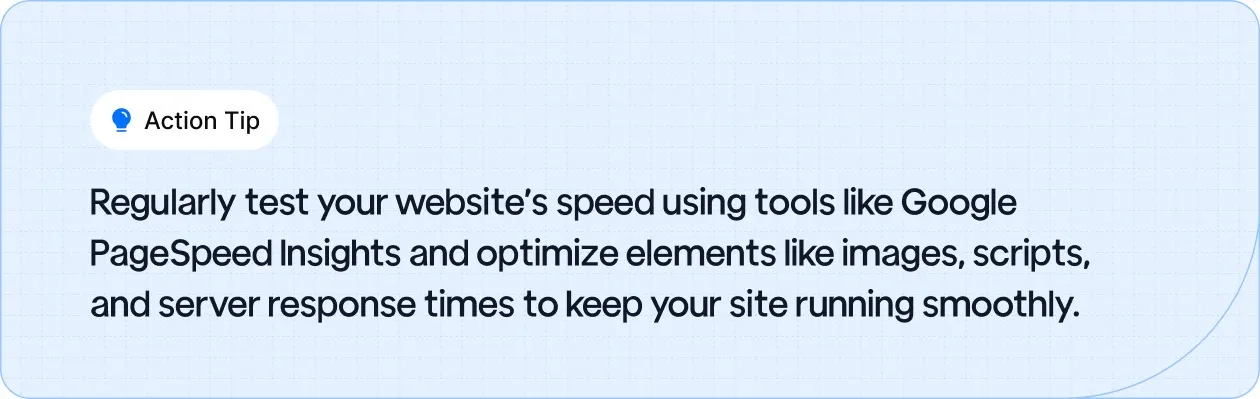
a) Site Speed
Website speed directly impacts how users experience your business. Google prioritizes fast-loading sites because they provide a better experience for users, leading to higher engagement and lower bounce rates.
A slow website can frustrate visitors and make them leave, while a fast one keeps them on your site longer, signaling to Google that your content is valuable. Faster sites retain users longer and increase the likelihood of conversions, improving both user experience and SEO.
b) Mobile Optimization
More clients are searching for demolition services on mobile devices than ever before. In fact, mobile-first indexing means that Google now prioritizes the mobile version of your website for ranking. If your site isn’t optimized for mobile, you risk losing valuable clients and missing out on better rankings.
Ensure that all your content displays correctly across all devices, from desktops to smartphones, to provide a seamless experience for users.
Must Read: Why Construction Companies That Master SEO Get More Projects: 8 Key Strategies to Get Started
Choose the Right Keywords for Your Demolition Business
Keyword research is the backbone of your SEO strategy, helping you connect with clients who are actively searching for your demolition services. By targeting the right, specific terms and long-tail keywords, you can attract highly qualified prospects and stay ahead of the competition.
Let’s explore how to identify and use the best keywords to get your business noticed.
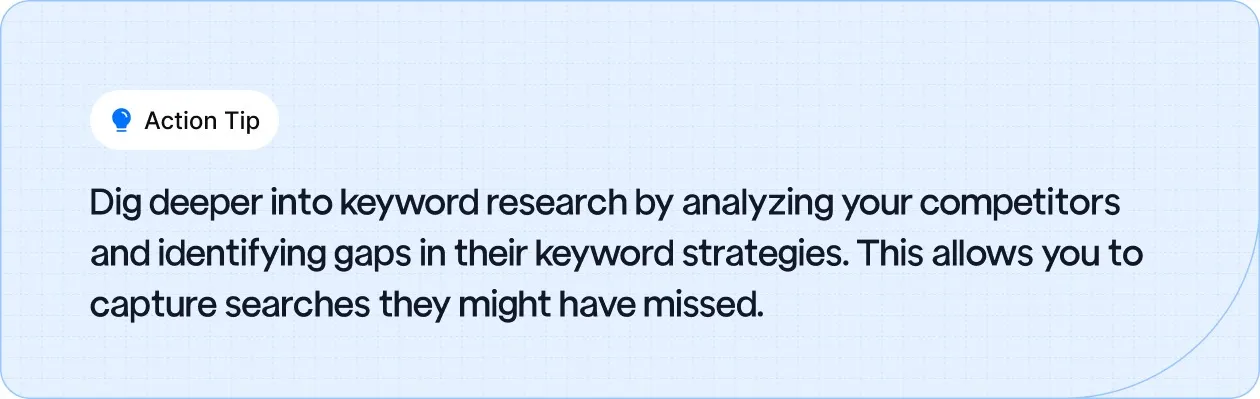
a) Keyword Research Process
Effective keyword research is the foundation of your SEO strategy. It requires understanding what your potential clients are actually searching for when they need demolition services.
By using tools like Google Keyword Planner or Ahrefs, you can uncover keywords that align with your audience’s search intent, allowing you to create content that answers their questions and meets their needs.
Client-Centric Search Terms: Focus on understanding the specific services your clients need, such as “emergency demolition services” or “green demolition contractors,” and target those terms.
b) Target Long-Tail Keywords
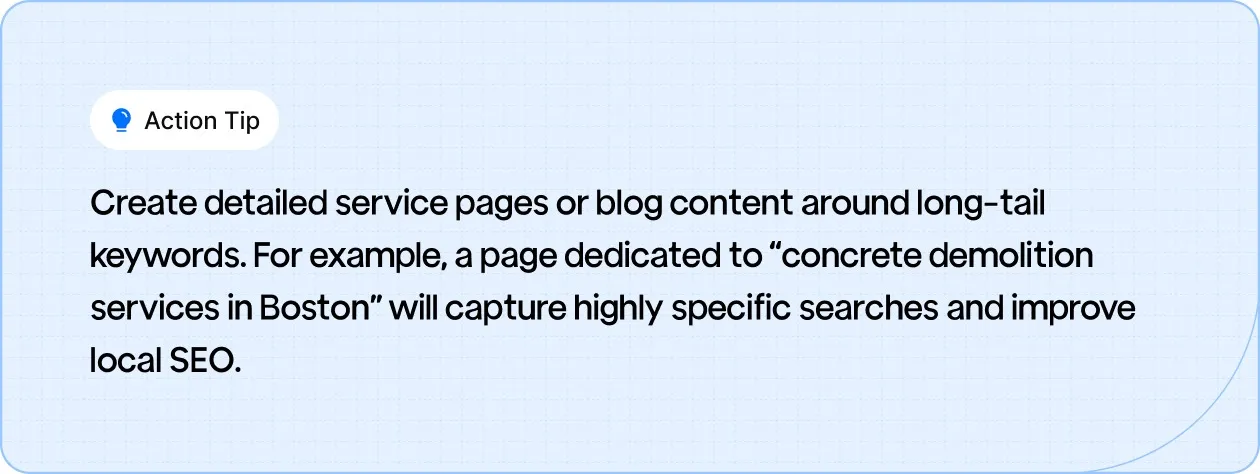
Long-tail keywords are a goldmine for demolition businesses. These highly specific search terms, such as “licensed concrete demolition in Chicago” or “affordable house demolition,” may attract fewer searches, but they bring in more qualified prospects who are closer to hiring.
People searching for these specific services know exactly what they want, making them more likely to convert into clients.
Long-tail keywords help you cater to specific needs, reducing competition and increasing the chances of connecting with users ready to take action.
Is your content attracting the right people?
Selecting precise keywords aligned with client needs makes it easier to connect with those looking for your services.
Build Backlinks and Local Citations to Improve Authority
Backlinks and local citations are essential for strengthening your demolition business’s online authority. These elements improve your SEO by enhancing trust and relevance in local searches, ultimately driving visibility and engagement.
Let’s dive into how you can leverage these strategies to improve your presence.
a) Backlink Building
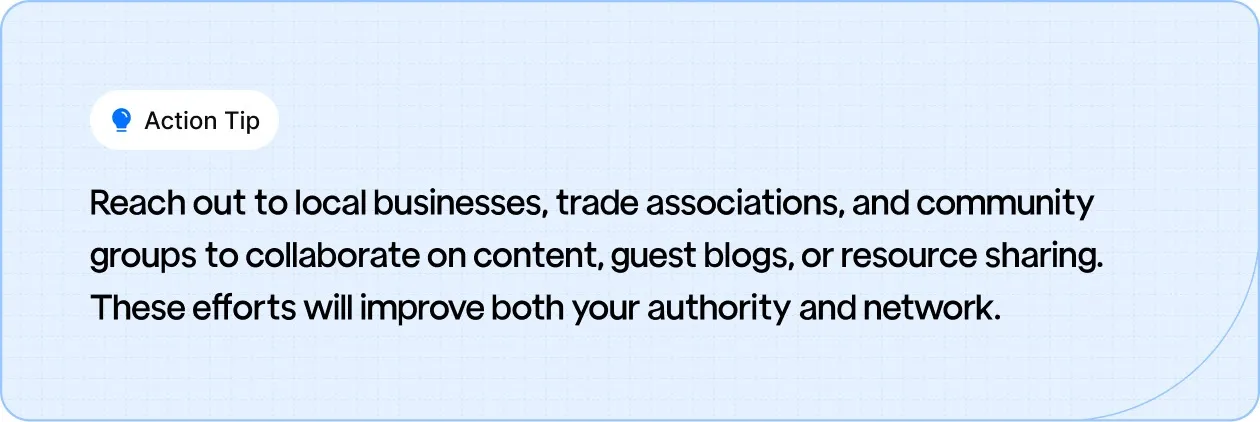
Backlinks act as endorsements from other websites, helping search engines recognize your site’s value and authority. Focus on securing high-quality backlinks from local businesses, industry websites, and trusted directories. These connections improve your rankings and drive valuable traffic to your site.
A single backlink from a reputable local business or industry leader carries more weight than several links from lower-quality sources.
b) Local Citations
Local citations ensure your business information is accurate across various online directories, helping search engines confirm your location and credibility. Consistency in your NAP (Name, Address, Phone number) is essential for appearing in local search results. Inconsistent details can confuse search engines, harming your SEO.
Ensure your NAP details are the same across all directories to avoid penalties and enhance local search rankings.
Mobile Optimization and User Experience (UX)
Optimizing your demolition business’s website for smartphones is essential. A seamless mobile experience, coupled with a well-designed user interface, keeps visitors engaged and improves your chances of ranking higher in local searches.
Let’s explore how mobile optimization and user-friendly design can make your site stand out.
a) Mobile Search
With a large portion of clients searching for demolition services directly on their phones, mobile optimization is critical. If your website isn’t responsive or loads slowly on mobile devices, potential clients may quickly abandon it and turn to competitors.
A mobile-optimized site ensures that your business appears trustworthy and accessible when clients need it most, no matter where they are. Google now uses mobile versions of websites for ranking purposes, making it crucial for your site to deliver a smooth mobile experience.
b) User Experience (UX)
User experience is how easily and quickly visitors can navigate your site. A positive UX means users can find what they need without frustration, keeping them engaged and more likely to take action. This directly impacts your SEO, as Google prioritizes websites that provide clear, intuitive, and satisfying experiences.
An easy-to-use, clutter-free website with clear calls to action will keep users moving through your site and increase the likelihood of converting them into clients.
Suggested Read: Local SEO for Contractors: A Simple Guide to Get Noticed
Start Implementing SEO Strategies to Be Visible Locally
SEO for demolition contractors requires optimizing your website for local searches, creating structured and relevant content, building your online authority, and providing a seamless user experience that keeps clients engaged.
By focusing on these elements, you’ll improve your rankings and attract and convert more qualified leads.
If your business is ready to streamline its content strategy and improve its SEO, now is the time to take action and optimize your website for better visibility and results.
Ready to refine your content strategy for better SEO outcomes?
Gushwork helps businesses streamline their content strategies with personalized SEO approaches that enhance local visibility and drive meaningful results.


.webp)







.webp)



.svg)


