









When a plumbing emergency happens, your customers need someone they trust, fast.
But how do you stay top of mind when their pipes aren’t bursting, or drains aren’t clogged? Email marketing for plumbers is the solution. It’s a straightforward, powerful way to send helpful reminders, special offers, and expert tips directly to your customers’ inboxes, keeping your business front and center when they need you the most.
No complex strategies, just simple communication that builds trust and keeps customers coming back.
Why Email Marketing Works for Plumbing Businesses?
Email marketing offers plumbing businesses a direct, cost-effective way to communicate with customers, keeping them engaged through personalized updates and timely offers.
By maintaining consistent contact, plumbers can build lasting relationships that build loyalty, increase repeat business, and generate impressive returns on investment.
a) Direct and Personalized Communication
Email marketing allows plumbing businesses to reach customers where they are, in their inboxes. With personalized messages, you can speak directly to your audience, offering timely reminders, service updates, or promotions based on their past interactions. This direct line of communication means your business stays top of mind without being lost in the noise of social media or online ads.
- Personalized messages: Reminders for seasonal check-ups or follow-ups after service calls.
- Timely offers: Discounts or special offers sent at the right time, increasing the chances of engagement.
b) Building Long-Term Relationships
Consistency is key. Regularly reaching out to your customers with helpful tips, reminders, or offers creates a sense of reliability. Email marketing gives you the chance to nurture relationships over time, turning first-time customers into loyal clients.
- Seasonal service reminders: Emailing customers about things like winterizing pipes or scheduling an annual checkup.
- Exclusive offers for repeat customers: Encourage loyalty with discounts or special offers for customers who regularly book services like drain cleaning or sewer line inspections.
c) Exceptional ROI for Plumbing Businesses
Email marketing for plumbing businesses offers one of the highest returns on investment. For every dollar spent, plumbers can expect up to $44 in return. This high ROI comes from being able to directly target interested customers with relevant, timely information.
- Cost-effective outreach: Unlike paid ads, email doesn’t require a big budget to reach a large audience.
- Targeted campaigns: By sending emails to a segmented list of customers, businesses can ensure the right message reaches the right person at the right time.
Must Read: How to Effectively Market Your Plumbing Business: 10 Proven Strategies
Set SMART Goals for Plumbing Email Campaigns
Setting clear and specific goals for your plumbing email marketing campaigns is essential for success. Without goals, it’s easy to waste resources or miss out on valuable opportunities.
By aligning your email campaigns with your broader business objectives, you ensure that every email you send contributes to your overall growth strategy.
SMART Goals for Plumbers
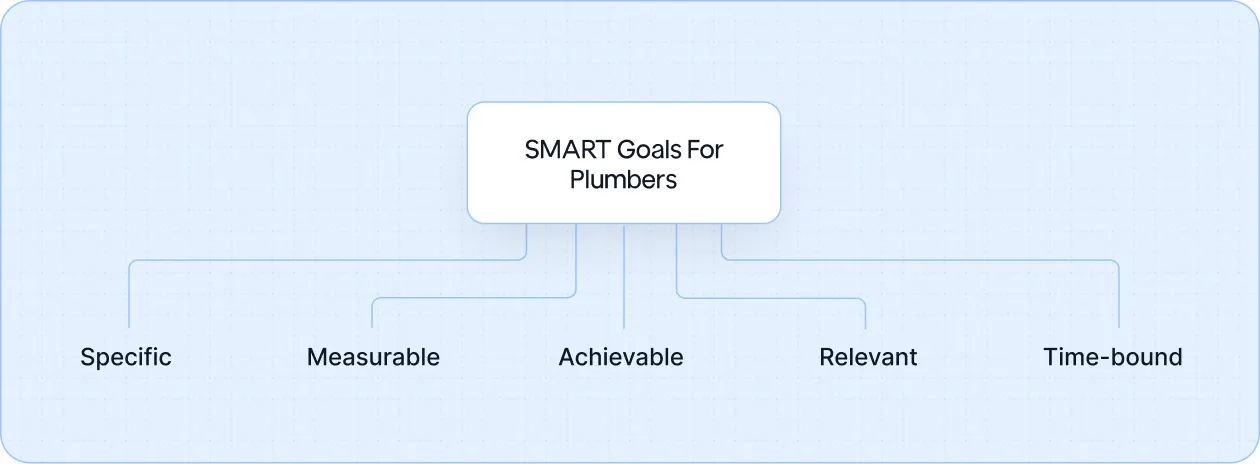
Using the SMART framework (Specific, Measurable, Achievable, Relevant, Time-bound) helps you set goals that are clear and actionable. Here are a few examples of SMART goals plumbers can focus on:
- Increase open rates for seasonal promotions by 10% in the next 3 months by improving subject lines and sending at optimal times.
- Generate 25 new service requests per month through targeted email campaigns, such as exclusive offers for first-time customers.
- Reduce customer churn by 20% through regular service reminders and value-driven content that keeps customers engaged long after the first service.
Tracking Success
Measuring the effectiveness of your campaigns is key to knowing if you’re hitting your goals. Key metrics to track include:
- Open Rates: To evaluate subject line performance and overall interest.
- Click-Through Rates (CTR): To see how engaging your content is.
- Conversions: To measure how many customers take action, like booking a service or clicking on a special offer.
By setting SMART goals and tracking key metrics, you can ensure that your plumbing email campaigns are focused, effective, and contributing directly to your business growth.
Build and Grow Your Plumbing Email List
Building a quality plumbing email list is the first step in creating meaningful customer relationships. By using ethical lead generation strategies, segmenting your audience based on needs, and maintaining a clean list, you can ensure that your emails reach the right people with the right message, leading to more engaged, loyal customers over time.
Ethical Lead Generation
Growing your email list ethically is the first step toward establishing a strong and trustworthy connection with your audience. Focus on methods that encourage customers to opt-in willingly and feel confident about receiving emails.
- Opt-in Forms: Embed simple, clear forms on your website and landing pages, offering value such as a free plumbing guide or a maintenance checklist in exchange for their contact details.
- Lead Magnets: Offer practical resources like “Top 10 Plumbing Tips” or seasonal maintenance guides. These encourage sign-ups and position you as a helpful, trusted resource.
- Incentives: Reward new subscribers with exclusive discounts or special service offers like a free inspection or discounted drain cleaning. This adds immediate value and motivates potential customers to join your list.
Segmentation for Relevance
Segmentation ensures that your emails are relevant and personalized, increasing engagement and reducing unsubscribes. By personalizing your messages, you ensure they reach the right people at the right time.
- Customer Type: Segment by new customers, recurring clients, or high-value customers to send personalized messages that speak directly to their needs.
- Service History: Target specific customer groups based on past services (e.g., those who previously booked sewer line inspections might be interested in maintenance reminders).
- Seasonal Needs: Segment based on service requirements tied to time of year, such as reminding customers about winter pipe protection or scheduling spring drain cleaning.
List Hygiene and Maintenance
A clean, updated list is essential for maximizing engagement and ensuring that your emails are reaching active, interested customers.
- Remove Inactive Subscribers: Regularly scrub your list to remove contacts who haven’t engaged in months. This keeps your list fresh and improves overall deliverability.
- Update Information: Make sure email addresses are correct by using double opt-ins or periodic re-engagement campaigns, ensuring your emails always go to the right place.
- Monitor Engagement: Track how recipients interact with your emails (opens, clicks) and segment based on this behavior. If certain users are disengaging, it’s a signal to revisit your content strategy.
By focusing on ethical lead generation, relevant segmentation, and list maintenance, plumbing businesses can build an engaged, high-quality email list that drives long-term results without wasting resources on uninterested subscribers.
This foundational step is essential for ongoing success in email marketing.
Must Read: 15 Smart Marketing Moves to Drive Growth for Your Home Services Business
Create Effective Plumbing Email Content
Creating engaging plumbing email content is about making every email personal, relevant, and action-oriented. By using personalized details, creating compelling subject lines, and including clear, action-driven CTAs, you can ensure your emails stand out in inboxes and drive meaningful responses from your customers.
Personalization
Personalizing your plumbing emails is about making your emails feel personalized and relevant to the recipient.
- Use Service History: Reference past services (e.g., "Your annual drain cleaning is coming up, book today for a 10% discount!").
- Location-Specific Offers: Include location-based details, like local weather-related tips (e.g., "Winterize your pipes before the cold hits in Chicago").
- Customer Preferences: Leverage data like service frequency or specific requests to send targeted emails that resonate with individual customers, increasing both open rates and engagement.
Compelling Subject Lines
The subject line is the first thing your customers see, and it decides if they'll open your email. A great subject line piques curiosity or promises value right away.
- Be Clear and Direct: Use subject lines that clearly convey value (e.g., "Prevent Costly Plumbing Issues This Winter, Act Now!").
- Create Urgency: Encourage immediate action with time-sensitive language (e.g., "Last Chance to Save on Drain Cleaning Services").
- Use Curiosity: Make the recipient want to know more (e.g., "Is Your Home Ready for a Plumbing Emergency? Find Out").
Clear Call-to-Actions (CTAs)
Every email you send should have a clear and compelling CTA that prompts your customers to take action. From booking a service to requesting an estimate or signing up for a seasonal inspection, make it easy for them to take action.
- Action-Oriented: Use strong verbs like "Book," "Get," "Claim," and "Save" to direct attention to the desired action (e.g., "Schedule Your Service Now and Save 10%").
- Keep It Simple: Ensure your CTA is easy to find and click on mobile devices, using a button or text link (e.g., 'Get Your Free Plumbing Inspection Today').
- Urgency: Include language that encourages urgency without being pushy (e.g., "Claim Your Spot Before Slots Fill Up").
By focusing on personalization, effective subject lines, and clear CTAs, plumbing businesses can create email content that gets opened and drives customers to take immediate action.
Great email content starts with great SEO.
At Gushwork, we help you create SEO-focused blog posts and landing pages that support your email marketing campaigns, driving more engagement and conversions.


Optimize Plumbing Emails for Mobile Devices
With more customers reading emails on their phones, optimizing your plumbing email campaigns for mobile is crucial to ensure your messages are easily readable and engaging.
By using simple layouts, large buttons, and testing emails across devices, you can improve the customer experience and drive better results from your campaigns.
Mobile Optimization
With a growing number of customers checking their emails on smartphones, mobile optimization is essential. If your emails don’t display properly on mobile devices, you risk losing customer engagement.
- Simple Layout: Use a single-column layout to make content easy to read on smaller screens.
- Large, Clickable Buttons: Ensure CTAs are easy to click by using large, touch-friendly buttons (at least 44px by 44px).
- Concise Text: Keep your content short and to the point. Mobile users tend to skim, so make sure your message is easily scannable with clear headings and bullet points.
- Readable Fonts: Use larger fonts (at least 14px for body text) to enhance readability on smaller screens.
Testing for Mobile
Before hitting send, always test your emails on mobile devices to ensure they display correctly. Emails that look great on desktops can easily get distorted on phones, leading to a poor customer experience.
- Check Layouts and Fonts: Ensure everything aligns well and the text is legible on all devices.
- Test CTAs: Make sure buttons are easy to click and lead to the right landing pages.
- Use Email Testing Tools: Incorporate tools like Litmus or Email on Acid to preview how your emails will appear on different devices.
Optimizing your plumbing email campaigns for mobile ensures that your messages are readable, engaging, and actionable, no matter where your customers are checking their inboxes.
Suggested Read: 20+ Plumbing Lead Strategies That Get You Found, Booked, and Paid
Automate Plumbing Email Campaigns
Automation takes the repetitive tasks off your plate, giving you more time to focus on delivering great service. By automating routine emails like service reminders, follow-up emails, and seasonal promotions, plumbing businesses can ensure consistent communication without manual effort.
This results in higher efficiency and improved customer engagement, all while maintaining a personal touch.
Automated Campaign Examples
- Service Reminders: Set up automated emails to remind customers about regular maintenance, such as annual pipe inspections or drain cleaning. These emails can be triggered based on service dates, ensuring no customer misses an important reminder.
- Follow-Ups for Estimates: If a potential customer receives a quote but hasn’t booked the service yet, automated follow-up emails can gently nudge them to take action, increasing the chances of conversion.
- New Customer Onboarding: Welcome new customers with an automated introductory email that introduces your business, highlights your services, and offers a special deal on their next booking. It’s a simple yet effective way to build rapport from the start.
By automating these plumbing email campaigns, businesses can streamline their marketing efforts, ensuring they stay in touch with customers at the right moments without extra time investment.
A/B Testing for Plumbing Email Campaigns
A/B testing helps you identify which elements of your plumbing email campaigns resonate best with your audience. By experimenting with small changes, you can optimize your emails for better engagement and higher conversions. Key components to test include:
- Subject Lines: Experiment with different wording to see which gets more opens (e.g., "Save 10% on Your Next Service" vs. "Fix Leaks Before Winter").
- Call-to-Actions (CTAs): Test variations of your CTAs, such as “Book Now” vs. “Claim Your Discount,” to see which prompts more action.
- Email Design: Compare text-heavy emails with more image-focused designs to determine what drives higher engagement.
Best Practices for A/B Testing
- Small Tweaks, Big Impact: Even minor changes can significantly improve performance. For instance, subject lines with urgency ("Limited-Time Offer!") vs. value-driven messaging ("Save on Your Next Drain Cleaning") can lead to noticeable differences in open rates.
- Test One Element at a Time: Focus on testing one element at a time—whether it's the subject line, CTA, or design. This ensures that you can attribute results to specific changes.
- Track and Compare Results: After running your tests, analyze the results to determine which version performed better. Use these insights to refine future campaigns and optimize your approach over time.
By merging A/B testing with best practices, plumbing businesses can continuously improve their email marketing strategy. This iterative approach helps refine content, optimize designs, and create more effective campaigns, ultimately driving better engagement and conversions.
Best Practices for Plumbing Email Campaigns
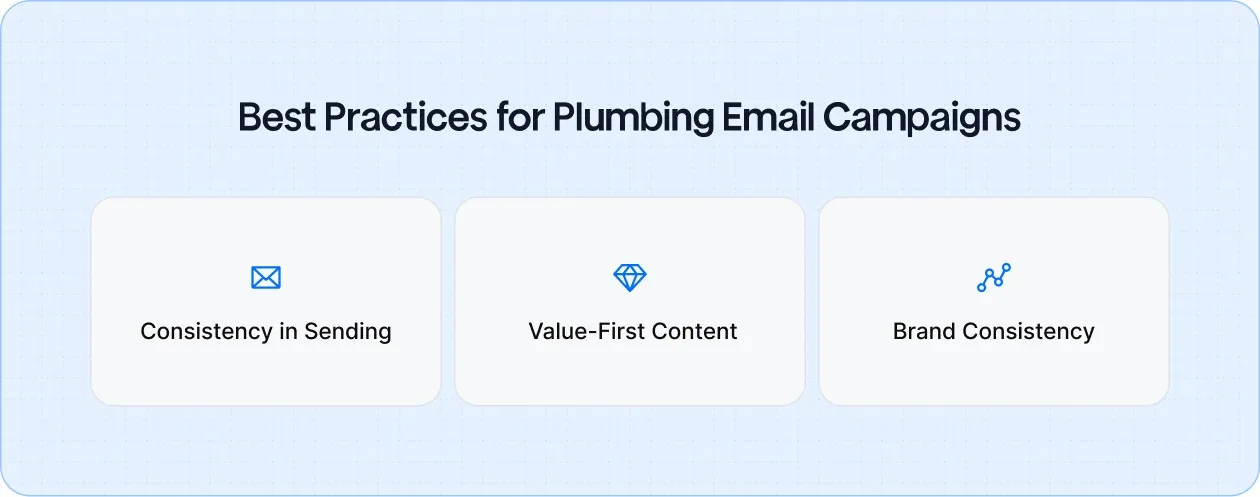
Building successful plumbing email campaigns requires consistency, offering valuable content, and maintaining brand identity. By sticking to a regular schedule, providing helpful insights, and ensuring all communications reflect your brand’s voice, you can build trust, engage customers, and create a lasting connection.
a) Consistency in Sending
To keep your plumbing business top-of-mind, it's crucial to send emails on a regular schedule. Consistency builds trust and recognition, ensuring customers look forward to hearing from you. Consider setting a bi-weekly or monthly schedule for:
- Maintenance tips (e.g., "How to Prevent Winter Pipe Freezes").
- Seasonal reminders (e.g., “Time for Your Annual Plumbing Inspection”).
This routine helps customers feel connected to your business and keeps them engaged without overwhelming them.
b) Value-First Content
In email marketing, always put value first. Rather than bombarding customers with sales pitches, offer them useful insights that help them maintain their plumbing systems or save money. This could include:
- Helpful plumbing tips (e.g., "How to Identify a Leaky Faucet").
- Safety advice (e.g., “Protect Your Pipes from Freezing This Winter”).
By sharing valuable content, you position yourself as a trusted expert and ensure customers feel they are receiving valuable insights.
c) Brand Consistency
Every email should align with your brand’s identity to create a cohesive customer experience. From your logo and color scheme to the tone of voice, ensure all your emails are instantly recognizable as coming from your business. This consistency:
- Reinforces trust with your audience.
- Enhances recognition across all customer touchpoints, from your website to social media and customer service interactions.
By maintaining a strong and consistent brand presence in your emails, you strengthen your relationship with customers and build a more professional image.
By following these best practices, plumbers can create email campaigns that are effective and build lasting customer relationships.
Let’s Get Started: Build Your Plumbing Email Campaigns That Drive Results
Creating effective plumbing email campaigns is about setting clear goals, building a quality email list, and delivering valuable content.
By following the steps of personalizing your approach, optimizing for mobile devices, and measuring performance, you can build lasting relationships with customers and see measurable success in no time.
Want to elevate your plumbing email campaigns?
Gushwork helps you create SEO-driven content that powers your email marketing and drives meaningful customer engagement.


.webp)




.webp)


.svg)


