










If you work in animal services, content is never the problem. There are always animals to care for, stories to tell, updates to share, and urgent needs to communicate. The real challenge is making all that content actually work together.
Most shelters, rescues, and animal service organizations post consistently, yet still struggle with low adoption follow-through, donor drop-off, or supporters who engage emotionally but never take the next step. That disconnect usually is about structure. Content exists, but it isn’t guiding people anywhere.
Animal services content marketing is about changing that.
In this blog, you’ll learn what content marketing really means in the context of animal services, how to build a clear and realistic content marketing plan, and how supporting channels can strengthen your content so it creates a lasting impact.
What Content Marketing Means for Animal Services?
Animal services content marketing means creating helpful, story-led, trust-building content that keeps working long after you hit publish.
It’s a system that helps the right people find you, understand your work, and take a clear next step, like adopting, fostering, donating, volunteering, or partnering.
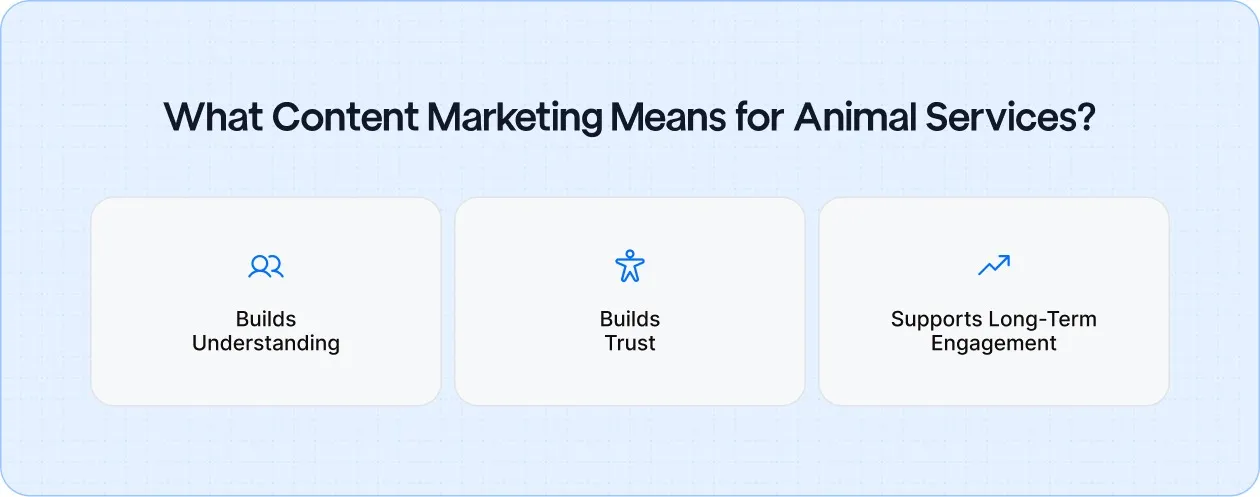
Animal services content marketing serves three purposes:
- It builds understanding.
People outside the organization rarely know what animal care, rescue, or rehabilitation actually involves. Content helps explain the work behind the scenes in a calm, transparent way.
- It builds trust.
Consistent, thoughtful content shows that your organization is stable, responsible, and intentional. Trust is especially important in animal services because supporters are emotionally invested and want reassurance that animals are cared for properly.
- It supports long-term engagement.
Content marketing creates a steady presence. It allows people to learn at their own pace and return when they are ready to take action.
In this space, content has two jobs at the same time. It has to make people feel something, and it has to make things easy. This usually includes a mix of “trust content” and “decision content.”
- Trust content builds credibility and emotional connection.
- Decision content reduces hesitation and answers questions people are already asking.
Let’s make a content marketing plan around this.
Creating an Animal Services Content Marketing Plan
An animal services content marketing plan exists to bring structure to what is otherwise constant, reactive communication.
At a basic level, the plan answers three questions clearly: who the content is for, what it needs to help them understand, and how it supports real outcomes:
1. Define Your Audiences And Goals First
Your content plan has to match who you serve and what you want to achieve.
- List your main services and segments. Write down each service and match it with who uses it most. For example: puppy owners for training, busy professionals for daycare, senior pet owners for in-home vet visits.
- Set 2–3 clear goals for content. Examples include more grooming bookings, more wellness plan sign-ups, or higher adoption applications. Avoid vague goals like “more followers.”
- Map which content supports which goal. Tie each goal to specific content ideas. A “new puppy care” email series supports training packages. A “how to prepare for grooming” guide supports first-time grooming visits.
- Decide how you will measure success. Track things like form submissions, calls, online bookings, and requests from existing clients.
2. Choose Core Content Themes Your Brand Will Own
Great animal services content repeats a few strong themes instead of chasing every trend. Think in “pillars” that match what you actually sell.
- Health and safety education. Share clear, practical advice on vaccinations, parasite control, grooming safety, behavior red flags, and seasonal risks. Avoid drama; focus on calm, expert guidance.
- Everyday care and routines. Talk about nail trims, brushing, enrichment, crate training, or litter box care. These topics show you understand real life with pets.
- Service prep and aftercare. Create content that explains what happens before, during, and after each service, like surgery, boarding, or grooming. This reduces anxiety and calls to your front desk.
- Stories and community. Use success stories, adoption updates, “day in daycare” recaps, or “patient of the week” posts to bring emotion into the plan.
3. Pick The Right Channels For Your Animal Services Content
You do not need to be everywhere. You need to be present where your specific pet owners or facility managers actually pay attention.
- Website and blog as your main home. Every key guide, FAQ, and resource should live on your website first, then be repurposed for social or email later. This improves search visibility and trust.
- Google Business Profile for local discovery. Add posts about promos, reminders, or seasonal tips. Many pet owners never reach your website if your profile already answers their questions.
- One or two social platforms. For most animal services, Facebook and Instagram work well. Shelters may also see value in TikTok. B2B animal services can use LinkedIn when dealing with clinics or suppliers.
- Email for loyalty and reminders. Use email to send appointment reminders, check-ins, health tips, and service updates. This keeps you top of mind between visits.
4. Map Content To The Pet Parent Journey
Strong content plans support every stage of the decision process, from “I think my dog has a problem” to “I am ready to book.”
- Top-of-funnel awareness content. Create posts that answer early problems, such as “Signs your cat may be stressed” or “Is my dog overweight?”, to attract new visitors.
- Mid-funnel trust and comparison content. Write pages explaining your approach versus common alternatives, such as “In-home pet sitting versus boarding,” with honest pros and cons.
- Bottom-funnel conversion content. Build service pages that show exactly what happens during appointments, what it costs, and how to book, so people can decide quickly.
- Post-visit retention content. Share aftercare guides, training refreshers, or seasonal reminders that keep clients returning instead of drifting to competitors.
5. Plan Topics By Season And Local Reality
Animal needs change with the calendar, and your content should follow those cycles. Think fleas, ticks, heat, fireworks, travel, and holiday boarding.
- Create a simple annual content calendar. Mark key months for vaccines, travel, shedding, storms, and heat, then plan matching topics and reminders around those periods.
- Align content with real local risks. If you live in a tick-heavy area, cover prevention thoroughly; if summers are brutal, talk about heatstroke, paw safety, and hydration in depth.
- Use “campaign clusters.” During busy periods, publish or share several related pieces together, such as blogs, social posts, and emails around “spring parasite prevention.”
- Leave room for unexpected events. Keep flexibility so you can respond quickly to disease outbreaks, weather events, or recall notices that affect pet safety.
6. Structure Your Website For Both Content And Conversion
Your website is your home base, where all content should eventually point. It needs structure that makes sense to both Google and pet parents.
- Create clear service pages. Dedicate one page to each core service, such as grooming, daycare, boarding, training, or wellness exams, with clear benefits and FAQs.
- Add local signals across the site. Mention your city and nearby areas naturally in headings, paragraphs, and alt text, so search engines understand where you work.
- Organize content into hubs. Group posts under themes like “Puppy Care,” “Senior Pets,” or “Behavior Basics,” with hub pages that link to all related articles.
- Use simple calls to action. Add clear buttons like “Book an appointment,” “Schedule a meet-and-greet,” or “Call us today,” so every page gives a next step.
Make Content Easy to Act On
Structure your website so stories, guides, and updates naturally lead to adoption, donations, or bookings.


7. Turn One Strong Piece Into Many Touchpoints
You do not need to create every post from scratch. Good content plans recycle one strong idea across multiple formats and channels.
- Start with a detailed “anchor” guide. Write one high-quality article about a key topic, such as “Complete guide to puppy’s first year,” that lives on your site.
- Break the guide into social and email pieces. Turn each section into standalone posts, stories, or email tips to stretch that work across the month.
- Create a simple downloadable checklist. Offer a “new puppy checklist” or “boarding packing list” as a lead magnet in exchange for email addresses.
- Film one or two videos around the same topic. Use short clips to demonstrate parts of the guide, such as trimming nails or crate training basics.
8. Measure What Works And Adjust
A content marketing plan only improves when you pay attention to what people actually read, click, and act on. Numbers should guide your next steps, not scare you.
- Track basic website and booking metrics. Monitor page views, top pages, form fills, and calls from your website or Google profile each month.
- Watch which topics drive real actions. Look for patterns where certain posts or pages often precede bookings, then double down on those themes.
- Review social and email performance. Note posts that get saves, shares, or replies, and emails with high open and click rates, then reuse that style or topic.
- Adjust your calendar every quarter. Drop content that gets no interest, expand topics that resonate, and refine based on real audience behavior.
Be Clear and Credible
Clarify what your organization stands for so supporters understand your work and trust your process.
Best Content Marketing Ideas For Animal Shelters In 2026
Shelters need content that actually attracts adopters, supporters, donors, foster families, and volunteers, while feeling human, emotional, and genuinely helpful.
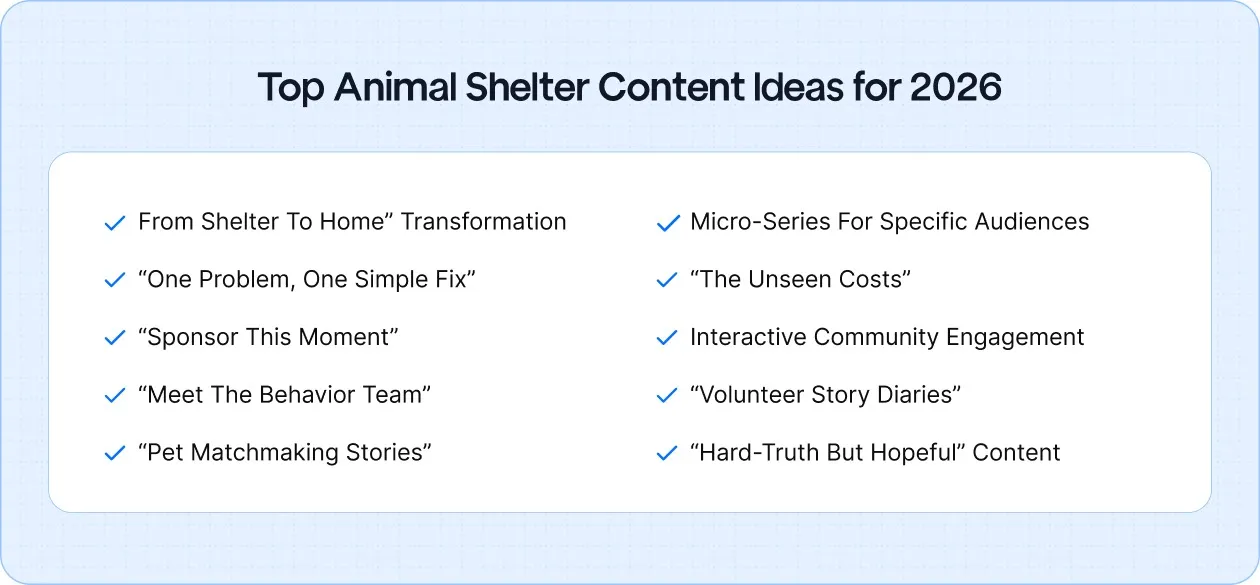
Below are fresh content ideas shelters can truly execute:
1. “From Shelter To Home” Transformation Storytelling Series
People don’t connect only to dogs or cats. They connect to before-and-after life change. This content idea focuses on the emotional transformation journey.
How to do it well:
- Tell what life was like before rescue
- Explain what changed at the shelter
- Show what life looks like in their new home
- End with: “This is what your support makes possible”
Formats you can produce:
- Photo carousel: intake ➝ recovery ➝ happy home
- Short vertical video story
- Side-by-side transformation before/after visuals
- Mini-documentary style clips for big cases
2. “One Problem, One Simple Fix” Pet Education Mini-Series
This is bite-sized, practical advice content that solves minor but stressful everyday problems pet owners face.
How to structure each content piece:
- Start with the problem in real-world language:
- Barking at delivery people
- Cat not using the litter box
- Puppy chewing furniture
- Share one simple, humane tip
- Keep tone supportive, not judgmental
- End with: “If this helps, share it, someone else is struggling too.”
Best formats:
- 30–45 sec videos
- Simple static graphics
- Short blog + short video paired
3. “Sponsor This Moment” Storytelling Content
Instead of generic donation appeals, build sponsorship content that allows donors to emotionally connect with specific moments they can fund.
What moments to create content around:
- First warm bath
- First soft bed
- First vet treatment
- First meal after neglect
- First time playing
How to execute:
- One short story per moment
- A very human emotional caption
- A simple “Sponsor this experience for the next dog like this”
4. “Meet The Behavior Team” Myth-Breaking Content
People assume animals in shelters are broken or dangerous. This content shows the effort, science, and kindness behind behavioral support.
What to show:
- Gentle training sessions
- Calm confidence-building exercises
- Enrichment activities
- Success progress clips
- Humor when appropriate
How to present:
- Short videos
- Before ➝ training ➝ improvement clips
- Friendly human narration
- Simple everyday language
5. “Pet Matchmaking Stories”
People love matchmaking stories. Show how thoughtfully you pair animals with homes rather than “first come, first served.”
What each content piece should include:
- Who the family was
- What they needed emotionally or practically
- The animal’s personality
- Why it was the perfect fit
- A happy final moment
Formats:
- Reel / TikTok explaining the match
- Photo series + story caption
- Blog-style hero adoption recap
6. Micro-Series For Specific Audiences
Different supporters consume different kinds of content. Create dedicated recurring series for specific groups.
Series ideas include:
For kids:
- “Kindness to Animals” bite-size lessons
- Fun pet facts
- Cartoon-style storytelling posts
For seniors:
- Gentle pet companionship stories
- Benefits of senior pet adoption
- Calm, emotional storytelling
For busy families:
- Low-maintenance pet care guides
- “Life with kids + pets” real stories
- Practical advice in under 60 seconds
7. “The Unseen Costs” Emotionally Honest Content
People think adopting costs money. They forget that saving animals already costs the shelter money long before adoption fees.
Create content that respectfully reveals:
- Medical treatment timelines
- Special case surgeries
- Rehab timeframes
- Medication expenses
- Emotional work from staff
Present it like:
- Real stories
- Calm, compassionate tone
- No guilt language
- Clear explanation of why donations matter
8. Interactive Community Engagement Content
Not everything should be emotional or educational. Some should make people participate.
Great interactive content ideas:
- “Name this pet” polls
- “Which personality fits you?” quizzes
- “Who wore it better: pet edition?” fun posts
- Guess the age / breed game
- Adoption anniversary shoutouts
9. “Volunteer Story Diaries”
Shelters rely on volunteers, and people love human-warming volunteer narratives. Instead of requesting for volunteers, inspire them to come forward.
Great content approaches:
- Why they joined
- First emotional experience
- Their favorite animal story
- What volunteering changed in their life
- Heartfelt closing thoughts
Formats:
- Blog-style storytelling
- Photo + heartfelt caption
- Mini-documentaries for bigger shelters
10. “Hard-Truth But Hopeful” Content
Sometimes you must talk about the difficult parts, but in a respectful, responsible, non-traumatic way.
Possible content:
- Why long-stay dogs deserve homes
- Why black cats and big dogs get overlooked
- What happens when shelters overflow (explained gently)
- Why responsible ownership matters
Structure:
- Explain gently
- Show facts
- Show real animals affected
- End with a hopeful action step
Turn Stories Into Impact
Create content that educates, builds trust, and gently guides people toward the next step.
How Other Marketing Channels Support Animal Services Content Marketing?
Content marketing rarely succeeds on its own in animal services. Even the most thoughtful guides, stories, or educational resources need supporting channels to help them get discovered, trusted, and revisited over time.
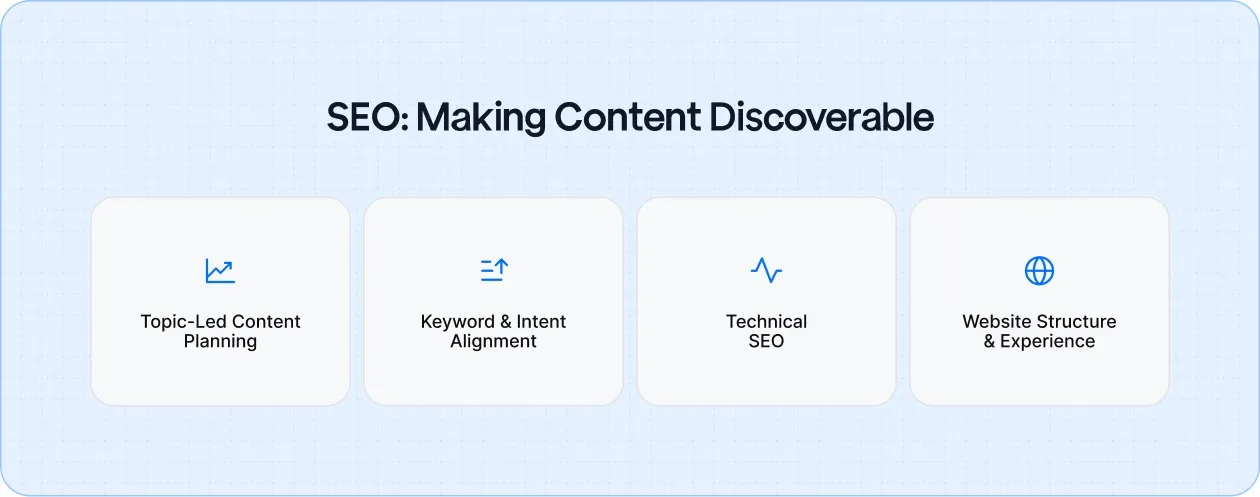
These channels do not replace content marketing. They extend its reach, reinforce its credibility, and help it perform different jobs at different stages of the supporter journey:
SEO: Making Content Discoverable
Search Engine Optimization is the backbone of animal services content marketing because it determines whether your content is ever seen by people actively looking for help, information, or services.
SEO supports content marketing by aligning what you publish with how people search.
- Topic-led content planning
- Content performs best when it answers specific, real questions.
- Instead of publishing isolated posts, content should be built around related topics that help readers understand a subject fully over time.
- Keyword and intent alignment
- SEO research helps identify what people are already looking for, not what organizations assume they want to know.
- Informational keywords support early learning, while local and intent-based searches support action later.
- Technical SEO
- Fast page load times matter for mobile users
- Ensures content is easy to access and read
- Clear navigation helps readers move between related resources
- Website structure and experience
- Content needs to be easy to find, read, and navigate.
- Clear internal linking between blogs, guides, FAQs, and resource pages helps both users and search engines understand relevance.
In animal services, SEO is less about ranking for broad terms and more about becoming a trusted source for specific, useful information that continues to attract the right audience long after publication.
Get Found When People Look for Help
Strengthen SEO so your content reaches adopters, donors, and pet owners at the right moment.
Digital PR: Using External Trust to Reinforce Your Content
Digital PR strengthens content marketing by borrowing credibility from respected platforms and publications. When animal services organizations contribute helpful insights to established animal welfare blogs, community sites, or industry publications, it validates their expertise.
Digital PR works best when content is treated as contribution.
- Publishing value-first content
- Articles, opinion pieces, or educational features should aim to inform, not fundraise or self-promote.
- Topics like animal care standards, adoption preparation, or community challenges tend to perform better than organizational updates.
- Building authority through backlinks
- When reputable sites link back to your content, it improves search visibility and signals trustworthiness.
- These links also guide new readers back to deeper resources on your site.
- Positioning the organization as a credible voice
- Over time, consistent PR placements help your content feel less isolated and more part of a wider conversation around animal welfare.
For animal services, digital PR helps content move from “our perspective” to “recognized expertise.”
Pay-Per-Click Advertising: Accelerating the Reach of High-Value Content
PPC advertising plays a supporting role by adding speed where organic content takes time. It is especially useful when animal services need immediate visibility for adoption drives, fundraising efforts, or urgent needs.
Paid advertising works best when it amplifies existing content.
- Using ads to distribute educational content
- Ads that lead to guides, explainers, or adoption resources tend to perform better than direct donation or adoption asks.
- Content lowers hesitation and prepares people before they act.
- Intent-based targeting
- Search ads perform best when aligned with clear intent, such as adoption-related queries or care-related questions.
- Social ads work well when targeting specific demographics, interests, or local communities.
- Balancing reach and quality
- PPC should filter for relevance.
- Clear messaging helps attract genuinely interested people.
In this way, PPC supports content marketing by putting the right content in front of the right audience at the right time.
Email Marketing: Turning Content Into Ongoing Relationships
Email marketing supports content marketing by providing continuity. Many people who engage with animal services content are not ready to act immediately. Email allows organizations to stay present without constant urgency.
Email works best as a content delivery channel.
- Reusing content strategically
- Blogs, guides, and updates can be shared through newsletters to extend their lifespan.
- This reinforces learning and keeps supporters informed.
- Segmented communication
- Different audiences respond to different content.
- Adopters, donors, and volunteers should receive content that reflects their interests and stage of involvement.
- Building trust through consistency
- Regular, calm communication builds familiarity.
- Over time, this increases confidence and long-term engagement.
Email turns one-time content consumption into an ongoing relationship.
Social Media and Influencer Marketing
Social media is often where animal services content gains initial visibility, but its real strength lies in distribution rather than ownership.
Social platforms help content travel further when used intentionally.
- Repurposing long-form content
- Blog posts and guides can be broken into smaller visual or text-based pieces.
- These snippets act as entry points to deeper resources.
- Leveraging influencer and community voices
- Pet influencers and community advocates introduce content to new audiences who already trust them.
- Collaborations work best when influencers share educational or story-driven content rather than direct appeals.
- Guest content and audience sharing
- Publishing content on high-traffic pet blogs or community sites exposes your work to aligned audiences.
- This also supports authority and SEO through shared visibility.
Social media amplifies content, but content gives social media something meaningful to share.
Video Marketing: Adding Depth and Transparency to Content
Video strengthens content marketing by showing what the written content explains. In animal services, seeing care, environments, and people at work builds confidence faster than polished messaging.
Video should support clarity, not replace substance.
- Educational and explanatory videos
- Short videos explaining adoption steps, care routines, or rehabilitation processes reduce uncertainty.
- These work best when paired with written resources.
- Behind-the-scenes transparency
- Showing daily operations builds trust and realism.
- This reassures supporters that animals are cared for responsibly.
- Long-term usability
- Videos can live on websites, blogs, email campaigns, and social platforms.
- One video often supports multiple pieces of content over time.
Video helps content feel tangible and human.
Partner Marketing: Strengthening Content Through Shared Credibility
Partner marketing supports content marketing by embedding it within trusted local and industry networks.
Animal services rarely operate in isolation. Partners help content reach people who already care.
- Collaborating with aligned organizations
- Veterinary clinics, pet stores, groomers, and local businesses often share the same audience.
- Co-created content feels more community-driven and less promotional.
- Cross-publishing educational resources
- Shared guides or care resources benefit all parties involved.
- This increases reach while reinforcing trust.
- Building long-term visibility
- Partnerships help content resurface repeatedly instead of fading after one campaign.
Partner marketing turns content into a shared community asset rather than a single-organization effort.
Conclusion
Content marketing in animal services is about doing the right things with clarity and purpose.
When content is planned around real questions, real concerns, and real decision-making behavior, it becomes guidance. It helps adopters feel prepared, donors feel confident, and volunteers feel connected to something meaningful.
Over time, that consistency builds trust, and trust is what sustains animal services work.
Ready to Make Content Work Together
Build a content-driven system that creates trust, clarity, and consistent engagement over time.


.webp)






.webp)


.svg)


