









Air duct cleaning is a business where attention is fragmented. Homeowners hear about it from HVAC techs, property managers, inspectors, online ads, and the occasional social post, often out of order and without context.
As a result, many air duct cleaning companies struggle not because people don’t need the service, but because their marketing doesn’t clearly connect the dots.
Good marketing in this space is about building steady visibility, explaining value in simple terms, and staying present across the places customers already spend time, especially on mobile.
In this blog, we break down how marketing for air duct cleaning businesses actually works today, which strategies matter most, how mobile marketing fits into the bigger picture.
What Is Marketing for Air Duct Cleaning Businesses?
Marketing for air duct cleaning businesses is the system that makes sure homeowners know you exist, understand what you do, and trust you enough to call when the need arises. Unlike emergency plumbing or HVAC repairs, duct cleaning is often preventative. That means customers rarely search with urgency unless they’ve already been educated or reminded of the problem.
Effective marketing bridges that gap. It builds awareness before demand peaks, reinforces credibility through proof and explanation, and ensures your business stays visible in local markets where decisions are made quickly and comparisons are shallow.
At its core, air duct cleaning marketing focuses on three things:
- Being discoverable when homeowners start researching indoor air quality, allergies, or home maintenance
- Explaining a service that most people don’t fully understand
- Staying present long enough for awareness to turn into action
This is why duct cleaning marketing works best when multiple channels support each other rather than operating in isolation.
How Mobile Marketing Strengthens Air Duct Cleaning Marketing?
Most searches, reviews, and comparisons happen on phones, often in short windows of attention. Mobile marketing strengthens air duct cleaning marketing by aligning with how homeowners actually discover, evaluate, and choose service providers today.
Mobile-first behavior shows up across the entire journey:
- Homeowners search on mobile when they notice dust, odors, or allergy symptoms
- They scan reviews, photos, and service descriptions quickly
- They prefer tap-to-call, short forms, and fast-loading pages
Mobile marketing supports this behavior by making every touchpoint easier to act on.
Key ways mobile marketing reinforces duct cleaning marketing:
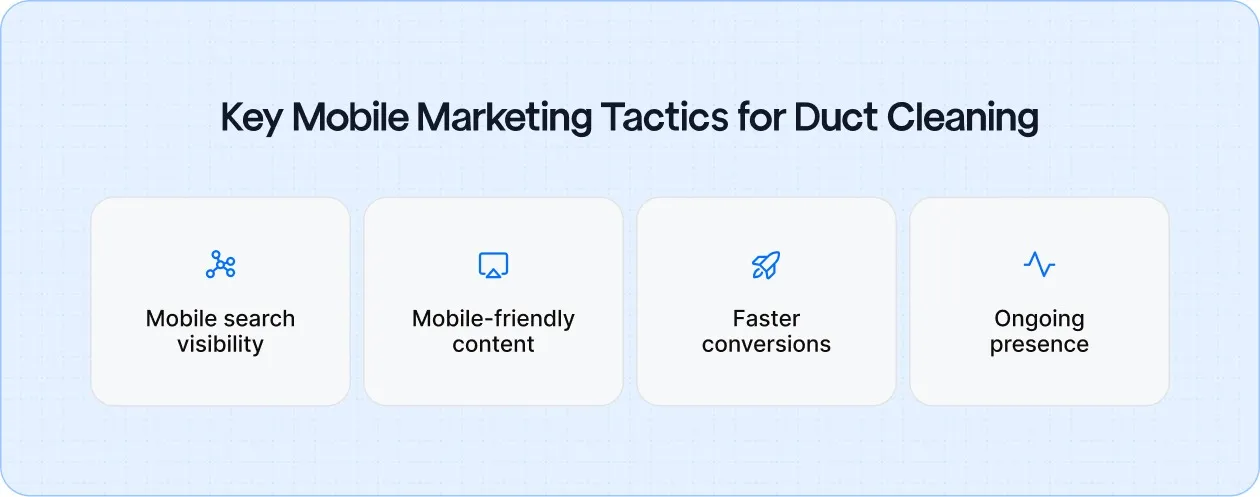
- Mobile search visibility: Local SEO, Google Business Profile listings, and Local Service Ads surface your business where mobile users look first
- Mobile-friendly content: Short videos, visual explanations, and simple comparisons help explain duct cleaning without overwhelming the viewer
- Faster conversions: Click-to-call buttons, mobile-optimized landing pages, and SMS follow-ups reduce friction between interest and booking
- Ongoing presence: Mobile ads, social feeds, and remarketing keep your business visible even when homeowners aren’t ready to book immediately
When marketing for air duct cleaning is designed with mobile behavior in mind, it becomes easier for homeowners to understand the service, trust the provider, and take the next step without hesitation.
How Can Air Duct Cleaning Businesses Effectively Market Their Value?
The strategies below reflect how successful duct cleaning companies build demand across different stages of awareness and intent.
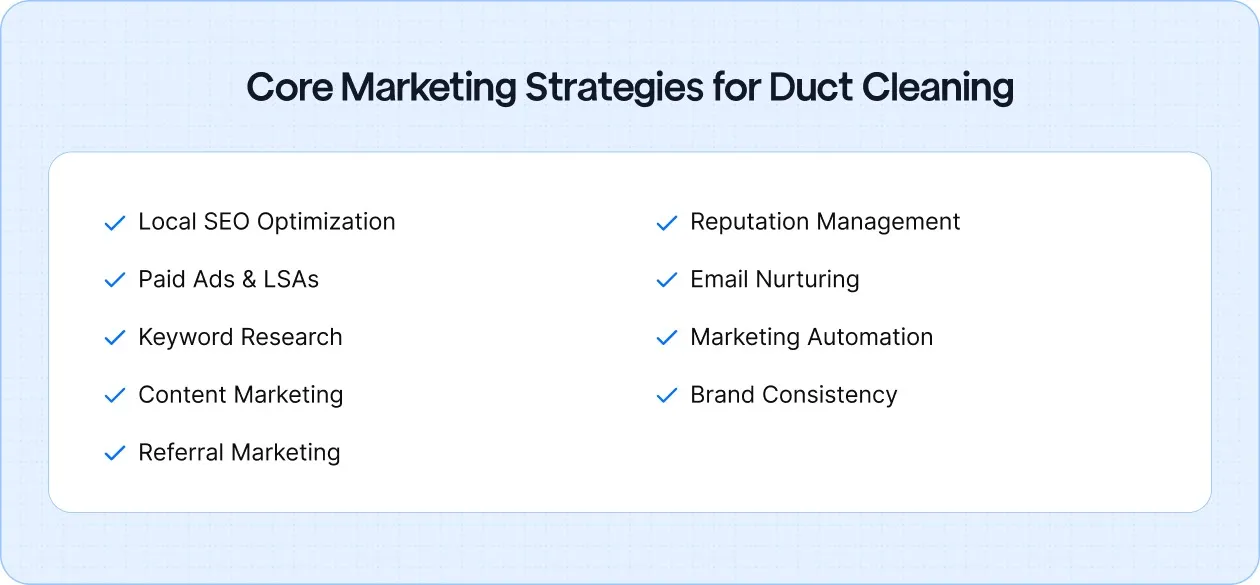
Core Marketing Strategies For Air Duct Cleaning Businesses
These strategies form the foundation of marketing for air duct cleaning businesses, regardless of device or platform. They focus on visibility, trust, and steady lead generation over time.
Local SEO And Google Business Profile Optimization
Local SEO determines whether your business is the first name people see when they search “air duct cleaning near me” or whether you get buried under competitors. Your map ranking, reviews, and Google profile often decide whether you get a call.
To make local SEO actually work:
- Fully optimize Google Business Profile with accurate services, real service areas, and correct categories so Google clearly understands what you do and where you operate, improving visibility in map packs and local searches.
- Upload real photos of equipment, team, and jobs, because homeowners trust real proof over stock images and Google rewards active, updated profiles with higher visibility.
- Collect reviews consistently and respond professionally, since reviews directly influence ranking, conversions, and trust. A steady flow of recent positive reviews beats old 5-star ratings every time.
- Use location-based keywords naturally on your website, service pages, and blogs so your content signals relevance for your city rather than competing nationwide for impossible terms.
A strong local SEO foundation means you rely less on ads, build credibility naturally, and create a pipeline of predictable leads.
Get Found at the Right Moment
Show up in local searches when homeowners start looking for air duct cleaning near them.


Paid Search And Local Service Ads (LSAs)
Paid ads help you capture the most motivated customers, the ones already searching and ready to book. For duct cleaning, these ads work especially well during allergy seasons, after renovations, or when HVAC demand spikes.
How to use paid ads effectively:
- Target high-intent keywords and problem-based searches, so ads appear when someone needs help now, not when they’re browsing casually. This improves both conversion rates and cost-efficiency.
- Use Local Services Ads to build trust instantly, because Google’s Guarantee badge reassures hesitant homeowners, making them more likely to contact you instead of a cheaper competitor.
- Focus on cost per lead and lead quality, instead of obsessing over impressions or clicks. If ads don’t convert into booked jobs, the channel needs optimization, not more budget.
- Ensure fast and professional call handling, since paid leads disappear quickly if nobody answers. Fast response time often matters a lot.
Paid ads become powerful only when your reputation, site, and communication are strong enough to back them.
Strategic Keyword Research
Keyword research ensures you’re targeting terms that actually bring revenue. For local service businesses like duct cleaning, the right keywords can mean the difference between qualified leads vs traffic that never books.
How to approach keyword research:
- Prioritize high-intent transactional terms, such as “HVAC duct cleaning,” “dryer vent cleaning,” or “commercial duct cleaning,” which signal buying intent rather than curiosity.
- Include problem-based and symptom keywords, like “dust coming from vents,” “musty smell from vents,” “allergies from AC,” because people search the problem before the service, capturing them earlier increases conversion likelihood.
- Build location-based keyword clusters, such as “air duct cleaning in [city],” and “[city] HVAC cleaning,” so you rank in multiple suburbs and towns, not just one primary area.
- Refresh keyword strategy every 6–12 months, since search behavior shifts with seasons, HVAC awareness trends, health awareness, and Google algorithm updates.
Strategic keyword planning gives direction to content, ads, local SEO, and website structure, instead of reacting to whatever comes your way.
Content Marketing And Education-Based Trust Building
Most homeowners don’t understand duct cleaning, when to do it, why it matters, or who to trust. Education removes fear and positions you as the expert.
Smart ways to use content:
- Create simple educational blogs and guides that explain warning signs, health benefits, and energy savings in plain language instead of technical jargon. This builds confidence and educates prospects before they call.
- Use FAQs to address anxiety and objections, especially around pricing, safety, timing, kids, pets, and allergies. When customers see their concerns answered, they hesitate less.
- Use visuals and short explanations instead of lengthy lectures, because customers want reassurance, not engineering lessons. Visual clarity earns trust faster.
Good content makes people more comfortable choosing you.
Explain the Service Simply
Create content that helps homeowners understand duct cleaning without confusion or technical overload.
Referral And Partner Marketing
Some of the best duct cleaning leads come from people who already have strong homeowner relationships. These referrals convert faster, argue less on pricing, and trust you more.
Who makes great referral partners:
- HVAC companies that don’t offer duct cleaning, because they already get service calls and can easily recommend you, rather than sending customers away.
- Property managers and maintenance firms, who manage multiple units and need a reliable, repeatable partner rather than switching providers each time.
- Realtors, restoration companies, cleaners, and renovation contractors, who constantly deal with dust, odors, and post-construction clean environments.
Partner marketing is about creating dependable relationships so your business stays “the recommended choice.”
Consistent Reputation Management
In home services, reviews are currency. Most homeowners check Google reviews before even clicking your site, and volume + recency matter more than a static old 5-star rating.
A real review strategy includes:
- Proactively asking for reviews after jobs, instead of hoping customers remember. Make it part of your closing workflow, not an afterthought.
- Responding to all reviews, positive or negative, with a professional tone. Google tracks responsiveness, and customers judge how you handle issues.
- Spreading reviews across platforms, not just Google, Facebook, Yelp, Trustpilot, and industry-specific directories strengthen overall credibility signals.
- Making reviews visible on your website, turning social proof into a real conversion asset.
A disciplined review engine becomes one of your strongest revenue drivers.
Email Marketing And Nurturing
Not everyone books duct cleaning immediately. Many people browse, compare, hesitate, or need internal approval at home. Email helps you stay present in their inbox without pressure.
How to use email effectively in duct cleaning:
- Use simple nurture sequences after someone requests a quote, visits your site, or downloads content. These emails should educate, reassure, and gently push toward booking.
- Send seasonal reminders, especially before peak allergy seasons, pre-winter HVAC prep, or post-construction cleaning periods, timing alone can convert undecided prospects.
- Use email to build trust, by sharing reviews, safety assurances, certifications, and transparent explanations.
- Keep email concise, helpful, and human, because people don’t want corporate-sounding newsletters; they want clarity and reassurance.
Marketing Automations
Air duct cleaning businesses lose leads because they miss calls, forget follow-ups, or move too slowly. Automation prevents human error from costing revenue.
Automation that actually helps:
- Missed-call text back, instantly messaging prospects when you can’t pick up, so you don’t lose urgent jobs to competitors.
- Auto-follow-up reminders for quotes, repeat cleaning cycles, and maintenance windows so you stay relevant and proactive.
- CRM workflows that track leads, tag sources, and show which channels convert best, helping you make smarter budget decisions.
- Integrated booking links, so prospects can schedule without back-and-forth communication delays.
Brand Consistency
Many duct cleaning businesses lose trust simply because they appear disorganized. Branding is about being recognizable, dependable, and professional everywhere someone encounters your name.
Real brand consistency looks like:
- Same tone, identity, and value message across ads, website, trucks, invoices, uniforms, and follow-ups so your business feels “established”.
- Clear service positioning, like health benefits, cleaner homes, energy efficiency.
- Reinforcing expertise visually, with certifications, equipment photos, real job proof, and team imagery rather than stock pictures.
A clean, consistent brand makes price conversations easier because perceived professionalism increases perceived value.
Be Easy to Trust
Position your business as professional, reliable, and worth calling before comparisons begin.
Mobile Marketing Strategies For Air Duct Cleaning Businesses
Most customers discover, research, and contact duct cleaners from their phones. Mobile behavior is fast, emotional, and urgency-driven, and your marketing must keep up with that reality.
Mobile-Optimized Website Experience
If your website is slow, confusing, or hard to use on mobile, you don’t just lose a visitor, you lose a paying job. Homeowners won’t try later. They will simply call someone else.
Key mobile priorities:
- Fast-loading, distraction-free pages, so visitors can quickly understand who you are, what you do, and why they should trust you, without waiting or getting lost.
- Click-to-call buttons immediately visible, because most mobile users prefer calling instead of filling out long forms. If they need to scroll to find your number, you’re losing sales.
- Clear navigation with visible services and areas served, so users instantly confirm you cover their location and can handle the job they need.
- Short, one-step contact forms, because nobody wants to complete a mini-application just to request pricing.
Mobile convenience directly impacts conversion rates, more than design, fancy copy, or branding.
Fix the First Impression
Make your website fast, clear, and easy to act on for homeowners searching on mobile.
SMS Marketing For Follow-Ups And Reminders
Texting works brilliantly in duct cleaning because it feels personal, fast, and simple. When used thoughtfully, it improves communication and drives more closed jobs.
How to use SMS correctly:
- Send appointment confirmations and reminders, reducing no-shows and making customers feel taken care of without requiring phone calls.
- Follow up on quotes casually, reminding customers without sounding pushy. A friendly check-in message often wins jobs lost to procrastination.
- Use seasonal or maintenance reminders sparingly, adding value instead of annoyance. Good timing creates repeat business naturally.
- Always provide a clear opt-out, so communication remains respectful and builds trust instead of irritation.
SMS boosts conversions, but only when used to support communication.
Mobile-Friendly Paid Ads And Extensions
Mobile users behave differently than desktop users. They skim faster, decide faster, and prefer instant contact instead of browsing deeply.
To optimize mobile ads properly:
- Use call extensions and location extensions, because they reduce friction and encourage immediate action instead of long browsing journeys.
- Write urgency-driven ad copy, addressing real problems like odors, allergies, dust buildup, or HVAC inefficiency.
- Run ads only during hours you can answer, since missed calls burn budget and damage reputation. Availability matters more than visibility.
- Test mobile-specific landing pages, built for quick decisions rather than long reading.
Click-To-Text And Live Chat Support
Mobile ads shouldn’t feel like desktop ads squeezed onto a smaller screen. They require their own strategy.
Best mobile social practices:
- Share short, real visuals of jobs, like dust extractions, before-and-after results, or behind-the-scenes work. Real proof beats marketing talk.
- Explain what customers are seeing in simple captions, so people actually understand why duct cleaning matters and when they should call.
- Post consistently but not aggressively, staying present without becoming repetitive.
- Highlight customer stories, problem-solving moments, and team professionalism, because people buy from businesses they trust.
Social authority strengthens brand memory so you’re the name they remember.
Missed-Call Text Back System
In home services, someone who calls a duct cleaner usually needs help now.
How to implement it effectively:
- Set up instant automatic texts like: “Sorry we missed your call! This is [Business Name]. Need duct cleaning help? Reply here and we’ll assist right away.”
- Use it during busy hours, after hours, and weekends, so you never truly “miss” a lead.
- Pair it with fast follow-up processes, so conversations turn into scheduled jobs.
This alone can recover thousands in revenue every year.
Measuring Your Air Duct Cleaning Marketing
Marketing only matters if it leads to real business outcomes. For air duct cleaning companies, success is less about big metrics and more about whether your efforts turn into calls, booked jobs, and repeat work.
A simple way to evaluate performance is to track how each channel contributes to customer action. This usually includes:
- Phone calls and form submissions from your website
- Leads coming from Google Business Profile, ads, or local listings
- Conversion rates from inquiries to booked services
Beyond lead volume, quality matters. Pay attention to:
- Cost per booked job, not just cost per lead
- Which campaigns bring homeowners ready to schedule, not just inquire
- Seasonal performance trends, especially before peak HVAC usage periods
Tools like Google Analytics, call tracking, and basic CRM reporting are often enough to identify what’s working and what needs adjustment. When marketing data is reviewed regularly, it becomes easier to double down on effective strategies and avoid spending time or budget on channels that don’t move the needle.
Conclusion
A well-structured marketing approach creates stability. It keeps your business visible between jobs, reinforces credibility before customers are ready to act, and makes it easier for people to choose you when the need arises.
Mobile marketing strengthens this system by meeting customers where they already spend their time and lowering friction at the moment of decision.
Over time, the businesses that win are the most consistent. Marketing becomes less about chasing leads and more about building a presence that customers recognize, trust, and return to when it matters most.
Ready to Build Steady Demand
Get a clear marketing plan that improves visibility, trust, and bookings over time.


.webp)




.webp)


.svg)


