


Home

Resources
Blogs
Blog
Get insights on AI, productivity, and the future of work.


Thank you! Your submission has been received!
Oops! Something went wrong while submitting the form.
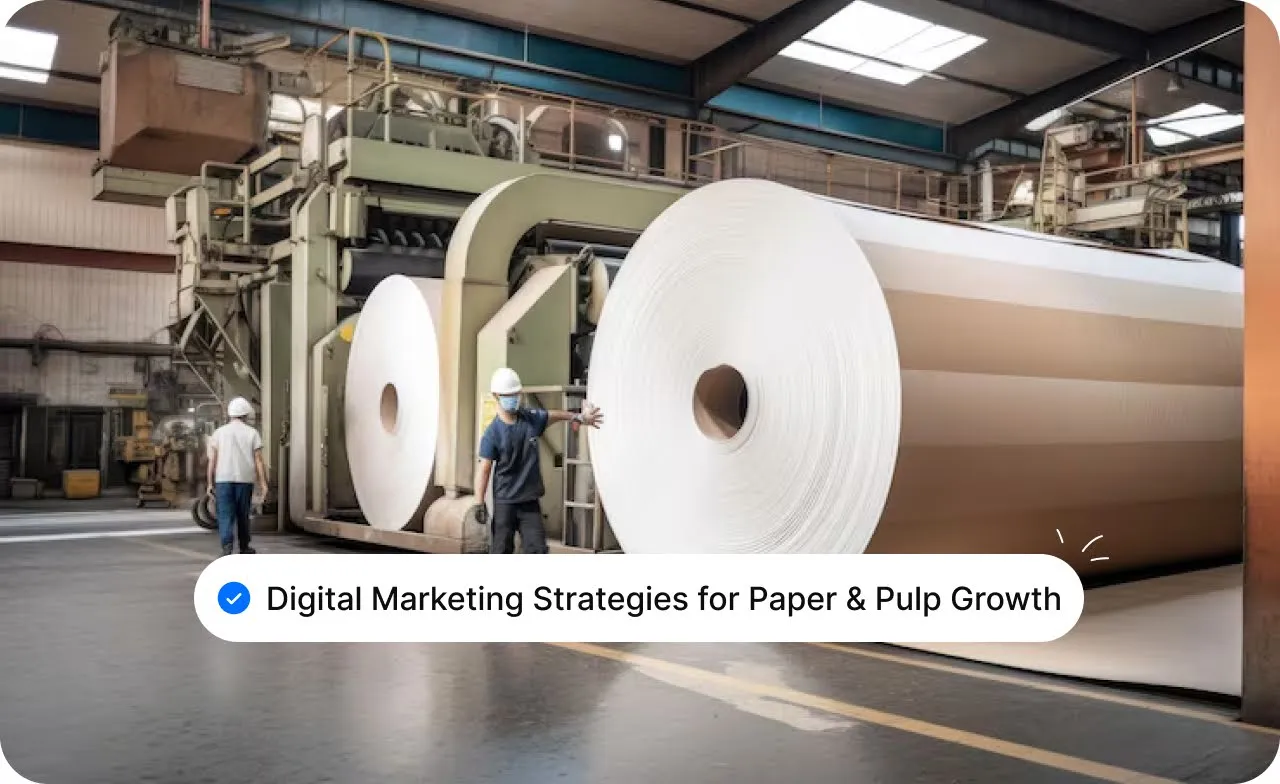
Digital Marketing
Sep 30, 2025
5 mins
Most Pulp And Paper Manufacturers Are Doing Digital Marketing Wrong - Here’s The Real Fix
Batul Beawarwala
Are you tired of investing in digital marketing strategies that seem to generate clicks but fail to bring in qualified leads for your mill?
In the paper and pulp industry, it's not enough to simply show up online. If you're still relying on generic PPC ads and social media posts, you're missing the mark.

Procurement teams, packaging buyers, and global distributors don’t want fluff; they want measurable results, like certified products, sustainability metrics, and on-time deliveries. If your digital presence doesn’t address these specific concerns, you risk losing deals before they even hit your inbox.
This guide is for paper and pulp manufacturers who want to stop wasting marketing spend and start attracting high-value leads that convert into long-term contracts.
Your Mill’s Website: The New Front Gate for Leads
Your mill’s website is where leads start coming in. It should work as your best sales engineer, giving potential buyers the exact details they need, right when they need them.
This is where your first impression is made, so getting it right is crucial.
Make sure your website is set up to provide easy access to the most important details for your customers:
- Specifications: List the technical aspects of your paper grades, weight, thickness, and fiber content, so that buyers can quickly view them. If it’s hard to find this info, they’ll look elsewhere.
- Certifications: Display sustainability certifications like FSC or PEFC, along with other industry certifications that buyers are looking for. These need to be clearly visible to prove your mill meets their standards.
- Compliance Documents: Make sure compliance certificates are easy to find, and let buyers download or view them with minimal effort.
- HS Codes & Pricing: International buyers often rely on HS codes to assess whether you’re a suitable supplier. Clear pricing and HS codes reduce barriers and speed up decision-making.
- MOQ (Minimum Order Quantity): Buyers need clarity on what you require for an order. Clearly state your MOQ to prevent delays and confusion in the decision-making process.
Why This Matters?
Procurement teams are looking for suppliers who make information easy to access and understand. If they have to search for key details like specs, certifications, or pricing, they may skip over your site for one that makes these things more straightforward.
Transparency on your website means buyers won’t waste time digging through pages. Instead, they’ll move forward with a quote or inquiry faster.
Speak Procurement's Language With Data-Backed Content
When procurement teams are searching for paper and pulp suppliers, they want to know exactly what they’re getting.
Tissue-based paper, linerboard, and recycled pulp all require an understanding of the specifications, compliance, and sustainability of the product.
Content that speaks directly to these needs can push your mill from the “maybe” list to the “preferred supplier” list.
What Should You Focus On?
- Grade Performance: Clearly outline the technical details of each product. Whether it’s strength, opacity, or smoothness, be precise. Let buyers quickly see if your product matches their exact requirements.
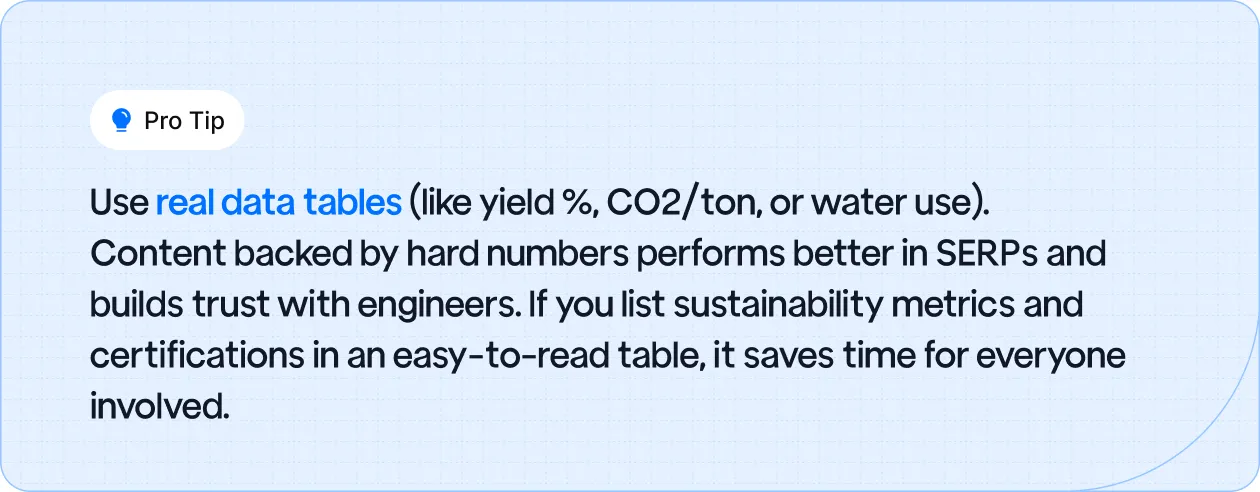
- Sustainability Data: Buyers in the paper and pulp industry are increasingly focused on environmental impact. Provide CO2 per ton, water use, and recycling percentages. Sustainability is becoming a key decision factor.
- Compliance Information: Highlight your certifications, like FSC for sustainable sourcing and ISO standards for quality management. Make it easy for buyers to access these credentials directly from your site.
Why It Works?
Procurement teams don’t have time to dig through pages to find product data. The easier you make it for them to assess your products, the quicker they can move forward with their decision.
Offering transparent, data-backed content shows you’re reliable and confident in your product’s performance, and this builds trust with potential buyers.
From Tissue to Kraft: Start Hunting Your Top 50 Buyers
Broad digital ads are rarely effective for the paper and pulp industry. In a sector where suppliers are often competing for large contracts and long-term partnerships, a scattershot approach won’t cut it.
Instead, Account-Based Marketing (ABM) targets specific high-value buyers with tailored campaigns that speak directly to their needs.
How ABM Helps Your Mill
- Highly Targeted Approach: Focus on the top 50 accounts that are most likely to purchase from your mill. This helps you allocate marketing resources more effectively.
- Tailored Proof Points: Different buyers will need different information. A tissue company will need details on product softness and absorbency, while packaging companies will focus more on strength and durability.

Each has a different focus, so your messaging needs to reflect that. For example, procurement cares about price and delivery, R&D is interested in performance and innovation, and sustainability teams want to see eco-friendly certifications and data.
Show Up on LinkedIn Before Buyers Shortlist Competitors
Procurement managers, supply chain professionals, and packaging experts are all actively engaging on LinkedIn. If you’re not putting your mill in front of them on this platform, you’re already behind.
LinkedIn has become a digital trade show booth where decision-makers go to source new suppliers.
How to Use LinkedIn for Maximum Impact
- Targeted Ads: Use LinkedIn's targeting features to ensure you're reaching the right decision-makers, including sustainability officers, procurement heads, and packaging engineers.
- Content Sharing: Post content that highlights your mill’s strengths, such as sustainability achievements, new product launches, and industry insights. Think of LinkedIn as your always-on exhibition space.
Buyer Search Terms You Should Own & How to Use Them
When potential buyers search for terms like “FSC kraft supplier” or “tissue base paper exporter,” your mill should be right there at the top of the search results.
These high-intent search terms are opportunities that shouldn’t be wasted on vague or irrelevant ads.
Here’s how to pick and use these terms effectively:
How to Use These Search Terms Smartly
- Set up a seed list: Start with 5–7 high-intent keywords and expand using a keyword tool like SEMrush or Ahrefs.
- Use match types smartly: Initially, use exact and phrase match to control your spend and traffic quality.
- Optimize landing pages: Each keyword should lead to a dedicated landing page with matching content. For example, if you target "recycled pulp supplier," create a page highlighting your recycled pulp grades and certifications.
- Layer retargeting: Visitors who clicked but didn’t convert can see case studies, sustainability dashboards, or lead prompts to remind them of your mill.
- Refine using real data: Track CTR (Click Through Rate), conversion rates, and cost per qualified lead. If a keyword isn’t generating quality leads, pause or refine it.
Emails That Keep Your Mill in Procurement Conversations for 12 Months
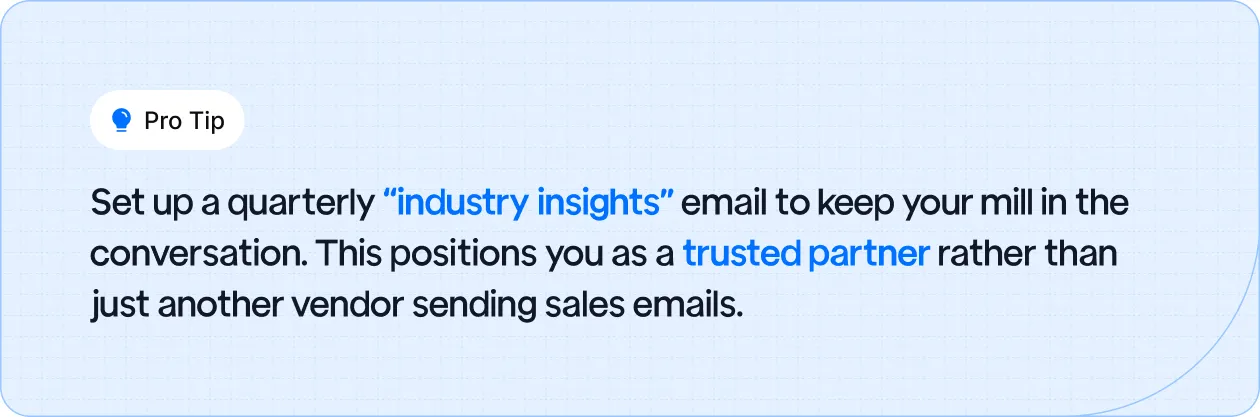
In the paper and pulp industry, deals often take months, sometimes even longer, to close. Automated, value-packed emails ensure your mill stays top of mind during long procurement cycles.
How to Nurture Leads Over Time
- Industry Insights: Share pulp price indexes, regulatory updates, and sustainability news to position your mill as a knowledge leader.
- Case Studies: Showcase your mill’s success stories, emphasizing your delivery reliability, product quality, and environmental impact.
Show Buyers Your Mill Without a Plane Ticket
In the paper and pulp industry, a buyer’s trust is often won long before they visit your mill. Virtual plant tours and quick compliance videos are effective tools that can demonstrate your quality and transparency, even when buyers are halfway across the world.
Buyers want to feel confident about your mill’s operations and product quality, but they can’t always afford or schedule an in-person visit. That's where virtual tours and video content come in.
How to Use Virtual Tours & Videos Effectively
- Showcase Key Processes: Give buyers a sneak peek into your mill’s most important processes, including fiber preparation, machine operations, and your environmental treatment plant (ETP). Highlight the steps where quality is controlled, and make them visible to potential clients.
- Compliance Transparency: Compliance videos, which walk through the standards your mill adheres to (e.g., FSC certifications, ISO standards), can ease procurement teams’ concerns about meeting regulations. Having these available on your site ensures buyers have quick access to the info they need without lengthy back-and-forths.
- Engage With a Call to Action: After watching your virtual tour, give buyers the option to request more information or schedule a follow-up call. This step keeps them engaged and encourages conversion from passive viewers to active buyers.
Prove You’re Green Without Sounding Like a Sales Pitch
Sustainability is a major purchasing factor for paper and pulp buyers. But greenwashing won’t get you very far.
What will work is hard data, like CO2 emissions per ton of product, water recycling rates, and detailed certifications.
How to Showcase Sustainability Effectively
- Transparency in Data: Buyers need the facts. Display your CO2 emissions per ton and water use in a simple, clear format. Buyers are increasingly expecting companies to show their sustainability efforts without fluff or vague claims.
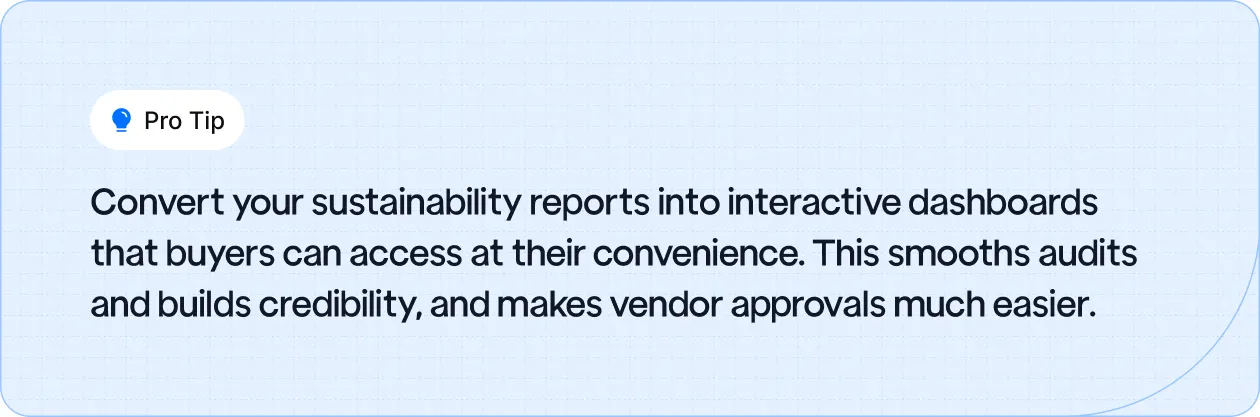
- Interactive Dashboards: A static report won’t engage anyone, but interactive sustainability dashboards allow buyers to access up-to-date info whenever they need it. This makes you appear reliable and transparent, two traits that every buyer looks for.
- Certifications Front and Center: Make sure your FSC and ISO certifications are displayed clearly, not buried in an "About Us" section. Buyers know these credentials matter and will appreciate the ease of access.
Don’t Hide From Global Buyers: Be Visible in Their Markets
Global buyers don’t have time to search for you; they expect you to be visible when they need you. The export markets for paper and pulp products are vast, but if your mill isn’t discoverable in Europe, the GCC, or Southeast Asia, you could be missing out on substantial opportunities.
Export SEO ensures your mill appears when buyers are searching for suppliers in their specific region.
How to Improve Global Visibility
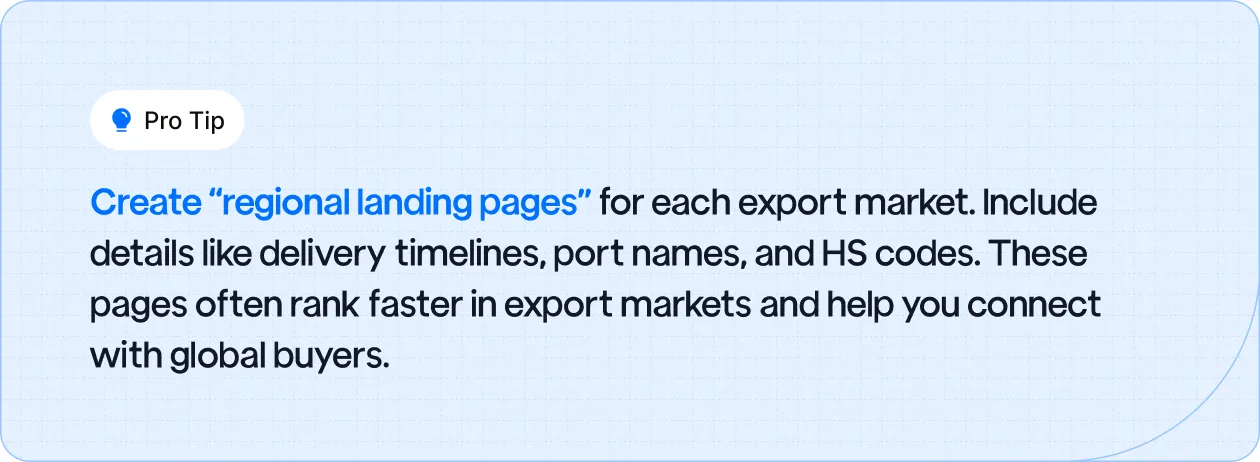
- Localized Landing Pages: For each target market, create localized landing pages that speak directly to those buyers. Include specific details like HS codes, delivery timelines, and port names to help them gauge whether your mill is the right fit.
- Target Regional Keywords: Use tools like SEMrush or Google Keyword Planner to research keywords specific to international markets. Localized SEO ensures your mill ranks for searches that matter in each country or region you’re targeting.
- Regional Certifications: If your mill has certifications that are region-specific (e.g., European Ecolabel, GCC Compliant), display those prominently on your localized pages. Buyers in those regions will trust your mill more if you’re already adhering to their standards.
Trade Shows Bring Leads, Digital Turns Them Into Contracts
Trade shows are a key way to meet potential buyers, but the real work begins after the event. Leads gathered from trade shows are typically unqualified until you nurture them through email marketing, case studies, and tailored follow-ups.
Digital marketing makes sure your mill doesn’t lose touch with leads once they’ve left the show floor.
How Digital Nurturing Works After Trade Shows
- Follow-Up with Valuable Content: After a trade show, don’t just send a generic “thanks for visiting” email. Send case studies, customer success stories, or sustainability reports that speak directly to the buyer’s needs.
- Automated Nurturing Sequences: Set up email automation that delivers timely and relevant content to leads based on their interest at the show. For example, a buyer who expressed interest in tissue paper can get case studies focused on tissue production.
- Clear Calls-to-Action: End each follow-up email with a strong CTA that encourages the buyer to schedule a call or request an RFQ. Keep it simple and direct.
The KPIs That Show If Your Mill Is Winning Online
Likes and impressions don’t pay the bills. Lead quality and conversion rates are the true indicators of how well your digital marketing is performing. Paper and pulp manufacturers need to track the KPIs that move the needle on sales.
Key KPIs to Track for Your Mill’s Digital Success
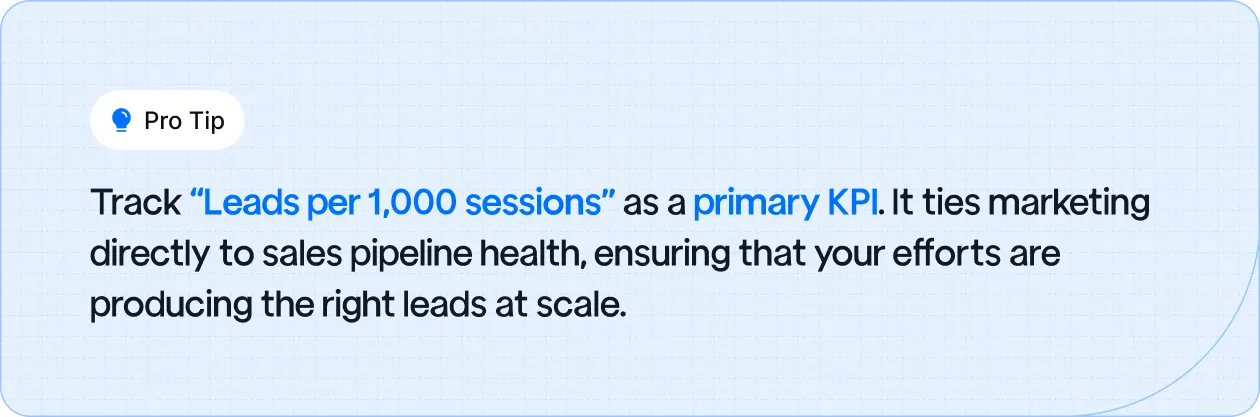
- Leads Generated: Focus on the number of qualified leads you’re generating through digital channels. RFQs, spec downloads, and demo requests should be your benchmarks.
- Spec Downloads: Track how many times buyers download product specifications or certifications. This shows their level of interest and intent.
- Win Rate: After a lead has been nurtured, measure the conversion rate to closed deals. This is the ultimate metric of success.
A 90-Day Digital Playbook Personalized for Paper & Pulp Manufacturers
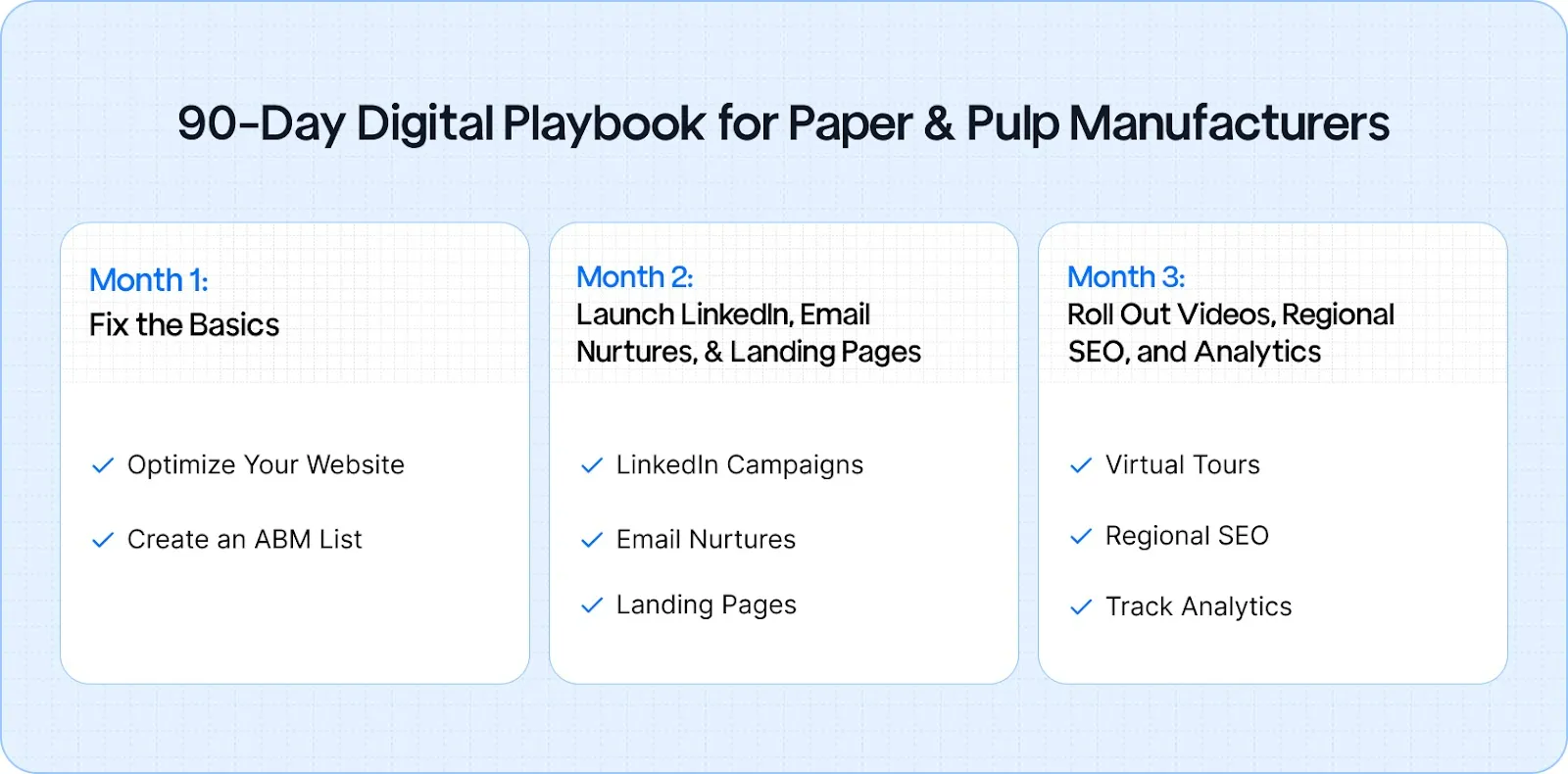
Getting your mill’s digital marketing efforts off the ground can seem overwhelming. But with a focused 90-day plan, you can quickly build momentum and start seeing results.
This roadmap is designed to help paper and pulp manufacturers grow their online presence and start generating leads fast.
First Month: Fix the Basics
- Optimize Your Website: Ensure that product specs, certifications, and MOQ info are front and center.
- Create an ABM List: Start identifying your top 50 accounts for a focused marketing push.
Second Month: Launch LinkedIn, Email Nurtures, and Landing Pages
- LinkedIn Campaigns: Start posting regularly with relevant content and engage with decision-makers.
- Email Nurtures: Set up automated email workflows that guide leads through your buying process.
- Landing Pages: Build region-specific landing pages for your key export markets.
Third Month: Roll Out Videos, Regional SEO, and Analytics
- Virtual Tours: Record and upload plant tours that showcase your mill’s capabilities.
- Regional SEO: Target export markets with tailored SEO content for better search visibility.
- Track Analytics: Monitor your website, LinkedIn, and email campaign performance and adjust accordingly.
From Invisible Supplier to Trusted Partner: The Next Step for Your Mill
Digital marketing has moved from a luxury to a necessity for pulp & paper mills. Without it, staying visible and trusted in an increasingly competitive marketplace is nearly impossible. It’s time to shift from being an invisible supplier to a trusted partner in your industry's eyes.
Gushwork understands the unique challenges you face. Let us help you implement these proven strategies without draining your resources.
Stop being invisible online. Start filling your pipeline with qualified leads.
Gushwork can help you get there.
Book a Consultation


FAQs
Q1. Why is digital marketing crucial for paper and pulp manufacturers?
A1. Digital marketing helps paper and pulp manufacturers stay visible and relevant to buyers who increasingly rely on online research before making decisions. It enables mills to showcase their capabilities, certifications, and sustainability efforts, improving lead generation and conversion rates.
Q2. How can SEO help paper and pulp manufacturers attract the right buyers?
A2. SEO ensures your mill ranks for targeted, high-intent keywords such as "FSC kraft paper supplier" or "tissue base paper manufacturer." This helps attract procurement managers and buyers who are actively looking for certified, sustainable, and high-quality products in your niche.
Q3. What is Account-Based Marketing (ABM) and how can it help paper and pulp mills?
A3. ABM targets specific, high-value buyers with personalized campaigns. For paper and pulp mills, ABM focuses on top accounts in industries like tissue manufacturing or packaging, allowing tailored messaging based on their needs, such as sustainability certifications or product performance.
Q4. How important is mobile optimization for paper and pulp manufacturing websites?
A4. Mobile optimization is essential, as many industrial buyers research suppliers on their smartphones or tablets. A mobile-friendly site ensures quick access to essential product information, technical specifications, and contact forms, improving lead conversion rates.
Q5. Can LinkedIn be effective for generating leads in the paper and pulp industry?
A5. Yes, LinkedIn is a powerful platform for reaching decision-makers in procurement, packaging, and sustainability. By sharing content about your mill’s capabilities, sustainability efforts, and product innovations, you can engage key industry professionals and increase visibility.
Q6. How can virtual tours help paper and pulp manufacturers build buyer trust?
A6. Virtual tours allow potential buyers to experience your mill's processes and capabilities without visiting in person. By showcasing your operations, certifications, and quality control processes, you build transparency and trust, which are crucial in securing long-term contracts.

Digital Marketing
Sep 30, 2025
5 mins
Top 10 Marketing Strategies for Metals Manufacturers to Stay Competitive
Batul Beawarwala
You know the frustration: pouring thousands into marketing campaigns only to attract leads who don’t understand the nuances of your metal fabrication business. Engineering teams aren’t impressed by flashy brochures; they care about weld integrity, CNC precision, and custom tolerances.
Procurement managers won’t respond to generic pitches; they need proof you can meet project specifications on time, every time. Traditional marketing tactics often leave you shouting into a void, wasting time and budget on contacts who will never convert.

This guide is for metals manufacturers who need a marketing strategy that targets the exact buyers who value precision, reliability, and technical expertise.
1. The Future Is Digital – Don't Get Left Behind
Digital disruption is no longer optional in metals manufacturing. Buyers now research suppliers online, compare multiple vendors, and often make decisions before ever speaking to a salesperson.
Companies embracing digital tools are more visible, more credible, and able to engage prospects faster.
Why It Works:
Digital marketing allows you to:
- Showcase your machinery, processes, and capabilities online
- Engage prospects in real-time through chat, demos, or webinars
- Automate parts of the sales funnel, saving your team time
Actionable Tip: Develop a digital marketing plan that includes:
- SEO optimized content to attract relevant buyers
- Social media campaigns highlighting projects and technical expertise
- Virtual tours or video demos showing your manufacturing process
2. Make Your Business Easy to Find with SEO
If buyers can’t find you online, they’ll find your competitors. SEO ensures your company appears in search results when decision-makers look for niche services like “CNC metal cutting” or “stainless steel fabrication.”
Why It Works:
- 87% of industrial buyers use search engines to learn about products they need.
- Appearing for highly targeted keywords attracts qualified leads actively seeking your services
Actionable Tip:
- Optimize website pages, blog posts, and product descriptions with industry-specific keywords
- Include location-based terms to capture regional prospects
- Make sure metadata (titles, headers, alt-text) aligns with search intent
Consider writing long-form content like “How to Reduce Material Waste in CNC Milling” or “Best Practices for Custom Steel Fabrication” to capture buyers searching for solutions, not just products.
3. Educate, Don’t Just Sell, to Build Trust
Engineers and procurement teams want actionable insights. Content marketing positions your company as a trusted advisor rather than just another vendor.
Why It Works:
- Builds credibility with technical audiences
- Provides practical solutions for common pain points
- Keeps your brand top-of-mind during long sales cycles
Actionable Tip:
- Case studies demonstrating real-world problem-solving
- Step-by-step guides addressing material selection or fabrication challenges
- Webinars that show techniques and process improvements
Use downloadable resources like checklists or CAD templates that engineers can reference during internal discussions. This subtly builds authority while giving prospects something useful.
Is your content failing to convert visitors into leads?
Enhance your lead-generation strategy with AI-powered solutions tailored for metals manufacturing.
Start Optimizing Now
4. Leverage Social Media to Build Real Connections
Social media is a tool for engagement, relationship-building, and thought leadership in metals manufacturing. LinkedIn, Twitter, and Instagram can help you reach the right professionals.
Why It Works:
- Positions your brand as a technical authority
- Engages engineers, buyers, and procurement teams directly
- Expands visibility beyond traditional sales channels
Actionable Tip:
- Share project updates, industry insights, and behind-the-scenes content
- Join and contribute to LinkedIn groups relevant to metals manufacturing
- Post technical tips, like “Optimizing Weld Quality for Structural Steel Projects,” to demonstrate expertise
Use short videos or infographics that visually explain processes; these are often shared internally within engineering teams, increasing your organic reach.
5. Is Your Website Working Hard Enough to Convert Visitors?
Your website is your digital salesperson, working 24/7. For metal manufacturers, they need to communicate their capabilities clearly and persuade visitors to take action.
Why It Works:
- First impressions often happen online
- Fast, mobile-friendly websites with clear CTAs improve conversion rates
- Project galleries and client testimonials build trust
Actionable Tip:
- Include RFQ forms, detailed product pages, and video demonstrations
- Optimize navigation and page speed to reduce friction
- Feature certifications like ISO or AWS to reassure technical buyers
Use case-specific landing pages targeting different buyer personas (e.g., procurement vs. engineering) to guide visitors to relevant content quickly.
6. Lead Scoring Lets You Focus on the Right Prospects
Not all leads are created equal. Lead scoring prioritizes prospects most likely to convert, helping your sales team focus on high-value opportunities.
Why It Works:
- Identifies high-potential leads
- Improves efficiency by reducing time spent on unqualified leads
- Strengthens trust by providing targeted follow-ups
Actionable Tip:
- Track email opens, website visits, and content downloads
- Assign scores to leads based on engagement and project potential
- Segment leads for personalized outreach campaigns
Integrate lead scoring with marketing automation so nurturing workflows can continue for lower-scoring leads without manual effort.
Also Read: The Best Marketing Methods for Small Manufacturers: 11 Proven Strategies for Success
7. Paid Ads Put Your Business in Front of the Right People
Paid campaigns like PPC and LinkedIn ads help metals manufacturers target the exact decision-makers searching for their services.
Why It Works:
- Reaches buyers who are actively evaluating options
- Focuses on specific industries, roles, and geographic locations
- Complements organic SEO for faster lead generation
Actionable Tip:
- Run targeted PPC campaigns on Google Ads or LinkedIn
- Use retargeting to re-engage visitors who didn’t convert initially
- Test ad creatives to find what resonates with your audience
Create landing pages specifically for ad campaigns to increase conversion rates and track ROI more accurately.
8. Keep Leads Hooked with Email Marketing
Email marketing nurtures prospects and maintains relationships over long sales cycles, which is critical in metals manufacturing.
Why It Works:
- Keeps your brand top-of-mind
- Provides ongoing education and value to buyers
- Supports loyalty and repeat business
Actionable Tip:
- Segment lists by role, purchase history, or project type
- Send targeted newsletters, product updates, and technical tips
Automate triggered emails based on user behavior, like downloading a brochure or attending a webinar, to maintain engagement without extra manual effort.
9. Trade Shows and Events Are Still Worth It
In-person interactions allow prospects to see your capabilities and build trust, something digital alone can’t achieve.
Why It Works:
- Strengthens relationships with buyers
- Demonstrates capabilities in real-time
- Generates high-quality leads
Actionable Tip:
- Exhibit at key industry events like FABTECH or MetalCon
- Use interactive demos and QR codes to collect contact information
- Follow up promptly with leads after the event
Combine live events with digital campaigns, share photos, video snippets, and post-event summaries to extend engagement beyond the show floor.
10. Let Analytics Show You What’s Really Working
Without data, marketing is guesswork. Analytics reveal which campaigns perform and where you should focus next.
Why It Works:
- Tracks website traffic, conversions, and engagement
- Highlights high-performing channels and content
- Guides strategic adjustments to improve ROI
Actionable Tip:
- Use tools like Google Analytics, HubSpot, or Marketo
- Regularly review metrics such as conversion rates, lead quality, and user behavior
- Optimize campaigns based on insights
Visualize data with dashboards to share insights across your team. Highlight top-performing campaigns, then double down on strategies that work.
Sales and Marketing Should Be a Team, Here’s Why
In many metals manufacturing companies, sales and marketing often work in silos, both aiming for growth but rarely speaking the same language.
Marketing might be producing campaigns, emails, and trade show content, while sales struggles to follow up on leads that weren’t qualified or nurtured properly. The result?
- Wasted time and resources
- Missed opportunities with qualified buyers
- Prospects receiving inconsistent messaging
Consider a typical scenario: an engineer is evaluating suppliers for a complex CNC project. Marketing sends a general newsletter highlighting your capabilities, while sales calls are made without knowing what the prospect has already seen.
Mixed messages confuse the buyer, making competitors who present a cohesive experience far more appealing.
When sales and marketing operate as a single unit:
- Marketing creates content that addresses the exact challenges buyers are facing.
- Sales provides real-time feedback from the field on which messages resonate and which don’t.
- Leads are better qualified, so sales spend time engaging prospects who are more likely to convert.
- The entire customer journey feels seamless, reinforcing your company as a reliable, knowledgeable partner.
Some manufacturers implement weekly alignment sessions:
- Marketing previews upcoming campaigns and content plans.
- Sales shares insights from client interactions and feedback on what works.
- Teams collaborate on lead scoring, nurturing plans, and follow-up strategies.
The long-term results are clear:
- Higher lead-to-conversion ratios
- Shorter sales cycles
- Stronger brand perception
- Prospects feel like they are engaging with a coordinated, expert team, not a fragmented organization
Make Sure Your Website Works on Any Device: It’s More Important Now Than Ever
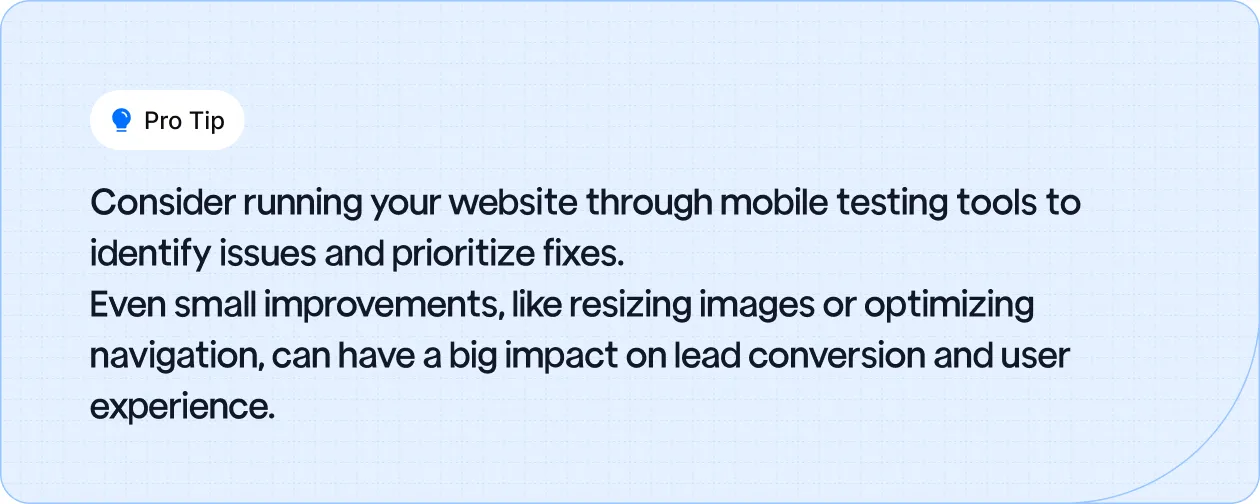
Today’s industrial buyers research suppliers on smartphones, tablets, and laptops. If your website doesn’t load correctly or display important content properly on mobile devices, you could be losing qualified leads before they even get in touch.
A mobile-optimized website signals professionalism and reliability to engineering and procurement teams who expect quick access to technical details, specifications, and contact options.
Key Reasons Mobile Optimization Matters for Metals Manufacturers:
- Buyers can view product catalogs, project galleries, and technical specs from anywhere
- Easy-to-use forms and CTAs make it simple to request quotes or additional information
- Faster load times reduce bounce rates and keep potential clients engaged
What to Focus On for a Mobile-Friendly Experience?
- Load Speed: Pages should load in 2-3 seconds to prevent frustration
- Navigation: Menus, buttons, and links should be easy to click on smaller screens
- Forms: Ensure RFQs and contact forms are accessible and simple to fill out
- Content Display: Technical diagrams, images, and videos should scale correctly
Turning Your Marketing Strategy into a Long-Term Competitive Advantage
The future of metals manufacturing marketing is embracing a digital-first mindset, building meaningful relationships, and making data-driven decisions that generate measurable results.
Success comes from engaging the right buyers at the right time, providing educational content, and ensuring every interaction reflects your expertise.
Many manufacturers feel frustrated with wasted ad spend, scattered campaigns, and unqualified leads that never convert. A DIY approach to marketing isn’t enough to compete in today’s digital and technical landscape.
Gushwork understands these challenges and integrates AI-powered tools to streamline campaigns, optimize lead nurturing, and drive measurable growth.
Ready to implement these strategies for your metals manufacturing business?
Book a consultation with Gushwork today and take the first step towards marketing success.
Book a Consultation
FAQs
Q1. What is marketing for metals manufacturing, and why is it different from general B2B marketing?
A1. Marketing for metals manufacturing focuses on reaching technical buyers like engineers, procurement teams, and project managers. Unlike generic B2B marketing, it emphasizes demonstrating technical expertise, showcasing custom fabrication capabilities, and addressing complex specifications, tolerances, and project deadlines.
Q2. How can metal manufacturers generate qualified leads without wasting budget on unqualified prospects?
A2. By combining targeted SEO, lead scoring, and content marketing, metals manufacturers can attract prospects who actively search for niche services like CNC cutting or custom steel fabrication. Prioritizing high-value leads ensures sales teams focus on prospects most likely to convert, reducing wasted ad spend.
Q3. Which digital channels are most effective for metals manufacturing marketing?
A3. Key channels include:
- SEO & Content Marketing: For engineers searching for technical solutions online
- LinkedIn & Industry Social Platforms: To engage decision-makers
- Email Marketing: To nurture leads over long project-based sales cycles
- Paid Ads (PPC & Retargeting): To reach high-intent prospects efficiently
Q4. How important is a mobile-optimized website for metals manufacturers?
A4. Extremely important. Engineering and procurement teams often research suppliers on mobile devices. A responsive website ensures easy access to product specs, project galleries, RFQs, and technical resources, which improves lead conversion and strengthens credibility.
Q5. Can trade shows still drive leads in the digital age for metal fabrication businesses?
A5. Yes. Trade shows like FABTECH or MetalCon allow manufacturers to demonstrate capabilities in real-time, build trust with buyers, and collect high-quality leads. Combining in-person events with digital follow-ups extends engagement and maximizes ROI.
Q6. How can metal manufacturers measure the effectiveness of their marketing campaigns?
A6. Analytics tools like Google Analytics, HubSpot, or Marketo help track website traffic, lead conversions, campaign performance, and content engagement. Regular review of these metrics allows manufacturers to optimize campaigns, refine strategies, and improve ROI.
Digital Marketing
Sep 29, 2025
5 mins
7 Marketing Strategies Every Welding Manufacturer Needs to Beat the Competition and Scale Fast
Batul Beawarwala
Have you ever noticed how people only call you after they have already decided you "look right" for the job?
That choice rarely comes from a single conversation anymore. It comes from what they see when they search your company name, browse your website, or scan your welding capabilities online. They judge the quality of your work before they hear your voice. And for many welding manufacturers, that moment is where good opportunities quietly slip away.
Marketing in welding is about making your skill, precision, and reliability visible to buyers who care about getting it right the first time.
This guide walks through how welding manufacturers can build marketing that boosts sales, strengthens reputation, and supports long-term scale.
How Welding Manufacturing Marketing Actually Works?
Marketing for welding manufacturers works best when it mirrors how your buyers think and decide. They are not looking for slogans. They are looking for confidence. They want to know you understand their specs, their timelines, and their quality expectations.
Strong welding marketing focuses on a few core realities:
Buyers Want To See Proof
Finished projects, weld quality, process documentation, and real applications carry more weight than sales language.
Decision-Makers Value Clarity Over Creativity
Clear explanations of your capabilities, materials, and standards eliminate hesitation.
Visibility Shapes Trust
The easier it is to find and understand your expertise, the more likely buyers are to shortlist you.
Consistency Builds Reputation
When your messaging matches your actual work, it strengthens belief in your reliability.
When marketing for welding manufacturing reflects the same care and precision you apply on the shop floor, it creates a steady flow of clients who already respect your work before the first conversation even begins. That is what turns marketing from an afterthought into a growth engine for welding manufacturers.
Why Marketing is Your Secret Weapon in the Welding World?
The real challenge in running a welding shop is getting the right customers to notice your business.
Many welding manufacturers still wait for referrals or repeat contracts, but buyers today search online, compare options, and choose based on credibility.
If your company doesn’t appear in those searches, you lose opportunities.
Common Struggles in Customer Acquisition
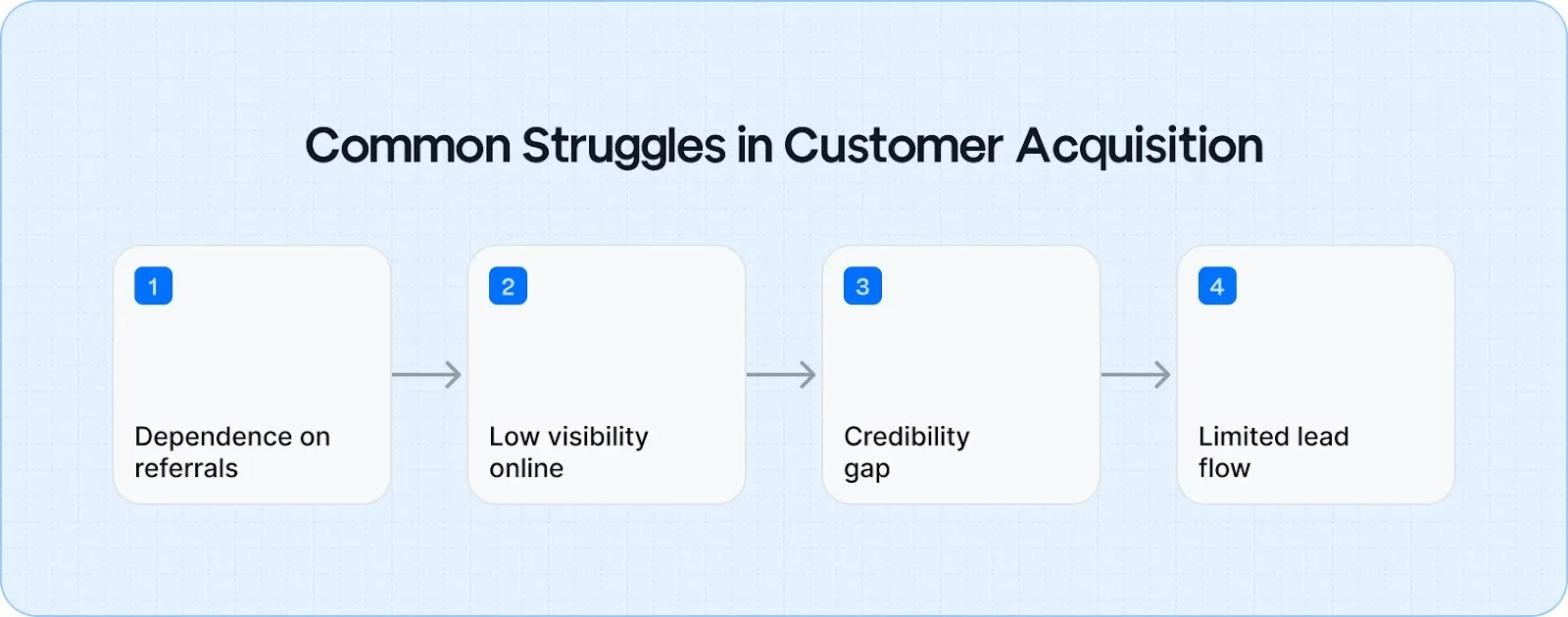
Welding manufacturers face hurdles when it comes to winning new business:
- Dependence on referrals: Work slows down when old contracts end.
- Low visibility online: Competitors appear in searches while your shop remains hidden.
- Credibility gap: Buyers look for proof like certifications, case studies, or technical expertise.
- Limited lead flow: Without digital outreach, inquiries remain unpredictable.
The Numbers That Prove the Impact
Marketing is more than a support function; it drives measurable results for manufacturers.
- 70% of companies report positive ROI from content marketing, according to a report by Content Marketing Institute.
- Content marketing costs 62% less than traditional marketing while generating three times the number of leads.
- 73% of B2B marketers use content marketing as part of their marketing strategy.
8 Marketing Strategies to Strengthen Your Welding Manufacturing Business
The shop floor isn’t the only place business happens anymore; buyers start their search online. If your welding business isn’t visible there, you’re losing contracts before you even get a chance to bid.

Building a strong online presence ensures potential clients can find you, trust you, and contact you.
SEO (Search Engine Optimization) for Welding Businesses
Search engines are often the first stop for buyers looking for welding services. With the right SEO approach, your shop can show up at the top when they search.
- Keyword strategy: Focus on welding-specific keywords that match what buyers type, like “industrial welding services” or “pipe welding contractors.”
- On-page optimization: Use service descriptions, project showcases, and certifications to highlight your capabilities clearly.
- Local SEO: Claim and update your Google Business Profile to attract nearby clients searching “welding near me.”
- Pro tip: Adding location-based keywords like “structural welding in Pune” or “fabrication shop in Texas” makes you stand out locally.
- Link building: Earn trust by getting mentioned in industry directories or supplier listings.
Improve Your Welding SEO
We optimize your website so welding buyers can find your services when they search.
Enhance Your SEO Approach
Pro Website Design
Your website is often the first impression of your shop. A cluttered, outdated site can turn buyers away even before they see your work.
- Key features: Keep it simple, clear, and structured so clients can quickly see what services you provide.
- Mobile optimization: More than half of B2B searches now happen on phones. If your site doesn’t load well, you’re missing those leads.
- Example: One welding company redesigned its website with project galleries and certifications upfront and saw a significant increase in RFQ submissions within three months.
Once your shop is visible online, the next step is amplifying your brand where clients spend their time, social media.
Social Media for Networking & Sales
Different platforms serve different goals. Understanding what to post and where helps you reach the right people.
LinkedIn: Ideal for B2B connections. Use it to connect with plant managers, procurement officers, and contractors who often need welding services. Share case studies, project highlights, or technical know-how to position your shop as an authority.
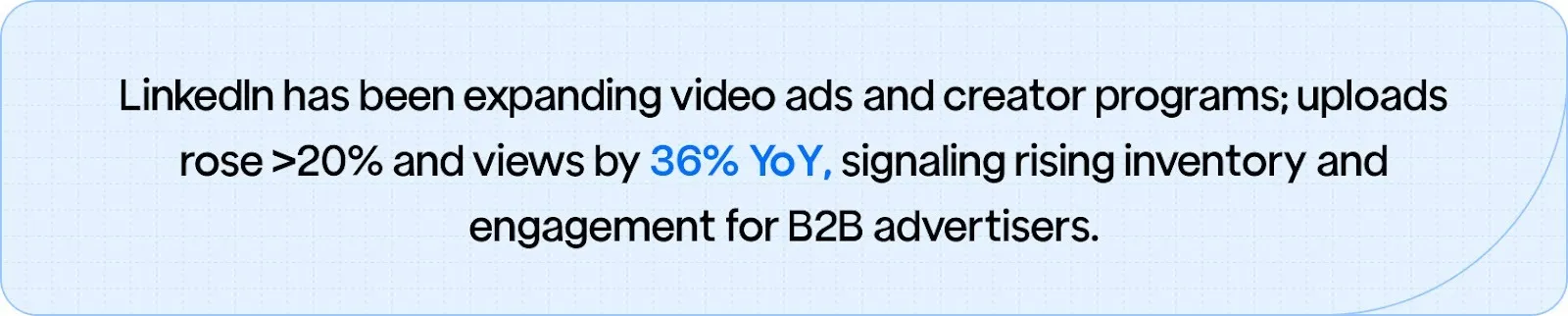
- Facebook & Instagram: Perfect for visual storytelling. Photos of finished projects, short reels of welding in action, and client testimonials build credibility with both individuals and small businesses.
- YouTube: A great way to showcase your process. Tutorials, demos, or behind-the-scenes shop tours prove your expertise and can rank in Google searches, giving you long-term visibility.
- Example in action: A welding shop shared Instagram Stories of a large custom fabrication project. Within a week, three new clients reached out—proof that showing your process can directly generate business.
Content Strategy for Social Media
Consistency and authenticity beat fancy production every time. Buyers want to see real work, real results, and real people.
- Content that connects: Share success stories, highlight client testimonials, or post time-lapse videos of complex welds being completed. These give prospects confidence in your capabilities.
- Hashtags & trends: Industry hashtags like #weldingservices or #fabrication help buyers discover your content. Jumping on trending formats (like quick reels or shorts) can amplify reach.
- Paid ads: When organic reach slows down, targeted ads can put your services directly in front of buyers in your region or industry. For example, you can run a campaign targeting “manufacturing plant managers” within 50 miles of your shop.
Build Content That Shows Your Expertise
Let’s create clear, technical content that demonstrates your welding capabilities and builds buyer confidence.
Strengthen Your Content Strategy
Social media builds visibility and trust. In an industry where many buyers choose based on reputation, your online presence can act as proof of quality.
With social media making your brand visible and trusted, the next step is to drive faster, more targeted results through paid advertising.
Content Marketing Strategies for Growth
Think of content marketing as your shop’s steady welding arc; it builds trust slowly, but the bond it creates lasts for years. Unlike quick ads, content keeps working long after you’ve posted it.
Ways to make it work:
- Blogs & case studies: Write posts like “Why Custom Welding Solutions Are Key for Manufacturing Success” and back them up with case studies from real projects.
- Ebooks & whitepapers: Offer guides like “The Ultimate Checklist for Industrial Welding Projects” in exchange for email sign-ups.
- Email marketing: Send newsletters with project updates, seasonal offers, or “shop tips” that keep you top-of-mind.

Content builds authority. Now, let’s talk about how to turn those readers into loyal, paying clients.
Turning Your Welding Services Into Business Relationships
Winning a job is one thing. Turning that job into a long-term contract is where the real profit lies. The strongest welding shops treat relationships like assets.
Here’s how to make it happen:
1. Customer service excellence: Personalize your follow-up. Example: one welding shop turned a one-off pipe repair into a 3-year contract simply by checking in regularly.
2. Testimonials & reviews: Nothing beats real client feedback. Ask for reviews on Google or LinkedIn and proudly display them on your site.
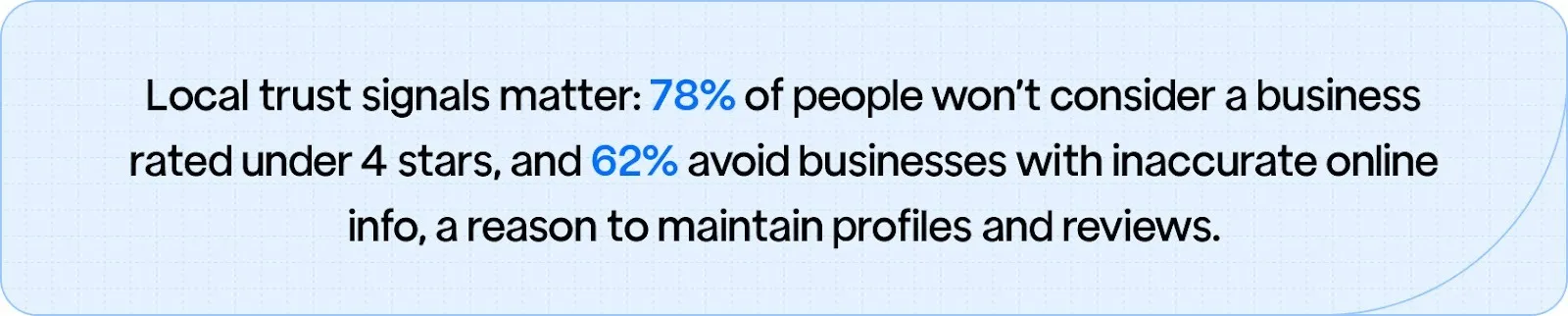
3. Loyalty programs: Reward repeat business. Offer referral discounts or early access to scheduling slots for top clients.
With stronger relationships, you’ll want to track what’s really working behind the scenes.
Tracking Your Welding Marketing Success
Think of analytics like the gauges on your welding machine. They tell you if things are on track or if something needs adjusting.
Metrics to track:
- Website traffic: Are more buyers visiting your site?
- Leads: How many RFQs or inquiries come in each month?
- ROI: What revenue can you connect directly to marketing spend?
Tools to use:
- Google Analytics for website performance.
- Social media insights for post engagement.
- Email marketing stats (open rates, clicks).
Once you know what’s working, it’s time to shift gears and bring in fast results with PPC ads.
Pay Per Click (PPC)
Sometimes you can’t wait months for SEO to kick in. That’s where PPC steps in; it’s like striking an arc that produces instant heat.
Your best options:
- Google Ads: Capture local buyers searching “welding repairs in [Your City].” One small shop used this tactic and doubled inquiries in a month.
- LinkedIn Ads: Target B2B buyers like plant managers or contractors who need industrial welding partners.
- Remarketing: Show tailored ads to visitors who viewed your site but didn’t contact you.
PPC brings fast leads, but to play the long game, your content is what keeps your business growing year after year.
Sustainable Growth for Your Welding Business
Success in welding is about making sure the right clients can find you, trust you, and choose you over the competition.
The shops that grow sustainably are the ones treating marketing as a strategy, not an afterthought.
If you’re still relying on referrals or waiting for calls to come in, you will keep struggling with inconsistent jobs and wasted time on unqualified leads.
Ready to Boost Welding Sales?
Get Gushwork’s expert support to build a marketing strategy that increases visibility and drives qualified inquiries.
Book A Consultation
Digital Marketing
Sep 29, 2025
5 mins
2025’s Seven Most Powerful Lead Gen Platforms Every Construction Manufacturer Should Be Using
Batul Beawarwala
Construction product manufacturers often rely on relationships, referrals, and long sales cycles. But today’s buyers look online first. Contractors, architects, and project managers want quick answers, clear specs, and a shortlist of suppliers they can trust. If your products don’t show up where they search, they move on to whoever does.
That’s where the right lead generation platforms help. They put your products in front of active buyers, connect you to real projects, and give you steady visibility without adding more work to your plate. For manufacturers trying to grow in a competitive market, these platforms make a real difference.
In this blog, you’ll find seven platforms that consistently help construction product manufacturers reach qualified buyers and create more dependable lead flow.
What Lead Generation Means for Construction Product Manufacturers?
Lead generation in the construction space is all about getting your products in front of the people who make project-driven decisions. Instead of chasing broad audiences, you focus on reaching out to specific buyers who are actively researching materials, equipment, or solutions for upcoming jobs.
For manufacturers, strong lead generation:
- brings in better inquiries
- cuts down on time spent chasing cold prospects
- helps you stay visible in a market where timing and trust matter
7 Platforms That Help Construction Manufacturers Reach the Right Buyers
These top platforms are built around how real construction buyers search for products. They gather project data, list trusted suppliers, and make it easier for contractors, architects, and builders to compare options. Each one gives manufacturers a practical way to stay visible, get in front of active projects, and bring in leads that are already warmed up.
1. Gushwork
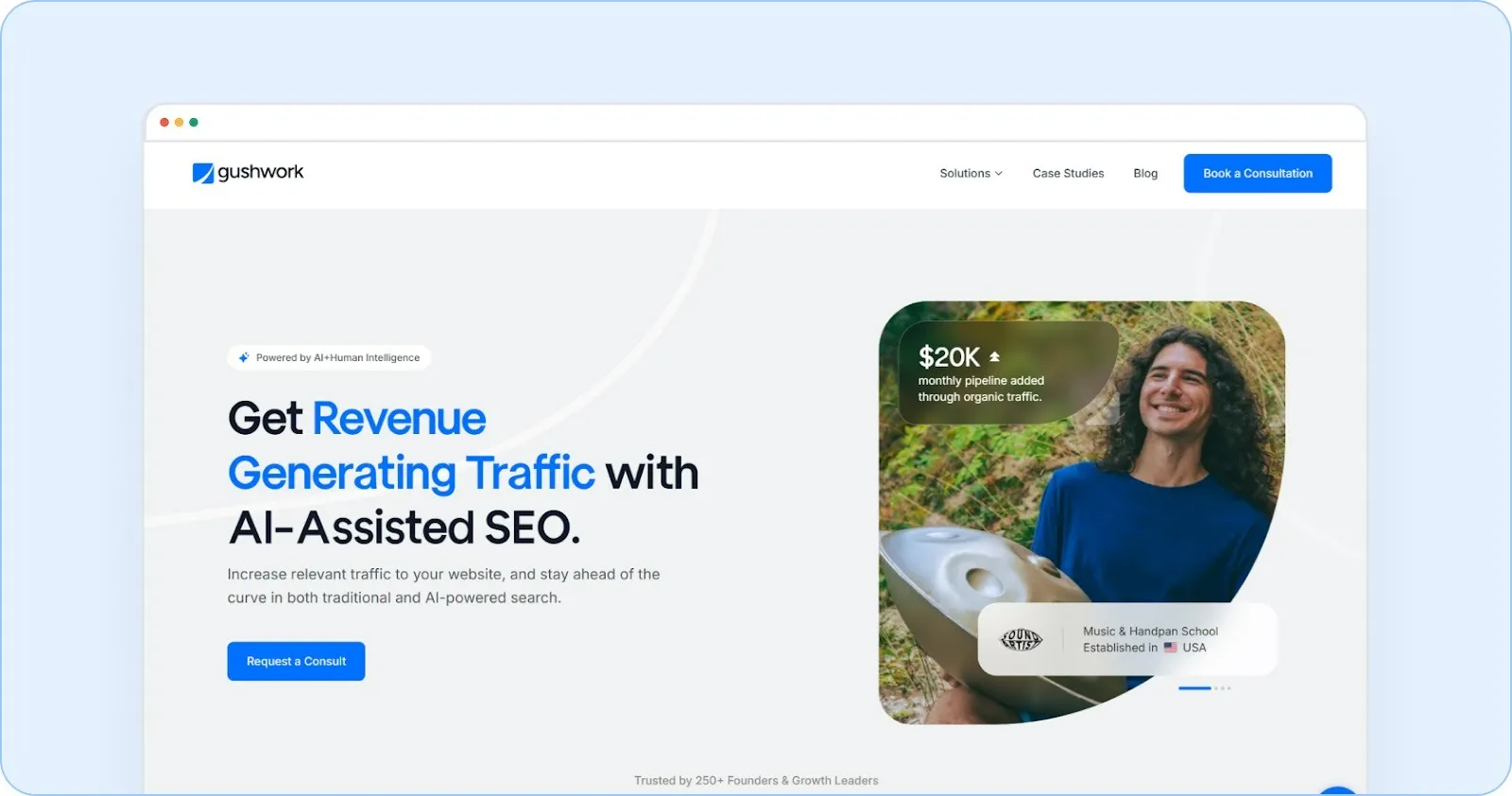
Gushwork offers a fully integrated system that incorporates AI to streamline the lead generation process for construction product manufacturers.
Unlike traditional methods that rely on manual searching or generic lead lists, Gushwork uses advanced AI to automate lead discovery, qualification, and outreach, ensuring that manufacturers connect with the most relevant leads based on project data.
Key Features:
- AI-Driven Automation: Gushwork uses AI to search, qualify, and automate outreach to the best leads for your business, saving you significant time and resources.
- Advanced Filtering: With project-specific filtering, Gushwork ensures that you reach leads who are actively looking for construction products similar to yours.
- Seamless CRM Integration: The tool integrates with your CRM, providing real-time updates, tracking, and seamless management of your leads, helping you convert prospects faster.
- Predictive Analytics: Gushwork’s predictive capabilities help you focus on leads that are most likely to convert, ensuring that your sales efforts are targeted and efficient.
What’s in it for the Manufacturers?
- Scalable Lead Generation: As your business grows, Gushwork grows with you, scaling its lead generation efforts to match your needs.
- Reduces Manual Work: Automates repetitive tasks, freeing up your sales team to focus on closing deals rather than sifting through low-quality leads.
- High-Quality Leads: Targets only those leads that are aligned with your business goals, improving your chances of conversion.
Strengthen Your Visibility on the Right Platforms
We will help you find out where your ideal buyers search and how to show up ahead of competitors.
Improve My Visibility
Use Case:
Construction product manufacturers can rely on Gushwork to connect with qualified contractors, architects, and developers who are actively searching for construction products, ensuring they find the right leads without wasting time on irrelevant contacts.
2. Building Radar
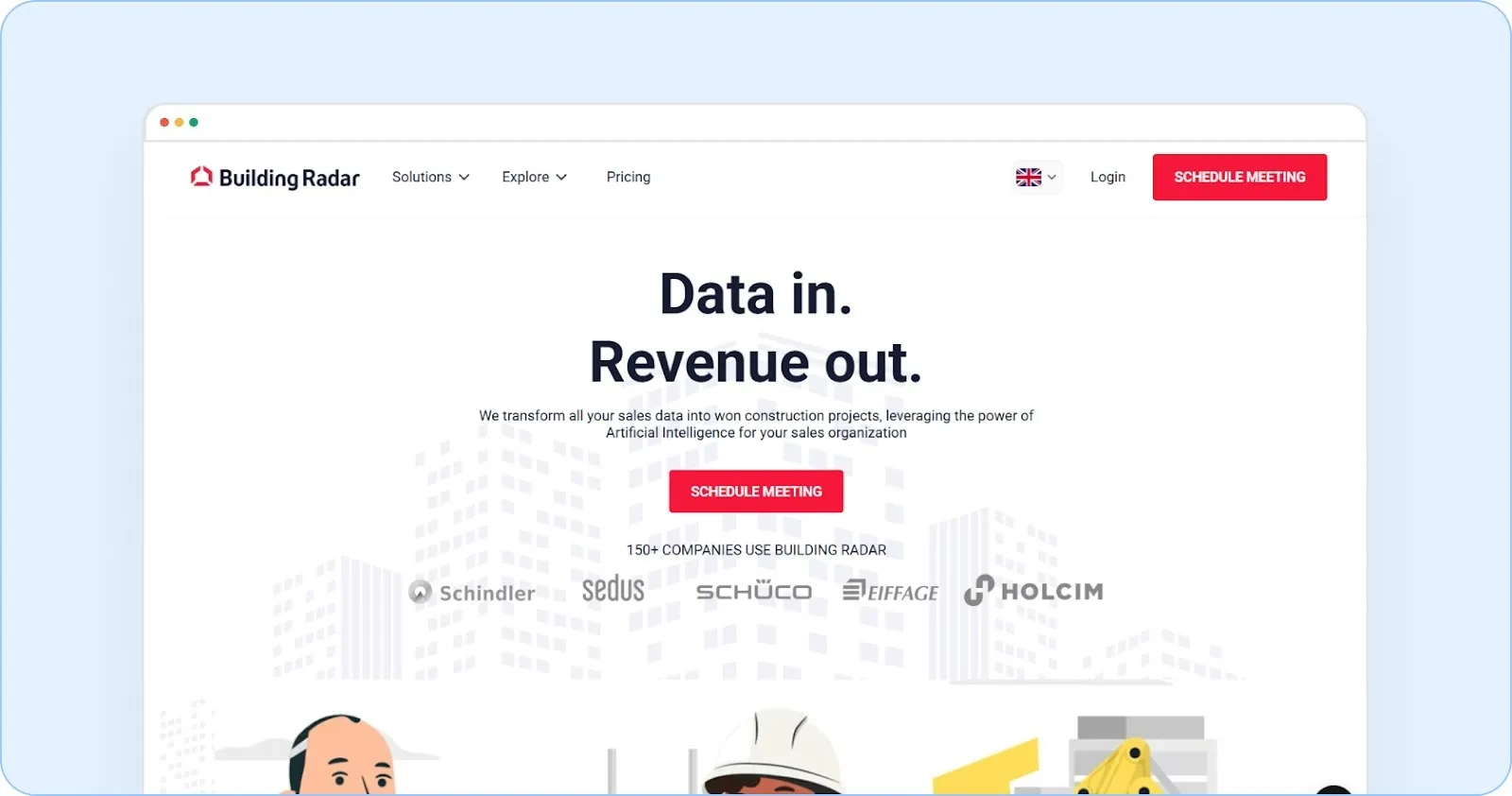
Building Radar takes lead generation to the next level by leveraging AI to surface construction projects early. For manufacturers, this tool offers a competitive advantage by identifying new projects and providing timely alerts about opportunities that match your criteria.
Key Features:
- AI-Powered Project Identification: Automatically identifies construction projects and delivers real-time data, including contact information of key decision-makers.
- Real-Time Alerts: Receive immediate notifications when new projects match your specified parameters, keeping you ahead of competitors.
- Advanced Search Filters: Easily filter leads based on project size, location, and other factors to ensure you focus on high-potential opportunities.
What’s in it for the Manufacturers?
- Stay Ahead of the Competition: Building Radar gives you access to projects before they go public, allowing you to get in early and bid on high-value opportunities.
- Targeted Lead Generation: You can narrow down leads based on the exact type of projects that align with your product offerings, ensuring a better match and higher conversion rates.
Use Case:
Manufacturers can use Building Radar to find large-scale commercial projects that are a perfect fit for their construction products, allowing them to bid early and gain a competitive edge.
3. ConstructConnect

ConstructConnect is a well-established platform that offers construction product manufacturers access to a vast database of public and private projects, complete with detailed project specs, bid dates, and more. The platform also enables easy communication with contractors and developers, making it a go-to tool for finding high-quality leads.
Key Features:
- Comprehensive Project Database: Access an extensive database of both public and private projects, including bid dates, specifications, and more.
- Collaboration Tools: ConstructConnect makes it easy to communicate and collaborate with general contractors and developers, improving your chances of being involved in key projects.
- Bid Tracking: Track bid progress and receive updates on changes to project details, ensuring you stay on top of opportunities.
What’s in it for the Manufacturers?
- Easy Access to Bidding Opportunities: The platform provides a centralized system where you can easily track and bid on projects that are most relevant to your products.
- Enhanced Collaboration: By using ConstructConnect, you can foster relationships with contractors and developers looking for your products, ensuring long-term business growth.
Use Case:
Construction product manufacturers can use ConstructConnect to track upcoming bids and submit offers directly to contractors, ensuring they never miss out on an opportunity.
4. The Blue Book
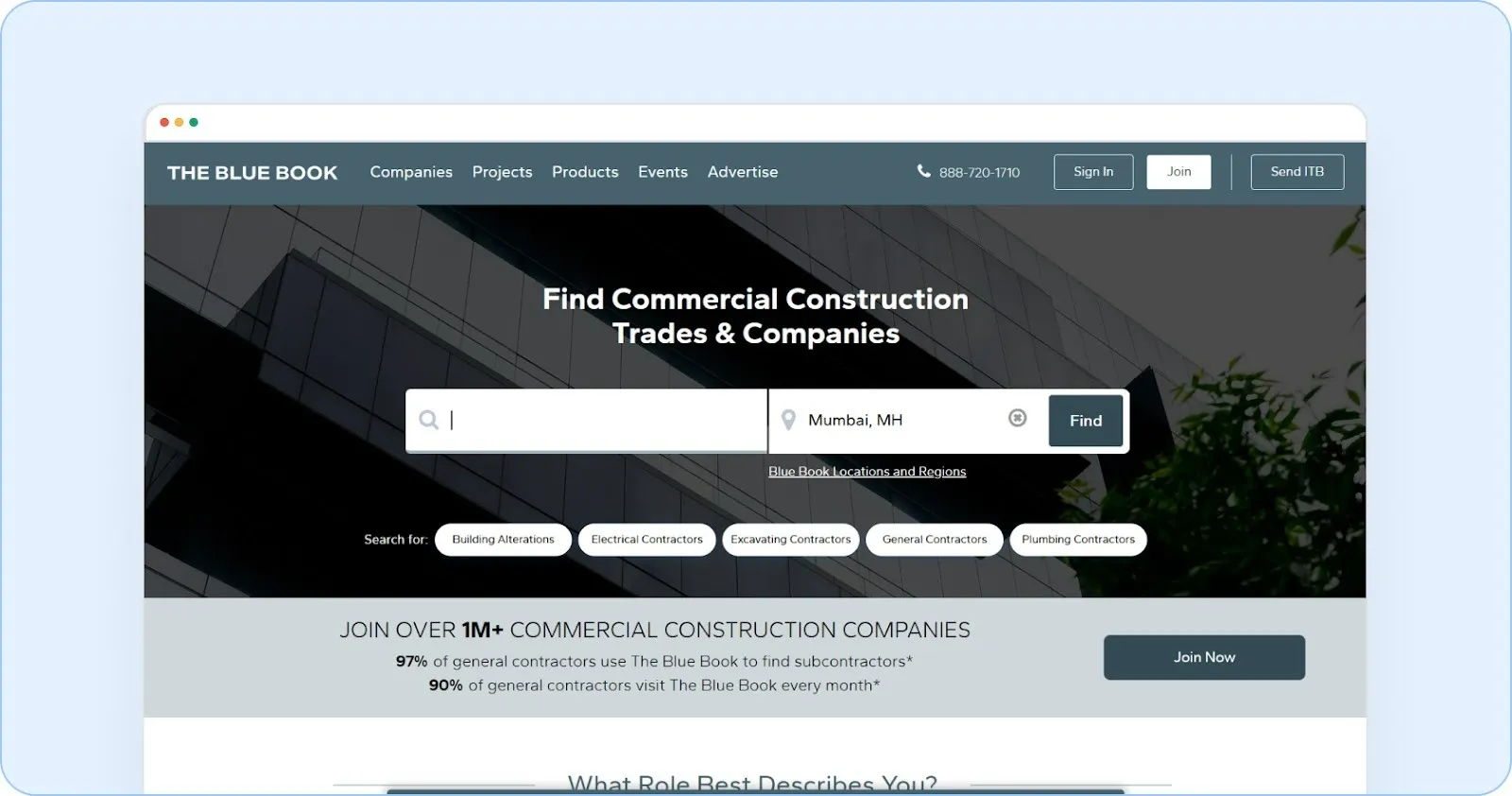
The Blue Book is a comprehensive directory and lead generation platform that helps construction product manufacturers build connections with contractors, subcontractors, and other professionals in the industry.
Through this platform, manufacturers can access detailed project leads and network with key industry players.
Key Features:
- Large Database: A vast directory of contractors, subcontractors, and project leads from various sectors within the construction industry.
- Project Specs and Bid Info: Access project details, including specs, bid dates, and more, allowing you to make informed decisions about where to focus your efforts.
- Networking Opportunities: The Blue Book helps you expand your network by connecting you with industry professionals and decision-makers.
What’s in it for the Manufacturers?
- Targeted Networking: Build relationships with key stakeholders in the construction industry, ensuring that your product offerings reach the right people.
- Access to Diverse Projects: The platform provides a wide range of project leads across different sectors, making it easy for manufacturers to find opportunities that match their product range.
Use Case:
Manufacturers can use The Blue Book to get listed, increase visibility, and connect directly with contractors and project managers who are interested in their products.
5. BidClerk
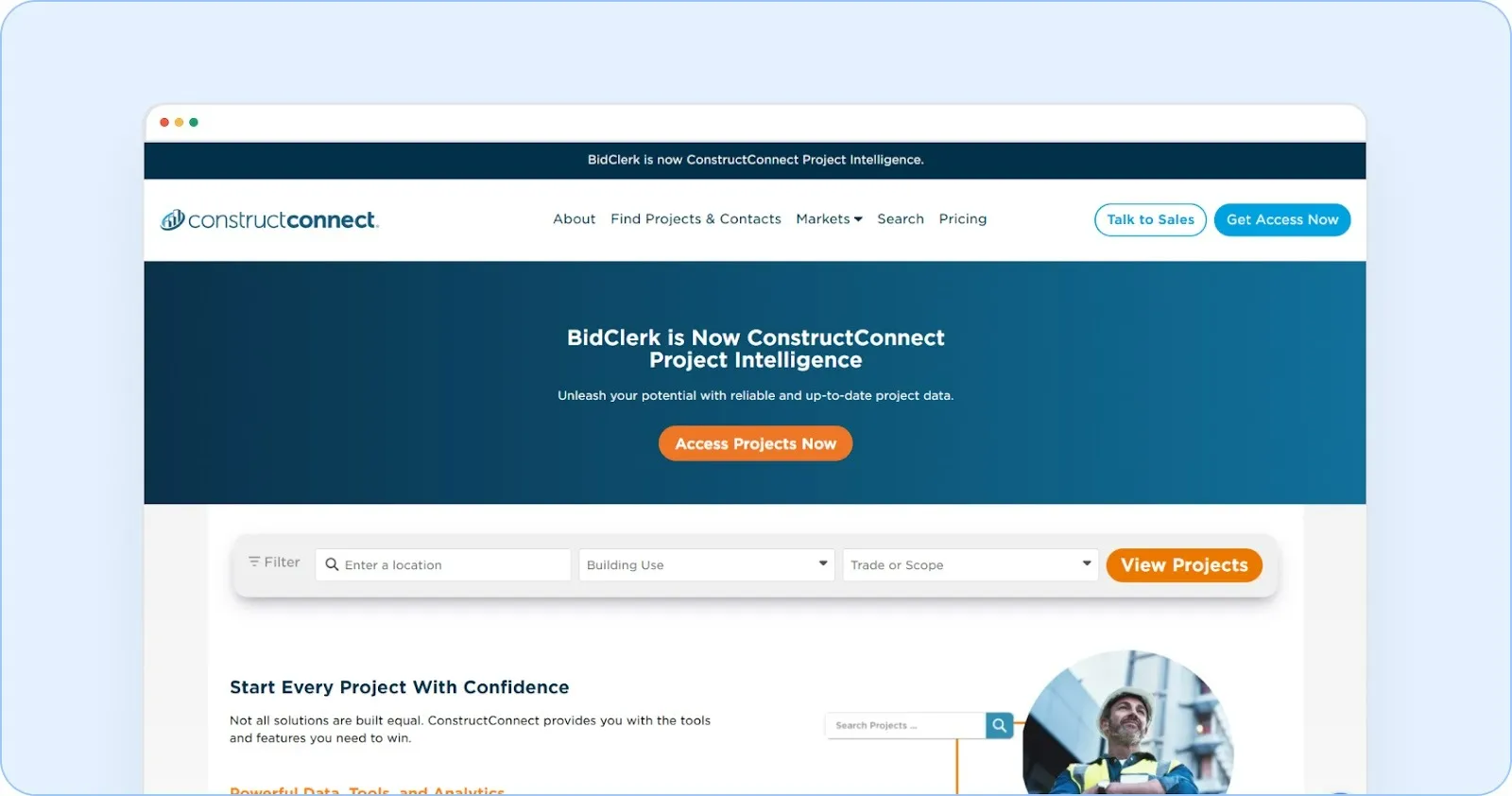
BidClerk is a powerful platform offering access to a vast database of commercial and residential construction leads. Manufacturers can tap into this resource to discover high-quality projects and ensure they are always in the loop on new bidding opportunities.
Key Features:
- Detailed Directory of Projects and Contractors: BidClerk provides an extensive list of ongoing and upcoming construction projects, helping manufacturers find the right leads in both commercial and residential sectors.
- Customizable Search Filters: Tailor your search by project type, location, value, and more, ensuring that you only target the most relevant opportunities for your products.
- Access to Public and Private Sector Opportunities: Whether you're looking for government contracts or private sector projects, BidClerk provides access to both.
What’s in it for the Manufacturers?
- Targeted Lead Generation: BidClerk allows manufacturers to focus on specific project types, increasing the chances of finding leads that align with their product offerings.
- High-Quality Leads: By filtering out irrelevant opportunities, you can zero in on projects that are the most likely to convert, saving time and resources.
Use Case:
Manufacturers can use BidClerk to filter projects relevant to their products, whether it's for large-scale commercial buildings or residential renovations, ensuring they’re always bidding on the right opportunities.
6. LinkedIn Sales Navigator
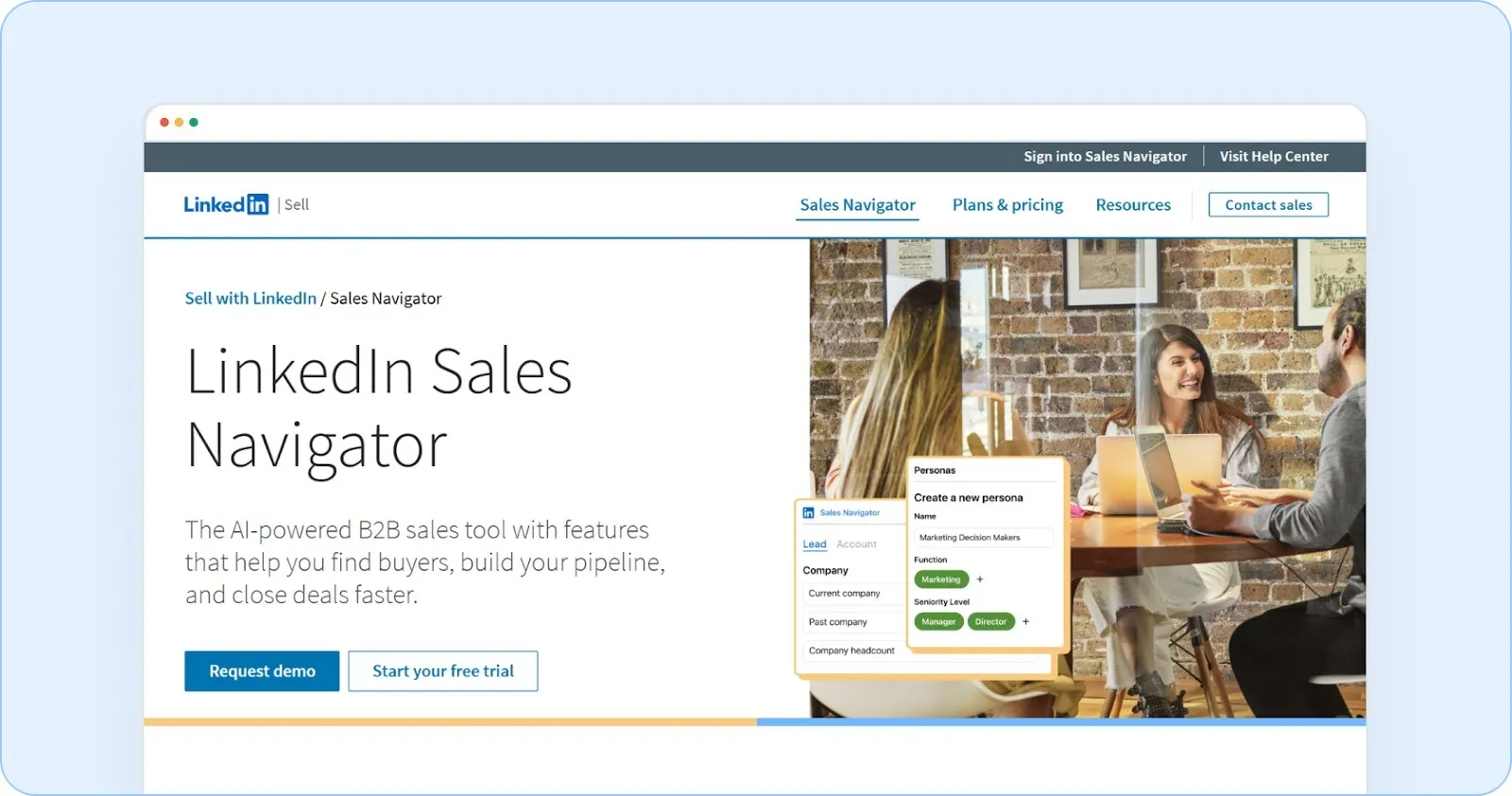
LinkedIn Sales Navigator is a premier B2B sales tool that connects manufacturers with decision-makers in the construction industry. With its powerful search filters and advanced targeting, it’s an essential tool for manufacturers aiming to build relationships with key stakeholders in the construction world.
Key Features:
- Advanced Search Filters: Pinpoint the right stakeholders by job title, company, location, and industry, making it easy to find potential leads in the construction sector.
- Direct Messaging: Connect with decision-makers directly through LinkedIn's messaging system, bypassing the need for traditional cold calls or emails.
- CRM Integration: Integrate Sales Navigator with your CRM to manage, track, and follow up on leads seamlessly, improving your sales workflow.
What’s in it for the Manufacturers?
- Access to LinkedIn’s Vast Network: LinkedIn’s platform is an essential tool for networking, allowing manufacturers to tap into a broad range of construction professionals, from contractors to architects and developers.
- Long-Term Relationship Building: LinkedIn is perfect for building lasting connections with key players in the construction industry, ensuring a steady stream of leads for years to come.
Use Case:
Manufacturers can use LinkedIn Sales Navigator to target and engage with contractors, architects, and developers who are actively seeking the construction products they offer, ensuring more meaningful connections and higher-quality leads.
7. Procore
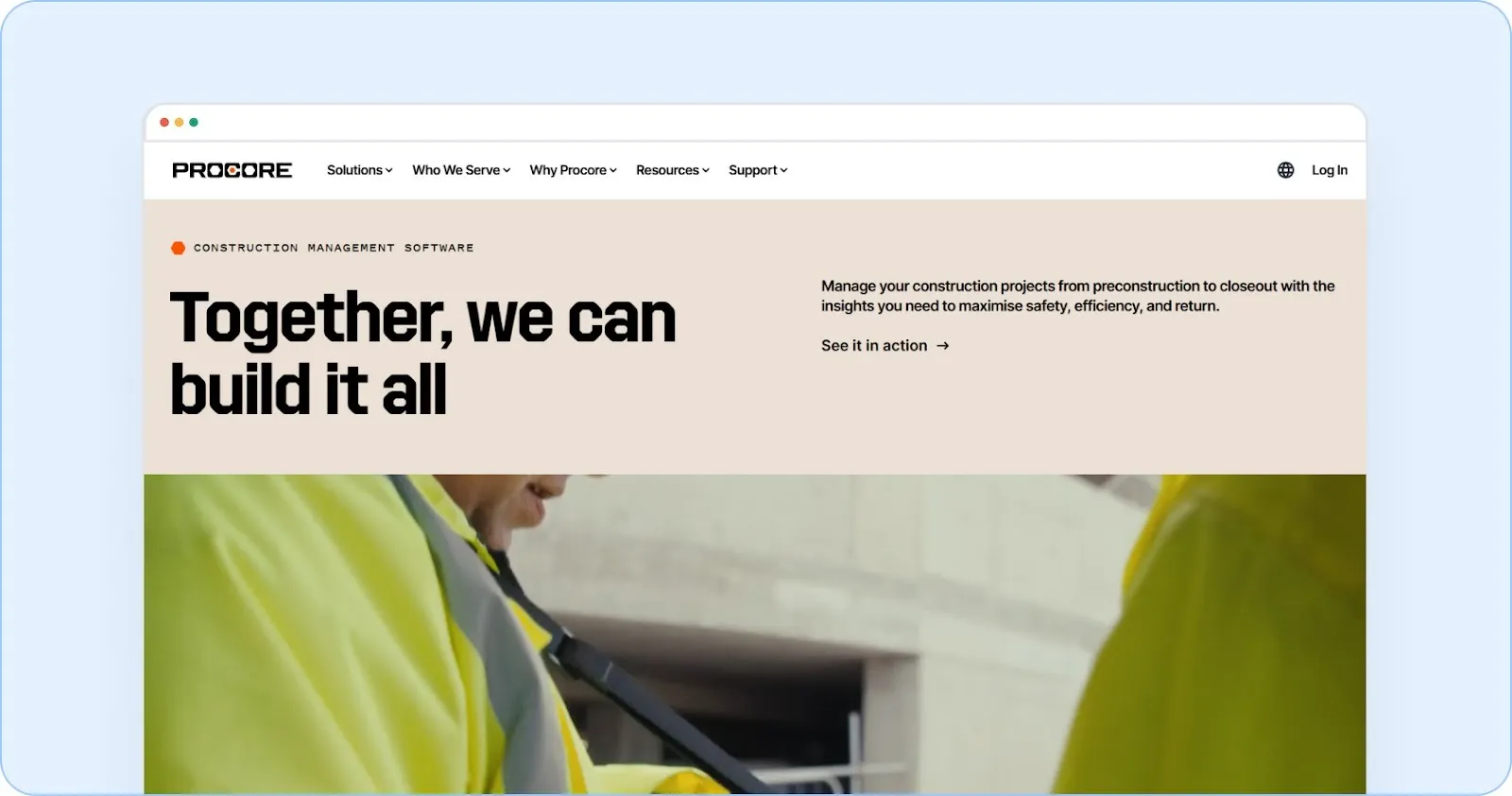
Procore is a comprehensive construction management software that streamlines project workflows and serves as a powerful lead generation platform for manufacturers. Procore connects you directly with project managers, contractors, and subcontractors who are in need of your products.
Key Features:
- Project Management Tools: Procore offers a suite of tools for contractors and subcontractors to manage projects from start to finish, including scheduling, budgeting, and documentation.
- Lead Generation Features: Manufacturers can use Procore to connect with contractors who are actively involved in construction projects and are in need of specific products.
- CRM Integration: Sync Procore with your CRM system to track and manage leads effectively, ensuring timely follow-ups and streamlined communication.
What’s in it for the Manufacturers?
- Direct Connection with Project Managers: Procore provides a direct line of communication with those who make purchasing decisions, allowing manufacturers to quickly identify and connect with potential buyers.
- Strong Relationship Building: Procore's platform helps manufacturers maintain ongoing relationships with contractors and subcontractors, ensuring that your products are top of mind for future projects.
Use Case:
Construction product manufacturers can use Procore to stay in constant contact with project managers, ensuring they are involved in the early stages of a project and can supply their products as needed. This proactive approach keeps them competitive and relevant.
How to Integrate Lead Generation Platforms into Your Sales Process?
Effectively integrating lead generation platforms into your sales process is key to maximizing the quality of your leads and improving overall sales efficiency. Without proper integration, your team may struggle to track, follow up on, or act on high-quality leads quickly enough.
By connecting these platforms with your existing systems, you can ensure a seamless flow from lead discovery to conversion.
Key Steps to Integration:
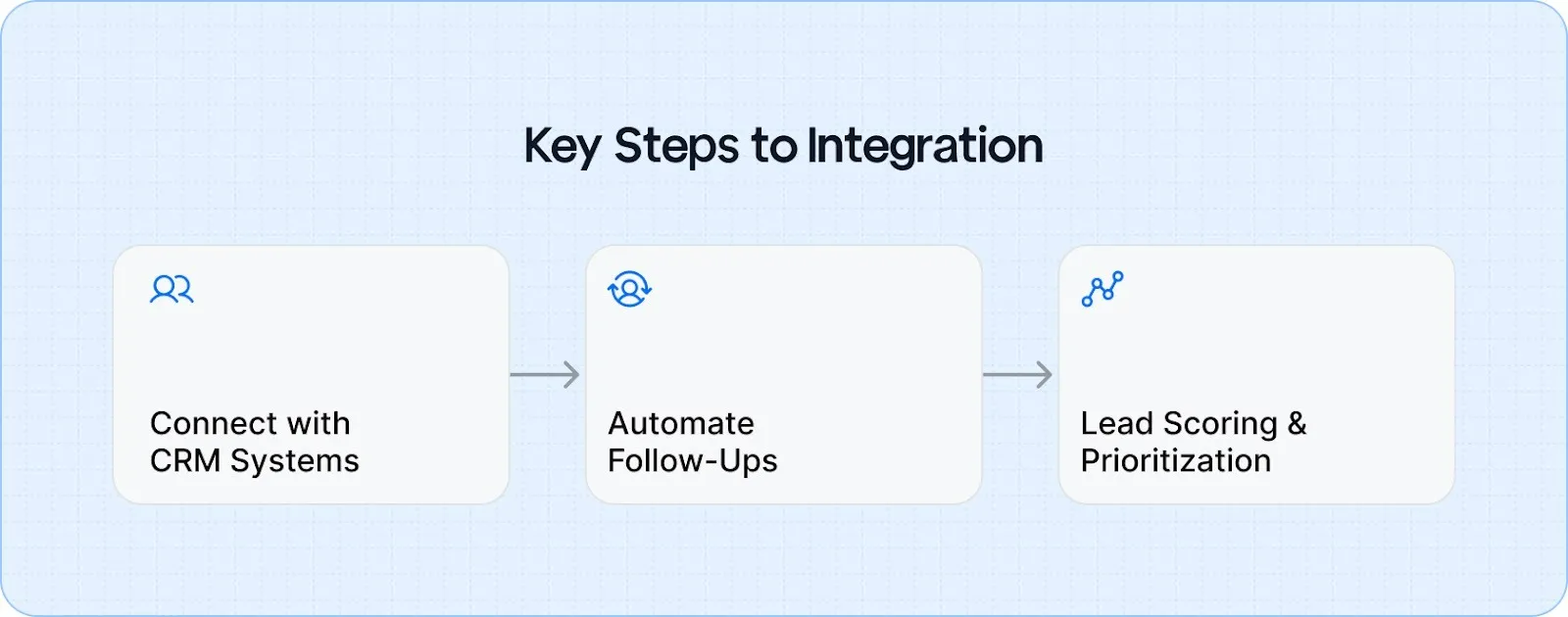
1. Connect with CRM Systems
To avoid losing track of leads or missing follow-ups, sync your lead generation platforms like Gushwork, Building Radar, or ConstructConnect with your CRM (Customer Relationship Management) system.
By doing this, all incoming leads from these platforms will automatically be added to your CRM, allowing your sales team to track and manage them in one place.
Why It Matters?
This ensures that no leads slip through the cracks, and your sales team can easily access key information such as lead status, interaction history, and next steps.
2. Automate Follow-Ups
Follow-ups are crucial in the lead conversion process, but they can be time-consuming. By integrating your lead generation tools with email marketing platforms or sales automation software, you can set up automated follow-up sequences for different types of leads.
For example, a new lead can receive an initial thank-you email, followed by personalized content, and later reminders about your products.
Why It Matters?
Automation saves your team valuable time while ensuring consistent communication, increasing the likelihood of turning leads into customers.
3. Lead Scoring and Prioritization
Not all leads are created equal. Use AI-powered platforms within your lead generation platforms to assign a "score" to each lead based on their behavior, engagement, and likelihood to convert. This scoring system helps prioritize leads so your sales team can focus on the highest-value prospects first.
Why It Matters?
By focusing on the leads most likely to convert, your team can use its time and resources more efficiently, resulting in higher conversion rates and less wasted effort.
Why It’s Important?
- Reduced Manual Work: Integrating lead generation platforms with your CRM and other systems means fewer manual tasks for your team, such as manually entering lead details or tracking follow-ups. This allows your team to focus more on closing deals rather than administrative tasks.
- Increased Efficiency: With all lead information in one place and automated follow-ups, your team can act faster and more strategically, reducing the time between lead capture and conversion.
- Better Collaboration: Integrating platforms like Gushwork with your CRM allows your marketing and sales teams to work together seamlessly. Marketing can pass off highly qualified leads, and sales can focus on what matters, turning those leads into customers.
Grow Your Pipeline Faster
We will create a clear, structured plan that positions your products at the front of active projects.
Create My Plan Today
Also Read: Manufacturing Lead Generation: A Complete Guide to Building Your Sales Pipeline
Key Missteps to Avoid When Generating Construction Leads
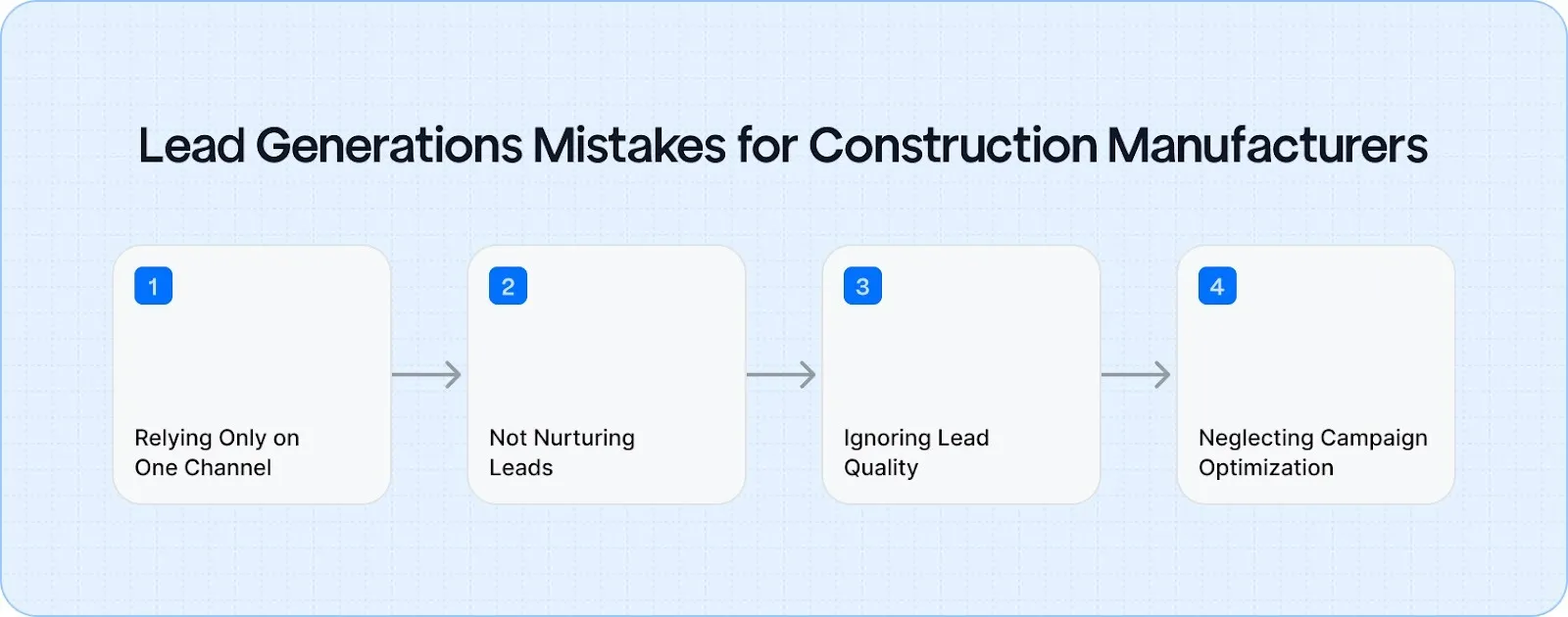
Avoiding key mistakes in your lead generation strategy can significantly improve the quality of your leads, save time, and prevent wasted resources. Here are some of the most common pitfalls to watch out for, along with actionable solutions to help you avoid them.
Relying Only on One Channel
Focusing all your lead generation efforts on a single tool or method, such as cold-calling or one lead database, can limit your reach and effectiveness. Relying on just one platform restricts your exposure to a narrow audience and can lead to missed opportunities.
Solution: Diversify your approach by combining various lead generation platforms like Gushwork, email campaigns, SEO strategies, and networking events. This will help you reach a wider pool of potential leads and improve your chances of engaging with qualified prospects.
By using a multi-channel strategy, you ensure a steady flow of opportunities from different sources, increasing the likelihood of connecting with the right people.
Not Nurturing Leads
Many manufacturers make the mistake of focusing solely on capturing leads and neglecting the critical nurturing phase. Leads may lose interest or become cold if not properly engaged with ongoing communication.
Solution: Implement lead nurturing strategies like automated email sequences, retargeting ads, and regular follow-up check-ins to keep leads engaged and move them closer to making a purchase.
Nurturing ensures that you stay top-of-mind, building trust and demonstrating value to potential customers over time. This process is essential to turning cold leads into loyal clients.
Ignoring Lead Quality
Focusing on the quantity of leads over their quality can waste resources and reduce conversion rates. Not all leads are equal, and some may not even be relevant to your business.
Solution: Partner with platforms like Gushwork to filter leads based on project relevance, budget, and alignment with your product offerings. Lead qualification platforms ensure you're targeting the right audience, which boosts your chances of converting leads into sales.
Prioritize leads that match your ideal customer profile, so your sales team can focus on the most promising opportunities.
Failing to Track and Optimize Campaigns
Without tracking the performance of your lead generation campaigns, it’s impossible to know which strategies are working and which are not. Failing to analyze key metrics can lead to ineffective campaigns and wasted resources.
Solution: Regularly monitor metrics like conversion rates, cost-per-lead, and ROI for each channel. Platforms like Gushwork can provide insights into your lead quality and campaign success.
By analyzing these metrics, you can refine your strategy, adjust your approach, and ensure you're maximizing your lead generation efforts.
By avoiding these common mistakes, you’ll streamline your lead generation process, improve the quality of your prospects, and ultimately increase your conversion rates. Ensure you’re incorporating the right platforms and strategies to make the most out of every lead.
Strengthen Lead Flow for Your Construction Business
Lead generation for construction product manufacturers doesn’t have to be a struggle. The right platforms, like Gushwork, can help you automate processes, target high-quality leads, and boost your sales pipeline.
Outdated methods are holding you back, but with AI-powered automation and industry-specific databases, you can stay ahead of the competition and connect with the right people.
Don’t let your lead generation efforts be inefficient. Embrace the platforms that will take your business to the next level and start seeing real results.
Ready to start generating high-quality leads?
Learn how Gushwork can streamline your lead generation process and help you land more deals today.
Book a Consultation
Digital Marketing
Sep 26, 2025
5 mins
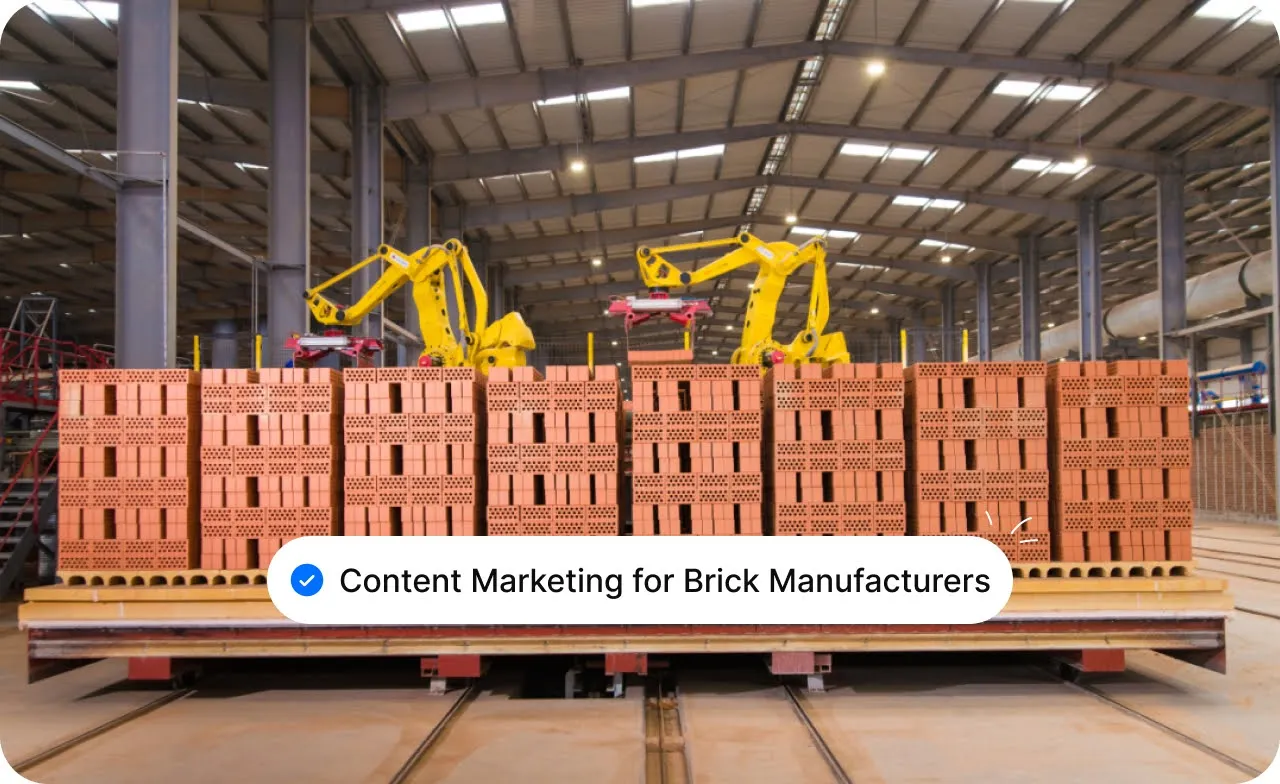
Content Marketing Strategies for Brick Manufacturers the Top 1% Use to Own Their Market
Batul Beawarwala
When was the last time someone chose a brick supplier just because the price looked good on a brochure?
They didn’t. And you know that. Decisions in the brick manufacturing industry are slow, deliberate, and deeply tied to trust. Buyers want to see how your bricks perform, how consistent your production is, and how your material holds up across real projects and real conditions. That confidence is rarely built through sales calls alone. It’s built through the information they find when they research you on their own.
This is where content marketing becomes far more than a marketing strategy. It becomes proof of reliability. A quiet way to show your standards, your process, and the thinking that goes into every batch you produce.
This blog explores how content marketing can help brick manufacturers strengthen credibility, influence decision makers early, and turn interest into meaningful enquiries.
What Content Marketing Really Means for Brick Manufacturers?
Content marketing for the brick manufacturing industry is about guiding choice at the specification stage. It supports the moment when architects, builders, and contractors decide which materials will shape the structure of a project.
Instead of promoting products, effective content:
- Helps decision makers compare brick types based on performance and use case
- Shows consistency through real project applications and case references
- Explains standards, testing methods, and compliance without overwhelming jargon
- Supports material selection during design and planning, not just purchase
- Answers questions that typically slow down approvals or cause hesitation
This type of content works quietly but powerfully. It positions your brand as a reliable source of information, not just a supplier. And when buyers feel informed, their decisions carry more confidence. That is where trust forms and leads follow.
Also Read: Master the Art of Utilizing Content Marketing at Trade Shows: A Step-by-Step Guide
Brick by Brick: Building Your Content Marketing Strategy
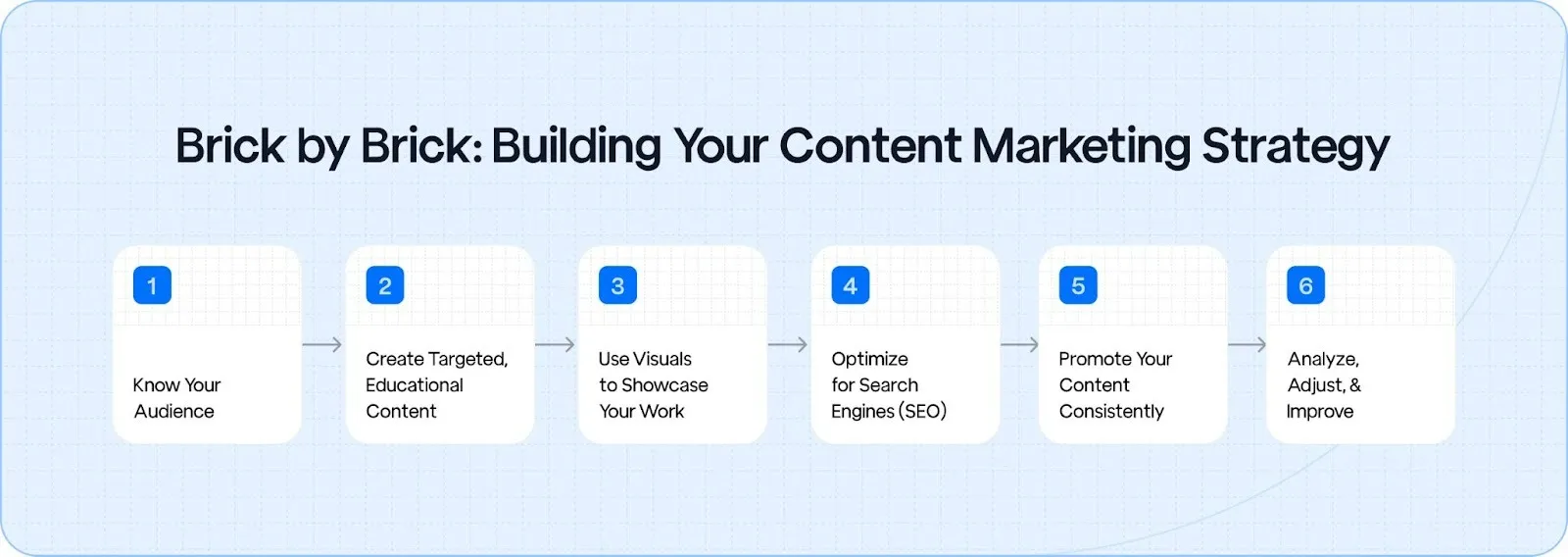
Here’s how you can build a strategy that works, step-by-step:
Step 1: Know Your Audience
To start building your strategy, you need to understand the exact problems your audience is trying to solve. Are they contractors looking for reliable, durable materials? Or architects seeking sustainable building options?
Pinpointing these specific needs will guide the type of content you create. How-to guides, product comparisons, and case studies should be laser-focused on addressing your audience’s pain points.
Define Your Ideal Buyers
We identify who your brick products are meant for and align keywords with how they actually search.
Refine ICP and Keywords
Step 2: Create Targeted, Educational Content
Content that educates helps them make informed decisions. For example:
- How-to guides on choosing the right bricks for different construction needs.
- Product breakdowns that explain the technical specs of your bricks.
- Industry reports that highlight trends in sustainable building and how your bricks meet those needs.
These types of content establish your company as a trusted expert, not just a seller.
Create Content That Builds Trust
We develop clear, informative content that shows the quality, durability, and application of your bricks.
Strengthen Your Content Strategy
Step 3: Use Visuals to Showcase Your Work
Don’t underestimate the power of visuals. Photos of your bricks in finished projects, video tours of your manufacturing process, and infographics breaking down brick durability grab attention and help customers understand the tangible benefits of your product.
A behind-the-scenes factory tour or a time-lapse of a construction project using your bricks could provide that “wow” factor that engages potential clients.
Step 4: Optimize for Search Engines (SEO)
Even the best content won’t help if people can’t find it. SEO optimization ensures that your content reaches the right audience. Focus on keywords specific to the brick manufacturing industry, terms like “durable bricks,” “eco-friendly building materials,” and “best bricks for high-traffic areas.”
By incorporating these keywords naturally into your blog posts, case studies, and product descriptions, you increase the chances of appearing in search engine results when potential customers are looking for solutions.
Step 5: Promote Your Content Consistently
Like laying bricks in a wall, distribute your content consistently across channels like your website, email newsletters, and social media. Engage with your audience through comments, shares, and likes, and make sure your content resonates. Consistency helps build momentum, keeping your company top-of-mind for your audience.
Step 6: Analyze, Adjust, and Improve
Finally, don’t forget to measure the impact of your content. Use tools like Google Analytics, social media insights, and customer feedback to gauge what’s working and what’s not.
Are certain blog topics generating more leads? Is your video content getting more engagement than written posts? Use these insights to refine your strategy and ensure your content is as effective as possible.
Each step is essential to building a robust, effective strategy that supports your business long-term. Over time, you’ll have a solid content foundation that attracts, educates, and converts your audience into loyal customers.
Effective Content Marketing Strategies for Your Brick Manufacturing Business
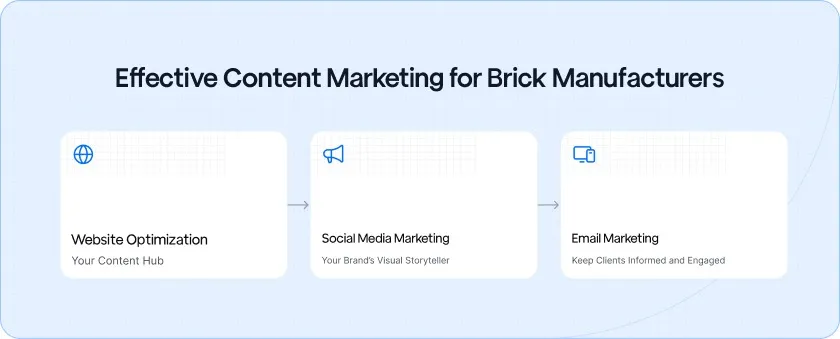
Content marketing for brick manufacturers isn’t a one-size-fits-all solution. It requires a personalized, strategic approach that reflects your unique value proposition and reaches the right audience in the right way. Here are the essential strategies to ensure your content resonates and drives results.
Website Optimization
Your website is the backbone of your content marketing strategy. It’s where potential customers go to learn more about your products, company, and values. To turn your site into a lead-generating machine, it needs to be more than just a digital brochure. Here’s how to optimize it:
- Clear CTAs: Every page should have strategically placed Calls to Action (CTAs). "Request a Quote," "Download Brochures," or "View Case Studies," these buttons guide visitors toward their next step.
- Educational Landing Pages: Create pages dedicated to educating potential customers on your brick’s specifications, applications, and benefits.
- User-Friendly Navigation: Make it easy for customers to find what they’re looking for. Simplify menus, reduce clicks, and organize information in a digestible format.
Your website is the digital storefront that should provide the exact information potential clients are looking for, while guiding them smoothly toward making a purchase.
Social Media Marketing
Social media is no longer just for B2C brands. It's a powerful tool for B2B manufacturers too, especially in industries like brick manufacturing. Platforms like LinkedIn, Facebook, and Pinterest are essential for building your brand’s presence and engaging with your target audience.
- Showcase Projects: Share images and videos of your bricks used in real-world applications, such as in large construction projects or eco-friendly buildings.
- Behind-the-Scenes Content: Let potential clients in on the manufacturing process, showing the quality control, care, and precision that goes into every brick.
- Customer Success Stories: Share testimonials and case studies of satisfied clients, build credibility and trust.
By regularly posting relevant, engaging content, you can increase your visibility and connect with decision-makers in the construction and architecture industries.
Email Marketing
Email marketing is a cost-effective way to stay top-of-mind with your customers, nurture leads, and provide valuable industry insights. Here’s how to use it effectively:
- Segmented Email Campaigns: Create personalized email lists based on customer interests, project types, and stages in the sales funnel. For example, contractors might be interested in bulk orders, while architects might seek more information on sustainability.
- Regular Newsletters: Keep your audience informed with updates on product offerings, industry news, and how your products solve specific problems.
- Lead Nurturing: Use automated email sequences to nurture leads who have shown interest but haven’t converted yet. Provide them with educational content, special offers, or detailed product specs to help them make informed decisions.
Email marketing offers a direct line to your audience, making it a key strategy for brick manufacturers looking to maintain relationships with existing clients and convert new ones.
Also Read: The B2B Manufacturing Marketing System: Build Visibility, Trust, and Sales
Using Data to Optimize Your Brick Marketing Content
In today’s digital marketing landscape, data is your best friend. But only if you know how to use it.
With the right analytics tools and techniques, brick manufacturers can make smarter, data-driven decisions that lead to better content, higher engagement, and ultimately, more conversions.
Here’s how you can use data to elevate your marketing efforts:
Performance Tracking Tools
Understanding how well your content is performing is crucial for optimizing your strategy. By using tools like Google Analytics, social media insights, and CRM software, you can gain actionable data to refine your content.
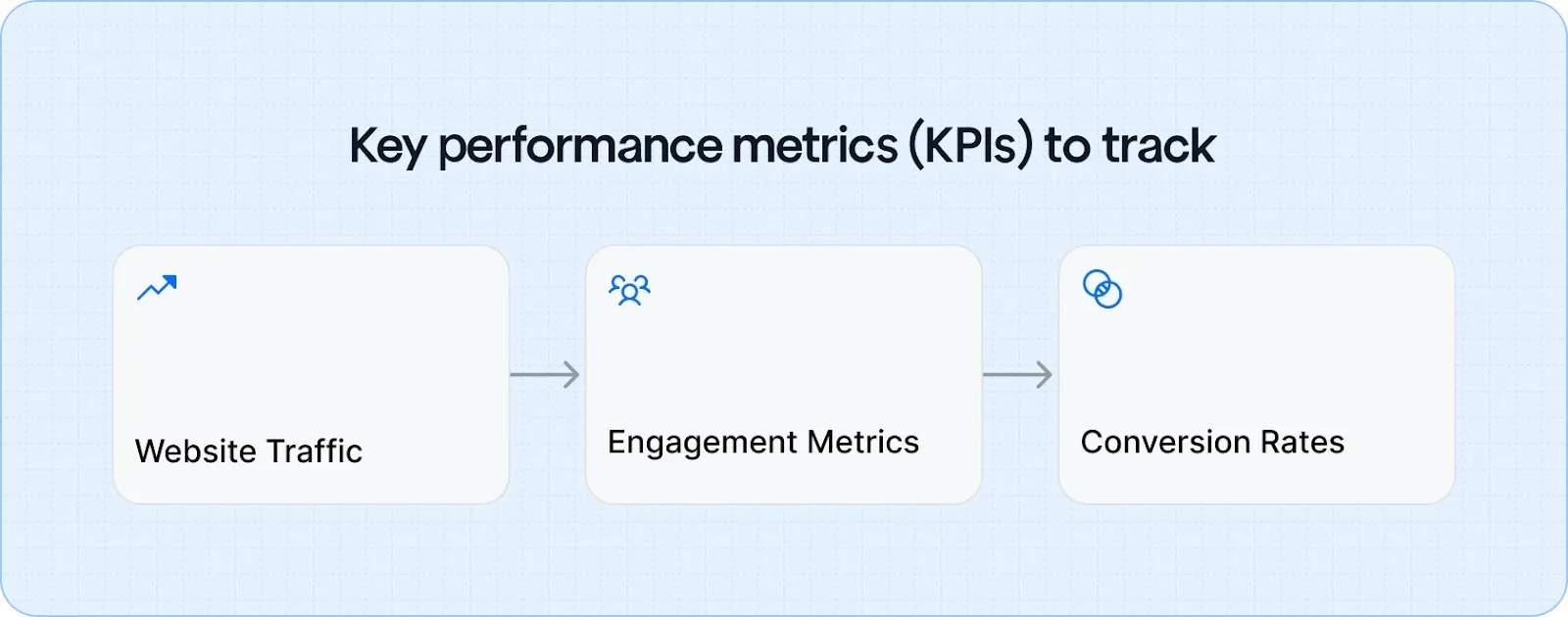
Key performance metrics (KPIs) to track include:
- Website Traffic: How many visitors are coming to your site? Which pages are they visiting? This helps you identify what’s attracting attention and where to focus your efforts.
- Engagement Metrics: Track how often people interact with your content, whether that's through comments, shares, or time spent on a page. The higher the engagement, the more successful your content is at connecting with your audience.
- Conversion Rates: Ultimately, you want your content to drive actions, whether that’s submitting a contact form, signing up for a newsletter, or requesting a quote. Keep track of what’s converting and why.
By regularly monitoring these metrics, you can see which types of content are resonating with your audience and adjust your strategy accordingly.
Audience Segmentation and Personalization
Not all your customers are the same, so why treat them like they are? Segmentation allows you to break your audience into smaller, more manageable groups based on criteria like:
- Role: Contractors, architects, and real estate developers all have different needs and pain points.
- Location: Geographical differences can impact the type of bricks needed, especially in regions with varying climates or building regulations.
- Project Type: A small residential builder might have different requirements than a large-scale commercial contractor.
Tailoring content for these specific personas ensures that each group receives the information most relevant to them. For example, an architect might appreciate a blog post on the aesthetic qualities of brick, while a contractor might be more interested in content focused on durability and cost-effectiveness.
Personalization increases engagement, builds stronger relationships, and drives more qualified leads to your business.
Refine Your Content Strategy with A/B Testing
Once your content is live, how do you know if it’s effective? The answer lies in A/B testing. This testing allows you to compare two versions of a piece of content, whether that’s an email subject line, a landing page, or a blog title, to see which performs better.
It’s a powerful tool for continuously refining your strategy and ensuring you're always moving toward higher conversion rates.
By analyzing the results of A/B tests, you can identify which messaging, formats, and CTAs resonate most with your audience and make adjustments accordingly. Even small tweaks can result in better engagement and higher conversion rates over time.
Avoid These Mistakes When Marketing Your Bricks Online
Here are some common pitfalls and how to avoid them:
Make Complex Ideas Easy to Grasp
Bricks are, by nature, a technical product. But that doesn’t mean your content needs to be overly technical or jargon-heavy. The key is to strike the right balance between providing enough detail while keeping things accessible for a broad audience. Here’s how:
- Use Simple Language: Instead of overwhelming your audience with industry jargon, focus on explaining key concepts in simple terms. For example, instead of talking about “compressive strength” and “mortar adhesion,” you might say, “Our bricks can handle more weight without cracking and bond well with other materials.”
- Incorporate Visuals: Diagrams, infographics, and videos are an excellent way to explain complex ideas quickly. Showing the differences between types of bricks, or demonstrating their performance in different environments, can make a huge difference in how well your audience understands the product.
Overload with Content
It’s easy to fall into the trap of cranking out blog posts, social media updates, and emails just for the sake of it. But content overload can lead to burnout, confusion, and disengagement. Here’s how to focus on quality over quantity:
- Create Evergreen Content: High-value, timeless content that remains relevant over time should be the foundation of your strategy. Examples include detailed guides on how to choose the best bricks for various projects or the environmental benefits of using bricks in construction. This type of content continues to attract leads long after it’s published.
- Repurpose Content: Instead of constantly creating new content, repurpose high-performing content across different channels. A blog post can be turned into a video, infographic, or podcast, ensuring that it reaches a broader audience without requiring a lot of extra work.
How to Stay On Top of Your Content Strategy?
Here’s how to maintain a strong, reliable presence in the digital world.
Create Interactive Content
Interactive content is one of the most effective ways to engage your audience and keep them coming back. Tools like quizzes, calculators, and product selectors allow your prospects to actively participate in the content experience. For example:
- Brick Cost Calculators: Help contractors estimate the cost of a brick-based construction project based on materials, square footage, and labor.
- Quizzes to Choose the Right Brick: Guide customers through a series of questions to find the perfect brick for their needs.
Interactive content provides value and encourages visitors to spend more time on your website, increasing the chances of conversion.
Engage with Your Audience
Content marketing is a two-way street, and by responding to comments on social media, blog posts, and email newsletters, you create meaningful conversations that build trust. Here’s how to engage effectively:
- Social Media Conversations: Respond to comments and messages on platforms like LinkedIn and Facebook. Share insights, answer questions, and offer solutions to challenges your audience is facing.
- Blog Comments: Take the time to reply to blog comments with additional value. With more detailed answers or linking to related content.
- Email Feedback: Ask for feedback in your newsletters and use it to refine your approach.
When your audience feels heard and valued, they’re more likely to return for more information, turning them into loyal customers.
6 Proven Content Types That Will Get Your Bricks Noticed
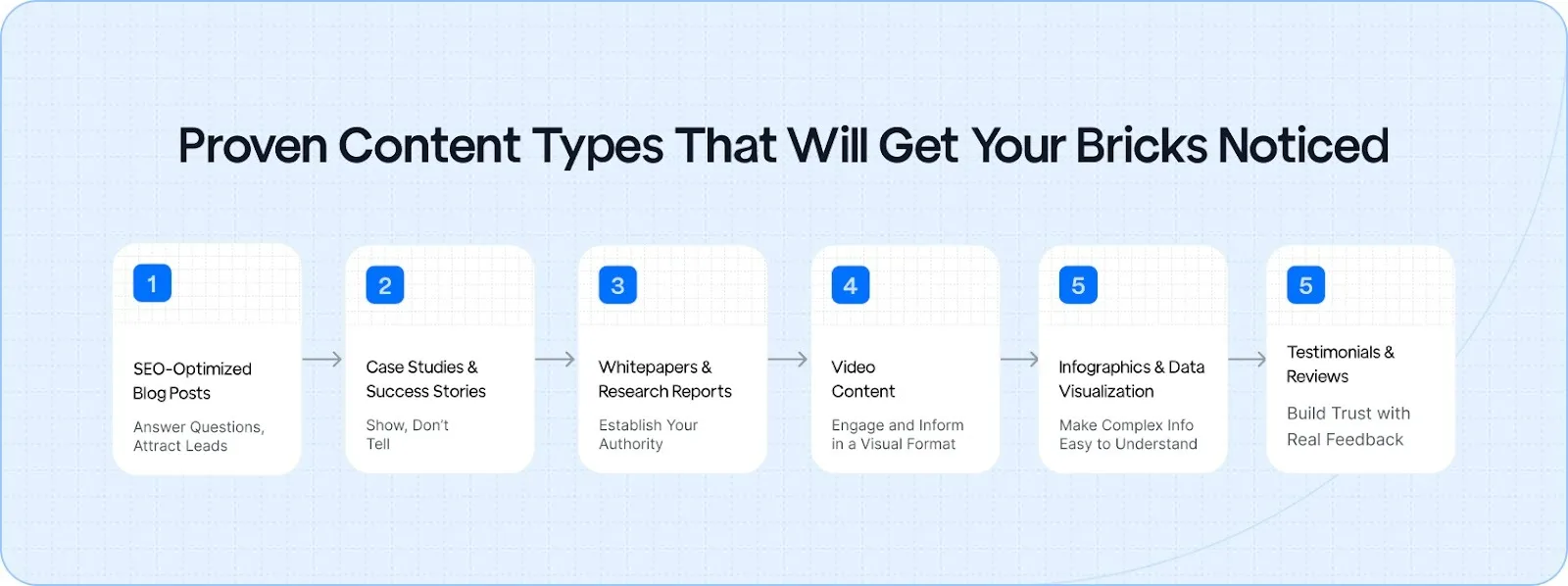
Content marketing for brick manufacturers requires writing blog posts and creating valuable, diverse content that serves both your audience and your business goals. Let’s look at the types of content that will help your brand stand out.
1. SEO-Optimized Blog Posts
SEO isn’t just a buzzword; it’s the key to getting your content found by the right people. To ensure your content reaches potential customers, focus on creating SEO-optimized blog posts that answer common industry questions. For example:
- “What Type of Bricks are Best for High-Traffic Areas?”
- “How Do Eco-Friendly Bricks Benefit Construction Projects?”
- “The Benefits of Bricks Over Other Building Materials”
These blog posts help educate your audience and drive organic traffic to your site by ranking for the questions your potential customers are searching for.
Improve Your Search Visibility
We support your content with SEO that helps your brick products appear in relevant searches.
Enhance Your SEO Approach
Also Read: How Manufacturers Can Win More Leads With SEO
2. Case Studies and Success Stories
Nothing builds trust like real-world success. Case studies and success stories are powerful tools for showing how your bricks have been successfully used in large projects. Highlight the challenges faced by your clients, how your bricks solved their problems, and the positive outcomes.
This content adds credibility to your product and positions your company as a solution provider.
- Example: A case study on how your bricks contributed to a sustainable building project can attract contractors and developers looking for green building materials.
3. Whitepapers and Research Reports
Whitepapers and in-depth research reports are perfect for demonstrating your industry knowledge and positioning your company as an authority. These resources give your audience insights into the latest trends, technologies, and best practices in the brick industry.
- Example: “The Future of Sustainable Brick Manufacturing: Trends and Insights for 2025”
Whitepapers also work well for lead generation. Offer them as downloadable content in exchange for contact information, helping you capture qualified leads.
4. Video Content
Videos are an incredibly engaging way to convey information. From how-to guides to factory tours, videos provide a visual connection that written content can’t match. Here are some video content ideas for your brick business:
- Product Demonstrations: Show how your bricks are used in real-world applications, such as construction projects or design mockups.
- Customer Testimonials: Let your satisfied customers speak for you. Video testimonials help humanize your brand and build trust.
5. Infographics and Data Visualization
Infographics and data visualizations are the perfect way to explain complex concepts quickly and clearly. For example, create an infographic that compares the durability of different types of bricks or breaks down the environmental benefits of using eco-friendly bricks. This format makes it easier for your audience to digest valuable information and share it with others.
6. Customer Testimonials and Reviews
The best marketing comes from your existing customers. Customer testimonials and reviews provide social proof, showing potential clients that your products live up to their promises. Ask happy customers to share their experience using your bricks, and showcase their stories on your website, social media, and product pages.
Conquer Content Marketing Challenges in the Brick Industry
Marketing bricks isn’t without its challenges, and understanding these hurdles is the first step to overcoming them. The brick industry is filled with unique complexities, but with the right approach, you can turn these challenges into opportunities.
Simplify Technical Content
Bricks are technical products with many specifications, but that doesn’t mean your content has to be overly complex. Simplifying technical content ensures it resonates with both technical and non-technical audiences. Use easy-to-understand language, and supplement with visuals that make complex ideas easier to grasp.
Keep Prospects Engaged Over Time
The construction industry has long sales cycles, especially for large-scale projects. Keep your prospects engaged with valuable content at every stage of their buying journey. Whether it's blog posts, whitepapers, or case studies, make sure you're consistently nurturing leads until they’re ready to convert.
Standing Out in a Competitive Market
The brick industry is competitive, and differentiating yourself can be tough. Focus on your unique selling points, whether that’s sustainability, custom-made bricks, or superior durability, and build content around these advantages. By offering unique value, you can carve out your niche in the market.
How Content Marketing Can Make Your Bricks Stand Out in a Crowded Market
Content marketing is your key to building a strong presence in a crowded market. With the right strategy, you can establish your brand as a leader and attract high-quality leads.
Build Brand Authority and Expertise
By consistently producing valuable content, you position your company as an authority in the brick manufacturing industry. Blog posts, whitepapers, and industry insights are all great ways to showcase your knowledge and help your audience solve problems.
Enhance Customer Education and Engagement
Bricks are a major investment in construction projects, and customers want to make the right choice. Provide educational content, like how-to guides and comparison charts, to help your customers make informed decisions.
Generate Qualified Leads
Targeting niche markets within the construction industry will help you attract the right leads. Case studies, whitepapers, and industry-specific content are excellent tools for engaging decision-makers in the construction and real estate sectors.
Improve SEO and Search Visibility
Optimizing your content with the right keywords will help you rank higher in search engine results. Use SEO best practices to ensure your content is discoverable by those searching for brick-related solutions.
The Secret to Converting Traffic Into Sales
In the brick manufacturing industry, simply attracting traffic isn’t enough. It’s about converting that traffic into qualified leads and long-term business relationships.
Content marketing allows you to build trust, educate your audience, and showcase your expertise in ways that resonate with both technical and non-technical customers.
- The real challenge isn’t just getting visitors to your site; it’s ensuring that the content you produce drives conversions.
- A strategic, ongoing content marketing plan will establish your brand’s authority, attract the right leads, and nurture those leads until they’re ready to make a purchase.
Ready to Strengthen Your Content Marketing?
Get expert guidance to build a content strategy that supports trust, visibility, and steady inquiries.
Book A Consultation

SEO
Sep 25, 2025
5 mins
Follow These 12 SEO Steps To Double Your Visibility In The Glass Manufacturing Niche
Batul Beawarwala
If you’re a glass manufacturer, you’ve likely faced the frustration of a website that’s buried on page 5 of search results. The truth is, in a niche industry like glass manufacturing, general SEO tactics aren’t enough.
The competition is fierce, and without a hyper-targeted SEO strategy, you’re left competing for visibility with companies offering vastly different products.
Your ideal customers, architects, builders, or procurement officers, are out there, but they’re only finding you if your SEO strategy is specific enough to make you stand out when they search for terms like "custom glass for commercial buildings" or "tempered glass suppliers near me."
This article doesn’t cover basic SEO tips; it’s about understanding the nuances of your industry and leveraging SEO to attract the right decision-makers who truly understand the complexities of glass manufacturing. From specific keywords to local SEO tactics, this blog will dive into how you can boost your search rankings and drive high-quality leads tailored to your exact market.
#1: Conduct Industry-Specific Keyword Research for Glass Manufacturing SEO
Keyword research is the backbone of a strong SEO strategy. For glass manufacturers, using the right keywords ensures your content reaches the relevant audience actively searching for your products.
- Use keyword research tools like SEMrush or Ahrefs to discover high-intent keywords such as:
- “custom glass manufacturing [city]”
- “tempered glass supplier”
- Target long-tail keywords like: “commercial glass fabrication in [city]” to capture niche searches
Pro Tip: Expand your keyword list by incorporating variations of your main keywords using synonyms. This strategy broadens your reach, allowing you to capture more search traffic without overstuffing your content with repetitive phrases.
#2: On-Page SEO: How Glass Manufacturers Can Optimize Their Website for Better Search Visibility
On-page SEO ensures that search engines and website visitors can easily understand and interact with your content. Glass manufacturers need to implement on-page SEO best practices to improve their site’s ranking and user engagement.
- Optimize title tags, meta descriptions, headers, and body content with your target keywords.
- Ensure each page has a unique title and meta description incorporating the main keyword.
Pro Tip: Incorporate schema markup on your product pages and service descriptions.
This helps search engines understand your content better, improving the chances of appearing in rich snippets and enhancing your visibility in search results.
#3: Boost Local SEO to Capture Nearby Clients and Stand Out in Your Region
Local SEO is essential for glass manufacturers targeting customers in specific regions. Being visible in local searches allows you to attract nearby clients who are searching for local manufacturers, suppliers, and service providers.

Claim and optimize your Google My Business (GMB) listing for better visibility in local searches.
- Include accurate business info and high-quality photos
- Encourage satisfied customers to leave reviews
Pro Tip: Create location-specific landing pages for the areas you serve.
For example, create pages like “Glass Manufacturers in [City]” to rank for local search queries, which helps you target customers in specific regions and boost your visibility on search engines.
#4: Content Marketing: Establish Your Authority in the Glass Industry
Content marketing is a great way to build trust and authority in your industry while also boosting your SEO rankings. For glass manufacturers, creating content that addresses common customer questions and educates your audience is key to improving SEO.

Regularly publish informative blog posts, case studies, and product guides to answer questions your target customers are asking.
By incorporating relevant keywords, you’ll increase your content’s chances of ranking higher in search results.
Pro Tip: Diversify your content formats. Along with written content, consider creating videos, infographics, and product demos to engage your audience further. This boosts your SEO and keeps visitors on your site longer, which is favorable for rankings.
As you build your SEO strategy, streamlined lead generation makes a big difference.
By integrating advanced solutions, you can automate your marketing efforts and achieve consistent results faster.
Optimize Your Lead Flow
#5: Link Building: How Glass Manufacturers Can Improve Their Domain Authority and Trustworthiness
Link building is critical for improving your website's authority in the eyes of search engines. High-quality backlinks signal to Google that your content is credible, which is crucial for ranking higher.

- Focus on earning high-quality backlinks from industry websites, directories, and authoritative blogs.
- Engage in guest posting and industry collaborations to build backlinks.
Pro Tip: Monitor your backlinks using tools like Ahrefs. Ensure you’re obtaining high-quality links from reputable sources, and regularly track them to evaluate the effectiveness of your link-building strategy.
#6: Technical SEO: Ensure Your Website Is Fast, Secure, and Crawlable
Technical SEO helps ensure that your website is fast, secure, and easily crawled by search engines. For glass manufacturers, a technically sound website improves search rankings and offers a better user experience.
Optimize your website’s speed by compressing images, minifying code, and leveraging browser caching. A fast website improves both user experience and SEO rankings.
Pro Tip: Ensure your website uses HTTPS for security, as this is a ranking factor for Google. Also, regularly check for broken links and duplicate content to avoid issues that can harm your SEO performance.
#7: Optimizing for Voice Search: Future-Proofing Your Glass Manufacturing SEO
Voice search is rapidly becoming more popular, and optimizing for voice queries can give you a competitive edge. As voice search continues to grow, glass manufacturers need to adapt their SEO strategies accordingly.

Focus on long-tail, conversational keywords that mirror how people speak. For example: “Where can I find glass suppliers near me?” instead of just “glass suppliers”
Pro Tip: Optimize your FAQ pages by answering common questions directly. This helps increase the chances of being featured in voice search results, as voice queries often pull answers from these sections.
#8: Social Media: Leverage Social Platforms to Boost SEO
Social media is not just for brand awareness; it can also impact SEO by driving traffic to your site and increasing engagement. Glass manufacturers can leverage social media platforms to improve their online presence.
Share high-quality content on platforms like Facebook, LinkedIn, and Instagram to drive traffic back to your website. Include links to your product pages or blog posts in your social media profiles.
Pro Tip: Engage with your followers by responding to comments, hosting polls, or running contests. This increases engagement and helps build a loyal online community that can share your content.
#9: Monitoring SEO Performance: Track Your Progress
Tracking your SEO performance is essential for understanding what’s working and where improvements are needed. Regular monitoring allows you to adjust strategies to ensure continuous progress.
Use tools like Google Analytics and Google Search Console to track your website’s organic traffic, keyword rankings, and user behavior.
Pro Tip: Set up conversion tracking to measure how well your SEO efforts are turning visitors into leads or customers, providing valuable insights into your SEO strategy’s effectiveness.
Also Read: Can Google Ads Drive More Leads and Sales for Your Manufacturing Business?
#10: Mobile Optimization: Ensure a Seamless Experience on All Devices
With mobile-first indexing, ensuring that your website is mobile-friendly is critical for SEO success. Glass manufacturers need to ensure their website performs well on all devices to avoid ranking penalties.

Ensure your website is responsive and adjusts to various screen sizes. Google prioritizes mobile-optimized websites in search rankings.
Pro Tip: Use Google’s Mobile-Friendly Test tool to check your website’s performance on mobile devices. Make adjustments as needed to improve user experience and SEO.
#11: Boost Engagement and SEO with Video Content
Video content is a powerful tool for increasing engagement and boosting SEO. Glass manufacturers can use videos to showcase their products, explain their processes, and share customer testimonials.
Create engaging videos that highlight your products, manufacturing processes, or customer success stories. Ensure these videos are optimized for platforms like YouTube, as well as for your website.
Pro Tip: Include keyword-rich titles, descriptions, and tags in your videos to help them rank in search engines, increasing the chances of driving organic traffic.
#12: Keep Your Glass Manufacturing Website Relevant by Updating Old Content
Regularly updating old content ensures that your website remains relevant, informative, and competitive in search rankings.
Refresh outdated blog posts, product pages, and case studies by adding new information, updated statistics, or more relevant keywords.
Pro Tip: Link new content to older posts to improve the internal link structure of your site and boost SEO across all pages.
Get Yours: Custom Manufacturing Websites That Drive Sales & Build Trust
Take Your SEO and Lead Generation to the Next Level with AI-Powered Solutions
Implementing these 12 SEO tips will help glass manufacturers increase their online visibility, capture high-quality leads, and stand out in a competitive market. However, improving SEO and generating qualified leads isn't a one-time fix—it’s an ongoing process that requires optimization and automation for long-term success.
Many manufacturers struggle with overwhelming marketing tasks and inconsistent results. The DIY approach is no longer enough to stay competitive.
Ready to enhance your SEO strategy and accelerate your lead generation?
With Gushwork, you can integrate AI-powered tools to streamline your marketing processes and achieve faster, more consistent results.
Book Your Consultation
FAQs
Q1. What is SEO for glass manufacturers?
A1. SEO for glass manufacturers involves optimizing your website and content to rank higher on search engines for industry-specific and location-based keywords. It helps attract potential clients by improving visibility and driving relevant traffic to your site.
Q2. How can keyword research improve my SEO strategy?
A2. Keyword research helps identify high-intent search terms your potential customers use when searching for glass products or services. By targeting these keywords in your content, you can improve your rankings and attract the right audience, ultimately generating more leads.
Q3. How important is local SEO for glass manufacturers?
A3. Local SEO is crucial for glass manufacturers as it helps you attract customers in specific regions. By optimizing your Google My Business listing and creating location-specific landing pages, you increase your chances of showing up in local search results, making it easier for nearby clients to find you.
Q4. How can video content improve my SEO?
A4. Video content boosts engagement by keeping visitors on your site longer, which positively impacts your SEO rankings. Additionally, optimized videos can rank on platforms like YouTube, driving more traffic back to your website and increasing brand visibility.
Q5. What are some effective link-building strategies for glass manufacturers?
A5. Earning backlinks from authoritative sources like industry websites, directories, and blogs is key to improving your domain authority. Participating in guest posts, collaborations, and getting listed on trusted industry directories are some of the most effective strategies.
Q6. How can Gushwork help improve my SEO and lead generation?
A6.Gushwork integrates AI-powered tools to automate SEO processes, optimize lead generation, and ensure faster, more consistent results. By streamlining your marketing efforts, you can focus on high-value strategies that drive qualified leads and improve your online presence.
Digital Marketing
Sep 25, 2025
5 mins
These 11 Marketing Strategies Will Build Your Small Manufacturing Business in the Future
Batul Beawarwala
Small manufacturers live in a strange middle ground. You are not a startup. You are not a massive enterprise either. You run lean, stay hands-on, and juggle production, sales, and operations all at once. Marketing often ends up being the thing you get to only when everything else is done. And when you do touch it, it feels confusing, inconsistent, or impossible to measure.
Here is the part most small manufacturers overlook. You need more innovative methods that fit how your business actually runs. Simple systems. Clear positioning. Consistent visibility in the right places.
This blog breaks down 11 proven marketing strategies that help small manufacturers attract better leads, stay relevant, and create steady growth without burning time or budget.
The Starting Point for Smarter Manufacturer Marketing
Most marketing efforts fail for small manufacturers for one simple reason. The foundation is shaky. New tactics are added on top of unclear messaging, outdated websites, or inconsistent positioning. No strategy works well when the basics are misaligned.
Before you move into specific methods, make sure these core elements are solid:
- Your value is clearly defined
Can a buyer understand what makes you different in under 10 seconds? If not, no strategy will convert well.
- Your ideal buyer is specific
“Anyone who needs manufacturing” is not a target. Narrow focus makes every marketing move sharper.
- Your website explains, not just shows
A gallery of machinery is not enough. Buyers want context, process clarity, and real outcomes.
- Your contact path is friction-free
If it takes effort to request a quote or speak to someone, interest fades fast.
- Your messaging stays consistent
What you say on your website, emails, and sales material should reinforce the same story.
By implementing the right strategies and continually refining your approach, you can unlock meaningful growth.
11 Core Marketing Strategies for Small Manufacturers
Effective marketing for small manufacturers starts with clarity, consistency, and smart channel selection. From understanding who you are selling to and strengthening your online visibility, to building authority through content and nurturing long-term relationships, each strategy plays a role in creating steady demand:
1. Know Who You’re Selling To
Knowing your target market is the key to making your marketing efforts effective and efficient. If you're marketing to the wrong audience, even the best strategies will fall flat.
Actionable Steps:
- Conduct Research: Understanding who your ideal customer is should be the first step in any marketing campaign. Whether you are targeting wholesalers, retailers, or direct consumers, the approach will differ. Use market research tools like surveys, interviews, and analytics to gather insights about your audience's needs.
- Create Buyer Personas: Develop detailed profiles for your target customers—this includes their demographics, pain points, goals, and purchasing behaviors. By understanding these elements, you can create targeted messages that address their unique needs.
- Tailor Your Messaging: Once you've defined your audience, customize your messaging to speak directly to them. Use language that resonates with their specific pain points and highlight how your products provide solutions.
2. Get Found Online
Search Engine Optimization (SEO) is crucial for manufacturers aiming to boost their online visibility. With the right strategy, SEO doesn’t have to be complicated or costly.
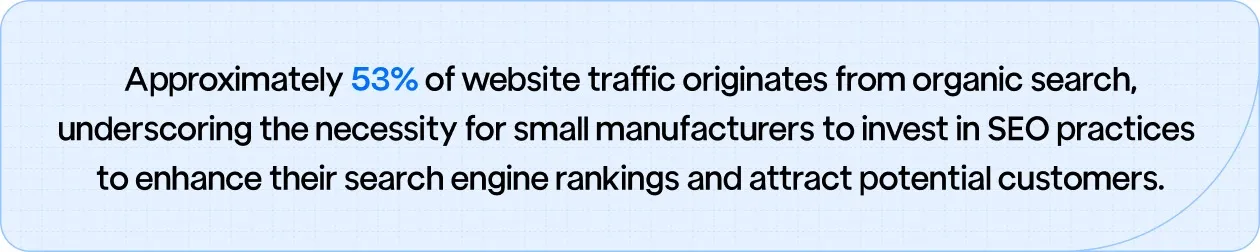
Actionable Steps:
- Optimize Your Website: Ensure your website uses the right keywords for your products and services. Tools like Google Keyword Planner can help you identify high-traffic terms that are specific to your industry.
- Focus on Local SEO: For small manufacturers, targeting local customers can be a game changer. Optimize for local searches by including location-based keywords and claiming your Google My Business listing.
- Use Google My Business: It's a free tool that helps improve local SEO. Set up your business profile, encourage reviews, and share updates to improve visibility in local searches.
Improve Your Search Visibility
We build a structured SEO approach that helps your business get found by the right buyers.
Upgrade Your SEO Strategy
3. Build Authority with Content Marketing
Content marketing is one of the most effective ways for small manufacturers to connect with potential customers by offering valuable, informative content that builds trust over time.
Actionable Steps:
- Write Blogs, Guides, and How-Tos: Create educational content that helps your target audience solve problems related to your products. This could include step-by-step guides, industry insights, or product breakdowns.
- Use Case Studies: Show real-world examples of your products in action. Case studies highlight your products' benefits and help build authority by demonstrating their effectiveness.
- Create Videos and Infographics: Complex manufacturing processes or products can be hard to explain with words alone. Use video demos or infographics to showcase your products’ features and benefits in a visually engaging way.
Create Content That Builds Trust
We create valuable, insightful content that highlights your expertise and drives consistent buyer engagement.
Enhance Your Content Strategy
4. Social Media
Social media can be a powerful tool to engage with potential customers and showcase your products. The trick is to use the right platforms and content to make an impact.

Actionable Steps:
- Focus on LinkedIn, YouTube, and Facebook: These platforms are great for B2B manufacturers. LinkedIn allows you to network and share thought leadership, while YouTube is perfect for product demos, and Facebook works for community-building.
- Share Value-Driven Content: Post content that educates and adds value, not just product promotions. Share insights into industry trends, problem-solving tips, or behind-the-scenes looks at your production process.
- Use Hashtags and Engage: Participate in relevant conversations using hashtags, join groups, and reply to comments to increase visibility and drive engagement.
5. Email Marketing
Email marketing is a highly cost-effective way to keep your brand in front of potential and existing customers. It’s an essential strategy for manufacturers who want to nurture long-term relationships.

Actionable Steps:
- Build and Segment Your Email List: Create segmented lists based on customer behavior, preferences, or demographics. This allows you to send targeted messages that are relevant to each group.
- Send Product Updates and Exclusive Offers: Keep your customers informed about new product releases, special discounts, and industry news. Make them feel valued with exclusive offers that encourage repeat purchases.
- Automate Your Campaigns: Set up automated email flows for customer onboarding, post-purchase follow-ups, or abandoned cart reminders. This saves you time while keeping customers engaged.
6. PPC Ads
Pay-per-click (PPC) advertising is an excellent way for small manufacturers to drive targeted traffic quickly, especially in competitive markets where organic reach can take time.
Actionable Steps:
- Run Targeted PPC Campaigns: Use platforms like Google Ads to bid on industry-related keywords and target specific buyer segments. Set up retargeting ads to follow up with visitors who didn’t convert on their first visit.
- Monitor and Optimize: Track the performance of your campaigns and adjust bids and keywords to maximize ROI. Ensure that your landing pages are optimized for conversions to make the most of your ad spend.
7. Referral Programs
Referral programs are an easy and cost-effective way to acquire new customers by leveraging the trust your existing customers have in your products.
Actionable Steps:
- Encourage Referrals: Offer incentives like discounts or free products to customers who refer new business. Make the process as easy as possible, like creating unique referral links for easy sharing.
- Build a Referral Network: Collaborate with complementary businesses to create mutual referral programs. This expands your reach and brings in qualified leads that are more likely to convert.
- Track and Optimize: Monitor the success of your referral program and continuously optimize it based on performance. Look at which channels or referral partners are delivering the best results.
8. Trade Shows and Events
Trade shows and industry events are excellent opportunities for manufacturers to network, showcase products, and build relationships with potential customers and partners.
Actionable Steps:
- Attend Relevant Trade Shows: Focus on industry-specific events where you can meet your target audience. These events offer great networking opportunities and the chance to see what competitors are doing.
- Prepare Marketing Materials: Bring high-quality product demos, brochures, and business cards to make the most of face-to-face interactions.
- Follow Up with Leads: Don’t let the relationships end at the event. Follow up promptly with leads and nurture these connections to convert them into long-term clients.
Also Read: Master the Art of Utilizing Content Marketing at Trade Shows: A Step-by-Step Guide
9. Influencer Marketing
While influencer marketing is often associated with B2C businesses, it can be just as valuable for B2B manufacturers looking to expand their reach and credibility within the industry.
Actionable Steps:
- Identify Industry Influencers: Look for key players in your industry who have a strong following and align with your values. These influencers can help promote your products in a way that builds trust with your audience.
- Collaborate for Exposure: Provide influencers with your products to review or feature in their content. This can create organic buzz and expand your reach without traditional ad spend.
- Track Engagement: Measure the success of influencer partnerships by tracking engagement, traffic, and conversions from their promotions.
10. Video Marketing
Video marketing is a powerful tool to showcase your products in action, explain complex processes, and engage your audience in a dynamic way.
Actionable Steps:
- Create Short Product Demos: Show your products in use and highlight their key features. Keep it concise and focused on the customer’s needs.
- Use YouTube and Social Media: Post videos on YouTube for broader reach and share clips on social media to engage with your audience directly.
- Leverage Live Streaming: Use live streaming for product launches, behind-the-scenes content, or Q&A sessions. This can increase real-time engagement and foster a connection with your audience.
11. Track, Test, and Adjust
The key to sustained success is constantly evaluating the effectiveness of your marketing strategies. Regular testing and adjustments help you stay ahead of the competition.
Actionable Steps:
- Use Analytics Tools: Track your marketing performance using tools like Google Analytics and social media insights. This data will give you a clear picture of what’s working and what isn’t.
- A/B Test Campaigns: Test different approaches to see what resonates best with your audience. Try variations of subject lines, landing pages, or ad copy to optimize performance.
- Review Goals Regularly: Your business and industry are constantly evolving. Regularly review your marketing goals and adjust your strategies to keep up with changing trends.
Ready to Supercharge Your Manufacturing Marketing?
Marketing for small manufacturers doesn't need to be costly or complex.
Remember, the real challenge is about attracting the right ones. SEO, content marketing, and targeted ads are key to building a foundation that drives lasting success.
Ready to Strengthen Your Marketing?
Get expert guidance on applying proven strategies that support long-term business growth.
Book A Consultation
SEO
Sep 24, 2025
5 mins
10 Content Marketing Services That Fuel Brand Reach and Sales for HVAC Manufacturers
Batul Beawarwala
Most HVAC manufacturers are great at what happens inside the factory. You already know how to build reliable components, meet specs, and deliver on time. The real challenge shows up outside the factory walls when the people who need your products can’t clearly see what you offer.
Buyers rarely reach out unless they already understand your capabilities, your product range, and the value you bring. If that clarity is missing, they move on to the next option even if your solution is the better one.
That’s where content marketing becomes a practical method. This kind of marketing explains your products clearly, answers technical questions buyers already have, and helps serious prospects move closer to sending an inquiry.
In this blog, you’ll learn the top content marketing services for HVAC manufacturers that actually drive leads.
Why HVAC Manufacturers Need Content Marketing?
For HVAC manufacturers, content marketing is a practical way to solve real sales problems that slow business down.
Here’s why it matters:
1. Your Products Are Technical, And Buyers Want Clarity.
HVAC components, systems, and parts often come with complex details. Good content breaks these details into simple, clear explanations that help buyers understand exactly what you make and whether it fits their project requirements.
2. You Reduce Unqualified Inquiries.
When your content clearly lists capabilities, minimum order quantities, materials, and industries served, the wrong prospects stop reaching out. That saves your team time and brings in more serious, ready-to-buy leads.
3. Your Competitors Are Already Online.
Most HVAC manufacturers still rely on distributors, catalogs, and sales reps. But top-performing manufacturers now use online content to win attention earlier in the buying cycle.
4. It Builds Trust Before Your First Conversation.
When buyers see technical guides, case studies, product explanations, and clear processes, they feel confident about your capabilities. Trust doesn't come from your sales pitch. It comes from what buyers see online when they’re researching on their own.
5. It Creates A Steady Flow Of Leads Without Relying On Trade Shows.
Trade shows are valuable, but they’re seasonal and unpredictable. Content works all year, helping you get inquiries even during slow periods.
Top 10 Content Marketing Companies For HVAC Manufacturers
The services below focus on what actually moves the needle for B2B buyers: clear information, strong proof, and content that supports long sales cycles. Each one plays a different role in helping you get found, trusted, and contacted by the right decision-makers:
1. Gushwork
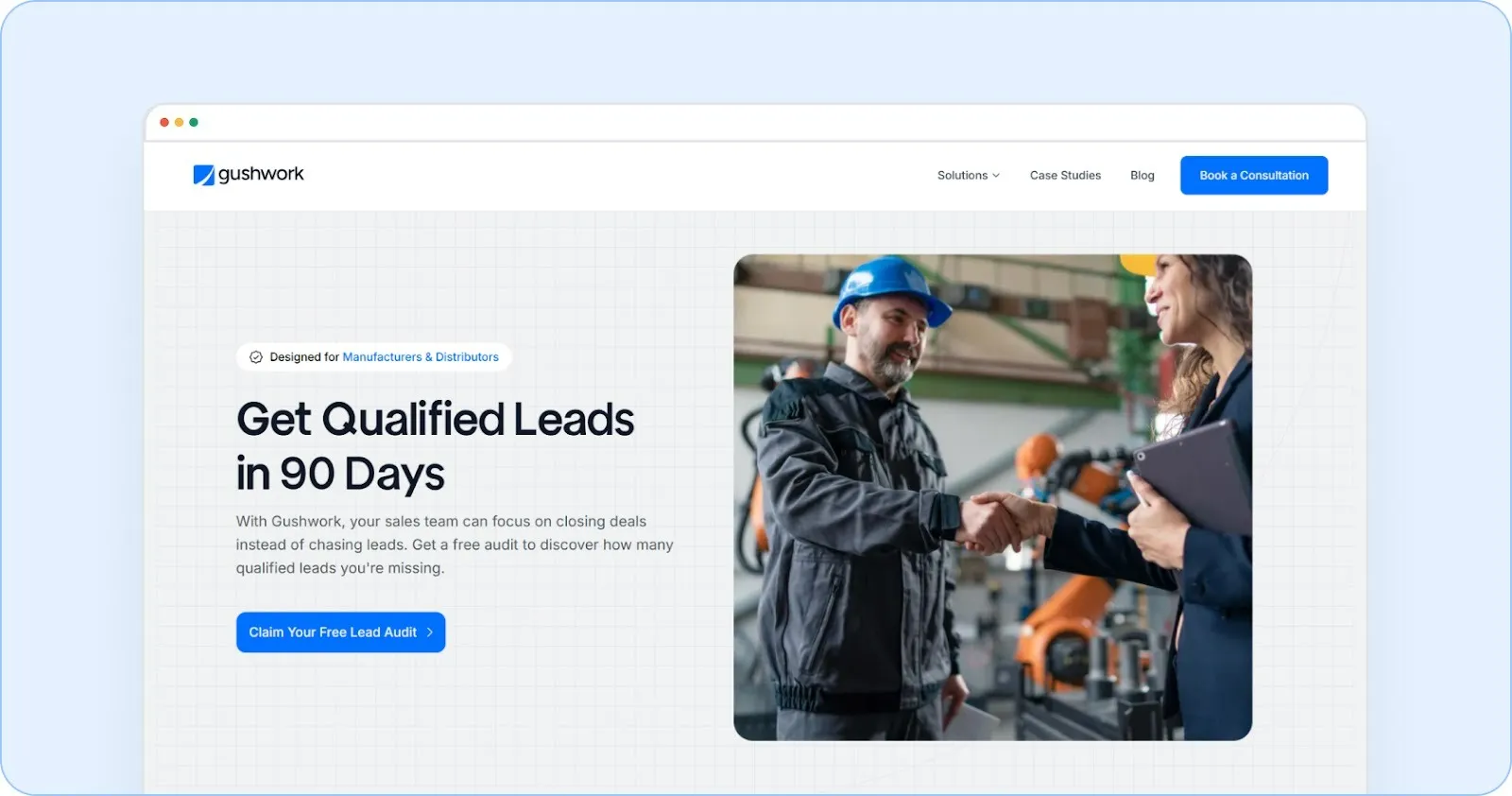
Gushwork specializes in AI-assisted SEO and lead generation systems tailored for HVAC manufacturers. Unlike traditional agencies, Gushwork takes a deep, data-driven approach to content marketing, focusing on long-term buyer journeys and ensuring every piece of content is optimized to capture high-quality, relevant leads.
Their suite of services including website development, CRM integration, automated marketing workflows, and targeted SEO & ads. It helps HVAC manufacturers create predictable lead flow and increase online visibility without relying on generic content strategies.
Key Services:
- AI-assisted SEO & Local SEO
- Automated Marketing Workflows & CRM
- Targeted Digital Marketing Campaigns
- Content Marketing for Engineering Decision-Makers
Why They Stand Out?
Gushwork’s exclusive focus on manufacturers gives them a unique understanding of the HVAC industry, allowing them to create highly targeted strategies that deliver measurable results.
If you want lead systems built specifically for HVAC manufacturers, Gushwork can help you attract better prospects and turn more of them into real opportunities.
2. Blue Corona
Best for: Full-service HVAC marketing with a focus on generating leads and increasing sales.
Blue Corona specializes in content marketing, SEO, and pay-per-click advertising for HVAC businesses. Their holistic approach helps HVAC manufacturers improve online visibility, attract leads, and optimize marketing costs.
Key Services:
- SEO & Local SEO
- Content Creation (blogs, landing pages)
- PPC Management
- Website Optimization
- Lead Recovery Services
Why They Stand Out?
Known for combining SEO, content creation, and PPC, Blue Corona offers a comprehensive solution to improve your HVAC company’s digital presence and lead generation.
3. Hook Agency
Best for: Tailored SEO and website strategies for HVAC companies.
Hook Agency specializes in building high-converting websites for HVAC businesses while providing SEO strategies designed to increase traffic and improve lead generation.
Key Services:
- Custom Web Design
- SEO Optimization
- Content Strategy for HVAC Manufacturers
- Conversion Rate Optimization
- Social Media Marketing
Why They Stand Out?
Hook Agency combines aesthetic website design with a focus on conversion, ensuring HVAC manufacturers not only attract visitors but also turn them into leads.
4. Lokal
Best for: Data-driven, localized content marketing for HVAC companies.
Lokal offers personalized, data-driven marketing strategies that focus on local SEO and content creation, ensuring HVAC manufacturers target the right geographic market.
Key Services:
- Local SEO
- Content Marketing
- PPC Advertising
- Google Business Profile Optimization
- Custom Website Design
Why They Stand Out?
Lokal’s data-centric approach ensures HVAC manufacturers increase visibility in specific regions, driving highly-targeted local traffic.
5. Lemon Seed Marketing
Best for: Creative content marketing with a strong social media presence for HVAC brands.
Lemon Seed Marketing focuses on social media, content creation, and email marketing strategies designed to engage HVAC manufacturers' target audiences across platforms.
Key Services:
- Social Media Marketing
- Content Creation (blogs, social posts, video)
- Email Marketing
- Brand Strategy
Why They Stand Out?
Lemon Seed excels at crafting engaging, creative content that resonates with HVAC brands’ audiences, driving both engagement and leads.
6. HVAC Webmasters
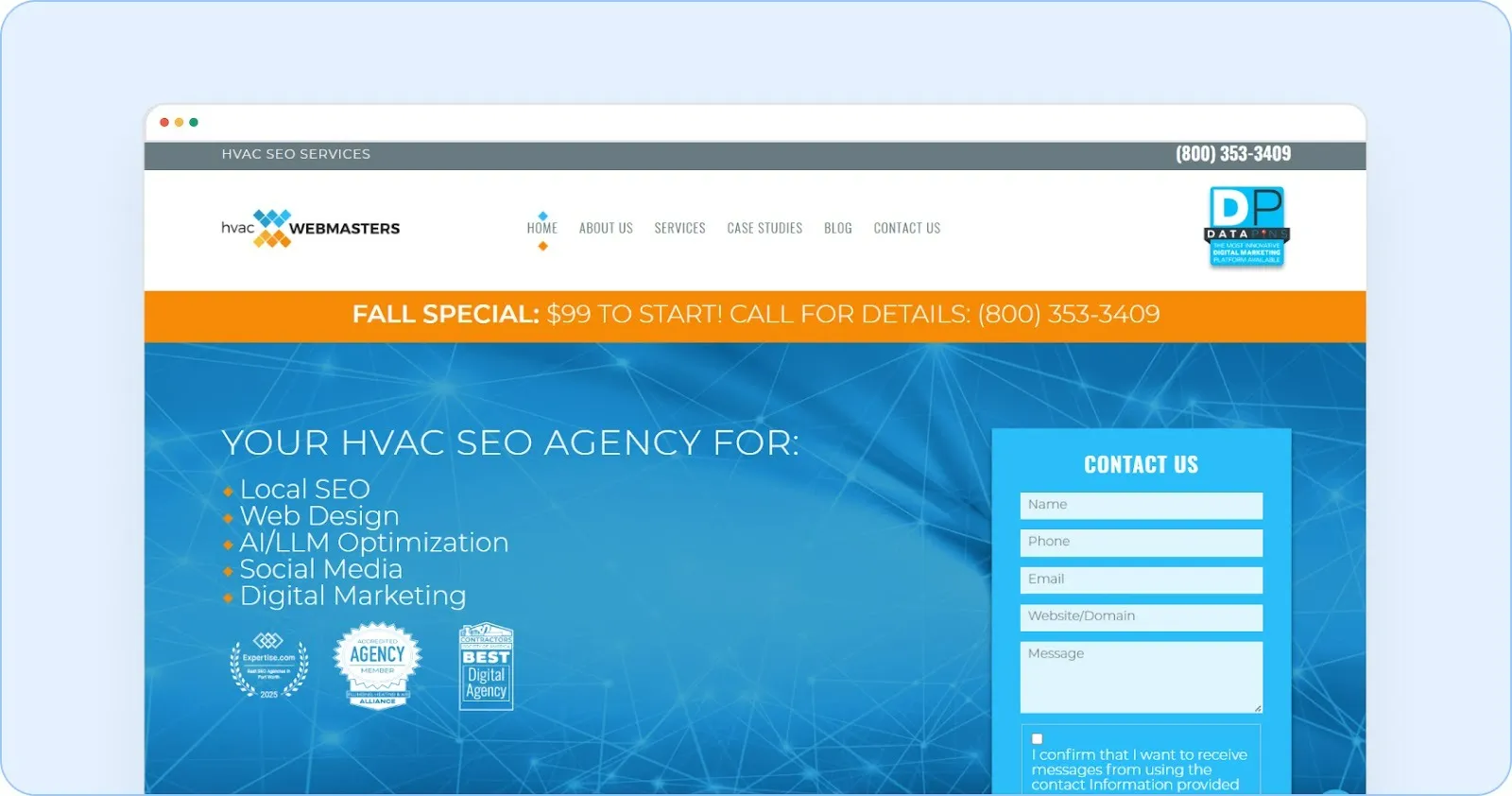
Best for: Comprehensive HVAC marketing with a focus on SEO and lead generation.
HVAC Webmasters offers a full suite of services, including content creation and SEO, designed to improve the online presence of HVAC manufacturers and generate qualified leads.
Key Services:
- SEO & Local SEO
- Content Marketing
- Website Development & Optimization
- Social Media Marketing
Why They Stand Out?
HVAC Webmasters is dedicated exclusively to HVAC businesses, creating tailored content strategies that drive measurable results for the industry.
7. Rival Digital
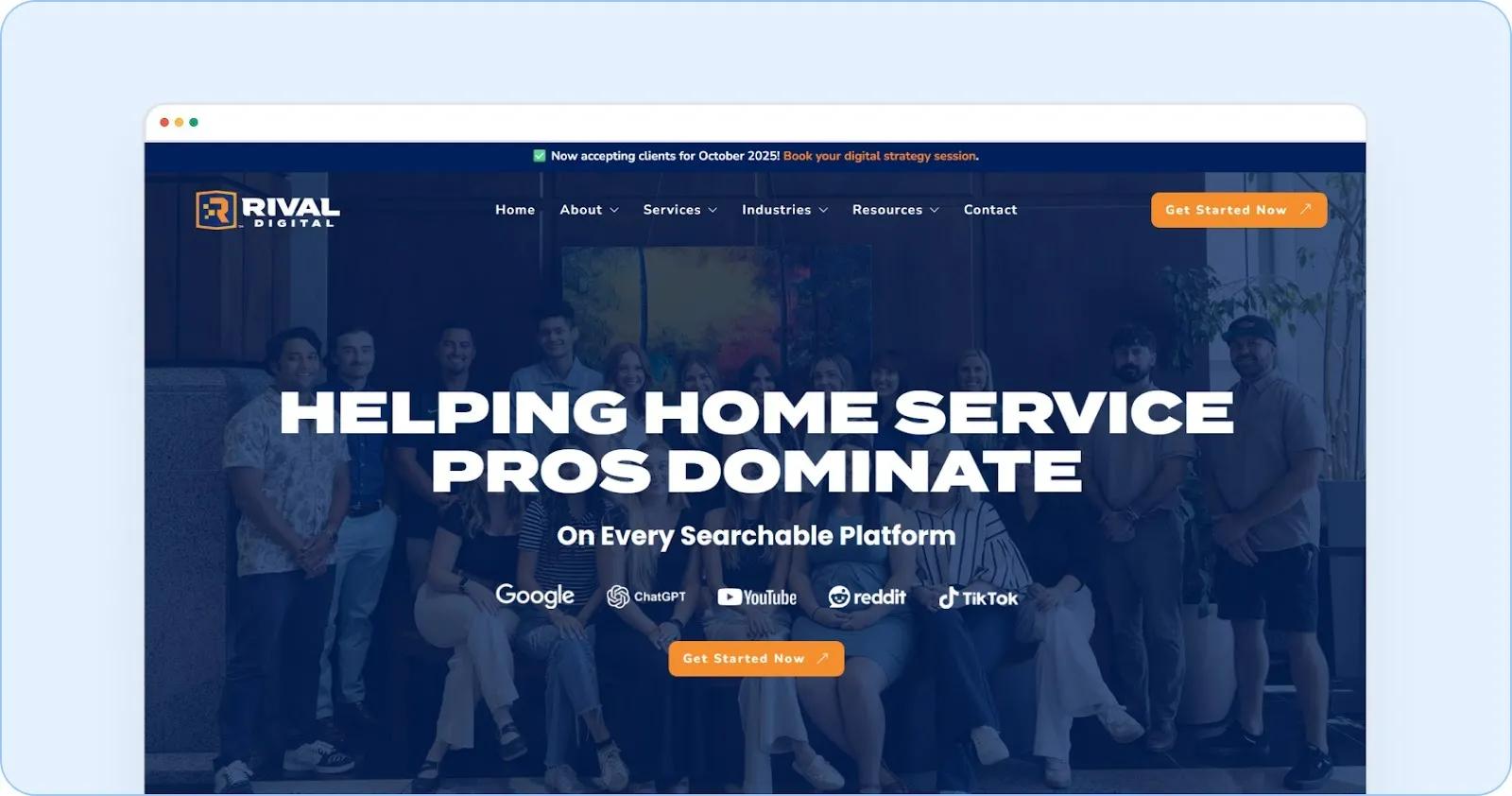
Best for: Data-driven SEO and content strategies for HVAC companies.
Rival Digital specializes in creating custom content strategies for HVAC manufacturers, with a focus on SEO and increasing online visibility.
Key Services:
- Advanced SEO
- Content Marketing & Strategy
- Conversion Rate Optimization
- PPC Campaigns
Why They Stand Out?
Rival Digital’s focus on data-driven content strategies helps HVAC manufacturers maximize SEO results and generate high-quality leads.
8. BXB Media
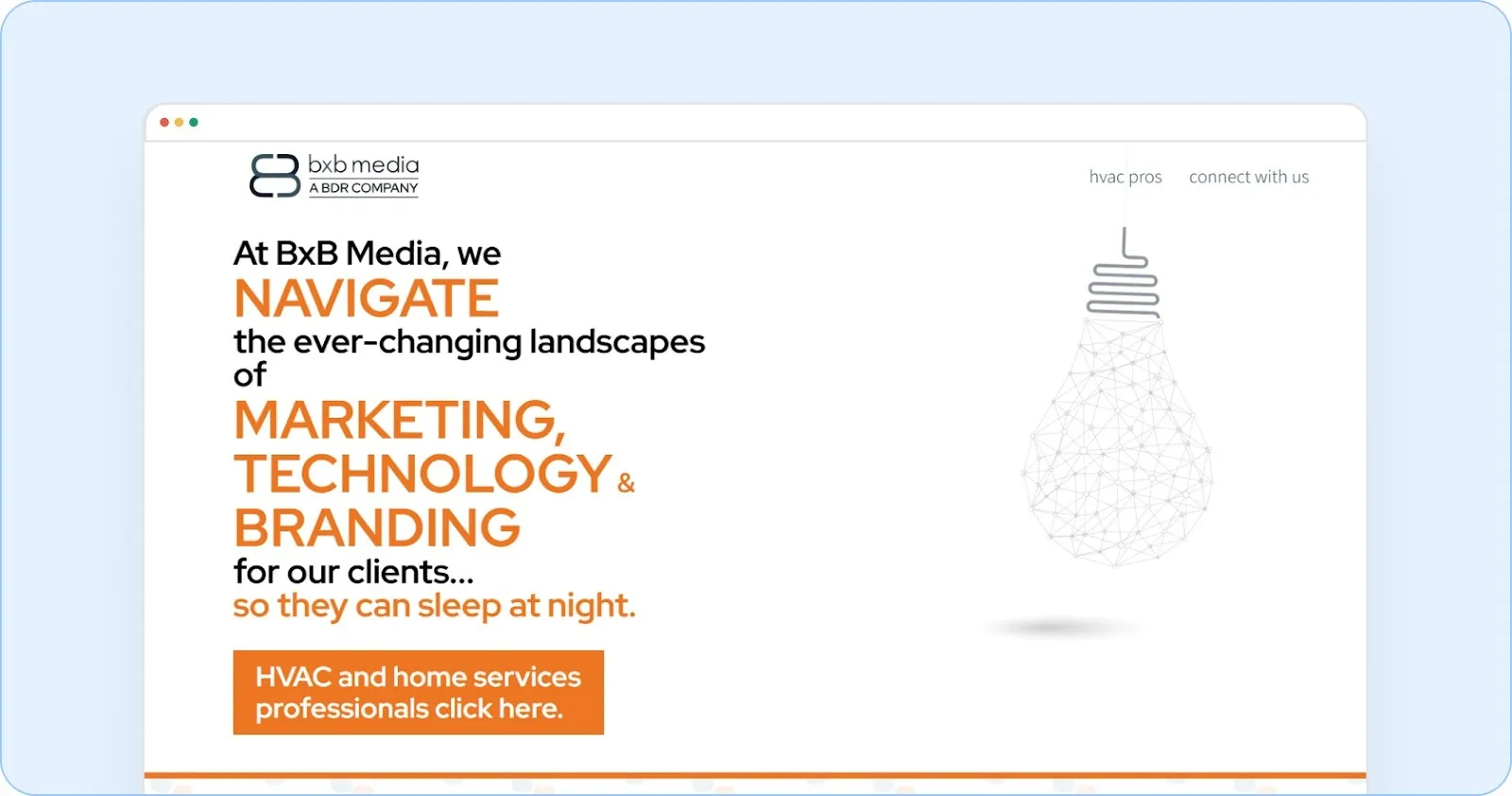
Best for: Blending traditional and digital marketing for HVAC businesses.
BXB Media offers a hybrid marketing strategy, combining both traditional and digital content marketing services to reach HVAC manufacturers’ audiences through multiple channels.
Key Services:
- Content Marketing & SEO
- PPC Advertising
- Traditional Ad Development (print, TV)
- Video Production
- Social Media Management
Why They Stand Out?
BXB Media’s unique approach bridges the gap between traditional and digital marketing, ensuring HVAC manufacturers can reach their audience on multiple platforms.
9. 1SEO Digital Agency

Best for: Comprehensive digital marketing with creative content services for HVAC brands.
1SEO Digital Agency offers content marketing, SEO, and creative services to help HVAC manufacturers enhance their digital presence and generate leads.
Key Services:
- SEO & Local SEO
- Content Marketing
- Creative Services (Photography, Video)
- PPC Campaigns
- Reputation Management
Why They Stand Out?
Their creative approach to content marketing and focus on visual storytelling help HVAC manufacturers capture attention and optimize for search.
10. Thrive Agency
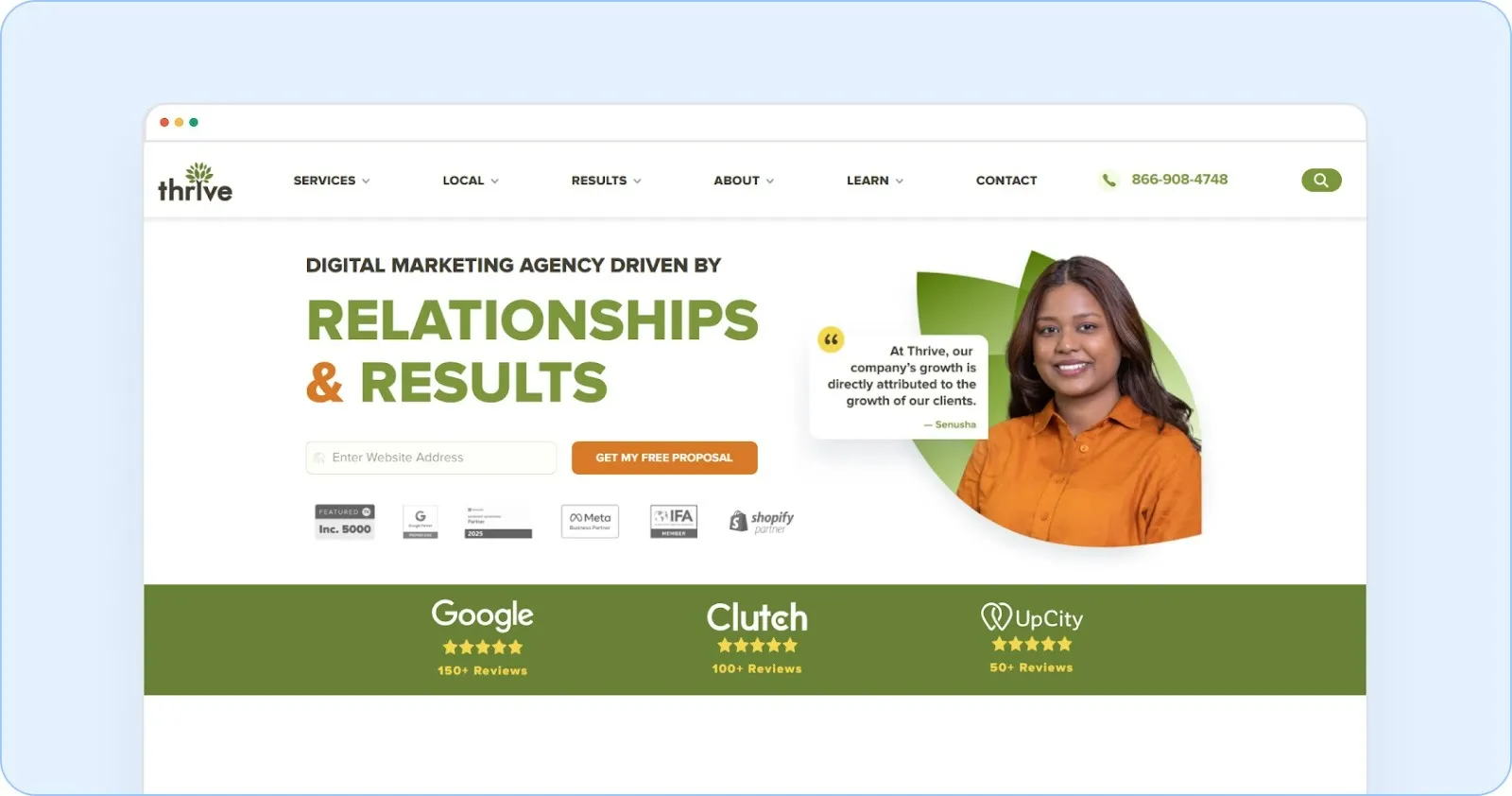
Best for: Full-service digital marketing for HVAC brands looking for end-to-end solutions.
Thrive Agency offers a comprehensive range of digital marketing services, including SEO, content marketing, and social media management, to help HVAC manufacturers succeed online.
Key Services:
- Content Marketing
- SEO & Local SEO
- Social Media Marketing
- Online Reputation Management
Why They Stand Out?
Thrive’s end-to-end digital marketing services provide HVAC manufacturers with a one-stop solution for all their content marketing needs.
Top 4 Content Marketing Trends for HVAC Manufacturers
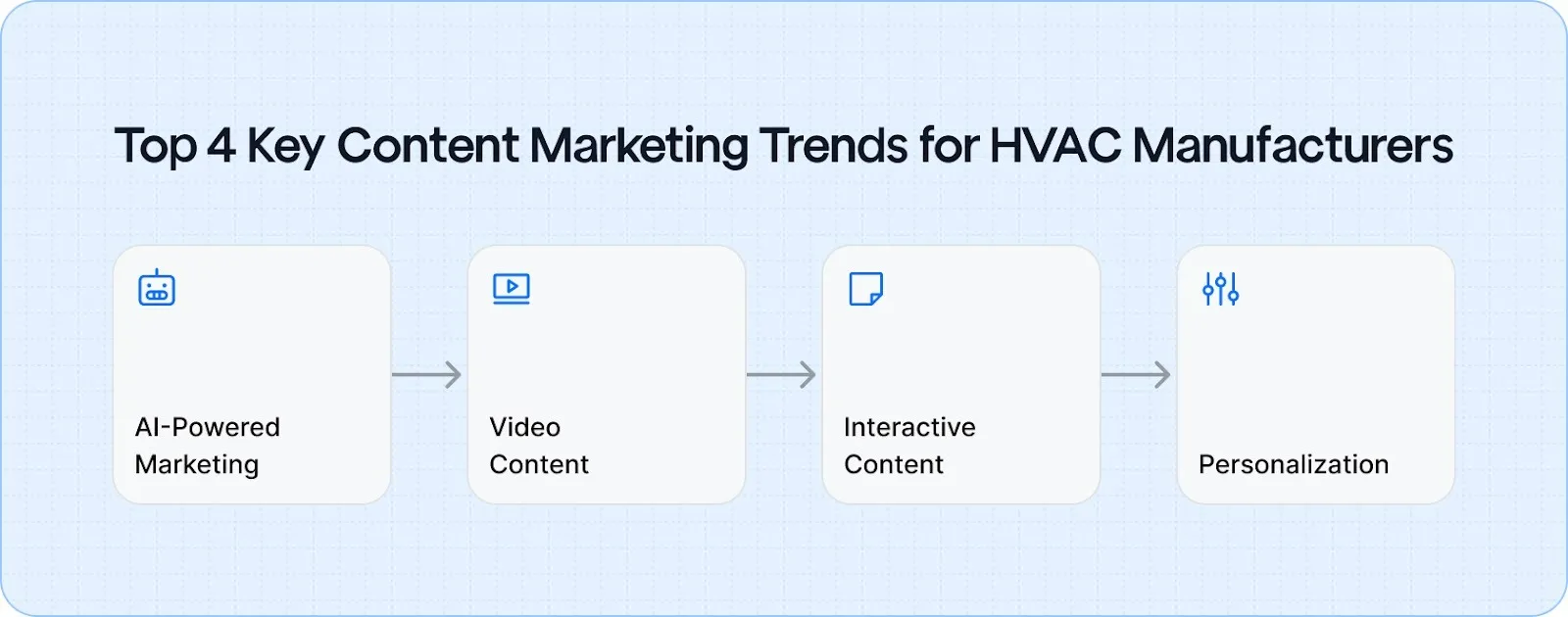
For HVAC manufacturers, keeping pace with evolving content marketing trends is crucial to staying competitive. With new technologies, shifting customer preferences, and increasing digital competition, HVAC companies need to adapt quickly to remain relevant.
Here’s a look at the specific trends HVAC manufacturers should focus on to enhance their content marketing efforts:
1. AI-Powered Marketing
AI is no longer just a buzzword; it’s a key enabler of success in modern marketing strategies. HVAC manufacturers can leverage AI to optimize content creation, enhance SEO, and automate marketing workflows.
By incorporating AI into your marketing strategy, you can:
- Enhance Content Relevance: AI tools can suggest the best keywords and optimize content for better rankings.
- Automate Lead Nurturing: AI can track lead behavior and personalize email marketing campaigns, keeping prospects engaged without manual effort.
- Predict Lead Quality: AI-powered analytics help identify high-potential leads based on their behavior, ensuring marketing efforts are spent efficiently.
Incorporating AI into your HVAC marketing strategy empowers your company to stay ahead of competitors by creating content that not only attracts but also engages and converts your target audience.
2. Video Content
Video is one of the most powerful forms of content in the digital age, and its popularity continues to grow. Short-form videos, in particular, have become a go-to medium for engaging potential customers. For HVAC manufacturers, here’s how video content can elevate your marketing:
- Product Demos: Short, crisp videos showing your products in action can help potential customers understand their functionality and value.
- Tutorials & How-To Guides: Educational videos teaching customers how to maintain HVAC systems or troubleshoot common issues, build trust and authority.
- Behind-the-Scenes Content: Sharing the process behind your manufacturing or installation can help humanize your brand and create a deeper connection with your audience.
Videos are compelling because they provide clear, visual explanations of how your products solve real-world problems.
For HVAC manufacturers, video can help simplify complex technical features, making them accessible to a wider audience.
3. Interactive Content
Interactive content helps HVAC manufacturers actively engage their audience while collecting valuable insights.
Unlike static content, interactive tools foster participation, giving users a reason to engage with your brand. Here’s how to incorporate it into your marketing strategy:
- Quizzes: Help users find the right HVAC system for their needs, while collecting important data for lead generation.
- Surveys: Gather feedback from customers about their needs or satisfaction, helping you refine your offerings and content.
- Calculators: Provide cost-saving calculators or energy efficiency tools that allow users to see the benefits of your HVAC solutions.
Not only does interactive content increase engagement, but it also gathers valuable data, enabling HVAC manufacturers to segment their audience more effectively and personalize their marketing strategies.
4. Personalization
In today’s competitive landscape, generic content doesn’t cut it anymore. Personalization is key to attracting the right prospects and driving conversions.
For HVAC manufacturers, this means creating content that speaks directly to the needs and pain points of your specific audience. Here’s how to personalize your content marketing efforts:
- Personalized Email Campaigns: Send targeted emails based on users’ past behaviors, offering solutions that meet their specific needs.
- Dynamic Landing Pages: Customize landing pages to reflect the location, industry, or specific HVAC product the visitor is interested in.
- Localized Content: For HVAC manufacturers with multiple service areas, create localized content that speaks to regional preferences, challenges, and needs.
Personalized content can dramatically improve user engagement and conversion rates, especially when it speaks directly to your customers’ pain points and decision-making factors.
Also Read: Sales Enablement for Manufacturing: 5 No-Nonsense Ideas
Ready to Get More Qualified HVAC Leads?
We build clear and simple content systems for HVAC manufacturers that explain your products, attract the right buyers, and turn website visits into real inquiries.
Plan My Content Strategy
How Content Marketing Helps HVAC Manufacturers Rank Online?
Ranking on Google’s first page is a necessity for HVAC manufacturers looking to increase organic traffic and attract qualified leads.
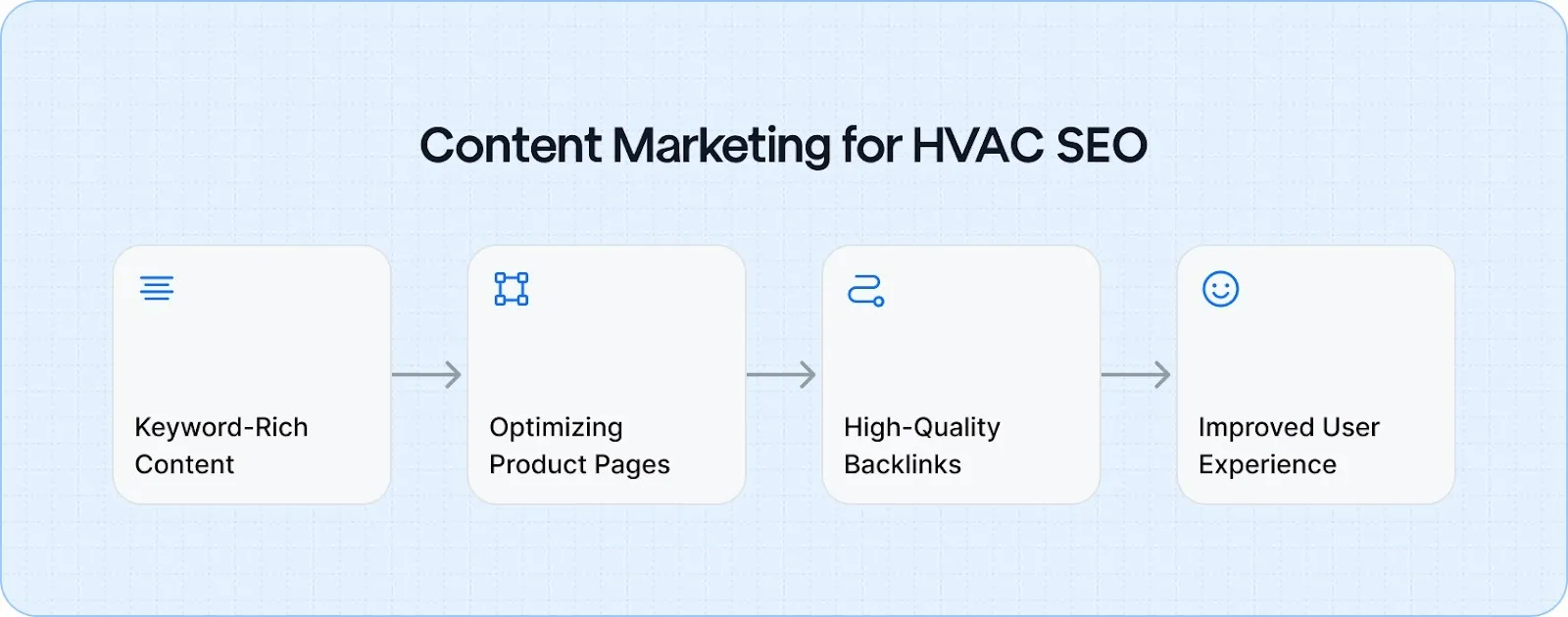
While many factors contribute to SEO success, content marketing plays a crucial role in boosting search engine visibility.
Here’s how effective content marketing strategies can help HVAC manufacturers rank higher on Google.
1. Keyword-Rich Content
To rank well on Google, HVAC manufacturers need to consistently produce content that is rich in industry-specific keywords. Here’s how to approach it:
- Target Long-Tail Keywords: Focus on niche keywords like “best HVAC system for hospitals” or “energy-efficient HVAC units for office buildings.” These keywords often have lower competition and higher conversion rates.
- Content Formats: Incorporate keywords into a variety of content formats, including blog posts, product pages, and FAQs.
- Keyword Placement: Strategically place keywords in titles, meta descriptions, headers, and throughout your content to maximize visibility.
By creating content around high-performing keywords, HVAC manufacturers can increase their chances of appearing in relevant searches, driving more targeted traffic to their site.
2. Optimizing Product Pages
Content marketing extends beyond blogs and articles; it includes optimizing your product pages for search engines. HVAC manufacturers should ensure product pages include:
- Detailed Descriptions: Provide in-depth, keyword-rich descriptions of your HVAC products, highlighting their features and benefits.
- Technical Specifications: Include technical data and specifications that help engineers and decision-makers find exactly what they need.
- Customer Reviews: Feature customer testimonials to build trust and credibility while helping improve SEO through fresh content.
Optimizing your product pages with valuable content can improve both SEO rankings and the user experience, making it easier for potential customers to find the right products.
3. High-Quality Backlinks
Google rewards websites that are linked to from other authoritative sites. This is where high-quality backlinks come in. HVAC manufacturers can improve their SEO by:
- Creating Shareable Content: Develop content that others in the industry want to link to, such as detailed case studies, reports, or whitepapers.
- Guest Blogging: Write guest posts for reputable HVAC-related blogs to earn backlinks.
- Collaborating with Industry Influencers: Build relationships with industry influencers who can link to your content and help boost your credibility.
The more high-quality backlinks your website has, the more authority Google assigns to your content, improving your chances of ranking higher.
4. Improved User Experience
Google values websites that offer a seamless user experience (UX). To improve UX and boost SEO, HVAC manufacturers should focus on:
- Website Speed: Ensure your website loads quickly to reduce bounce rates.
- Mobile Optimization: Since most searches now occur on mobile devices, make sure your website is responsive and user-friendly.
- Clear Navigation: Simplify your website’s structure so visitors can easily find the information they need.
Providing a great UX not only benefits your visitors but also improves your SEO performance by keeping users on your site longer.
Wrapping Up
Content marketing is a vital tool for HVAC manufacturers who want to build lasting customer relationships and increase online visibility.
Simply relying on outdated marketing strategies won’t help you stay competitive. It’s time to shift from generic, one-size-fits-all approaches to highly targeted, AI-driven systems that focus on quality leads.
Key Takeaways:
- A strong digital marketing strategy is essential to stand out in the crowded HVAC space.
- AI-powered systems like Gushwork’s ensure a predictable flow of qualified leads.
- Relying on outdated methods like basic SEO or generic ads won't bring lasting results.
If you're frustrated by low-quality leads and inefficiency, it’s time to optimize your marketing efforts.
Want Better HVAC Leads Without Guesswork?
We help HVAC manufacturers create clear content and simple lead systems that bring in the right buyers. Get practical guidance and a plan you can use right away.
Book My Consultation
Industrial Sales
Sep 24, 2025
5 mins
If Your Lead Flow Is Dry, Partnering With These 5 Businesses Is The Fastest Way To Fix It
Batul Beawarwala
Most manufacturers don’t struggle with production. You already know how to deliver on specs, meet deadlines, and keep quality tight. The real struggle is getting in front of the right buyers who need exactly what you make.
That’s why many manufacturers look for support from lead generation partners who understand the industrial world.
In this blog, you’ll learn what lead generation companies actually do for manufacturers, why they matter, and the top five types you should consider if you want more qualified RFQs, better-fit prospects, and a steady sales pipeline.
What Is Lead Generation?
Lead generation is the process of helping the right buyers find your business and getting them interested enough to talk to you. In manufacturing, a “lead” is usually someone who is a good fit for what you make, and wants to request a quote or start a conversation.
If marketing brings visibility, lead generation brings actual opportunities.
It’s the bridge between “someone is searching” and “someone is ready to speak to your sales team.”
Why Manufacturers Need Lead Generation Support
Most manufacturing companies are built around operations, not marketing. So even if your product line is strong, the path that leads buyers to you is often unclear or inconsistent.
Here’s why a lead generation partner becomes valuable:
1. Buyers Don’t Just “Find You” Anymore
Procurement teams look online before they request a quote. They compare suppliers by capabilities, certifications, materials, and case studies. If your business doesn’t appear in those early searches, you’re out before the conversation even starts.
2. Your Team Is Busy With Production, Not Outreach
Most manufacturing teams run lean. Sales often doubles as customer service or account management. Outreach, follow-ups, and research can’t compete with day-to-day operations. A lead partner handles the top-of-funnel work your team doesn’t have the time or system for.
3. Many Inquiries You Get Today Aren’t The Right Fit
You might get messages from students, tiny buyers, or low-quantity requests. A good lead generation partner filters out noise so you spend time only on buyers who match your order size, materials, certification needs, and capabilities.
4. Buyers Want Clarity Before They Call
Many manufacturers lose opportunities because their online presence doesn’t show enough detail. Lead partners help package your capabilities in a way that’s easy for buyers to understand: clean data, clear specs, and focused messaging.
5. Growth Becomes Predictable Instead Of Seasonal
Trade shows, referrals, and repeat clients are helpful but inconsistent. Lead generation creates a steady flow of potential buyers that supports your sales goals throughout the year.
Best 5 Lead Generation Companies for Manufacturers
The companies listed below specialize in working with manufacturers, understand long sales cycles, and focus on leads that match your capabilities, production setup, and industry standards:
1. Gushwork
Gushwork offers a comprehensive lead generation system designed specifically for manufacturers. Integrating SEO, content marketing, CRM, and automation, Gushwork helps manufacturers focus on attracting high-quality leads who are already interested in what you offer.
Why It Matters?
- AI-Driven Targeting: Gushwork utilizes AI to target and engage businesses actively searching for your products, ensuring you're not wasting resources on unqualified leads.
- CRM and Automation: Seamlessly integrates into your CRM, allowing for automated follow-ups and a streamlined sales process that eliminates manual work and reduces lead leakage.
- SEO-Optimized: Gushwork’s focus on high-intent SEO ensures that your business is visible to prospects who are already looking for your specific offerings, allowing you to generate qualified leads organically.
Key Benefits:
- Increased Conversion Rates: By automating and streamlining the lead generation process, Gushwork increases your chances of converting high-quality prospects.
- Optimized Content Marketing: Ensure your content speaks directly to your audience, addressing their unique needs and concerns.
If you want a scalable lead generation system built for the manufacturing industry, Gushwork is your way to lead efficiently.
Also Read: Manufacturing Lead Generation: A Complete Guide to Building Your Sales Pipeline
2. Dealfront
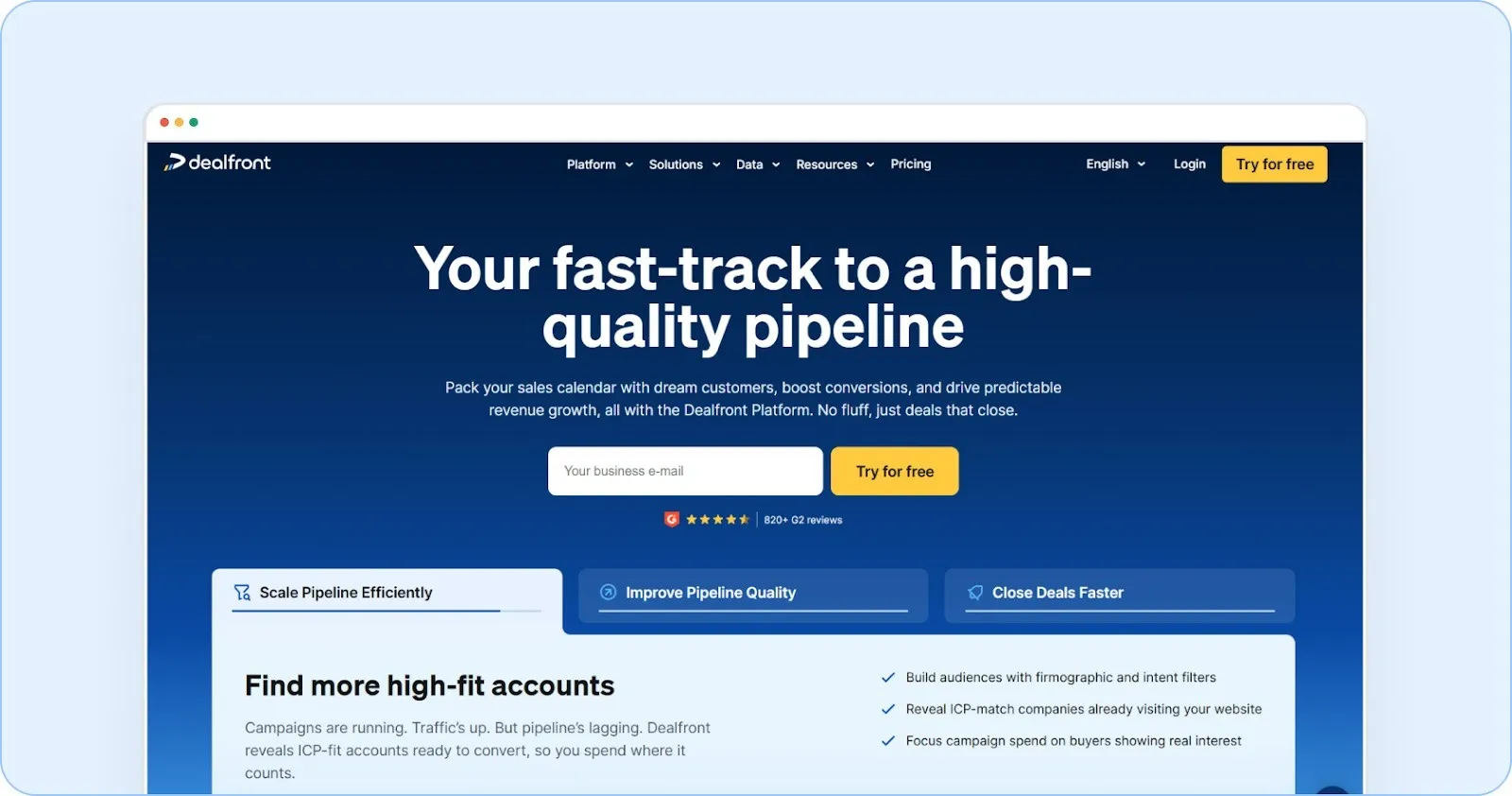
Why It Matters?
- Real-Time Visitor Identification: Dealfront helps manufacturers identify who is visiting their website and which pages they are interacting with, allowing for more targeted outreach.
- Sales Intelligence: Gain deeper insights into the needs and pain points of these visitors, helping your sales team engage in more relevant, high-impact conversations.
Key Features:
- Visitor Tracking: Understand who is showing interest in your products.
- Automated Lead Prioritization: Dealfront’s system automatically flags high-intent leads, allowing your team to focus on the most valuable prospects.
By identifying visitors that match your ideal customer profile, Dealfront helps manufacturers reduce wasted effort on unqualified leads and provides actionable insights into your existing web traffic.
3. CIENCE
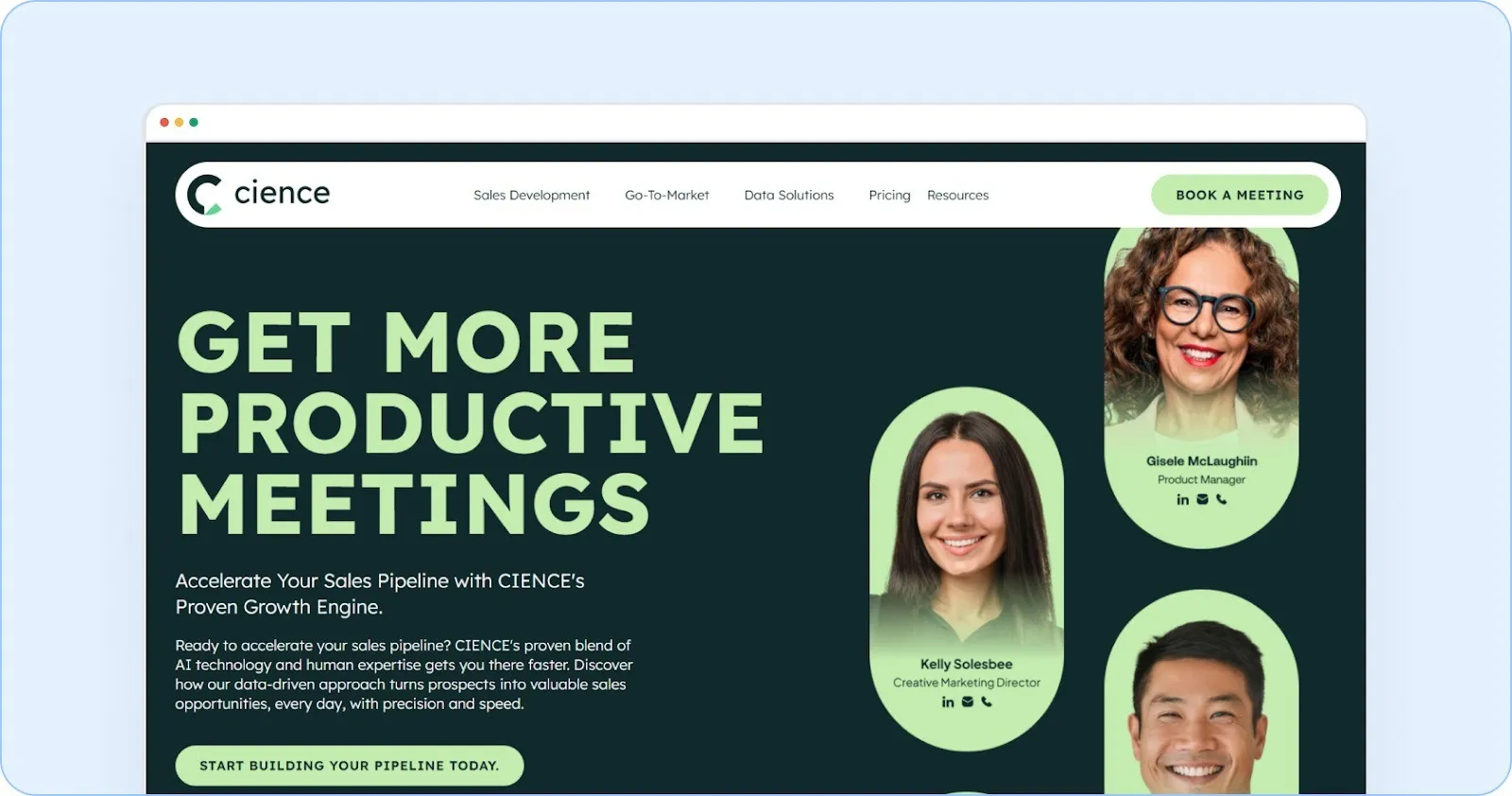
CIENCE offers outsourced Sales Development Representative (SDR) teams that focus on lead generation using industry-specific databases. This solution allows manufacturers to scale their lead generation efforts without needing to hire or train an in-house team.
Why It Matters?
- Industry-Specific Expertise: CIENCE provides SDR teams with deep knowledge of your industry, ensuring they understand the unique challenges and buying behaviors of your target market.
- Tailored Outreach: Their SDR teams use industry-specific databases to find and engage prospects who are a perfect fit for your products and services.
Key Benefits:
- Efficient Scaling: Grow your lead generation efforts without the overhead costs of adding full-time staff.
- High-Quality Leads: Their industry-specific databases are focused on finding leads that matter, resulting in more qualified appointments and higher conversion rates.
CIENCE’s outsourced SDR teams bring the expertise manufacturers need to generate and qualify leads effectively, enabling your business to grow without the operational hassle.
4. LinkedIn Sales Navigator
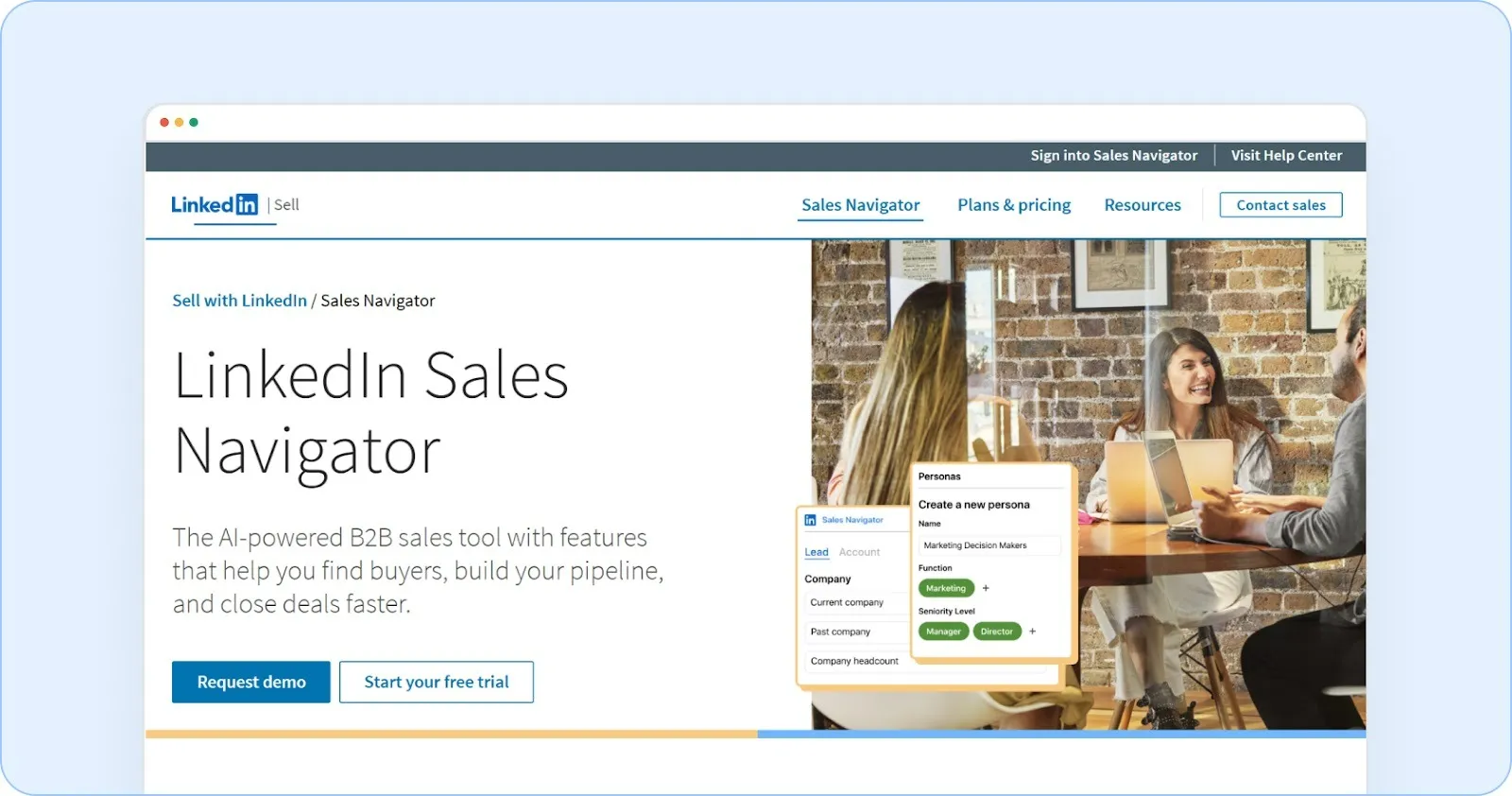
LinkedIn Sales Navigator is a powerful tool for manufacturers who need to target and connect with decision-makers within their industry. By utilizing advanced filters and real-time insights, LinkedIn makes it easier for you to engage with the right individuals responsible for purchasing decisions.
Why It Matters?
- Advanced Search Filters: Sales Navigator allows you to narrow down search results by job title, company size, and industry, ensuring you connect with the most relevant decision-makers.
- Real-Time Updates: Stay informed about changes within your prospect’s company, such as job changes, new projects, or funding, making your outreach more timely and relevant.
Key Features:
- Targeted Outreach: Directly find high-level executives and decision-makers who are the key to making purchasing decisions in your industry.
- Sales Insights: Get actionable insights into your leads’ activities, helping you engage at the most opportune moments.
With LinkedIn Sales Navigator, manufacturers can streamline their lead generation efforts and ensure they are connecting with the right people, making it easier to close high-value deals.
5. Pearl Lemon Leads

Pearl Lemon Leads provides full-service lead generation with a personalized approach, focusing on appointment setting for manufacturers. Unlike traditional cold-calling services, they take the time to create tailored messaging that resonates with your target audience.
Why It Matters?
- Personalized Outreach: Pearl Lemon doesn’t just generate leads—they take a highly personalized approach to outreach, making sure your prospects feel valued and understood.
- Appointment Setting: They focus on converting leads into actual appointments, ensuring that your sales team spends time on high-quality prospects who are ready to engage.
Key Benefits:
- Tailored Messaging: Personalize your outreach to speak directly to the pain points and needs of your target audience.
- Focus on Quality: Set appointments with leads who are more likely to convert, reducing wasted time on cold calls.
Pearl Lemon Leads offers a full-service approach to lead generation that ensures your sales team isn’t just talking to leads, but engaging with highly interested prospects ready to move forward.
How to Select the Best Lead Generation Service?
Finding the right lead generation partner is crucial for manufacturers who want to scale effectively and target high-value prospects. But with so many options available, how do you choose the right one?
Here are the key factors to consider when picking a lead generation company that fits your business needs.
Know What You Need: Agency vs. Software
Before you start looking at companies, it’s essential to identify whether you need a full-service agency to handle the entire lead generation process or if you just need a software solution to complement your in-house efforts.
- Full-Service Agencies: These companies handle everything from lead research to outreach, typically offering a range of services like cold calling, email campaigns, and appointment setting.
- Software Solutions: If your team already has the expertise and resources, a lead gen software might be a better choice. These platforms often integrate with your existing CRM and help you automate tasks like follow-ups and prospect tracking.
Look for Industry Experience
Not all lead generation companies understand the nuances of the manufacturing industry. When choosing a lead gen provider, look for one with experience in your industry.
A company that understands your specific needs and challenges will know how to tailor its strategies to attract the right decision-makers in your target market.
Key Questions to Ask:
- Have they worked with other manufacturers in your industry?
- Do they understand your sales cycle, B2B buying process, and specific pain points?
- Can they integrate seamlessly with your existing CRM and sales tools?
A lead gen provider that has experience working with manufacturers will be better equipped to drive high-quality leads that fit your unique business needs.
Scalability and Flexibility: Growing with You
Your business is likely to grow, and as it does, so will your lead generation needs. It's essential to choose a lead generation company that offers scalability and flexibility.
- Scalability: Can the service adapt to increased demand as your business grows? Ensure that the platform or agency can handle a larger volume of leads as your sales pipeline expands.
- Flexibility: As your company evolves, so will your lead generation strategy. Look for a partner that is willing to adjust their approach based on new market conditions, changes in your product offering, or shifts in customer behavior.
Choosing a company that can grow with you ensures long-term success and eliminates the need for a switch down the road.
3 Pro Tips for Maximizing Your Lead Generation Efforts
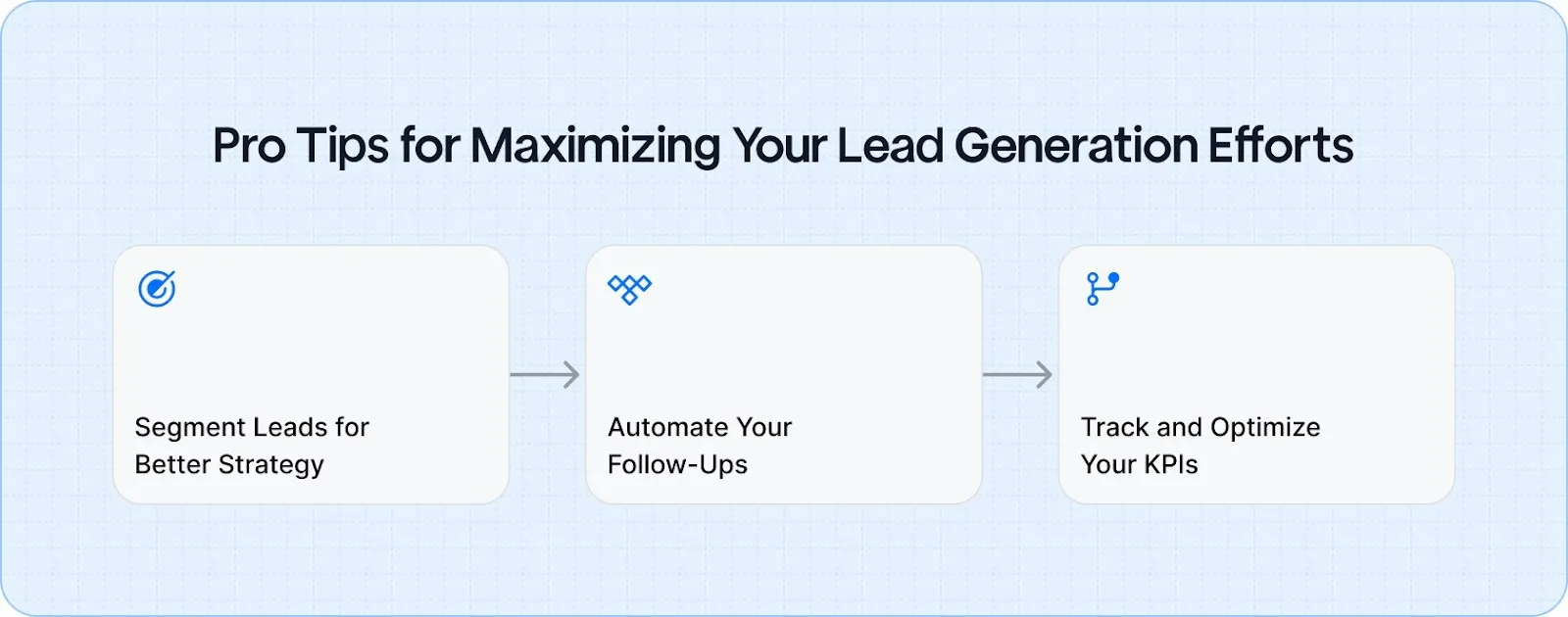
While picking the right partner is essential, you can also take several steps internally to optimize your lead generation efforts. Here are some pro tips for maximizing your lead generation success:
1. Segment Your Leads: Tailor Your Strategy
Not all leads are created equal, and each type of buyer will have different needs. Tailoring your strategy to different buyer personas within your target industries is key to maximizing your lead generation success.
- By Industry: Segment your leads based on industry and their unique challenges. For example, an automotive manufacturer may require different messaging than a food manufacturer.
- By Role: Tailor your messaging for different decision-makers, such as procurement managers, engineers, or CFOs.
Segmentation ensures that your outreach is personalized and relevant, increasing your chances of conversion.
2. Automate Your Follow-Ups
One of the biggest challenges manufacturers face is keeping track of all their leads and ensuring follow-ups happen at the right time. Automation tools can save you time and ensure that no leads slip through the cracks.
- CRM Integration: Use a CRM with automation capabilities to track, nurture, and follow up with leads without manual effort.
- Lead Scoring: Implement automated lead scoring to prioritize prospects who are ready to engage.
Automation ensures that you're engaging with your leads at the right time, increasing the likelihood of conversion while reducing the time spent on administrative tasks.
Also Read: PPC for Manufacturing: The Smart Way to Drive Leads and Slash Wasted Spend
3. Track and Optimize Your KPIs
The success of your lead generation efforts depends on continuously optimizing your strategy based on real-time performance. Use your lead generation tools to monitor key performance indicators (KPIs) such as:
- Lead Volume: How many leads are you generating?
- Lead Quality: Are the leads converting into sales opportunities?
- Conversion Rates: How effectively are you turning leads into customers?
By consistently monitoring your KPIs, you can adjust your strategy to focus on the channels and tactics that deliver the best results, ensuring that your lead generation efforts continue to improve.
What Success Looks Like for Manufacturing Industries?
Real-life examples provide powerful insights into the effectiveness of well-executed lead generation strategies. Here’s how two manufacturers transformed their businesses with targeted lead generation solutions.
Case Study 1: John Maye - AI-Powered SEO Strategy Transforms Lead Generation
The Challenge:
John Maye, a well-established name in the packaging equipment industry, had a problem; despite their long-standing expertise and trusted reputation, they lacked an online presence.
This meant they were missing out on qualified leads who were actively searching for their products online.
Their outdated website and reliance on traditional, cold outreach left them with low visibility in the digital space, and they weren’t able to engage with high-intent prospects.
The Solution:
John Maye partnered with a strategic AI-powered SEO strategy to elevate their digital presence. The goal was to improve organic visibility, capture qualified leads, and engage prospects who were actively searching for packaging solutions. Here’s what was done:
- AI-Driven SEO: Implemented a data-driven SEO strategy targeting high-intent keywords related to packaging equipment, specifically tailored to manufacturers' needs.
- Lead Capture System: Integrated a lead capture system into their website to funnel incoming visitors into the sales pipeline.
- Content Optimization: Optimized their existing website with detailed, industry-relevant content designed to answer the exact questions potential buyers were searching for.
The Impact:
- 17 Qualified Leads in 30 Days: John Maye generated 17 qualified leads in just 30 days through enhanced organic visibility.
- Shift to Warm, High-Intent Leads: By targeting high-value keywords and answering critical questions, they attracted prospects who were already interested in packaging solutions. This allowed them to transition from cold outreach to engaging with warm, high-intent prospects.
- Consistent Lead Flow: Their AI-powered system created a 24/7 lead generation engine, continuously capturing leads from relevant organic searches even while the team was offline.
Key Takeaway:
The shift from traditional cold outreach to an AI-driven, SEO-focused strategy helped John Maye tap into a whole new pool of high-intent prospects.
The leads they generated were genuinely interested in their products, significantly reducing wasted time and resources on unqualified leads.
Case Study 2: Paniflex - Organic Growth with Zero Ad Spend
The Challenge:
Paniflex, a closet door distributor in the USA, faced a major issue: despite having a strong product offering, its visibility was virtually nonexistent online.
Buyers were actively searching for closet door solutions, but Paniflex’s website wasn’t showing up for the highly relevant keywords in search engines.
As a result, they were losing valuable business opportunities to competitors who had optimized their digital presence.
The Solution:
Paniflex made a strategic decision to optimize their website for high-intent keywords and focus on building their organic presence. Here’s what they implemented:
- Comprehensive Keyword Optimization: They focused on 250+ high-intent keywords related to closet door systems, ensuring their website showed up for searches related to their products.
- Content Strategy: Created valuable, keyword-optimized content that directly addressed the questions and concerns of architects, contractors, and designers looking for closet door solutions.
- Zero Paid Ads: Instead of relying on paid advertising, Paniflex relied on organic search traffic to generate qualified leads.
The Impact:
- 113 Qualified Buyers in 6 Months: Paniflex generated 113 qualified buyers over 6 months, all through organic search traffic with no ad spend.
- Top Rankings for 250+ Keywords: Their website ranked in the top positions for over 250 high-intent keywords, bringing in targeted traffic from prospects who were actively looking for their products.
- Consistent Leads: The enhanced digital presence helped Paniflex achieve consistent lead generation without any reliance on paid ads, ensuring a steady flow of high-quality leads from organic search.
Key Takeaway:
Paniflex proved that you don’t need to spend a dime on ads to see remarkable results.
By focusing on organic SEO and creating valuable, search-optimized content, they were able to generate a consistent stream of qualified leads from buyers who were already looking for their exact solutions.
Want to See Similar Results?
Let’s talk about how Gushwork’s AI-powered lead generation system can supercharge your efforts and deliver measurable results for your manufacturing business.
Book a Consultation
Build Your Pipeline with Quality Leads
Lead generation is a critical component in growing your manufacturing business. Without the right strategy and support, it’s easy to waste time and resources chasing unqualified leads. But with the right approach, you can target and convert high-intent prospects who are genuinely interested in what you offer.
The solution isn’t in generic outreach, but in intelligent, AI-powered lead generation that’s tailored specifically for manufacturers like you. By partnering with the right company, you can streamline your processes and ensure consistent, high-quality leads for your business.
Your Buyers Are Searching. Let’s Make Sure They Find You.
We set up the content and marketing for your manufacturing business, so the right prospects reach out on their own.
Help Me Get Found
FAQs
Q1. What is AI-powered lead generation, and why is it crucial for manufacturers?
A1. AI-powered lead generation uses artificial intelligence to target and engage high-intent prospects who are actively searching for your products.
For manufacturers, this means attracting businesses that truly understand your complex offerings, long sales cycles, and high-value contracts, while automating the tedious aspects of lead nurturing and follow-ups. This approach ensures efficiency and helps you focus on leads that are more likely to convert into valuable, long-term customers.
Q2. How can I measure the success of a lead generation strategy for my manufacturing business?
A2. The success of your lead generation strategy can be measured using key performance indicators (KPIs) such as the number of qualified leads generated, conversion rates, the quality of leads (determined by their fit for your business), and ROI (return on investment).
By tracking these metrics, you can refine your strategy to focus on the most productive channels and optimize your sales funnel for better results.
Q3. Can I integrate lead generation tools with my existing CRM system?
A3. Yes, many top lead generation platforms, including Gushwork, offer seamless CRM integrations. These integrations help you automatically capture, track, and follow up on leads directly within your CRM.
This eliminates manual entry, streamlines your workflow, and ensures that no leads slip through the cracks. It also ensures that all lead information is centralized for easy access and follow-up.
Q4. How do I choose between full-service lead generation companies and software solutions?
A4. If you need a comprehensive, hands-on approach, a full-service lead generation company might be the best option. These companies handle everything from research to outreach.
However, if you have an in-house sales team and only need a tool to enhance your efforts, a lead generation software that integrates with your CRM may be a more cost-effective solution. Consider your team's expertise, goals, and budget when deciding.
Q5. Can lead generation companies help with targeting decision-makers in my industry?
A5. Absolutely! Companies like LinkedIn Sales Navigator and Dealfront specialize in identifying and engaging decision-makers within your industry.
These tools enable you to narrow down prospects by job title, company size, and other filters, ensuring that you're connecting with the right people—key decision-makers who have the authority to make purchasing decisions.

“For the first time, we’re proud to add SEO services. Six months in, impact evident.”
Read Case Study

In Conversation with

Abhijith HK
Founder & CEO of Codewave
Want us to do the same for your business?
Talk to an Expert
.svg)
.svg)

