


Home

Resources
Blogs
Blog
Get insights on AI, productivity, and the future of work.


Thank you! Your submission has been received!
Oops! Something went wrong while submitting the form.

Trade Shows
Sep 18, 2025
5 mins
Pre-Trade Show Marketing for Manufacturers: Guide with Strategies & Checklist
Batul Beawarwala
Are you worried that your trade show booth will go unnoticed?
Many manufacturers spend big on booths but fail to attract the right visitors. You can’t afford to wait until the day of the show to start attracting the right visitors.
Without a strong pre-show marketing strategy, you’re simply wasting your budget. This guide isn’t about generic tips; it's about helping manufacturers like you cut through the noise and capture the attention of the exact audience that will drive your sales.
Why Most Exhibitors Fail (And How You Can Avoid Their Mistake with Pre-Trade Show Planning)
Trade shows are one of the best opportunities for manufacturers to showcase products, build relationships, and grow their business. However, many exhibitors fail to make the most of these events.
The reason? They neglect to plan ahead. Relying solely on the event itself to generate traffic can result in missed opportunities and underwhelming results.
Pre-show marketing is the key to success. Manufacturers who start promoting their presence 2-3 months before the event can see an average 33% increase in booth traffic. Here’s why:
- The earlier you start, the more time you have to create buzz, build anticipation, and engage with your target audience.
- Effective pre-show marketing allows you to stand out from the crowd and attract the right people to your booth.
Key Stats to Consider:
- 10x higher engagement: Companies that implement a pre-show marketing plan see up to 10 times more engagement than those who wait until the event opens.
- More visibility: Pre-event marketing helps increase brand visibility, ensuring your company is top-of-mind when attendees plan their show schedules.
Without a pre-show plan, you risk blending in with countless other booths and missing out on attracting the right prospects.
Pre-show marketing isn't just about sending out invitations; it’s about creating a sense of excitement and urgency that pulls in the right audience.
Best Trade Show Marketing Ideas Start With This One Critical Step
Before you dive into the logistics of booth design or promotional giveaways, the most crucial step for your trade show marketing strategy is defining your goals.
Without clear objectives, your pre-show efforts will lack direction, leaving you scrambling to make an impact during the event.
Whether you’re focused on generating leads, increasing brand visibility, or launching a new product, your marketing approach must align with your goals for maximum effectiveness.
Goal Examples for Manufacturers
As a manufacturer, your trade show objectives may vary, but they all require a targeted strategy. Here are a few common goals for trade show success:
- Lead Generation: Capturing contact details from potential clients interested in your products or services.
- Building Brand Awareness: Increasing recognition of your company and products among industry professionals.
- Launching a New Product: Introducing a new product to the market and generating buzz around it.
- Strengthening Relationships with Existing Clients: Engaging with current clients and reinforcing your partnerships.

To ensure your efforts yield results, define what success looks like before the event begins. For example, if your goal is to generate leads, set a target like X number of leads. If it’s brand visibility, track Y brand mentions on social media.
By outlining specific metrics, you’ll be able to measure progress throughout the event, making it easier to adapt and adjust your strategy on the fly.

A well-planned content calendar is key to maintaining consistent messaging before, during, and after the trade show. Map out your email campaigns, social media posts, and press releases well in advance, ensuring they support your specific event goals. This will help keep your message focused and increase the chances of achieving your objectives.
Your Social Media Should Be Working Months Before You Pack Your Bags
Social media isn’t just for live updates during a trade show; it’s a powerful tool that can help extend your marketing reach months before the event. By leveraging social media early, manufacturers can generate excitement and ensure their booth is on attendees' radar.
Targeting the right audience and creating engaging content helps build anticipation and sets the stage for a successful event.

Your social media should be buzzing well before the trade show doors open. Here's how you can use your platforms to attract attention and get people excited about your presence:
- Product Sneak Peeks: Share teaser content about the products or services you’ll be showcasing. This sparks curiosity and builds anticipation.
- Behind-the-Scenes Content: Show your audience what goes into preparing for the trade show. Share photos or videos of your booth setup or team prepping for the event.
- Speaker Announcements: If you have any key speakers or presentations planned, highlight them to get your followers excited about the value they’ll gain by visiting your booth.

Start engaging with attendees before the event starts to build anticipation. Encourage your followers to share your content and use the official event hashtags to boost visibility.
By being active and engaging with the community, you’ll ensure that when trade show day arrives, attendees are already familiar with your brand and ready to stop by your booth.
Crafting Emails That Capture Attention and Drive Action
Email marketing remains one of the most powerful tools for directly engaging with your audience, especially when used strategically. Personalized emails not only remind prospects of your presence at the trade show but also offer them exclusive invites or early access to product demos.
A 2025 survey by Tradeshow Labs found that 42% of exhibitors consider email marketing before the trade show an effective way to draw attention to their displays.
By crafting the right message, you can ensure that your audience is excited to visit your booth long before the event starts.

To make your email marketing more effective, use these tactics to deliver highly targeted content that resonates with your audience:
- Segment Your Email Lists: Divide your email list into targeted segments. Send VIP invitations to existing clients, making them feel valued, and offer event-specific incentives (e.g., exclusive consultations or free product demos) to prospects.
- Exclusive Invitations: Use emails to invite your top clients and prospects to special pre-show or VIP events. Offering exclusive access can create a sense of urgency and importance.

Don’t fall into the trap of sending generic follow-up emails. Instead of mass updates, send personalized content based on past interactions with each recipient.
Whether it's a follow-up on a previous conversation or an offer tied to their specific interests, personalized emails are far more likely to drive action and engagement.
Turning Your Website into a Pre-Show Lead Magnet
Your website is more than just a place to list your products; it’s a powerful tool for driving traffic to your booth and capturing leads before the trade show even begins.
By creating a dedicated landing page for the event, you can provide all the essential details attendees need to know while making it easy for them to engage with your brand early.
This ensures your company is top of mind when they walk through the trade show doors.
Landing Page Essentials
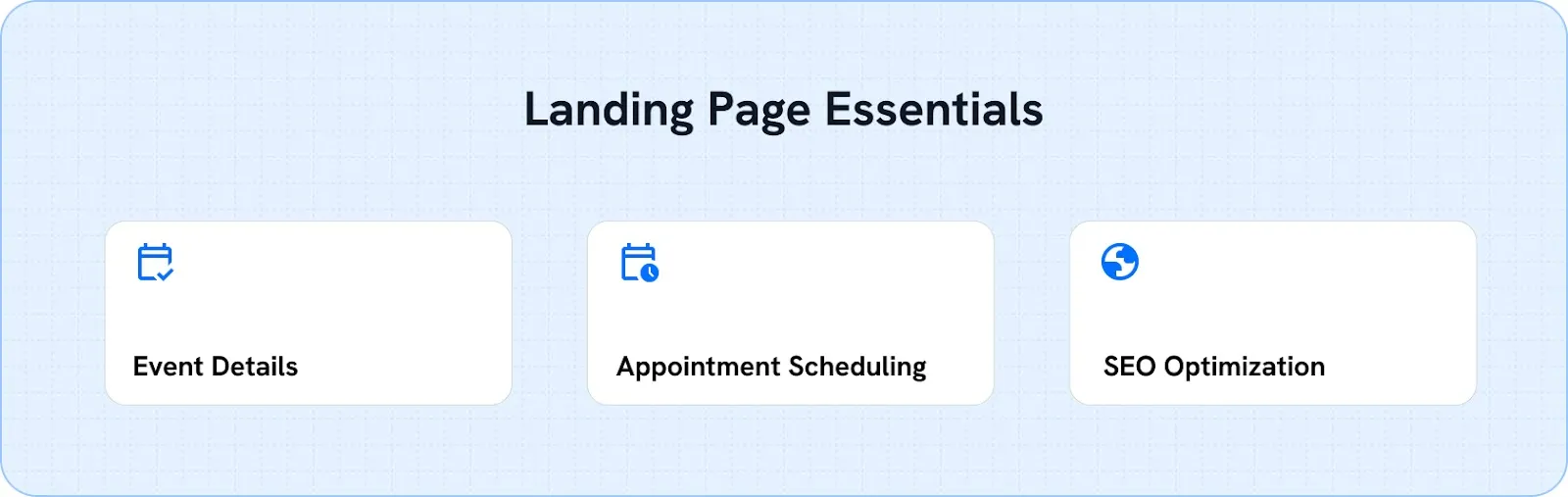
To make the most of your website, design a landing page that’s optimized to drive engagement and capture leads. Here’s what to include:
- Event Details: Include key information such as the trade show dates, location, and your booth number. Make it easy for visitors to find what they need without searching for other sources.
- Appointment Scheduling: Allow visitors to book meetings or demos in advance. This not only makes your booth more attractive but ensures you’ll have valuable conversations during the event.
- SEO Optimization: Ensure your landing page ranks high in search results. The goal is for your landing page to be the first thing people see when they search for the trade show or related terms.

A countdown timer on your landing page adds urgency, encouraging visitors to register early and mark the event on their calendars. The visual countdown creates excitement, making the trade show feel closer and more immediate.
Pro Tip: If you’re looking to streamline this process and ensure your website is ready for the trade show, Gushwork can help you optimize your site with dedicated landing pages that capture and manage leads effectively.
Create Content That Makes People Hunt Down Your Booth
Content marketing is a powerful way to position your brand as a thought leader and engage with your target audience long before the trade show doors open.
By publishing content like blog posts, videos, and case studies, you not only educate potential prospects but also get them excited about your solutions.
Engaging content keeps your brand top-of-mind and piques curiosity, ensuring your booth becomes a destination during the event.
Content Ideas
Here are some content ideas that manufacturers can use to build anticipation for the upcoming trade show:
- Behind-the-Scenes Booth Setup: Share exclusive behind-the-scenes footage of how you’re preparing your booth, giving followers a sneak peek into your trade show setup. This creates curiosity and makes them excited to see it in person.
- Product Demo Previews: Post teaser videos or images showcasing your product demos. Highlight the features that solve your audience’s challenges, and promise a more in-depth experience at your booth.
- Industry Trends & Insights: Share blog posts or videos discussing current trends in your industry, positioning your brand as an expert who can offer valuable knowledge at the trade show. This builds credibility and attracts decision-makers who value your insights.

To maintain consistent messaging, repurpose your content across various platforms. Share blog posts on your website, turn videos into social media posts, and send email newsletters featuring trade show updates. This ensures your message reaches your audience in different ways, reinforcing your brand presence.
Inform, educate, and inspire them to visit your booth.
Create Engaging Content


PPC: Why Pre-Event Ads Beat Booth Spending Every Time
Paid advertising is one of the most effective ways to extend your reach and engage a targeted segment of your audience before the trade show even begins.
Rather than relying solely on booth spending, pre-event ads allow you to build awareness, promote exclusive offers, and drive traffic to your booth.
With the right PPC strategy, you’ll ensure that your brand is visible and that your booth is a must-see destination.
Targeting Strategy
To maximize the effectiveness of your paid ads, it's essential to target the right audience. Here’s how you can leverage various platforms for optimal results:
- LinkedIn: Use LinkedIn’s targeting tools to reach industry professionals, suppliers, and decision-makers within your specific sector. LinkedIn’s detailed targeting features ensure you connect with the right people ahead of the event.
- Google Ads: Run Google search ads targeting event-specific keywords, such as the trade show name or industry terms. This will ensure your brand is visible when attendees search for information related to the event.
- Facebook & Instagram Ads: Use Facebook’s advanced targeting features to segment your audience based on interests, job titles, and more. Create engaging visual content like videos and carousel ads to generate excitement for your booth.
Print Marketing: The Tangible Touch That Builds Anticipation
In a digital world, print marketing remains a powerful tool to make your brand stand out and feel tangible.
Sending personalized direct mail pieces and promotional kits in advance not only builds excitement but also serves as a reminder of your trade show presence.
When done right, print marketing can create a sense of exclusivity, making your booth a must-visit destination at the event.
How to Do It Right
To maximize the impact of your print materials, focus on delivering something valuable that resonates with your audience. Here’s how to approach it:
- Postcards: Send eye-catching postcards with your booth number, event details, and a special offer like a free consultation or product demo at your booth. Use bold visuals to capture attention and keep the message simple but enticing.
- Brochures: Provide attendees with detailed brochures that highlight your products or services in a way that ties into the event’s themes. Ensure they’re informative, well-designed, and include clear calls-to-action (CTAs).
- Event-Specific Invitations: Send exclusive invitations to targeted prospects, offering VIP access or a special giveaway at your booth. This makes the invite feel personal and adds an element of exclusivity, encouraging recipients to engage with your booth.

To stand out from the typical trade show clutter attendees receive, personalize your materials. Include the recipient's name, reference their specific industry challenges, or offer tailored incentives.
Personalized content helps create a deeper connection and ensures your materials don’t get overlooked.
Checklist for Print Marketing:
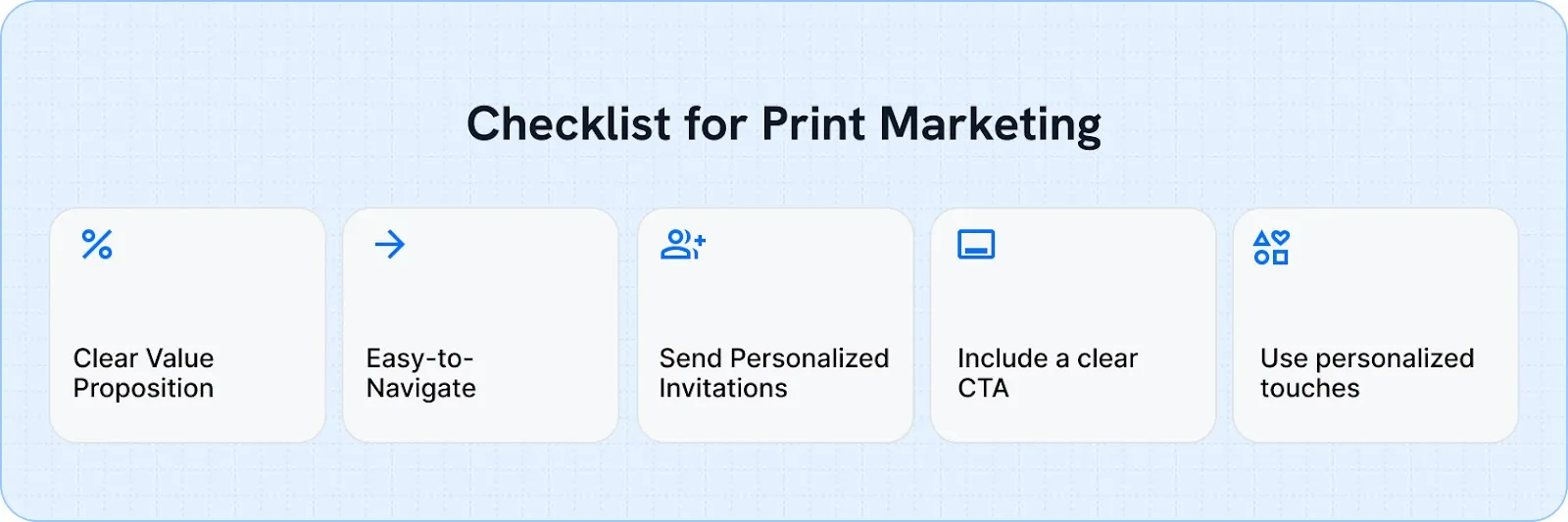
- Design eye-catching postcards with event details and a special offer
- Create engaging brochures that explain your products/services and their value
- Send personalized event-specific invitations offering exclusive benefits
- Include a clear call-to-action (CTA) in all materials
- Use personalized touches to make your materials stand out
Train Your Team for Maximum ROI: The Secret to Effective Engagement
Your booth staff plays a pivotal role in determining the success of your trade show experience. While your booth design and marketing materials attract visitors, it’s the interactions with your team that will drive meaningful conversations, generate leads, and close deals.
Personable sales representatives are regarded as the best booth staffers by 59% of exhibitors, highlighting the significance of having the right people in charge of a display.
Ensuring your team is well-prepared and knows how to engage with different types of attendees is critical for maximizing ROI.
Staff Training: Set Your Team Up for Success
To make the most of your trade show investment, provide your booth staff with the right training to handle various aspects of the event:
- Product Knowledge: Ensure your team knows your products inside and out. This includes understanding key features, benefits, and how your products solve your target audience’s pain points. They should be able to answer questions confidently and explain the value of your products in a way that resonates with attendees.
- Lead Capture Techniques: Train your team on the most effective ways to capture leads. This could include using lead capture apps, collecting business cards, or asking the right questions to qualify prospects. Make sure they understand the importance of gathering accurate and actionable contact information for follow-up after the event.
- Approaching Different Types of Attendees: Different visitors have different needs. Train your staff to recognize the types of attendees they will encounter, such as new clients versus returning customers, and how to tailor their approach accordingly.
For example, returning customers may need less explanation but could be more interested in upgrades or new products, while new clients may require a deeper introduction to your offerings.

One of the best ways to ensure your team is confident and prepared is through role-playing exercises. Practice handling questions, objections, and different types of interactions that might arise at the trade show.
This not only helps your team feel more comfortable but also sharpens their skills in real-world scenarios, ensuring they can handle any situation with confidence.
Offering Pre-Show Incentives to Drive Traffic and Build Urgency
Pre-show incentives are a powerful way to create urgency and motivate attendees to prioritize your booth over others.
By offering exclusive perks, like VIP passes, early-bird discounts, or limited-time offers, you give people a reason to make your booth a must-visit destination. These incentives not only attract more visitors but also increase the chances of converting leads into customers.
Offer Ideas to Consider
Here are a few effective pre-show incentives you can use to drive booth traffic and generate excitement:
- VIP Passes: Offer exclusive access to your booth for VIP attendees. This could include special offers, priority scheduling for demos, or a more personal experience with your team.
- Early-Bird Discounts: Encourage visitors to book a demo or sign up for an offer before the event begins with an early-bird discount. This creates a sense of urgency and gives attendees an incentive to act quickly.
- Limited-Time Product Trials: Offer a limited-time trial of your product to those who sign up in advance. This gives potential customers a hands-on experience and increases the likelihood of conversion.
- Exclusive Event Access: Give attendees access to an exclusive event, like a product reveal or an expert-led session, by signing up early. This not only builds anticipation but also makes your booth a focal point for high-value interactions.

To make your offer even more compelling, make it time-sensitive. The fear of missing out (FOMO) is a great motivator, and limited-time offers encourage immediate action. Whether it’s a countdown to the event or a flash sale, making the offer feel urgent boosts pre-show interest and ensures more people will visit your booth.
Checklist for Pre-Show Incentives:
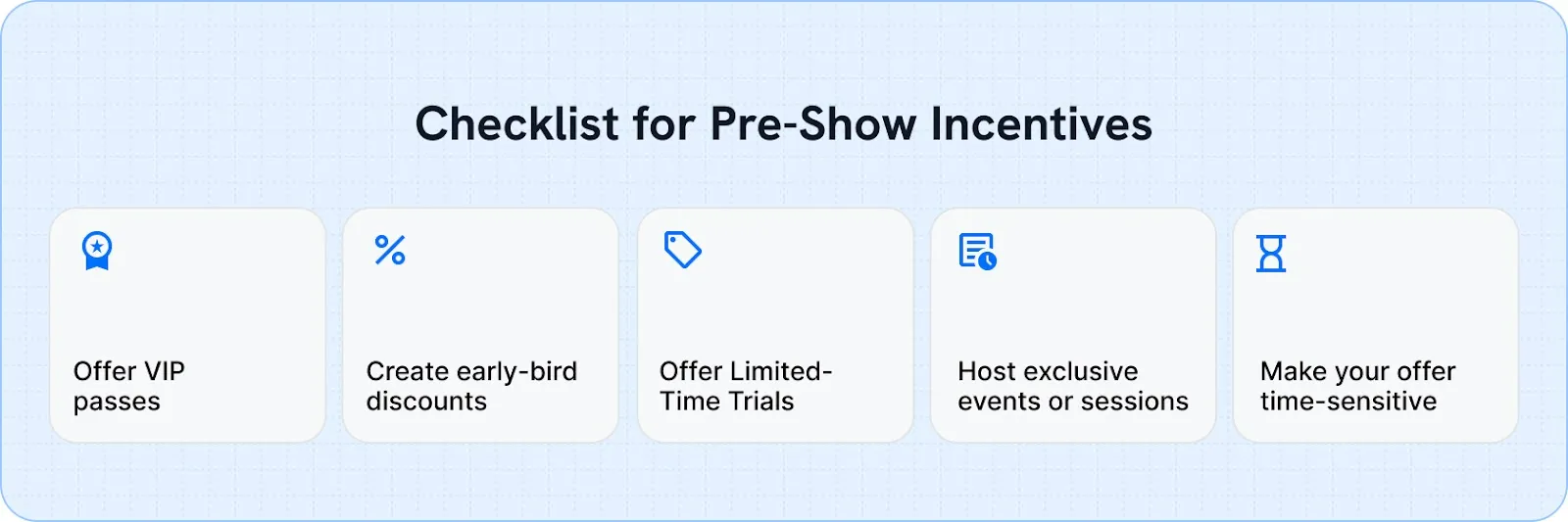
- Offer VIP passes for early engagement
- Create early-bird discounts for those who sign up in advance
- Provide limited-time product trials to build interest
- Host exclusive events or sessions for early registrants
- Make your offer time-sensitive to encourage immediate action
Partnerships and Sponsorships: Amplifying Your Reach Before the Show
Partnering with event organizers or other exhibitors can significantly amplify your pre-show marketing efforts.
By forming strategic partnerships or securing sponsorships, you extend your reach to a broader audience, reinforce your presence, and gain additional exposure before the event even begins.
These collaborations help position your brand in front of the right audience, creating more opportunities to engage with potential leads.
Sponsorship Ideas to Boost Your Reach
Sponsoring or partnering with the right elements of the event can provide high-visibility opportunities. Here are some impactful ways to amplify your presence:
- Sponsor High-Traffic Event Areas: Look for sponsorship opportunities in high-traffic areas like session breaks, networking events, or registration desks. This gives your brand visibility in spaces where attendees are likely to gather, keeping you top of mind as they head toward the main exhibit floor.
- Co-Host a Webinar or Panel: Collaborate with a complementary brand to co-host a webinar or panel that provides valuable insights relevant to the trade show. This positions both brands as industry leaders and helps you tap into each other’s audience, expanding your reach well before the event.
- Sponsorship of Event Sessions: Consider sponsoring specific sessions that align with your products or services. By doing so, you associate your brand with valuable educational content, making your company a trusted voice in the industry.

A smart way to extend your reach without competing directly is to partner with non-competing companies in your industry. By cross-promoting each other, you increase visibility and leverage each other’s networks.
For example, you could share social media posts, co-branded emails, or offer special promotions to each other’s audiences, maximizing exposure with minimal investment.
Discover expert strategies on how to stand out and maximize your impact as an exhibitor at trade shows and conferences. This video provides actionable tips to ensure your booth gets noticed and attracts the right audience.
Lastly, Plan Follow-Ups Now, Execute Later
Pre-show marketing is essential for attracting attendees to your booth, but it’s your follow-up efforts that turn initial interest into lasting business relationships.
Planning your follow-up strategy before the trade show ensures you’re ready to engage with leads promptly after the event, maximizing your ROI.
The key to effective follow-up is personalization and ensuring you stay top of mind long after the event ends.
Follow-Up Tips to Maximize ROI
To ensure your follow-up is as effective as possible, here are some tips for making each interaction count:
- Personalize Your Follow-Up Emails: After the event, avoid sending generic messages. Personalize your follow-up emails based on your pre-show interactions, whether it was a demo, conversation, or shared interest in a specific product. Referencing these specific moments builds rapport and shows that you remember the attendee’s unique needs.
- Address Pain Points: Use the information you gathered during the trade show to address the unique pain points of each lead. Show them how your products or services specifically solve their challenges, making your follow-up email relevant and valuable.
- Timing is Everything: Don’t wait too long to follow up. Reach out within 48 hours to keep the conversation fresh and maintain the momentum. A quick response shows professionalism and reinforces your commitment to your leads.

To streamline your follow-up process, consider using a Customer Relationship Management (CRM) tool to automate follow-ups and track lead engagement. CRMs allow you to segment leads based on interest and likelihood to convert, ensuring that the most promising leads get prioritized and nurtured appropriately.
Checklist for Effective Follow-Ups:
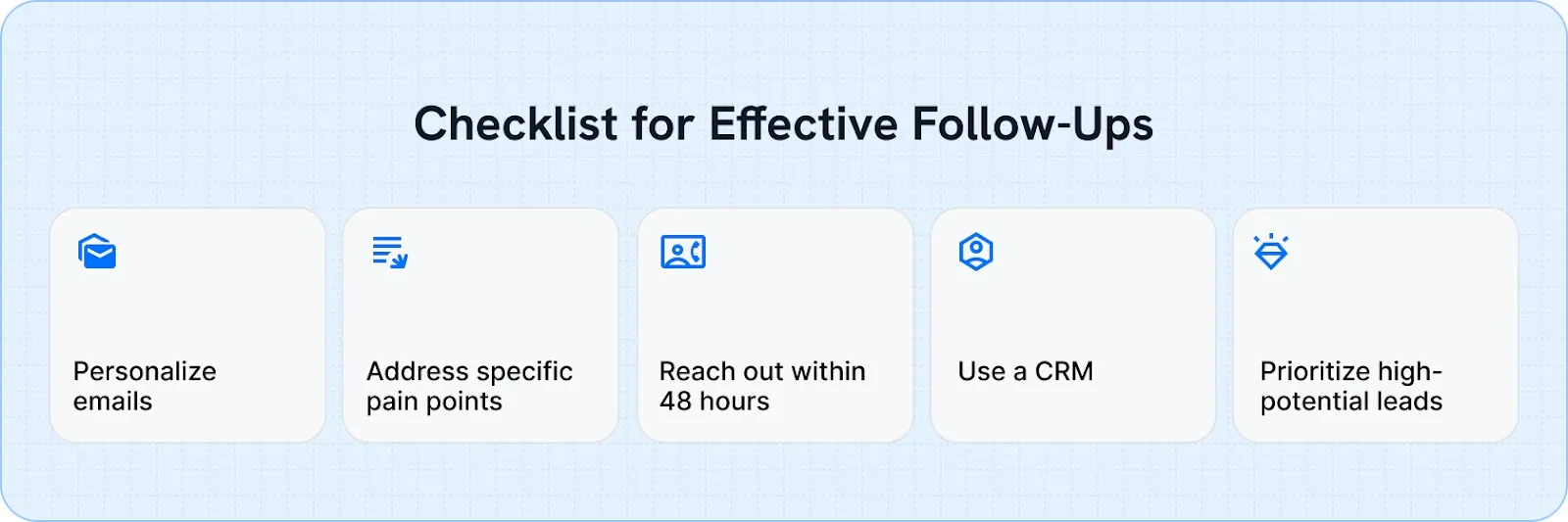
- Personalize emails based on pre-show interactions
- Address specific pain points in each follow-up
- Reach out within 48 hours of the event
- Use a CRM to automate and track follow-ups
- Prioritize high-potential leads for immediate follow-up
Ready to Start Your Pre-Trade Show Marketing Plan?
By planning early and strategically, you set yourself up for success long before the event begins. Your pre-show marketing plan isn’t just about promoting your booth—it’s about creating a powerful presence that attracts the right audience, builds anticipation, and maximizes ROI.
The truth is, relying solely on the event itself is not enough. Without a cohesive pre-show strategy, you risk missing valuable opportunities to engage with decision-makers and key prospects.
Let Gushwork help you streamline your strategy for seamless execution.
Book a Consultation
FAQs
Q1. How early should I start my pre-trade show marketing?
A1. Start your pre-show marketing 2–3 months ahead of the event. This gives you ample time to build awareness, engage your audience, and schedule meetings with prospects.
Q2. What are the best ways to build anticipation before the trade show?
A2. Use content marketing, social media engagement, paid ads, and email campaigns. Offering exclusive promotions or sneak peeks can also drive excitement.
Q3. How can I make my booth stand out at a trade show?
A3. Design a visually appealing booth with clear branding. Incorporate interactive elements like live demos and offer limited-time promotions to attract more visitors.
Q4. Why are partnerships and sponsorships important for pre-show marketing?
A4. Partnerships and sponsorships help expand your reach and increase brand visibility. Sponsoring high-traffic areas or co-hosting events ensures you engage a larger audience.
Q5. What’s the best way to follow up with leads after the trade show?
A5. Personalize your follow-up emails based on pre-show interactions. Use a CRM to track and automate follow-ups to ensure no lead falls through the cracks.
Digital Marketing
Sep 12, 2025
5 mins
Proven Digital Marketing Strategies for Packaging Business' Growth
Batul Beawarwala
If you run a packaging manufacturing business, you already know how much time goes into getting one buyer to trust you. They want samples, specs, certifications, pricing, and proof that you can deliver on time. That part of the job is expected.
What no one told you is that today’s buyers start this entire process online.
Before they call, they search.
Before they email, they compare.
Before they request a quote, they check whether your business even shows up.
And that’s where most packaging manufacturers fall behind.
Digital marketing is simply the modern version of being present where buyers make their decisions.
In this blog, you’ll learn what digital marketing actually means for packaging manufacturers, why it matters now, and how even a small set of improvements can help you get more qualified inquiries.
What Digital Marketing Means for Packaging Manufacturers?
Before talking about channels or strategies, let’s clear one thing up: Digital marketing is not about doing everything online. It is to ensure that your business is easy to find and easier to understand.
Here’s the simplest way to look at it:
It Helps Buyers Understand Your Capabilities
Most buyers today prefer checking supplier details online before talking to anyone. If your site clearly explains what you make, who you serve, and what you can handle (materials, MOQ, certifications, industries), half their questions are already answered, which makes them more comfortable contacting you.
It Shows Your Business To Buyers Who Don’t Know You
Even if you have a strong network, new buyers won’t hear about you unless you show up where they search. Digital marketing places your business in front of people looking for corrugated, flexible, rigid, food-safe, or industrial packaging suppliers.
It Helps You Get Inquiries From Serious Buyers
When your website, listings, and pages include the right information, you naturally filter out people who want five boxes or one-time orders. Digital marketing helps you attract buyers who match your production scale.
Show Buyers What Your Packaging Business Can Really Do
We help packaging manufacturers present their services in a simple, professional way that brings in better inquiries.
Plan My Business Marketing
5 Digital Marketing Strategies for Packaging Manufacturers
In today’s competitive market, digital marketing is no longer optional; it’s a must for your packaging business to stand out and grow. Whether you’re new to digital marketing or looking for practical advice, here are 5 strategies that will help you attract more customers and drive sales.
SEO
SEO (Search Engine Optimization) is the process of making sure your website shows up when people search for packaging solutions online.
Why It Works for Packaging Manufacturers?
SEO helps your packaging business appear in search results when customers are looking for terms like "eco-friendly packaging" or "custom corrugated boxes." Since buyers are increasingly researching online before making decisions, SEO ensures your business is easily discoverable when they’re looking for packaging solutions.
Without SEO, your potential customers may never find you.
How to Do It
Add keywords like “sustainable packaging” or “custom boxes” to your website. Make sure your content is relevant and clearly explains your products.
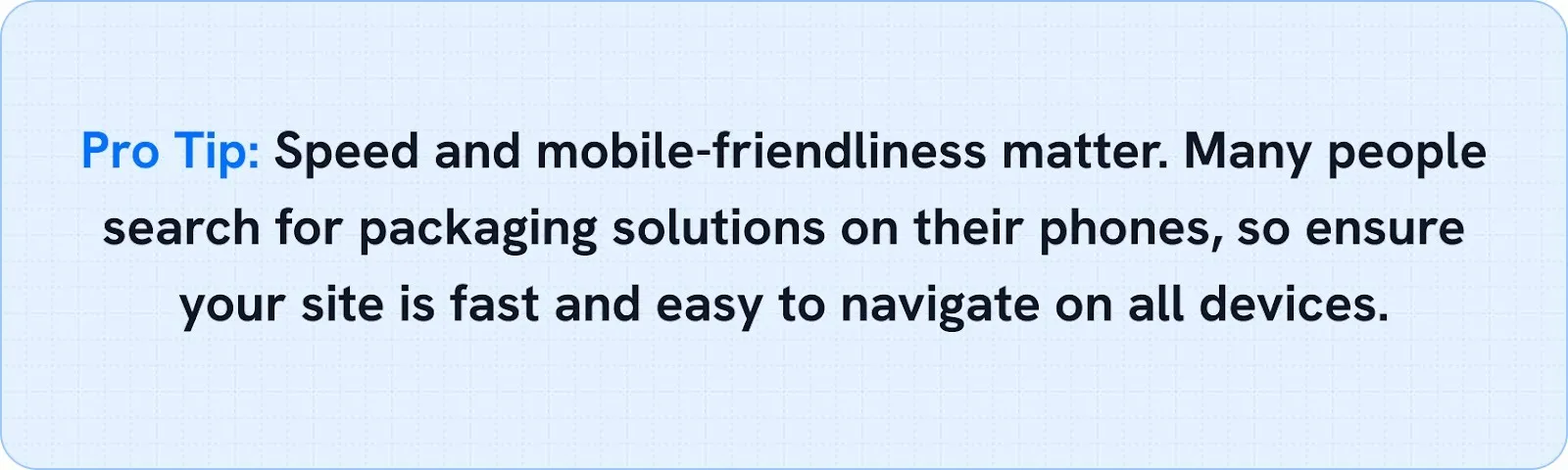
PPC Ads
PPC (Pay-Per-Click) ads are online ads that show up at the top of search results. You pay each time someone clicks on your ad.
Why It Works for Packaging Manufacturers?
PPC ads help your business get noticed fast. If you target the right keywords, like "food packaging" or "retail packaging solutions," your ad will appear when potential customers are actively searching for those terms.
This method helps you attract people who are ready to buy, right at the moment they need your product.
How to Do It
Create ads for packaging solutions and use specific keywords related to your products. For example, "affordable custom packaging" or "recyclable packaging."
Content Marketing
Content marketing involves creating helpful and engaging content, like blogs, videos, and case studies, to educate your customers and showcase your expertise.
Why It Works for Packaging Manufacturers?
By sharing useful information on your website, you build trust with potential customers. When they see that you understand their packaging needs, whether it’s sustainability or product protection, they’re more likely to turn to you when it’s time to make a purchase.
Content marketing helps position your brand as an expert in the packaging industry, which builds long-term relationships with your audience.
How to Do It
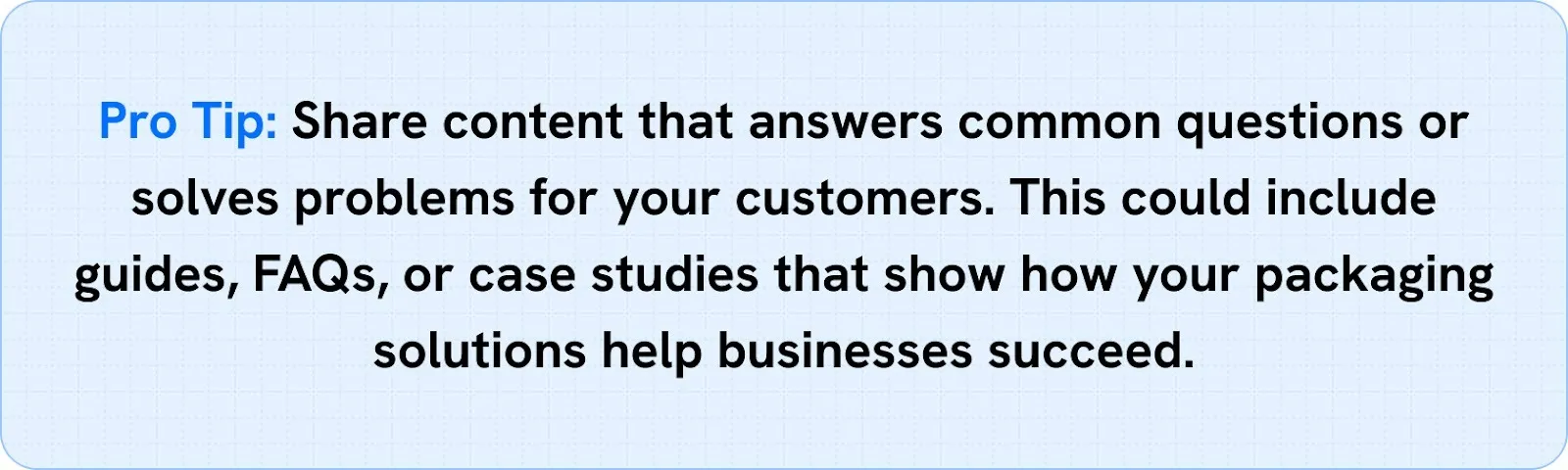
Write blogs or create videos about packaging topics that matter to your audience, such as “How to Choose the Right Packaging for E-Commerce” or “The Importance of Sustainable Packaging.”
Turn Your Packaging Know-How Into Content Buyers Trust
We help packaging manufacturers turn their expertise into simple blogs, videos, and case studies that bring in better leads and show customers exactly why they should choose you.
Build My Content Plan
Social Media
Social media platforms like Instagram, LinkedIn, and Facebook let you connect with customers by sharing posts, photos, and videos of your products and services.
Why It Works for Packaging Manufacturers?
Social media gives you a chance to showcase your packaging products visually. It’s the perfect platform to highlight your sustainable packaging efforts or show how your products are used in real life.
It also helps you build relationships with customers, engage in conversations, and share updates about your business.
How to Do It
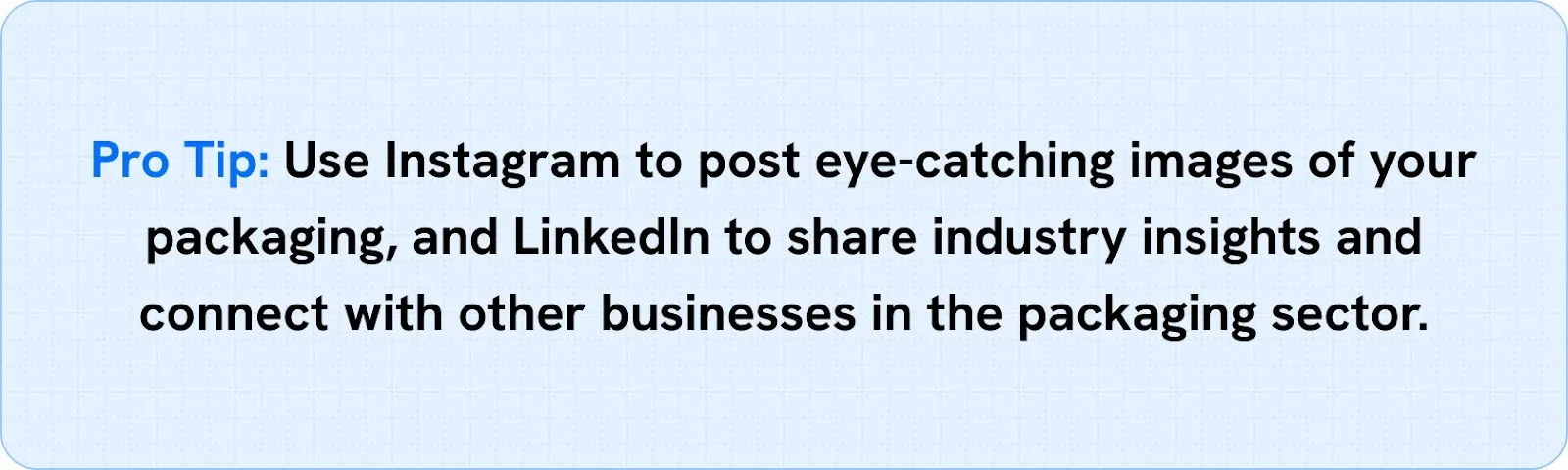
Post photos or videos of your products, customer success stories, and behind-the-scenes looks at how your packaging is made. LinkedIn is great for professional connections, while Instagram is perfect for showcasing the beauty of your packaging.
Email Marketing
Email marketing involves sending personalized messages to your customers and leads to keep them engaged and informed about your packaging solutions.
Why It Works for Packaging Manufacturers?
Email marketing helps you stay connected with potential customers who are interested in your products. By sending helpful content, product updates, and exclusive offers, you keep your brand in front of them, so when they’re ready to buy, they think of you first.
How to Do It
Create email campaigns that provide valuable content, such as tips for choosing the best packaging or discounts for first-time customers. Segment your audience based on their interests or stage in the buying process to send relevant content.
Building Your Digital Marketing Plan
Creating a digital marketing plan might sound overwhelming, but it doesn't have to be. By breaking it down into manageable steps, you can make a real impact on your packaging business. Let's simplify the process and focus on results. Here’s how you can build an effective marketing strategy without the stress:
Step 1: Set Smart Goals

Setting clear, measurable goals is the first step in any successful digital marketing strategy. Without a target, you won’t know if your efforts are working.
Goals give you direction, helping you stay focused on what's important. When your goals are Specific, Measurable, Achievable, Relevant and Time-bound (SMART), you can track progress and adjust your tactics as needed.
Example Goals:
- Increase website traffic by 30% this quarter.
- Generate 50 new leads each month.
- Improve your social media engagement by 20% in the next 60 days.
How to Do It:
Start by identifying what you want to achieve with your digital marketing, whether it’s more leads, increased brand awareness, or better customer engagement. Then, make sure your goals are measurable. For instance, if your goal is to increase traffic, track how much traffic you get from each channel, such as SEO or social media.
Step 2: Create Informative Content
Content marketing involves creating valuable content that speaks directly to your audience’s needs, interests, and pain points. This can be in the form of blog posts, videos, case studies, or even infographics.
In the packaging industry, customers often need guidance on topics like sustainability, cost-effective solutions, or custom packaging options. By providing valuable content, you build trust with your audience, positioning yourself as an expert in the packaging space.
How to Do It:
- Blogs: Write articles that address common questions and challenges your customers face. For example, “5 Ways Sustainable Packaging Can Save Your Business Money.”
- Videos: Create short, informative videos that explain your products, show your manufacturing process, or highlight the benefits of your packaging solutions. Platforms like YouTube are great for showcasing your expertise and reaching new customers.
- Case Studies: Share success stories from existing clients. This not only demonstrates the effectiveness of your products but also builds credibility.
Try making a video on YouTube that shows behind-the-scenes footage of your packaging process or introduces a new product. For inspiration, check out this YouTube video on how to create engaging content for packaging businesses.
Step 3: Use Automation
Automation tools allow you to handle repetitive marketing tasks like email campaigns, social media posting, and customer follow-ups. By automating these tasks, you free up time to focus on strategy and creativity.
Automation saves you time and ensures consistency across all your marketing channels. For packaging manufacturers, this can be especially useful for sending regular updates, follow-ups, or newsletters to your customers. Automation also makes it easier to scale your efforts as your business grows.
How to Do It:
- Email Marketing: Use platforms like Mailchimp or ActiveCampaign to set up automated email sequences that nurture leads. For example, an email series that educates potential customers about sustainable packaging options can move them closer to making a purchase.
- Social Media: Tools like Buffer or Hootsuite allow you to schedule posts ahead of time. You can set up a content calendar for your packaging business, posting updates, product features, and sustainability news regularly without having to log in every day.
Step 4: Track Your Success
Tracking your marketing performance is essential to understanding what’s working and what needs improvement. Google Analytics and other tracking tools help you see where your traffic comes from, how users behave on your site, and how many conversions your efforts are driving.
Without tracking, you can’t measure success or adjust your strategy. Understanding which marketing channels are bringing in the most traffic and generating leads allows you to double down on what works and improve areas that aren’t performing as well.
How to Do It:
- Google Analytics: Set up Google Analytics on your website to track visitor behavior, traffic sources, and conversions. You can easily see how much traffic comes from organic search, social media, or paid ads.
- Social Media Insights: Each social media platform provides detailed insights into how your content performs. Use these insights to refine your approach and post more of what resonates with your audience.
Want a Marketing Plan That Actually Grows Your Packaging Business?
We help packaging companies build practical SEO strategies that attract better inquiries, improve visibility, and support steady month-to-month growth.
Build My Growth Plan
Why Sustainability is Important for the Packaging Industry?
Sustainability is no longer a "nice-to-have" in the packaging industry; it's essential for survival. As consumer expectations evolve, the demand for sustainable packaging is now the baseline.
For manufacturers, embracing sustainability isn’t just about staying competitive; it’s about future-proofing your business.
Why It’s Critical?
Consumers are increasingly driven by environmental concerns, making sustainability a key factor in purchasing decisions. Packaging manufacturers who fail to adapt risk losing customers to competitors offering eco-friendly alternatives.
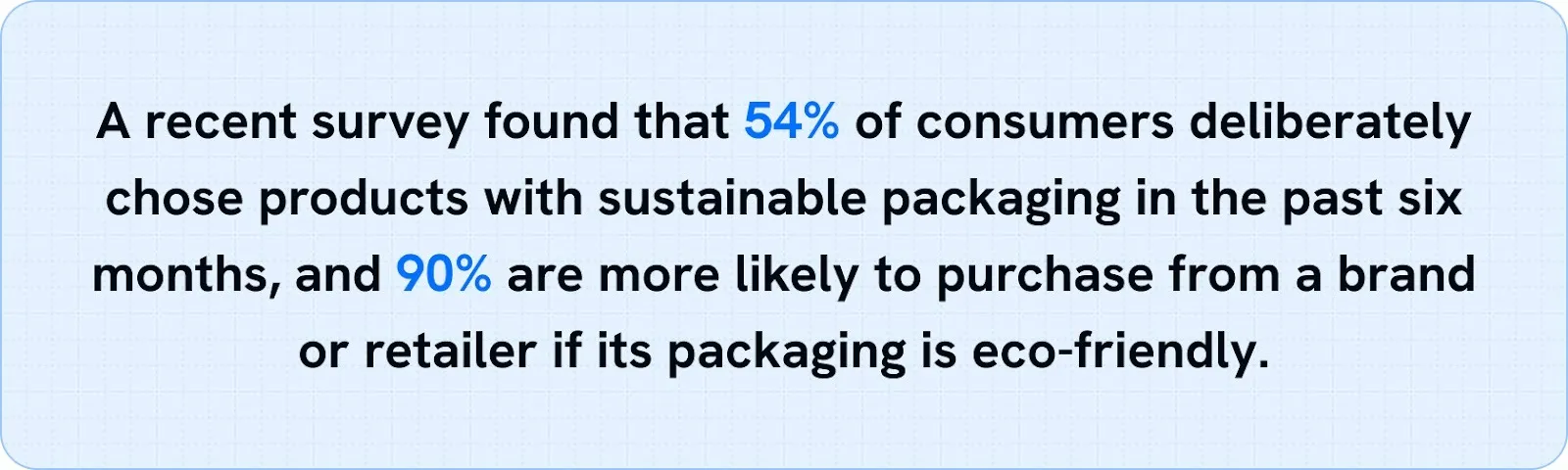
In today’s market, sustainability is a core advantage that can differentiate your brand and ensure long-term growth.
Digitalizing Sustainability Efforts
Packaging manufacturers must effectively communicate their sustainability efforts through digital channels. Here’s how to make complex certifications and data compelling:
- Certifications (e.g., FSC, SFI): Instead of just listing certifications, explain their significance. For instance, FSC certification ensures your materials are responsibly sourced, helping preserve ecosystems.
- Carbon Footprint: Share actionable data, like how you’re reducing emissions or improving energy efficiency. For example, “Our energy-efficient processes have cut carbon emissions by 20% in one year.”
How to Make It Simple and Compelling?
Use infographics, videos, and case studies to clearly present sustainability data. These visuals make complex information digestible, building trust and engaging your audience.
Sustainability as a Reflection of Brand Values
For modern brands, sustainable packaging is more than just eco-friendly; it reflects their values. Customers are more likely to support brands that align with their environmental goals.
Showcase how your packaging solutions support these values in your digital marketing to build stronger connections with your audience.
Measuring the Success of Your Digital Marketing
To determine if your digital marketing efforts are paying off, it’s crucial to track the right metrics. Without data, you can’t measure success or optimize your strategy. Let’s break down the key numbers you should track to ensure your marketing is driving results.
1. Website Traffic
What to Track?
- Is your website getting more visitors than before?
- Which pages are receiving the most attention?
- Are visitors engaging with your content?
Why It Matters:
Increased website traffic is a good sign that your digital marketing is effective in drawing attention to your business. By tracking where your traffic is coming from (e.g., social media, search engines, paid ads), you can identify which channels are performing best and focus your efforts there.
2. Leads
What to Track:
- How many people are filling out contact forms or signing up for newsletters?
- Are more people requesting quotes or more information about your products?
Why It Matters?
Leads indicate that your audience is interested in what you offer. By tracking the number of leads generated, you can measure how well your content, PPC ads, or social media efforts are attracting potential customers.
The more qualified leads you generate, the better your chances of converting them into sales.
3. Sales
What to Track?
- Are your marketing efforts turning visitors and leads into paying customers?
- Are you seeing an increase in revenue or conversions directly tied to your digital campaigns?
Why It Matters?
Ultimately, the goal of digital marketing is to drive sales. By tracking sales data, you can directly measure the effectiveness of your marketing strategy.
If your traffic and leads are increasing but sales aren’t following, it may indicate that there’s a problem with your website, pricing, or the sales process itself.
Start Now and Grow Your Packaging Business
Now is the time to put your packaging business on the map. Start small, be consistent, and watch your business grow. Digital marketing offers endless opportunities to expand your reach, attract more customers, and drive sales. By focusing on the right strategies, you’ll begin to see results in no time.
Get your website optimized, start creating valuable content, and engage with potential customers on social media. The digital world is waiting for your packaging business, and it’s your time to shine. Take action today and watch your brand grow.
Supercharge your digital marketing with Gushwork. Automate your workflows, streamline your customer interactions, and create personalized experiences that drive success.
Need a Clear Path to Better Marketing Results?
We cut out the guesswork for packaging manufacturers by setting up focused marketing steps that bring in steady inquiries and support your sales team.
Book a Consultation Today
FAQs
Q1. Why is digital marketing essential for packaging manufacturers?
A1. Digital marketing is crucial for packaging manufacturers because it allows you to reach a wider audience, generate qualified leads, and stay competitive. As more buyers shift to online research and decision-making, having a strong digital presence ensures your business is discoverable and positioned to meet evolving customer needs.
Q2. How can SEO help my packaging business grow?
A2. SEO helps your business appear in search results when potential customers look for packaging solutions. By optimizing your website with relevant keywords like “eco-friendly packaging” or “custom corrugated boxes,” you make it easier for buyers to find your products. This increases traffic, boosts visibility, and ultimately drives more leads.
Q3. How do PPC ads benefit packaging manufacturers?
A3. PPC ads give your business quick visibility by placing it at the top of search engine results. This strategy targets potential customers who are actively looking for packaging solutions, helping you attract qualified leads and get noticed fast—an essential tactic in today’s fast-paced market.
Q4. What content should I create for my packaging business to attract customers?
A4. Focus on creating content that addresses your customers’ specific needs and pain points, such as sustainability or product protection. Consider blogs, videos, and case studies on topics like “Choosing the Right Packaging for E-Commerce” or “The Importance of Sustainable Packaging.” Providing valuable content establishes trust and positions you as an expert in the industry.
Q5. How can social media help my packaging business?
A5. Social media platforms like Instagram and LinkedIn are great for showcasing your products and engaging with potential customers. You can share photos, videos, and updates about your packaging solutions, sustainability efforts, and industry insights.
Q6. How can email marketing benefit packaging manufacturers?
A6. Email marketing helps you nurture relationships with potential customers by keeping your brand in their inboxes. By sending valuable content, product updates, and exclusive offers, you stay top-of-mind when they’re ready to make a purchase. It’s a great way to maintain ongoing engagement and convert leads into customers.
Paid Ads
Sep 12, 2025
5 mins
If Your Lead Flow Is Dry, Google Ads Might Be the Most Effective Fix for USA Manufacturers
Batul Beawarwala
If you’re a manufacturer still relying on outdated marketing methods, you could be missing out on a massive opportunity to grow your business.
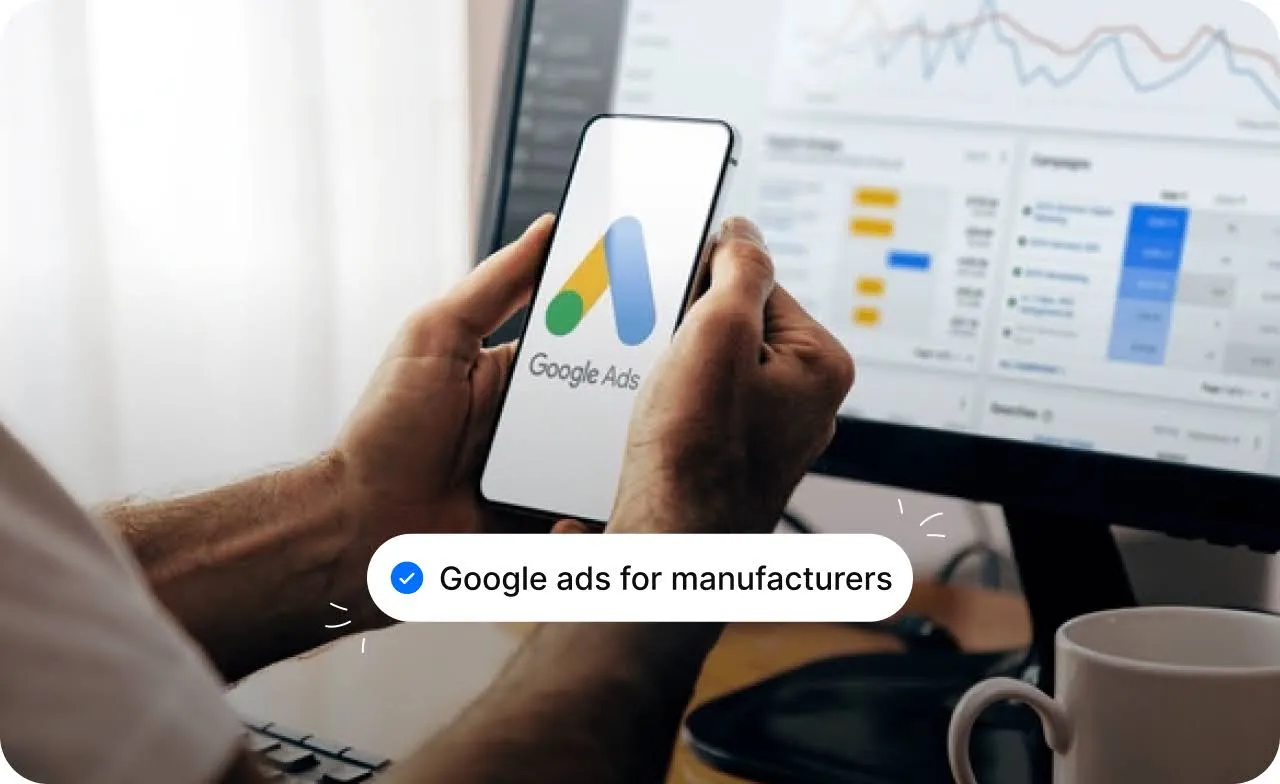
Google Ads gives you the chance to target the exact people who need your products, at the exact moment they’re searching for them. By using this powerful tool, manufacturers can drive qualified leads, increase brand visibility, and boost sales.
This article will show you how to use Google Ads to achieve all of this and more. Let’s dive in.
The Digital Age for Manufacturers: Embrace It or Get Left Behind
The manufacturing sector is more competitive than ever, and the need to adapt to the digital world has never been more pressing.
Digital marketing, especially through platforms like Google Ads, is no longer a luxury; it’s a necessity for manufacturers looking to stand out. If you’re not tapping into the power of online advertising, you’re missing out on opportunities to drive leads and increase sales.
Why is Google Ads crucial for manufacturers?
- Reach the Right Audience: Google Ads allows you to target decision-makers who are actively searching for the products and services you offer.
Whether it’s procurement managers looking for suppliers or engineers seeking specific industrial components, Google Ads ensures your brand appears at the right time in front of the right people.
- Maximize Your Marketing Budget: Google Ads offers complete control over your spending. With flexible bidding options, you can set your budget to match your goals, whether you want to drive brand awareness or generate high-quality leads.
Plus, you only pay when someone clicks on your ad, making it cost-effective and measurable.
- Boost Brand Visibility: In a crowded marketplace, it’s easy for your brand to get overlooked. Google Ads helps increase your online presence, ensuring that potential clients see your products when they need them most.
- Drive Qualified Traffic: Unlike traditional advertising, Google Ads allows you to focus on the people who are already interested in your offerings. You can refine your audience based on search intent, location, device, and more, ensuring that your ads are being seen by those who matter most to your business.
As the manufacturing world moves further into the digital age, staying competitive means embracing the tools that can drive results.
If you're not using Google Ads, your competitors are already gaining the upper hand by capturing the attention of your potential customers.
Optimize Your Google Ads Strategy with Expert Precision
Get Your Free PPC Audit
What’s Your Goal? Get Clear on Your Google Ads Mission
Before diving into Google Ads, it's essential to define your objectives. Without a clear goal, your campaigns can become aimless, wasting both time and money.
Whether you're aiming to generate more leads, increase brand awareness, or boost local visibility, setting specific goals will guide your strategy and set you up for success.

Lead Generation: Attracting High-Quality Prospects
If your primary goal is to drive sales or gather contact information from potential customers, lead generation is the way to go. For manufacturers, this could mean attracting procurement managers or plant supervisors actively searching for your products.
With Google Ads, you can create targeted ads that encourage visitors to fill out forms or call your sales team, prompting them to take action, whether that's requesting a quote, signing up for a newsletter, or scheduling a demo.
Brand Awareness: Building Recognition
Perhaps you want more people to recognize your brand or products, especially if you're new to the market or launching a new product line. Google Ads is a great tool for building awareness because it helps you reach a wide audience quickly.
The goal here isn't necessarily an immediate sale, but rather ensuring that when people think of the products you offer, your brand comes to mind first.
Local Visibility: Connecting with Nearby Customers
For manufacturers who rely on local business or serve specific geographical areas, local visibility is key. Google Ads can help you appear in local searches, so when someone nearby is searching for a manufacturer, supplier, or service you offer, your ad shows up.
Whether it's a "near me" search or a regional need, Google Ads can target your ads to specific locations, making sure you reach the right people in the right places.
By clearly defining your goals, you can choose the right type of campaign that best aligns with your objectives.

So, take a step back and ask yourself: What's my goal? Then, let that answer guide your campaign strategy.
Which Google Ads Campaign is Your Secret Weapon?
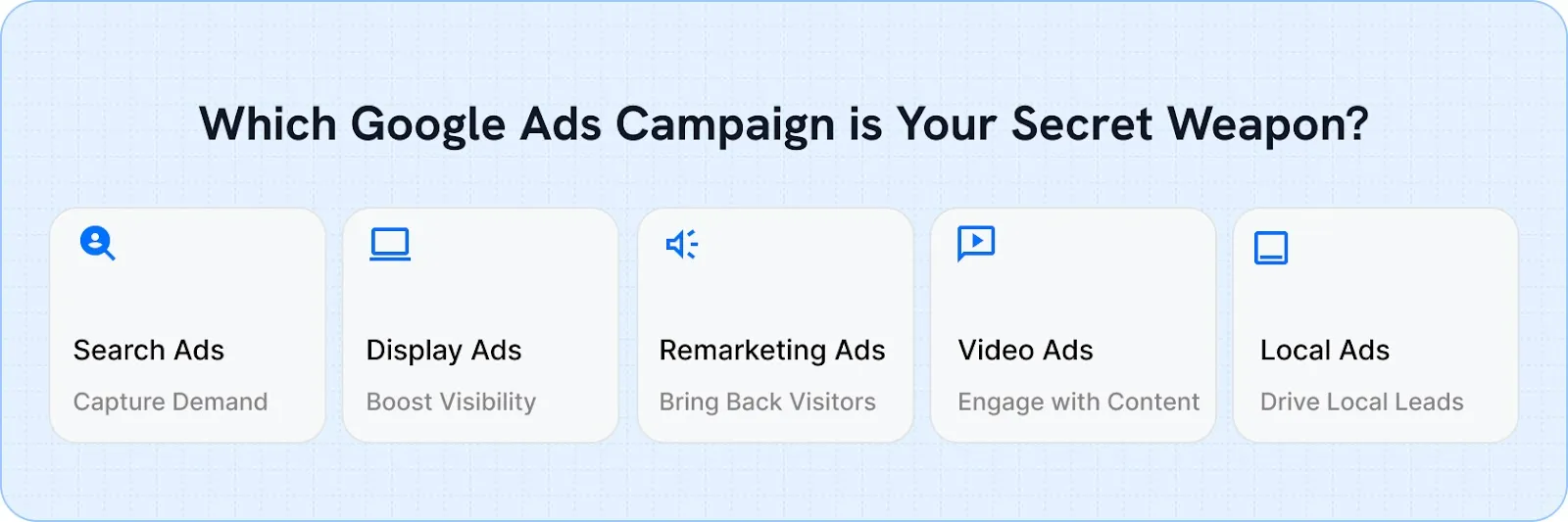
When it comes to Google Ads, there’s no one-size-fits-all approach. To get the best results, it’s important to choose the right type of campaign that aligns with your manufacturing business goals.
Whether you want to generate more leads, increase brand awareness, or drive local traffic, Google Ads offers a variety of campaign types designed to meet specific needs.
Here’s a breakdown of the most effective Google Ads campaign types for manufacturers:
1. Search Ads: Capture Demand in Real-Time
Search Ads are the most straightforward and highly targeted campaign type, appearing at the top of Google search results when people actively search for products or services related to your business.
For manufacturers, this could mean targeting potential customers who are looking for equipment, components, or suppliers. By bidding on relevant keywords, you ensure your ad appears exactly when someone types in search terms like "industrial pumps" or "B2B manufacturing suppliers."
2. Display Ads: Boost Visibility Across the Web
Display Ads are visual ads that appear on websites and apps within Google’s Display Network. These ads allow you to showcase your products to a broad audience, whether they’re browsing industry-related blogs, watching videos, or reading news.
Display Ads are particularly effective for brand awareness, as they help introduce your business to people who may not yet be actively searching for your products but are in the market for what you offer.
3. Remarketing Ads: Bring Back Interested Visitors
Remarketing Ads are designed to target people who have already visited your website but didn’t complete an action, like requesting a quote or making a purchase.
By serving targeted ads to these visitors as they browse other sites or use apps, you can remind them of the value your products provide and encourage them to return to your site.
This campaign type is ideal for conversion optimization, ensuring that leads who have shown interest in your products don’t slip away. For manufacturers, remarketing is a powerful tool to nurture leads and guide them back to your site when they are ready to make a decision.
4. Video Ads: Engage with Compelling Content
Video Ads, often displayed on YouTube and other Google Partner websites, allow you to showcase your products, services, or brand in an engaging format.
Video content is an excellent way to demonstrate your expertise, explain how your products work, or highlight the unique features that set you apart from competitors.
For manufacturers, this is a great way to educate potential customers about complex products or processes.
5. Local Ads: Drive Foot Traffic and Local Leads
Local Ads are ideal if you want to attract customers within a specific geographic area. These ads appear when someone conducts a search with a location-based query, like “manufacturers near me” or “industrial suppliers in [city].”
For manufacturers that operate in specific regions or have a physical presence, local ads can help boost visibility and drive both online and offline conversions.
Local campaigns are essential for driving local visibility, whether you’re promoting a new facility, showcasing local products, or expanding into new markets. These ads ensure that your business appears to the right people in the right places, at the right time.
Which Campaign Type Should You Choose?
To determine which Google Ads campaign type is your secret weapon, think about your goals:
Learn practical strategies to get the most out of your Google Ads spend. This video shows how to target the right audience, optimize campaigns, and generate high-quality leads, even with a limited budget.
Keywords: Find Your Customers When They Need You Most
In Google Ads, keywords are everything. They connect your business to potential customers searching for your products, but choosing the right keywords is crucial.
It’s not about picking popular terms; it's about targeting the right people at the right moment.
- Long-tail keywords (specific, multi-word phrases) attract high-intent leads who are closer to making a purchase. For example, rather than using a broad term like “manufacturing equipment,” target something like “industrial pumps for wastewater treatment.”
This ensures you’re reaching people who have a clear need and are more likely to convert.
- Industry-specific keywords are equally important. They help your ads appear for people actively searching for products within your niche. Whether you're in automotive, medical, or packaging manufacturing, using tailored keywords means your ads reach decision-makers who are looking for exactly what you offer.
Why Targeted Keywords Matter?
- Reach the Right Audience: With long-tail and industry-specific keywords, you're not just appearing for anyone, but for the right people at the right time, increasing the likelihood of conversions.
- Better ROI: By narrowing your focus, you get more relevant clicks, ultimately improving your return on investment (ROI) and campaign effectiveness.
Refining Your Keyword Strategy with the Right Tools
To perfect your keyword strategy, use tools like:
- Google Keyword Planner: Helps you identify the best keywords and track search volume.
- SEMrush: Gives insights into competitor keywords and the competitive landscape, ensuring you're always one step ahead.
By combining long-tail and industry-specific keywords with these tools, you can drive more qualified leads to your manufacturing business.
Craft Ads That Speak to Your Manufacturing Audience
Request a Free Ad Review
Writing Ads That Actually Get Clicked
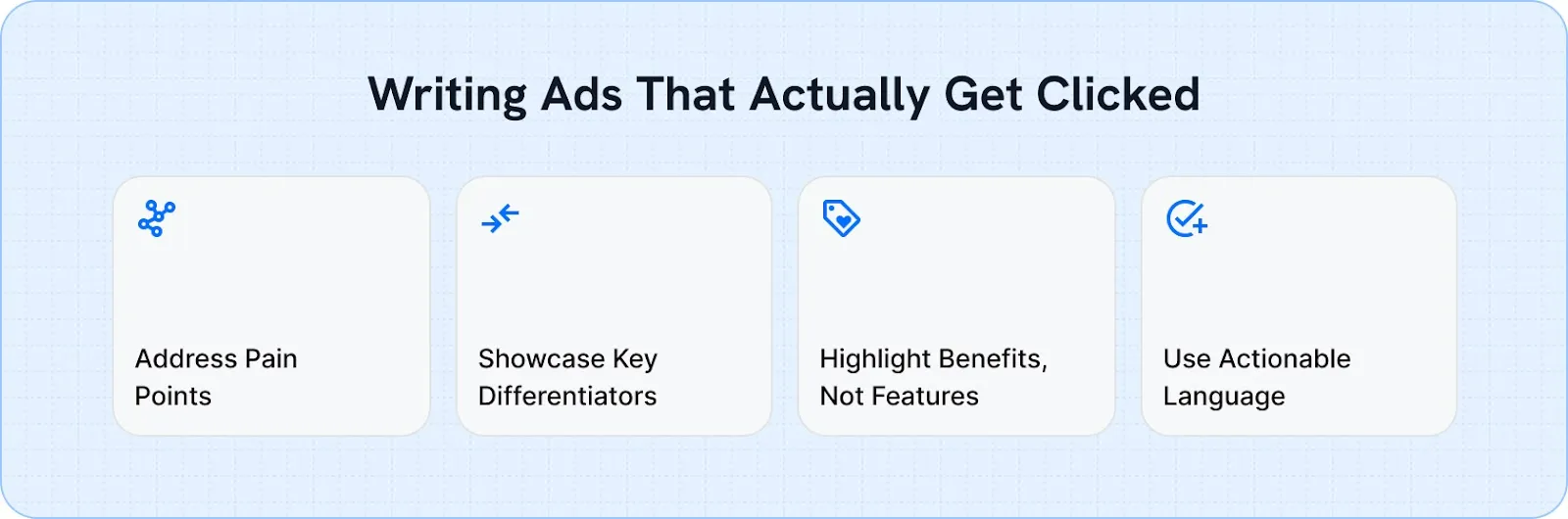
To create Google Ads that grab attention and drive action, focus on clear, benefit-driven copy that speaks directly to your target audience's needs. Here’s how to make your ads stand out:
- Address Pain Points: Highlight the challenges your customers face and show how your product or service solves them. For example, “Tired of delays? Get your custom parts in just 48 hours.”
- Showcase Key Differentiators: Stand out from competitors by emphasizing what makes you unique, such as:
- Fast lead times
- Certifications that ensure quality
- Custom solutions tailored to client needs
- Highlight Benefits, Not Features: Instead of listing features, focus on how those features benefit the customer. For example, “Our ISO-certified manufacturing process ensures precision and reliability for your projects.”
- Use Actionable Language: Encourage clicks with clear, action-oriented phrases like "Get a quote today" or "Start your free trial."
By focusing on value-driven content and speaking directly to customer needs, your Google Ads become more than just promotions; they become solutions that get clicked.
Boost Your Local Reach Today!
Use geo-targeting to reach leads in your exact service areas, connecting with local customers in need of your services.
Start Local Ads Now
Using Google Ads Extensions
Google Ads extensions are a powerful tool to enhance your ad visibility and increase click-through rates (CTR). These extensions allow you to add more information to your ads, making them more appealing and informative to potential leads.
When used strategically, extensions can provide additional value to your customers, making it easier for them to take the next step.
Here’s how you can use different extensions to get the most out of your Google Ads:
1. Callout Extensions: Highlight Key Features
Callout extensions allow you to add short, non-clickable snippets of text to your ads. These snippets can highlight key features, offers, or unique selling points that make your business stand out.
- Why it works: They provide immediate, valuable information like "Free Shipping," "24/7 Support," or "Certified Quality," helping potential leads quickly assess your value without clicking through.
- Impact: Callouts make your ads more compelling by showcasing key benefits that matter to your target audience, improving the chances of attracting engaged clicks.
2. Site Link Extensions: Direct Traffic to Specific Pages
Site link extensions allow you to add additional links below your ad, directing users to specific pages on your website, such as product pages, contact forms, or special offers.
- Why it works: Site links give users more options to engage with your business, offering them a path to the exact information they’re interested in. For manufacturers, this might mean linking to a product catalog, requesting a quote page, or customer testimonials.
- Impact: By providing more relevant destinations, site links improve user experience and CTR, as potential customers can immediately find what they need, reducing bounce rates.
3. Structured Snippets: Provide More Specific Information
Structured snippets provide additional information about your products or services, such as product categories, services offered, or types of expertise.
These snippets appear as headers with specific details underneath, such as "Industries Served: Automotive, Medical, Packaging."
- Why it works: This extension adds clarity to your ad, giving potential leads more context on what your business offers before they click. For example, if you’re a manufacturer, you could use structured snippets to showcase your core products, like "Custom Machining," "Precision Engineering," or "24/7 Production."
- Impact: Structured snippets help you communicate exactly what your business specializes in, increasing ad relevance and making your ads stand out as more useful to users.
The Impact of Extensions on CTR
By enhancing your ads with these extensions, you're not only providing more valuable information but also improving your ad’s visibility and relevance. This leads to:
- More Clicks: The added details make your ad more informative and engaging, leading to higher click-through rates.
- Better Targeting: Extensions help show potential customers that you can meet their specific needs, improving your ad’s alignment with their intent.
- Improved User Experience: Providing users with more options and useful details means they don’t have to search as hard to find the information they need.
By utilizing Callout Extensions, Site Link Extensions, and Structured Snippets, you ensure your Google Ads stand out and provide immediate value, increasing both the quality and quantity of clicks.
Also Check Out: Google’s official guide on ad extensions (Updated)
Optimizing Landing Pages for Conversions
Your landing page is where your Google Ads traffic turns into valuable leads. To increase conversions, make sure your landing page aligns with your ad messaging and offers a seamless, user-friendly experience.
Key Tips for Optimization:
- Consistency with Ad Messaging: Ensure the content on your landing page matches what was promised in your ad. If your ad mentions a specific product or offer, highlight it clearly on your page.
- Clear and Strong CTA: Make your call-to-action obvious and action-oriented. Phrases like “Get Your Free Quote” or “Contact Us Today” guide visitors on what to do next.
- Mobile Optimization: Ensure your landing page is mobile-friendly. A large portion of traffic comes from mobile devices, so the page should look and function well on all screen sizes.
- Fast Load Times: A slow page can cause high bounce rates. Test your page speed and optimize for faster load times to retain visitors.
- Trust Signals: Incorporate customer reviews, certifications, and guarantees to build trust and make visitors feel confident in converting.
Optimizing your landing page can significantly boost conversions, turning clicks into valuable leads.
Turn Clicks Into Conversions with Optimized Landing Pages
Get Landing Page Tips
Budgeting and Bidding for Control and ROI
When managing Google Ads, budgeting and bidding directly impact your ROI. You can choose between manual bidding for control or automated strategies for optimized spending.
1. Manual Bidding for Full Control
With manual bidding, you set individual bids for each keyword, allowing complete control over your budget. This method works well if you want to prioritize high-performing keywords.
2. Automated Bidding for Optimized Spending
Automated strategies like Target CPA or Maximize Conversions adjust bids automatically based on campaign goals, saving you time while optimizing performance for the best ROI.
Allocating Your Budget
- Set goals: Align your budget with campaign objectives (e.g., lead generation or brand awareness).
- Use data: Adjust spend based on past performance to prioritize high-converting campaigns.
- Account for seasonality: Increase your budget during peak periods and reduce it during quieter months.
By choosing the right bidding strategy and budgeting smartly, you can maximize your Google Ads performance and ROI.
Continuous Optimization for Maximum ROI
To get the most out of your Google Ads campaigns, continuous optimization is essential. By tracking key metrics and making data-driven adjustments, you can ensure your campaigns deliver the best possible results.
Key Metrics to Track:
- CTR (Click-Through Rate): Measures how often people click on your ads. A higher CTR indicates your ads are relevant and engaging.
- Conversion Rate: Tracks the percentage of clicks that lead to a desired action (purchase, lead form, etc.). This metric shows how effectively your landing page converts visitors.
- CPA (Cost Per Acquisition): Measures the cost of acquiring a customer. Lowering your CPA means you're getting more value for your spend.
Advertisers using automated bidding strategies often see higher conversions and lower CPAs than manual bidding, although results vary by industry and campaign.
Regularly reviewing these metrics will allow you to make informed changes, such as adjusting bids, refining ad copy, or testing new keywords, to improve campaign performance.
Supercharge Your Google Ads Strategy
Want a personalized Google Ads plan? Let’s take your campaigns to the next level.
Book a Free Consultation
Avoiding Common Google Ads Mistakes
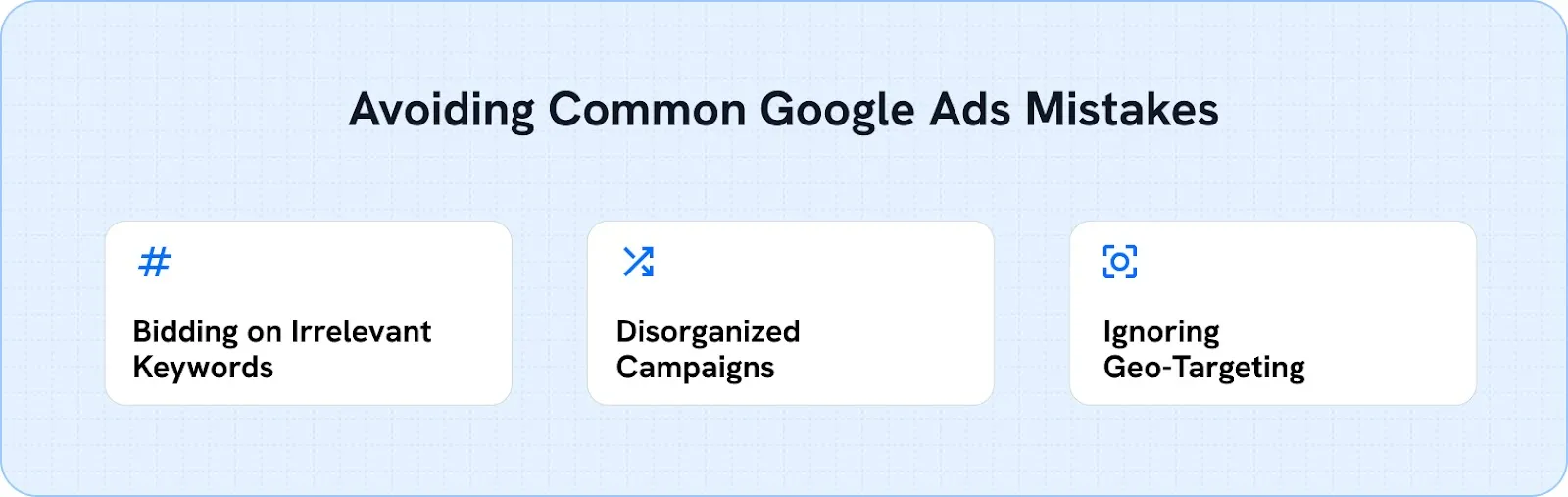
To make the most of your Google Ads campaigns, avoid these common mistakes that can drain your budget and hurt performance:
Mistake 1: Bidding on Irrelevant Keywords
Bidding on broad or irrelevant keywords can waste your budget on clicks that don’t convert. Ensure your keywords are specific to your products or services, targeting high-intent users who are more likely to convert.
Mistake 2: Disorganized Campaigns That Waste Budget
Campaigns without a clear structure can lead to wasted spend. Keep campaigns organized by product categories, regions, or goals to better manage budgets and track performance. This helps ensure you're spending on the right areas.
Mistake 3: Ignoring Geo-Targeting for Local Campaigns
Not using geo-targeting means missing out on local customers. For businesses serving specific locations, geo-targeting ensures your ads reach the right audience in your target areas, maximizing relevance and improving conversions.
Avoiding these mistakes will help you get better results and higher ROI from your Google Ads campaigns.
Take Your Manufacturing Business to the Next Level with Google Ads
Google Ads is a powerful tool for manufacturers looking to generate high-quality leads and improve ROI. By targeting the right keywords, optimizing your bidding strategy, and creating compelling ads, you can connect with decision-makers actively searching for your products or services.
Google Ads helps you stay visible in a competitive market, reach the right audience at the right time, and ensure your marketing budget is being spent effectively. With the right strategy, your manufacturing business can see a significant increase in conversions and drive sustainable growth.
For those looking to optimize their Google Ads campaigns and create high-converting strategies, Gushwork is your ultimate partner.
Gushwork provides the tools and expertise to boost your digital advertising success.
Book a Call Today
FAQs
Q1. How can Google Ads help my manufacturing business?
A1. Google Ads allows manufacturers to target decision-makers actively searching for your products or services, driving qualified leads and improving brand visibility. It helps ensure you reach the right audience at the right time, boosting sales and ROI.
Q2. What type of Google Ads campaign is best for generating leads for manufacturers?
A2. For lead generation, Search Ads are most effective. They appear when users actively search for specific products or services, capturing high-intent leads who are ready to make a purchase or inquiry.
Q3. How can I optimize my Google Ads budget?
A3. Start by defining your goals, then allocate budgets based on performance. Use manual bidding for full control or automated bidding strategies to optimize spending. Regularly monitor metrics like CTR, conversion rates, and CPA to adjust your budget effectively.
Q4. What is the role of geo-targeting in Google Ads for manufacturers?
A4. Geo-targeting is essential for manufacturers serving specific regions. It ensures your ads are shown to local customers who are most likely to convert, driving both online and offline leads within your service areas.
Q5. How do I choose the right keywords for my Google Ads campaign?
A5. Focus on long-tail and industry-specific keywords to target high-intent leads. Use tools like Google Keyword Planner and SEMrush to find the best keywords that align with your products and audience, improving your ROI.
Q6. Can Google Ads help with brand awareness for my manufacturing business?
A6. Yes, Display Ads are great for increasing brand awareness. They allow you to showcase your products across various websites, reaching potential customers who may not be actively searching but could be interested in your products.
Paid Ads
Sep 10, 2025
5 mins
Manufacturers Who Fail In PPC Are Wasting 90% Of Their Budget. Here’s How You Can Fix It
Batul Beawarwala
If you run a manufacturing business, you’ve likely had the same thought at some point: “We make good products. Why aren’t more qualified buyers finding us?”
Many manufacturers deliver solid work, meet deadlines, and keep customers happy, but still struggle to get steady inquiries from the right kind of buyers.
Trade shows help. Referrals help. But neither gives you predictable, year-round leads.
That’s where PPC for manufacturing becomes a game-changer. PPC is a simple tool that gets your business in front of buyers at the exact moment they search for what you produce. PPC pushes your company to the top. You only pay when someone clicks, so every dollar goes toward real interest.
In this blog, you’ll learn how PPC works, why it’s one of the smartest ways for manufacturers to get qualified leads, and how to run it without wasting money.
What Is PPC for Manufacturing?
PPC for manufacturing is simply a paid way to get your business in front of serious buyers at the exact moment they’re looking. But instead of thinking about “ads,” think of it like this:
You’re paying to skip the line.
When buyers search online for a supplier, Google sorts through hundreds of businesses. PPC lets you jump to the front so buyers see you first. You should know: PPC is not about “branding” or “awareness” or chasing clicks.
For manufacturers, PPC is about catching purchase intent.
Purchase intent is when a buyer searches with a real need in hand, like:
- “ISO-certified sheet metal fabricator near me”
- “Custom injection molding supplier small batch”
- “HVAC coil manufacturer bulk order”
- “Precision machining for stainless steel”
These searches are signals that someone is sourcing, pricing, or ready to buy.
You only pay when someone actually clicks your ad.
No click = no charge.
So instead of paying for billboards, trade shows, or magazine ads hoping the right person sees it, a PPC strategy for manufacturers lets you pay only when an actual buyer takes action.
Why PPC Is Especially Useful In Manufacturing?
Unlike retail businesses, manufacturers deal with:
- long buying cycles
- technical products
- multiple decision-makers
- low-volume but high-value orders
PPC helps in fixing a visibility problem that your competitors are already working on.
The moment your campaign goes live, your business starts appearing in front of active buyers. And you can increase or decrease the flow anytime based on capacity, season, or demand.
This makes PPC ideal for manufacturers trying to grow their pipeline, reach new markets, or stabilize lead flow when deals slow down.
Move Your Manufacturing Leads to the Front of the Line
We set up PPC systems that bring your factory steady, purchase-ready leads.
Start My PPC Campaigns
How to Build a PPC Campaign That Brings Manufacturing Leads?
Running a successful PPC campaign in manufacturing is all about focusing on quality over quantity. While it may be tempting to go for broad, high-traffic keywords, these often attract unqualified leads who aren’t ready to make a purchase.
Instead, it's crucial to hone in on specific, intent-driven keywords that align with your core products and services. A well-structured PPC campaign will target the decision-makers in your industry, ensuring every click brings you one step closer to securing a lead.
Let’s dive into the blueprint that will help you set up PPC campaigns that actually convert, starting with the critical element of keyword targeting.
Break Free from Broad Keywords, Focus on What Matters
Broad keywords like “machinery” or “manufacturing” are often too vague and can waste your advertising budget. While these keywords may attract a lot of clicks, they don’t always translate into valuable leads.

Instead, focus on long-tail keywords that are much more specific to your business and industry.
These types of keywords reflect specific processes, materials, and industries that are directly relevant to your target audience.
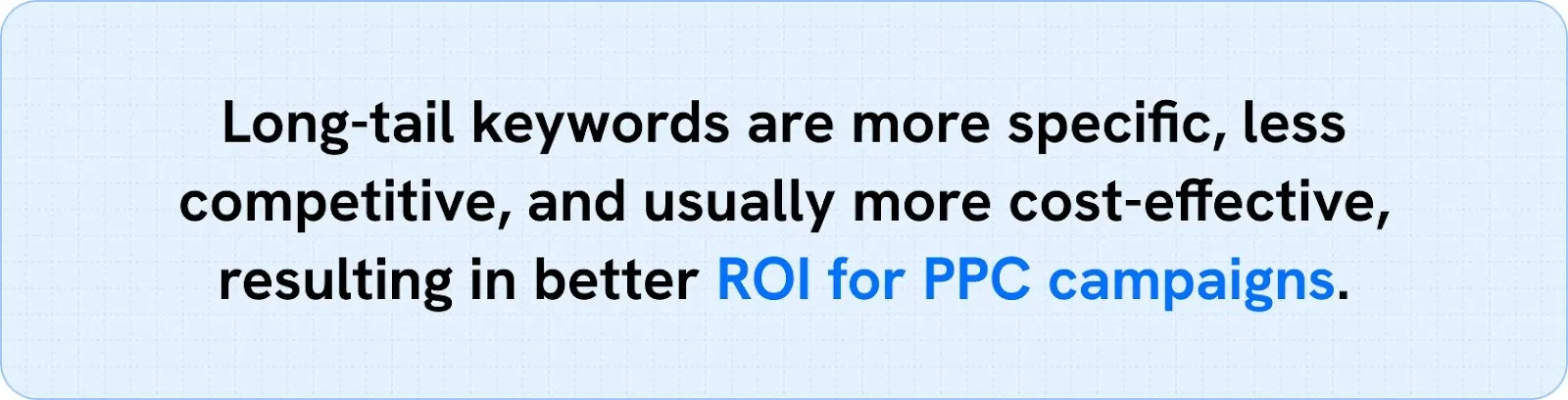
Benefits of Focusing on Long-Tail Keywords:
- Lower CPC: Long-tail keywords generally have less competition, leading to lower costs per click.
- Higher conversion rates: Because the searcher is more likely to be looking for exactly what you offer, the chance of converting them into a lead is significantly higher.
- More qualified traffic: You’re attracting users who are further down the funnel and ready to engage with your brand.
Tip: Avoid broad, generic terms like “machinery” or “manufacturing,” as they will quickly eat through your budget without bringing in qualified leads. Instead, focus on the unique capabilities and specializations that set your business apart.
Not Sure Which Keywords Bring Real Buyers?
We build clean, practical keyword lists for manufacturers that cut out research traffic, block junk clicks, and focus only on terms used by serious purchasing teams.
Get My Keyword Plan
Define Goals That Matter
One of the biggest mistakes manufacturers make in PPC is focusing solely on click-through rates (CTR) or impressions. While these metrics are important for gauging the visibility of your ads, they don’t tell you how well your ads are actually driving business results.
Instead of focusing on vanity metrics, set real business goals that align with your sales process and track meaningful conversions. For manufacturers, some of the most important goals to track include:
- Cost per Qualified Lead (CPL): Measure the cost it takes to bring in a qualified lead that could potentially convert into a customer. This is a more accurate reflection of your ad spend's effectiveness.
- Quote Requests: Track how many people click on your ads and then fill out a form or request a quote. This is a clear sign of intent and a more valuable conversion metric for manufacturers.
- Conversion Rates: Ultimately, the goal of any PPC campaign is to convert clicks into real customers. Focus on the percentage of people who take action after clicking your ad, whether it's requesting more information, scheduling a call, or purchasing.

Why This Metric Matters?
Focusing on conversion-based goals, such as CPL and conversion rates, provides a clearer picture of your campaign's effectiveness.
How to Set and Track Effective PPC Goals:
- Define what success looks like: For example, a quote request or download is much more actionable than just a click.
- Use conversion tracking: Implement tools like Google Tag Manager and Google Analytics 4 (GA4) to track all interactions that contribute to your end goal.
- Measure ROI, not just CTR: Focus on how your ad spend translates into actual business outcomes. Tools like Google Ads Conversion Tracking and CRM software can help you connect ad clicks to offline purchases or leads.
Tip: Align your goals with your sales funnel, measure the actions that indicate genuine interest and are most likely to convert into a sale.
Essential PPC Optimizations Every Manufacturer Should Use
When it comes to PPC campaigns for manufacturers, success isn’t just about choosing the right keywords or setting a solid budget. Every detail matters, from the words in your ads to the layout of your landing pages.
Small tweaks can make the difference between a click and a conversion.
Let’s break down the key elements that can optimize your campaigns and turn them into lead-generating machines.
Your Ad Copy Should Speak Their Language
Think of your ad copy as the handshake with your potential customers. It needs to be clear, direct, and reflect the specific needs of your target audience. Generic ad copy, like "high-quality parts," doesn’t tell your audience why they should care. Instead, use precise language that highlights your unique selling points.
This type of copy speaks directly to your customers' needs and gives them exact details they care about, certifications, materials, and specifications. It also builds trust quickly because it shows you understand their industry and requirements.
Why Precision in Ad Copy Matters:
- Builds trust: Highlighting certifications and precise details makes your business appear professional and reliable.
- Speaks directly to decision-makers: Use industry-specific terms that resonate with your audience, engineers, procurement managers, etc.
- Increases conversion chances: Specifics like material specs and certifications can lower bounce rates by aligning with your customers’ exact needs.
A Landing Page That Does the Selling For You
Your landing page is where the magic happens. It’s the place where a potential customer goes from curious to committed. But here’s the key: simplicity and focus are your best friends. When a user clicks on your ad, they’re expecting something very specific. Make it easy for them to act.
Here’s how to do it:
- One Action: Whether it’s “Request a Quote” or “Download our Capabilities PDF”, keep the focus on a single call to action (CTA). Avoid overwhelming the visitor with multiple options that can lead to decision fatigue.
- Minimal Distractions: Ensure your landing page has a clean design, clear headings, and a logical flow. Too many images, links, or unnecessary information can distract decision-makers from taking the desired action.
- Show Your Value Quickly: The moment the user lands on your page, they should immediately see the benefits, be it your quality certifications, unique selling points, or customer testimonials. Your page should clearly highlight what sets your business apart.
Best Practices for Landing Pages:
- Highlight the offer immediately: Whether it's a quote or PDF, it should be front and center.
- Keep it concise: Show only what's needed to push the visitor toward conversion.
- Trust signals: Add badges, certifications, and customer logos to build credibility right away.
- Speed: Fast-loading pages are crucial. A 1-second delay in loading can reduce conversions by 7% (Google Research, 2023).
The goal of your landing page is to convert visitors into qualified leads, and by focusing on simplicity and clarity, you're much more likely to get the results you're looking for.
Want Landing Pages That Actually Bring Inquiries?
We create simple, clear landing pages built for manufacturers, fast load times, clean messaging, and layouts that turn clicks into real leads instead of drop-offs.
Make My Landing Page
Best Ways to Grow Your PPC Results
As your PPC campaigns start delivering results, it’s time to think bigger. Scaling your campaigns effectively requires a strategic approach, focusing on the right metrics, leveraging remarketing, and fine-tuning your bids to maximize ROI.
Let’s dive into how you can optimize for growth and ensure your PPC budget works harder as you scale.
Apply Remarketing
Not every visitor who clicks on your ad will convert right away, and that’s okay. People often need a little more time or information before they take action. This is where remarketing comes in, allowing you to re-engage users who visited your site but didn’t convert.
Remarketing is a powerful tool for bringing back warm leads, those who have already shown interest in your products but didn’t complete the conversion. With remarketing, you can show these users exactly what they missed, making it easier for them to pick up where they left off. For example:
- Case studies that demonstrate successful projects similar to their needs.
- Material spec sheets or product details they viewed but didn’t download.
- Special offers or limited-time discounts to incentivize action.
By targeting users who have already interacted with your site, remarketing is a cost-effective way to increase conversion rates and recapture lost opportunities.
Benefits of Remarketing:
- Lower cost-per-conversion: Remarketing ads are typically cheaper to run than targeting entirely new audiences.
- Higher engagement: You’re showing ads to people who have already expressed interest in your products.
- Better ROI: It takes fewer resources to convert someone who’s already familiar with your brand.
Want More Buyers to Come Back and Convert?
We help manufacturers set up simple remarketing steps that reconnect with warm prospects and guide them back to your site when they’re ready to inquire.
Improve My Marketing Plan
Monitor Key Metrics
To scale your campaigns effectively, it’s crucial to focus on the metrics that actually drive results, not just vanity metrics like clicks or impressions. While these numbers can be useful, they don’t tell the full story. What you really want to measure is how your PPC efforts contribute to qualified leads and sales.
Start by tracking conversions, not just clicks. Set up tools like Google Tag Manager (GTM) and Google Analytics 4 (GA4) to get a complete picture of your customer journey.
This way, you can measure how users interact with your site after they click on your ad and whether they complete valuable actions (like requesting a quote or downloading a specification sheet).
Once you have conversion data, optimize based on the metrics that matter:
- Cost per Qualified Lead (CPL): Measure how much you’re spending to acquire a lead who is genuinely interested in your product or service.
- Cost per Acquisition (CPA): This metric shows how much you’re spending to acquire a customer, helping you understand the efficiency of your campaigns.
- Return on Ad Spend (ROAS): Track how much revenue you’re earning for every dollar spent on PPC to evaluate the overall performance of your campaigns.
Using this data, you can adjust your bids, ad copy, and targeting to ensure you’re getting the best results at the lowest cost.
How to Optimize for Growth:
- Track the full customer journey: Use GA4 and GTM for detailed, full-funnel tracking.
- Refine targeting: Adjust your campaigns to focus on the segments that drive the most conversions.
- Bid adjustments: Lower bids on underperforming keywords and increase them on high-performing terms.
Benefits of Tracking and Optimization:
- Improved ad performance: When you focus on the metrics that matter, you can continuously refine your strategy to improve ROI.
- Informed decisions: Data-driven insights allow you to make smarter, more effective decisions about where to allocate your budget.
- Scalable campaigns: As you track and optimize, you can confidently scale your campaigns without overspending.
Common PPC Mistakes Manufacturers Should Fix Early
Even the best PPC strategies can fall short if you’re not careful with the details. A few simple mistakes can drain your budget without delivering real results.
Let’s explore common pitfalls manufacturers often make in PPC campaigns, and how to avoid them.
Understanding Keyword Applications
A common mistake manufacturers make is bidding on broad keywords like “machinery parts.” While these keywords seem relevant, they attract a lot of general traffic from people who might not be serious buyers. These types of clicks can waste your budget and drive up costs without generating quality leads.
To make your PPC campaign more effective, focus on industry-specific keywords that reflect your product’s exact use. For example:
- “Food processing equipment parts” instead of just “machinery parts”
- “CNC precision parts for medical devices” instead of “machinery parts”
These keywords are more aligned with specific industries and buyer intent, ensuring the right decision-makers see your ads. By focusing on niche terms, you’ll attract more qualified leads and avoid wasting money on clicks that don’t convert.
Landing Pages That Convert
Your landing page is the critical bridge between your ad and the sale. While it’s tempting to make it look visually appealing, the real goal is to make it convert visitors into leads.
For manufacturing businesses, this means creating a page that speaks directly to decision-makers like engineers, procurement managers, and operations teams.
Here’s how to design a landing page that drives action:
- Clear Specifications: Highlight your product's exact specs, tolerances, and materials to reassure potential buyers that your solution meets their technical needs.
- Certification Badges: Display relevant certifications (like ISO, FDA, or UL) to build credibility and show you meet industry standards.
- Strong CTAs: Keep your call-to-action (CTA) simple and focused. For example, “Request a Quote” or “Download Specifications.” These direct actions reduce decision fatigue and guide visitors to take the next step.
Setting Your PPC Budget
Creating an effective PPC budget isn’t just about deciding how much to spend. It’s about spending wisely so every dollar contributes to generating qualified leads and increasing sales.
Without a solid budget strategy, you risk wasting your resources on inefficient ads or bidding on the wrong keywords. The goal is to make sure your PPC campaigns are targeted and measurable, so you can adjust and improve continuously.
Let’s break down how you can set a smart and scalable PPC budget that drives results without overspending.
How to Predict Your PPC Success?
Predicting the success of your PPC campaigns isn’t about making educated guesses; it’s about using data-driven insights to forecast costs and returns. One of the most effective ways to predict your cost-per-click (CPC) and cost-per-lead (CPL) is by using tools like Google Keyword Planner and Google Ads’ built-in estimates.
These tools give you a snapshot of what different keywords might cost in your industry, allowing you to plan your budget accordingly.
Here’s how to approach it:
- Estimate Your CPC: Use Google Keyword Planner to find out how much you’ll pay for each click on the keywords that matter most to your business.
- Example: If a keyword like “custom CNC machining” has an average CPC of $4, and 10% of the people who click on your ad are likely to convert into leads, your CPL will be around $40.
- Example: If a keyword like “custom CNC machining” has an average CPC of $4, and 10% of the people who click on your ad are likely to convert into leads, your CPL will be around $40.
- Set Your Target ROI: Aim for a 2-3x return on investment (ROI). In simple terms, for every $1 spent on PPC, you should aim to generate $2–$3 in sales or leads. This ensures that your PPC campaign is profitable and sustainable in the long run.
- Adjust Based on Performance: Once your campaign starts, use real data to adjust your strategy. If you’re getting great leads at a low CPC, consider increasing your budget to scale. If your ads are underperforming, it may be time to refine your keyword targeting or improve your landing pages.
Benefits of Forecasting Your PPC Success:
- Clarity in budgeting: Knowing your CPC and CPL allows you to set realistic expectations for your PPC campaigns.
- Better decision-making: You can make adjustments to keywords or ad copy based on performance predictions.
- Improved ROI: Predicting costs early helps you optimize bids, reducing waste and improving overall campaign performance.
How to Balance Ad Spend & Scale Campaigns Effectively?
One of the key aspects of a successful PPC campaign is scaling it effectively, without blowing through your budget too quickly. You don't have to start big to be successful.
In fact, starting small and scaling gradually based on performance allows you to optimize without risking too much at the beginning.
Here’s how to scale smartly:
- Start Small with High-Conversion Keywords: Focus your initial spend on a few high-conversion keywords. Instead of bidding on broad, high-competition terms, invest in specific long-tail keywords with a high likelihood of driving qualified leads.
- Example: If you’re in automotive manufacturing, instead of bidding on a broad term like “automotive parts,” try “high-performance automotive parts for electric vehicles.”
- Example: If you’re in automotive manufacturing, instead of bidding on a broad term like “automotive parts,” try “high-performance automotive parts for electric vehicles.”
- Monitor Performance Weekly: Set a routine to review your campaign performance weekly. Look at key metrics like CPC, CPL, and conversion rates. Use this data to determine which keywords and ads are performing well and which are not.
- Adjust Bid Strategies: Once you identify which keywords and ads are driving the most qualified leads, increase bids on high-performing terms to capture more traffic. Conversely, reduce bids on underperforming keywords. Refining your targeting is an ongoing process; keep adjusting your bids based on performance.
- Gradually Scale Up: Once you see that your campaigns are consistently delivering positive results, start to increase your budget incrementally. Focus on scaling your best-performing ads and campaigns rather than expanding to too many new keywords or audiences all at once.
Key Tips for Effective Scaling:
- Track performance: Consistently monitor key metrics like CPC, CPL, and conversion rates to stay informed.
- Increase budget for high performers: Scale up based on results, not assumptions.
- Refine targeting: Continuously fine-tune your ad copy and keywords to maximize efficiency.
Benefits of Smart Scaling:
- Avoids overspending: By starting small and scaling gradually, you avoid the risk of burning through your budget too quickly.
- Improved ad performance: Scaling based on data ensures that your campaigns drive results without wasting money on underperforming keywords.
- More sustainable growth: A gradual approach to scaling allows you to maintain high-quality leads while optimizing your budget for maximum return.
Wrapping Up
PPC is more than just a way to get people to click on your ads; it’s a high-return strategy when executed properly. With PPC, you gain immediate visibility in front of targeted buyers who are actively searching for the products and services you offer. But it doesn’t stop there.
By using tools like Google Ads and leveraging remarketing, you can track ad performance with data-driven insights. This enables you to continuously refine your campaigns, ensuring your budget is spent wisely on high-converting leads, not just random clicks.
PPC allows manufacturers to drive qualified traffic and increase conversions by targeting buyers at the right time, when they’re ready to make a decision.
Gushwork helped manufacturers like Paniflex and others optimize their PPC strategies to generate high-quality leads while minimizing wasted spend. It’s all about showing up at the right moment with the right message.
Want to see how PPC can work for your business?
Let us show you how we can optimize your campaigns for better results.
Book a Consultation Today

Digital Marketing
Sep 10, 2025
5 mins
You Need This Exact Marketing Strategy Used By The $500M Manufacturing Industry Leader to Stand Apart
Batul Beawarwala
Some teams overspend without seeing results. Others spend too little and miss out on steady, qualified inquiries. Leads rise and fall without a clear pattern, and you’re never fully sure if the money going out is bringing the right buyers in.
A solid sales and marketing budget removes that uncertainty. It gives you a clear picture of what you’ll invest, what you expect in return, and how to support your sales pipeline every month instead of reacting when inquiries slow down.
In this blog, you’ll learn how to build a simple, practical, and data-backed budget that fits the manufacturing world.
What Is a Sales & Marketing Budget and Why Manufacturers Need One?
A sales and marketing budget is a plan that shows how much you’ll invest in reaching buyers and how you’ll use that money across the year.
For manufacturers, it’s not about fancy campaigns. It’s about making sure the right customers know what you make, why you’re a good supplier, and how to contact you.
Your budget ensures three things:
1. You Stay Visible To The Buyers Who Actually Need Your Products.
Even great factories stay invisible if they don’t show up online. A budget ensures you stay present on the channels where procurement teams search.
2. You Spend Money On What Works Instead Of Guessing.
Without a plan, manufacturers often waste money on trade shows, directories, or ads that never return value. A clear budget helps you focus on the channels that bring real RFQs.
3. Your Sales Team Gets Consistent Support All Year.
Your team needs steady leads, updated materials, and buyer touchpoints every month.
A marketing budget for manufacturers is about spending smart, so you get in front of the right companies and close more deals with less friction.
Preparing a Strong Manufacturing Marketing Budget
Crafting a marketing budget that fuels growth and delivers measurable results requires more than just allocating funds; it demands strategic planning, data-driven decisions, and a clear understanding of your business objectives.
Let's break down the essential steps to build a marketing budget that works as hard as your manufacturing operations.
Step 1: First Know Your Business Needs
Before you start spending, assess your unique marketing needs. Are you aiming to boost brand awareness, generate leads, retain customers, or dominate the digital space? Each goal requires a different approach and allocation of resources.
For instance, if your past campaigns on LinkedIn generated a high number of qualified leads, consider allocating more of your budget to LinkedIn ads.
Step 2: Define SMART Goals
Set Specific, Measurable, Achievable, Relevant, and Time-bound (SMART) goals. This clarity ensures that your marketing efforts are aligned with your business objectives and provides a benchmark for measuring success.
Example: Increase qualified leads by 15% through targeted LinkedIn ads over the next 6 months.
By setting clear goals, you can track progress and adjust strategies as needed to stay on target.
Step 3: Invest in What Moves the Needle
Identify which marketing channels will provide the highest return on investment (ROI). In today's digital age, strategies like SEO and content marketing should be prioritized over traditional methods.
For example, companies that have invested in SEO and content marketing have seen significant increases in organic traffic and lead generation.
By following these steps, you can create a manufacturing marketing budget that is strategic, data-driven, and aligned with your business goals, ensuring that every dollar spent contributes to your growth and success.
Build a Marketing Budget That Actually Drives Sales
From SEO to content campaigns, we help you invest where it counts and cut what doesn’t.
Plan My SEO
Common Budget Mistakes Manufacturers Should Avoid
When creating a marketing budget for your manufacturing business, avoiding these common mistakes is crucial to ensuring your funds are spent wisely. Let’s dive into the key blunders that can derail your marketing efforts, and how to dodge them.
Mistake 1: Overlooking Digital Marketing
Traditional marketing methods alone won’t cut it in today’s digital-first world. While print ads, direct mail, and trade shows still have their place, manufacturers need to invest in digital marketing to stay competitive. SEO, content marketing, and paid ads are essential to reaching modern buyers who are actively searching for solutions online.
If you’re not prioritizing digital channels like SEO and Google Ads, you’re missing out on a huge portion of the market that is actively seeking solutions to their problems.
Mistake 2: Not Measuring ROI
If you’re not tracking the return on investment (ROI) of your marketing efforts, you risk wasting valuable resources. Marketing budgets can get out of hand quickly if you don’t measure performance and optimize campaigns. Invest in tools that allow you to track real-time results and make data-driven decisions.

By tracking metrics like lead generation, conversion rates, and customer acquisition costs, you can ensure your marketing spend is being allocated to the most effective channels. Monthly check-ins will help you pivot strategies when needed, ensuring you’re always on track to hit your goals.
Mistake 3: Going Overboard with Trade Shows
While trade shows are a valuable opportunity for networking and showcasing your products, they shouldn’t consume your entire marketing budget. Relying too heavily on physical events can limit your reach and lead to missed opportunities in the digital space.

Striking a balance between digital and traditional marketing channels will give you more flexibility, reach, and ultimately, a higher return on your investment.
By avoiding these budgeting blunders, you’ll set your manufacturing business up for success, ensuring that every dollar spent moves you closer to your marketing and sales goals.
How to Spend Less and Win More with High-ROI Marketing Plans?
Optimizing your marketing budget requires more than just guesswork; it’s about making data-driven decisions. By leveraging data analytics, you can allocate funds to channels that deliver measurable results, ensuring every dollar spent contributes to your business goals.
Marketing automation is another key factor in maximizing ROI. Automating campaigns not only streamlines your efforts but also allows for real-time tracking and performance analysis, helping you make informed decisions faster.
By combining data insights with automation, you create a marketing engine that scales effectively while driving optimal results.
Metrics Every Manufacturer Should Track Before Spending More
To ensure your marketing budget is truly working for your manufacturing business, it’s essential to track the right metrics. By focusing on the key indicators that drive growth and profitability, you can make informed decisions and optimize your marketing spend for the best possible results.
Here’s a look at the top metrics you should monitor to assess the effectiveness of your marketing strategy.
Track What Truly Matters
Focus on metrics that directly impact your business growth. Key metrics to track include:
- ROI (Return on Investment): Measures the profitability of your marketing spend.
- Customer Acquisition Cost (CAC): The cost of acquiring a new customer.
- Customer Lifetime Value (CLV): The total revenue you can expect from a customer over their lifetime.

Continuous Refinement, Stay Agile
Marketing budgets should never be set in stone. Regularly assess the effectiveness of your campaigns and be ready to make adjustments based on real-time performance.
Build Your Marketing Budget
Creating a well-structured, data-driven marketing budget is crucial for manufacturing businesses looking to stay competitive and drive growth. By prioritizing the right channels, setting clear goals, and continuously refining your strategy, you can ensure every dollar spent delivers measurable results.
A dynamic budget that adapts to performance data and market trends is the key to optimizing ROI and fueling long-term success.
Gushwork’s data-driven approach helps you leverage the best strategies to maximize your marketing budget, ensuring you stay ahead of the curve.
Recap & Actionable Takeaways:
- Focus on digital marketing channels that provide measurable results.
- Regularly track key metrics like ROI, CAC, and CLV.
- Continuously refine your strategy based on real-time data.
Digital Marketing
Sep 10, 2025
5 mins
Redesigning Your Manufacturing Website? Here’s How To Ensure It Becomes A Growth Engine
Batul Beawarwala
Your website is often the first impression potential clients have of your manufacturing business; make sure it speaks volumes. A strong design doesn't just showcase your products; it builds trust, highlights your expertise, and sets the tone for long-term success.
It should be user-friendly, mobile-responsive, and optimized for search engines to ensure that potential clients can easily find and navigate your site. Moreover, a clear and organized layout can enhance customer experience, making it simple for visitors to access essential information like product specs, pricing, and contact details.
This comprehensive guide will break down key considerations, like functionality, speed, and visual appeal, to help you select a design that meets both your business goals and your customers' needs.
The Strategic Foundation: 10 Must-Know Design Principles for Manufacturing Websites
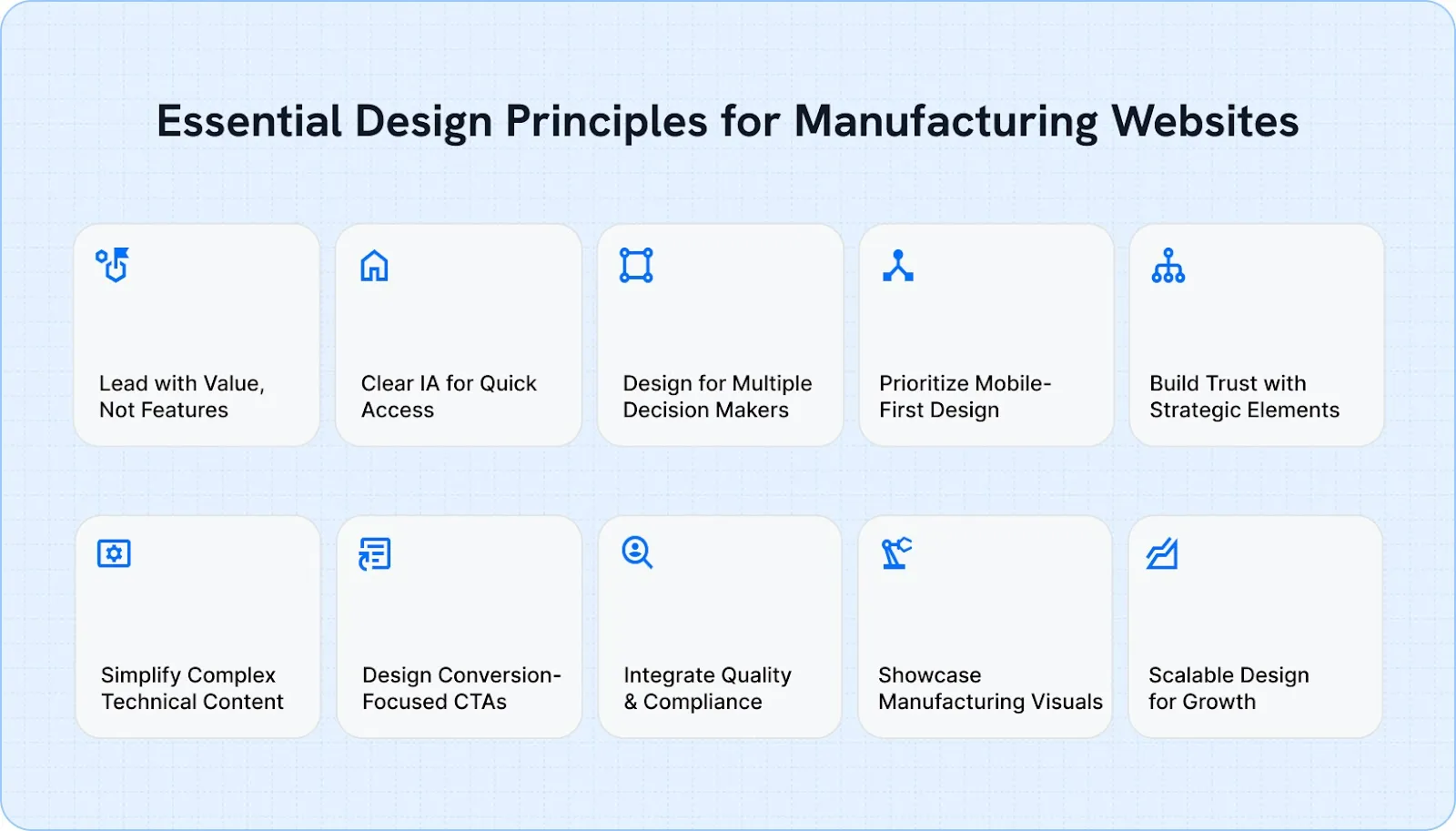
Building a website for your manufacturing company isn’t just about aesthetics; it's about creating a strategic platform that fuels your business growth, attracts quality leads, and builds trust with your audience. As the manufacturing industry becomes more competitive and digitally driven, your website is often the first point of contact with potential clients.
Here are 10 essential design principles that will not only enhance user experience but also improve your website’s effectiveness in generating leads and driving conversions.
1. Lead with Value, Not Features
Manufacturers often make the mistake of showcasing a list of features or technical specifications right off the bat. But remember, your audience, whether it's a procurement officer, engineer, or C-suite executive, doesn’t need to be overwhelmed by every detail upfront.
Highlight your core value proposition immediately, making it crystal clear what differentiates your company. Whether it's faster production times, unmatched quality standards, or eco-friendly practices, position these elements prominently on your homepage.

Tip: Lead with statements like:
- “Get precision-engineered parts delivered in 48 hours”
- “ISO-certified manufacturing for aerospace reliability”
2. Clear Information Architecture for Quick Access
Your manufacturing website needs to present technical and complex information in a way that’s simple to navigate. Think about creating a website layout where the content is broken down into digestible chunks that match your buyer’s journey. Ensure your site map allows for quick access to:
- Products/Services: Clearly list offerings with specs and details for each product.
- Capabilities: Include equipment lists, certifications, and production capacity.
- Industries Served: Highlight industry-specific solutions with relevant case studies.
- Quality & Compliance: Showcase your certifications and industry standards (e.g., ISO, CE, UL).
- Company Information: Show your company’s history, mission, and team, giving a face to your brand.

3. Design for Multiple Decision Makers
B2B manufacturing purchasing decisions typically involve a team of decision-makers, each looking for different types of information. A procurement manager might care more about costs and delivery times, while engineers will focus on technical specifications. Your design should cater to both by:
- Layering content: Have quick, scannable data for time-pressed visitors and detailed resources (white papers, case studies) for those seeking more in-depth information.
- Creating dedicated pages for specific audiences or personas.
- User-friendly filtering options: This helps users quickly find the most relevant information based on their role.
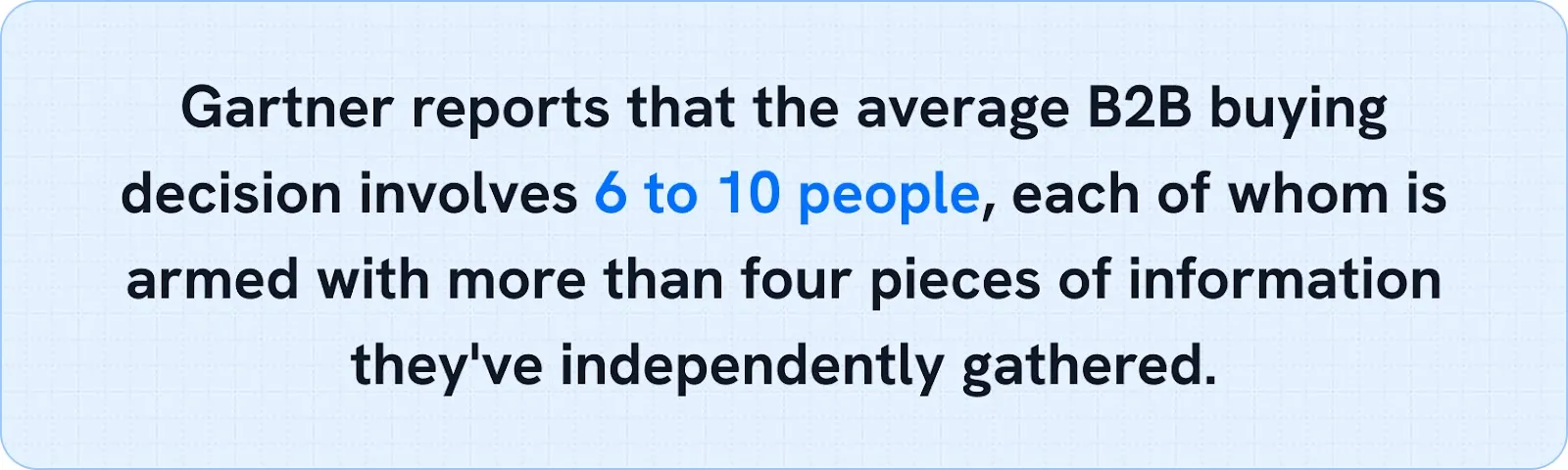
4. Prioritize Mobile-First Design
With 60% of B2B buyers now researching suppliers via mobile devices, optimizing your manufacturing website for mobile isn’t optional anymore; it’s necessary. Mobile-first design ensures that your website is responsive, easy to navigate, and functional across all devices, especially smartphones and tablets. Key considerations for mobile optimization include:
- Touch-friendly navigation for easy browsing.
- Content that’s automatically scaled to fit different screen sizes, eliminating the need for zooming.
- Fast loading times, as slow mobile sites can increase bounce rates.
5. Build Trust with Strategic Elements
Manufacturing partnerships are long-term commitments, and building trust is a critical part of the buying process. To foster trust on your website:
- Display industry certifications prominently (e.g., ISO, CE, UL).
- Show client testimonials that include real company names and photos for authenticity.
- Present detailed case studies that demonstrate how you solve real-world problems.
- Invest in professional images of your team, facilities, and products.
- Display your security badges to reassure users that their data is safe.
6. Simplify Complex Technical Content
Manufacturing businesses often need to present complex, technical data, whether it’s detailed specifications, CAD drawings, or product comparisons. Make sure you provide content that is:
- Visually digestible: Use diagrams, technical drawings, and comparison charts.
- Expandable: Allow users to click or hover to see additional information without overwhelming them with excessive details.
- Accessible: For visitors who need to download CAD files or product guides, ensure that downloads are quick and easy.
7. Design Conversion-Focused CTAs
Effective calls to action (CTAs) guide your visitors toward the next step in the sales process. The key is to make sure your CTAs are:
- Action-oriented and specific: Instead of generic CTAs like “Contact Us,” try using phrases like "Get Your Custom Quote Today" or "Download Product Spec Sheet."
- Located strategically: Place them in prominent areas where users are most likely to take action (e.g., after reading a product description, on landing pages, or in the footer).
- Easy to find: Make buttons large and colorful enough to catch the eye without being obtrusive.
8. Integrate Quality and Compliance Messaging
For manufacturing businesses, quality assurance and compliance are often the most important selling points. Build these into your website’s design:
- Dedicated quality pages showcasing certifications, testing procedures, and product standards.
- Visual cues: Use icons, banners, and certification badges to reinforce compliance.
- Clear, consistent messaging throughout your content.
9. Showcase Manufacturing Capabilities with Visuals
As a manufacturer, showing what you do is crucial. Photos and videos bring your processes to life, helping visitors connect with your company on a personal level. Consider adding:
- High-quality photos of your facilities and equipment.
- Process videos that show your operations in action.
- Customer testimonials in video form for greater authenticity.
- Images of your team engaged in daily work to humanize your brand.
10. Plan for Growth with Scalable Design
Manufacturing businesses don’t stay static; they grow, expand, and evolve. Your website must be designed to accommodate this growth. Scalable design means that as your company adds:
- New products or services
- Additional team members
- Upgrades in facilities or certifications
Design your website to accommodate future growth, ensuring it evolves alongside your business.
Get a Future-Proof Site
By adhering to these essential principles, you’ll ensure your website becomes a powerful tool for driving growth, gaining leads, and building a strong online presence.
Remember that your website is not just a brochure, it's your digital business hub that works 24/7 to communicate your brand's value and convert visitors into long-term clients.
Beyond Design: The Three Pillars of Manufacturing Website Success
Design is only the starting point; what truly drives success is how well you integrate your website with broader strategic elements. To maximize ROI, manufacturing websites must focus on three critical components: SEO, content marketing, and CRM integration.
These often-overlooked pillars can transform a good website into a powerful tool that drives business growth and competitive advantage.
Let’s dive into these strategies that ensure your website not only looks good but also works hard for you.
Pillar 1: GET FOUND – Strategic SEO That Puts You in Front of Ready-to-Buy Manufacturers
Even the best-designed website won’t do you much good if your target audience can’t find it. Manufacturing SEO is about much more than basic keyword optimization. It's a specialized strategy designed to ensure your site appears when your ideal customers are actively searching for manufacturing solutions.
Manufacturing SEO Priorities That Drive Discovery:
- Local SEO optimization: Target manufacturing hubs where your ideal clients operate, making sure your website appears in geographically relevant searches.
- Technical keyword targeting: Understand the exact search phrases that procurement specialists, engineers, and supply chain managers use when they look for solutions. This could be long-tail keywords such as “precision machining for automotive parts.”
- Voice search optimization: B2B buyers often use voice search on mobile devices during meetings or facility visits. Optimize your site for voice search by incorporating natural language phrases and questions.
- Schema markup: Implement structured data on your pages to generate rich snippets in search results, showcasing your key capabilities directly in the SERPs.
- Page speed optimization: In a world where users demand instant access, a fast-loading website ensures users don’t leave due to technical content or large images, especially on mobile.
A well-integrated SEO strategy ensures that your website design supports these technical SEO needs, and clean code, fast loading times, and a clear content structure are essential. This integration helps you rank higher and stand out in search results, giving you a competitive edge by being found when your prospects are searching for solutions.
Result: Your ideal customers find you first, positioning you as the leader in their search, and allowing you to lead the conversation from the very beginning.
Pillar 2: GET ENGAGED – Content Marketing That Converts Browsers into Buyers
A stunning design gets users to your website, but it’s your compelling content that keeps them engaged and converts them into qualified leads. Manufacturing content marketing isn't about random blog posts or superficial product descriptions; it's about delivering targeted, valuable resources that turn visitors into trusted prospects.
Content Strategy That Builds Authority and Trust:
- Technical guides and whitepapers: Show your expertise in solving specific problems within your industry. These resources should demonstrate how your solutions directly address your prospects’ pain points.
- Detailed case studies: Highlight real-world success stories with measurable results that demonstrate ROI for companies similar to your target audience.
- Process documentation: Build trust in your manufacturing capabilities by showcasing your operational efficiency, quality control, and reliability through documented processes.
- Industry trend analysis: Position yourself as a forward-thinking partner by sharing insightful analyses of current trends and their potential impact on the industry.
- Interactive FAQ sections: Address common concerns proactively to help potential buyers feel confident in their decision-making process.
Your content must align with the user journey, moving visitors from initial interest to deeper engagement.
This educational content builds trust, showcases your authority, and significantly shortens sales cycles. It’s not about stuffing keywords; it’s about genuine value that resonates with your audience.
Result: Visitors stay longer, engage more, and arrive at sales conversations already convinced of your expertise, making your sales team’s job easier and leading to higher conversions.
Pillar 3: GET RESULTS – CRM Integration That Transforms Website Activity into Trackable Revenue
Here’s where many manufacturing websites fall short. You can drive traffic, but without proper CRM integration and performance monitoring, you’ll never know which content or actions truly matter. Proper integration allows you to track and analyze website activity in real-time, turning visitor actions into actionable sales insights.
Performance Tracking That Drives Business Growth:
- Lead scoring systems: Based on page views, content consumption, and engagement depth, lead scoring helps prioritize high-potential leads.
- Behavioral tracking: Track the buyer journey, which pages are they visiting, what content are they engaging with, and when do they drop off? These insights optimize conversion paths.
- Automated lead nurturing: Triggered by specific website actions (like a case study download or a request for a quote), this nurturing keeps prospects engaged until they’re ready to make a purchase.
- Sales team alerts: Automatically notify sales teams when high-priority actions take place, such as pricing page visits or repeated visits to your product/service pages.
- ROI measurement: Connect website activity to closed deals, attributing revenue to specific actions like form submissions, downloads, or consultations.
Advanced Success Monitoring:
- Conversion path analysis: Determine which content and pages are most effective at moving leads toward a sale.
- Sales cycle impact measurement: Understand how your website-generated leads compare to those generated by other marketing channels in terms of time to conversion.
- Customer acquisition cost tracking: Measure the cost of acquiring customers through your website versus traditional marketing methods.
Without CRM integration, your website is just a digital brochure. But with it, you’ll gain real-time visibility into which activities, pages, and content drive revenue. Performance tracking connects your website’s efforts directly to your bottom line.
Result: You’ll know exactly which website elements are driving revenue, giving you the power to continuously optimize for better business outcomes rather than just tracking vanity metrics like traffic.
Also Read: 25+ Manufacturing Website Design Examples That Generate Leads (Strategy Checklist Included)
Three Manufacturing Website Designs That Drive Results
Your manufacturing website isn’t just a digital brochure; it’s a powerhouse for lead generation, trust-building, and revenue-driving.
Let’s explore three manufacturing websites that nail it by applying strategic design principles, with the added power of Gushwork’s automation and AI-driven tools.
These case studies showcase websites that don’t just look good but work hard to deliver measurable business results.
Case Study 1: John Maye Company – Where Packaging Meets Flexibility
John Maye Company understands that timing and flexibility are crucial in packaging equipment rentals. The homepage hits you with clear, benefit-oriented messaging right away: “Flexible Terms for Seasonal Peaks” and “Emergency & Same-Day Rentals.”
These address the most common pain points for manufacturing companies: cash flow and urgent equipment needs.
Why This Design Shines:
- Immediate Problem-Solution Clarity: The hero section directly addresses key pain points for manufacturing companies that require flexibility in equipment, something rental companies don’t always highlight.
- Service-Specific Navigation: The site cleverly differentiates rental services from sales, catering to two very different types of buyers and decision-making processes.
- Trust-Building Specifics: Rather than vague promises like "quality service," they provide real commitments: “All Rentals Include Maintenance” and “Same-Day Rentals.” This helps reduce buyer risk perception, a game-changer in the rental market.
How Gushwork Powers John Maye’s Strategy:
By integrating Gushwork’s AI-driven automation, John Maye has optimized lead capture and response time, ensuring they quickly address high-intent visitors.
Gushwork’s lead scoring and automated follow-up ensure that prospects who are looking for urgent equipment rentals are contacted promptly, turning high-conversion visitors into customers without delay.
Revenue Driver: By offering rental options prominently, John Maye has expanded their market. Companies that might never buy equipment still generate recurring revenue through rentals, broadening their customer base.
Case Study 2: Paniflex – Precision Manufacturing for the Win
Paniflex is laser-focused on precision. Their competitive edge? “Manufacturing doors to the nearest quarter inch” with state-of-the-art equipment like CNC routers and computerized cutting tables. This website doesn’t shy away from showcasing exactly what they do, and it works.
Why This Design Shines:
- Technical Differentiation at the Forefront: Paniflex doesn’t bury its precision capabilities in an “About Us” section. They put it front and center, appealing directly to the architects and contractors who need exact specifications.
- Transparency in Process: By mentioning their use of R2D2's software and automated equipment, they offer a level of transparency that builds confidence in their manufacturing processes and ensures consistent quality.
- Market-Specific Messaging: Recognizing that architects and contractors value precision over generic quality claims, the messaging is tailored to their needs, addressing the specific challenges these professionals face.
How Gushwork Powers Paniflex’s Strategy:
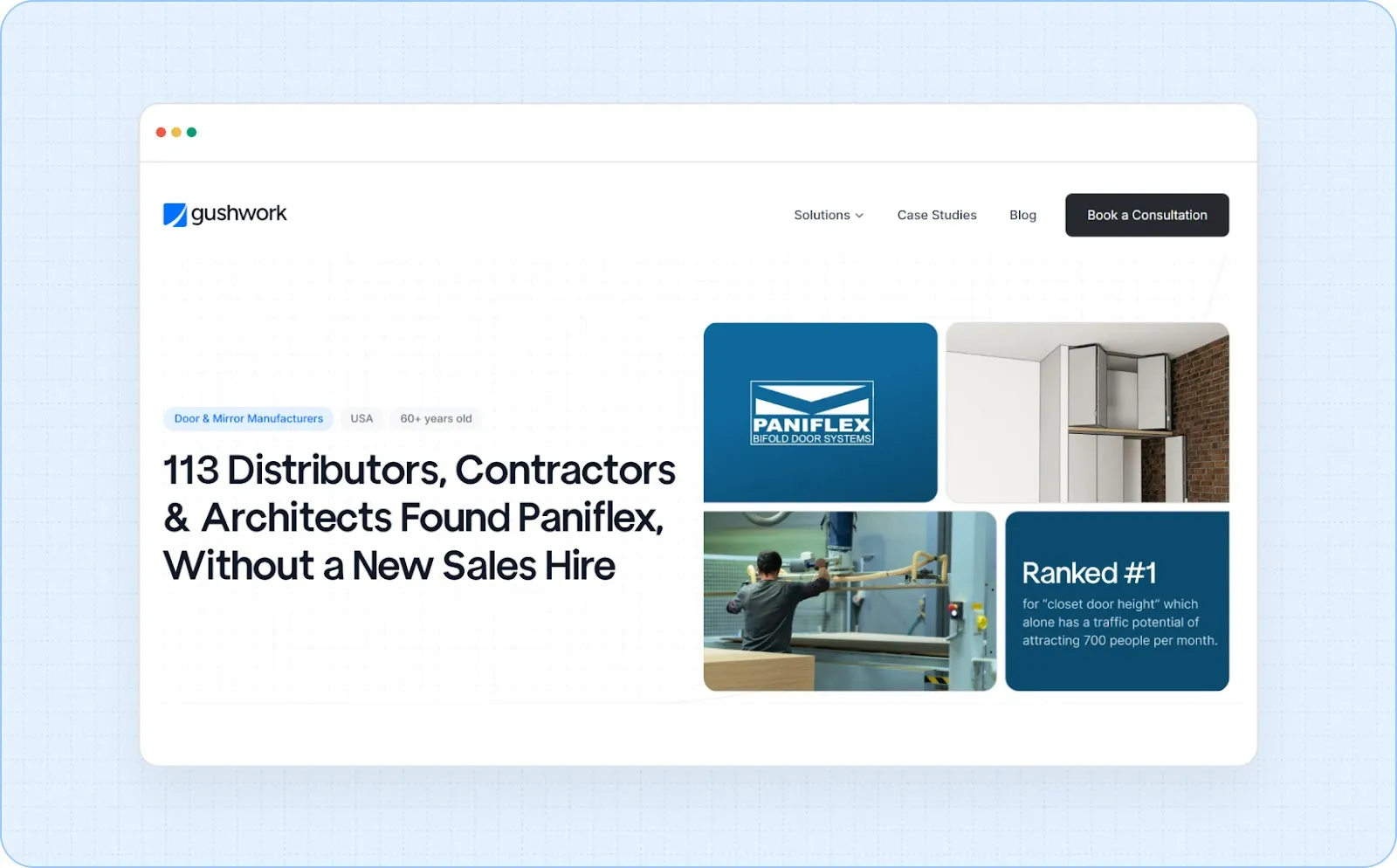
With Gushwork’s content marketing automation, Paniflex is able to distribute targeted content (such as technical whitepapers and case studies) to high-value leads, improving lead engagement and conversion rates. Behavioral tracking helps identify when these professionals are in the research phase, enabling tailored content delivery that matches their specific needs.
Revenue Driver: By positioning their services as cost-saving, eliminating the need for modifications to openings, they justify premium pricing, attracting clients who prioritize precision over cost.
Case Study 3: Chemiteck – Chemistry Meets Web Design
While Chemiteck's site might not be visually loaded, its domain positioning and URL structure show that it’s aimed at industrial chemical solutions. This offers a valuable lesson on designing for the chemical industry, where safety and regulatory compliance should take center stage.
Essential Elements for Chemical Manufacturing Websites:
- Regulatory Compliance Prominence: Safety and regulatory certifications are must-haves for chemical manufacturers. Chemiteck’s site should clearly showcase compliance and safety credentials (e.g., MSDS sheets, certifications), reassuring visitors of their reliability.
- Application-Focused Organization: Instead of organizing by chemical types, this site should focus on industries served and specific applications. Buyers are more interested in solving industry-specific problems than browsing through a generic product list.
- Technical Support Integration: Chemical manufacturers often require technical consultation. A website that features easy access to support (e.g., troubleshooting resources, application engineering contact) will increase buyer confidence.
- Safety & Handling Information: Chemical manufacturers must provide immediate access to safety data. Chemiteck should highlight MSDS sheets and safety handling procedures on its homepage to create trust and build compliance credibility.
How Gushwork Powers Chemiteck’s Strategy:
Gushwork’s CRM and performance tracking tools ensure that Chemiteck’s website is not just a catalog of chemicals but a revenue-generating asset.
Behavioral tracking helps segment visitors based on their interests (e.g., those looking for safety certifications or application specifics) and triggers automated nurturing sequences to guide these leads through the sales funnel efficiently.
Lead Generation for Chemical Manufacturing: Successful chemical manufacturing websites turn technical problem-solving into a selling point. By focusing on process optimization, application expertise, and safety, Chemiteck can attract qualified leads who value industry knowledge over simply selling chemicals.
Key Takeaways for Your Manufacturing Website Design:
- John Maye demonstrates that clear value propositions and specific offerings in rental services can help drive urgent, high-conversion leads.
- Paniflex highlights the importance of market-specific messaging and technical transparency to pre-qualify high-value leads and command premium pricing.
- Chemiteck shows how safety, compliance, and application-specific solutions are critical for building trust in industries where regulatory standards are paramount.
The Integration Strategy: Making It All Work Together
A manufacturing website is more than just a digital brochure. To generate leads and drive growth, it must integrate design, content strategy, SEO, and CRM into a unified system.
These elements should work together seamlessly, guiding visitors from their first impression to becoming qualified leads and, ultimately, customers.
Here’s how it works:
1. Design: The First Impression
Your website design is the first thing visitors notice. It should be easy to navigate, user-friendly, and responsive across all devices. The design needs to guide users to the key information that will help them make decisions, like clear calls to action (CTAs) and simple navigation.
2. Content: Building Trust and Authority
Content makes your website more than just a page of information; it builds trust. Your content should speak directly to your audience's needs, addressing their pain points with educational resources, like case studies, technical guides, and industry insights.
It establishes your company as an expert in your field, building credibility and moving visitors closer to making a purchasing decision.
3. SEO: Helping the Right People Find You
SEO ensures your website appears in search results when potential customers are looking for your services. By using targeted keywords, optimizing your pages, and focusing on mobile-friendly design and fast load times, you’ll improve visibility and attract qualified leads.
Without SEO, even the best design and content won’t be found by your ideal customers.
4. CRM: Turning Visitors Into Leads
CRM integration tracks and nurtures leads. With platforms like Gushwork’s CRM, you can automatically capture visitor data, track their behavior, and identify high-potential leads based on actions like form submissions or product page views.
CRM allows you to nurture leads through personalized follow-ups, guiding them through the decision-making process.
Why This Integration Works: The Big Picture
Manufacturers often optimize these elements separately, leading to missed opportunities. When design, content, SEO, and CRM work together, you get:
- Qualified leads who are ready to buy.
- A shortened sales cycle with pre-qualified prospects.
- Sales intelligence that helps your team close deals faster.
With this integrated approach, your website becomes a lead-generation machine that continuously works for your business, giving you a competitive edge.
Implementation Roadmap for Manufacturing Website Success
Creating a successful manufacturing website isn't just about a sleek design, it’s about a strategic approach that drives real business growth. To make your website your hardest-working salesperson, follow this roadmap to align design, content, SEO, and CRM systems for maximum impact.
1. Start with Strategic Foundation
Before diving into design, define your unique value proposition and identify your ideal customer profile (ICP). Know exactly who you are targeting and what problems your manufacturing solutions solve. This clarity will guide the rest of your website’s development, ensuring that every element speaks directly to the needs and pain points of your audience.
2. Design for User Journey
Map out your typical sales process, from awareness through to decision. Your website must support each stage of the journey:
- Awareness: Create a clear first impression with a user-friendly design and compelling content.
- Consideration: Provide in-depth resources, such as case studies and technical specifications, to help prospects evaluate your offerings.
- Decision: Feature strong calls to action (CTAs) like "Request a Quote" or "Book a Demo" to drive conversions.
By aligning your design with the user journey, you can guide visitors smoothly through their decision-making process.
3. Implement Technical Excellence
A visually appealing website is worthless if it’s slow or hard to navigate. Prioritize the following technical elements:
- Fast loading speeds to improve user experience and search engine rankings.
- Mobile optimization so users can easily access your site on any device.
- Clean, structured code that supports both the user experience and SEO visibility.
These elements are critical for both user engagement and ensuring your site ranks well in search engine results.
4. Create Content Assets
Content is the heart of a successful manufacturing website. Focus on creating valuable, industry-specific content that establishes authority and builds trust with your audience. This can include:
- Case studies that showcase real-world success stories.
- Technical resources like whitepapers, product specs, and guides.
- Industry insights that position your brand as an expert and thought leader.
This content not only helps with SEO but also nurtures leads through educational and trust-building resources.
5. Integrate CRM Systems
CRM systems are essential for tracking and nurturing leads effectively. Integrate your website with a CRM platform to:
- Track visitor behavior and identify high-potential leads.
- Segment leads based on engagement, allowing you to send personalized follow-ups.
- Automate lead nurturing with timely emails, helping prospects move through the sales funnel.
This integration ensures that you don’t just attract visitors; you actively convert them into qualified leads.
6. Measure and Optimize
Finally, measure the effectiveness of your website. Track key performance indicators (KPIs) such as:
- Website traffic and bounce rates.
- Lead conversion rates.
- Engagement with content (downloads, video views, etc.).
Monitor these metrics alongside business outcomes like revenue growth or sales cycle reduction. Use this data to continuously refine your website and marketing strategy for ongoing optimization.
Make Your Website Your Hardest-Working Salesperson
By following this roadmap, your manufacturing website will evolve into a strategic asset that supports every stage of the customer journey, from attracting visitors to converting them into loyal customers. With the right combination of design excellence, content authority, SEO visibility, and CRM integration, your website will drive measurable growth for your business.
To ensure seamless integration and maximize your website's potential, Gushwork offers advanced CRM tools and AI-driven automation that streamline lead capture, nurturing, and conversion.
With Gushwork’s tried and tested strategy, your website can be a constant driver of business growth.
Get Strategy Help
By connecting your website to real-time performance data and visitor insights, Gushwork ensures your website doesn’t just attract traffic, it turns that traffic into sales, helping your business grow faster and smarter.
FAQs
Q1. How do I ensure my manufacturing website appeals to my target audience?
A1. To appeal to your target audience, focus on their specific needs. Use clear messaging that highlights your unique value, such as faster production or specialized services. Ensure your site speaks directly to decision-makers like engineers, procurement managers, and business executives by tailoring your content to address their concerns and pain points.
Q2. What role does website speed play in user experience and SEO?
A2. Website speed is essential for both user experience and SEO performance. A fast-loading website reduces bounce rates and keeps visitors engaged. For SEO, Google ranks faster websites higher, improving your chances of being discovered by potential clients. Tools like image optimization and code clean-up can help improve speed.
Q3. Should I include interactive features like product configurators or quote generators?
A3. Yes, interactive features such as product configurators or quote generators enhance user engagement and simplify the buying process. These tools allow visitors to customize products or get immediate quotes, leading to higher conversion rates by providing instant value and reducing friction in the decision-making process.
Q4. How important is it to align my website’s design with my overall brand identity?
A4. Consistency between your website design and your brand identity is key to building trust and recognition. Ensure that your color scheme, fonts, and logo reflect your brand’s values and personality. A cohesive design creates a professional image that resonates with visitors and strengthens brand loyalty.
Q5. How do I optimize my website for different stages of the buyer’s journey?
A5. To optimize for different buyer stages, tailor your content to address specific needs at each point. For awareness, focus on broad industry insights. For consideration, offer detailed product specs and case studies. For decision-making, use clear CTAs and offer quotes or product demos to convert prospects into buyers.
Q6. What are the benefits of using case studies and testimonials on my website?
A6. Case studies and testimonials provide social proof and demonstrate real-world success. They help build trust by showcasing how your solutions have positively impacted similar clients. Featuring detailed case studies allows potential customers to see your capabilities in action, while testimonials humanize your brand and offer credibility.
Digital Marketing
Sep 9, 2025
5 mins
If Your Revenue Isn’t Growing Despite Digital Marketing Spend, This Could Be The Reason. Let’s Solve It
Batul Beawarwala
Most manufacturers know how to run a factory like clockwork. They understand efficiency, precision, and output. But when it comes to marketing, things start to feel unpredictable.
That frustration isn’t random. It’s the result of a few common challenges that manufacturers face when they try to take marketing online. Unlike retail, your buyers don’t make emotional purchases.
What you need isn’t “more marketing.” You need clarity, a system that speaks to engineers, procurement teams, and B2B buyers in their language.
This guide breaks down the real blockers in your marketing and shows you how to track the right results, attract serious buyers, create content that supports their decisions, and use smart tools to strengthen relationships and drive consistent growth.
What Do We Mean by Manufacturing Marketing Challenges?
When people hear “marketing,” they often think of ads, social media, or fancy brochures. But in manufacturing, marketing looks very different. It’s about helping the right buyers discover your company and trust it enough to reach out.
A manufacturing marketing challenge is simply anything that gets in the way of that. It’s what stops your business from getting consistent, qualified inquiries even though your setup, pricing, and quality are solid.
Here’s what that usually looks like in real life:
1. Your website doesn’t explain what you actually make.
Most manufacturing sites list product names or categories but skip details like materials, grades, or applications. Buyers looking for a specific item can’t tell if you can make it, so they move on.
2. You’re visible offline but invisible online.
You might be well-known in your region or within your network, but outside that circle, no one can find you. When buyers search on Google, they see competitors instead of you.
3. You get the wrong kind of inquiries.
Students, small resellers, or low-quantity buyers keep reaching out because your content doesn’t speak to the right audience. The real buyers don’t realize you’re a good fit.
4. You rely on trade shows or word of mouth.
Those channels work, but they’re unpredictable. One canceled event or slow quarter, and your pipeline goes quiet.
5. You think marketing is “not for manufacturing.”
That’s one of the biggest challenges. Marketing is about showing the people who already need your product that you exist and are capable of delivering.
In short, marketing is not about competition or product quality. It solely advocates for communication, how clearly your business explains what it does, who it helps, and why buyers should trust you.
Challenge 1: Demonstrating Return on Investment (ROI)
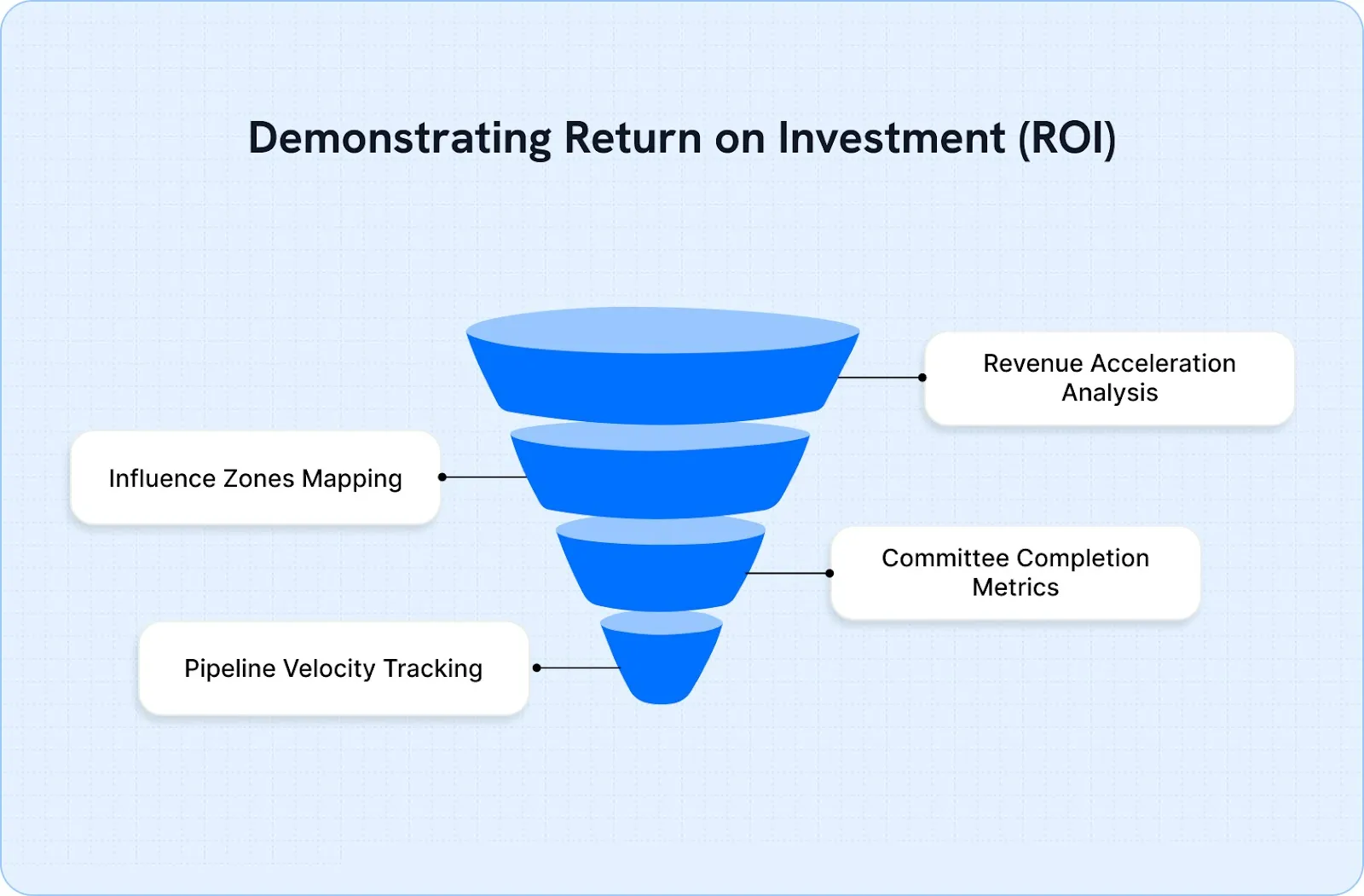
Manufacturers, your sales cycles are long, approx 130 days as per research by Focus Digital. With multiple decision-makers involved, traditional marketing metrics like "last-touch attribution" or "lead volume" often miss the mark. These methods either overvalue the final contact point or ignore the extended nurturing process that builds trust and interest over time.
The real issue? You're focusing on isolated touchpoints instead of the entire customer journey.
What Actually Works:
- Pipeline Velocity Tracking: Measure how marketing accelerates the movement of prospects through the sales stages.
- Committee Completion Metrics: Track how many stakeholders engage before the sales handoff.
- Influence Zones Mapping: Assign value to activities at each stage—awareness, consideration, evaluation, and consensus-building.
- Revenue Acceleration Analysis: Compare deal size and close rates for marketing-influenced versus cold opportunities.
Practical Steps:
- Replace counting Marketing Qualified Leads (MQLs) with measuring lead velocity.
- Analyze the correlation between deal size and the depth of marketing engagement.
- Implement attribution windows that align with your actual sales cycles.
- Develop dashboards that showcase pipeline health, not just lead volume.
By adopting these strategies, you can gain a clearer understanding of how your marketing efforts contribute to long-term sales, moving beyond traditional metrics to a more comprehensive view of ROI.
You’ve Fixed Problems on the Factory Floor. Now Fix the One Online.
If you don’t have a working website, you’re losing serious leads. We set up your site, organize your pages, and optimize everything so buyers can find and contact you easily.
Get My Site Live and Running
Challenge 2: Generating High-Quality Leads
Manufacturers often focus on volume when it comes to lead generation, but in reality, it's about relationship-building with the right decision-makers. The issue? Your "leads" are actually entire buying committees, each at different stages of the decision-making process.
The CMO Survey reports that optimism among manufacturing marketers in the U.S. economy has climbed into the mid-60s on a scale of 1 to 100.
What Actually Works:
- Account-Based Targeting: Focus on companies, not just individuals, to better understand their needs as a whole.
- Committee Mapping: Engage with all stakeholders involved in the buying decision, not just the first contact.
- Progressive Profiling: Gradually gather more insights on the buying process to tailor your approach.
- Intent Signal Tracking: Monitor research behaviors that indicate active projects and serious interest.
Practical Implementation:
- Account-Level Engagement Scoring: Track engagement at the company level, not just individual leads.
- Role-Specific Nurture Tracks: Customize messaging for different stakeholders (engineers, finance, procurement).
- Stakeholder Identification Content: Offer tools like org charts to help identify decision-makers.
- Buying Committee Tracking: Ensure all stakeholders are engaged before sales handoff.
Focusing on the full buying committee and understanding their journey will help generate high-quality leads ready to convert.
The Market Already Exists. You Just Need to Be Found.
Hundreds of companies are searching every day for what you produce. Let’s make sure your name shows up when they do.
Help Me Get Found
Challenge 3: Reaching Your Target Audience
Many manufacturers struggle with reaching their target audience because they’re using B2C strategies that don’t fit the B2B industrial market. The truth is, manufacturing buyers don’t browse social media looking for equipment; they’re searching for technical details and relying on trusted networks for recommendations.
What Actually Works:
- Technical Content SEO: Focus on solving problems through content, not just product listings. Optimize for the specific searches buyers are making.
- Industry Publication Partnerships: Get your message in front of buyers where they already go for information, industry publications and specialized websites.
- Trade Show Digital Integration: Take conversations from trade shows and keep them going digitally throughout the year to maintain engagement.
- Referral Network Activation: Use your existing customers to introduce you to potential leads; trusted referrals go a long way.
Practical Implementation:
- Audit Traffic Sources: Shift budget from low-performing channels like social media to high-performing search and industry-specific websites.
- Create Technical Resource Libraries: Develop content that answers solution-based queries, not just product-focused ones, to drive organic traffic.
- Account-Based Advertising: Target specific companies and decision-makers with tailored ads that speak to their exact needs.
Customer Advocacy Programs: Develop programs that encourage referrals and case studies from satisfied customers to build trust.
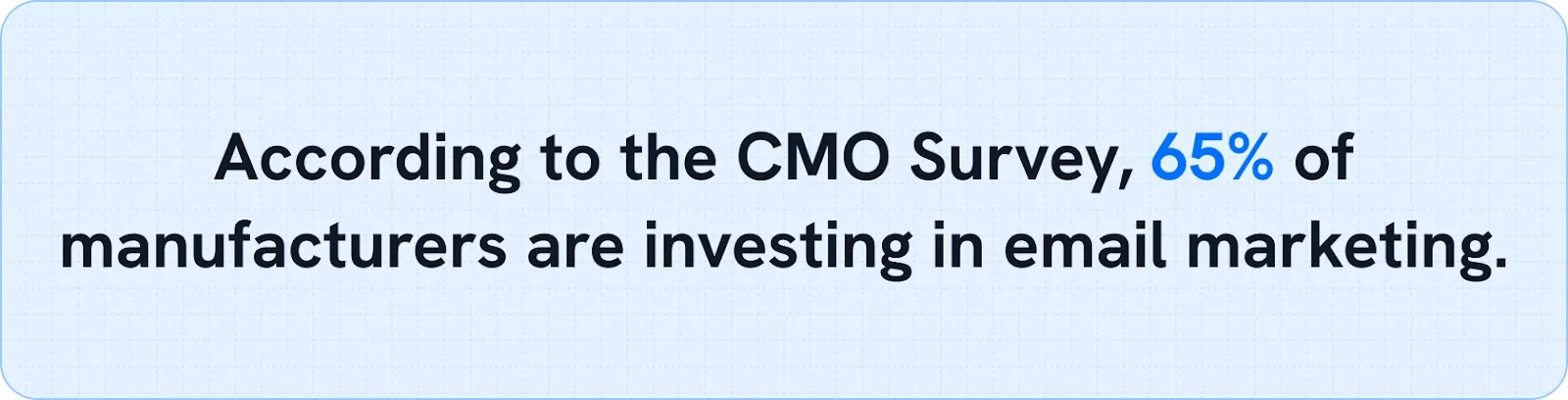
By focusing on the channels and messaging that align with how industrial buyers research and make decisions, you'll be able to reach the right audience and engage them effectively.
Challenge 4: Not Creating Engaging Content
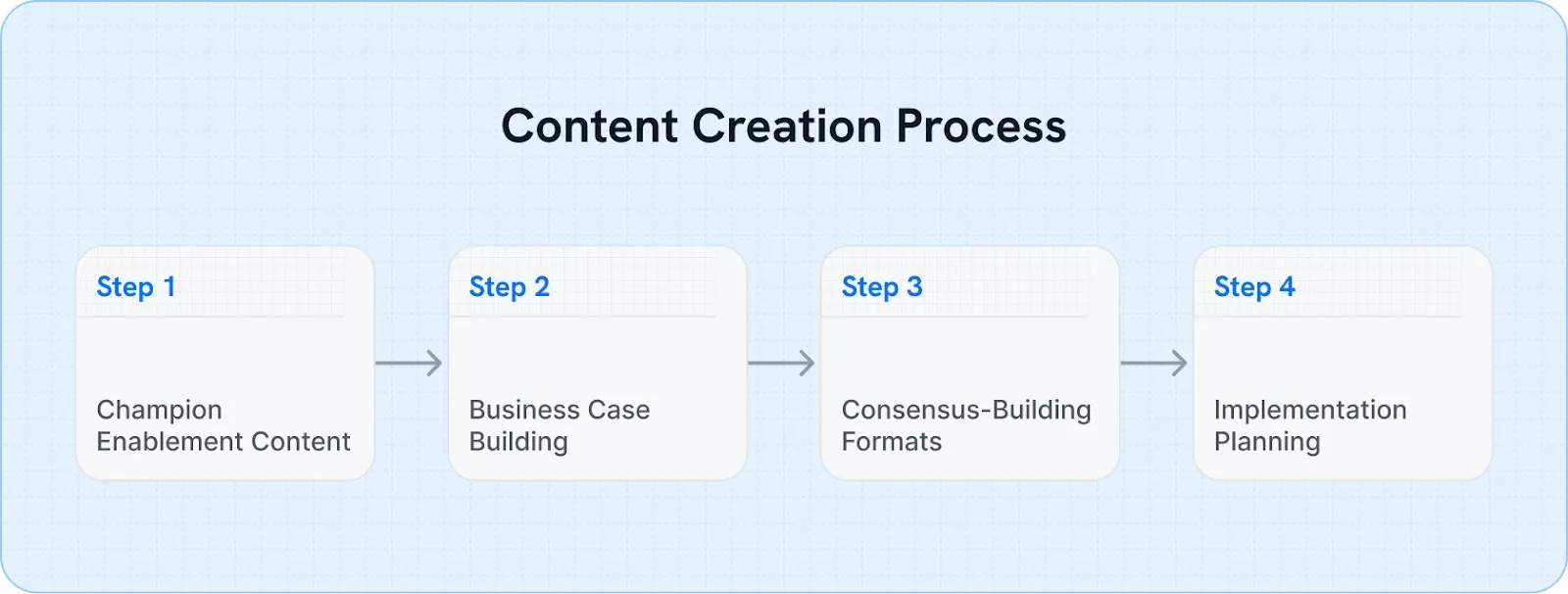
Many manufacturers make the mistake of creating content that only appeals to technical experts, people who already understand their technology. But the real need is content that helps the entire buying committee make a decision.
Technical buyers aren’t looking for more education; they need content that arms them with the tools to convince their colleagues and get internal buy-in.
What Actually Works:
- Champion Enablement Content: Create resources that empower technical buyers to educate their teams internally.
- Business Case Building: Provide tools like ROI calculators, cost comparisons, and risk assessments to help decision-makers justify the purchase.
- Consensus-Building Formats: Design content that multiple stakeholders can engage with and discuss together.
- Implementation Planning: Outline clear steps from purchase to results, showing how your solution delivers on its promises.
Practical Implementation:
- Convert Technical Specs into Business Impact Stories: Focus on how your product solves business problems, not just on its features.
- Create Presentation Templates for Champions: Provide easy-to-use templates that buyers can use to present your solution internally.
- Develop Executive Summaries: Condense complex technical content into digestible executive summaries for higher-level decision-makers.
- Build Decision-Making Frameworks: Offer frameworks that help guide the discussions within the buying committee and move them toward a consensus.
Want content that brings in real enquiries?
We’ll help you create clear, useful content that answers what decision-makers care about and moves them closer to choosing you.
Talk Content Strategy
Challenge 5: Keeping Up with Digital Marketing Trends
It’s easy to get caught up in the latest digital marketing trends, but for manufacturers, success comes from deep industry expertise, not simply following what's trending. The issue is that many of these trends are designed for different business models and buyer behaviors, which makes them ineffective for the unique needs of the manufacturing industry.
What Actually Works:
- Manufacturing-Specific Innovation: Rather than blindly adopting trends, tailor them to suit the behaviors and preferences of industrial buyers.
- Process Innovation Over Tactical Innovation: Focus on improving how you create and distribute content, rather than just jumping on the latest platforms.
- Technology That Amplifies Expertise: Leverage AI and automation to scale the knowledge of your subject matter experts, making it accessible to more potential buyers.
- Long-Term Relationship Building: Invest in systems that support lengthy buyer journeys, especially when decisions can take 18 months or more.
Practical Implementation:
- Evaluate Trends Through the Lens of Manufacturing Buyer Behavior: Assess new trends by considering how they align with your specific buyers’ needs, not just general market shifts.
- Focus on Technology Investments That Scale Expertise: Prioritize investments in AI and automation tools that can capture and scale the insights of your internal experts.
- Build Systems for Long-Term Relationship Building: Design systems that nurture leads over an extended period, offering value at each stage of their 18-month journey.
Prioritize Compounding Improvements: Look for opportunities to improve systems that build on past successes, creating a snowball effect over time.
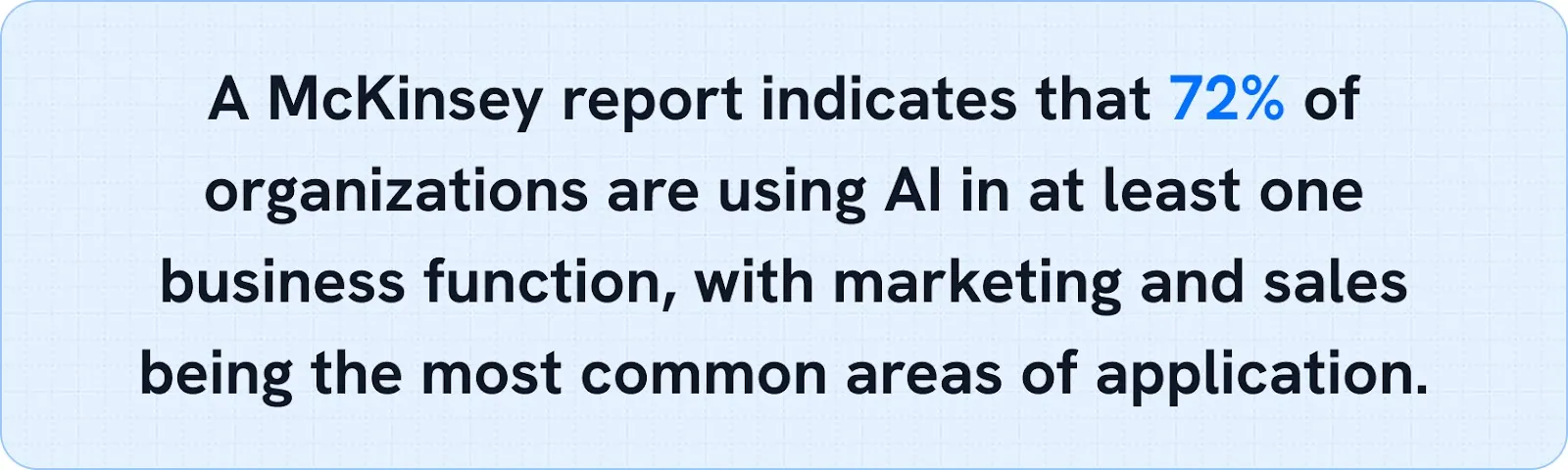
Adapting trends to fit the unique needs of the manufacturing industry will help you maintain a sustainable, long-term strategy rather than chasing fleeting digital fads. By focusing on process improvements and using technology to scale expertise, you’ll build deeper, more meaningful relationships with buyers.
Real Talk: Manufacturing Marketing Wins You Can Learn From
As a manufacturer, it's easy to feel overwhelmed by all the marketing options out there. But the truth is, the best results come from focusing on the basics, optimizing for the right audience, and using channels that actually work.
Let's take a look at a real-world example that shows how manufacturers can make digital marketing work for them.
SEO Success: How Pazago Boosted Leads (and Confidence)
Pazago, a leading logistics and digital freight forwarding platform, made smart moves with SEO, resulting in a significant increase in inbound leads. By focusing on technical SEO, content optimization, and local search, they were able to attract the right audience, driving relevant traffic to their site.
Key Actions:
- Technical SEO: Pazago improved site speed and mobile optimization, ensuring a better experience for visitors and better performance on search engines.
- Local SEO: They personalized their SEO efforts to target businesses in specific regions, capturing leads in key markets.
- Content Optimization: Pazago created content that spoke directly to their target market’s pain points, like guides on cross-border logistics and digital freight forwarding, making sure it was relevant and valuable.
Results:
- 30% Increase in Inbound Leads: In just 6 months, they saw a 30% jump in inbound leads, proving that SEO can drive real business results.
- Higher Search Engine Rankings: Pazago climbed higher for key logistics-related keywords, boosting visibility.
- Qualified Traffic: More visitors from their target regions, ready to engage with their services.
Takeaway: SEO isn’t just about keywords; it’s about creating a website that answers your customers' needs. By focusing on practical content that addresses specific pain points and improving site performance, Pazago increased both its lead generation and its online visibility.
Key Takeaways: From Challenges to Celebrations
Thriving in today’s manufacturing world means embracing digital marketing strategies that are personalized to your specific needs.
It’s no longer enough to rely on traditional methods; success lies in creating content that speaks directly to your audience, automating repetitive tasks to boost efficiency, and leveraging new technologies like AI to stay competitive.
By making these shifts, you can overcome challenges and celebrate the growth that follows.
Ready to strengthen your marketing and bring in better business?
We’ll walk you through what’s holding things back and show you a clear plan to fix it, step by step.
Book a Strategy Session
Gushwork specializes in helping manufacturers streamline their marketing efforts, from content optimization to AI-driven automation.
With our personalized strategies, you can focus on what matters most: growing your business and connecting with the right customers.
Let's discuss how we can help you take your marketing to the next level!
FAQs
Q1. How can I measure ROI accurately in manufacturing marketing?
A1. To measure ROI effectively, focus on the entire buyer journey with methods like Pipeline Velocity Tracking, Committee Completion Metrics, and long-term attribution windows to understand the impact of each marketing touchpoint.
Q2. What is the most effective way to generate high-quality leads in manufacturing?
A2. Focus on account-based targeting and engage all stakeholders in the buying process with committee mapping. Tailor content to meet the needs of each role within the buying committee.
Q3. Why is SEO important for manufacturing companies?
A3. SEO helps you get noticed by buyers who are searching for technical solutions. Optimizing your website for solution-focused content ensures you attract relevant traffic and qualified leads.
Q4. How can content marketing be more effective for manufacturing companies?
A4. Shift from educating experts to creating content that supports decision-makers in the buying committee, such as business case tools, ROI calculators, and implementation guides that help them justify the purchase internally.
Q5. How do I reach my target audience if they aren't browsing social media?
A5. Focus on technical content SEO, leverage industry publications, and integrate trade show conversations digitally to engage buyers in the right places, where they already seek solutions.
Q6. How can AI improve marketing efforts in manufacturing?
A6. AI can automate repetitive tasks, scale subject matter expertise, and improve content personalization, ultimately helping manufacturers engage more effectively with their audience and optimize their marketing strategies.

SEO
Sep 8, 2025
5 mins
Food Manufacturing SEO: Use These Strategies or Lose Leads to Competition
Batul Beawarwala
Food manufacturers spend most of their time proving things. Proving safety. Proving consistency. Proving they can meet certifications, audits, and strict customer requirements. But there’s one place where that proof often falls short; online.
Buyers want to verify a supplier long before sending an RFQ. They want to confirm standards, understand ingredients, check capabilities, and see that you operate with the level of control their industry demands. When your website reflects that level of discipline and clarity, you feel like a safe choice.
That’s where SEO fits in. When your content matches the depth and detail buyers expect, RFQs start coming from companies that already understand what you can deliver.
In this blog, you’ll learn how food manufacturers can use SEO to support compliance, attract high-quality RFQs, and turn their operational strengths into a stronger digital presence.
What SEO Actually Means for Food Manufacturers?
SEO for food manufacturers is about presenting your operation in a way that helps buyers validate you quickly and confidently. Buyers look for the same core things: capability, reliability, and compliance. SEO is the system that organizes this information so it’s easy to find and easy to trust.
SEO is like a digital “facility tour.”
Strong SEO for food manufacturers focuses on:
- Clear capabilities: Ingredients handled, processes, volumes, packaging formats, and specialty capabilities.
- Compliance signals: SQF, BRC, HACCP, organic, gluten-free, allergen controls, facility certifications.
- Technical clarity: Spec sheets, process summaries, batch consistency, shelf-life info, and storage requirements.
- Buyer intent keywords: Terms tied to co-packing, private label, formulation support, and industry-specific needs.
When done right, SEO becomes part of your compliance story, structured information, presented clearly, backed by the standards you already follow on the production floor.
Why and How Food Manufacturing SEO Works Differently?
SEO for food manufacturers is a specialized strategy that goes beyond traditional search engine optimization. Unlike B2C businesses, your audience consists of B2B decision-makers such as procurement teams, food scientists, and QA specialists.
These professionals need precise, compliance-driven information that helps them make informed purchasing decisions. Here’s why your SEO strategy needs to be unique:
- Optimizing for B2B Search Intent: Your audience is focused on product specifications, certifications, and sourcing information. Tailor your content to meet these specific needs by highlighting:
- Quality control processes
- Supplier certifications
- Detailed product specifications
- Compliance-Driven SEO: Food manufacturers must navigate strict regulations. Integrate compliance requirements into your website content, such as:
- HACCP (Hazard Analysis Critical Control Point): A preventive system for managing food safety hazards at every stage of production.
- SQF (Safe Quality Food): A certification that ensures food manufacturers meet strict food safety and quality standards, recognized by global retailers.
- BRCGS (British Retail Consortium Global Standards): A globally recognized food safety and quality certification program for manufacturers.
- FSMA (Food Safety Modernization Act): U.S. FDA regulations focused on preventing foodborne illnesses by ensuring proactive safety measures in food production.
- GMP (Good Manufacturing Practices): FDA guidelines ensuring food products are produced and controlled according to safety and quality standards.
- FDA Food Labeling Regulations: Regulations that ensure food products are labeled with accurate ingredient, allergen, and nutrition information.
- Kosher and Halal Certifications: Voluntary certifications ensuring products meet Jewish and Islamic dietary laws.
- USDA Organic Certification: Certification ensuring food products are grown and processed without synthetic chemicals, fertilizers, or GMOs.
- FSSC 22000 (Food Safety System Certification): A globally recognized food safety management standard, accredited by the GFSI, for food manufacturers.
- ISO 22000: An international standard for food safety management systems, integrating HACCP principles for all stages of the food supply chain.
- Pallet and Packaging Safety Standards (ASTM and ISTA): Standards ensuring food packaging meets safety requirements for transportation and storage.
- Allergen-Free Certification: Certifications ensuring food products are free from specific allergens like peanuts, dairy, soy, etc., and are safely processed in allergen-controlled environments.
- Managing SEO Across Multiple Facilities and SKUs: With several facilities and product variants, your SEO strategy needs to account for:
- Regional SEO: Optimize for local search trends and product preferences across different locations.
- Product-Specific Keywords: Create separate pages or content sections for each SKU, ensuring that each product variant is easy to find and aligns with regional demand.
Strengthen Your Food Manufacturing SEO
We’ll help you present your capabilities and certifications through educational blogs, so buyers can trust you faster.
Get Found First
Turn Technical Details Into Search Visibility That Attracts Buyers
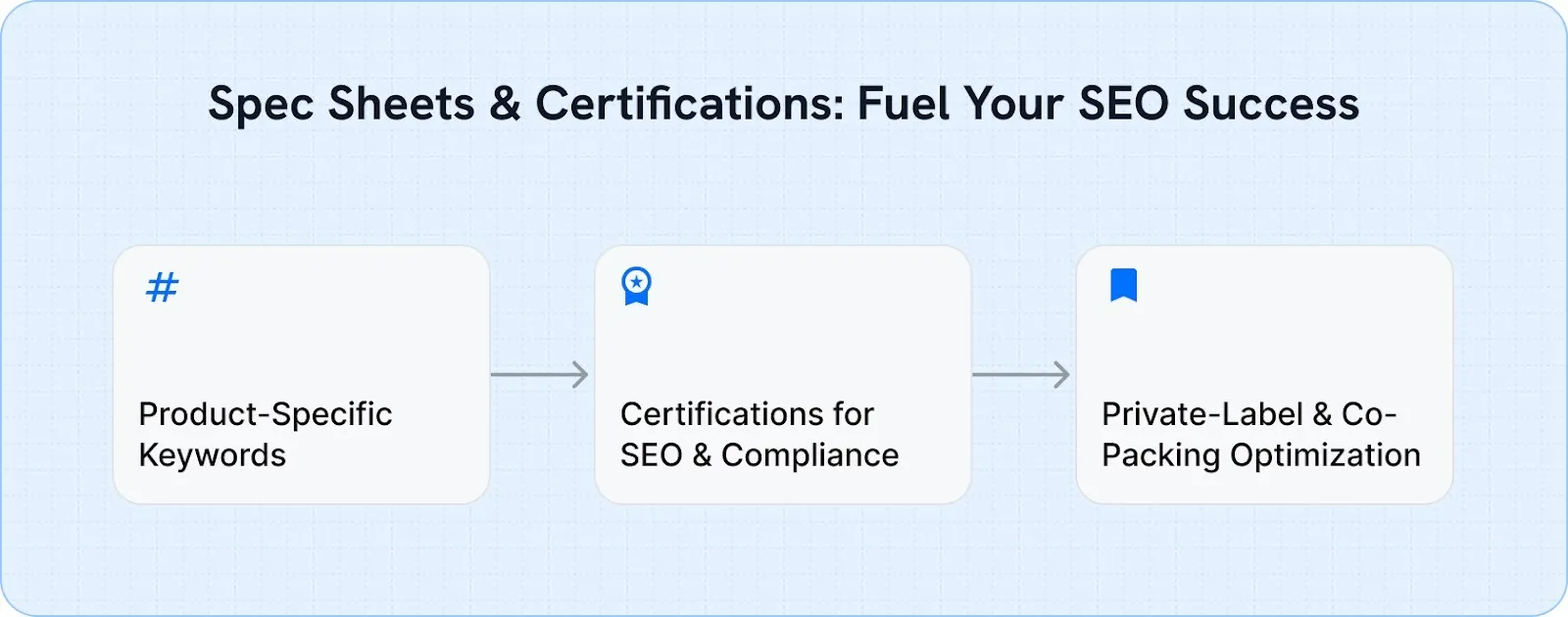
As a food manufacturer, getting your products noticed online isn’t just about showcasing your offerings; it’s about providing the right information in a way that speaks directly to your target audience. For procurement professionals, food scientists, and QA specialists, the information they need to make decisions often comes down to technical details, certifications, and reliability.
Here's how you can use spec sheets, certifications, and targeted keywords to make your website work harder for you.
- Targeting Product-Specific Keywords: When procurement teams are sourcing ingredients or packaging, they search for specific product details. Keywords like “almond protein isolate supplier” are crucial for reaching these professionals.
By optimizing your site for these product-specific searches, you make it easier for decision-makers to find you when they're looking for exactly what you offer.
- Create dedicated pages for each product with clear descriptions, technical details, and use cases.
- Focus on long-tail keywords that align with industry searches (e.g., “bulk almond protein supplier for food manufacturers”).
- Include product-specific information such as ingredient sourcing, production methods, and supply chain transparency.
- Why Certifications Matter for SEO & Compliance: For your audience, certifications aren’t just nice-to-haves; they're often a requirement for doing business.
Certifications like SQF, BRCGS, Kosher, and Halal help build trust and demonstrate your commitment to safety and quality. Here’s why they’re essential for your SEO and compliance:
- SQF (Safe Quality Food) and BRCGS (British Retail Consortium Global Standards) are widely recognized by procurement teams as indicators of rigorous quality control. These certifications make your products easier to find and more credible in search results.
- Kosher and Halal certifications are vital for reaching specific market segments. Food buyers looking for products to meet religious dietary requirements will often filter their searches based on these certifications. Optimizing your site with these credentials can help your business tap into these highly targeted markets.
- Incorporate certification logos and mentions in key places on your website (e.g., product pages, spec sheets, and the footer) to improve both user trust and SEO.
- Optimizing for Private-Label & Co-Packing Searches: If you offer private-label or co-packing services, you’re missing out on a huge opportunity if you're not optimizing for these searches.
Brands looking to outsource their production will search for manufacturers who can meet their specifications. By optimizing for terms like "private-label food manufacturing" or "co-packing services for snacks," you increase the likelihood of attracting new business.
- Create dedicated pages or sections that clearly explain your co-packing capabilities, minimum order quantities, and product customization options.
- Use targeted keywords like "custom co-packing for protein bars" or "private-label juice manufacturer" to attract brands that are looking for these services.
- Showcase your past work or successful partnerships with private-label brands to build credibility and trust.
Build a Trusted Digital Presence
We’ll help you create content and pages that show buyers you’re a safe, reliable choice from the first click.
Build My Presence
How to Turn Your Food Manufacturing Site Into a Lead Engine
Your website can be more than just a digital brochure; it can be a powerful tool that brings in potential customers. For food manufacturers, this means making sure your website is easy to navigate, speaks directly to what your customers need, and helps them find the products they’re looking for.
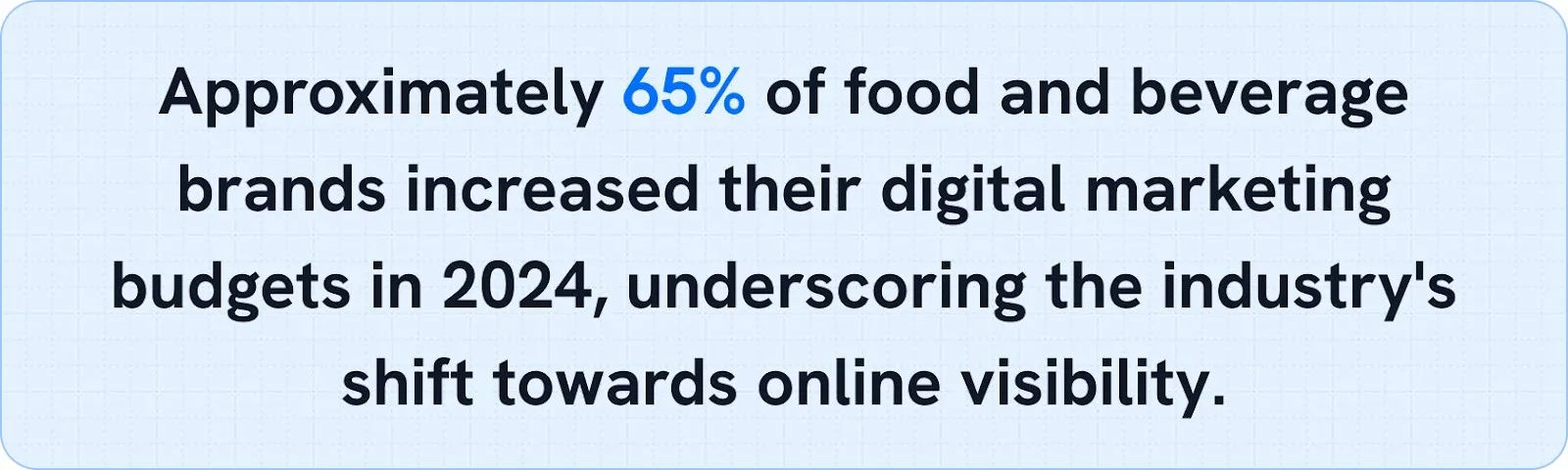
Here’s how you can turn your website into a lead-generating machine:
- Build a Clear Website Structure Around Your Manufacturing Capabilities: Your website should be organized so that visitors can easily find what they’re looking for. If you specialize in processes like extrusion (shaping food products using heat and pressure) or fermentation (like in yogurt or beer production), make sure these capabilities are easy to find on your site.
When you clearly explain these processes, using keywords that potential customers might search for, it helps them find you and trust your expertise.
Example: Create pages explaining how your extrusion or fermentation process works, and include keywords like “extrusion process for food manufacturing” to help search engines find your pages.
- Create Industry-Specific Sections to Attract the Right Customers: You likely serve different industries, like Consumer Packaged Goods (CPG) or foodservice. By creating separate sections on your website for each industry, you can provide content that speaks directly to the unique needs of each group. For example:
- CPG Section: A page that shows how your products meet the needs of packaged food companies, with easy-to-understand case studies or product lists.
- Foodservice Section: A page that focuses on how your products can help restaurants or distributors, highlighting things like bulk packaging or compliance with food safety regulations.
- This structure makes it easier for visitors to find the information that’s most relevant to them, keeping them on your site longer and making it more likely they’ll reach out to you.
- Use Product Pages That Are Easy to Find and Understand: The pages on your website where you list your products should be clear, informative, and easy to navigate.
- Product Listing Pages (PLPs): These pages should organize your products into categories that make sense, like “protein-based snacks” or “gluten-free products.” Each product category should be easy to browse, with descriptions of what’s included in each category.
- Product Detail Pages (PDPs): These are where you provide the most detailed information about a specific product. Think of it as your “sales pitch.”
These pages should clearly explain the product’s benefits, specifications (like whether it’s allergen-free or certified Kosher), and show how it meets industry standards. Include buttons like “Contact for Bulk Pricing” or “Request a Sample” so customers can easily get in touch.
Templates to Simplify Your SEO Work
To turn your website into a lead-generating tool, focus on optimizing specific pages that resonate with your B2B audience. Here’s how to structure key pages to drive conversions:
- Detailed PDPs (Product Detail Pages): These pages should clearly present product information such as technical specifications, allergens, shelf life, and storage options. By providing detailed, relevant information, you help potential clients make informed decisions and improve your site’s relevance in search results.
- Capability and Co-Manufacturing Pages: If you offer co-manufacturing or specialized capabilities, create dedicated pages that explain your processes in detail. Use these pages to attract new partnerships by outlining what you can offer, such as custom production processes, quality control measures, and past successful projects.
- Geo-Targeted Plant Location Pages: If you have multiple manufacturing plants, create location-specific pages that target regional search terms. Highlight certifications, plant-specific capabilities, and compliance with local regulations to improve regional SEO and attract local business.
These targeted SEO templates help provide the right information, drive engagement, and ensure potential customers can easily find the specific details they need.
Optimize Your Compliance Content for Better SEO
In the food manufacturing industry, content isn’t just about showcasing products; it’s about ensuring compliance with a range of regulations while maintaining high performance in search engine rankings.
When it comes to SEO for regulated content, manufacturers face unique challenges. However, by focusing on key elements like product information, media files, and website performance, you can drive both compliance and SEO success.
Here's how you can optimize your website to meet both regulatory standards and search engine performance:
- Managing Downloadable Spec Sheets and COAs (Certificates of Analysis) for Better Indexing and SEO Value: As a food manufacturer, offering downloadable documents like spec sheets and COAs is essential for meeting industry regulations and building trust with your clients. However, these documents are also an important part of your SEO strategy.
- What You Need to Do: Make sure these documents are properly named, organized, and tagged with relevant keywords so search engines can easily index them. For example, instead of naming a spec sheet “document1.pdf,” rename it to something descriptive, like “almond-protein-isolate-spec-sheet.pdf.” This helps search engines understand the content and improves your chances of ranking higher for relevant keywords.
- Why It Matters: Having these documents accessible and properly optimized makes it easier for procurement teams and other B2B decision-makers to find the information they need. It also shows search engines that your site offers valuable, detailed content, which can help improve your rankings.
- Optimizing Media Files with Allergen-Friendly Alt-Text for Both SEO and Accessibility: Images and videos are a powerful way to showcase your products and manufacturing processes.
However, many manufacturers overlook the importance of optimizing media files for both SEO and accessibility. This is particularly important when your products may be subject to allergen regulations.
- What You Need to Do: For every image or video on your site, use alt-text that describes the content in a way that includes relevant keywords and complies with allergen labeling requirements.
For example, instead of using “product1.jpg” as the image name, you could use “gluten-free-cereal-allergen-free.jpg” and add alt-text like “gluten-free cereal with no nuts or dairy, safe for allergy sufferers.”
- Why It Matters: Alt-text not only helps improve SEO but also ensures your website is accessible to individuals using screen readers. For manufacturers, this is especially important as accessibility regulations grow stricter in various markets. Including allergen-friendly alt-text ensures you meet both SEO and legal requirements while enhancing user experience.
- Speed Optimization: Ensuring Fast Loading Times for Large-Scale Food Manufacturing Sites: Food manufacturing websites tend to be content-heavy, with detailed product descriptions, specifications, and large media files. Slow-loading pages can be frustrating for users and harmful to your search rankings.
- What You Need to Do: Invest in optimizing your website’s speed by compressing images, minifying code (like JavaScript and CSS), and using content delivery networks (CDNs) to serve files faster. For example, compress product images without sacrificing quality, and ensure that PDFs or spec sheets are optimized for quick downloads.
- Why It Matters: Website speed directly impacts both user experience and SEO. Google’s algorithms prioritize fast-loading websites, so improving speed can help you rank higher in search results. Additionally, faster websites lead to better engagement, reduced bounce rates, and higher conversion rates, critical factors for food manufacturers who want to attract more B2B leads and increase sales.
Your website needs to meet strict regulations while also showing up in search results.
How to Use Schema Markup for Real SEO Gains
Schema markup is a simple yet powerful way to make your website more visible in search results by providing search engines with structured data about your content. Here's how it can improve your SEO:
- Enhancing Product Details with Schema.org: Use schema.org markup to highlight key product information such as certifications, pricing, and product details directly in search results.
This can help your products stand out with additional info, such as “Kosher-certified” or “Price: $10,” making your listing more attractive and informative.
- Boosting Content Visibility with Structured Data: Implement structured data for things like breadcrumbs, FAQs, and videos. This helps search engines better understand your content and present it in richer formats, such as FAQ snippets or video carousels, which can drive more traffic to your site.
By using schema markup, you can make your content more informative and accessible to both search engines and users, improving your SEO and attracting more potential leads.
Build Authority With Useful, Honest Content
Building trust with potential clients is crucial for food manufacturers, and your website content plays a key role in this. Here’s how you can use content to establish your brand as a trusted expert:
- Authoritative Resources like Formulation Guides and Application Data: Offering in-depth resources, such as formulation guides or application data, can position your brand as an expert in the industry.
These resources help potential clients understand the technical aspects of your products and showcase your knowledge. By providing useful, detailed content, you make your website a go-to reference for decision-makers in the food manufacturing sector.
- Showcasing Your Commitment to Safety and Certifications: Certifications like HACCP (Hazard Analysis Critical Control Point) and FSSC 22000 are critical in the food industry as they ensure product safety and quality. Displaying these certifications prominently on your website reassures customers that your products meet industry standards. Highlight these credentials in product pages and key landing pages to build confidence and trust in your brand.
- Using Case Studies to Demonstrate Success: Case studies are a powerful tool to show real-world results. By sharing detailed stories of how your products have helped other businesses succeed, you build credibility and trust.
Case studies allow potential clients to see how your products perform in practical, real-world scenarios, making it easier for them to envision success with your brand.
Turn Your Compliance Into RFQs
We’ll organize an SEO plan to attract serious inquiries.
Start My SEO
By creating valuable content like guides, showcasing your certifications, and using real-world case studies, you position your company as an expert in the field, building trust and authority with your target audience. This not only helps improve SEO but also increases your chances of turning website visitors into long-term customers.
Power Up Your SEO With High-Value Backlinks
For food manufacturers, building a strong online presence is key to attracting more business, and one of the best ways to do this is by earning high-quality backlinks. Backlinks are links from other websites to yours, and they signal to search engines that your content is trustworthy and authoritative.
Here's how manufacturers can earn valuable backlinks to improve SEO:
- Leverage Partnerships with Trade Associations, Certification Bodies, and Universities: Collaborating with trusted industry bodies, like trade associations, certification organizations, and universities, can help you earn high-quality backlinks. When these reputable sites link to your content, it boosts your SEO by showing search engines that your website is a reliable source of information.
For example, being listed on a food safety certification body’s website or contributing to industry research published by a university can generate valuable backlinks.
- Collaborate with Distributors and Retail Brands: Building relationships with your distributors and retail partners can be another great way to earn backlinks. Share resources like case studies, joint research, or product features with your partners and ask them to link back to your website.
For instance, if a distributor uses your product in their catalog or a retailer features your product in their online store, they can link to your site, giving you a boost in search rankings.
By earning backlinks from respected sources like trade associations, certification bodies, and industry partners, you enhance your website's authority. This not only improves your search rankings but also increases the visibility of your food manufacturing business, helping you attract more leads and potential customers.
Track Metrics That Matter for Real Growth
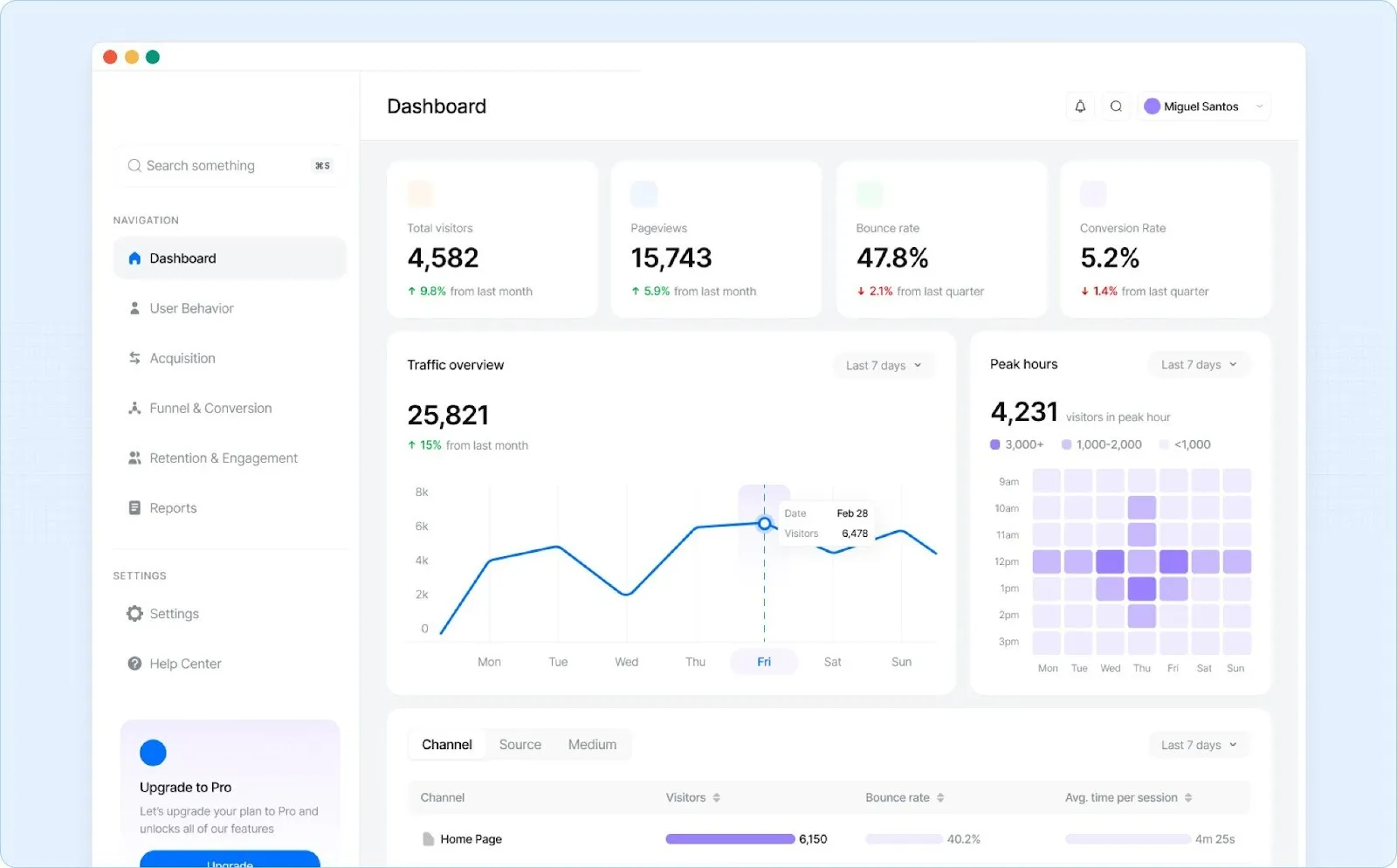
For food manufacturers, tracking the right metrics is crucial to understanding how well your website is performing and where you can improve. Here’s how you can focus on the most important metrics to optimize your SEO strategy and drive real results:
- Focus on Conversion Metrics: While rankings are important, the real goal is to convert visitors into leads. Monitor metrics that show how well your website is turning visitors into potential customers. Key conversion metrics to track include:
- Sample Requests: Track how often visitors request product samples, as this is a strong indicator of interest.
- Qualified Leads: Focus on leads that are genuinely interested in your products, such as procurement professionals or food scientists, and monitor how many of them fill out contact forms or request quotes.
- Plant Tours: If your website encourages plant tours or site visits, track how often these are requested. Plant tours are a high-value conversion, signaling serious interest in your manufacturing capabilities.
- Use Event Tracking to Measure Content Performance: To understand which pieces of content are resonating with your audience, set up event tracking on your website. This allows you to monitor:
- PDF Downloads: Track how often visitors download spec sheets, COAs, or other product-related documents. This indicates how engaged visitors are with your content.
- Form Submissions: Measure how many users are filling out contact or inquiry forms. This tells you whether your content is driving visitors to take the next step toward becoming a lead.
- Optimize Your SEO Strategy Using Search Console Diagnostics: Google’s Search Console provides valuable insights into your website’s performance. Use the diagnostics and real-time data available in Search Console to:
- Identify SEO Issues: Find any crawl errors, broken links, or indexing issues that might be holding back your site’s performance.
- Monitor Keyword Performance: Track which keywords are driving traffic to your site and see if you need to adjust your strategy based on real-time data.
- Improve Content Strategy: Look at the performance of specific pages and content to see what’s working and what needs optimization.
By focusing on conversion metrics, tracking user interactions, and leveraging tools like Search Console, you can fine-tune your SEO strategy to drive meaningful leads, not just traffic. This approach helps ensure that your food manufacturing website not only attracts visitors but also converts them into valuable business opportunities.
Boost SEO with Smart Tools for Food Manufacturers
AI-powered platforms like Gushwork can transform your SEO strategy by automating tasks like keyword tracking, lead generation, and website optimization. These platforms help you streamline SEO, saving time and effort while improving your site’s performance.
- Automate SEO and Lead Tracking: Platforms like Gushwork optimize content, track keywords, and manage leads automatically, improving your site’s visibility and conversion rates.
- Scale SEO Efforts Efficiently: Automation saves time on repetitive tasks, allowing you to scale your SEO strategy without adding extra work. Focus on high-value activities like content refinement and new marketing initiatives.
By incorporating AI-powered tools, you can enhance your SEO, drive better results, and grow your food manufacturing business more efficiently.
Ready to Bring In Better RFQs?
Get an SEO plan that highlights your capabilities, showcases compliance, and attracts the right food industry buyers.
Book A Consultation

Digital Marketing
Sep 8, 2025
5 mins
The Fastest-Growing Manufacturers Follow This Marketing Plan. Grab The Template For Free
Batul Beawarwala
A lot of manufacturing teams work hard but still feel like their marketing never lines up with what the business needs. Plans sit half-finished. Content gets produced without a clear purpose. Sales asks for support, yet nothing feels coordinated. When that happens, growth slows and good opportunities slip away.
A simple, clear plan changes that. It helps you stay focused, communicate value, and create content that supports real buying conversations. It also gives your team a structure they can follow without guessing what comes next.
This template gives you that structure. It’s built for manufacturing and home service businesses that want a practical plan they can use right now.
What is a Marketing Plan and How Does It Help Your Manufacturing Business?
Manufacturing and home service companies don’t need a complicated strategy. They need a clear plan that shows what they’re trying to achieve, who they’re trying to reach, and how their marketing will support real revenue goals. That’s all a marketing plan is. It’s a simple roadmap that keeps everyone aligned and moving in the same direction.
A good plan helps you stay consistent, avoid wasted effort, and create content that matches what your buyers actually care about. It also gives sales the support they need, since your messaging, offers, and content all work together instead of pulling in different directions.
For teams that juggle long projects, busy schedules, and tight resources, this kind of structure makes a big difference. It turns marketing from scratch into a steady system that drives growth.
Read more on the Role of Marketing in Manufacturing Business.
Manufacturing Marketing Plan Template (Customizable)
Download the Manufacturing Marketing Plan Template (Google Doc)

How to Use the Template for Maximum Effectiveness
- Make a Copy
Click on the link above to make a copy of the template. Once you've copied it to your own drive or system, you can start editing and customizing it according to your specific needs. - Fill Out Each Section
Each section is pre-structured for you to fill in. Simply add your business information, goals, strategies, and timelines where prompted. - Customize It to Your Business
Use the guide included in the template to customize each section based on your manufacturing goals, target audience, and resources. Adjust the budget, strategies, and timeline as necessary to suit your business’s unique requirements.
7 Steps To Create A Strong Marketing Plan for Your Business
A solid marketing plan moves in clear steps. Each stage builds on the one before it, so your team always knows what to focus on and why it matters. When you follow a simple structure, you avoid scattered ideas and stay focused on actions that support growth:
Step 1. Setting SMART Marketing Objectives
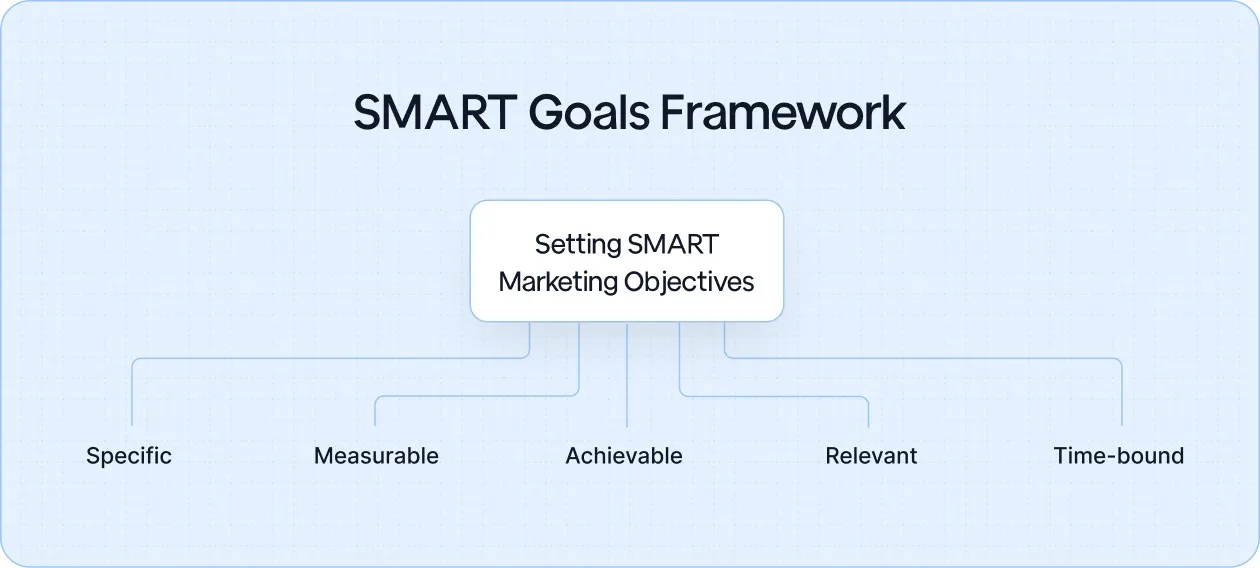
Before diving into specific marketing tactics, it’s essential to set clear, well-defined goals. These goals should follow the SMART framework to ensure they are:
- Specific
- Measurable
- Achievable
- Relevant
- Time-bound
This is particularly important for manufacturing businesses as it keeps your marketing efforts focused on measurable outcomes.
Examples of SMART Goals for Manufacturers:
- Increase B2B leads by 20% in the next quarter by targeting specific industries like automotive and aerospace.
- Boost website traffic by 30% in 6 months through SEO optimization and content marketing.
- Expand into two new regional markets within the next year by attending industry-specific trade shows and local advertising.
Tip: Ensure your marketing goals align with broader business objectives such as increasing product sales, expanding market share, or improving brand recognition.
Step 2. Identify Your Ideal Customer With Clear Buyer Personas
Understanding your ideal customers is crucial for crafting targeted marketing strategies. Buyer personas help you visualize your customers’ roles, pain points, and decision-making processes, making it easier to design tailored messages and solutions.
For manufacturers, buyer personas should focus on the job titles, pain points, and decision-making factors of your target customers. For example, if you manufacture industrial equipment, your personas might include purchasing managers in the automotive sector or operations directors in the healthcare industry.
Segmenting Based on Industry:
- Automotive: Decision-makers may prioritize product durability, cost-efficiency, and time-to-market.
- Aerospace: Key factors could include precision, safety standards, and long-term reliability.
- Healthcare: Concerns over regulatory compliance, quality assurance, and cost control will drive purchasing decisions.
Step 3. Get Clear on Your Position With a Simple SWOT Analysis
Performing a SWOT analysis (Strengths, Weaknesses, Opportunities, Threats) is an excellent way to gain insights into where your business stands in the market and how you can grow. For manufacturers, it’s important to assess both internal factors (like your operational strengths and weaknesses) and external factors (such as market trends, competition, and customer demands).
How to Perform Your SWOT Analysis:
- Strengths: What makes your products or processes unique? (e.g., cost-efficiency, innovative technology, strong supplier relationships)
- Weaknesses: What areas can be improved? (e.g., slow delivery times, limited product range, outdated machinery)
- Opportunities: Are there untapped markets or emerging trends you can capitalize on? (e.g., demand for sustainable materials, opportunities in renewable energy)
- Threats: Who are your competitors, and what external factors could hinder your success? (e.g., rising material costs, new competitors entering the market, regulatory changes)
Resources:
- SWOT Matrix template
- Competitor analysis tools like SEMrush or SpyFu for tracking industry competitors and their digital presence.
Step 4. Choose the Strategies That Move Your Business Forward
After setting goals and understanding your audience, it's time to choose the marketing tactics that will help you reach those goals. In the manufacturing industry, effective tactics may include content marketing, email campaigns, social media engagement, trade shows, Pay-Per-Click advertising, and SEO.
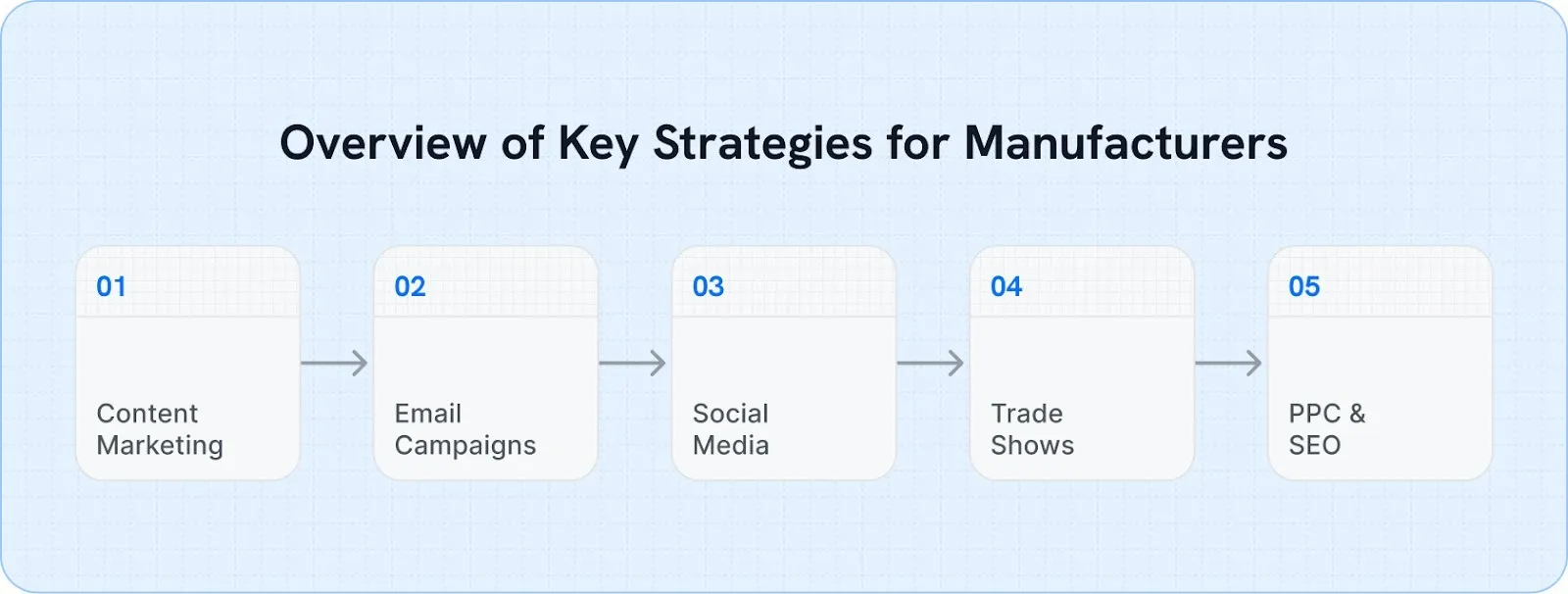
Overview of Key Strategies for Manufacturers:
- Content Marketing: Create blog posts, case studies, and product guides that showcase your expertise. Highlight industry insights, success stories, and use cases relevant to your products.
- Email Campaigns: Nurture leads with informative newsletters, product updates, and industry news. Email is effective for maintaining long-term relationships and pushing sales.
- Social Media: Engage with your audience on platforms like LinkedIn or Instagram, showcasing your products, company culture, and industry achievements.
- Trade Shows: Attend industry events such as IMTS (International Manufacturing Technology Show) or Farnborough Airshow to network and build your brand visibility.
- PPC & SEO: Use targeted ads and optimize your website to drive organic search traffic from key industry terms like "industrial machinery manufacturers" or "automotive component suppliers."
Tip: Allocate your budget based on the effectiveness of each tactic for your target audience. For instance, if your audience is highly active on LinkedIn, consider investing more in LinkedIn ads.
Step 5. Build Your Marketing Timeline
A marketing timeline breaks down your marketing activities into clear, actionable steps, ensuring that everything gets done on time and within budget. Breaking down tasks into manageable milestones will also help you track progress and adjust strategies when necessary.
How to Structure Your Timeline:
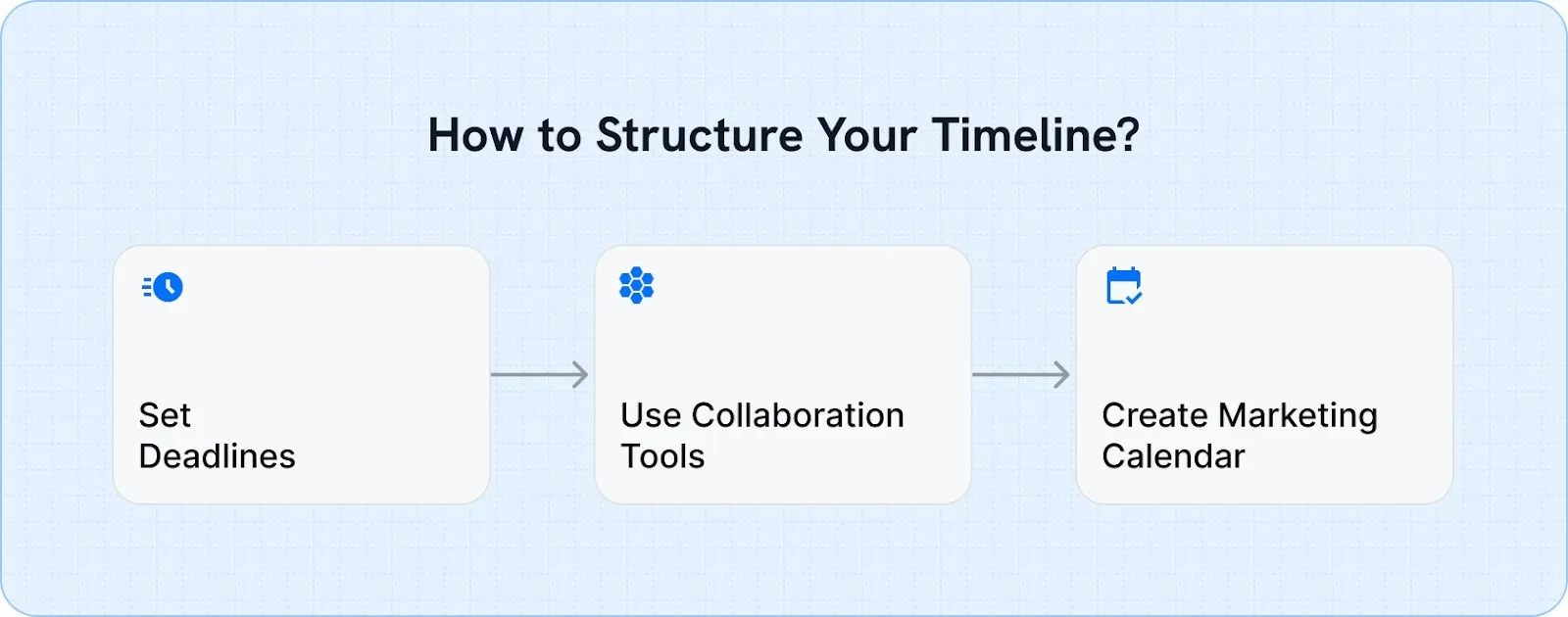
Set deadlines for each major task or campaign (e.g., launching a new product page, running a trade show campaign).
- Use tools like Trello or Asana for task management and collaboration within your team.
- Create a Marketing Campaign Calendar to visualize the timeline and ensure all activities align with key business milestones.
Tip: Be realistic about the time each task will take, and build in some flexibility for adjustments.
Step 6. Budgeting Smart for Maximum Marketing Impact
Marketing doesn’t come without costs, but with a clear budget, you can ensure you're getting the best return on investment (ROI). Start by calculating costs for activities like paid ads, content creation, and marketing tools.
Budgeting Breakdown for Manufacturers:
- Paid Ads: Allocate budget for Google Ads or LinkedIn Ads based on your target audience.
- Content Creation: Invest in quality content like blogs, videos, and case studies to attract and engage prospects.
- Tool Subscriptions: Factor in costs for marketing software like HubSpot, Mailchimp, or social media management tools like Hootsuite.
Tip: Use a Marketing Budget Template to allocate resources efficiently, ensuring you spend wisely across various channels.
Step 7. Measuring Campaign Success
Tracking the success of your marketing campaigns is crucial for understanding what’s working and what needs improvement. Key performance indicators (KPIs) like lead generation, website traffic, and conversion rates will give you valuable insights into your marketing efforts.
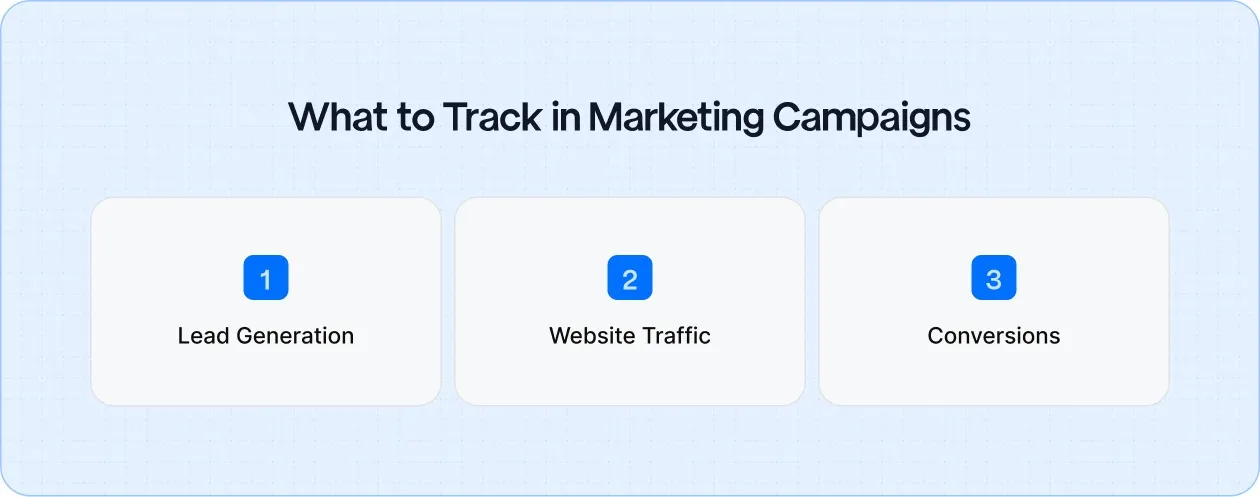
What to Track:
- Lead Generation: How many new leads are you capturing each month?
- Website Traffic: Are your efforts driving more visitors to your site?
- Conversions: How many of those leads are becoming paying customers?
Tools to Use:
- Google Analytics for website performance tracking.
- CRM Software (e.g., Salesforce, HubSpot) to track customer interactions, sales processes, and conversions.
Strengthen Your Manufacturing Marketing Today
Get a clear plan built to support real buyers and real sales conversations.
Get My Marketing Plan
Tip: Use a Performance Tracker to regularly review and adjust your marketing strategies based on results.
Marketing Steps That Make a Measurable Impact
Manufacturers need targeted strategies to grow their brand and generate leads. These marketing tactics help you engage your audience, build trust, and showcase your expertise effectively. Let’s dive into the strategies that truly work for manufacturers.
1. Content Marketing
Creating valuable content like whitepapers, case studies, and blog posts positions your brand as an industry leader. Focus on topics that solve customer problems or showcase your expertise in specific manufacturing sectors.
How It Helps:
- Builds trust with potential customers.
- Drives traffic and boosts SEO.
- Establishes authority in your niche.
Strengthen Your Content Strategy
Get focused, industry-ready content that helps buyers trust your expertise and find you faster.
Build My Content Plan
2. Trade Shows & Events
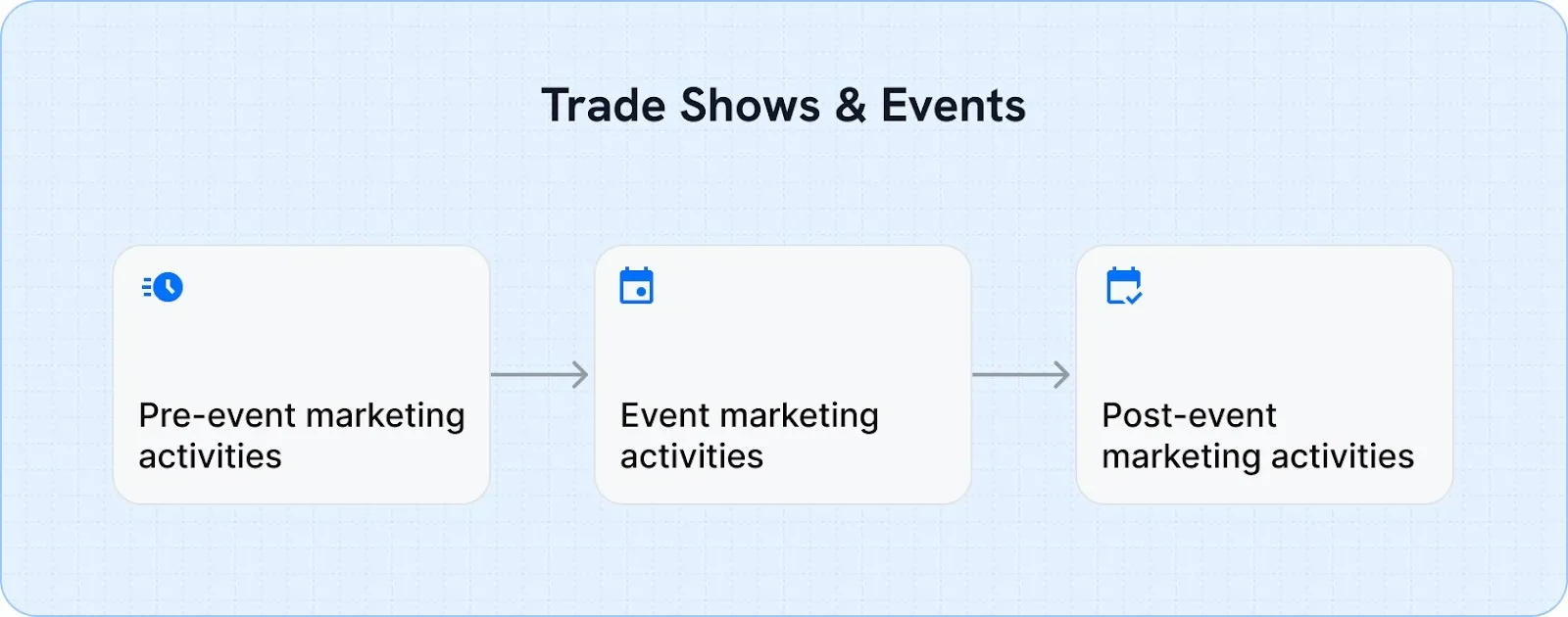
Trade shows are a powerful way to generate leads and showcase your products in person. Pre-event marketing, engaging demonstrations, and post-event follow-ups ensure maximum impact.
How It Helps:
- Creates quality face-to-face leads.
- Boosts brand visibility.
- Strengthens industry relationships.
3. Social Media Marketing
Focus on LinkedIn for B2B networking, YouTube for product demos, and Instagram for visual content. These platforms help build connections and showcase your products to the right audience.
How It Helps:
- LinkedIn connects you with key decision-makers.
- YouTube builds trust through video content.
- Instagram humanizes your brand with visual appeal.
Pro Tip: Create engaging content tailored to each platform’s strengths, like industry insights on LinkedIn and product showcases on Instagram.
These strategies provide tangible ways for manufacturers to grow their business and engage with the right audience. Start with content, connect at trade shows, and build a strong social presence to see measurable results.
Outsmart Your Competitors with These Winning Marketing Strategies
To stay ahead of the competition in the manufacturing sector, you need to continuously monitor and adapt your marketing strategies. By analyzing your competitors' efforts and learning from industry leaders, you can refine your approach to attract more customers and build a stronger brand.
How to Analyze Competitors’ Marketing Strategies
Understanding what your competitors are doing can give you valuable insights into how to improve your own marketing efforts. Tools like SEMrush and SpyFu allow you to track competitors’ keywords, ad strategies, and content performance, helping you identify gaps and opportunities.
How It Helps:
- Spot Weaknesses: Understand where competitors are falling short and capitalize on those weaknesses.
- Refine Your Approach: See what works for them and adapt those tactics to fit your unique brand.
- Benchmark Your Performance: Compare your metrics with competitors to gauge your own marketing effectiveness.
Tip: Regularly analyze competitors to stay updated on industry trends and emerging tactics that could give you an edge.
What Can You Learn from the Industry Leaders?
By studying successful case studies from top manufacturing companies, you can identify proven strategies that have driven their success. Look at how industry leaders position themselves, their branding tactics, and how they engage with their audience.
How It Helps:
- Proven Success: Emulate strategies that have been shown to work, rather than reinventing the wheel.
- Inspiration for Innovation: Take what works for others and tweak it to fit your own business model.
- Strategic Insights: Learn from the successes and mistakes of others to avoid common pitfalls.
Tip: Implement successful strategies from case studies into your own marketing plan, while aligning them with your unique strengths and business goals.
Your Manufacturing Marketing Plan Starts Here
By following the steps outlined in this blog and using the provided templates, you can create a comprehensive marketing plan that drives real results for your manufacturing business.
From setting SMART goals to tracking performance, these strategies will help you build a focused and effective marketing approach that supports your business growth.
Ready to take your manufacturing marketing to the next level? Download the full marketing plan template provided in this blog now to get started and align your strategies with your business goals.
Ready to Move Your Manufacturing Marketing Forward?
Get a clear, practical plan built to help you attract better buyers and support real growth.
Start My Growth Plan

