


Home

Resources
Blogs
Blog
Get insights on AI, productivity, and the future of work.


Thank you! Your submission has been received!
Oops! Something went wrong while submitting the form.

Digital Marketing
Dec 9, 2025
5 mins
Your Best Lawn Care Jobs Come From These 6 Marketing Strategies That Put You Ahead in Search
Ishani Mitra
Have you ever felt like your lawn care business has the skills, the tools and the drive, but not the exposure it deserves? You do the work well, customers are happy when they find you, yet the flow of new calls still feels unpredictable.
The gap between doing great work and consistently getting noticed is exactly where lawn care marketing makes the difference.
Marketing helps the right people find you fast, understand your offer, and feel confident reaching out. Do that well and your business shifts from chance to steady momentum.
In this blog, you’ll learn what shapes lawn care marketing, the foundation that makes your business easier to find, and the growth strategies that help you turn seasonal demand into stable, long-term work.
What Makes Lawn Care Marketing Different from Others?
Lawn care customers behave differently from most service shoppers. They search quickly, choose quickly and expect someone who can show up without much back and forth. Because of this, your marketing needs to be clear, easy to understand and built around the way homeowners make decisions in the moment.
Here's a breakdown of what sets lawn care marketing apart and why your approach has to match how people actually look for help:
- Homeowners Search With Immediate Needs: Most people look for lawn care because the grass is already overgrown, the yard looks messy or a specific season is starting. They are looking for someone who feels ready, available and trustworthy right now.
- Local Visibility Matters: Lawn care is a hyper-local service. People choose someone close to them because they want fast, reliable help. That means your marketing must help you appear in local search results, local maps and local groups.
- Proof Is More Powerful Than Promotion: Homeowners judge lawn care providers by what they can see. Real photos, real reviews and short job examples often convince people faster than discounts or sales messages.
- Seasonal Timing Affects Demand: Lawn care follows a natural cycle. Certain months bring heavy demand, while others slow down. Your marketing should reflect these shifts so you are promoting the right services at the right time.
- People Choose Businesses That Feel Simple And Ready: They want clarity that answers three quick questions:
- Do you serve my area?
- What do you charge or how do you price?
- How fast can you come?
The easier you make these answers to find, the more calls you get.
How to Market Your Lawn Care Business Effectively?
Once you have your basic marketing structure in place, the next step is building systems that help you grow steadily, reduce slow weeks and create demand even when the season dips. These strategies focus on long-term stability, higher-value customers and deeper brand presence in your service areas:
Google Business Profile
Your GBP is the first place many customers meet your business. It’s the small box on Google Maps and Google Search that shows your phone number, hours, photos and reviews.
For a lawn care business, this listing matters because people usually search locally and choose quickly. A complete profile makes you look reliable before they even visit your website.
How you can set it up:
- Write a clean, short business description. Focus on what you do, the areas you serve and what makes your service reliable. Skip long stories.
- Add a full list of your services. GBP allows you to add items like Lawn Mowing, Aeration, Fertilization and Spring Cleanups.
- Upload photos that show context: a full yard, the final cut pattern, your equipment and a couple of before/after shots. These types of photos perform better than random close-ups.
- Use GBP Posts to answer common seasonal questions. Example: “When should you aerate in [City]?” This helps your listing stay active and useful.
- Build a simple review routine: after finishing a job, say, “I’ll text you a quick link so you can rate your experience.” Send the link immediately.
Ready to Build a Strong Local Presence?
Gushwork helps lawn care owners set up Google Business Profiles that attract better clients and increase repeat work.
Create My GBP


Your Website And Service Pages
Homeowners search using the problem they see: “lawn care near me,” “spring aeration [city],” or “weekly lawn mowing cost.” A homepage won’t rank for all those queries.
Service pages are short pages that match specific searches and answer them simply: what the service is, how long it takes, and a realistic price range.
How you can set it up:
- Start with a simple layout: Home, Services, Service Areas, About, Contact.
- Add a “What This Service Includes” section on every service page. Keep it short but specific.
- Add one or two short FAQs at the bottom of each service page.
Example for mowing: “How often should I mow in summer?”
- Place your phone number at the top right of every page and make it clickable on mobile. Most lawn care customers book from their phones.
- Use real job photos on the actual service pages instead of stock images.
Make Your Lawn Care Business Easy to Find
Gushwork builds clean, SEO-ready websites and local profiles that help homeowners spot your business the moment they search.
Boost My Local Visibility
Local Seo Basics
Local SEO means getting found by customers in your service area. Two simple concepts matter most: keywords and citations.
Keywords are the exact phrases people type into search engines. Citations are online mentions of your business name, address and phone number (NAP).
If your NAP is inconsistent across sites, search engines and customers get confused and your visibility drops.
How you can set it up:
- Use local keyword phrases naturally: “lawn mowing in [Town]” in your titles and headings.
- Add your main service area (city) in your homepage title and first headline.
- Check your NAP consistency using a quick search of your business name. If your address or phone number appears differently anywhere, update it.
- Add your business to 5–7 quality local directories. Skip any that look messy or filled with ads.
- Add a small “Service Area Map” or list of towns to your footer.
Reviews And Social Proof
Reviews are short messages from real customers that tell strangers you do good work. For local services, recent and relevant reviews carry a lot of weight. They influence both search rankings and whether a homeowner hits your call button.
How you can set it up:
- Add a “Local Work” or “Our Recent Jobs” section on your website. One sentence per job + a photo is enough.
- Embed a small review widget on your homepage or service pages. People should see proof quickly without scrolling.
- If someone leaves a positive review, reply with one detail about the job. It shows authenticity.
- Collect at least one photo from each week of work. These can be reused on GBP, service pages and social posts.
- Respond to reviews quickly and politely, especially any negative ones.
Local Community Channels
Nextdoor and neighborhood Facebook groups are not general social platforms; they are hyper-local. People in these spaces ask for and give recommendations for nearby services.
How you can set it up:
- Join Nextdoor and 2–3 local Facebook groups; answer questions and share short before/after posts.
- Create a one-page partner sheet for realtors and property managers you can email or drop off.
- Seek small local mentions (a guest tip on a community blog or a partners page) to increase local signals.
- Offer a small “neighborhood welcome” deal when entering a new area. The offer doesn’t need to be huge. Even $10 off the first cut creates traction.
Basic Tracking
Tracking means noting where each lead came from and whether it became a booked job. This is how you start investing in the channels that work.
How you can set it up:
- Use one phone number for GBP, one for ads. Services like CallRail or Google Voice make this simple. It helps you know instantly where leads came from.
- Create a 2-column booking tracker:
- Lead Source
- Booked Job? (Yes/No) This alone gives real direction and helps you cut wasted spend.
- Review your weekly leads every Friday afternoon. Look for patterns: which days bring the most calls, which areas respond fastest.
- Add a note for job value (even if estimated). This helps you understand which marketing brings not just leads, but profitable leads.
- If a channel brings leads but not bookings, review the message. Often the problem is mismatched expectations, not the channel itself.
The Groundwork Your Lawn Care Business Needs Before Marketing
Here’s what shapes that foundation and why each part matters before you begin promoting your services:
The Kind of Lawn Care Business You’re Building
Every lawn care business looks different depending on what it focuses on. Some owners want simple weekly mowing routes. Others want higher-value work like fertilization, aeration or light landscaping. Some want to stay solo, while others aim for multiple crews.
The clearer you are about the type of business you’re creating, the easier it becomes to craft marketing that speaks directly to the right customer. Your service mix, pricing and brand tone all begin here.
The Size and Nature of Your Local Market
Lawn care demand is tied closely to the neighborhoods you serve. Some areas have dense housing with small yards. Others have larger properties that require longer visits.
This helps you answer simple but important questions:
- How many homes can you realistically serve?
- How much work is in your target area?
- How fast can you grow without stretching yourself?
When you know your true market size, your marketing becomes more focused and cost-efficient.
The Services You Can Deliver Well
Your marketing is most effective when it matches what you can confidently deliver.
Common services include:
- Mowing, trimming and edging
- Seasonal cleanups
- Fertilization or weed control (license may be required)
- Aeration and overseeding
- Small landscaping tasks
Clear service choices help you explain your value better and avoid confusing or overwhelming potential customers.
The Core Marketing Approach You’ll Build On
When you first start, your main goal is getting recurring customers and building trust. Simple, consistent visibility works best.
Focus on:
- Word-of-mouth from early customers
- Posting your work on social platforms
- Creating small, helpful reminders about seasonal yard needs
- Building a clean online presence that makes it easy to contact you
Once these basics are in place, you’ll have a strong base for more advanced marketing strategies.
Final Notes
Every strong lawn care business relies on two things: good work and good visibility. You’ve already mastered the first. The second is what turns skill into steady income. When you show up the same way you work, steady, reliable and straightforward, people notice. And once they notice, they remember.
Build visibility by showing up clearly and consistently. Stay active in the places your community already trusts. Do that, and your marketing becomes less about chasing leads and more about opening the door for the customers who are already looking for someone like you.
Ready to Grow Your Lawn Care Business with Confidence?
Gushwork helps you build the online foundation you need: strong content, a clear website and a trusted Google Business Profile that brings steady local clients.
Start My Growth Plan
SEO
Dec 9, 2025
5 mins
Handyman Services: 6 SEO Tips to Get You Noticed, No Tools Required!
Batul Beawarwala
You’re the go-to person when something breaks around the house, but how do you make sure people can find you when they need help most?
SEO, or Search Engine Optimization, is how you can make sure your business shows up first when someone nearby types in “handyman near me” or “emergency repairs.”
This guide will show you simple, practical steps to help more customers find you online, get in touch, and keep your phone ringing.
Why Do You Need SEO for Your Handyman Business?
SEO helps ensure your handyman business gets noticed by the right people at the right time. It improves your online visibility so that when someone needs help with home repairs or other services, your business shows up on the first page of search results.
Here’s why SEO is crucial:
- Attracts Local Customers: SEO ensures your business appears when people search for handyman services in their area.
- Increases Trust: Higher search rankings make your business seem more trustworthy, which leads to more customers choosing your services.
- Reduces Reliance on Ads: With proper SEO, you can draw in qualified leads organically, minimizing the need for paid advertisements.
SEO requires building a solid online presence that connects you with people ready to hire. To make this happen, having the right expertise in place is essential.
How to Be the Handyman Everyone Sees in Your Area with Local SEO
If you want to be the go-to handyman in your area, you need to show up when people search for services like yours. Local SEO helps make sure you’re visible in local search results when customers need help.
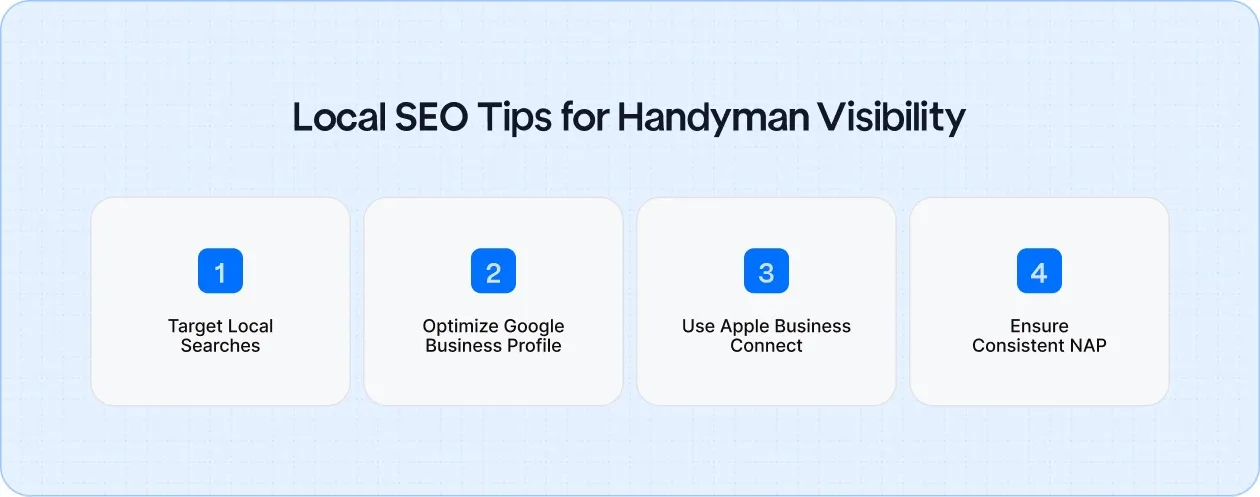
Here’s how to improve your local visibility:
- Target Local Searches: Focus on keywords like “handyman near me” or “local handyman services” to attract nearby customers.
- Optimize Google Business Profile: Claim and fully optimize your profile by adding essential details like your services, hours, and photos to appear in local search results.
- Use Apple Business Connect: Optimizing your listing here ensures you show up in Apple Maps and Search, reaching even more customers with iPhones and Macs.
- Ensure Consistent NAP Across Citations: Make sure your name, address, and phone number are consistent across directories like Yelp and Angi to improve your ranking.
Building local visibility with the right strategy can get you great results.
A smart local SEO approach ensures your business stands out when potential customers are actively searching for your services.
Optimize Your Content
Top 6 SEO Strategies Every Handyman Business Must Know
To succeed in handyman SEO, it's essential to focus on strategies that increase your online visibility and attract the right customers. By optimizing your website, content, and local presence, you can ensure your services are easily found by those who need them the most.
1. Conduct Proper Keyword Research for Handyman SEO
Keyword research is the first step in getting your handyman business noticed online. It’s all about knowing what your customers are searching for and making sure your business appears when they need help.
Here’s how to nail it:
a. Identifying Relevant Keywords
Start by finding terms that potential customers use when searching for services like yours. Tools like Google Keyword Planner can show you which keywords are popular and relevant. Focus on terms that are searched frequently and align with what your business offers.
b. Targeting Long-Tail Keywords
Long-tail keywords are longer, more specific phrases (e.g., “handyman for kitchen repairs near me”). While they may have less search volume, they attract more qualified leads, people who are ready to hire. These keywords are easier to rank for and help you reach the right customers at the right time.
c. Map Keywords to Pages
Once you have your keywords, assign them to the appropriate pages on your website. For example, if someone searches for “drywall repair near me,” your drywall services page should be optimized for that term. This makes it easier for search engines to match the right content with the right search queries.
2. On-Page Optimization for Handyman Services
On-page optimization is all about making sure your website is clear, accessible, and appealing to both search engines and customers. Here’s how to make your website work for you:
a. Creating SEO-Friendly Content
Quality content is crucial. Start by making sure your website addresses the services people are looking for in a way that’s helpful and easy to understand.
Use the right keywords naturally, without overstuffing, and make sure your content answers questions or solves problems. Structuring your content with clear headings (H1, H2, etc.) allows both readers and search engines to easily navigate the page and understand the key points.
b. Perfecting Titles and Meta Descriptions
Your titles and meta descriptions are the first things people see in search results. Create titles that include your main keywords and are descriptive enough to grab attention.
Your meta descriptions should briefly summarize what the page offers, highlighting your unique value. This helps improve click-through rates and gives search engines a better idea of what your page is about.
c. Internal Linking Strategy
Don’t overlook the power of internal linking. By linking relevant pages within your website, you help search engines understand the structure of your site and pass authority from one page to another.
Plus, it makes navigating your site easier for visitors, guiding them to the information they need without getting lost. The more streamlined and interconnected your website is, the better the user experience and the better your SEO.
High-quality, relevant content builds trust and connects with your audience.
If writing content that hits the mark feels overwhelming, there are simple ways to make the process easier
Get Content That Converts
3. Improve User Experience (UX) to Support SEO
User experience (UX) is a key factor in SEO, as it directly affects how visitors interact with your website. If your website isn’t user-friendly, people will leave, and so will your chances of ranking well.
a. Mobile Optimization
More people are searching for handyman services on their phones than ever before. A mobile-friendly site is essential. Ensure your site looks and functions well on all devices, so users can easily find what they need, no matter where they are.
b. Site Speed
Slow-loading websites drive visitors away. Studies show that a delay of just a few seconds can increase bounce rates and hurt your rankings. Compress images, use faster hosting, and minimize unnecessary scripts to keep your site quick and responsive.
c. Easy Navigation
A well-organized, easy-to-navigate site keeps visitors engaged. Make sure your key services are easy to find, with clear headings and logical menus. This improves user experience and helps search engines crawl and index your content more effectively.
By focusing on UX, you improve both your website's usability and its SEO performance, leading to happier visitors and better rankings.
4. Build Your Handyman Reputation Outside the Site with Off-Page SEO
Off-page SEO improves your handyman business’s visibility beyond your website. It helps build your credibility and trust, which directly impacts how well you rank in search results.
a. Getting Backlinks
Backlinks improve your site’s authority. When trusted websites, such as local directories or home improvement blogs, link to your business, it signals to search engines that your content is valuable. Focus on earning high-quality backlinks from reputable sources that are relevant to your industry.
b. Local Partnerships
Forming relationships with local businesses or community groups is a smart way to earn backlinks while enhancing your business's presence in the area. These partnerships offer more exposure and help you gain backlinks from sources that are already trusted in your community.
c. Generate Customer Reviews
Reviews on platforms like Google and Yelp have a direct effect on local SEO rankings. Positive feedback helps your business stand out in local searches and provides potential customers with the trust signals they need to choose your services.
Link-building and authority are crucial for higher rankings, but it can be a challenging task.
Earning backlinks from trusted sources can significantly improve your search rankings, helping you improve an existing site or build one from scratch.
Build Your Backlinks
5. Content Marketing: Answering the Questions Your Customers Are Asking
Your potential customers are always asking questions, and if you can answer them, you’ll build trust and improve your SEO. Here’s how content marketing can work for you:
a. Starting a Blog
One of the best ways to connect with customers is by writing content that directly answers their questions. Start with common questions like “How much does it cost to hire a handyman?” or “What should I look for in a handyman?”
By addressing these in detail, you’ll position yourself as the expert they turn to when they need help. Creating content that speaks directly to customer pain points is a great way to connect and drive traffic.
b. Using FAQ Pages for Featured Snippets
Google loves to show quick answers to common questions at the top of search results in something called a featured snippet.
By creating an FAQ page on your site that answers popular questions about your services, you increase your chances of showing up in those valuable snippet boxes. It’s a great way to gain visibility and reach people who are looking for fast answers. Provide clear, concise content that matches the searcher's intent.
c. Content Updates
You need to keep your content fresh and relevant. If you’ve written a blog post or service page in the past, go back and update it with new information, customer insights, or even updated pricing.
This shows Google and your customers that your business is active and providing the latest, most accurate information. Keeping your content optimized for what people are searching ensures your site remains competitive in search results.
Staying on top of your content and keeping it updated can seem like a lot, but the right strategy can make a huge difference.
For handyman businesses with a lot to manage, working with the right expertise can streamline the process, ensuring your content is always working for you.
Content that drives traffic and improves visibility requires having the right strategy.
Getting the most out of your blog and FAQ pages requires optimization and ensuring you're answering the right questions.
Get Expert Help Now
6. Track SEO Performance and Measure Results
Track your SEO performance to understand what’s working and where you need to improve. Without measurement, you’re essentially flying blind. Here’s how to effectively monitor and measure the impact of your SEO efforts:
a. Setting Up Google Analytics
Google Analytics is a must-have tool for tracking website traffic and understanding user behavior. It allows you to see where visitors are coming from, what pages they visit, and how long they stay.
By setting up goals and conversion tracking, you can measure how many visitors are completing important actions like filling out contact forms or requesting quotes. Regularly reviewing this data helps you identify areas where you can improve and refine your strategy to keep customers engaged.
b. Using Google Search Console
Google Search Console is your behind-the-scenes dashboard for tracking how your website appears in search results. It gives you valuable insights into which keywords are driving traffic, where you’re ranking, and which pages are performing best.
It also helps you spot issues like broken links, mobile usability problems, or indexing errors that could affect your site’s visibility. If you want to fine-tune your SEO strategy and ensure your site is running smoothly, Search Console is a critical tool.
c. Key Metrics to Track
Focusing on the right metrics helps you understand how well your SEO efforts are performing. Some of the most important metrics to track include:
- Bounce Rate: The percentage of visitors who leave your site after viewing only one page. A high bounce rate might indicate that your site isn’t engaging or relevant enough.
- Average Session Duration: How long visitors stay on your site. Longer sessions usually mean visitors are finding the content useful.
- Conversion Rate: This measures how many visitors take a desired action, such as filling out a contact form or calling for a quote. Tracking this metric tells you how well your site is turning traffic into potential leads.
Paid Ads vs SEO: What's Best for Your Handyman Business?
Both paid ads and SEO have their place in your handyman business marketing strategy, but knowing when to use each can make all the difference.
When to Use PPC Ads
Paid search ads, like Google Ads, are great for getting immediate leads, especially when you need to promote a specific service or target a competitive keyword.
They put you at the top of search results instantly, giving your business visibility right away. However, they require ongoing investment to maintain visibility.
Combining SEO with PPC
While PPC delivers quick results, SEO helps build long-term, organic visibility. By combining both, you can attract immediate traffic through ads while ensuring your website stays visible in search results over time. This balanced approach supports sustained growth and reduces reliance on paid ads.
A Long-Term SEO Strategy for Your Handyman Business
SEO is a long-term investment in your business’s growth. While it may take some time to see results, the payoff is worth it. With consistent effort, your website will attract more visibility, higher-quality leads, and ultimately, more customers.
Success comes from refining and updating your SEO strategy regularly. The more you adjust and improve, the better your chances of staying ahead of the competition. SEO is a journey, and with the right approach, your business can grow online.
SEO is the key to staying visible and competitive in your market.
Gushwork’s personalized SEO services are designed to simplify the process, ensuring your business ranks where it matters.
Book Your Free Consultation
Digital Marketing
Dec 9, 2025
5 mins
10 Must-Know Content Marketing Hacks: Make Your Home Services Impossible to Overlook
Batul Beawarwala
The last time you needed a home service, you probably didn’t flip through a phone book to find a provider. You likely searched online, read reviews, and chose someone based on what you found. That’s exactly where your potential customers are, actively looking for services like yours.
For home service businesses, the key to success is being where your customers are searching.
Content marketing gives you the chance to be found at the right time, with helpful, relevant information that answers their questions and addresses their needs.
1. Focus on Local SEO to Get Found Where Your Customers Are Searching
When your potential customers search for services, you want your business to show up right at the top. If you’re not optimized for local search, you could be missing out on the majority of your leads.
Actionable Steps:
- Start by claiming and updating your Google Business Profile and Apple Business Connect.
- Integrate location-specific keywords throughout your site. Think about the cities or neighborhoods you serve and use those terms wherever relevant.
2. Write Blog Posts That Answer Real Questions and Solve Everyday Problems
Your customers have questions; they need solutions. If your blog can answer those questions in a way that feels personal and helpful, you'll instantly become the trusted expert they turn to.
Actionable Steps:
- Write blog posts answering common customer questions (e.g., “How do I fix a leaky faucet?” or “What maintenance does my HVAC system need?”).
- Dive deep into creating how-to guides that make your services easier to understand and more approachable.

If your blog posts aren't generating quality inquiries, it might be time to refine your strategy.
A well-executed content strategy, aligned with SEO, can start bringing in the right customers.
Get SEO Optimized Blogs
3. Showcase Customer Success Stories with Real Testimonials
There’s nothing more convincing than the word of a satisfied customer. Testimonials and case studies act as social proof, establishing your credibility and making new customers feel safe in choosing you.
Actionable Steps:
- Collect testimonials after each job and display them on your website to show potential customers what others think of your work.
- Create detailed case studies that explain the problem and showcase how your services helped solve it.
- Include photos or videos alongside the testimonials to make the experience feel more real and relatable. The more authentic it looks, the better.
4. Video Marketing for Trust and Visibility
Video is one of the most engaging forms of content. It lets you show your customers exactly what you do and how well you do it, building trust quickly.
Actionable Steps:
- Film How-To videos that explain common maintenance tasks or give simple DIY tips (e.g., “How to change an air filter in your HVAC system”).
- Share before-and-after videos showcasing your work. Visual transformations leave a lasting impact.
- Don’t stop with one platform; post your videos on Instagram, Facebook, YouTube, TikTok and your website for maximum visibility.
5. Build a Social Media Presence That Talks to Your Community
Social media is your chance to engage with your community, show off your work, and connect with potential customers in a real, human way.
Actionable Steps:
- Share updates about completed jobs, community events, and industry tips that resonate with your audience.
- Join local groups on platforms like Nextdoor to help your business become part of the neighborhood conversation.
- Facebook, Instagram and TikTok are great for engaging the local community and running targeted ads to people in your service area.
6. Nurture Your Leads with Email Marketing
Email is one of the most effective ways to maintain communication with leads and existing customers. With the right messages, you can convert hesitant prospects into loyal customers.
Actionable Steps:
- Build an email list by offering valuable content like maintenance tips or exclusive offers on your website.
- Send service reminders and seasonal promotions to keep your business top of mind.
- Automate follow-up emails for leads who haven’t booked yet. This will help you nurture potential customers without lifting a finger.
When your content speaks directly to your audience's needs, it builds lasting relationships.
If your blog posts aren't quite hitting the mark, a targeted SEO and content strategy will significantly help align your efforts.
See How It Works
7. Invest in PPC for Instant Visibility
If you're looking to attract customers right now, paid ads can help get your business in front of people searching for services like yours. It's the fastest way to gain visibility in a crowded market.
Actionable Steps:
- Run PPC campaigns targeting specific, high-intent keywords like “emergency plumber near me” or “affordable HVAC services in Boston.”
- Use Google Local Services Ads (LSAs) for added visibility and credibility.
- Track your ad performance and continually adjust your budget to improve the return on investment (ROI).
8. Use Lead Magnets to Engage Potential Customers
Lead magnets are a great way to build trust with your audience and encourage potential customers to engage with your business.
Actionable Steps:
- Offer valuable resources like maintenance checklists, cost calculators, or DIY guides in exchange for contact details.
- Promote these lead magnets across your blog, social media, and landing pages to attract visitors and increase conversions.
By offering something useful upfront, you not only attract visitors but also build a relationship with them that could lead to future business.
Must Read: 11 Proven SEO Strategies for Home Services to Increase Calls and Leads
9. Build and Manage Your Reputation with Reviews
Online reviews are crucial for building trust with new customers and improving local SEO. Reviews play a big role in how your business ranks in local search results.
Actionable Steps:
- Encourage customers to leave reviews on Google, Apple Business Connect, and Yelp after completing a job.
- Always respond to reviews, both positive and negative, to show that you value feedback and are committed to improving.
10. Measure and Adjust Your Marketing Efforts for Ongoing Growth
You cannot improve what you don't measure. Regularly tracking your marketing efforts helps you identify what's working and where adjustments are needed.
Actionable Steps:
- Use tools like Google Analytics to monitor website traffic and user behavior.
- Track key metrics such as bounce rate, conversion rate, and lead quality to ensure your marketing is effective.
Make Your Home Service Business Stand Out
Content marketing is your most cost-effective tool to build lasting relationships with customers, even with a limited budget.
By consistently applying these 10 strategies, you'll start seeing meaningful growth, more visibility, better-qualified leads, and a stronger online presence that sets you apart from your competitors.
Want to turn your content into a lead-generating machine?
Let’s create a personalized strategy that works for your business goals, helping you connect with customers who need your services most.
Book a Free Consultation

Digital Marketing
Dec 8, 2025
5 mins
Painting Companies Who Use These Tested Lead Generation Tips Land 3x More Projects
Batul Beawarwala
Getting consistent, quality leads is a common challenge for painting companies, especially when resources are limited. Many businesses struggle to find the right clients and often rely on inconsistent methods to bring in new work.
A well-organized lead generation system can help attract the right prospects without needing a large marketing team or budget.
This guide will walk you through practical, step-by-step strategies to generate painting leads effectively and help your business grow.
What Are "Good" Leads for a Painting Company?
Attracting quality leads is key to growing your painting business. But not all leads are worth pursuing. Understanding what makes a good lead can save time and resources, allowing you to focus on prospects who are truly ready to convert into paying clients.
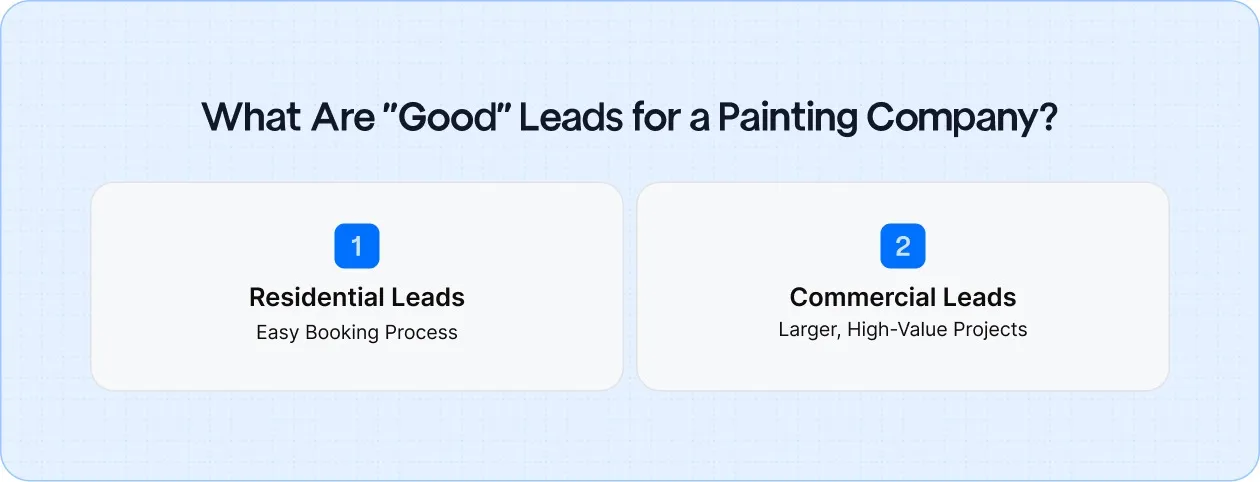
- Clear Need: Homeowners looking to repaint or improve their space.
- Budget: They have the necessary funds for your services, understanding the value of quality work.
- Decision-Making: Ready to hire a painter soon, not just exploring options.
Residential leads are common, but the quality of each varies. A good residential lead is someone who has a specific project in mind and is actively looking for a reliable contractor.
They typically respond well to targeted content like before-and-after images, client testimonials, and clear service offerings.
Commercial Leads: Larger, High-Value Projects
- Target Audience: Property managers, business owners, contractors.
- Project Scale: Larger projects with higher budgets, often requiring more detailed proposals and timelines.
- Decision Process: More structured, often requiring several rounds of negotiation and a formal contract.
Commercial leads often offer longer-term contracts and bigger projects, which can be a great way to stabilize your income. These leads require a more professional approach, with attention to detail in proposals and follow-ups to meet their needs.
Must Read: The Ultimate Guide & Expert Tips for Digital Marketing for Contractors
Want to attract more of the right clients?
Connect with your ideal customers by creating content that speaks to their needs and optimizing your website with the right keywords.
Increase Your Visibility
Free Lead Generation Strategies: Start with What You Can Control
Goal: Offer practical, cost-free methods to begin generating leads without a large budget.
Maximize Referrals from Past Clients
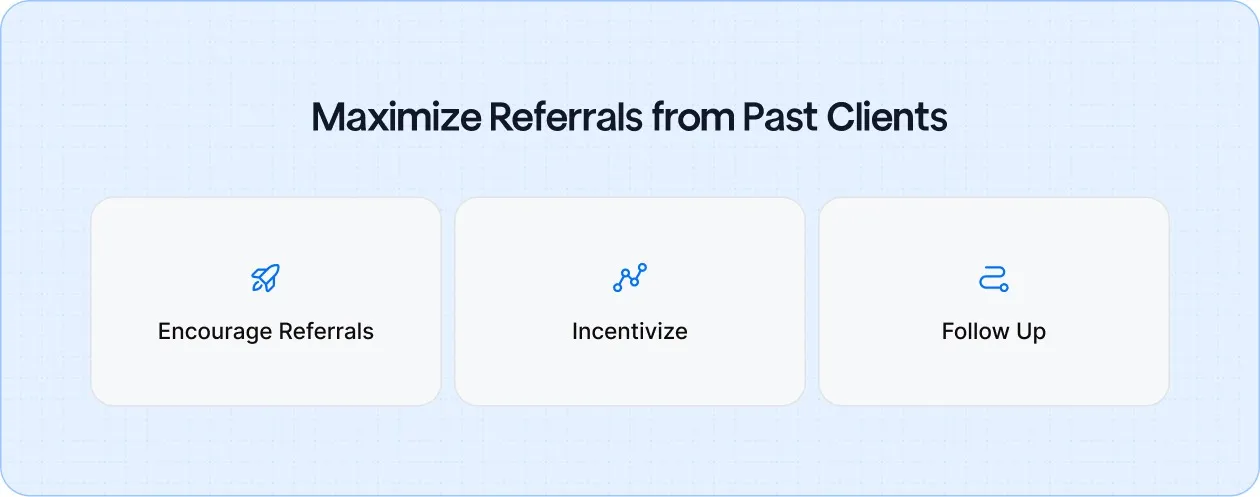
Word-of-mouth is one of the most powerful tools for generating new leads.
- Encourage Referrals: After completing a job, ask satisfied clients to refer you to friends or family. A simple request can lead to valuable new clients.
- Incentivize: Offer a small reward, like a discount or gift, for successful referrals.
- Follow Up: Set up a basic follow-up system to check in with past clients and ask for feedback or referrals.
Consistency in your content is key to attracting the right customers.
With the right SEO strategy, you can create content that draws in inquiries without the high costs.Create SEO Content
Use Yard Signs and Branded Materials to Gain Visibility
Simple offline methods can help your business stay visible in your community.
- Yard Signs: After completing a job, ask to place a sign in the yard. Keep it visible but respectful of the neighborhood.
- Branded Apparel: Have your crew wear shirts or jackets with your company logo, turning them into walking advertisements.
Build Partnerships with Local Businesses
Networking with local professionals can create a steady flow of leads.
- Collaborate with Real Estate Agents and Property Managers: These professionals are often looking for painters to recommend to their clients.
- Partner with Other Contractors: Network with plumbers, electricians, and builders to get referred to clients who need painting services.
Local SEO: Getting Found on Google and Apple Business Connect
Goal: Ensure your painting business is visible when potential clients search for your services.
Optimize Your Google Business Profile (GBP)
Your Google Business Profile (GBP) is one of the most effective ways to improve local visibility.
- Key Elements: Ensure your service area, photos of past work, and client reviews are included. The more complete your profile, the higher your chances of being found.
- Regular Updates: Keep your profile fresh with updates about new services, recent projects, and new photos.
- Client Reviews: Ask satisfied clients to leave reviews. Positive reviews build trust and improve your ranking in local search results.
Apple Business Connect: Visibility for iOS Users
Apple Business Connect is just as important as Google for local visibility; you must not overlook it.
- Visibility on Apple Maps: By optimizing your Apple Business Connect profile, your business can show up on Apple Maps and local searches across iOS devices. Many potential clients use iPhones for local searches, so your business must be easy to find.
- Complete Details: Ensure your business name, contact info, services, and photos are up-to-date to increase visibility across the Apple ecosystem.
Simple SEO for Your Website
An optimized website is key for local SEO.
- Essential Pages: Make sure your service offerings, contact page, and location-based pages are clear and easy to navigate.
- Local Keywords: Use keywords like “painting services near me” and other location-specific terms to help search engines find you.
- Mobile-Friendly: Most users will find your business on their phones, so ensure your website loads quickly and is mobile-friendly.
Paid Lead Generation Strategies: How to Get Painting Leads Faster
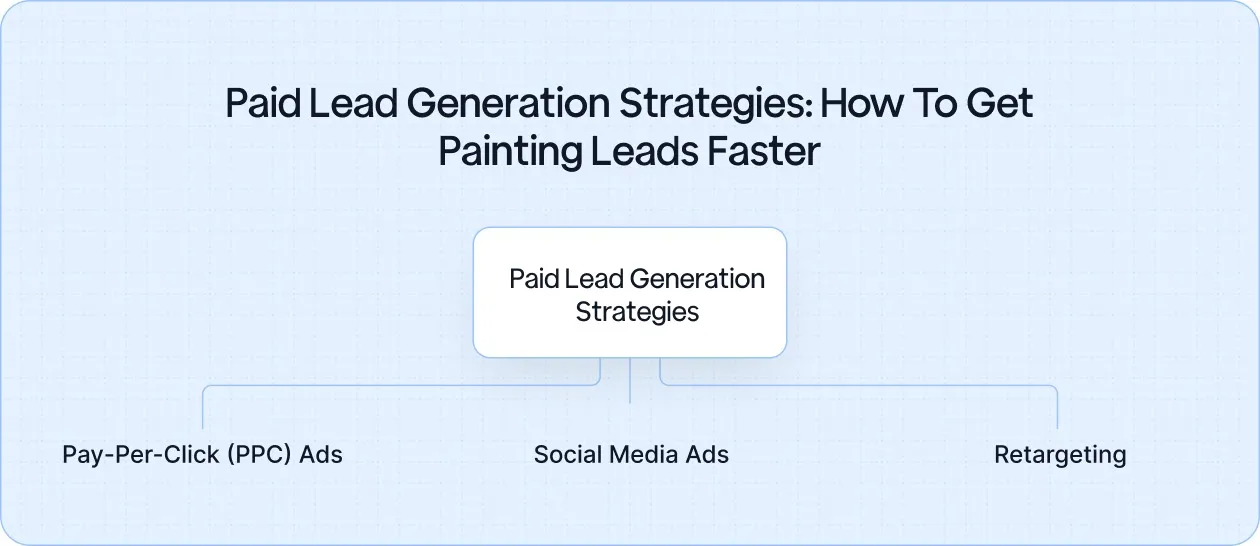
Pay-Per-Click (PPC) Ads: Targeted Ads to Capture Quality Leads
Paid ads can give your business an immediate visibility improvement, but making them work requires precision.
- Target High-Intent Users: With Google Ads, you can target people actively searching for painting services (e.g., “house painter near me”). These users are already in the decision-making phase, making them more likely to convert.
- Location Targeting: Ensure that potential clients within your service area see your ads. Location targeting ensures you’re not wasting money on irrelevant clicks from out-of-town clients.
- Dedicated Landing Pages: Having a specific landing page for each ad campaign increases conversion rates by aligning the ad's messaging with what visitors expect when they click. A well-optimized page can help turn a click into a lead.
Social Media Ads: Reach Local Homeowners
Social media is a powerful tool for connecting with your community and getting local leads.
- Facebook, Instagram, and TikTok Ads allow you to target homeowners in your area who are looking to improve their homes. These platforms let you visually showcase your work, which is key for a business like painting, where before-and-after images are highly persuasive.
- Seasonal Promotions: Running promotions during peak seasons can generate interest and drive conversions. Social media ads give you the flexibility to target specific times of year when people are most likely to invest in home improvement projects, such as during seasonal changes.
Retargeting: Don’t Let Potential Clients Slip Away
Retargeting allows you to stay top of mind with people who have already shown interest in your services.
- Meta Pixel and Google remarketing ads let you target people who visited your website but didn’t convert. By showing them ads again, you remind them of your services and increase the likelihood of conversion.
- TikTok Retargeting: If someone interacts with your TikTok ad but doesn’t schedule an estimate, retargeting helps bring them back. This is particularly effective on TikTok, where short, engaging videos create a strong connection with potential clients.
- Setting Up Remarketing Campaigns: Retargeting is easy to set up. Once you have tracking in place, create custom ads that speak to the pain points of visitors who didn’t convert the first time. Highlight what they might have missed or offer an incentive to re-engage them.
Working with Lead Generation Platforms: When Does It Make Sense?
Goal: Guide businesses on how to evaluate lead generation services and the value of SEO in generating consistent, high-quality leads.
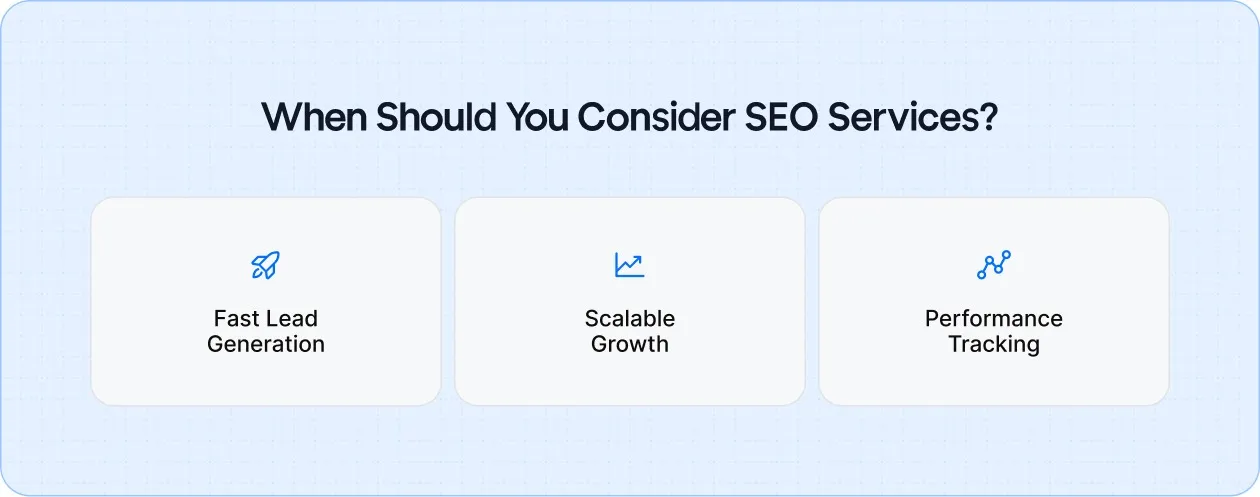
When Should You Consider SEO Services?
If your business is struggling to attract qualified leads or simply doesn’t have the time or resources to manage a dedicated marketing team, an SEO platform can be a game-changer.
SEO helps you build a steady flow of organic leads that can sustain your business long-term.
- Fast Lead Generation: SEO platforms are particularly useful for smaller companies or those with limited resources. By targeting high-intent keywords and optimizing your website, you can see faster results than relying on traditional advertising methods.
- Scalable Growth: Unlike paid ads, SEO offers long-term scalability. As your website gains more authority and ranks higher for relevant keywords, you'll attract more leads without constantly needing to inject money into new campaigns.
- Performance Tracking: SEO platforms help businesses track the performance of their content, identify areas for improvement, and adjust strategies for better results. With proper analytics and transparent tracking, you can see exactly how your efforts are impacting lead generation.
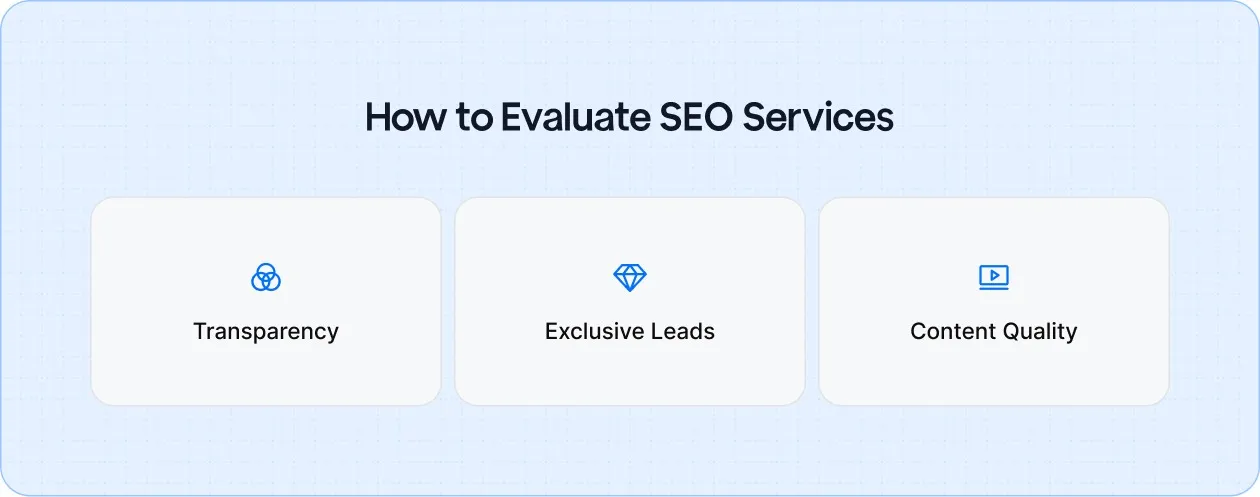
How to Evaluate SEO Services
Choosing the right SEO platform or service is crucial to ensuring your business gets the best results. Here’s what to focus on:
- Transparency: The platform should provide clear reports on the work they’re doing, what strategies are being used, and how it aligns with your business goals. This way, you can stay informed on progress and adjust as necessary.
- Exclusive Leads: Unlike shared lead platforms, SEO provides exclusive leads that are specifically interested in your services. With targeted SEO strategies, you’re attracting clients who are actively searching for painting services like yours.
- Content Quality: An effective SEO platform will focus on creating high-quality, relevant content that resonates with your audience. It should help improve your site’s ranking by producing content that speaks to the search intent of potential clients.
For businesses looking to generate high-quality, long-lasting leads, trusted AI-assisted SEO platforms like Gushwork offer a focused, sustainable approach. By investing in SEO, you can ensure that your business consistently appears in front of the right audience, making it easier for you to attract and convert leads over time.
A solid lead generation plan starts with clear, consistent content.
To take your lead generation further, focus on high-quality SEO content with Gushwork to help your painting business grow sustainably.
Book a Free Consultation

SEO
Dec 8, 2025
5 mins
Want More Drain Cleaning Calls? Try These Powerful SEO Hacks Today
Batul Beawarwala
When someone’s drain is clogged, they don’t waste time. They grab their phone and search for help. But how do they find you?
With the right SEO, your business can show up when people nearby need drain cleaning.
These simple steps can help bring in the calls you want.
How Customers Search for Drain Cleaning Services
As a drain cleaning business, understanding how your customers search for help is crucial to making sure you’re there when they need you the most. The way people search for services online can vary greatly depending on their situation.
Here’s a breakdown of the four key types of search behavior you should be ready to address:
4 Types of Search Behavior You Should Plan For
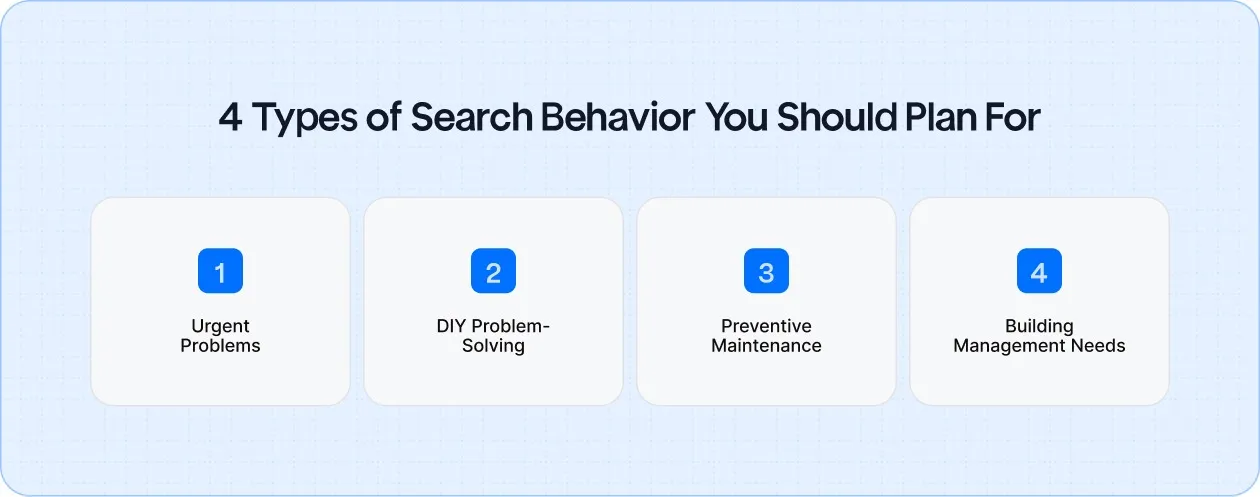
Understanding these four types of search behavior helps you tailor your SEO strategy to match the needs of different customers.
1. Urgent Problems
When a drain is overflowing, or there's a sewage smell in the house, there’s no time to waste. These customers need a solution immediately. They’ll search for "emergency drain cleaning" or “24/7 plumber near me,” looking for businesses that can provide quick fixes.
The challenge here is showing up at the right time, with the right message.
2. DIY Problem-Solving
Some customers may try to solve the problem themselves first. They’ll look up things like "how to unclog a drain" or "drain cleaning tips." While they might not always book right away, this is an opportunity to offer helpful content that builds trust and positions you as the go-to expert when DIY fixes don't work.
3. Preventive Maintenance
Not all searches are emergency-driven. Many customers search for ways to prevent future drain issues, like "how to keep drains clean" or "drain maintenance services." If you’re able to rank for these terms, you can help establish long-term relationships by offering regular services.
4. Commercial or Building Management Needs
Businesses or property managers often need commercial drain cleaning services. They might search for terms like "restaurant drain cleaning" or “property management plumbing services." These searches have a higher lifetime value and can lead to ongoing contracts.
High-Value Drain Keyword Groups to Target for Drain Cleaning SEO
To make sure your business shows up for these different types of searches, you’ll need to target the right keywords. Here's a breakdown of the keyword groups that are key to getting noticed:
1. Kitchen, Shower, Tub, Basement, and Floor Drain Issues
These are the types of drains that people commonly need cleaned. Focusing on specific drain types can help you target customers who need help with these recurring problems.
2. Problem-Driven Searches
Keywords like “slow drain,” “standing water,” or “foul smell in drain” are common when someone is experiencing a blockage or issue. These keywords indicate a direct need for your services, making them high-value terms to target.
3. Services
Think of the services you offer: "snaking,” “jetting,” and “camera inspections.” Customers searching for these specific services are already further down the sales funnel, ready to book a solution.
4. Local Modifiers
Customers will also search for local terms like “drain cleaning in Chicago” or “plumber near me.” Optimizing your site with local keywords ensures you’re visible when someone nearby needs help. These searches are typically the most urgent and the easiest to convert into booked jobs.
Build a Keyword Map That Matches Search Intent
It’s time to create a keyword map that matches their intent. This helps you organize your content in a way that meets their needs, turning searches into service calls.
1. Assign One Core Keyword Per Page
Each page should be focused on one main topic or service. This way, you ensure that your page ranks for the specific search someone is making, such as kitchen drain cleaning or emergency snaking.
2. Group Sub-Topics for Future Blogs
Create a list of related keywords to build blogs around. For example, if you have a main page on drain cleaning, you can create blogs for common problems like “How to Prevent Clogs in Your Kitchen Sink” or “Signs Your Shower Drain Needs Cleaning.” These blogs will help you capture even more searches and build authority.
Creating content that targets the right searches is crucial.
SEO content requires a strategy and expertise to ensure you’re targeting the right terms and creating content that connects.
Build Strong Content
Technical SEO Setup That Helps Drain Cleaning Pages Perform Well
A single misstep in structure, speed, or navigation could cost you visibility.
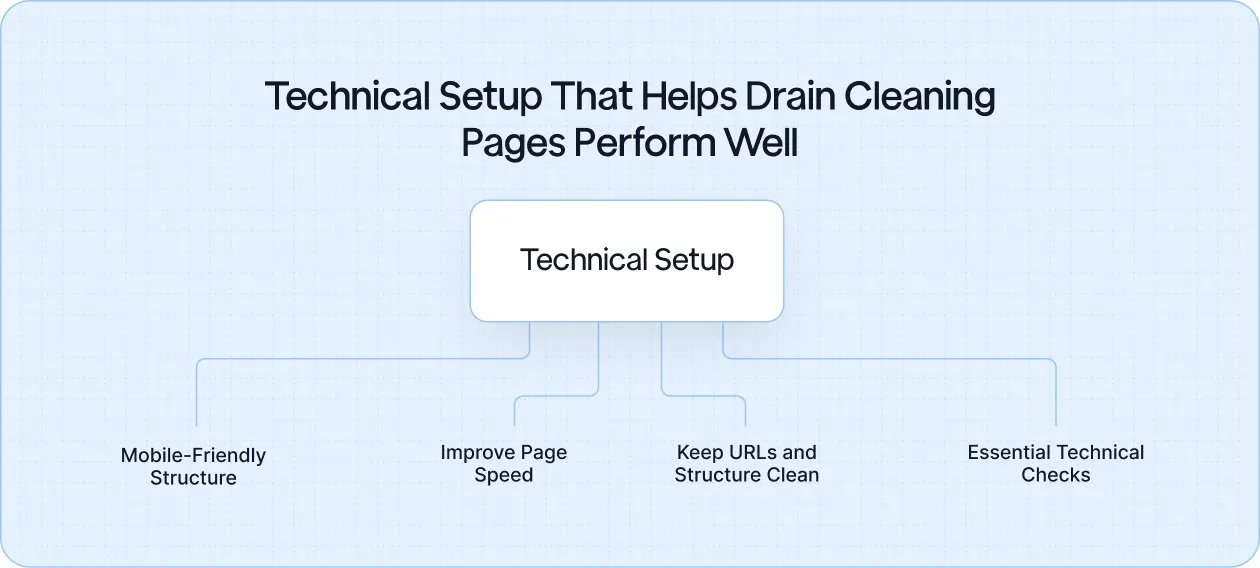
Let’s break down the key technical elements you need to perfect, and why trying to handle them alone can slow your growth.
Mobile-Friendly Structure
More people search for drain cleaning services on their phones than ever before, and if your site isn’t optimized for mobile, you’ll lose potential customers. Here’s what you need:
- Short, Simple Forms: Don’t make users work to get in touch. Forms should be quick to fill out, especially when someone needs help fast.
- Easy to Skim: Mobile users don’t read every word. Your content should be easy to navigate and scannable with clear headings and short paragraphs.
Improve Page Speed
Speed matters. If your page takes too long to load, visitors will leave before they even get to see your services. Here’s how to speed things up:
- Compress Media: Large images and videos can slow your site down. Optimizing them for fast loading speeds ensures a smoother user experience.
- Remove Unused Scripts: Every unnecessary line of code adds to load time. Clean your site to make it faster and more efficient.
- Host on a Dependable Server: Choosing the right hosting service can make or break your site’s performance. A slow or unreliable server will lead to constant issues.
Keep URLs and Structure Clean
The structure of your website’s URLs and internal pages should reflect the services you provide. Here’s what you should focus on:
- Service-First URLs: Your URLs should clearly reflect the service offered. For example, “www.yourbusiness.com/drain-cleaning” tells both users and search engines exactly what to expect on the page.
- No Duplicate Pages: Duplicate content confuses search engines and lowers your page performance. Keep each page focused on a unique service or location.
- No Cluttered Menus: Keep navigation simple and intuitive. A clean structure helps both search engines and users find what they’re looking for without frustration.
While it may seem simple, creating an organized, user-friendly structure that works for both search engines and customers requires careful planning and often, expert input to get it right.
Build a High-Converting Drain Cleaning Service Page
Your service page is often the first impression customers get of your business. A well-optimized, customer-friendly page can make the difference between a visitor moving on or calling for immediate help.
Here's how to build a page that attracts customers and convinces them to book your service.
Above-the-Fold Essentials
The top part of your service page is the first thing people see, so it needs to grab attention and make the next steps clear:
- Clear Headline: A headline that directly addresses the customer’s need is key. It should immediately tell them what you offer and how you can solve their problem.
- Prominent Call Button: Your contact button should stand out and be easy to find. For urgent services, like drain cleaning, you want customers to be able to reach you instantly, without having to search for the number.
- Trust Elements: Adding reviews, ratings, and even photos of previous work can make your business feel more reliable and professional. Trust is crucial in the service industry, and customers want to know they're in good hands.
Core Information Customers Expect
Once visitors are engaged, the next step is providing them with exactly what they’re looking for. Clarity and transparency here will help build confidence:
- What the Visit Includes: Customers want to know what they’re getting for their money. List the services you provide during a drain cleaning visit, such as snaking, jetting, or camera inspections.
- Price Ranges: People appreciate transparency. While drain cleaning costs can vary, offering a price range (or starting prices) can help customers decide if they’re in the right place.
- Arrival Window: Let them know when to expect you. Customers will appreciate knowing exactly when you plan to arrive, especially when they’re dealing with a clogged drain or other urgent issue.
- Temporary Safety Tips: Offer helpful advice they can follow while they wait for your arrival. It shows you care about their safety, and it can prevent further damage to their plumbing system before you get there.
On-Page SEO Checklist
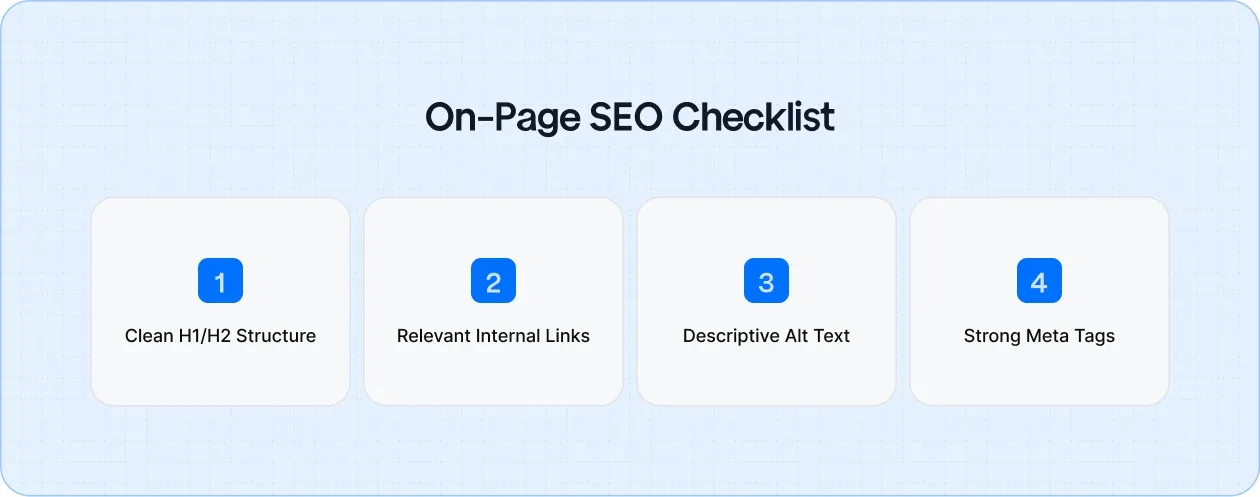
Optimizing your page for both users and search engines is essential for driving more traffic and conversions. Here’s your must-do checklist for a high-converting page:
- Clean H1/H2 Structure: Search engines rely on well-structured headings to understand what your page is about. Ensure you use clear H1 and H2 tags that align with the main topics of the page.
- Relevant Internal Links: Linking to other related services or blog posts helps visitors find more of what they need while also keeping your SEO on track. It also improves the overall user experience.
- Descriptive Alt Text: Alt text for your images helps search engines understand the content of your photos, while also making your site accessible to all users. Be sure to describe the image while naturally integrating keywords.
- Strong Meta Tags: Titles and descriptions play a big role in driving traffic. Make sure your meta tags accurately describe your page content and include relevant keywords to attract potential customers from search results.
Local SEO Steps That Make Your Drain Pages Easy to Find
If you want your drain cleaning business to pop up when someone nearby needs help, local SEO is your secret weapon. It’s about keywords, making sure search engines know you're the go-to option in your area.
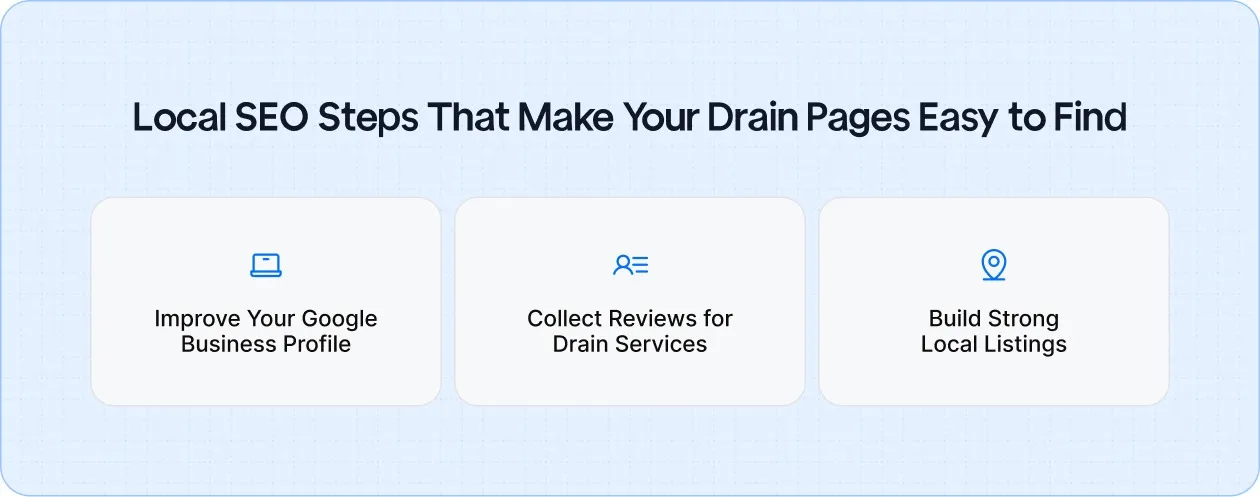
Here’s how you can do it without breaking a sweat:
Improve Your Google Business Profile
Your Google Business Profile is one of the first places customers look when searching for a local service. Let’s make it stand out:
- Update Your Services List: Ensure your full range of drain cleaning services is listed, so potential customers know you cover everything they need.
- Add Real Job Photos: Show off your work! A picture speaks a thousand words, and it builds trust.
- Add Hours + Service Area: Make it easy for customers to see when you’re available and exactly where you serve. No one likes to waste time guessing.
With these simple updates, you’ll be putting your best foot forward on the platform that counts most for local searches.
Collect Reviews That Support Your Drain Services
Nothing builds trust faster than a good review, especially when it’s from someone who has experienced your service firsthand. Here's how to get them:
- Ask After Each Job: Don’t wait! After you’ve done a great job, ask for a review. A happy customer is usually happy to help.
- Encourage Natural Descriptions of the Issue: When requesting reviews, guide customers to mention specific issues you solved. This helps with SEO and builds credibility.
- Reply to Every Review: Responding to reviews shows you care. Take the time to acknowledge the feedback, positive or negative. It’ll make customers feel valued and encourage others to leave their thoughts.
Build Strong Local Listings
Consistency is key for local SEO, especially when it comes to directory listings. Here’s how to ensure you’re properly represented across the web:
- Add Accurate NAP to Directories: NAP (Name, Address, Phone Number) needs to be consistent everywhere, across Yelp, Angie’s List, or any other local business directories. One mismatch can confuse search engines and potential customers.
- Keep Details Consistent: Ensure your business info is up-to-date and the same on every platform. Inconsistent details hurt your credibility and rankings.
- Mention Drain Services in Descriptions: Take advantage of every opportunity to describe what you offer and use relevant keywords that speak directly to what people search for.
When your details are consistent across platforms, search engines can confidently tell potential customers, “This is the business you need.”
Location Pages for Multiple Cities or Neighborhoods in Drain Cleaning SEO
If you're operating in several cities or serving distinct neighborhoods, creating specific pages for each can help you rank for local searches and meet potential customers where they are.
Location pages also improve your chances of appearing in voice search, which is increasingly common as customers use voice assistants like Siri and Google Assistant to find nearby services.
When Do You Need Location Pages?
Not every business needs a location page for every city or neighbourhood, but if you’re in one of these situations, it’s essential:
- Multi-City Operations: If you cover several cities, each should have its own page with personalized content that speaks to that area.
- Suburbs with Distinct Drain Patterns: Some areas might have unique drain issues or common problems (e.g., older homes with more pipe blockages). Create pages that speak to those specific needs.
- Regions with High Drain Blockage Cases: If certain regions tend to experience more frequent drainage issues (e.g., due to weather or older plumbing systems), dedicate a page to highlight your expertise in that area.
Structure for a Drain Cleaning Location Page
Once you've decided where you need location pages, structuring them right is the next step. A strong page should focus on these core elements:
- Local Intro: Start with a friendly introduction that shows your familiarity with the area. Mention the local drain issues people face and how you can help.
- Local Reviews: Add a few reviews from customers in that area to build trust. Seeing positive experiences from neighbours can push potential customers to take action.
- Embedded Map: Including an embedded map helps both customers and search engines know exactly where you’re located and which areas you serve. It’s a small touch that improves both user experience and SEO.
Internal Linking for Better Coverage
Don’t let your location pages exist in isolation. Here’s how to help your pages work together to build better coverage across your site:
- Link Each City Page to the Drain Cleaning Hub: Ensure that your city pages are linked back to your main drain cleaning service page so that search engines can understand the connection.
- Link Nearby Suburbs to Each Other: If your services span across multiple nearby areas, link those location pages together. This helps customers navigate and improves your site's relevance for those regions.
- Keep Navigation Clean: Simple, easy-to-follow navigation between pages ensures visitors can quickly find what they need without feeling overwhelmed.
Location pages shine when the copy feels local and human.
Writing unique content for each suburb or city can be time-consuming, but it’s essential for connecting with your community.
Write Effective Local Pages
Content Ideas That Support Your Drain Cleaning SEO
Creating content that speaks directly to the problems your customers face is one of the best ways to drive traffic and trust.
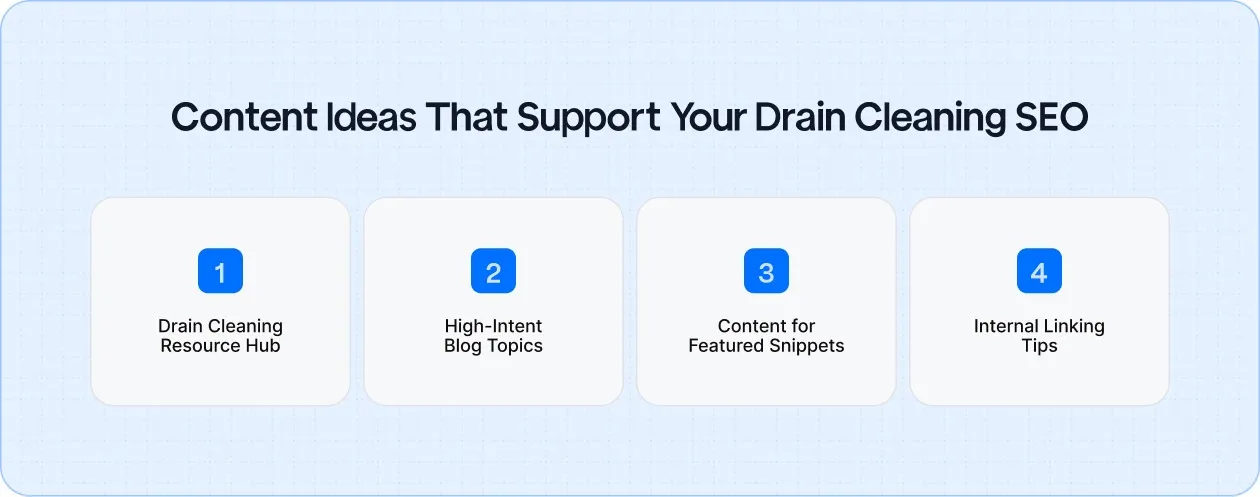
To truly support your SEO efforts and convert visitors into customers, you need a strategy that builds authority and answers the most common questions.
Create a Drain Cleaning Resource Hub
A resource hub acts as the backbone of your content strategy. It helps you organize your blog posts, cover all essential topics, and makes it easier for visitors to find exactly what they need.
- Organize Blogs into Clusters: Group related topics together to create a clear structure for your content. For example, group all your sewer-related articles in one cluster and drain cleaning tips in another. This makes your site more navigable and improves your SEO.
- Cover One Specific Problem Per Article: Don’t try to tackle everything in one post. Each article should focus on solving a single problem, such as unclogging a sink or fixing a leaking pipe. This helps both readers and search engines quickly understand what each page is about.
Blog Topics That Bring in High-Intent Visitors
To drive high-quality traffic, focus on topics that answer real questions homeowners are asking when they need drain cleaning services. Here are some topic ideas that bring in high-intent visitors:
- Signs of a Sewer Line Clog: This type of article speaks to homeowners who are noticing warning signs and are looking for immediate solutions.
- Jetting vs. Snaking Comparisons: Helping customers understand the difference between these services can guide them toward booking the right option with you.
- Cost Expectations: A blog discussing average drain cleaning costs sets clear expectations and positions your business as transparent and trustworthy.
- Safe Steps Before Calling a Pro: Offering DIY tips for minor issues can help build trust, showing you care about the customer even before they book your services.
Format Content for Featured Snippets
A featured snippet is that neat, boxed answer that appears at the top of Google search results. It’s a great way to get more visibility and drive traffic to your website.
- Short Answers: Provide clear, concise answers to common questions; Google loves these for snippets.
- Q&A Blocks: Structure your content in a Q&A format, addressing specific queries that homeowners might have, like “How often should you clean your drains?” or “What causes slow drains?”
Blogs perform and get customers when they answer real homeowner questions.
Create SEO-driven content that brings in real enquiries and connects you with the customers who need your services most.
Create SEO Blogs
Measure and Improve Your Drain SEO Results
Once you've set up your SEO strategy for your drain cleaning business, the real work begins: tracking, reviewing, and refining. SEO is an ongoing process that requires regular attention.
By measuring the right metrics, you can ensure your efforts are paying off and make adjustments to stay ahead. Here’s how you can track your results and keep improving.
Track the Metrics That Matter
To gauge the success of your SEO efforts, focus on the metrics that directly impact your business. Tracking the right data helps you understand what’s working and what needs tweaking.
- Calls from GBP: Google Business Profile (GBP) is a vital tool for local businesses. Track how many calls come directly from your profile to understand its effectiveness.
- Form Submissions: Keep an eye on how many people are filling out your contact or service request forms. More submissions mean more potential customers.
- Booked Jobs: Ultimately, booked jobs are the best indicator that your SEO strategy is working. Track this metric closely to understand how many visitors are turning into paying customers.
- Page Performance: Regularly check how your service pages are performing. Look at metrics like bounce rate and time on page; these will give you insights into how well your content is resonating with visitors.
Monthly Review Checklist
Reviewing your performance regularly helps you stay on track and fine-tune your approach. Here’s what you should include in your monthly review to keep your drain cleaning SEO efforts sharp:
- Check Rankings: See where you stand for your target keywords. If you’ve slipped in rankings, it’s time to review your content or technical setup.
- Review GBP Insights: Look at the data from your Google Business Profile. Are you getting enough views? Are users clicking to call or visit your site? This can tell you if your GBP needs optimization.
- Refresh Underperforming Content: Not all content will perform as expected. If certain pages are lagging, update them with fresh information or optimize them for better performance.
Build Steady Growth Through Smarter SEO Content
Driving growth for your drain cleaning business with SEO requires creating content that speaks directly to your customers’ needs and building pages that are easy to find and navigate.
By focusing on a clear structure, addressing real problems, and using the right SEO tactics, you can ensure that your business stays visible and relevant.
Achieving high-quality, search-optimized content is achievable.
With Gushwork’s expertise, you can consistently create content that drives real inquiries, without the extra pressure of expanding your team.
Book a Free Consultation

Digital Marketing
Dec 8, 2025
5 mins
Your Website Should Win You Roofing Jobs. This 6-Point Design Framework Makes That Happen in 2026
Ishani Mitra
Roofs protect homes. Your website should protect your business.
If a homeowner lands on your site and it looks outdated, loads slowly, or doesn’t clearly show what you do, they’re gone. And they’re headed straight to a competitor who communicates better online.
Today’s roofing customer wants answers without digging, proof without asking, and a clear next step without guessing. They want to see real projects, real reviews, and real reasons to trust you before they ever pick up the phone. A strong roofing website design does exactly that, it turns uncertainty into confidence and clicks into booked inspections.
In this blog, you’ll learn what a high-performing roofing website needs in 2025, which design choices actually drive leads, and how the right layout and content can help your business stand out in a crowded local market.
Why Roofing Website Design Matters in 2025?
Roofing is a high-trust, high-ticket service. Most homeowners don’t buy a new roof often, so they rely heavily on online research to pick the “safe” choice. Your roofing website design silently answers questions like:
- Does this company look established and professional?
- Have they done work like mine before?
- Can I reach them quickly if I have an emergency?
A good roofing website design helps you:
- Build trust fast: Clean layout, clear branding, real photos and reviews reassure nervous homeowners.
- Turn clicks into calls: Simple navigation and obvious “Call now” or “Request a quote” buttons reduce friction.
- Show local relevance: Highlighting service areas, local projects and reviews makes you feel “close by” and familiar.
- Support all traffic sources: SEO, PPC, Google Business Profile, social media, etc. Everything points back to your site. If the site is weak, all channels underperform.
Ready to Build a Roofing Site That Wins More Inspections?
Turn traffic into booked jobs with a clean, conversion-focused website designed for how homeowners actually make decisions.
Start Your Website Build
6 Core Principles of Effective Roofing Website Design
Before thinking about templates or fancy effects, get these basics right. They are what make a roofing website design actually convert visitors into leads.
1. Make The “Above The Fold” Section Do The Heavy Lifting
“Above the fold” is the part of your page people see before they scroll. It’s your first impression, so it should act like a clear, simple “billboard” for your roofing business.
How to set it up:
- Put a clear headline that says who you are and where you work (e.g., “Residential & Commercial Roofing in Columbus, OH”).
- Add one main CTA button: “Schedule a Free Roof Inspection” or “Call for Same-Day Leak Repair.”
- Show 1–2 trust cues right there: years in business, rating (“4.9★ on Google”), or “Locally owned since 2010.”
- Use a real project photo or crew photo, not a generic stock roof.
If the top of the page only shows a big image and a vague slogan, visitors have to work too hard. Keep it clear and direct instead.
2. Use A Simple, “Service-First” Navigation
Navigation is the menu at the top of your site. For roofers, it should help people jump straight to the service they need.
How to structure it:
- Keep 4–6 top-level links: Home, Services, Our Work, About, Financing (if you offer it), Contact.
- Under Services, use a dropdown with plain-English names: Roof Repair, Roof Replacement, Storm Damage, Commercial Roofing, Gutters.
- Avoid vague items like “Solutions” or “What We Do.” Make it obvious.
- Make the phone number and “Get a Quote” button part of the header so they show on every page.
The goal: no matter where someone lands, they should never be more than one click away from the service they need and a way to contact you.
3. Build Pages In Scannable “Blocks”
Most visitors skim, especially on phones. Short sections with clear headings and icons are easier to scan than long paragraphs.
How to lay it out: On key pages (Home, Service pages), repeat this pattern:
- Section 1 – Problem & solution A short line about the situation: “Leaks, missing shingles, or hail damage?” A solution: “We inspect, document, and repair roofs across [City].”
- Section 2 – Services in cards or columns Use 3–4 cards with icons or images: Roof Repair, Full Replacement, Storm Damage, Commercial. Each card: one sentence + “Learn more” link to the full service page.
- Section 3 – Why homeowners choose you Use 3–5 bullets with small icons: “Licensed & insured,” “Insurance claim support,” “In-house crews,” etc.
- Section 4 – Proof (reviews + projects) Strip of 2–3 reviews + a “View our recent projects” link.
- Section 5 – Clear CTA strip Full-width band with headline + phone number + button.
4. Design Mobile-First, Then Refine Desktop
Most home-service searches now start on phones, so roofing website design should be planned for mobile screens first. That means bigger tap targets, vertical stacking, and short sections.
How to make it work on mobile:
- Put your phone number as a tap-to-call button fixed at the bottom or top on mobile.
- Stack content in a single column: headline → short text → button → image.
- Keep forms short: name, phone, email, ZIP, service type. Anything more and people drop off.
- Check font size and contrast so text is easy to read outdoors and on small screens.
- Test your pages in Google’s mobile-friendly tools and keep Core Web Vitals (speed, stability) in good shape.
If it works smoothly on a phone, it’s usually easy to adapt for desktop. The reverse is rarely true.
5. Let Every Page Act Like A Landing Page
Many visitors don’t start on your homepage. They come in from Google to a blog post or a service page. Each of those pages should be able to stand on its own and convert a visitor into a lead.
How to set it up:
- Repeat key trust elements on every core page: small review strip, badges, and service area note.
- Add at least one in-content CTA (“Book a roof inspection”) plus a final CTA near the bottom.
- Include a short “Who we are” block on long pages with a logo, one-line intro, and link to the About page.
- Use internal links to guide people to the next step: service → gallery, gallery → contact, blog → service page.
Ask yourself: if someone only sees this page, do they know what you do, where you work, and how to reach you? If not, tweak the layout until the answer is yes.
6. Use Visual Patterns That Show Safety And Professionalism
People judge your professionalism by the way your site looks and feels. The design should quietly signal safety, order, and care.
Practical ideas:
- Use real project photos with clean lines and tidy job sites. Avoid messy or cluttered backgrounds.
- Keep a consistent color palette that matches your logo, no random colors on every section.
- Use icons to represent processes: Inspect → Document → Repair → Clean up → Warranty.
- Show team photos in uniforms and safety gear on ladders or roofs, not stock model shots.
- Keep plenty of white space so nothing feels cramped or chaotic.
Stop Losing Leads to Competitors With Better Websites
If customers can’t find clarity or trust fast, they bounce. Let’s fix that and turn more clicks into calls.
Let’s Build It Right
When your roofing website design follows these patterns, it does more than “look nice.” It quietly answers the questions in your visitor’s head: Can I trust these people? Will they do a clean, safe job? Is it easy to get started? And that’s what turns clicks into booked inspections.
Roofing Website Templates vs Custom Designs: How to Choose the Right Approach
Many roofing businesses begin with a template and level up when growth demands more flexibility. The key is choosing the option that fits where your business is today, and where it’s headed.
Option 1: Roofing Website Templates
Templates are pre-designed website structures built specifically for contractors or home-service businesses. For roofing companies early in their branding journey, templates allow you to launch quickly without hiring a full design team.
Real advantages of using templates
- Speed to launch: Many go live within days, not months.
- Predictable performance: Templates built for contractors already include the conversion-focused elements homeowners expect.
- Affordable improvements: You can upgrade sections as you grow instead of redesigning everything at once.
- Easy to edit internally: No waiting on developers for every small change.
Option 2: Custom Roofing Website Design
Custom sites are engineered around your workflow, sales strategy, brand voice, and multi-location structure. They offer freedom to design every experience around your customer journey.
Unique advantages of custom sites
- Built for lead conversion: Designed around your real sales process.
- Better page speed and SEO structure: Custom code removes template bulk that slows load times.
- Easier scaling and multi-location growth: Add new cities and services without breaking layout.
- Stronger storytelling and proof: Tailored case studies, drone photo galleries, team pages, repair vs replace comparison pages.
6 Roofing Website Examples Worth Studying In 2025
You don’t need to copy another roofer’s website, but it helps to see what “good” looks like in the wild. These examples show your design principles in action: clear offers, local proof, and easy paths to contact. Use them as a checklist:
1. Brady Roofing
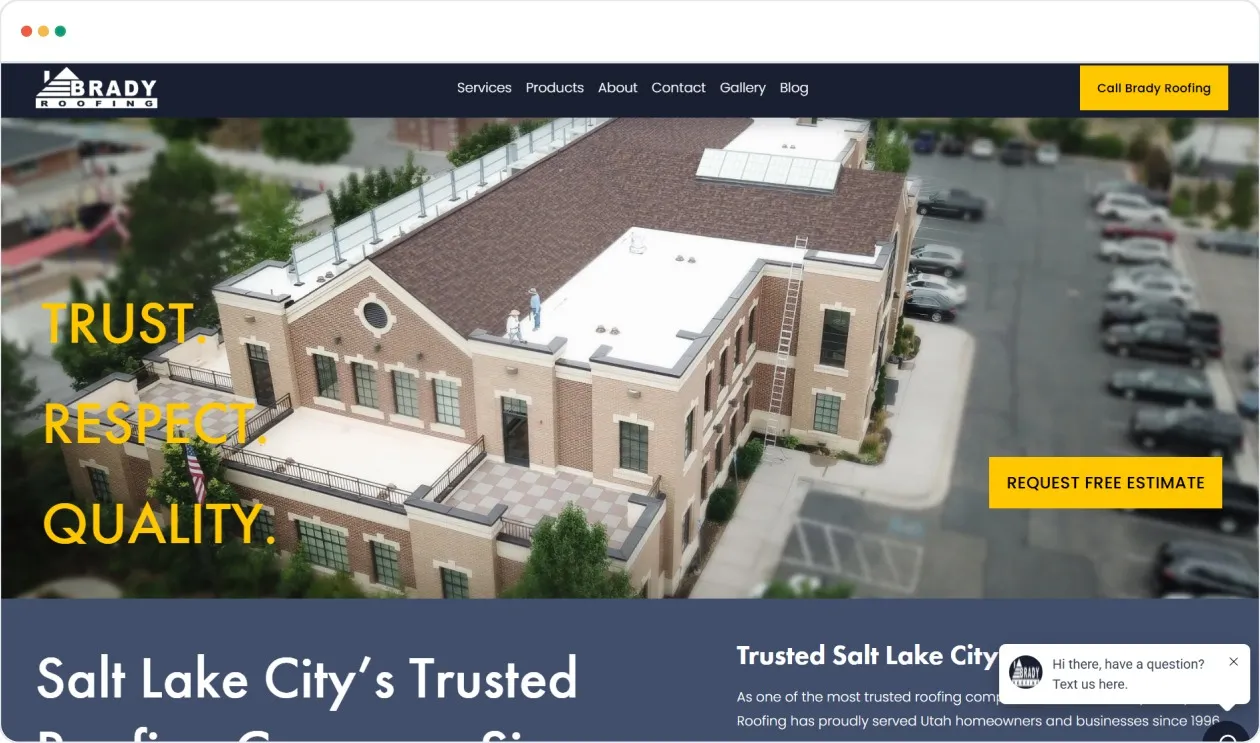
Brady Roofing in Salt Lake City opens with three simple words stacked big on the page: “Trust. Respect. Quality.” followed by “Salt Lake City’s Trusted Roofing Company Since 1996” and a “Request Free Estimate” button right under it.
Visitors instantly know they’re in the right place, see years in business, and have a clear next step. Their homepage then moves into services, “Why choose us” bullets, and a service-area block, which is a solid reference for balancing copy, proof, and CTAs.
What to borrow:
- Short, punchy hero headline + local tagline
- Single primary CTA in the hero
- Service grid + “why choose us” + reviews all on the same page
2. Mr. Roof
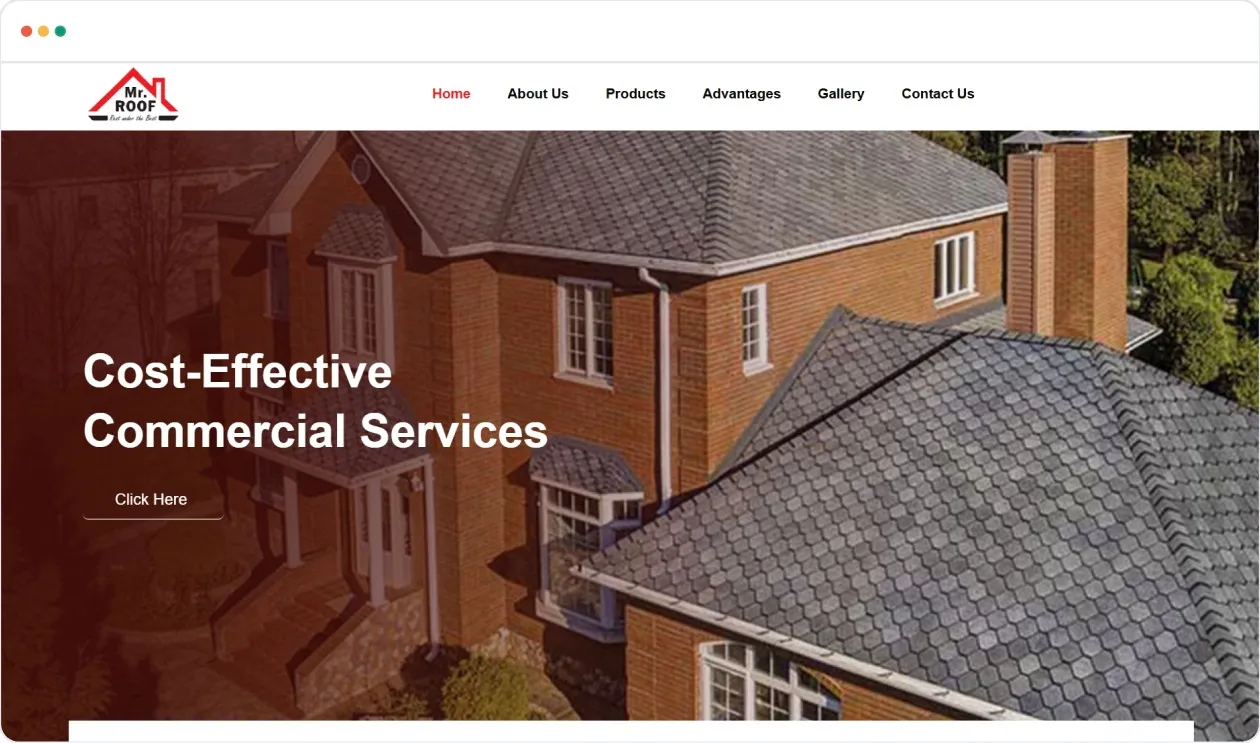
Mr. Roof serves multiple regions, and their site reflects that. The top of the homepage makes it easy to pick a location and see relevant services, which is handy if you run crews in more than one city. The hero focuses on a simple promise and a visible call-to-action, with supporting elements like warranties and ratings nearby.
What to borrow:
- Location-aware navigation if you cover several metros
- Strong, benefit-led hero line plus obvious “Get a quote” / “Schedule” button
- Supportive trust badges close to the main CTA
3. Newman Roofing
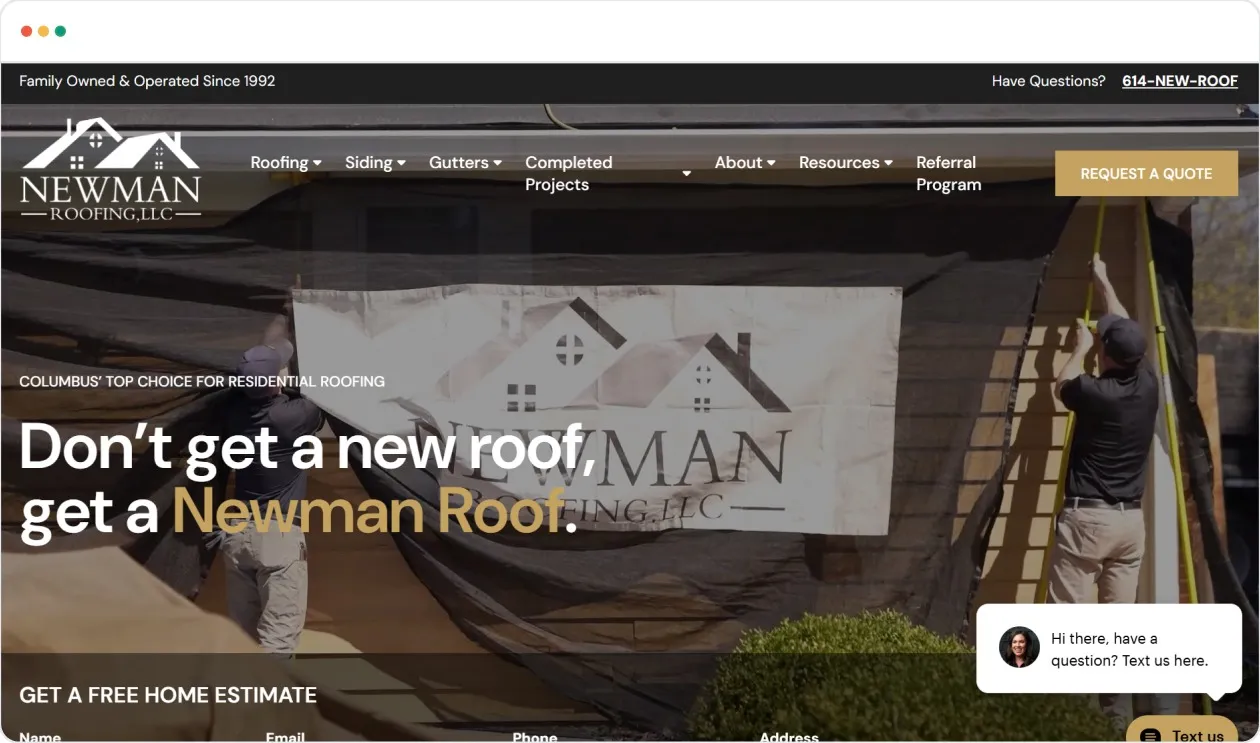
Newman Roofing leans heavily on local credibility. The hero states “Columbus’ Top Choice for Residential Roofing” with a “Get a Free Home Estimate” form above the fold. Further down, they highlight awards (“Voted Columbus’ Best Roofing Company”), a values-based story, a project gallery, and even an interactive project map that shows where they’ve worked.
What to borrow:
- City-specific headline that names your market
- Awards and “best of” mentions close to the top
- Project map or service-area module that proves you’re truly local
4. Garcia Roofing
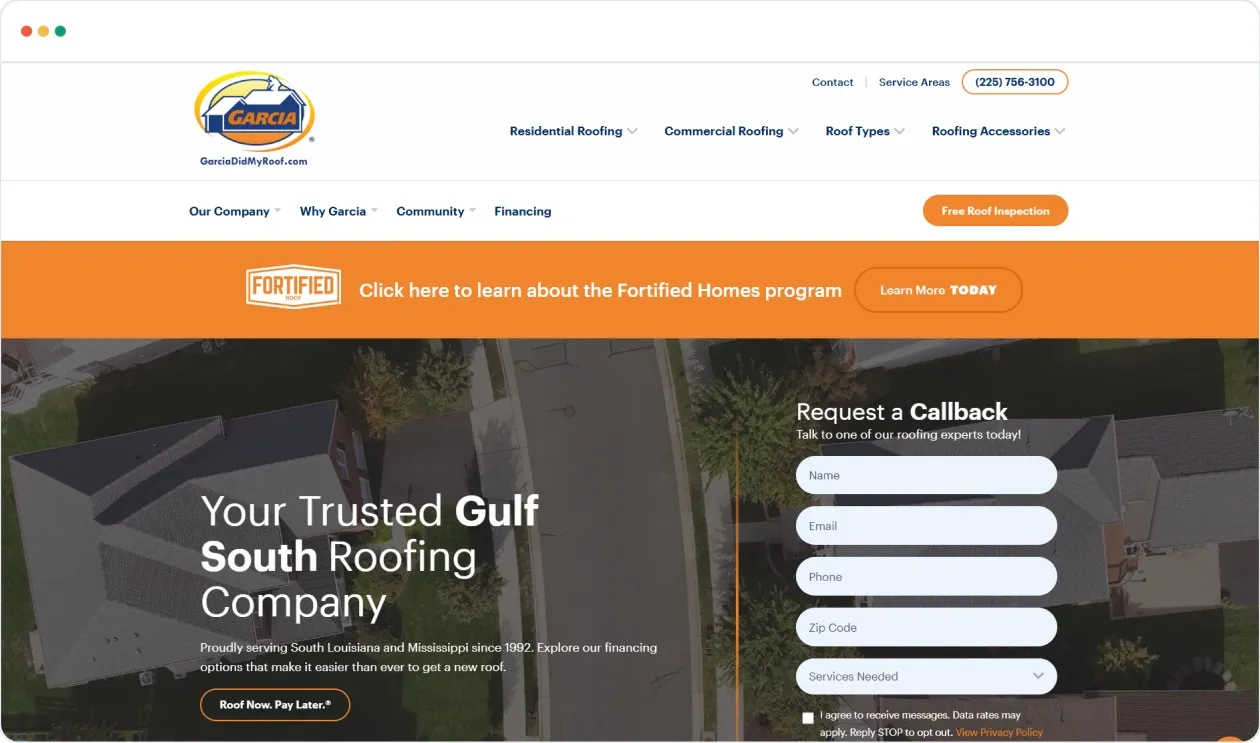
Garcia Roofing calls itself “Your Trusted Gulf South Roofing Company” and pushes a clear offer line right away: “Roof Now. Pay Later.®” They feature a simple “Request a Callback” form in the hero, then quickly move into “The Garcia Roofing Difference” with warranty, free inspections, and financing called out visually. For higher-ticket jobs, the way they talk about payment options and long warranties helps reduce hesitation.
What to borrow:
- A simple hero form for callbacks or inspections
- Strong, named offers (e.g., “Roof Now, Pay Later” style framing)
- A dedicated block explaining what makes your company different
5. Janney Roofing
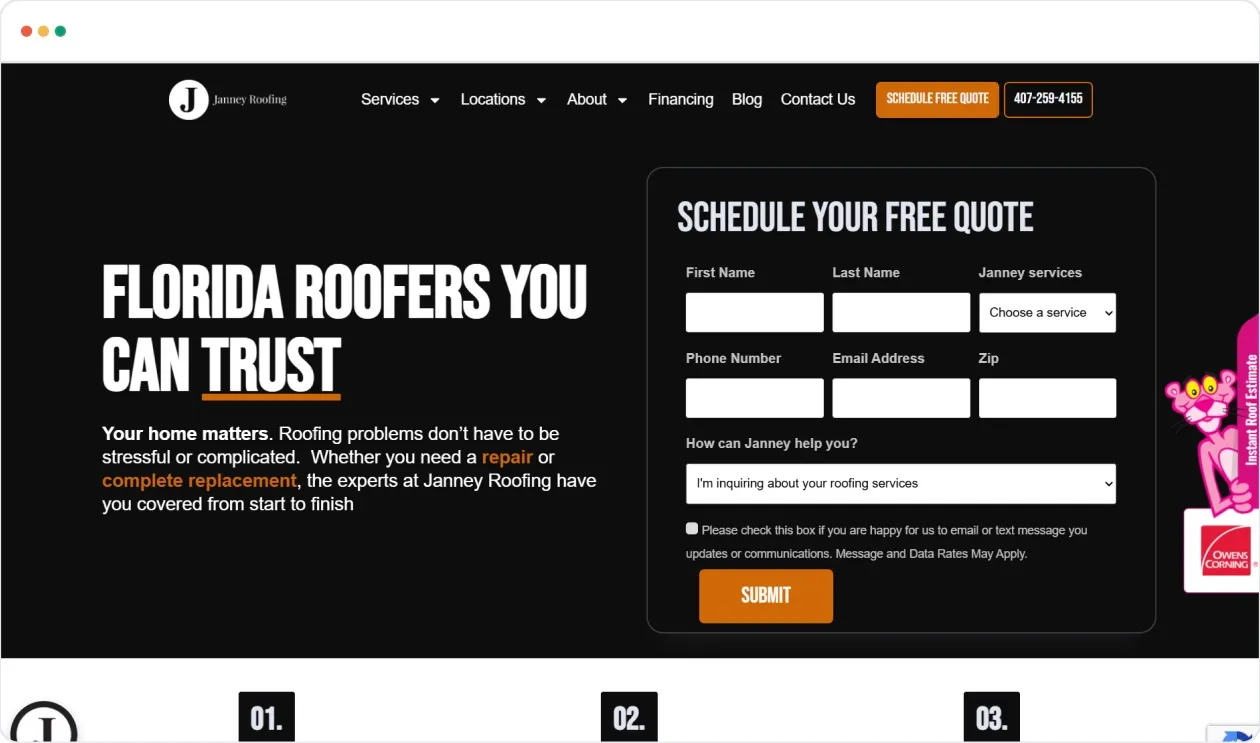
Janney Roofing (featured in the same SiteBuilderReport round-up) pairs a trust-focused headline with a very clear call to action and simple copy about what to expect. As you scroll, you see a strong “why us” story, reviews, and service explanations that avoid heavy technical jargon. The tone is calm and reassuring, which matters when people are stressed about leaks or storm damage.
What to borrow:
- Friendly, human headline that speaks to safety and peace of mind
- A short “what to expect” section near the top of the page
- Reviews presented as stories, not just star ratings
6. White Castle Roofing
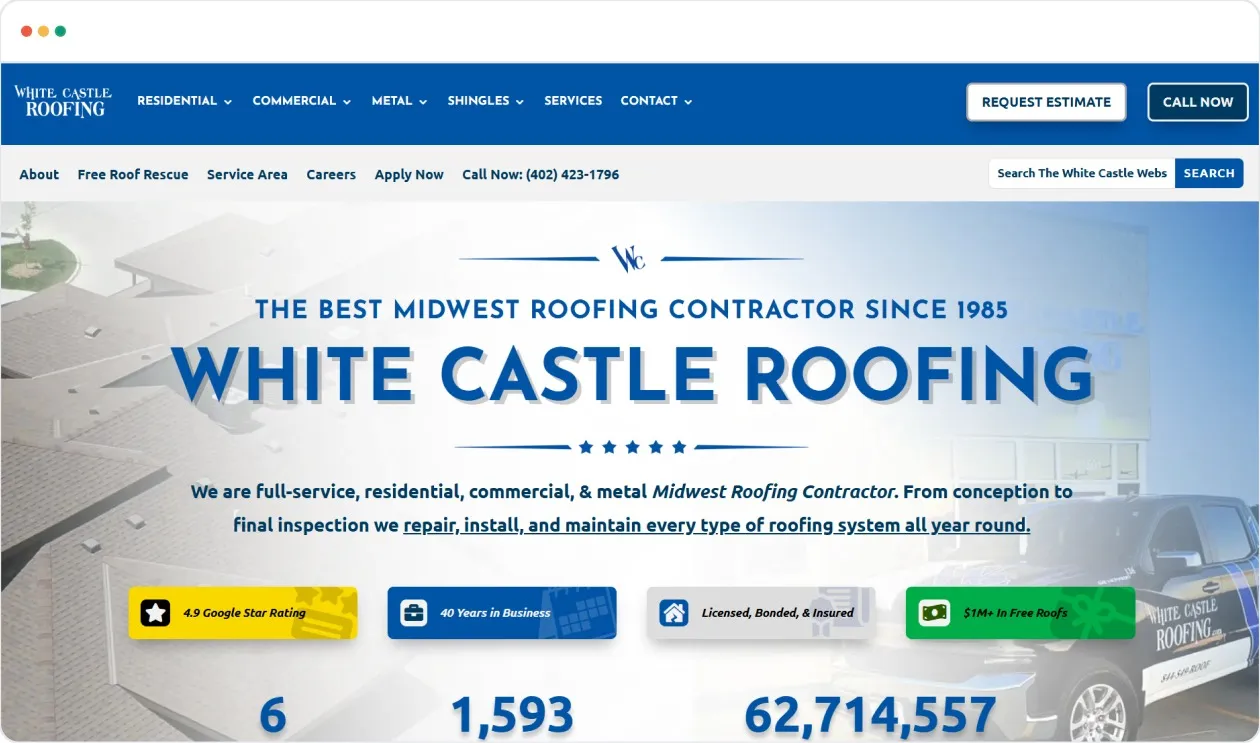
White Castle Roofing shows how personality can coexist with seriousness. Their brand name, visuals, and copy feel distinct, but they still hit all the basics: service navigation, project proof, reviews, and clear CTAs. It’s a good reminder that you can be memorable without sacrificing clarity.
What to borrow:
- Memorable brand elements (tagline, color, photography style)
- Consistent voice across hero, service pages, and About
- Proof elements on every main page, not just one “Reviews” tab
Example Roofing Website Template Layout
Here’s a simple, real-world example of how a roofing website design layout could look when built using proven design patterns. This template pulls together everything we discussed above, clarity, trust, visuals, and conversion:
Trusted Residential & Commercial Roofing in Columbus, OH
Fast inspections. Quality workmanship. Transparent communication.
⭐ 4.9 Google Rating |
2,400+ Roofs Installed |
Licensed & Insured


Why Homeowners Choose Us
Safety-first crews
Trained and certified, no subcontract guessing.
Clear Pricing
Written estimates and photos of every step.
Lifetime Warranty
Lifetime workmanship warranty on replacements.
Dedicated Project Managers
Smooth communication from start to finish.
Real Roofing Results in Your Neighborhood

Architectural shingles, Dublin OH – 2-day install

Architectural shingles, Dublin OH – 2-day install

Architectural shingles, Dublin OH – 2-day install
“Fast response and honest pricing. They handled our storm claim start to finish.” - John M., Worthington
How Our Process Works
📍 Inspection
📸 Documentation
🛠 Plan & Estimate
⚒ Build
🧹 Final Cleanup + Warranty
Proudly Serving Central Ohio
- Columbus
- Dublin
- Westerville
- Hilliard
- Powell
- Gahanna
Local crews, fast response times, homeowners rely on us across every neighborhood above.
Built on Trust and Craftsmanship
Family-owned and operated since 2010, we’re a team of certified roof specialists committed to safety, transparency, and doing the job right the first time.


GAF Certified |
Owens Corning Preferred |
BBB A+
Flexible Financing & Insurance Assistance
- Easy monthly plans for replacements
- Help navigating storm or hail insurance claims
- No-pressure consultations
We’re Here When You Need Us
Tell us what’s going on with your roof, and we’ll respond quickly.
📞 (555) 123-4567 - Tap to Call
Hours: Mon–Sat, 7 AM – 7 PM
Promise: Same-day response for leak repairs
Conclusion
A roofing business wins trust long before anyone climbs a ladder. The way your website looks, reads, and guides a homeowner through their questions determines whether they choose you or keep scrolling. When your design is clean, your message is clear, and your proof is visible, your website becomes more than an online brochure. It becomes a sales engine that works every hour of every day, even when your crew is off the clock.
If you’re ready to build a roofing website that actually drives leads and not just looks good, Gushwork can help you create a clean, conversion-driven site from scratch, built around what homeowners need to see before they book.
Let’s build something strong enough to hold up your business.
The Roofs Protect Homes, Your Website Should Protect Your Pipeline
Give customers a website that answers their questions and helps them take action instantly.
Book a Build Consultation

Digital Marketing
Dec 4, 2025
5 mins
How to Generate More Boiler Leads on a Budget: 11 Proven Strategies to Level Up Your Business
Batul Beawarwala
When homeowners need a reliable heating system, they're searching for trustworthy professionals to get the job done. But how do you make sure you're the one they find? The answer lies in understanding boiler leads.
Simply put, these are the people actively looking for heating services in your area. With the right approach, you can turn local searches into lasting customer relationships.
Let's explore how you can attract more of these valuable leads and fill your schedule with jobs that matter.
1. Identify Who Actually Starts a Boiler Conversation
Boiler leads begin with pressure points. A homeowner usually reaches out because comfort is affected or repairs feel endless.
A property manager reaches out to prevent tenant complaints or avoid repeat call-outs. Industrial or large commercial buyers reach out as part of planned upgrades, audits, or continuity planning.
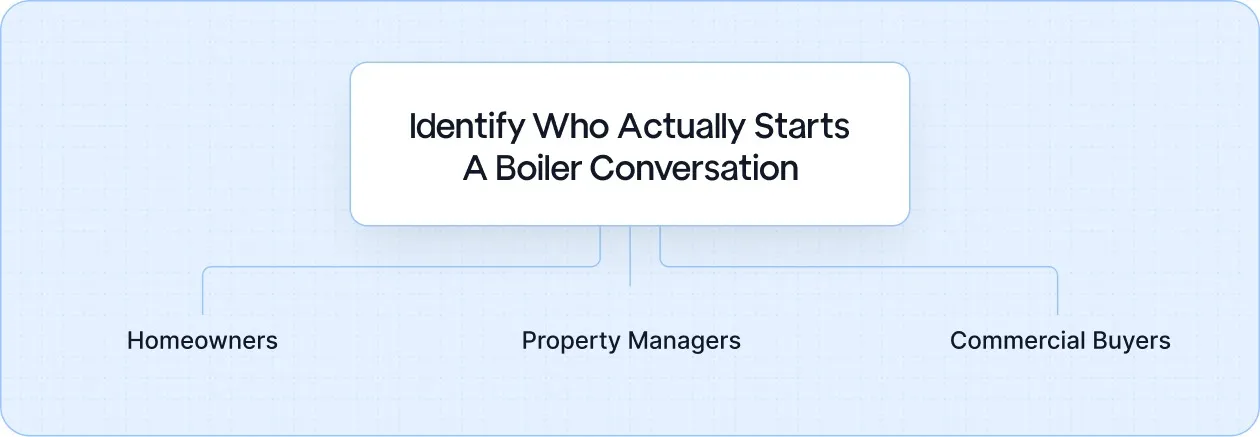
Each of these buyers evaluates you differently:
- Homeowners look for reassurance and clarity
- Property managers look for reliability and repeatability
- Commercial buyers look for foresight and long-term stability
Geography and season sharpen this intent. Cold regions drive urgency. Warmer regions lean toward scheduled replacements. High-density rental areas generate recurring needs.
When your messaging reflects why someone is reaching out right now, inquiries come in more focused and are easier to move forward with.
2. Shape Your Website Around How Boiler Decisions Are Made
Most visitors land with a single question in mind: “What should I do next?” Pages that answer this clearly tend to attract better boiler leads.
What helps most is the structure of the content:
- Clear separation between installation, repair, and replacement
- Straightforward explanations of what each option involves
- Early answers to concerns around disruption, timelines, and outcomes
Ease of use matters because boiler searches often happen under stress. A fast, mobile-friendly site with clear paths reduces friction and prevents drop-offs.
When visitors leave your site understanding their situation better, they contact you with intent rather than uncertainty.
Must Read: 15 Smart Marketing Moves to Drive Growth for Your Home Services Business
3. Earn Local Trust Before the Website Click
Many boiler decisions are influenced before someone reads a single page.
Your Google Business Profile and Apple Business Connect listings act as trust checkpoints. People scan them to answer simple questions: relevance, proximity, and credibility.
Listings perform better when they:
- Clearly show which boiler services you handle
- Use real job photos instead of stock images
- Reflect accurate service areas and availability
Local directories reinforce this trust by confirming consistency. When business details align across platforms, hesitation drops.
Appear when it matters most
Optimizing your Google Business Profile and Apple Business Connect makes sure you show up when local customers need you.
Optimize Your Listings
4. Use Paid Ads Only for High-Intent Boiler Moments
Paid ads work best when timing is already on your side.
Searches tied to boiler breakdowns, no heating, or urgent replacement come with intent built in. Ads in these moments help you appear when a decision is already forming.
Effectiveness comes from restraint:
- One service per campaign
- One clear location focus
- Messaging that mirrors the exact problem being faced
Retargeting supports people who step away to compare options, keeping your name visible without repeating the same pitch everywhere.
Used this way, paid ads support real demand instead of trying to create interest from scratch.
Must Read: 8 Industrial Manufacturing Marketing Moves Most Ignore
5. Use Social Platforms to Stay Top-of-Mind Before the Need Hits
Social media rarely creates immediate boilerplate inquiries. Its real value is pre-need familiarity.
Most homeowners don’t search for boiler services until something goes wrong. Social platforms help you stay visible before that moment, so your name feels familiar when urgency hits.
What works best here is consistency and clarity:
- Short explanations of common boiler issues
- Visual updates from real jobs
- Simple tips that reduce confusion around maintenance or replacement
This kind of content builds recognition quietly over time.
How platforms play different roles
Facebook works well for explanations and local updates. Instagram performs best when showing real work visually. TikTok suits short, problem-focused clips that explain one thing at a time. Each platform supports memory.
6. Borrow Trust Through Local Partners People Already Listen To
Influencer partnerships work best when they feel practical, not promotional.
Local real estate agents, home inspectors, or renovation creators already explain home decisions daily. When boiler expertise appears through them, credibility transfers faster than starting from scratch.
What makes these partnerships effective:
- Shared explanations of common issues
- Walkthroughs of what homeowners should expect
- Clear context around when replacement makes sense
This section exists to shorten the trust-building cycle, not expand audience size.
7. Support Undecided Inquiries With Helpful Follow-Ups
People often reach out once, then stop responding while they compare options or wait for the right time. Follow-up content helps keep the conversation alive without pressure.
What works well:
- Simple explanations addressing common second-thoughts
- Short case examples showing similar situations
- Seasonal reminders that feel relevant, not promotional
These follow-ups answer the question, “What should I do next?” without pushing urgency.
Encourage leads to take the next step
A simple follow-up with relevant tips and real-life examples helps customers feel confident in their decision.
Refine Content Flow
8. Turn Completed Jobs Into a Repeat Lead Source
Referrals work best when customers know what to say. Instead of asking for favors, make referrals easier by:
- Clearly summarising what problem was solved
- Explaining what kind of work you handle best
- Timing referral requests after visible outcomes
Local networking supports this further. Property managers, contractors, and community organisers often see boiler needs before homeowners act.
9. Offline Strategies That Complement Your Online Efforts
Offline marketing can still be incredibly effective in improving your visibility.
- Direct Mail is powerful for targeting homeowners during high-demand seasons, like winter. Sending personalized postcards with special offers or reminders about boiler maintenance can make a big impact before they start looking for services online.
- Sponsorships and local partnerships also help. By sponsoring home improvement events or working with plumbers or contractors, you position yourself as a trusted, local partner. This drives visibility and trust within your community.
- Local advertisements like flyers or posters in strategic locations (e.g., local cafes or gyms) complement your digital efforts by increasing awareness and providing reminders at the right moment.
Also Read: What Top Manufacturers Know About Industrial Sales Lead Flow That Others Learn Too Late
10. Use Technology to Manage Boiler Leads Efficiently
Efficient lead management is key to converting more boiler inquiries.
- CRM tools like HubSpot or Zoho help you automate follow-ups, keep track of leads, and ensure timely communication, ensuring no opportunity is missed. These tools streamline your efforts and save time, letting you focus on converting leads, not managing them.
- Lead management software such as LeadPal helps you prioritize high-conversion leads, keeping your sales team organized and focused. This allows you to optimize your pipeline without letting potential customers slip through the cracks.
11. Close the Deal with Effective Sales Tactics
The final step in converting leads is nurturing them into customers.
Follow-up sequences are essential. Automated emails with personalized offers, tips, or case studies keep the lead warm. This helps guide them towards making a decision when they’re ready.
Customer reviews act as powerful social proof, reassuring prospects that you can deliver what they need. Display these testimonials across your website and in follow-up emails to build trust.
Lastly, offering limited-time discounts or free consultations adds urgency and encourages leads to commit sooner.
Suggested Read: The 2026 Lead-Gen Tactics High-Growth Contractors Won’t Tell You About
How Consistency Leads to Long-Term Success in Boiler Lead Generation
Generating consistent, high-quality boiler leads doesn’t require overnight success. It is about consistent effort and smart strategies that compound over time.
Let’s recap the key takeaways:
- Targeting the right audience and personalizing your content to their specific needs builds a strong foundation for consistent leads.
- Optimizing your website with SEO, clear messaging, and easy navigation ensures that visitors understand their options and reach out with intent.
- Building trust through local SEO, reviews, and maintaining visibility both online and offline drives long-term customer recognition.
- Effective lead management and sales tactics keep leads engaged, turning interest into action.
The key to success lies in being consistent with your efforts and continually refining your approach. The more you engage with your community, optimize your processes, and nurture your leads, the more sustainable and reliable your boiler lead generation will be.
Generating consistent boiler inquiries is simple with the right approach.
Gushwork is the trusted partner in refining your SEO and content strategy, ensuring you reach the right customers with clarity and impact.
Book a Free Consultation
Digital Marketing
Dec 4, 2025
5 mins
Roofing Companies Who Follow These PPC Steps See 3–5x More Qualified Calls
Ishani Mitra
Ever feel like roofing jobs come in waves? One week the phone won’t stop ringing, the next week it’s dead quiet. Most roofing companies chalk this up to “seasonality,” but a lot of it actually comes down to visibility. Homeowners only call the roofers they notice first. Today, the visibility factor is decided by Google.
This is where roofing PPC becomes your competitive edge. PPC gets you in front of motivated homeowners in the critical “I need a roofer right now” moment, long before they scroll to another company or ask a neighbour for a referral. Master it, and you’ll never have to rely on unpredictable seasons to keep your crews busy.
In this blog, we’ll break down what roofing PPC really is, how it drives steady, high-intent leads, and the exact steps to build campaigns that produce real revenue, not just impressions and clicks.
What is Roofing PPC?
When you need a new customer, you need to be where they are looking for you.
When a roof starts leaking or shingles come loose, homeowners don’t wait. They grab their phone and search something like “roof repair near me.” In that moment, the companies that show up right at the top, often with a small “Sponsored” label, instantly become the first options they consider.
That’s the power of Pay-Per-Click (PPC) advertising for roofing businesses. It puts you in front of real people with real intent, at the exact time they need help.
Instead of crossing your fingers with slow organic methods or outdated referrals, PPC gives you a direct line to ready-to-hire customers. You only pay when someone actually clicks, meaning every dollar goes toward a genuine opportunity to win the job.
Why Roofing PPC Helps Your Business?
Roofing PPC is simply using this PPC system specifically to advertise your roofing services.
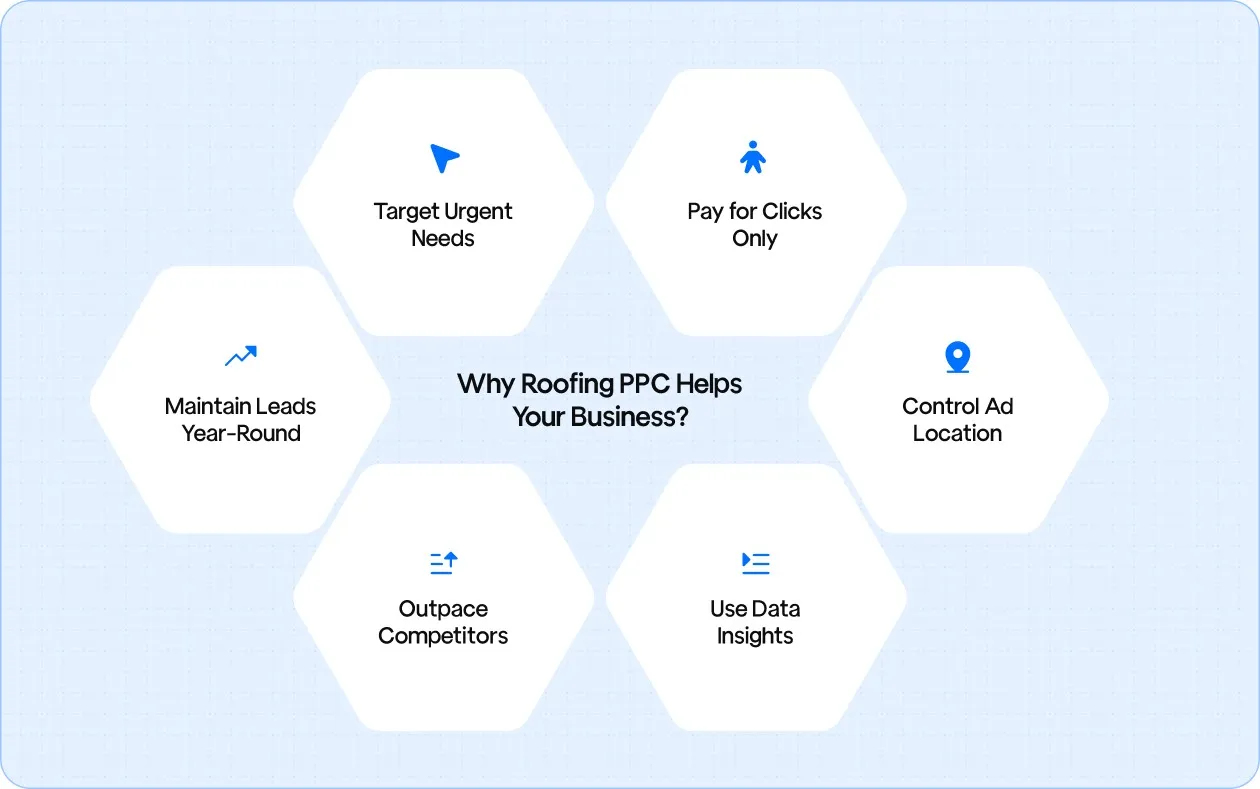
It's different from general advertising because it is incredibly focused.
1. You show up at the exact moment someone needs a roofer
Most roofing jobs come from urgent situations: leaks, storms, missing shingles, insurance claims. When people need help, they grab their phone and type the problem into Google. Roofing PPC puts your business right at the top of those results.
2. You only pay when someone is actually interested
Unlike billboards or mailers, PPC doesn’t charge you just for showing your ad. You pay only when someone clicks because they want to learn more.
3. You get to choose exactly who sees your ads
You can choose the towns, ZIP codes, or neighbourhoods you want more jobs from, and block the areas you don’t want.
So if a certain ZIP code brings better customers or easier jobs, you can focus all your ads there.
4. You learn what customers want based on real data
PPC tells you which messages get clicks, which towns bring better customers, and which services people search for most. You don’t need to guess.
5. You stay ahead of competitors
Competitors who run ads often show up first, but the good news is that a clever PPC campaign can help you claim that top spot whenever it matters most.
PPC helps you stay visible so homeowners see you first instead of them.
6. PPC works even during slow seasons
Roofing often slows down in winter or in months without storms. PPC helps keep calls steady so your business doesn’t go silent.
PPC gives your roofing company an immediate voice on the first page, directly connecting you with the highest-quality, most urgent leads in your area.
How To Build A Roofing PPC Campaign?
Roofing PPC only delivers results when every piece of the setup is handled correctly. This section breaks it down:
Start With Clear Goals And A Simple Budget
Roofing PPC clicks often cost more not because the jobs are high value, but because many contractors compete for the same keywords. When more people bid on a specific keyword, Google raises the price; it’s pure supply and demand. This is why starting without a clear plan can burn money fast.
Your goals tell Google the type of customers you want.
Your budget tells Google how aggressively it should go find them.
Put these two together and your ads reach people who are ready to book a job instead of casual browsers.
What this looks like:
- Decide what you count as a “real lead.” For roofing, that’s usually a 60-second call, a form submission, or a booked inspection.
- Start with a test budget that won’t stress you out while you learn.
- Pay attention to cost per booked job, not cost per click. Roofing owners often panic at high click costs, but clicks don’t pay you, jobs do.
Choose The Right Ad Types For Roofing Jobs
Someone with a roof leak at 9 PM isn’t reading 10 websites. They want the first roofer who can show up. Someone replacing a 20-year-old roof wants estimates and comparisons.
Different ad types help you reach each type of customer. If you use only one, you lose half of the market.
The roofing ad types:
- Search Ads: These appear when people type things like “roof repair near me.” Great for repair and replacement leads.
- Call Ads: These show only on phones and push people to call you right away. Best for emergency jobs.
- Local Services Ads (LSAs): These sit at the very top of Google with a “Google Guaranteed” badge. You pay only when the lead calls.
For most roofing businesses, a mix of all three works best.
Organize Your Campaigns Around Real Roofing Needs
People don’t search for roofing in the same way. A “roof leak fix” customer wants someone today. A “roof replacement estimate” customer wants pricing and options. An “inspection” customer wants safety and certifications.
When you group your ads by the type of job, each ad becomes more relevant and more likely to convert.
Simple structure that always works:
- Emergency Roof Repairs
- Full Roof Replacements
- Roof Inspections & Certifications
- Storm Damage Insurance Claims
Each group gets its own ads, keywords, landing page, and call-to-action.
Pick Roofing Keywords That Bring Real Buyers
Keywords tell Google who to show your ad to. Some keywords look good but bring the wrong crowd. You want the keywords that signal someone is looking for a contractor.
Good roofing keywords sound like buyers:
- “roof repair [city]”
- “emergency roof repair near me”
- “roof replacement estimate”
- “storm damage roofing repair”
- “licensed roofer [city]”
Add negative keywords to protect your budget:
(These stop Google from showing your ad for bad searches)
- “DIY”
- “jobs”
- “free labor”
- “supplies”
- “cheap materials”
This one step alone can cut your wasted spend by 30–50 percent.
Find the Right Roofing Keywords
We’ll identify the exact search terms homeowners use so your ads show up for real roofing jobs.
Get My Keywords
Write Ads That Solve Problems At A Glance
Your ad has one job: say the problem, promise the fix, and tell them what to do next.
A Roofing PPC ad that works looks like this:
- Headline: “Same-Day Roof Repair in [City]”
- Description: “Leaks fixed today. Licensed, insured crews. Free on-site estimate.”
- Call-to-action: “Call for fast service.”
- Extensions: warranties, years in business, emergency hours, financing options
Short, clear, reassuring. That’s what wins roofing clicks.
Use Landing Pages Built To Convert Roofing Leads
A landing page is where the ad sends people. If it’s confusing, slow, or cluttered, they leave. You need a page that speaks directly to the exact service they clicked on.
A roofing landing page should have:
- A bold headline: “Roof Leak Repair in [City]: Available Today”
- Tap-to-call button right at the top
- Real photos of your crew and real roof jobs
- Clear list of what’s included (estimate, inspection, materials, timeline)
- Trust signals (insurance, license number, certifications, warranties)
- A simple form with 3–4 fields max
- FAQ about pricing, timing, insurance claims
If you fix only your landing pages, your PPC results can double.
Track Calls And Real Leads
Roofing PPC fails when companies judge success by “traffic.” You need to see which calls turned into real jobs. That’s how you stop wasting money and put your budget behind what’s working.
What simple tracking looks like:
- Every campaign gets its own phone number
- Each call gets tagged: “Booked,” “Quote,” “Unqualified,” “Spam”
- Listen to call recordings to understand why some callers hesitate
- Update your scripts based on real questions callers ask
Roofing PPC becomes profitable when you learn what’s actually bringing jobs.
Optimize Weekly And Scale Slowly
Roofing PPC changes week to week: storms, seasons, competition, cost spikes. A simple routine helps you stay profitable without spending hours inside Google Ads.
Weekly check
- Pause keywords that wasted money
- Add new negative keywords (the biggest money-saver)
- Test one new ad headline or callout
- Check which page got real calls
Monthly check
- Review your cost per booked job
- Update photos and trust badges on landing pages
- Adjust budget based on your slow or busy season
The more consistent you are, the easier you can reach your desired audience.
7 Roofing PPC Strategies That Bring Real, High-Quality Calls
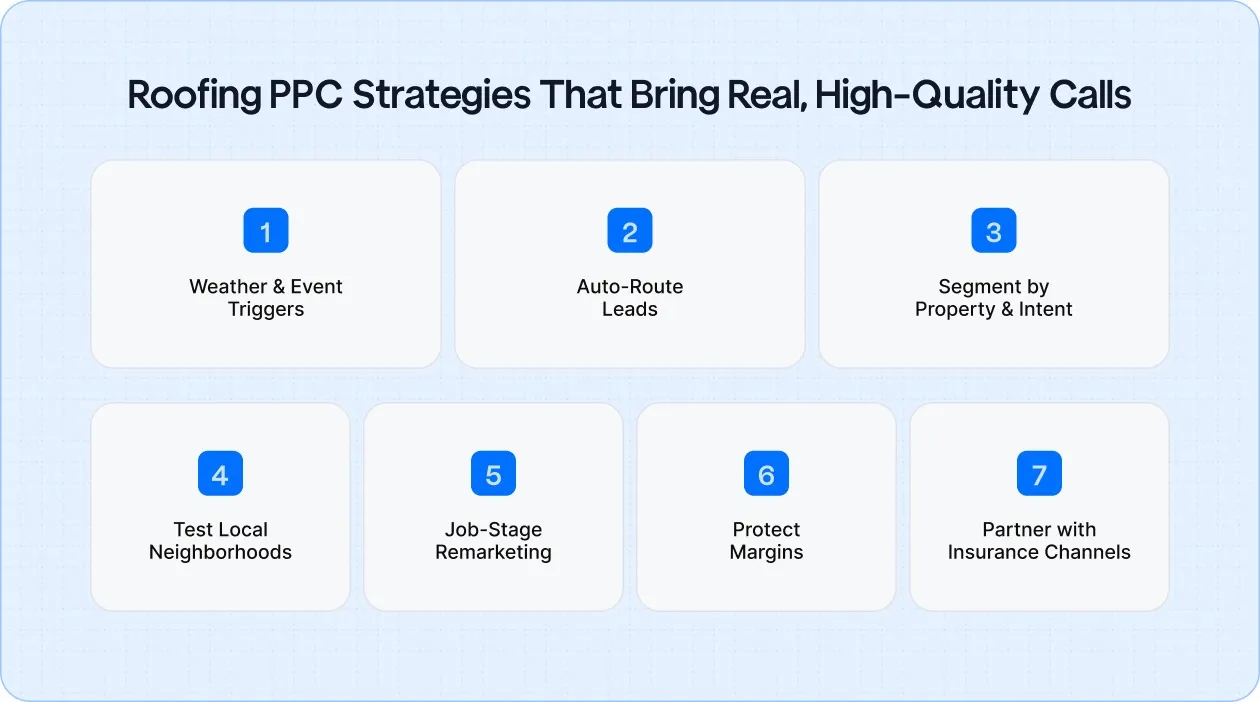
A roofing PPC campaign works best when each part is built with clear intent. Your strategy must match the way they think, search, and decide. Here’s a simple, practical breakdown:
1) Use Weather And Event Triggers To Turn On Urgency
Roof problems spike with storms and temperature shifts. Let the weather decide when you push ads harder, not guesswork.
How to do it:
- Connect a weather feed to a simple rule: if heavy rain or hail is forecast in your ZIPs, increase budget for emergency ads that day and the next two.
- Run separate emergency creatives that say “Storm damage inspections today” with a short booking form.
- After the storm window, switch to follow-up ads for repairs and insurance claims.
2) Auto-Route Leads By Job Type And Crew Availability
Don’t send every call to one general line. Match the lead to the right crew automatically so you can accept more jobs without chaos.
How to do it:
- Add a short form or IVR question: "Is this emergency repair or a replacement quote?"
- If emergency, forward to your on-call number. If replacement, send to sales team number.
- Show real-time capacity: if crews are full, pause heavy ad types to avoid missed calls and refunds.
Why it helps: You reduce canceled appointments and avoid paying for clicks you can’t serve.
3) Segment Audiences By Property Type And Buyer Intent
A homeowner and a commercial property manager search differently. Treat them separately.
Segments to use:
- Residential owners: focus on trust, local reviews, and scheduling ease.
- Property managers: highlight contracts, multi-unit pricing, and credentials.
- Real estate agents: emphasize quick inspections and repair turnarounds.
How to action this:
- Build short ad sets for each segment with different messaging and thank-you flows.
- Use separate phone numbers and forms so you can measure performance by segment.
4) Use Small Local Budgets To Test New Neighborhoods
Rather than broad city targeting, test 3 to 5 micro-areas with small daily budgets to find profitable pockets.
How to test:
- Run identical creatives in each ZIP for two weeks.
- Measure booked jobs per ad dollar, not just clicks.
- Expand budgets where jobs and margins are best.
5) Layer Remarketing With Job-Stage Messaging
People often research before they call. Remarketing brings them back with messages that match where they are in the buying cycle.
Remarketing plan:
- Visitor browsed emergency content: show ad for immediate inspections.
- Visitor looked at replacement pages: show financing offers and gallery of completed jobs.
- Visitor abandoned booking form: show a single-step booking link and phone number.
6) Protect Margins With Rules And Alerts
Ads can burn money fast. Set automatic rules so you aren’t surprised.
Practical rules:
- Pause keywords with more than three clicks and zero conversions in 7 days.
- Lower bids if cost per booked job exceeds your target.
- Alert by SMS if daily spend spikes 30 percent above planned.
7) Partner With Insurance And Storm Restoration Channels
Some leads come through insurance channels and restoration partners. Build simple referral ads and landing pages for them.
How to do it:
- Create a short landing page for insurance claim help with required documentation checklist.
- Run a small PPC campaign targeting terms like “roof claim help” and “insurance roof repair.”
- Offer a referral fee or joint-marketing material for restoration partners.
Strengthen Your Roofing SEO
We’ll improve your pages so you rank for searches that bring steady roofing enquiries.
Create My SEO Plan
Wrapping Up
A good roofing PPC setup doesn’t rely on luck. It works because every part of it speaks directly to the way homeowners search, decide, and book.
When your ads reach the right people, your landing pages answer their questions, and your tracking shows which jobs came from where, PPC becomes predictable instead of stressful. Over time, that predictability turns into steady calls, better-quality jobs, and a system you can control instead of chasing leads from week to week.
Ready to Grow Your Roofing Leads?
Get a focused plan that brings in more calls and better-quality roofing projects.
Book a Consultation

Digital Marketing
Dec 4, 2025
5 mins
Winning Appliance Repair Leads Starts Here. These 8 Strategies Make Sure You’re the First Choice
Ishani Mitra
Have you noticed how appliance repair calls always seem to come at the worst possible time? A fridge stops cooling right before a family dinner. A washer won’t drain hours before work clothes are needed. When that happens, people grab their phone and search for the fastest, most reliable technician they can find.
That moment is where your business either appears or disappears. And if you don’t show up clearly and confidently in search results, someone else gets the job.
Your good news is that you don’t need complicated marketing to fix this. You need a setup that makes homeowners find you first, trust you quickly and call without hesitation.
In this blog, you’ll learn what appliance repair SEO really is, how appliance repair leads actually work, and the most effective strategies to bring in steady, high-intent calls without wasting money.
What Are Appliance Repair Leads?
You may think of “leads” as jobs waiting to be booked, but for an appliance repair business, a lead specifically means a homeowner or property manager who has an appliance problem and is showing intent to hire someone to fix it.
These leads matter because they are active service opportunities. They can come through a phone call, form submission, chat message, or even a review inquiry.
Appliance repair SEO is simply the work you do so local customers who need urgent repairs can find and call your business first.
Where these leads usually come from:
- Google search: Someone looks up “fridge repair near me” and calls the top listing.
- Google Business Profile: They see your number, photos, reviews and tap “Call.”
- Apple Maps: iPhone users ask Siri for appliance repair and choose the most complete profile.
- Your website: They read a short, clear service page and fill the form or tap your phone number.
- Local social groups: Nextdoor, Facebook neighborhood groups and small community pages.
- Referrals: A neighbor, coworker or family member recommending you by name.
- Repeat customers: Past clients calling again because they trust your work.
What a lead looks like:
- A homeowner with a warm fridge that needs quick help
- A renter with a washer full of water
- A property manager looking for a reliable repair tech for multiple units
- Someone browsing for the best-rated company before scheduling
- A customer comparing prices and availability for the same-day fix
Get Found First When Customers Need Repairs
A stronger online presence helps your business appear at the exact moment someone searches for appliance repair help.
Strengthen My Visibility
Once you understand what leads actually are real people with real appliance problems, it becomes easier to shape your marketing around their needs. Your goal is to show up at the exact moment someone needs you, in a way that feels clear, trustworthy, and easy to contact.
Top 8 Ways to Get More Appliance Repair Leads
Most appliance repair leads come from customers who are past the decision stage and ready to hire.
They just need someone who can fix their appliance, in their area, right now. Your job is to show up clearly at that exact moment.
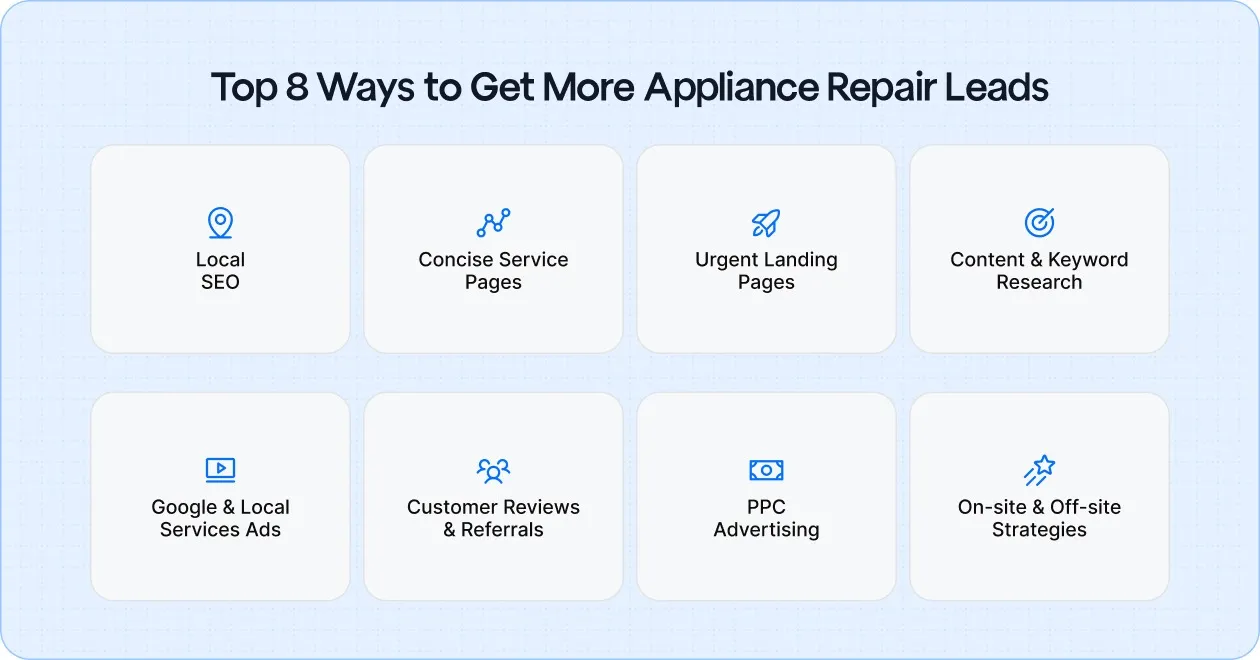
Below are the most reliable ways appliance repair SEO brings in steady, high-intent leads:
Local SEO
Local SEO is the work that helps people in your area find you when they need appliance repair. It covers your online listings, your map visibility and the local details on your website that tell Google, “Yes, this business serves this city.” When done right, it helps you show up when someone searches “fridge repair near me” or “washer repair in [city].”
What to do:
- Set up your Google Business Profile (GBP). This is your online business card on Google. It shows your phone number, reviews, photos and your service list. A complete GBP is often the first thing a desperate homeowner sees.
- Add your business to Apple Business Connect. This is Apple’s version of Google’s listing. It helps you appear in Apple Maps and Siri searches. Many iPhone users rely on it.
- Keep your Name, Address, Phone Number (NAP) consistent. Use the exact same business info everywhere: on Google, Facebook, Yelp and your website. Even small differences confuse customers and reduce visibility.
- Mention your city and nearby areas naturally on your site.
- Use photos with small captions. Real job photos with short notes like “Washer repair in Westside” help your listing feel authentic and local.
Turn Local Searches Into Real Opportunities
When customers see you clearly online, trust builds faster and calls increase naturally.
Improve My Local Presence
Simple, Focused Service Pages on Your Website
Customers search based on the exact appliance that broke. Someone with a warm fridge doesn’t want to scroll through a general “appliance repair” page. They want to see “refrigerator repair,” upfront, clearly explained. Dedicated service pages help both customers and search engines understand exactly what you fix.
What to do:
- Create a page for each appliance. Popular ones are fridge repair, washer repair, dryer repair, oven repair, dishwasher repair and more.
- Explain symptoms in everyday language.
- “Fridge not cooling,”
- “Washer won’t drain,”
- “Dryer not heating.”
Use terms homeowners understand.
- Show what the service includes. A short list: diagnosis, repair options, parts availability, warranty, etc.
- Add 1–2 real photos and a short review. Real proof builds trust faster than long paragraphs.
- Place your phone number at the top. Most appliance repair calls come from mobile visitors.
“Emergency” or “Same-Day” Landing Pages
Some repairs can’t wait, like a fridge that suddenly stops cooling or a washer full of water. These customers aren’t reading your website; they’re scanning for someone who can show up on the same day. A same-day page gives them that clarity instantly.
What to do:
- Start with a clear promise. “Same-day appliance repair in [City].”
- List common urgent problems:
- Fridge not cooling
- Dryer not heating
- Washer stuck mid-cycle
- Add fast proof. “Fixed my fridge the same day!” — Sarah, [Neighborhood]
- Show your hours and response window. Even a simple line like “Most repairs scheduled within 2–6 hours.”
- Add a large call button. Emergency visitors call quickly, so make it easy for them to reach you.
Content and Keyword Research
Keyword research means “finding the words customers type when their appliance stops working.” Your content should answer those questions in a simple, helpful way. You’re not teaching repair skills. You’re helping customers understand what might be happening and why calling you is the next step.
What to do:
- Write down the things people ask you every day.
For example:
- “Why is my fridge warm?”
- “Why is my washer shaking?”
- “Why is my dryer burning clothes?”
- Turn each question into a short, helpful explanation. 3–5 sentences should be enough.
- Use these simple posts everywhere. On your service pages, your Google Business Profile posts, and your website FAQs.
- Include your city naturally. For example, “If your fridge is warm in the Texas summer here, it’s usually…”
- Keep it human. The goal is to make the customer feel understood, not overwhelmed.
Google Ads & Local Services Ads
Paid ads place your business at the top when someone searches for help right now. Appliance repair is one of the strongest industries for ads because most customers already need service.
What to do:
- Target appliance-specific searches. “Fridge repair near me,” “Washer repair [city].”
- Send ad traffic to your same-day page. It converts better than your homepage.
- Use call-only ads during the day. These let people call you without even visiting your website.
- If Local Services Ads are available, set them up. They show the “Google Guaranteed” badge, which boosts trust.
- Track which ads bring real calls. Turn off anything that brings “parts only” or low-quality inquiries.
Customer Reviews and Referrals
Reviews are one of the strongest trust factors in appliance repair. A recent review can lead to more calls than any ad. Referrals work the same way. People rely on neighbors for recommendations when appliances break.
What to do:
- Ask for a review right after a job. A friendly, “I’ll text you a quick link to leave a review if you’d like” works well.
- Reply to every review. A simple “Thanks for the feedback!” shows you’re active.
- Show 2–3 reviews on your site, especially on your emergency and appliance-specific pages.
- Encourage referrals. Offer a small thank-you, like $10 off their next service.
Pay-Per-Click (PPC) Advertising
PPC ads show your business when people search for a specific appliance repair. You only pay when someone clicks. It’s a good way to boost calls quickly, especially during slow weeks or when you want to test new service areas.
What to do:
- Start with small, focused campaigns. One for fridge repair, one for washer repair, etc.
- Use clear, direct ad wording.
“Same-day fridge repair in Manhattan. Call now.” - Avoid broad keywords. Skip searches like “appliance parts,” “DIY,” “manual.”
- Track which clicks turn into real calls. Keep the keywords that bring paying jobs.
On-site and Off-site Strategies
Think of SEO in two parts:
- On-site is everything you control on your website.
- Off-site is everything people see about your business outside your website (reviews, listings, mentions, profiles). Both work together to show customers and Google that you’re a real, trustworthy repair company in your area.
What to do:
On-site
- Site speed: Aim for less than 3 seconds load time on mobile.
- Mobile-first UX: Big CTA, minimal form fields, visible phone number.
- Schema: LocalBusiness and Service schema JSON-LD on homepage and service pages.
- Image strategy: Compress large images and use short captions.
- Internal linking: Internal links should lead. For example, take the reader through emergency pages → service pages → contact to understand your offerings clearly.
Off-site
- Quality citations: Pick the top 5–7 directories that customers use locally. Keep the info identical.
- Local mentions/backlinks: Short vendor mentions on partner pages, HOA newsletters or local blogs. These are small wins that reinforce locality.
- Community involvement: Sponsor a local event; the mention gives both PR and a local backlink.
- Reviews cadence: Steady flow of reviews looks more natural and better for conversion.
Ready to Grow Your Business?
When you understand how homeowners search and you set up your visibility the right way, everything changes. Your Google listing pulls in more calls, your website speaks directly to real problems, and your reviews work like a 24/7 salesperson in the background.
Growth becomes predictable. Calls become consistent. And your business stops relying on luck or slow seasons.
With a clean SEO setup and smart lead generation, you give yourself room to scale on your own terms: one repair, one review, and one new customer at a time.
Build Steady Growth for Your Appliance Repair Business
Clear, consistent visibility gives you more chances to earn calls and build long-term demand.
Start My Growth Plan

“For the first time, we’re proud to add SEO services. Six months in, impact evident.”
Read Case Study

In Conversation with

Abhijith HK
Founder & CEO of Codewave
Want us to do the same for your business?
Talk to an Expert
.svg)
.svg)

