


Home

Resources
Blogs
Blog
Get insights on AI, productivity, and the future of work.


Thank you! Your submission has been received!
Oops! Something went wrong while submitting the form.

Digital Marketing
Nov 3, 2025
5 mins
Your Website Should Be Your Growth Engine - Design Tweaks That Make It Happen for Packaging
Batul Beawarwala
Your packaging website is your first chance to impress potential clients. But many websites fail to capture attention. They’re either cluttered or don’t showcase the creativity behind your designs.
When clients land on your site, it should spark excitement and drive action. Your website needs to create an experience that encourages visitors to engage with your work and take the next step.
This guide will explore 25 expert tips to help you craft a website that not only looks great but converts visitors into clients. Ready to elevate your online presence? Let’s dive in!
1. Design a Homepage That Hooks Visitors Instantly
Your homepage is the first chance you get to make a strong impression.

Visitors should instantly feel your creativity and expertise the moment they land on your page.
- Showcase Your Best Work: High-quality visuals of your best packaging designs are a must. This is where you display your skills in full force.
- Brand Identity at the Forefront: From your logo to your color scheme, everything should speak your brand’s language. This is where your story begins.
Your homepage is the starting point of your story; it’s where visitors first meet you. When done right, it’s a conversation that gets them interested in what’s to come.
2. Use Call-to-Actions (CTAs) That Make People Click
Visitors arrive with curiosity, but without the right guidance, they’ll be unsure what to do next. That’s where CTAs come in.
- Prompt the Next Step: Use simple, actionable phrases like “Request a Quote” or “View Our Portfolio.”
- Strategically Placed: Position these CTAs right after visitors engage with your designs, so they know exactly what to do next.
A well-placed CTA shows visitors how to take the next step in working with you.
3. Keep Navigation Simple
Great web design is focused on functionality. If visitors can’t find what they need quickly, they’ll leave.
- Easy-to-Find Sections: Make it simple for visitors to navigate your portfolio, services, and contact info.
- Intuitive Flow: Visitors shouldn’t have to think twice about where to click next. A well-organized site should guide them effortlessly.
When a visitor lands on your site, they should feel like they’re walking down a clear path, knowing exactly where to go and how to get there.
4. Optimize Your Site for Mobile Users
With more than half of all web traffic coming from mobile devices, your website needs to work seamlessly on smartphones and tablets.

- Responsive Design: Your site should adjust to any screen size, ensuring a smooth experience whether on a phone, tablet, or desktop.
- Quick and Easy Navigation: Mobile design should make it easy to browse and explore your portfolio, no matter where your visitors are.
Mobile-first design is about making sure your visitors can access your content whenever and wherever they need to.
Is Your Website Engaging Visitors Effectively?
Create an experience that draws visitors in, keeps them engaged, and turns interest into lasting relationships.
Convert Visitors Into Clients


5. Keep Your Content Fresh and Updated
A stagnant website can make your brand seem outdated. Keep your content fresh to show you’re active and engaged.
- Update Portfolio: Regularly add new work to your portfolio to reflect your latest achievements.
- Blog or News Section: Keep a blog or news section where you share industry insights, new projects, or packaging trends.
A website that feels fresh and current shows visitors that your brand is alive, active, and ready to innovate.
Old content makes your site look stale.
Regularly update and write fresh blog or news section to show visitors you're active, fresh, and always evolving.
Keep It Fresh
6. Make Your Website Load Fast, Every Second Matters
A slow website can make visitors lose interest before they even see your work.
- Optimize Your Images: Compress images to speed up load times without sacrificing quality.
- Use Caching: Make returning visits faster by saving elements for later use.
Even seconds matter. A fast-loading website will keep visitors engaged and on your site longer, increasing the chance they’ll explore your work further.
7. Showcase Your Work with a High-Quality Portfolio
Your portfolio is the heart of your website. This is where potential clients see the best of your work, but it’s also your opportunity to tell the story behind each design.
- High-Quality Images: Display your work in the best light, using clear, detailed images.
- Include Case Studies: Go beyond just photos, tell the story of each design. Explain the challenges you faced and how your design solutions helped solve them.
A portfolio should narrate your design journey and the impact it made.
8. Make Your Designs Interactive with 3D Mockups
Nothing makes a design feel real like seeing it in action.
- Interactive 3D Models: Allow visitors to rotate, zoom, and explore your packaging designs from all angles.
- Real-World Applicability: Visitors can get a true sense of your packaging’s texture and feel.
This is where your packaging truly comes to life, and visitors can experience it in a way that feels real and tangible.
9. Engage Visitors with Interactive Features
Engagement is about making visitors feel like they’re part of your creative process.
- Interactive Features: Use sliders to show before-and-after designs or mockups that let users interact with your designs.
- Deeper Involvement: These features allow visitors to engage with your packaging and explore different versions of your work.
The more interactive your website is, the more engaged your visitors will feel, making them more likely to inquire about your services.
10. Tell a Story with Your Packaging Designs
Packaging is about the story behind it.

- Narrate the Journey: Share the process, from the first sketch to the final product. Show how your designs evolved.
- Engage Emotionally: Visitors want to feel connected to your work. Let them understand the thought process behind every design decision.
When you tell a story, your packaging becomes a part of a bigger narrative that visitors can connect with.
11. Highlight Sustainability in Your Designs
Sustainability is now a requirement. More consumers are looking for brands that care about the environment.
- Eco-Friendly Design: Highlight the sustainable materials and minimalistic designs you use.
- Green Messaging: Show how your packaging not only looks great but also aligns with eco-conscious values.
Clients today want packaging that also aligns with their values. Make sustainability a core part of your brand message.
12. Use Consistent Branding Across Your Website
Brand consistency builds trust. Your website should reflect your brand’s unique personality, from fonts to imagery. Visitors should instantly recognize your brand's style and feel confident that your packaging designs align with your identity.
- Coherent Design: Ensure your website mirrors the branding found in your packaging, making the experience seamless.
- Visual Identity: Use consistent color schemes, typography, and logo placement to solidify your brand.
When your branding is consistent, it creates a professional and trustworthy image that visitors can connect with.
13. Prioritize User Experience (UX) Above All
Great design refers to how things work. User experience (UX) should be at the core of your website's design.
- Easy Navigation: Ensure users can easily find what they need without confusion.
- Fast and Smooth: Every click should lead somewhere meaningful.
By prioritizing UX, you create a site where visitors feel comfortable and guided, leading them naturally to the next step in their journey with your brand.
Your Website’s Design Should Speak to Visitors Through AI-Optimized Content.
Leverage AI to deliver personalized, engaging content that makes it easier for clients to find exactly what they need.
Enhance Content With AI
14. Add Testimonials to Build Trust
Real feedback from satisfied clients provides social proof. A well-placed testimonial can turn a curious visitor into a loyal client.
- Feature Reviews: Display testimonials that highlight your design expertise and the impact of your packaging.
- Before and After: Show how your packaging designs solved problems for previous clients.
Visitors are more likely to trust you when they see positive experiences from others.
15. Leverage Video to Showcase Your Process
Video is a powerful tool for engaging your audience. A short video showcasing your design process or a time-lapse of packaging coming to life can captivate visitors in a way static images cannot.
- Behind-the-Scenes: Let visitors in on how you approach your designs and the care you put into each project.
- Packaging in Action: Show your packaging designs being used in real life to highlight their functionality.
A video adds a dynamic element to your website and keeps visitors hooked longer.
16. Make Your Portfolio Easy to Filter
A large portfolio is great, but it’s important that visitors can find what they’re looking for quickly.
- Organized Categories: Sort your designs by type, industry, or style.
- Search Functionality: Add a search bar so visitors can easily find specific projects.
By allowing users to filter through your work, you make the experience personalized and efficient.
17. Use High-Quality Imagery to Capture Detail
Your packaging designs deserve to be shown in the best light. Low-quality images can give the wrong impression.
- Detailed Shots: Zoom in on textures, prints, and design elements to showcase the intricate details.
- Professional Photography: Invest in professional photos that highlight your work from the best angles.
High-quality imagery makes your packaging designs look polished and professional, boosting their appeal to potential clients.
18. Make Your Contact Information Easily Accessible
When visitors are ready to take the next step, you don’t want them scrambling to find your contact details.
- Prominent Contact Info: Place contact buttons or information on every page for easy access.
- Clear Call to Action: Have a “Get in Touch” CTA that’s visible and inviting.
Visitors should never feel frustrated trying to reach out to you. Making it easy increases the likelihood of conversions.
Don’t make visitors hunt for how to reach you.
The easier it is to contact you, the more likely they are to convert.
Get In Touch
19. Integrate Social Media to Build Community
Social media is a powerful tool for growing your brand. Display your social media feeds or links on your website to show potential clients where they can connect with you.
- Showcase Engagement: Highlight your active social media presence and let visitors see your community.
- Link to Platforms: Add clear, visible links to your social profiles, especially visual platforms like Instagram and Pinterest.
By integrating social media, you add credibility and make your website feel more connected to your audience.
20. Use Animation to Add Personality
Subtle animation can bring your website to life without overwhelming your visitors.
- Hover Effects: Add animated hover effects to buttons or images for a playful feel.
- Transitions: Use smooth page transitions to keep the experience fluid.
Animations add a layer of interactivity that can make the browsing experience more enjoyable and engaging.
21. Create an Engaging About Us Page
An “About Us” page is more than just a brief company history; it’s where you can connect on a personal level with potential clients.
- Tell Your Story: Share why you’re passionate about packaging design and what sets you apart.
- Meet the Team: If applicable, introduce your team to give a human touch to your brand.
A compelling About Us page builds rapport and trust, making it easier for visitors to feel comfortable with your services.
Let AI-Optimized Content Bring Your Brand Story to Life.
Use personalized, AI-powered storytelling to connect with visitors and showcase the creativity behind your brand.
Create Your Story
22. Offer Clear Pricing (When Possible)
While some packaging designers prefer not to list prices upfront, providing a price range can help manage client expectations.
- Transparency: Provide clear pricing for basic packages or services, so clients know what to expect.
- Tiered Options: Offer a range of services at different price points to cater to various budgets.
Clear pricing information reduces friction and helps visitors decide if they’re ready to work with you.
23. Provide an FAQ Section to Address Concerns
Anticipate common client questions and answer them upfront to save time for both you and potential clients.
- Cover Common Queries: Address questions about pricing, timelines, and processes.
- Build Trust: A well-thought-out FAQ section shows that you’re experienced and care about your clients’ needs.
A well-organized FAQ section answers questions before they become barriers to conversion.
Let Intelligent Content Anticipate and Answer Visitor Questions.
Optimize your FAQ section to proactively address concerns and build trust with your audience.
Expert FAQ Help
24. Make Your Website Secure
Security is crucial for building trust with your visitors. Make sure your website is secure and visibly so.
- SSL Encryption: Ensure your website uses SSL encryption to protect user data.
- Security Badges: Display any certifications or security badges to give visitors peace of mind.
A secure website not only protects you and your clients but also instills trust in visitors.
25. Streamline the Client Onboarding Process
Creating a seamless and clear client onboarding experience can make all the difference in how your potential clients perceive your service. A simple, well-structured onboarding process builds trust and sets expectations right from the start.
- Clear Process Flow: Use easy-to-follow visuals to break down the onboarding journey step by step.
- Guide Clients Through Each Stage: From initial consultation to project delivery, ensure clients know exactly what to expect.
- Set Expectations: Let potential clients know how long each phase will take and what’s involved.
- Showcase Your Professionalism: A smooth onboarding experience reflects your professionalism and attention to detail.
By making onboarding clear and simple, you’ll make clients feel confident in choosing you, helping to turn them into long-term partners.
Transform Your Packaging Website into a Client Magnet
A website showcases your work, draws people in and keeps them coming back. By following these 25 expert packaging web design tips, you will be creating a digital portfolio and building a powerful tool that engages, inspires, and converts visitors into loyal clients.
From the design layout to seamless functionality, every choice you make should reflect your unique brand and make a lasting impression.
It’s important to have a site that works for you, attracting the right clients and driving real business growth.
So, why settle for ordinary when your website can be extraordinary?
Your Website Should Showcase the Creativity Behind Your Designs.
With Gushwork’s expertise, we’ll turn it into a powerful tool that engages visitors and converts them into loyal clients.
Book Your Consultation
FAQs
Q1. What makes packaging design so important for my product?
A1. Packaging design is more than just a protective layer; it's the first impression your product makes on a potential customer. A well-designed package can communicate your brand's story, values, and quality, influencing purchasing decisions and setting your product apart in a crowded market.
Q2. How do I choose the right materials for my packaging?
A2. Selecting the right materials involves balancing functionality, cost, and brand image. Consider factors like product fragility, shelf life, and environmental impact. For instance, eco-friendly materials might appeal to environmentally conscious consumers, while premium finishes can enhance the perceived value of luxury items.
Q3. Should my packaging design be consistent across all products?
A3. Consistency in packaging design helps build brand recognition and trust. While variations can exist to distinguish different products, maintaining core elements like logo placement, color scheme, and typography ensures a cohesive brand identity across your product line.
Q4. How can I make my packaging stand out on crowded shelves?
A4. To capture attention, focus on unique design elements that reflect your brand's personality. Bold colors, innovative shapes, and interactive features can make your packaging eye-catching. Additionally, clear messaging and storytelling can create an emotional connection with consumers.
Q5. What role does packaging play in e-commerce?
A5. In e-commerce, packaging serves as both a protective barrier during shipping and a branding tool upon delivery. Thoughtful packaging can enhance the unboxing experience, leading to positive reviews and repeat customers. It's an opportunity to reinforce your brand's commitment to quality and customer satisfaction.
Q6. How do I ensure my packaging complies with regulations?
A6. Compliance with industry regulations is crucial to avoid legal issues. Research and understand the specific requirements for your product category, such as labeling laws, safety standards, and environmental guidelines. Consulting with experts or legal advisors can help navigate these complexities.
Q7. Can sustainable packaging boost my brand's image?
A7. Embracing sustainable packaging can resonate with eco-conscious consumers and enhance your brand's reputation. Using recyclable or biodegradable materials, minimizing waste, and communicating your sustainability efforts transparently can build consumer trust and loyalty.

Digital Marketing
Nov 3, 2025
5 mins
10 Proven Ways to Generate Leads for Your Manufacturing Business
Batul Beawarwala
You’ve probably noticed it yourself; one quarter, your inbox is packed with leads; the next, it’s silent. The issue isn’t your product quality or delivery timelines. It’s visibility. Your next buyer can’t find you.
In manufacturing, where purchase cycles are long and each order represents a major investment, relying on referrals or the occasional trade show no longer guarantees steady growth.

Many manufacturers attract plenty of website visitors but very few genuine prospects. Most leave before submitting a quote request because the outreach brings in browsers, not buyers.
This guide on 10 ways to generate leads for your manufacturing business shares proven strategies for manufacturers, machine shops, fabricators, and equipment suppliers seeking steady, qualified leads from buyers who value precision and reliability.
1. Build Buyer Personas and Define Your Ideal Customer Profile (ICP)
Every successful sales effort begins with clarity. Before investing in ads or social media, define exactly who you want to attract.
A lead is a potential buyer who has shown genuine interest, maybe they downloaded a catalog or filled out a lead form. It’s not every visitor who lands on your site, but the ones with real purchase intent.
Too often, manufacturers chase “anyone who needs fabrication” and waste time on non-buyers, such as students or hobbyists. Defining your Ideal Customer Profile (ICP) prevents that confusion.
Your ICP includes:
- The industry you serve best
- The company size you want to work with
- The decision-maker’s role (procurement head, plant manager, etc.)
- Their pain points (tight deadlines, supplier reliability, material quality)
Example: A CNC tooling supplier focusing on aerospace manufacturers might target plant managers who struggle with late deliveries from existing vendors.
Defining your ICP is the start.
Creating content that attracts, nurtures, and converts those ideal buyers is where real growth begins with Gushwork.
Create Content That Converts
2. Turn Your Website into a Lead-Generating Machine
Your website shouldn’t be a digital catalog, it should be your best salesperson working 24/7.
Traffic refers to the number of people visiting your site. But qualified traffic means visitors who genuinely need what you sell. The goal is to have better visitors who can convert into leads.
Your homepage is like your showroom. If it’s cluttered, unclear, or hard to navigate, visitors will leave without asking a single question.
To turn visitors into inquiries, include:
- A clear headline explaining what you offer and for whom
- Short leads or contact forms, only essential fields
- Project visuals and testimonials that build trust
- Certifications that prove quality
- Live chat for quick queries

Your website should convert curiosity into action.
Use performance-driven content and smart workflows to make every visit count.
Make My Site Sell
3. Create SEO-Optimized Content That Solves Real Problems
Your buyers are looking for solutions. SEO (Search Engine Optimization) helps them find you when they search online. It’s the process of making your website and blogs appear when buyers Google things like “custom precision machining supplier USA.”
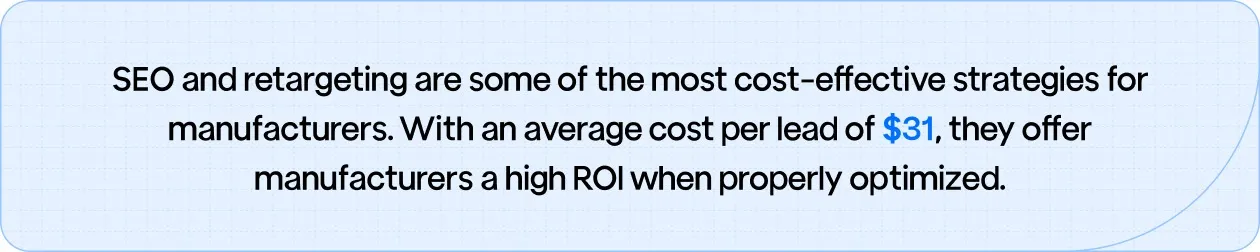
Your content is your sales pitch that runs even when you’re offline. The right topics attract serious decision-makers:
- Maintenance guides that solve recurring issues
- Material comparison blogs to help with design choices
- Cost breakdowns that build transparency
- Case studies showing real project outcomes

4. Use LinkedIn as a Relationship Tool, Not a Billboard
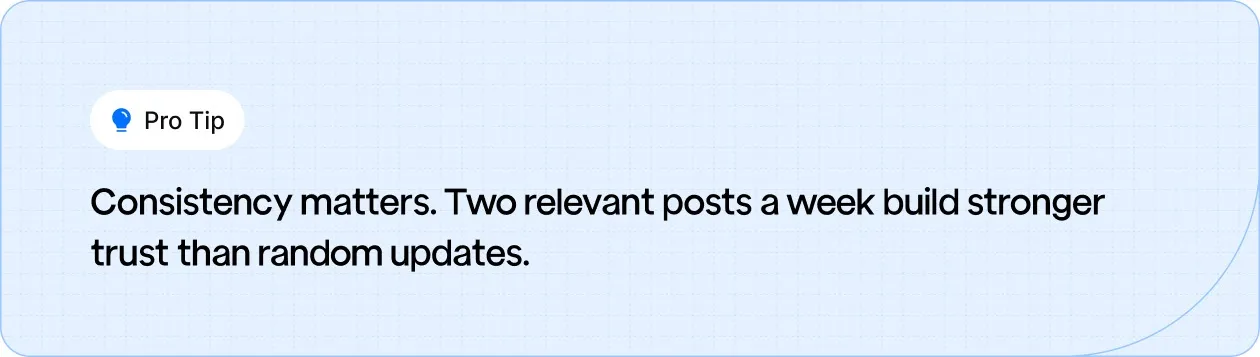
LinkedIn has become the online version of a trade floor for manufacturers, but it works only when you engage, not when you broadcast.
A small machining company once started sharing real stories about production challenges solved on the shop floor. Within weeks, plant heads and buyers began messaging directly for quotes.
To make LinkedIn work for you:
- Use Sales Navigator to find decision-makers by industry or job title.
- Personalize every message. Avoid “copy-paste” pitches.
- Post short videos or photos from your facility.
- Share quick problem-solving insights from your team.
5. Run Paid Ad Campaigns That Target the Right Buyers
PPC (Pay-Per-Click) advertising means you pay only when someone clicks your ad, not for empty views. It’s one of the fastest ways to reach buyers already searching for your product.
Think of it as placing a spotlight above your brand when a potential buyer types “ISO-certified injection molding company.”
Start small and focus on:
- Google Ads to reach active searchers
- LinkedIn Ads to target by company role or industry
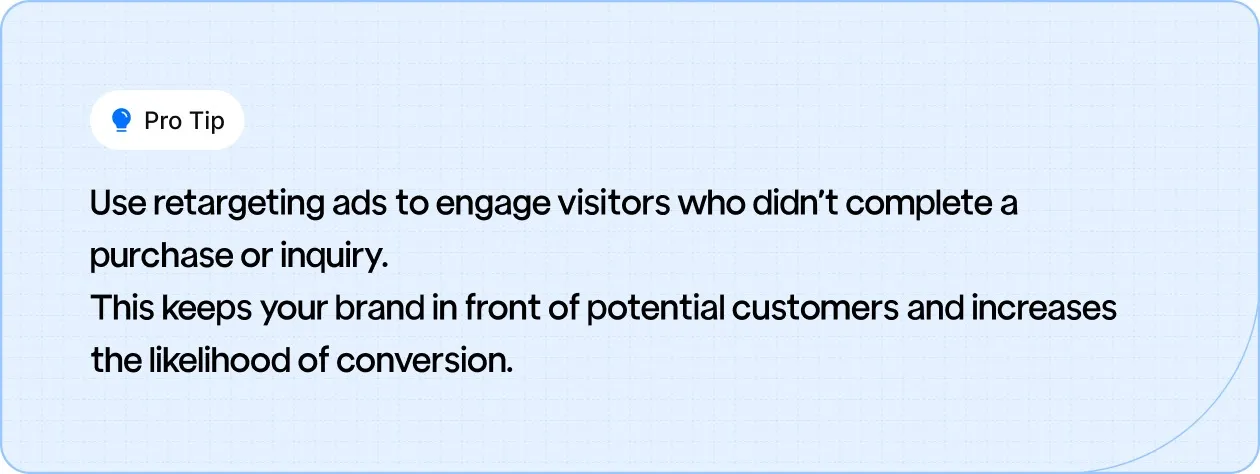
- Retargeting to re-engage visitors who didn’t inquire the first time
Must Read: Top 5 Lead Generation Companies for Manufacturers to Boost Your Sales

6. Use Email Marketing and Automation to Nurture Leads
Not every lead is ready to buy immediately. Email nurturing helps you stay top-of-mind until they are.
Email marketing is simply sending helpful, relevant updates to potential buyers over time. It builds familiarity and credibility without constant selling.
A fabrication firm that sent short monthly updates, like project photos, design tips, and new certifications, saw past prospects return with fresh leads.
Automation tools can help you:
- Send a welcome email after brochure downloads
- Follow up after quotes automatically
- Reconnect with inactive contacts with updates or offers
7. Host Webinars, Demos, or Virtual Plant Tours
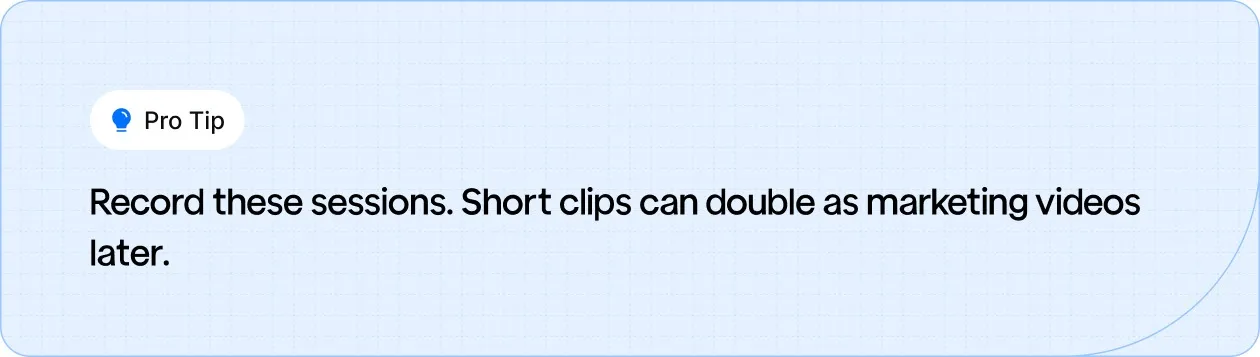
Buyers trust what they can see. Webinars and demos give them that confidence before they even visit your facility.
A metal finishing company once hosted a 30-minute online demo showing its testing and coating process. The result? 80 qualified leads in one week.
Ideas that work:
- “Ask the Engineer” sessions where prospects ask questions live
- Virtual facility tours showing your processes
- Partner training sessions for distributors or vendors
8. Combine Trade Shows with Digital Follow-Ups
Trade shows build relationships, but most companies lose momentum afterwards.
A sheet-metal manufacturer used QR codes at its booth to collect visitor data, synced it to their CRM, and sent personalized follow-ups within 24 hours. The outcome: conversions doubled.
To make the most of events:
- Collect visitor data digitally (QRs, tablets)
- Send thank-you emails quickly
- Retarget attendees with LinkedIn or Google Ads

9. Build Strategic Partnerships and Referral Channels
In manufacturing, your best new customer often comes from someone who already trusts you.
A parts supplier once partnered with a logistics company. They cross-referred clients, creating a steady pipeline without extra marketing cost.
Try this:
- Co-host webinars or publish joint success stories.
- Include partner promotions in newsletters.
- Offer incentives for customer referrals.

10. Measure, Optimize, and Automate Lead Generation
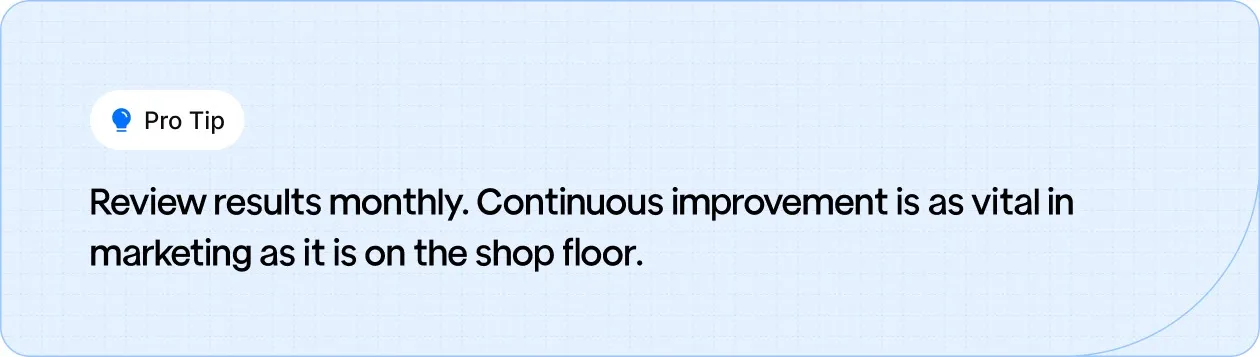
You can’t improve what you don’t measure. Analytics show where your leads come from and which channels deliver real results.
A manufacturer noticed that LinkedIn traffic converted twice as well as Google Ads clicks. After shifting its budget, it doubled leads in six months.
Track these key metrics:
- Source of leads (SEO, ads, trade shows, etc.)
- Cost per lead (your marketing spend per qualified inquiry)
- Conversion rate (percentage of visitors who submit RFQs)
Turn Your Manufacturing Expertise into a Lead Engine
You already know what precision means; it’s what keeps your machines running, your deliveries on time, and your customers coming back. But growth doesn’t happen by chance; it happens by process.
The manufacturers thriving today aren’t relying on luck or referrals; they’ve built systems that attract and convert qualified buyers like clockwork.
Your production line is optimized to deliver consistent output. Your marketing should work the same way: predictable, measurable, and built to run smoothly without constant supervision.
If you are ready to create a marketing system that works as efficiently as your factory floor, Gushwork can help.
FAQs
Q1: How can I generate leads for my manufacturing business without a big marketing budget?
A1: Start by optimizing your LinkedIn profile and engaging in industry-specific groups. Utilize advanced search filters to identify decision-makers in your target industries. Share valuable content, such as case studies or technical insights, to establish credibility and attract potential leads. Additionally, consider attending virtual trade shows or webinars to network with prospects.
Q2: What are the most effective lead generation strategies for manufacturers in 2025?
A2: Focus on digital marketing tactics like search engine optimization (SEO) to improve your website's visibility. Create content that addresses common industry challenges and showcases your expertise. Leverage social media platforms to engage with your audience and participate in relevant discussions. Implementing a customer relationship management (CRM) system can also help streamline follow-ups and manage leads efficiently.
Q3: How can I identify my ideal customers in the manufacturing sector?
A3: Develop buyer personas by analyzing your existing customer base and identifying common characteristics such as industry, company size, and purchasing behavior. Utilize tools like LinkedIn's advanced search to find prospects that match these profiles. Engage with industry-specific forums and groups to gain insights into potential customers' needs and challenges.
Q4: Is cold emailing an effective method for generating leads in manufacturing?
A4: Yes, when done correctly. Craft personalized emails that address the specific needs and pain points of your target audience. Avoid generic templates; instead, focus on how your product or service can provide value. Tools like Apollo and Saleshandy can assist in automating and tracking your outreach efforts.
Q5: How can I use my website to attract more qualified leads?
A5: Ensure your website is user-friendly and optimized for search engines. Include clear calls-to-action, such as request forms or contact information, to encourage visitor engagement. Showcase testimonials, case studies, and detailed product information to build trust with potential leads.
Q6: What role do trade shows play in lead generation for manufacturers?
A6: Trade shows offer opportunities to showcase your products and network with potential clients. Collect contact information from visitors and follow up promptly after the event. Integrating digital tools, like QR codes, can streamline the process of capturing leads and enhance post-event engagement.
Q7: How can I measure the effectiveness of my lead generation efforts?
A7: Track key performance indicators (KPIs) such as website traffic, conversion rates, and the number of qualified leads generated. Utilize analytics tools to assess the performance of different marketing channels and adjust your strategies accordingly. Regularly reviewing these metrics can help optimize your lead generation process.

Digital Marketing
Oct 28, 2025
5 mins
The Complete Guide to Effective Marketing Strategies for Manufacturers
Batul Beawarwala
The real frustration? Pouring ad spend into strategies that fail to filter out the noise, leaving your sales team to sift through inquiries that never stand a chance of converting.

This guide dives deep into manufacturer marketing strategies designed to target the precise audience that matters, decision-makers who know exactly what you offer and why it’s essential to their business.
Why Every Manufacturer Needs a Winning Marketing Strategy?
In the manufacturing industry, marketing is about building long-term relationships with the right buyers.
In B2B manufacturing, marketing helps create a clear brand presence, establish credibility, and generate quality leads. A well-structured marketing strategy ensures that your products reach the right people at the right time, helping your business stand out in a competitive market.
Without it, you risk becoming just another name in a crowded industry, struggling to get noticed.
The Real Struggles Manufacturers Face in Marketing
Manufacturers often face unique challenges when it comes to marketing. Here are a few of the biggest hurdles:
- Long Sales Cycles: B2B manufacturing sales cycles can be long, with decision-making often taking months due to the complexity of products and the need for multiple approvals. Marketing must support the entire journey from awareness to decision.
- Complex Products: Many manufacturers sell highly specialized or complex products that require detailed technical explanations. This can make traditional marketing methods like simple ads ineffective.
- Limited Visibility: In a market flooded with similar products, standing out can be a challenge. Without a strong marketing strategy, your business might struggle to get the attention it deserves.
A striking example comes from a Reddit discussion where a manufacturer revealed that despite generating millions in sales, they had invested almost nothing in marketing.
This lack of visibility led to the loss of several high-value accounts simply because potential clients were unaware of their existence.
How a Strong Marketing Strategy Pays Off for Manufacturers
A winning marketing strategy directly impacts your bottom line in several ways:
- Increased Lead Generation: Marketing helps attract qualified leads who understand the value of your product, improving the efficiency of your sales team.
- Improved Brand Recognition: Consistent, targeted marketing builds your brand’s reputation in the market, making it easier to convert potential customers into loyal ones.
- Expanded Market Reach: A strong marketing plan helps you tap into new markets, reaching clients you might not have had access to otherwise, and opening doors for growth.
Step-by-Step Guide for a Strong Manufacturer Marketing Strategy
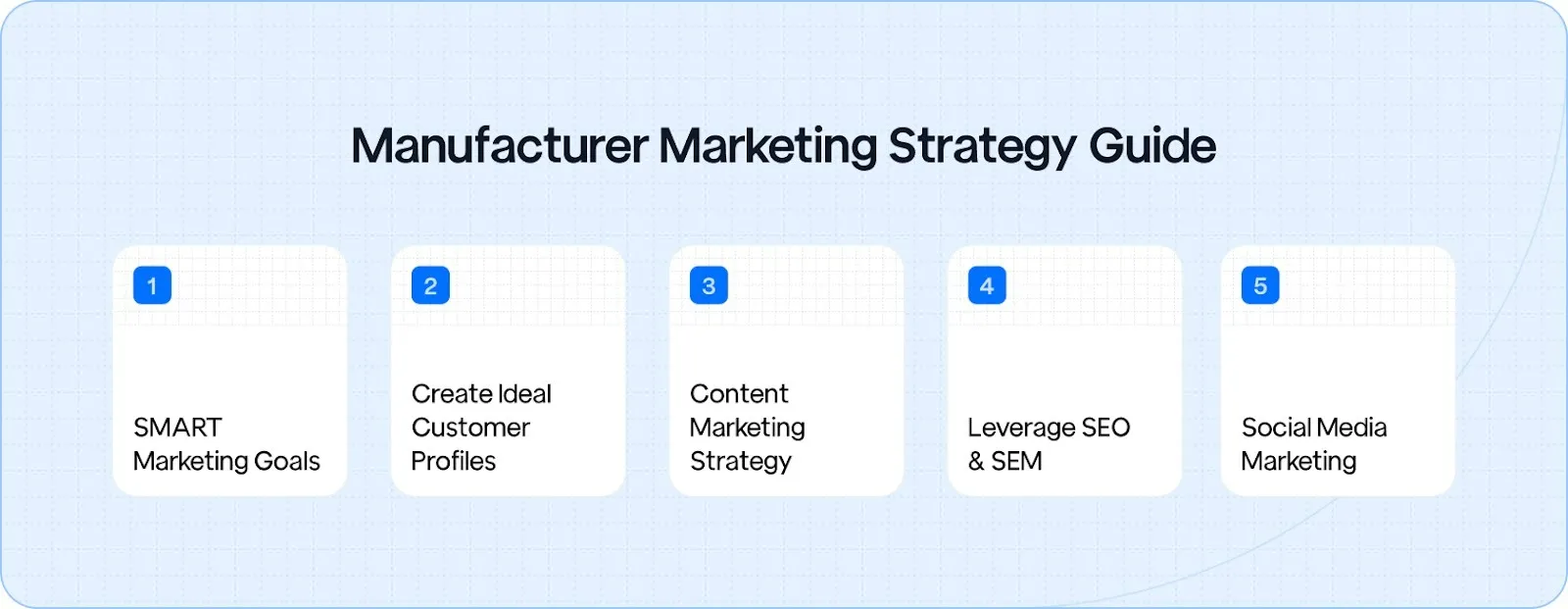
A solid marketing strategy is essential for growth and attracting the right customers in the manufacturing industry.
Here’s a simple roadmap to create a plan that engages decision-makers and generates high-quality leads.
Step 1. Define Clear Marketing Goals (SMART Goals)
Start by defining SMART goals:
- Specific: What do you want to achieve?
- Measurable: How will you track progress?
- Achievable: Are your goals realistic?
- Relevant: Do they align with your business?
- Time-bound: When do you want to achieve them?
This ensures your marketing efforts are focused and measurable.
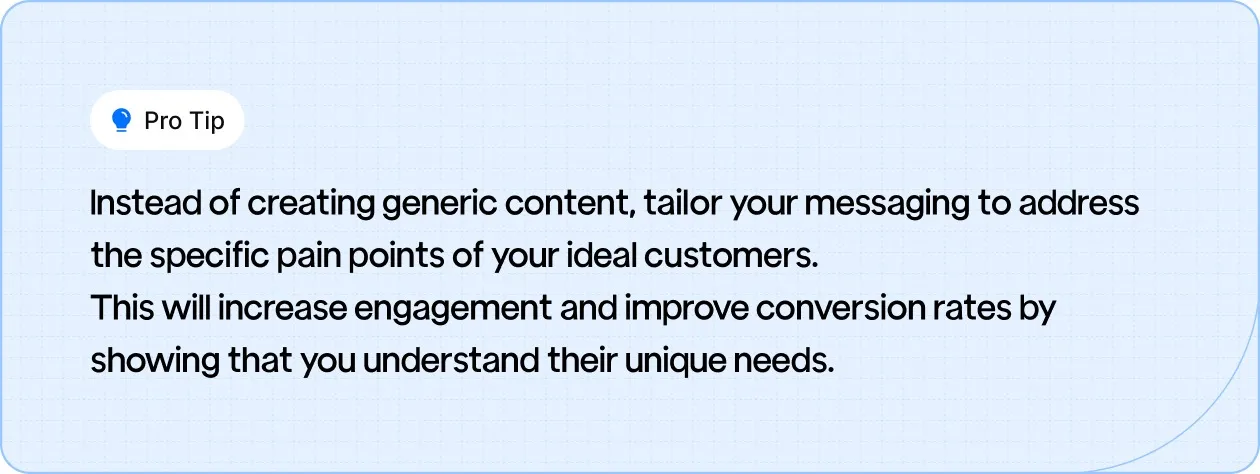
Step 2. Create Ideal Customer Profiles (ICPs) and Buyer Personas
Know your target audience:
- Ideal Customer Profiles (ICPs): Identify industries and businesses that would benefit most from your products.
- Buyer Personas: Understand the decision-makers’ roles, challenges, and needs.
This helps tailor your marketing to the right people.
Watch this video to learn more about crafting your marketing strategy and building strong customer profiles that resonate with the right audience.
(Embed the video here)
Step 3. Content Marketing Strategy
Create content that connects with your audience:
- Publish blogs, case studies, and webinars addressing their challenges.
- Position your brand as a leader with valuable insights.
Content builds trust and keeps your audience engaged.
Step 4. Leverage SEO & SEM
- SEO helps your website rank for key industry terms.
- SEM (paid ads) boosts visibility and brings in immediate leads.
Together, they increase your online presence and attract quality traffic.
Step 5. Social Media Marketing
Use platforms like LinkedIn to connect with decision-makers:
- Share content that addresses industry issues.
- Engage with prospects, answer questions, and build relationships.
- Social media allows real-time conversations and meaningful interactions.
Manufacturer Marketing Tactics You Need to Master Now
Manufacturers need to stay ahead by mastering the latest marketing tactics that drive engagement and lead generation.
These strategies will help you reach the right audience and increase your brand’s impact in the market.
1. Content Marketing
Manufacturers must focus on creating technical, value-driven content that speaks directly to their audience’s needs.
- Technical White Papers: Showcase your expertise by addressing industry-specific challenges and solutions in depth.
- Video Tutorials: Demonstrate your product’s features and applications through engaging, educational videos.
- Product Demos: Provide potential customers with hands-on, real-world examples of how your products solve their problems.
This approach positions your brand as a trusted resource and drives higher engagement with a targeted audience.
2. Trade Shows & Industry Events
Trade shows, both in-person and virtual, offer invaluable opportunities to connect directly with your audience.
- In-Person Events: Make the most of face-to-face interactions by showcasing your products and networking with industry professionals.
- Virtual Events: Leverage digital platforms to reach a wider audience, host webinars, and demonstrate thought leadership.
Use these events to engage prospects and nurture relationships that may convert into long-term partnerships.
3. Influencer & Partnership Marketing
Collaborating with industry influencers or partnering with other manufacturers can significantly expand your reach.
- Industry Leaders: Partner with trusted experts to amplify your brand’s credibility and influence within your sector.
- Co-Branding: Form alliances with non-competing manufacturers to cross-promote products to a similar target audience.
These partnerships can help increase brand visibility and credibility within your industry.
4. Email Marketing & Automation
Email marketing remains one of the most effective channels for B2B manufacturers.
- Nurture Leads: Develop email campaigns that provide valuable, relevant content tailored to each stage of the buyer’s journey.
- Marketing Automation: Use automation tools to segment your audience, personalize communications, and optimize campaigns for efficiency.
By automating your email outreach, you can build stronger relationships with prospects, making them more likely to convert.
5. Account-Based Marketing (ABM)
Focusing your marketing efforts on high-value target accounts allows you to create personalized campaigns for the businesses most likely to purchase.
- Tailored Campaigns: Design marketing content and outreach efforts that speak directly to the specific pain points of key accounts.
- Sales & Marketing Alignment: ABM requires close collaboration between marketing and sales teams to ensure seamless targeting and engagement.
This targeted approach maximizes the impact of your marketing budget, increasing conversion rates and driving revenue.
Must Read: Digital Marketing for Distributors: 10 Proven Strategies for Growth
Struggling to implement these strategies effectively?
Streamlining and automating your marketing operations can help you work smarter.
Boost Your Marketing Efficiency
B2B vs B2C: What Makes Manufacturing Marketing So Different?
B2B marketing for manufacturers differs significantly from B2C. Key distinctions include:
- Longer Decision-Making Cycles: B2B purchases often involve extended evaluation and approval processes.
- Multiple Decision-Makers: A team, including engineers, procurement, and executives, makes the final decision.
Niche Markets: Manufacturing often targets specialized industries, requiring tailored marketing approaches.
Marketing Best Practices for Manufacturers
To maximize the impact of your marketing efforts, focus on clear goals, tailored content, and continuous optimization.
Here are the best practices that will ensure your campaigns are effective and aligned with your business objectives.
1. Targeted Content
Create content tailored to each stage of the buyer's journey:
- Awareness: Address industry challenges.
- Consideration: Offer solutions to those challenges.
- Decision: Provide testimonials and product demos to drive final decisions.
2. Track & Measure Results
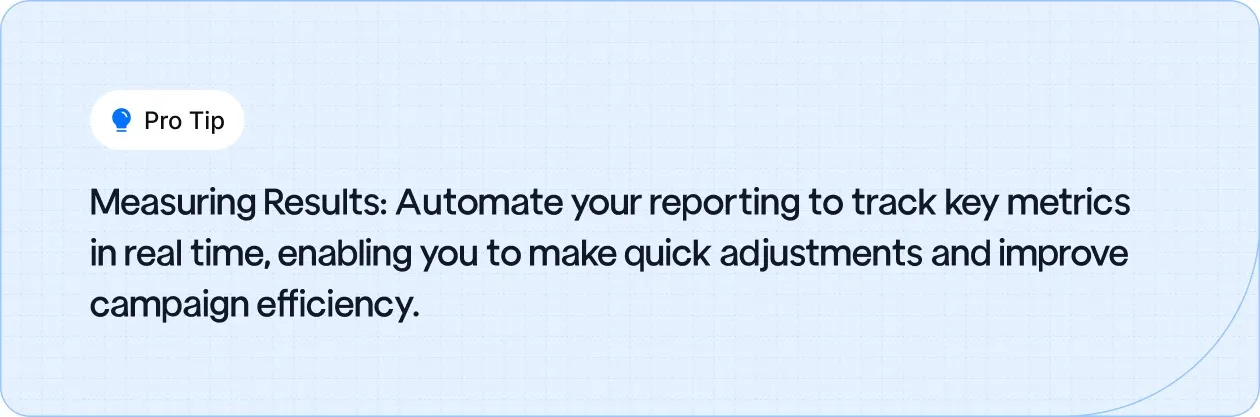
Track key metrics such as conversion rates, traffic, and leads to evaluate your campaign's performance. Tools like Google Analytics help you stay on top of your data.
3. Continuous Improvement
Marketing isn’t static. Test and optimize campaigns regularly based on performance data to stay responsive to market shifts.
How Automation is Shaping the Future of Manufacturing Marketing
Automation is transforming manufacturing marketing by improving efficiency and personalization.
Here’s how tools like CRM systems and AI-driven insights are helping manufacturers scale their efforts and drive better results.
Role of Automation
Marketing automation tools enable manufacturers to streamline processes, scale campaigns, and nurture leads more efficiently.
By automating repetitive tasks like email marketing, social media posting, and lead nurturing, you can focus on strategic decision-making while ensuring consistent engagement across multiple channels.
CRM Integration
Integrating marketing efforts with CRM systems allows for better lead tracking and management. It ensures your sales team has real-time data, leading to improved lead conversions and more personalized customer interactions.
Also Read: Why Smart Distributors Are Choosing CRM?
How to Build a Future-Proof Manufacturing Marketing Strategy
To drive growth and stay relevant in manufacturing, relying on outdated marketing methods or a self-managed approach is insufficient.
Manufacturers need a strategic, automated approach that integrates content, lead generation, and data-driven insights to create lasting impact.
- A clear marketing strategy is essential to reach the right decision-makers.
- Automating and streamlining your marketing efforts will boost efficiency and scalability.
- Aligning sales and marketing teams is crucial for maximizing conversions.
If you’re tired of inefficient marketing processes and missed opportunities, it’s time to invest in the right tools.
Gushwork offers a powerful set of tools to help you automate your marketing workflows.
This includes lead generation, customer engagement, and more, allowing you to focus on what matters most: driving growth.
Book a Consultation
FAQs
Q1: What is digital marketing for manufacturers?
A1: Digital marketing for manufacturers involves online strategies like SEO, PPC, content marketing, and social media to attract, engage, and convert potential customers. It allows manufacturers to target specific industries and decision-makers while tracking real-time performance.
Q2: How can I generate quality leads for my manufacturing business?
A2: To generate quality leads, focus on creating valuable content such as case studies and technical guides, optimizing your website for search engines, and running targeted ads on platforms like Google and LinkedIn. This approach helps attract high-intent prospects who are more likely to convert.
Q3: What is Account-Based Marketing (ABM) and how does it benefit manufacturers?
A3: ABM is a strategic approach where marketing efforts are focused on a set of high-value target accounts. For manufacturers, ABM allows for personalized campaigns that address the specific needs of key clients, leading to higher engagement and conversion rates.
Q4: How can marketing automation help my manufacturing business?
A4: Marketing automation tools help manufacturers streamline processes, scale campaigns, and nurture leads more efficiently. By automating repetitive tasks, you can focus on strategic decision-making while ensuring consistent engagement across multiple channels.
Q5: What role does SEO play in manufacturing marketing?
A5: SEO helps improve the visibility of your website on search engines, making it easier for potential customers to find your products or services. By optimizing your website's content and structure, you can attract more organic traffic and generate quality leads.
Q6: How do I align my sales and marketing teams effectively?
A6: Aligning sales and marketing teams involves setting shared goals, using common tools like CRM systems, and maintaining open communication. This collaboration ensures that both teams work towards the same objectives, leading to improved lead management and higher conversion rates.
Q7: Why is continuous improvement important in manufacturing marketing?
A7: Continuous improvement allows manufacturers to adapt to changing market conditions, optimize campaigns based on performance data, and stay competitive. Regularly testing and refining marketing strategies ensures sustained growth and effectiveness.

Digital Marketing
Oct 28, 2025
5 mins
If Your Pipeline Isn't Growing, You’re Probably Missing One Of These Distributor Marketing Must-Dos
Batul Beawarwala
With growing competition from direct-to-consumer brands and eCommerce platforms, it’s becoming harder to stand out in a crowded market. What you need is a distributor marketing strategy that targets the right audience and gets your products in front of the right people.
This guide will show you how to build meaningful relationships with the right resellers and retailers, select the most effective channels, and drive higher-quality sales. If you’re frustrated by ineffective marketing and wasted effort, keep reading for strategies that will help your distribution business excel.
What is Distributor Marketing?
Distributor marketing is simply the process of promoting and selling your products through partners like wholesalers, retailers, or other distributors.
Instead of selling directly to the end customer, you rely on these intermediaries to help get your product to market. It's a crucial part of how your products move from your factory to the final buyer.
This strategy includes creating strong relationships with these partners, building awareness of your brand, and driving sales.
The Key Ingredients of a Winning Distributor Marketing Strategy
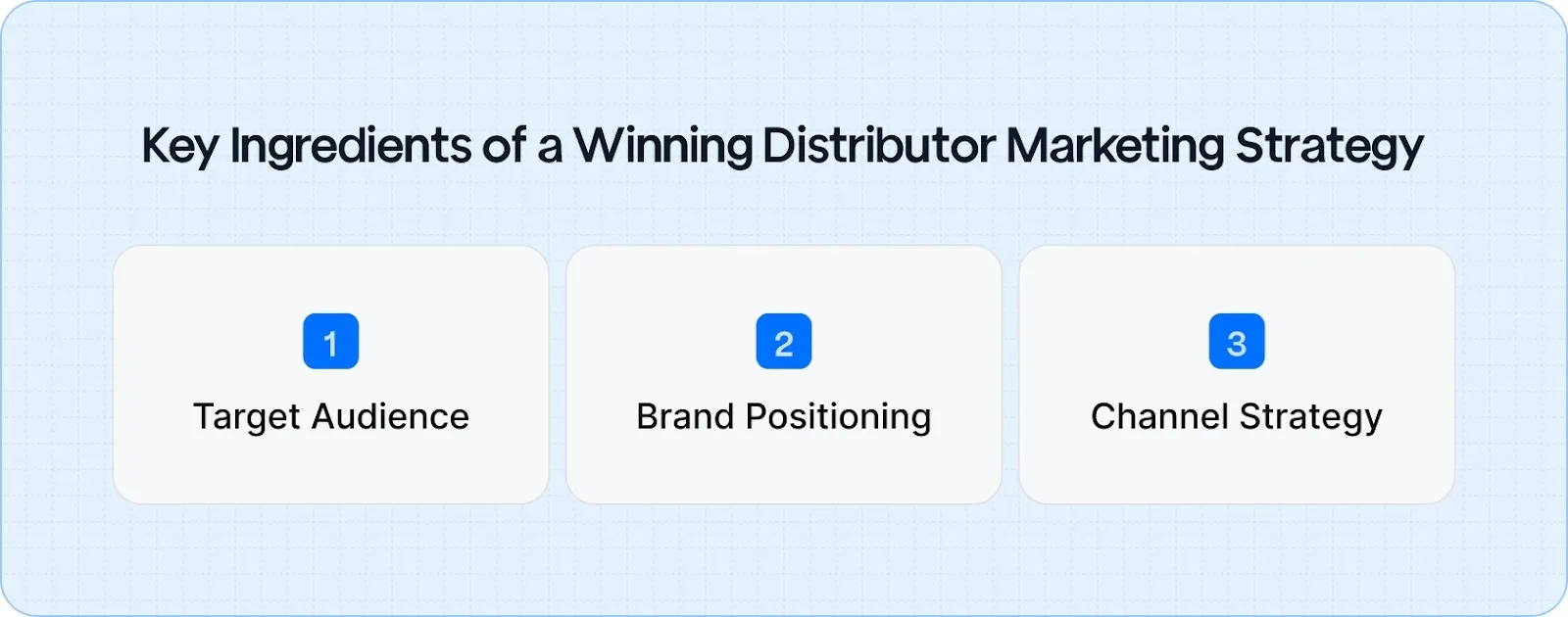
A successful distributor marketing strategy focuses your efforts on the right people, positioning your product in a way that makes it stand out, and choosing the most effective ways to reach them.
Here are the key ingredients that make your strategy work:
- Target Audience: This is the group of people or businesses you want to reach with your product. For distributors, your audience could be other businesses (B2B) or individual consumers (B2C) who need what you're selling. It’s essential to know who needs your product so you can focus your marketing efforts on them.
- Brand Positioning: This is about how you want your product to be seen in the market. How do you want customers to perceive your product? Are you offering the most affordable option, or are you positioning it as a high-quality, premium choice? Knowing this will help you differentiate your product from others in the market.
- Channel Strategy: Channels are the ways you communicate and sell to your customers. This can include traditional methods like trade shows and catalogs, or modern digital platforms like eCommerce websites. Choosing the right channel helps you reach your audience effectively.
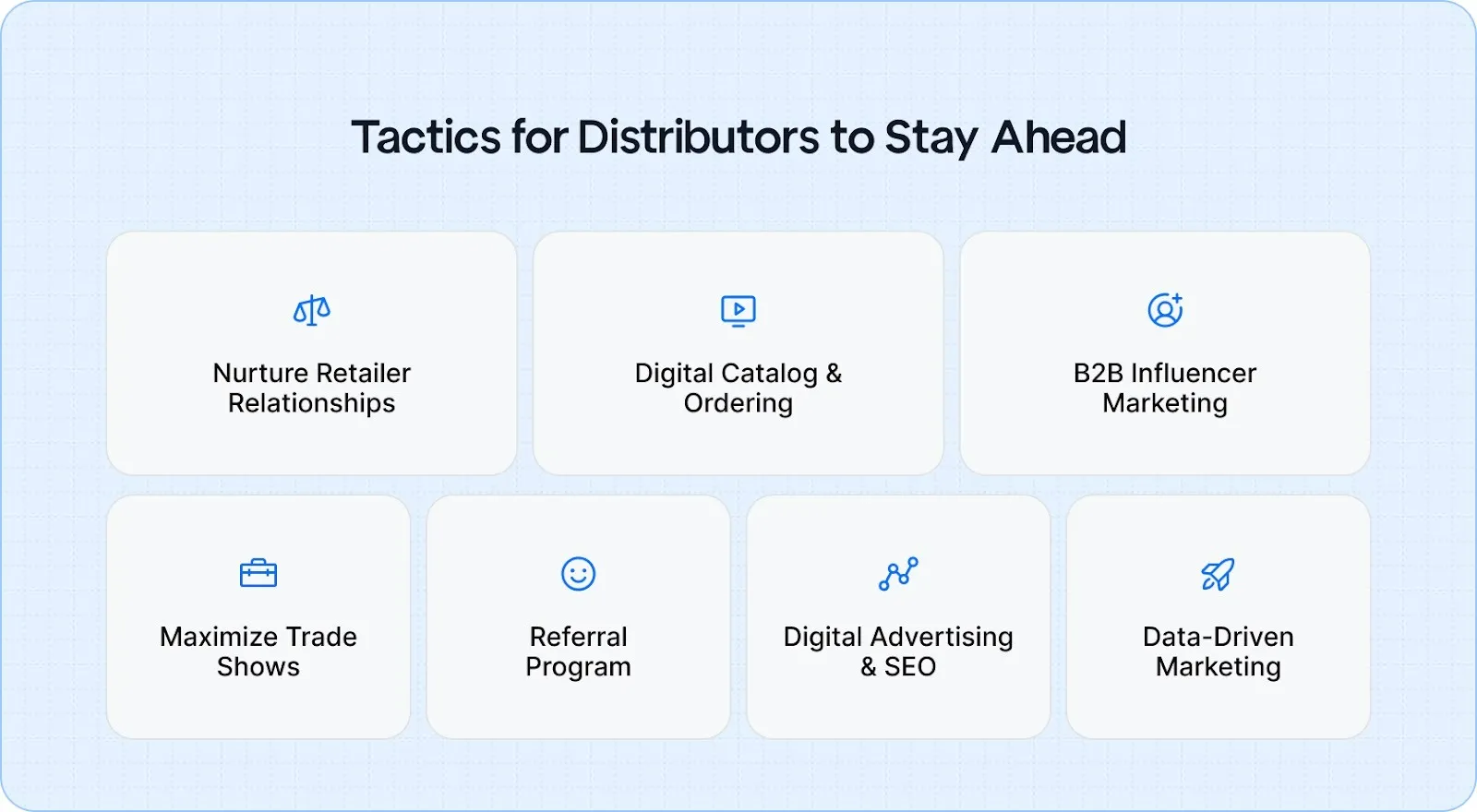
7 Proven Tactics for Distributors to Stay Ahead of the Competition
Competing in the distribution industry can feel like a constant race. However, with the right approach, you can stand out from your competitors.
Here are 7 marketing tactics that will help you strengthen your position in the market and gain a competitive edge:
1. Nurture Relationships with Retailers and Resellers
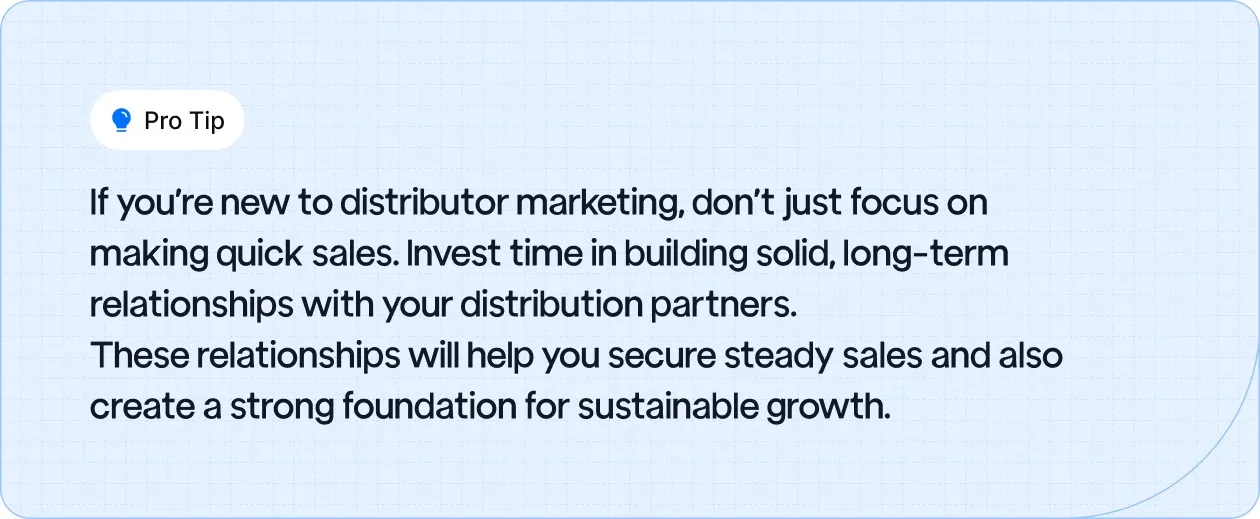
Building strong, long-term relationships with the businesses that sell your products is key. Offer support, tailored incentives, or exclusive deals to ensure they stay engaged with your brand and prioritize your products.
The goal is to make them feel valued and committed to your brand.
2. Create a Digital Catalog & Streamlined Ordering System
Investing in a digital catalog is a game-changer for ease and accessibility. With high-quality images, detailed descriptions, and updated prices, your catalog makes it easier for retailers to view and order products directly from you.
This enhances the buying experience and reduces friction for your resellers.
3. Leverage B2B Influencer Marketing
While influencer marketing is often associated with consumer-facing brands, it's becoming increasingly important in B2B as well.
Partner with industry experts or thought leaders to amplify your message within relevant networks, boosting credibility and broadening your reach.
4. Maximize Industry Trade Shows & Events
Trade shows and industry events are perfect for networking and gaining direct feedback from potential customers.
These gatherings allow you to showcase your products in person, build relationships, and identify opportunities for future collaborations, all while staying on top of industry trends.
5. Launch a Referral Program to Encourage Word-of-Mouth
Referral programs are one of the most effective ways to gain new business. Reward existing customers for referring others, using discounts, exclusive products, or added services.
It’s a cost-effective way to build trust and extend your network organically.
6. Invest in Digital Advertising & SEO for Greater Visibility
Digital advertising and SEO go hand-in-hand in helping your brand stand out in search results. Optimizing your website for relevant keywords and investing in targeted digital ads ensures that potential customers can easily find your products when searching for solutions you offer.
7. Utilize Data-Driven Marketing for Personalized Outreach
Data-driven marketing is all about understanding your customers’ behaviors. By analyzing purchasing patterns and customer interactions, you can create tailored marketing campaigns that directly address their needs, making your outreach more effective and valuable.
Managing multiple distribution channels can be overwhelming.
Simplify and streamline your process with a unified solution that optimizes every step of your marketing strategy.
Optimize Your Channels
B2B vs B2C Marketing: How Distributor Strategies Differ for Both
Understanding the differences between B2B (business-to-business) and B2C (business-to-consumer) marketing is crucial for distributors looking to refine their marketing strategies.
While both approaches aim to sell products, the methods and focus areas differ greatly.
B2B Marketing (Business-to-Business)
In B2B, your customers are other businesses. This means your sales cycle is typically longer, and the decisions made are based on logic, efficiency, and cost-effectiveness.
In this context, your marketing efforts should focus on:
- Building Relationships: Since business purchases are often high-value and long-term, fostering trust and loyalty is critical.
- Demonstrating Product Value: Focus on how your product solves specific business problems, such as increasing productivity or reducing costs.
- Content Marketing: Provide resources like white papers, case studies, and detailed product demos to educate and inform your potential clients.
B2C Marketing (Business-to-Consumer)
In B2C, you’re marketing directly to the end consumer. The sales process is typically faster, and emotional appeal plays a larger role in the purchasing decision.
Here, your strategy should include:
- Emotional Connection: Consumers often make decisions based on how the product makes them feel. Your marketing should tap into their desires, lifestyle, or aspirations.
- Simplified Messaging: Unlike B2B, the focus is on quick, clear messaging that highlights immediate benefits and easy purchase paths.
- Promotion and Discounts: Consumers are more likely to respond to promotions, discounts, and time-sensitive offers.
Measuring Success: How to Know Your Distributor Marketing is Paying Off
A marketing strategy is only as good as the results it delivers. If you don’t measure its impact, how can you know if it’s working?
To ensure your distributor marketing efforts are effective, you need to track the right metrics and use the right tools.
Key Metrics to Track (KPIs)
KPIs (Key Performance Indicators) are measurable values that help you evaluate the success of your marketing strategy. Here are some essential KPIs for distributors:
- Sales Growth: Measure how much your sales have increased over a certain period. Are your marketing efforts leading to higher sales volumes?
- Customer Acquisition Cost (CAC): Calculate how much it costs to acquire each new customer. This includes all marketing expenses divided by the number of new customers gained.
- Customer Lifetime Value (CLV): Understand how much a customer will bring to your business over the long term. This helps determine whether your customer acquisition cost is sustainable.
Tools & Platforms to Help Track Performance
CRM (Customer Relationship Management) software helps you monitor customer interactions, sales data, and marketing campaigns in one place.
These platforms provide insights that help you adjust and optimize your strategy.
Ready to measure your distributor marketing success accurately?
Use powerful tools to track your KPIs, optimize your strategies, and see impactful results.
Track Your Success
Let Your Distributor Marketing Strategy Drive Your Success
Building a solid distributor marketing strategy is key to developing lasting relationships, increasing brand awareness, and driving growth.
Your focus may be B2B or B2C, but having a targeted, thoughtful approach makes all the difference in setting your brand apart in today’s competitive market.
The frustration of ineffective marketing and wasted effort is common, but it's time to shift from ad-hoc tactics to a clear, optimized strategy.
Platforms like Gushwork can streamline your efforts, providing the tools to track success, optimize operations, and ultimately scale your business.
Start optimizing your distributor marketing strategy today.
Book a Consultation
FAQs
Q1. What is distributor marketing, and why is it important for my business?
A1. Distributor marketing involves promoting and selling your products through intermediaries such as wholesalers, retailers, or other distributors. It's crucial because it extends your market reach, leverages the distributor's local expertise, and allows you to focus on manufacturing while they handle sales and distribution.
Q2. How do I choose the right distributor for my products?
A2. Selecting the right distributor involves assessing their market reach, reputation, and alignment with your brand values. Key factors include their customer base, sales capabilities, and experience in your industry. It's also beneficial to evaluate their financial stability and commitment to marketing your products effectively.
Q3. What marketing support should I provide to my distributors?
A3. Supporting your distributors with marketing materials like brochures, product samples, and digital content can enhance their sales efforts. Training programs, co-branded campaigns, and access to promotional funds also empower distributors to effectively market your products and increase sales.
Q4. How can I measure the success of my distributor marketing efforts?
A4. Success can be measured using Key Performance Indicators (KPIs) such as sales growth, customer acquisition cost, and customer lifetime value. Tools like Customer Relationship Management (CRM) software can help track these metrics, providing insights into the effectiveness of your marketing strategies.
Q5. What are the benefits of omnichannel marketing for distributors?
A5. Omnichannel marketing ensures a seamless customer experience across various platforms. For distributors, this approach can increase brand visibility, improve customer engagement, and drive sales by meeting customers where they prefer to shop.
Q6. How does sustainability in marketing impact distributor relationships?
A6. Implementing sustainable practices, such as eco-friendly packaging or carbon-neutral delivery options, can enhance your brand's appeal to environmentally conscious consumers. Distributors benefit from associating with brands that prioritize sustainability, as it can differentiate them in the market and attract a loyal customer base.
Q7. What role does supply chain transparency play in distributor marketing?
A7. Transparency in your supply chain builds trust with distributors and end customers. Highlighting efficient and ethical sourcing, production, and delivery processes can strengthen your brand's reputation, encourage distributor loyalty, and appeal to customers who value corporate responsibility.
Digital Marketing
Oct 28, 2025
5 mins
Search Marketing Strategies for Manufacturers to Drive Leads
Batul Beawarwala
Manufacturers are wasting valuable resources on search marketing campaigns (strategies that drive traffic through paid ads and organic search results) that attract leads who don’t understand the complexities of your products or aren’t ready to buy.

Despite investing in SEO and PPC, the quality of leads often doesn’t justify the effort, leaving engineers, procurement teams, and plant managers overwhelmed with irrelevant inquiries.
The real challenge is attracting the right traffic.
This guide helps you target decision-makers who will understand your product's technical details and convert into loyal customers.
Why Manufacturer Search Differs from Other Industries?
Manufacturers face unique challenges when it comes to search marketing.
Unlike consumer-facing industries, where people typically make quick, emotional decisions, manufacturing buyers, including engineers, procurement managers, and plant supervisors, have specific, technical needs that demand detailed information..
They search with a clear purpose: to find solutions that meet precise specifications, ensure compliance, and match complex project requirements.
This search behavior significantly impacts how manufacturers should approach their digital marketing strategies.
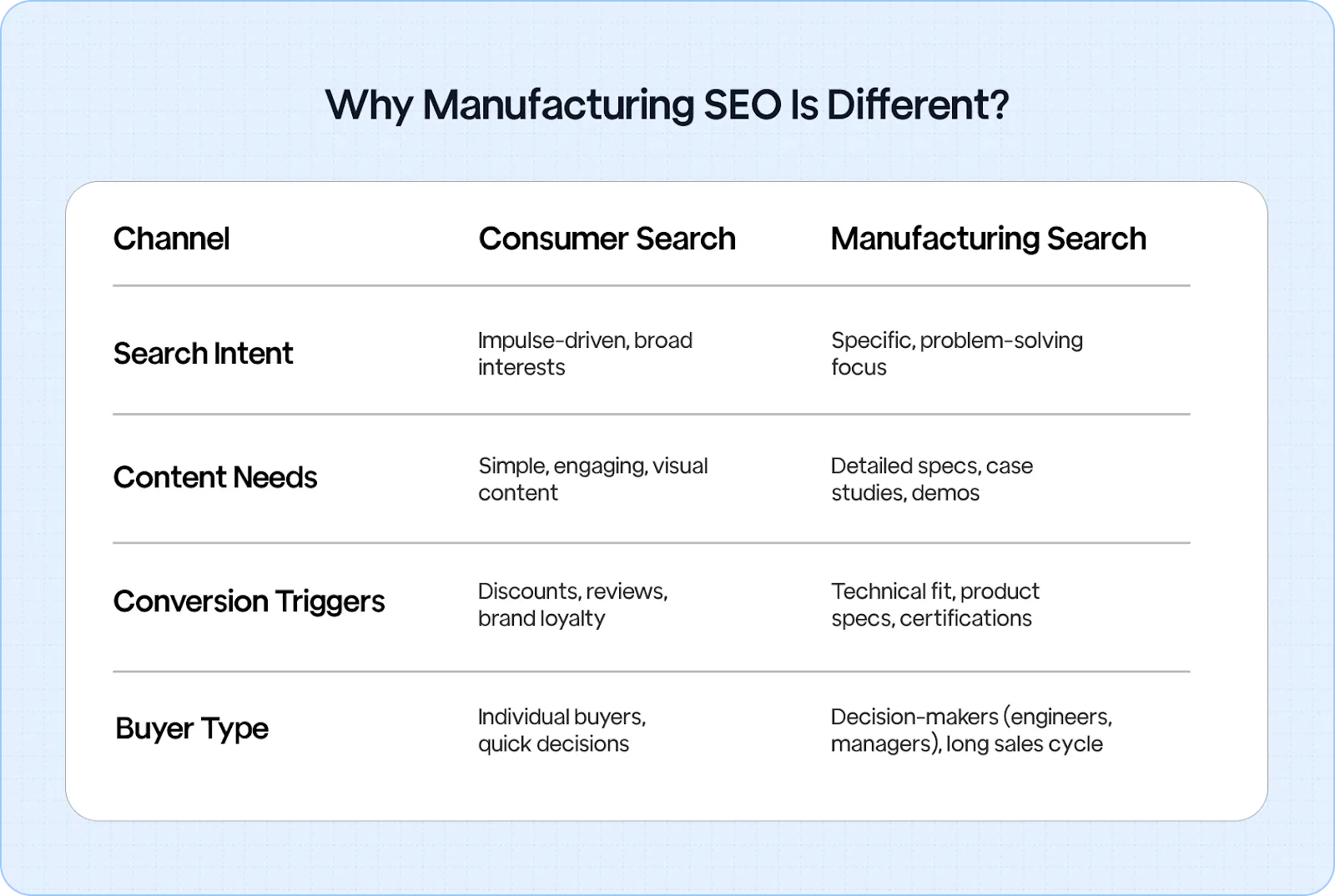
Here’s how search behavior differs across industries:
Maximize Your Digital Presence
Ensure you’re reaching the right audience at the right time, start optimizing your manufacturing marketing today.
Start Optimizing Now
Keyword Strategy That Converts Technical Buyers
To effectively reach technical buyers, your keyword strategy must go beyond broad terms. It needs to align with the detailed, problem-solving searches that engineers, procurement managers, and decision-makers use.
These buyers are looking for very specific information, part numbers, technical specifications, and compliance standards.
Here’s how you can build a keyword strategy that matches their search intent and drives qualified leads. Key areas to focus on:
1. Part Numbers and SKUs
Buyers often search using specific part numbers or SKUs, especially when they already know what they need. Optimizing for these terms ensures your products show up in the right searches.
2. Industry Standards and Compliance Terms
Compliance is critical in manufacturing. Ensure your content is optimized for industry standards (e.g., ISO, ASTM) and compliance-related terms to capture buyers looking for certified, compliant products.
3. Process, Material, Tolerance, and Finish-Based Searches
Technical buyers often search for products based on specific processes (e.g., injection molding), materials (e.g., aluminum), tolerances, or finishes. Make sure your product pages include these technical details.
4. Application and Industry-Specific Keywords
Each industry has its own language. Automotive, aerospace, and construction industries all require application-specific keywords that resonate with your audience’s needs (e.g., "automotive CNC machining" or "medical-grade plastic molding").
Building Content That Engineers Actually Read
Creating content for engineers, procurement managers, and other technical decision-makers requires a clear, focused approach. These buyers don’t want oversimplified content; they need in-depth, technical information that addresses their specific challenges and concerns.
To capture their attention and drive conversions, your content must demonstrate technical expertise while being easily accessible and practical.
Here’s how to build content that resonates with this audience. Content pillars you should focus on:
- Technical Specifications and CAD Hubs
Engineers often search for detailed product specifications or CAD files. Creating a centralized hub for downloadable specs and CAD files ensures you’re providing the technical data they need to make decisions.
- Process Deep-Dives, QA Stories, and Failure Mode Analyses
Go beyond product features and explain the processes that make your solutions work. Provide quality assurance stories or discuss potential failure modes to show how your products address real-world challenges.
- Compliance Explainers for ISO, ASTM, and Other Standards
Compliance is crucial in many industries. Content that explains how your products meet industry standards (e.g., ISO, ASTM) builds trust with decision-makers who prioritize regulatory adherence.
- Engineering Calculators, Configurators, and Demo Videos
Offer tools that engineers can interact with, like calculators for custom specs or configurators that help them tailor products to their needs. Demonstration videos showing the real-world applications of your products are invaluable.
- Case Studies with Measurable Proof and Real-World Applications
Engineers value data-driven content. Case studies showcasing how your solutions have solved real problems for other clients, with clear metrics and outcomes, validate your expertise and reinforce your brand’s credibility.
Also Read: 25+ Proven Strategies to Transform Your Industrial Content Marketing
Create Engaging, Technical Content
Want your content to resonate with engineers? Start producing in-depth, value-driven resources that speak directly to their needs.
Start Creating Content
Mastering Technical SEO for Industrial Websites
Technical SEO is crucial for ensuring that your website's detailed content, like CAD files, technical PDFs, and product specs, gets discovered by search engines.
Manufacturers often overlook key technical aspects that can make a significant difference in search visibility.
Technical SEO Checklist:
- PDF Optimization (Titles, Metadata, Compression): Ensure PDFs are optimized with clear titles, relevant metadata, and fast loading times.
- CAD File Indexing and Canonical Tags: Index CAD files and use canonical tags to avoid duplicate content issues.
- Faceted Navigation Rules for Processes and Materials: Optimize faceted navigation to make product details easy to find without crawling issues.
- Product Schema and Breadcrumb Structure: Implement product schema and breadcrumbs to improve search engine understanding and site navigation.
- Site Speed, Image Compression, and Mobile Optimization: Compress images, improve site speed, and ensure mobile optimization for a better user experience.
Must Read: 113 Distributors, Contractors & Architects Found Paniflex, Without a New Sales Hire
Boost Your Site's Visibility
Optimize your website’s technical SEO to ensure your customers find you. Start making these crucial changes today.
Enhance Your Visibility
PPC Strategies That Drive Qualified Leads
To succeed with PPC in manufacturing, campaigns must target the right decision-makers like engineers and procurement managers.
Here’s how to create campaigns that attract high-quality leads. Key PPC strategies for manufacturers:
1. Building PPC Campaigns Based on Intent
Focus your campaigns on high-intent keywords, such as specific part numbers or industry certifications. These terms are used by buyers who are already familiar with what they need and are closer to making a purchase decision.
2. Negative Keyword Strategy to Filter Consumer Traffic
Use negative keywords to prevent your ads from showing up in irrelevant searches. For example, exclude terms like "cheap" or "free" to avoid wasting ad spend on consumers who aren’t looking to buy high-value industrial products.
3. Creating Ad Copy with Certifications, Lead Times, and Capabilities
Tailor your ad copy to highlight what matters most to technical buyers, certifications (e.g., ISO), lead times, and product capabilities.
These factors are often deal-breakers for engineers and procurement teams, so make sure your ads emphasize them.
4. Linking PPC Data to CRM and Quoting Workflows
Connect your PPC campaigns with your CRM and quoting workflows to track the performance of each lead.
By measuring the journey from ad click to quote request, you can optimize your campaigns for higher-quality leads and better ROI.
5. Measuring Profitability Rather Than Clicks
It’s important to measure lead quality and profitability. Look at how well your PPC leads convert into actual sales and factor in your product margins to determine the real value of each lead.
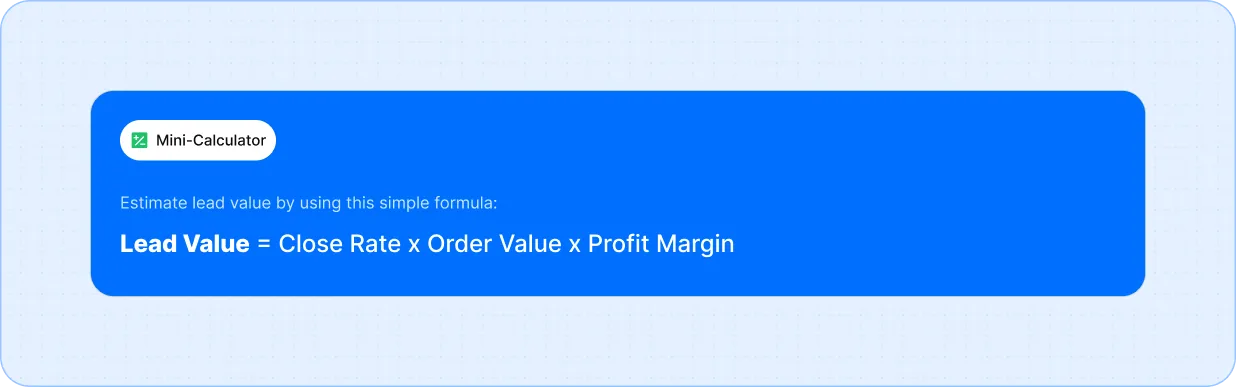
This will help you measure the true return on your PPC investment.
Improving Conversion Rates with User-Friendly Forms
Optimizing lead capture forms is key to improving conversion rates in manufacturing. By making forms intuitive and mobile-friendly, you ensure that prospects can easily submit the information needed to generate accurate quotes.
Using AI-based prequalification tools can also help streamline the process, ensuring that only qualified leads reach your sales team.
Key strategies to improve conversion rates:
- Mobile-Friendly Lead Forms: Ensure your lead forms are optimized for mobile devices, making it easy for decision-makers to submit inquiries on the go.
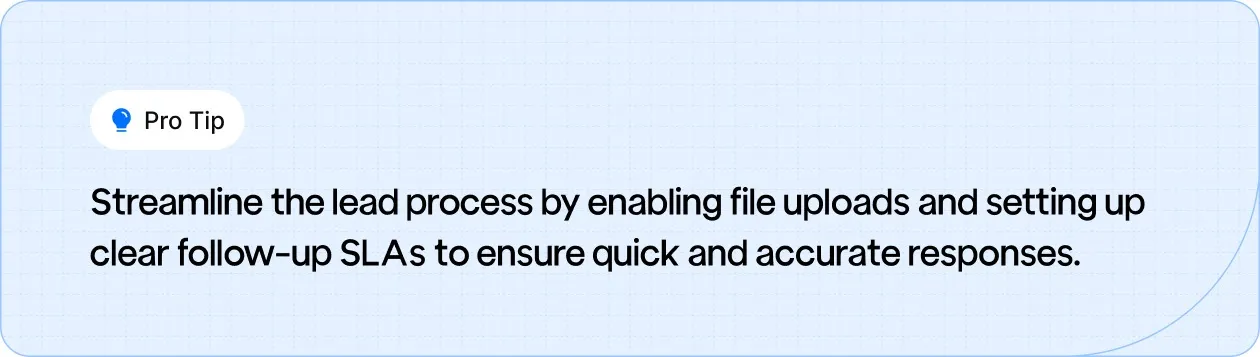
- Enabling File Uploads (CAD, BOM) for Accurate Quoting: Allow prospects to upload technical documents like CAD files and BOMs directly through the form. This ensures accurate quoting and saves time during follow-up.
- Creating SLA-Based Follow-Up Workflows: Set clear Service Level Agreements (SLAs) for follow-up responses. Automated workflows ensure leads are contacted quickly, improving your chances of conversion.
- Using AI and Chatbots for Prequalification: Implement AI and chatbots to automatically qualify leads based on their responses, ensuring that only serious inquiries are passed on to the sales team.
Account-Based Marketing for Engineering and Procurement Teams
Account-Based Marketing (ABM) is an effective strategy for targeting specific buyer committees in the manufacturing industry.
By focusing your efforts on high-value accounts and using personalized outreach, you can build stronger relationships with engineers, procurement managers, and decision-makers.
This approach combines SEO and remarketing tactics to keep your brand top of mind and increase the likelihood of conversions.
- Identifying High-Value Accounts and Targeting Engineers, Buyers, and Procurement Managers
Focus on the companies and roles that are most likely to convert. Identify your high-value target accounts, then zero in on the decision-makers within those organizations.
- Using LinkedIn and Industry-Specific Databases for Targeting
Leverage LinkedIn’s advanced targeting features and databases like ThomasNet to reach the right people. These platforms allow you to directly connect with engineers and procurement teams within your ideal accounts.
- Crafting Ads for Thought Leadership and Technical Content
Create ads that promote your expertise. Share industry insights, whitepapers, and technical content that position your brand as a trusted leader in your field.
- Creating Personalized Content Sequences for ABM Outreach
Develop tailored content sequences for each account. Use targeted emails, case studies, and product demos to engage prospects and guide them through the decision-making process.
90-Day Implementation Roadmap for Search Marketing Success
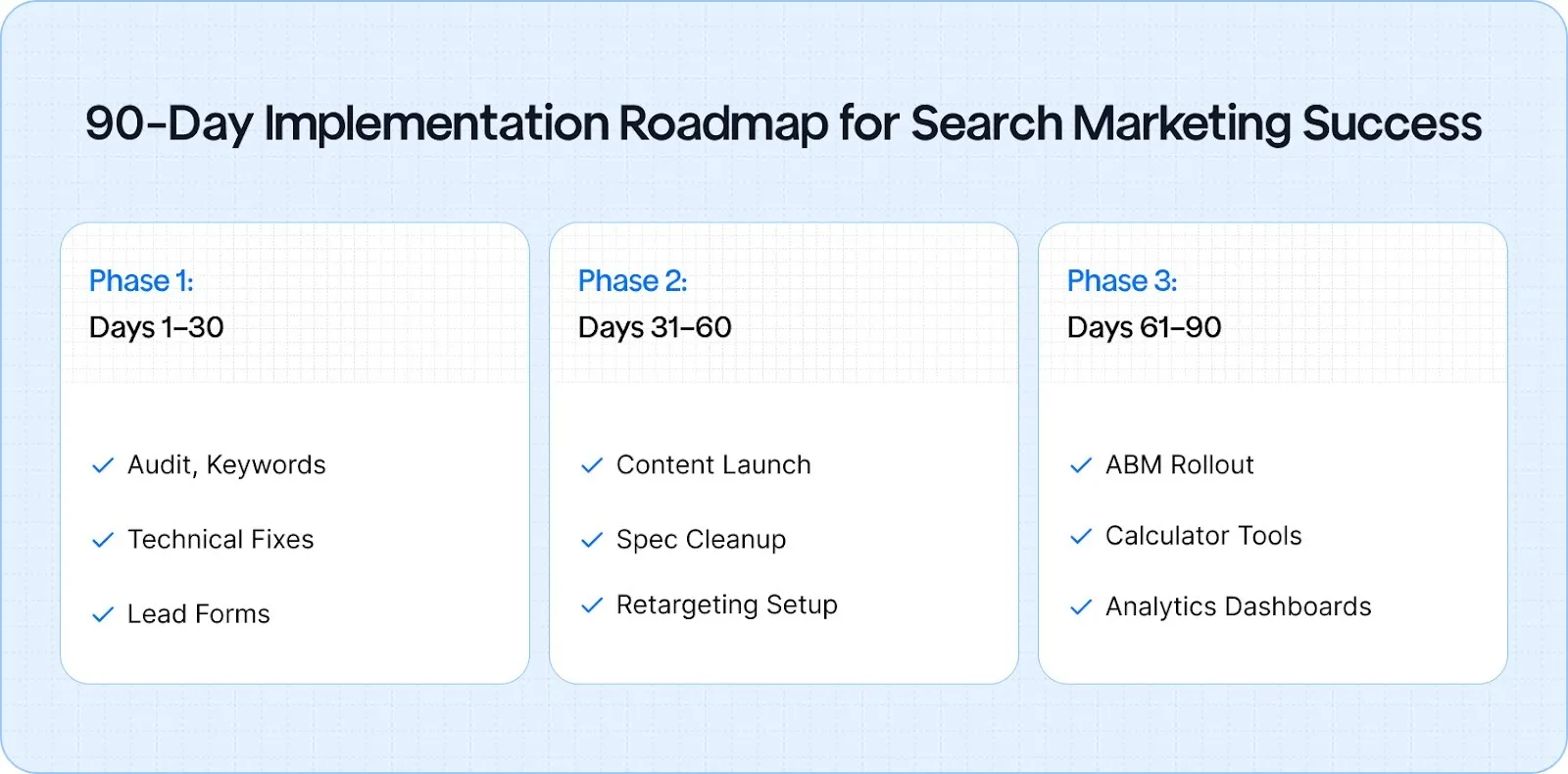
A successful search marketing strategy for manufacturers requires a clear plan and focused execution.
This 90-day roadmap will guide you through three actionable phases to optimize your online presence, attract qualified leads, and drive sales.
Phase 1 (Days 1–30): Audit, Keyword Mapping, Technical Fixes, Lead Form Optimization
- Audit your website to identify technical issues that could be hindering performance.
- Map your keywords to ensure they align with your target audience’s needs and pain points.
- Optimize lead capture forms to make them mobile-friendly and easy to use, ensuring a smooth conversion process.
Phase 2 (Days 31–60): Content Launch, Spec Cleanup, Retargeting Setup
- Launch valuable content such as blogs, case studies, and whitepapers targeting specific pain points and industry terms.
- Clean up technical specs to ensure they are SEO-friendly and easily discoverable.
- Set up retargeting ads to re-engage website visitors and drive them back to your site.
Phase 3 (Days 61–90): ABM Rollout, Calculator Tools, Analytics Dashboards
- Implement an ABM strategy targeting high-value accounts and key decision-makers.
- Launch engineering calculators or interactive tools that add value and improve engagement.
- Set up analytics dashboards to track progress and measure ROI.
Start Your Roadmap
Implement a practical 90-day plan to boost search marketing success and see measurable results.
Kickstart Your 90-Day Plan
Ready to Supercharge Your Manufacturing Marketing Strategy?
Manufacturers face unique challenges in search marketing, targeting the right decision-makers and driving quality leads that convert.
It's clear that a one-size-fits-all approach isn’t enough to achieve meaningful results. To truly optimize your search marketing, you need a tailored solution that streamlines your processes and boosts your ROI.
Key Takeaways:
- Targeted search strategies and technical content are key to attracting qualified leads.
- Implementing an efficient workflow for lead capture and follow-up is essential for conversions.
- Tracking and optimizing every step of your search marketing process drives success.
Gushwork helps manufacturers track and optimize every step of their search marketing
It streamlines the entire process, including part-number indexing and the final sale.
Book a Free Consultation
FAQs
Q1: How can manufacturers improve their search engine rankings?
A1: Manufacturers can enhance their search engine rankings by implementing robust Search Engine Optimization (SEO) strategies. This includes optimizing website content with relevant keywords, ensuring mobile-friendliness, improving site speed, and obtaining quality backlinks.
Additionally, creating detailed product specifications and case studies can attract technical buyers and improve organic visibility.
Q2: What is the difference between SEO and PPC for manufacturers?
A2: SEO (Search Engine Optimization) focuses on optimizing your website to rank higher in organic (non-paid) search results, which builds long-term visibility. PPC (Pay-Per-Click) advertising, such as Google Ads, involves paying for ad placements in search results, providing immediate visibility.
Manufacturers often use a combination of both to balance short-term lead generation with long-term organic growth.
Q3: How do I target engineers and procurement managers online?
A3: To effectively reach engineers and procurement managers, manufacturers should focus on creating content that addresses their specific needs and challenges. This includes publishing technical blogs, whitepapers, and case studies that highlight product specifications and industry compliance.
Utilizing LinkedIn for targeted advertising and participating in industry-specific forums can also help in reaching these decision-makers.
Q4: What are the best platforms for B2B advertising in manufacturing?
A4: For B2B advertising in manufacturing, platforms like LinkedIn and Google Ads are highly effective. LinkedIn allows for precise targeting based on job titles and industries, making it ideal for reaching professionals such as engineers and procurement managers.
Google Ads can capture intent-driven searches, directing potential leads to your website.
Q5: How can I measure the ROI of my digital marketing efforts?
A5: Measuring the return on investment (ROI) of digital marketing efforts involves tracking key performance indicators (KPIs) such as website traffic, lead conversions, and sales attributed to marketing activities.
Tools like Google Analytics and CRM systems can help in monitoring these metrics. It's important to align marketing goals with business objectives to accurately assess ROI.
Q6: What role does content marketing play in manufacturing marketing?
A6: Content marketing plays a crucial role in manufacturing marketing by educating potential customers and establishing authority in the industry.
Creating valuable content, such as technical guides, product demonstrations, and customer testimonials, can attract and engage your target audience. This approach aids in SEO and builds trust with potential clients.
Q7: Should I consider hiring a digital marketing agency for my manufacturing business?
A7: Hiring a digital marketing agency can be beneficial for manufacturing businesses, especially if internal resources are limited. An experienced agency can provide expertise in SEO, PPC, content creation, and analytics, helping to develop and execute a comprehensive digital marketing strategy tailored to your business needs.
Digital Marketing
Oct 27, 2025
5 mins
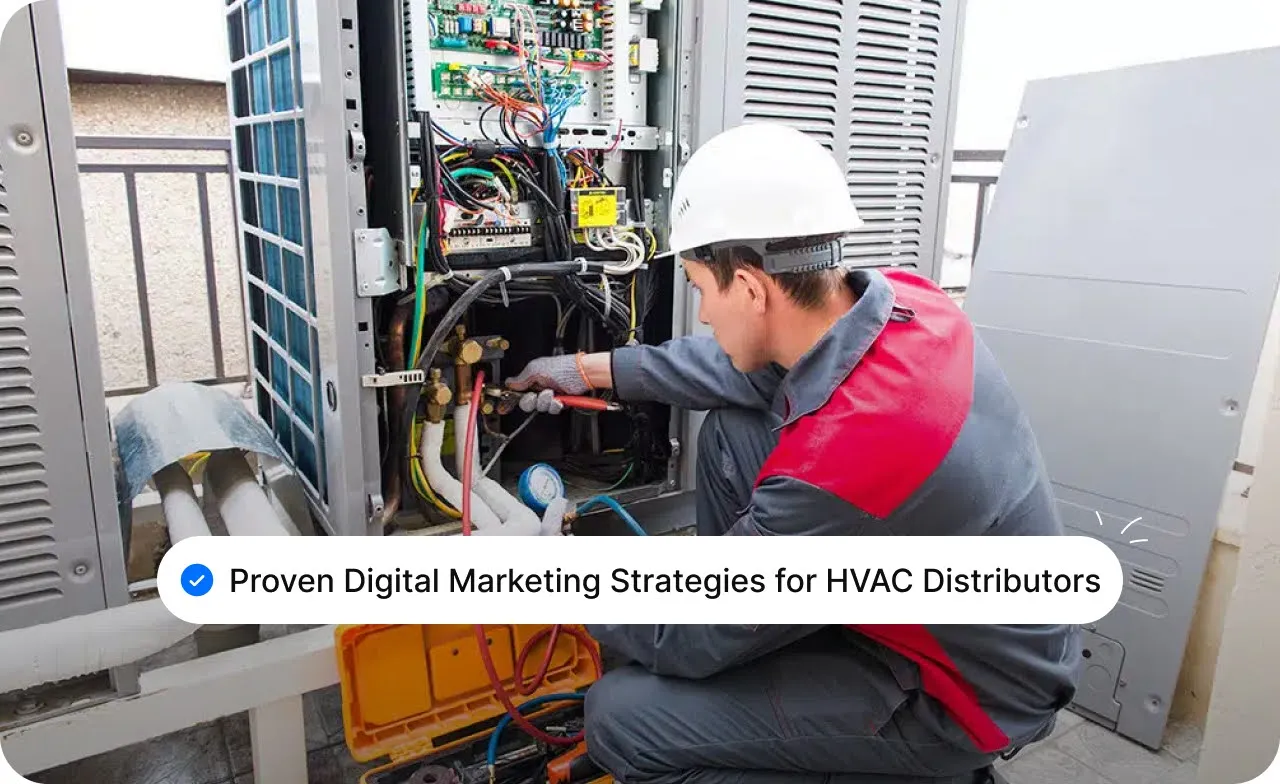
Proven Digital Marketing Strategies for HVAC Distributors
Batul Beawarwala
HVAC distributors often face a unique challenge: their digital marketing efforts generate plenty of traffic but fail to convert that traffic into qualified leads.

While big competitors flood the market with generic ads and broad campaigns, smaller distributors struggle to stand out and reach the right customers.
In a crowded digital space, the real challenge lies in targeting and engaging the right audience, one that values your products and services.
This article will break down proven strategies for HVAC distributors to cut through the noise, optimize their online presence, and drive more meaningful, revenue-generating interactions with the customers who matter most.
Why Digital Marketing is Crucial for HVAC Distributors?
A strong online presence is essential for reaching the right customers. Digital marketing provides HVAC distributors with the tools to target, engage, and convert prospects more efficiently than traditional methods.
Increased Online Search Behavior
With more consumers turning to the internet for HVAC needs, your visibility online directly impacts your business success.
91% of homeowners rely on online reviews before picking contractors, meaning HVAC distributors who aren’t visible in search results are missing out on key opportunities.
- 74% of consumers research HVAC products online before buying.
- 92% of users search for local HVAC services via search engines.
Competitive Advantage
Digital marketing allows HVAC distributors to stand out in a crowded market by reaching the right audience with tailored messages.
Using platforms like SEO, social media, and targeted ads, you can highlight your unique offerings and position your brand as the go-to expert in the industry.
- Showcase your expertise through content marketing and targeted ads.
- Leverage local SEO to attract customers in your specific service areas.
Cost-Effectiveness
Compared to traditional advertising, digital marketing allows HVAC distributors to maximize their budgets with highly targeted campaigns.
Tools like Google Ads and SEO enable precise audience targeting, which means you can track performance, optimize strategies, and ultimately get a better return on investment.
- Reach the right audience with lower ad spend using digital ads.
- Measure campaign success with tools like Google Analytics for improved ROI.
Digital Marketing Strategies Every HVAC Distributor Should Implement
To stand out in the crowded HVAC market, implementing the right digital marketing strategies is crucial.
These approaches drive traffic and help you convert visitors into long-term customers. Here are the most effective strategies for HVAC distributors.
Search Engine Optimization (SEO)
SEO is essential for driving organic traffic to your website, ensuring that your business is visible to potential customers who are actively searching for HVAC products and services.
How to Do It: Start with keyword research to identify high-value terms related to HVAC parts and services. Optimize your website with proper on-page SEO techniques, use targeted headings, meta tags, and internal links.
Create dedicated landing pages for each service or product category to improve search engine rankings.
![Optimize your website for geo-targeted keywords like 'HVAC parts in [city]' to improve local SEO and appear in relevant local searches.](https://cdn.prod.website-files.com/6614dca1d3aa7b076d6f3004/68ff6fef88835c5190c30626_9699e023.webp)
If you're looking for an easier way to manage SEO campaigns, there’s a solution available.
Gushwork Agents integrate seamlessly with your existing marketing efforts, enhancing results.
Optimize Your SEO
Pay-Per-Click Advertising (PPC)
PPC is an effective way to generate immediate results by targeting users actively searching for HVAC-related products. It helps you get in front of potential customers quickly and drives traffic to your website.
How to Do It: Set up Google Ads campaigns focusing on high-intent keywords like “HVAC parts distributor” or “commercial HVAC equipment.”
Optimize your ads for conversions by linking to well-designed landing pages with clear calls to action.
Social Media Marketing
Social media is a powerful tool for building brand awareness and engaging with your audience.
Platforms like Facebook, Instagram, LinkedIn, and Twitter offer opportunities to connect with both B2B and B2C customers.
How to Do It: Share helpful product tips, industry news, and customer success stories on your social channels. You can also run ads to reach a broader audience and promote special offers or new products.
Email Marketing
Email marketing provides a direct line to your leads and customers.
With a 90% open rate for well-crafted emails, it’s a powerful tool for nurturing relationships and encouraging repeat business.
How to Do It: Use email campaigns to announce new products, share HVAC maintenance tips, or offer seasonal promotions. Segment your email list to deliver personalized content to the right audience, including first-time visitors and loyal customers.
Must Read: Top 10 Lead-Focused Content Marketing Services for HVAC Manufacturers
Overcoming Common Digital Marketing Challenges for HVAC Distributors
The HVAC distribution market is competitive, and many manufacturers face similar challenges when it comes to digital marketing.
From building brand recognition to generating qualified leads, these hurdles can be overwhelming, but they are entirely surmountable with the right strategies in place.
Lack of Brand Awareness
Problem: Many HVAC distributors struggle to make their brand stand out in a saturated market, which can lead to missed opportunities with potential customers.
Solution: To build strong brand recognition, focus on creating a consistent online presence using content marketing, SEO, and social media platforms.
These tools help elevate your brand and make it visible to those actively searching for your products or services.
In a discussion on Reddit, a commercial HVAC professional emphasized the value of focusing on niche services to differentiate from competitors.
By creating detailed content that addresses specific customer needs and utilizing digital channels for distribution, HVAC distributors can build brand authority and attract a targeted audience.
Low Lead Generation
Problem: Even with increased traffic, many HVAC distributors struggle to convert website visitors into actual leads, which impacts their sales pipeline.
Solution: Improve your lead generation efforts by optimizing your website with clear CTAs (Call-to-Actions), well-designed landing pages, and effective lead magnets such as downloadable guides or product catalogs.
These elements guide prospects towards taking action and filling out contact forms.
Difficulty Competing with Larger HVAC Players
Problem: Smaller HVAC distributors often find it difficult to compete with large, well-established companies that have bigger marketing budgets and teams.
Solution: To level the playing field, focus on a niche approach. Highlight personalized service and local expertise that larger competitors may overlook.
This allows you to create a unique selling proposition (USP) that resonates with specific customer needs.
Key Metrics & Tools to Track
Key Metrics:
- Conversion Rate: This tells you the percentage of website visitors who take action, such as making a purchase or submitting an inquiry.
- Customer Acquisition Cost (CAC): The total cost involved in acquiring a new customer, including advertising and sales expenses.
- Return on Ad Spend (ROAS): Measures the revenue generated from each dollar spent on ads, helping you evaluate the success of your PPC campaigns.
- Bounce Rate: A high bounce rate indicates that visitors are leaving your site quickly, signaling that your landing pages or user experience may need improvement.
- Time on Page: This metric tells you how long visitors stay on your website, providing insight into how engaging your content is.
Key Tools:
- Google Analytics: A comprehensive tool for tracking traffic, user behavior, and conversion rates on your website.
- SEMrush: A powerful tool for SEO performance, tracking organic search rankings, and identifying keyword opportunities.
- HubSpot: Offers detailed analytics for lead generation, email campaigns, and overall marketing performance.
Data-driven decisions are the key to optimize your marketing strategy.
There’s a tool that can automate your data collection and analysis.
Leverage Your Data
How to Choose the Right Digital Marketing Platform for Your HVAC Distribution Business
Choosing the right digital marketing platform is crucial for HVAC distributors looking to grow their online presence and generate qualified leads. With so many agencies out there, it can be overwhelming to find the right fit.
Here's how to make an informed decision that ensures your marketing efforts are in good hands.
Why You Need a Platform?
Digital marketing for HVAC distributors requires specialized knowledge and constant optimization. Running campaigns across SEO, PPC, social media, and email marketing can quickly become overwhelming without the right expertise.
A renowned and trusted platform allows you to tap into their experience and resources, saving you both time and money while focusing on running your business.
What to Look For:
- Experience in HVAC Marketing: The platform you choose should have a deep understanding of the HVAC industry. They should be familiar with unique challenges such as local SEO, targeting the right customer segments, and industry-specific marketing strategies.
- Specialization in SEO and PPC: A trusted platform should excel in both driving organic traffic through SEO and generating immediate leads via PPC campaigns. Look for platforms that can demonstrate success in these areas and ask for case studies or examples of past HVAC clients.
- Proven Track Record: Choose a platform that showcases real, measurable results. Whether through client testimonials, detailed metrics, or case studies, the platform should have a history of delivering tangible outcomes for HVAC businesses.
Gushwork has a proven track record in helping businesses optimize their digital marketing strategies, boosting their visibility and lead generation.
Questions to Ask:
- Can you provide case studies or examples of HVAC clients you've worked with?
- What specific SEO strategies do you recommend for HVAC distributors to improve local rankings?
- How do you measure success in PPC campaigns, and can you share ROI data?
- What is your process for ongoing optimization and reporting?
By asking these key questions, you'll gain a better understanding of how the platform works and how it can meet your unique needs. Choosing the right digital marketing platform can save you time, reduce marketing costs, and help you achieve faster growth in the highly competitive HVAC market.
Platforms like Gushwork offer trusted expertise and proven strategies to accelerate your success, so you can focus on what matters most: your business.
Staying Competitive with Digital Marketing Strategies for HVAC Distributors
To remain competitive and drive sustainable revenue, HVAC distributors must embrace modern digital marketing strategies. Relying on traditional marketing methods simply won’t deliver the same results in today’s fast-paced, online-driven market.
By adopting SEO, PPC, and social media marketing, distributors can effectively reach the right customers, improve brand visibility, and establish themselves as trusted industry leaders.
Taking action now is crucial. Whether you're optimizing your website for better search rankings, launching a targeted ad campaign, or engaging on social platforms, each step contributes to your growth.
By focusing on the right digital strategies, HVAC distributors can achieve lasting success and stand out in a crowded marketplace.
Ready to scale your HVAC distribution business?
Speak with Gushwork’s experts today and discover how streamlined digital solutions can accelerate your growth.
Book Your Free Consultation
FAQs
Q1. How can HVAC distributors increase their online visibility?
A1. HVAC distributors can increase online visibility by focusing on local SEO, optimizing their website for search engines, creating valuable content, and maintaining an active social media presence. Ensuring your business appears in local search results is crucial for attracting customers in your service area.
Q2. What is the best digital marketing strategy for HVAC distributors?
A2. A combination of SEO, PPC advertising, and social media marketing is the best approach. SEO helps you rank higher in search results, PPC drives immediate traffic, and social media engages customers directly. Tailoring your strategy to your specific audience is key to success.
Q3. How does social media marketing help HVAC distributors?
A3. Social media marketing helps HVAC distributors build brand awareness, engage with local communities, and share educational content. Platforms like Facebook, Instagram, and LinkedIn allow distributors to connect directly with potential customers, showcase their expertise, and promote special offers.
Q4. What are the key metrics to track for HVAC digital marketing?
A4. Key metrics include conversion rate, customer acquisition cost (CAC), return on ad spend (ROAS), bounce rate, and time on page. Tracking these metrics helps you assess the effectiveness of your campaigns and make data-driven decisions to optimize your marketing efforts.
Q5. How important is local SEO for HVAC distributors?
A5. Local SEO is crucial for HVAC distributors since most customers search for services within a specific geographic area. Optimizing for local search helps your business appear in local search results, especially on platforms like Google My Business, which increases visibility and drives more relevant leads.
Q6. Should HVAC distributors invest in PPC advertising?
A6. Yes, investing in PPC advertising can provide immediate results and help HVAC distributors generate leads quickly. Targeted PPC campaigns focusing on high-intent keywords like “HVAC parts” or “emergency AC repair” can drive qualified traffic and complement long-term SEO efforts.
Q7. How can HVAC distributors generate more leads through their website?
A7. HVAC distributors can generate more leads by optimizing their website with clear calls-to-action (CTAs), easy navigation, and dedicated landing pages for specific services or products. Offering downloadable resources like maintenance guides or product catalogs in exchange for contact information is another effective strategy.
Digital Marketing
Oct 24, 2025
5 mins
Manufacturers Are Slashing Their Sales Cycles - Here Are the Content Strategies Helping Them
Batul Beawarwala
Attracting the right leads is a constant challenge, particularly for manufacturers with complex, high-value products.
Generic content might generate traffic, but it often fails to bring in qualified prospects who understand the true value of what you offer.
Without the right sales tools and resources aligned with your content, your sales team can end up wasting time on leads that don’t convert.
This guide will show you how combining content marketing with sales enablement can help manufacturers attract the right buyers, streamline the sales process, and close deals faster.
What is Content Marketing vs. Sales Enablement?
Content marketing and sales enablement are two distinct but complementary strategies.
Understanding the difference, and how they can work together, will help you build a more efficient and effective sales process.
Content Marketing
Content marketing is the process of creating valuable content to attract, engage, and educate potential customers. It can include blog posts, videos, social media updates, and more.
Sales Enablement
Sales enablement is about equipping your sales team with the tools, content, and training they need to engage with prospects effectively and close deals faster.
This can include product information, case studies, and sales playbooks.
To further enhance your understanding of sales enablement and its significance in the sales process, watch the following brief video:
[Embed the video here]
This visual guide will provide a quick yet comprehensive overview, helping to solidify the concepts discussed.
Why They Work Together?
Content marketing nurtures leads by educating and informing them, while sales enablement gives your sales team the right tools to convert those educated leads into paying customers. Together, they form a powerful, efficient sales process.
The Sales Funnel: Tailoring Content to Every Stage of the Buyer’s Journey
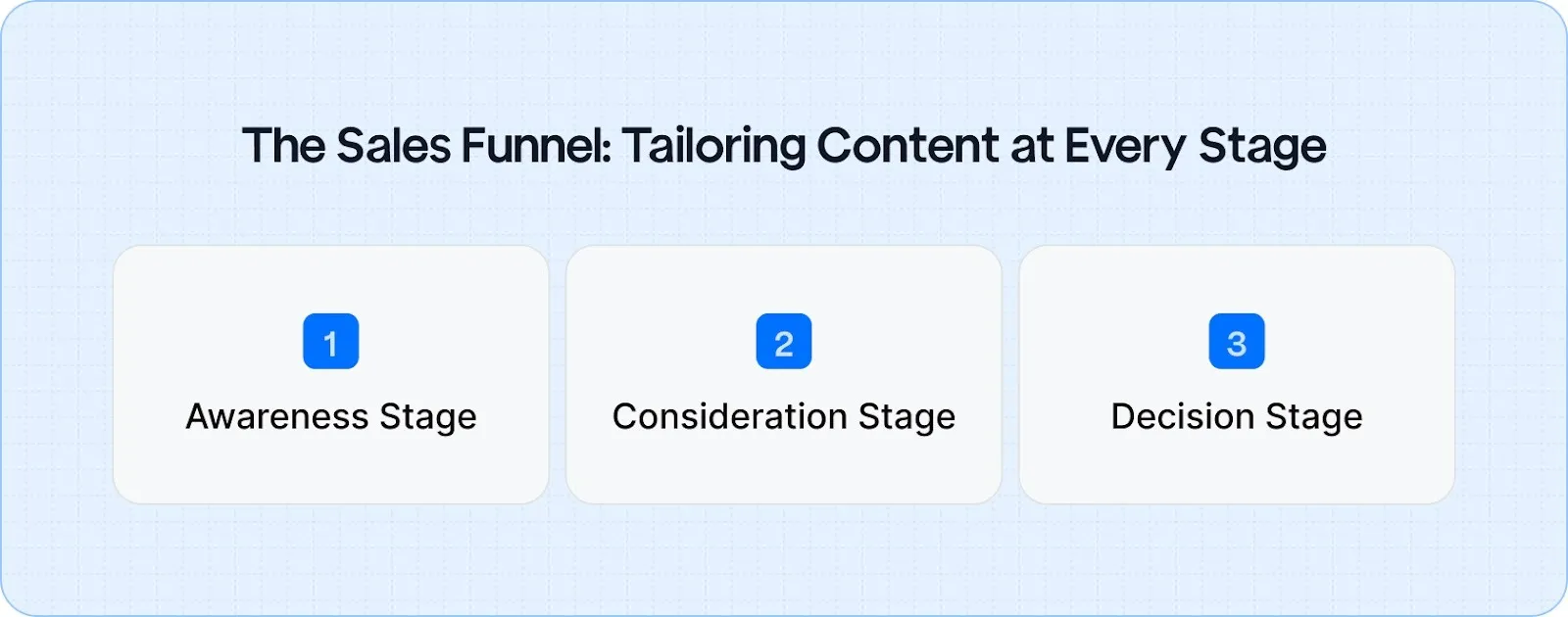
The sales funnel is the process a potential customer follows before making a purchase. It starts with them realizing they have a problem and ends with them deciding to buy a solution.
Each stage of the funnel requires different types of content to guide the customer along the way.
1. Awareness Stage
In this stage, prospects are becoming aware of their problem and searching for solutions. Your goal is to educate them about their challenges and introduce your product as a possible solution.
- Content types: Blog posts, social media updates, introductory videos
- Purpose: Help prospects realize their pain points and that a solution exists
- Example: A blog post that explains how inefficient equipment leads to higher production costs, subtly introducing your product as a fix.
2. Consideration Stage
At this point, prospects know their problem and are considering options. You need to show them why your product is the best choice to solve their problem.
- Content types: eBooks, webinars, in-depth case studies
- Purpose: Provide valuable insights and comparisons to help prospects evaluate their options
- Example: A webinar that shows the specific benefits of your product, or a case study demonstrating how it improved efficiency for a similar business.
3. Decision Stage
Now, prospects are ready to decide. They just need the final pieces of information to make the purchase. This is where your product-specific content comes in.
- Content types: Product demos, customer success stories, pricing guides
- Purpose: Convince them that your solution is the right one, providing clear proof of its value
- Example: A product demo video or a detailed pricing guide that clearly shows how affordable and effective your solution is compared to others.
Sales Enablement Integration
Your sales team plays a key role in guiding prospects through these stages. Sales enablement content, such as battlecards (quick reference guides), product sheets, and pitch decks, help your team answer questions and provide the right resources at each stage of the buyer's journey.
- Tools for your sales team: Quick reference guides (battlecards), one-pagers (product sheets), tailored presentations (pitch decks)
- Goal: Ensure your sales team has the right content to close deals efficiently at every stage.
A Reddit thread from the r/ProductManagement community highlights valuable insights on creating effective sales enablement materials.
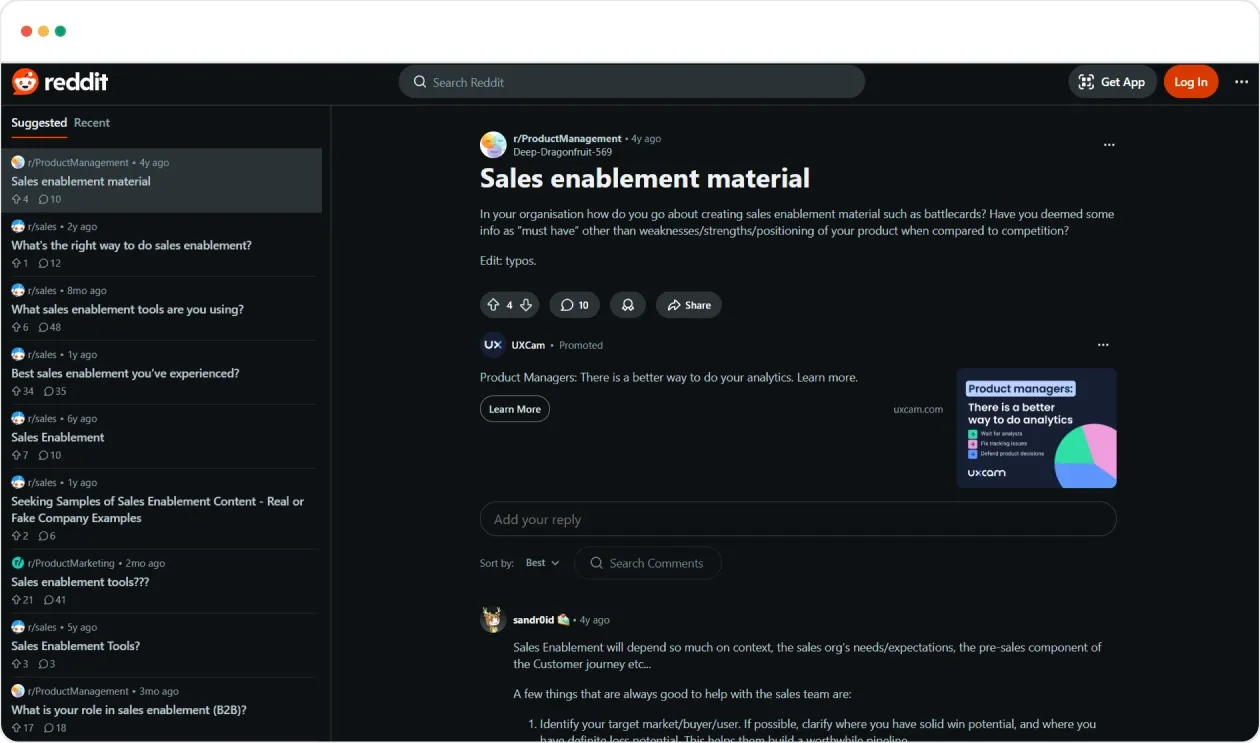
The thread also points to useful tools and strategies, which ensures that sales teams can quickly find the answers they need.
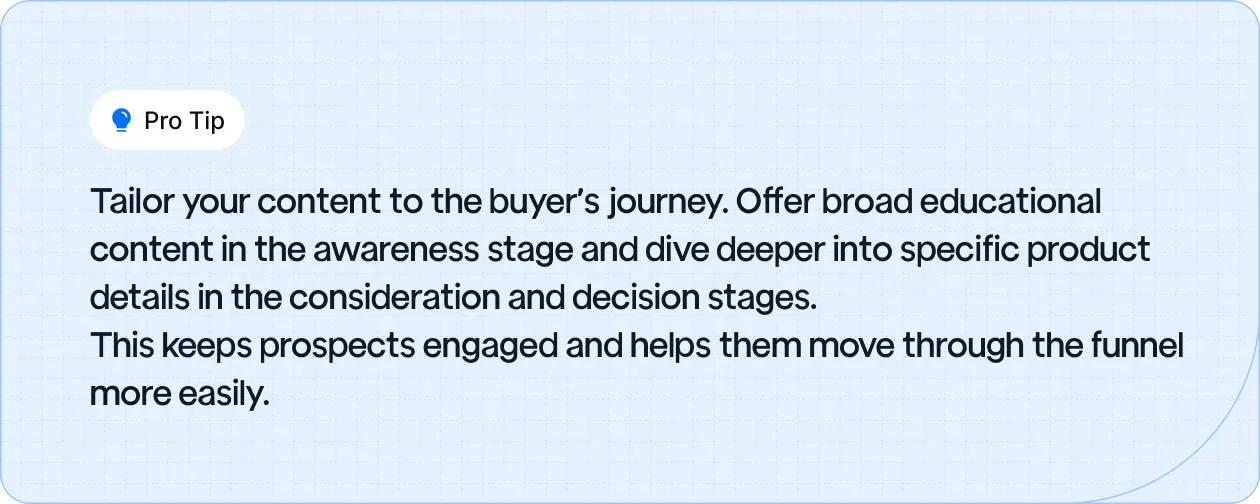
The Synergy Between Content Marketing and Sales Enablement
In many businesses, marketing and sales teams work separately, each focusing on their own goals.
But for manufacturers, especially those with complex products, success comes when both teams collaborate closely.
When marketing and sales are aligned, they create a seamless experience for the prospect, guiding them smoothly from the first interaction to the final sale. Without this partnership, leads can get lost, and valuable opportunities are missed.
How they work together:
Content Creation
Marketing’s job is to create content that raises awareness and attracts potential customers. This includes blog posts, social media updates, videos, and more. But attracting leads is just the first step.
Sales teams take over to nurture these leads and move them through the buying process using the content marketing team has provided. Think of marketing as the "first impression," and sales as the "closer."
Example: Marketing creates a blog post explaining the benefits of your product’s energy efficiency, while the sales team uses that content in follow-up emails to further educate leads and answer specific questions.
Feedback Loops
For content marketing to be truly effective, sales teams need to provide feedback on what content works, and what doesn’t.
If a particular blog or video helped close a deal, marketing needs to know so they can create more content like it. This feedback loop ensures that both teams are continuously improving their strategies.
Example: Sales may tell marketing that prospects love detailed case studies, leading marketing to create more of these success stories to help close deals.
Sharing Knowledge
Collaboration tools, like CRM systems and shared content libraries, are vital for aligning marketing and sales. These tools make it easy for both teams to access and share the right content at the right time.
When marketing and sales have access to the same up-to-date resources, they can move leads through the funnel more effectively, ensuring that no valuable information is lost.
Example: Both teams can use a shared library to access product demos, pricing guides, or competitive battlecards, ensuring that sales reps are always using the most relevant and accurate content during conversations with prospects.
Key Types of Content for Sales Enablement
Sales enablement content refers to all the resources your sales team uses to engage with customers effectively and close deals. These materials help salespeople educate, persuade, and move prospects through the buying process.
Examples of sales enablement content include:
- Product sheets that provide essential details about your product’s features and benefits
- Demos that show your product in action, giving prospects a hands-on experience
- Case studies that highlight real-world examples of how your product has solved problems for other companies
1. Internal Sales Content
Internal sales content helps your sales team become more knowledgeable and efficient in their roles. These resources prepare your team to have confident, consistent conversations with prospects.
- Sales playbooks: Step-by-step guides that outline how your team should sell, including strategies and best practices for different customer scenarios.
- Scripts: Pre-written dialogues that help salespeople navigate calls and meetings with prospects, ensuring key messages are delivered every time.
- Training materials: Videos, documents, and presentations that help onboard and continuously educate the sales team.
2. External Sales Content
External sales content is used by the sales team when interacting with potential customers. This type of content is designed to move prospects closer to making a purchase.
- Case studies: Success stories that show prospects how your product has helped other companies, proving its value and building trust.
- Product demos: Live or recorded demonstrations that show the features and benefits of your product in action.
- Presentations: Customizable decks that sales reps use during meetings to present your product’s value proposition and convince prospects of its benefits.
Why These Content Types Matter?
Each type of sales enablement content is designed to address specific buyer needs at different stages of their journey.
When used effectively, these resources help your sales team provide the right information at the right time, making their pitches more effective and increasing the likelihood of closing the sale.
- Internal content helps sales teams sell confidently, ensuring they’re prepared for any situation.
- External content helps move prospects through the decision-making process by offering tailored, relevant information at each stage.
Building a Unified Sales Enablement Content Strategy
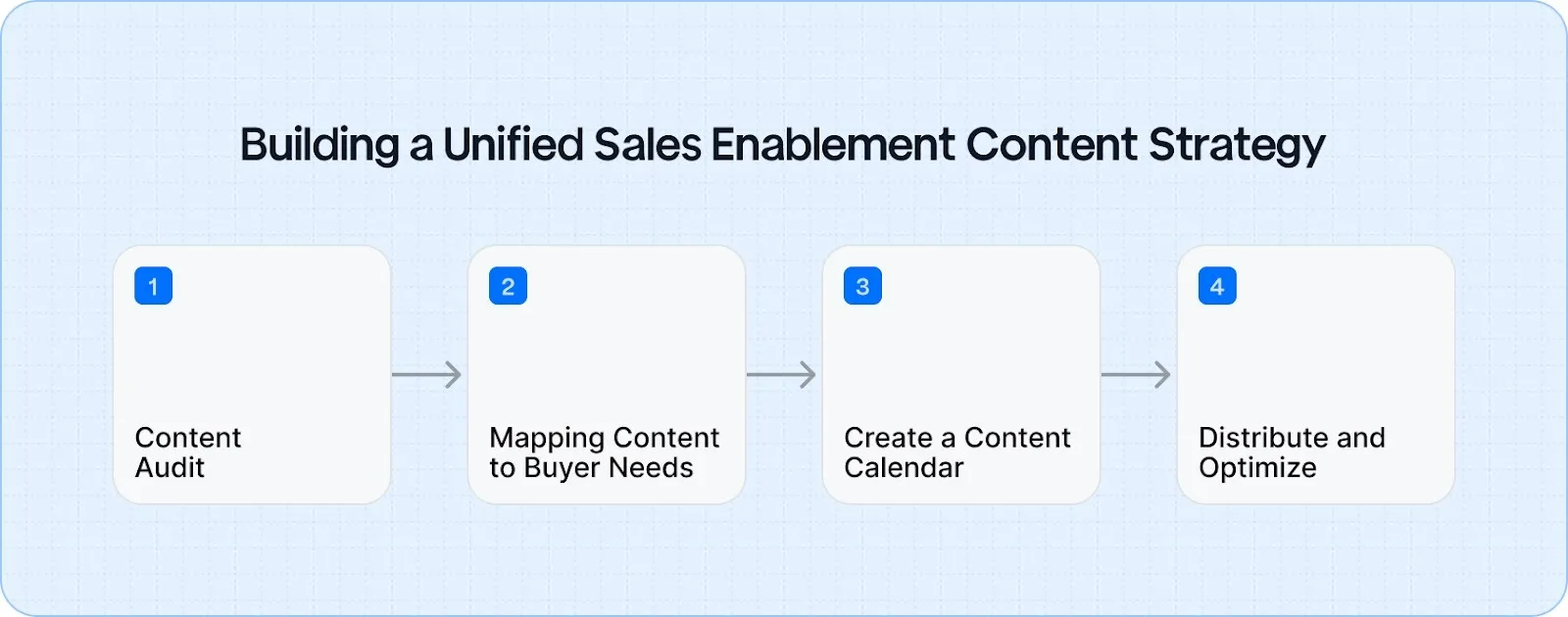
A well-structured content strategy is essential for aligning marketing and sales teams, ensuring that the right content reaches the right prospects at the right time.
Follow these steps to build a unified sales enablement strategy.
Step 1: Content Audit
Begin by reviewing your existing content. Identify which resources are performing well and which ones are not. This helps in understanding what resonates with your audience and what needs improvement or updating.
- Actionable Tip: Categorize your content into high-performing and underperforming sections. Repurpose or update old content to ensure it aligns with current buyer needs.
Step 2: Mapping Content to Buyer Needs
Align your content with different buyer personas and sales stages (awareness, consideration, decision). Each type of content should address specific pain points at each stage of the buyer’s journey.
- Actionable Tip: Create a content map that outlines which content should be used at each stage. For example, educational blog posts for the awareness stage and detailed case studies for the decision stage.
Step 3: Create a Content Calendar
Plan your content creation based on when your prospects are most likely to need it. Align the release of new content with sales campaigns, product launches, or industry events to ensure maximum relevance and impact.
- Actionable Tip: Schedule content based on seasonal trends, industry events, and key product features, ensuring your sales team has content ready for specific times of the year.
Step 4: Distribute and Optimize
Use content management systems (CMS) to organize and distribute content easily to your sales team. Make sure content is readily accessible and track its usage to see what works best in converting leads.
- Actionable Tip: Encourage your sales team to provide feedback on which content they use the most, allowing you to refine and improve your content library over time.
Technology’s Role
Easy-to-use tools like HubSpot, Salesforce, and Google Drive help automate and organize your content distribution. These tools allow seamless sharing, content tracking, and performance analysis to optimize content use.
Actionable Tip: Leverage CRM tools to analyze which content drives the highest conversion rates and ensure that your sales team has real-time access to high-impact content.
Optimizing Content for Sales Impact: Best Practices and Tips
Creating content that drives results for your sales team requires more than just putting together a few materials.
It’s about delivering the right content at the right time and in the right way. Here’s how to optimize your content to make sure it actually supports your sales efforts.
Tailor Content to Buyer Needs
Your content needs to speak directly to the buyer’s pain points at each stage of the buying process.
Rather than offering generic information, make sure the content is specific to the buyer’s challenges and how your product provides a solution.
- Key Action: Create content based on detailed buyer personas, focusing on specific issues that your product can solve.
- Why It Matters: Tailored content helps the buyer see your product as the solution to their problem, rather than just another option in the market.
Personalization at Scale
While personalized content is key, it can be difficult to create for each individual buyer. Fortunately, modern tools allow you to scale this personalization without losing its impact.
By using automation and CRM tools, you can deliver personalized content at every touchpoint, such as email and product demos.
- Key Action: Use CRM tools or AI-driven platforms to personalize emails and follow-ups based on the prospect’s previous interactions with your content.
- Why It Matters: Personalization at scale increases engagement and helps build stronger connections with leads.
Real-Time Sales Support
Sales teams often need content at a moment’s notice, during a call with a prospect or while in the middle of a demo.
Ensuring that your sales team has immediate access to the right materials can make all the difference between closing a deal and losing a lead.
- Key Action: Implement a content management system (CMS) that’s mobile-friendly and easily accessible during sales calls and meetings.
- Why It Matters: Speed and convenience in content access give sales reps the confidence to engage prospects effectively, without delays or distractions.
Measuring and Tracking Content Marketing and Sales Enablement Success
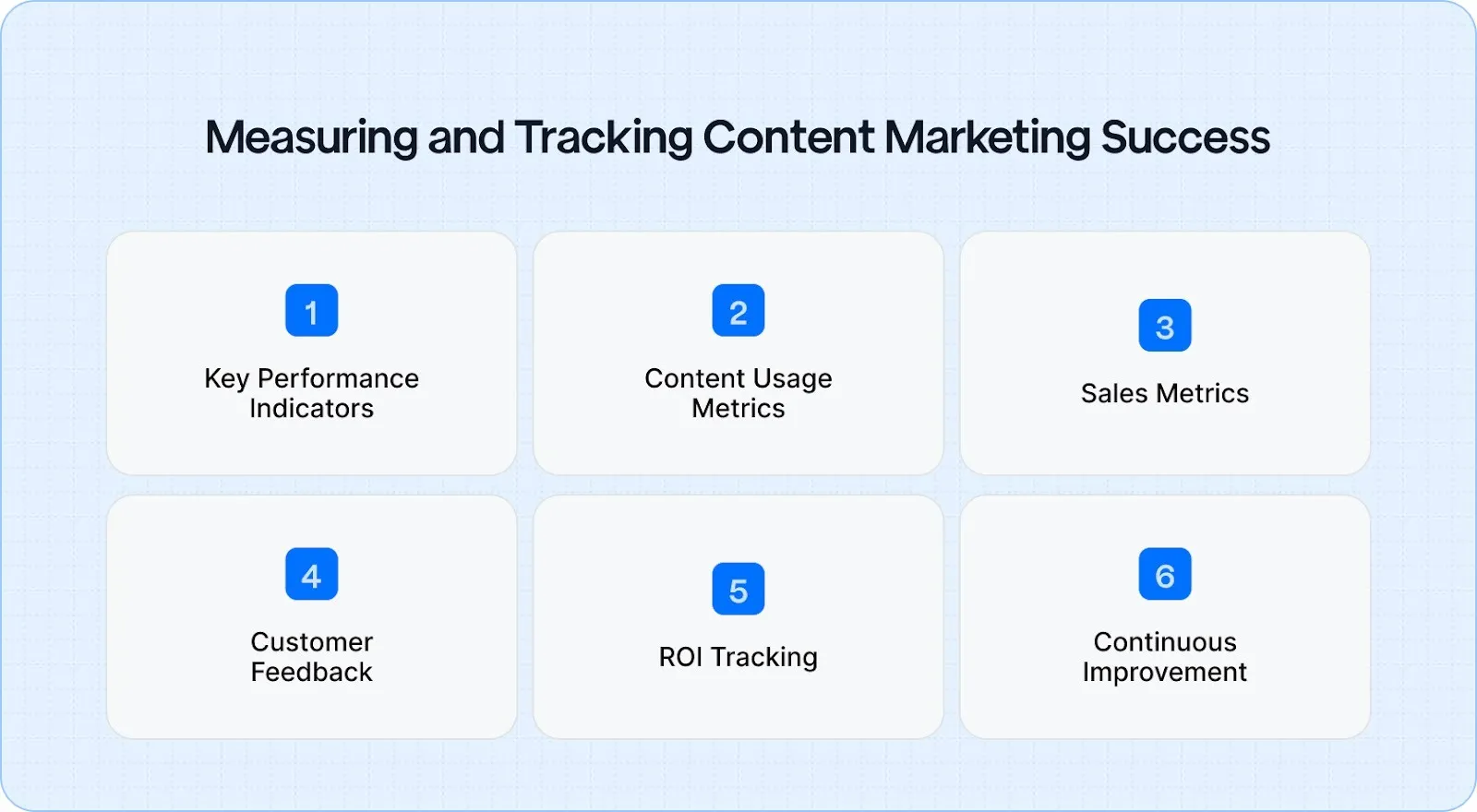
Tracking the success of your content helps refine your strategy. Here’s how to measure if your content is delivering the results you want.
- Key Performance Indicators (KPIs)
KPIs like lead generation, conversion rates, and engagement help track content success.
Actionable Tip: Focus on metrics like conversion rates and lead quality to assess content effectiveness.
- Content Usage Metrics
Track how often and which content is used by your sales team. This helps identify what’s working and what needs improvement.
Actionable Tip: Use CMS tracking to see which content gets the most engagement from your team.
- Sales Metrics
Metrics like win rates and conversion rates show how well content helps move prospects to a sale.
Actionable Tip: Compare deals that used specific content versus those that didn’t to see what’s driving success.
- Customer Feedback
Feedback from sales teams and prospects can highlight which content is resonating and what needs refinement.
Actionable Tip: Collect feedback regularly to understand what content works best in different sales situations.
- ROI Tracking
Measuring ROI helps you understand if content is delivering value relative to the investment.
Actionable Tip: Track revenue generated by content-driven leads alongside production costs to gauge ROI.
- Continuous Improvement
Adjust your content strategy based on performance data. Regular updates keep your content relevant and effective.
Actionable Tip: Conduct quarterly content reviews to optimize based on data.
Struggling to track content performance?
Use a platform that automatically measures engagement and success, helping you refine your strategy.
Measure Your Impact
Overcoming Common Barriers to Effective Content Marketing & Sales Enablement Alignment
Aligning content marketing and sales can be challenging. Here are some common barriers and how to overcome them.
Key Challenges:
- Siloed Teams: Marketing and sales teams often work separately, leading to misalignment in goals and messaging.
- Content Accessibility: Sales teams may struggle to quickly find and use the content they need.
Solutions to Overcome These Barriers:
- Build Open Communication: Encourage regular check-ins between sales and marketing teams. This keeps both teams aligned on goals and ensures content meets the needs of both parties.
- Invest in Technology: Use platforms like CRM or content management systems (CMS) to streamline content access. These tools help sales teams quickly find relevant materials and enable better collaboration between departments.
- Implement Feedback Loops: Create a process where sales teams provide regular feedback on content. This helps marketing adjust content based on what’s working in the field, improving its effectiveness over time.
Enhance Your Sales Enablement Content Strategy
Aligning content marketing with sales enablement is essential for improving sales performance.
When your content is tailored to buyer needs, easily accessible by your sales team, and continuously optimized, you create a smooth sales process that drives results.
Key Takeaways:
- Content marketing and sales enablement need to work together to effectively engage and convert prospects.
- Optimizing content for each stage of the buyer’s journey helps move leads through the funnel.
- Regular collaboration between sales and marketing teams ensures content remains relevant and effective.
Ready to enhance your sales enablement content strategy?
Improve your sales enablement content strategy today with the right tools.
Partner with Gushwork to organize your content, streamline your processes, and drive better results.
Book a Free Consultation
FAQs
Q1. What’s the difference between content marketing and sales enablement?
A1. Content marketing focuses on creating valuable content to attract and educate potential customers. Sales enablement equips your sales team with the tools and resources they need to engage effectively with these prospects.
Q2. How can content marketing help my sales team?
A2. By providing educational materials like blog posts, videos, and case studies, content marketing helps your sales team engage prospects early in the buyer's journey, building trust and addressing their needs before direct sales efforts begin.
Q3. What types of content should be included in a sales enablement strategy?
A3. Effective sales enablement content includes:
- Product sheets
- Case studies
- Pitch decks
- Competitive battlecards
- Sales playbooks
These materials help sales teams address specific buyer needs and make their pitches more effective.
Q4. How do content marketing and sales enablement work together?
A4. Content marketing attracts and educates leads, while sales enablement ensures your sales team has the resources to convert these leads into customers. Together, they create a seamless and efficient sales process.
Q5. What are the key performance indicators (KPIs) for measuring success?
A5. Important KPIs include:
- Lead generation
- Conversion rates
- Customer acquisition cost (CAC)
- Lifetime value (LTV)
- Sales cycle length
Tracking these metrics helps assess the effectiveness of your content strategy and sales efforts.
Q6. How can I align my sales and marketing teams effectively?
A6. Foster open communication through regular check-ins, invest in shared tools like CRM systems, and implement feedback loops where sales teams provide input on content effectiveness. This alignment ensures both teams work towards common goals.
Q7. What are the common barriers to effective content marketing and sales enablement alignment?
A7. Key challenges include siloed teams and difficulty accessing content. Overcome these by encouraging regular communication between sales and marketing, investing in technology to streamline content access, and implementing systems for continuous feedback.
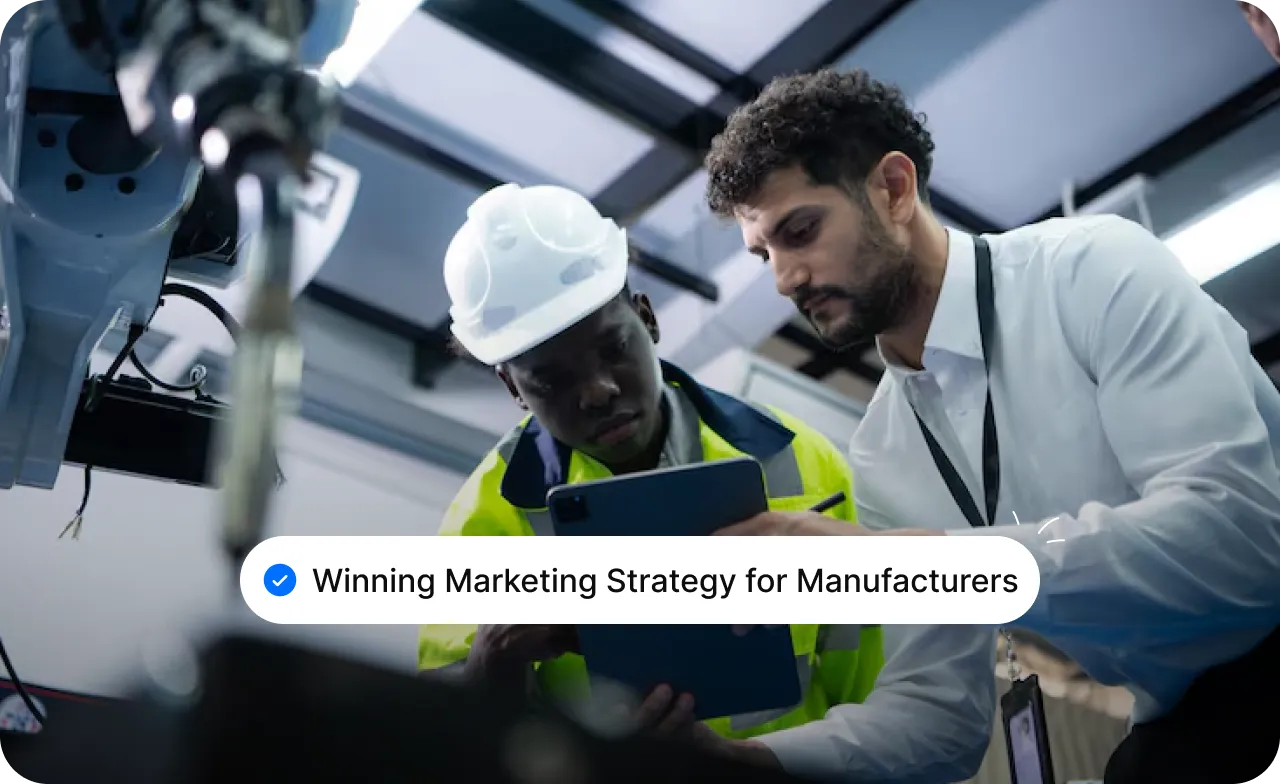
Digital Marketing
Oct 24, 2025
5 mins
Create a Winning Marketing Strategy for Industrial Product Manufacturers
Batul Beawarwala
Marketing industrial products can feel like navigating a complex maze. Unlike consumer goods, industrial products often cater to a specific audience, solving highly specialized problems. But how do you effectively communicate the value of your products to decision-makers who are often overwhelmed with options?
The key to success lies in a well-crafted marketing strategy that targets the right people, at the right time, with the right message. But how do you build a strategy that works? How can you ensure your industrial product not only stands out but also attracts and converts the right leads?
In this blog, we’ll explore the elements of an effective marketing strategy for industrial products.
What is Marketing?
Marketing is the work that makes your product findable, understood, and trusted by the people who might buy it. For industrial products, it means clear technical proof, practical answers, and signals that reduce risk for engineers and procurement teams.
At its best, marketing maps to the buyer’s journey. It builds awareness when someone starts researching, provides the specific facts they need to compare suppliers, and supports the internal case they must make to buy. Each piece of content or touchpoint should have a clear role in that path.
Marketing also measures what matters to the business. It tracks who shows up, how they interact with technical content, and whether those interactions become real enquiries. When marketing links to real commercial outcomes, it stops being chaotic and starts being predictable growth.
What Makes Marketing Industrial Products Different from Other Industries?
Industrial products often require more technical, niche marketing efforts due to their complexity and specialized customer base. It focuses on selling complex, high-value products to businesses that need them for specific functions.
Challenges in Industrial Marketing:
- Complex Products: Industrial products often have multiple components and technical specs that need to be explained clearly.
- Long Sales Cycles: Sales for industrial products can take months or even years, requiring patience and persistence.
- Niche Audiences: Your customers are often in specialized industries with unique needs, meaning your marketing must be targeted and precise.
Why This Requires a Unique Strategy?
- Precision in Targeting: Industrial marketing is about strategically reaching the ideal buyer at the optimal moment with a message that directly resonates with their specific needs and pain points.
- Education Over Selling: Your products often need a detailed explanation, which means educating your audience is key.
Foundations of an Effective Industrial Product Marketing Strategy
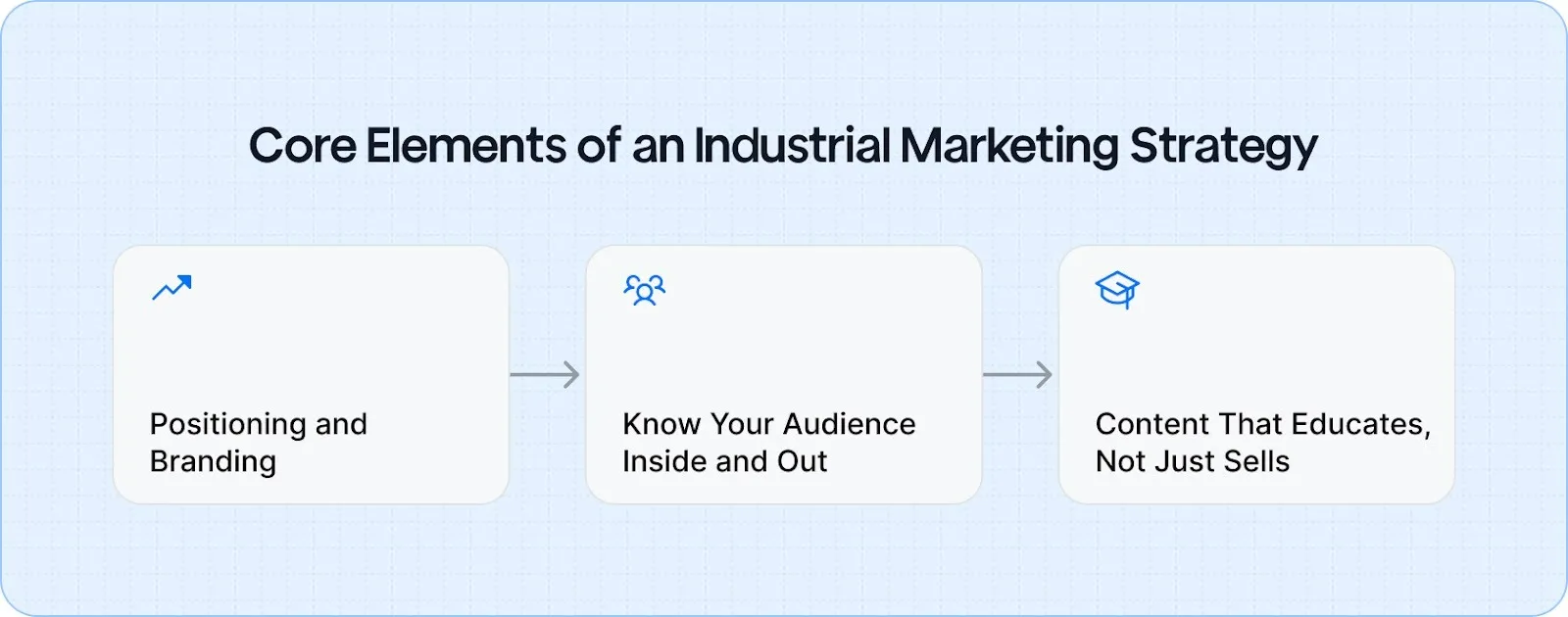
A successful marketing strategy involves precise positioning, understanding your audience, and crafting educational content that resonates with your target buyers. These core elements help build trust and drive qualified leads.
- Positioning and Branding
First, you need to position your product clearly. What makes it stand out? What value does it bring? Strong branding ensures your product is memorable and easily recognizable.
- Know Your Audience Inside and Out
Create buyer personas, detailed profiles of your ideal customers. Understanding their needs, challenges, and how they make buying decisions will help you craft tailored marketing messages.
- Content That Educates, Not Just Sells
Offer valuable content that helps to solve problems and make informed decisions about your product.
Example:
- Blogs explaining product use.
- Videos showing product demonstrations.
- Case Studies with real-world results.
To further guide you in creating an effective industrial marketing strategy, check out this quick video on the simple steps to develop one.
Struggling to optimize your marketing workflow and scale your outreach?
Platforms that streamline lead generation and team collaboration are crucial for industrial businesses.
Start Streamlining Now
Digital Marketing Approaches for Industrial Product Growth
Digital marketing tools like ABM, AI-powered SEO, and social media are transforming how industrial products are marketed. Leveraging these tools can enhance your outreach and connect you with key decision-makers more efficiently.
Account-Based Marketing (ABM)
ABM is all about targeting specific, high-value accounts. This means focusing your efforts on a smaller set of prospects who are the best fit for your product. You can tailor your marketing specifically for each of these accounts, ensuring a higher chance of conversion.
AI-Powered SEO and Content Creation
AI tools are revolutionizing marketing by speeding up tasks like keyword research and content generation. You can create high-quality content faster and improve your SEO to rank higher in search results, bringing more targeted traffic.
Maximizing Social Media: LinkedIn and Beyond
Social media platforms like LinkedIn are powerful for connecting with B2B decision-makers. Sharing content, networking with industry professionals, and using LinkedIn ads can drive meaningful leads for industrial products.
The Role of Traditional Marketing in Industrial Sales
While digital marketing is critical, traditional methods like trade shows and direct mail remain powerful for building relationships and demonstrating products.
Integrating both approaches maximizes your marketing effectiveness.
Trade Shows and Networking

In-person events like trade shows and industry conferences are making a comeback. These are great opportunities to showcase your products, network with potential clients, and build relationships.
But today, you need to pair them with digital efforts for a comprehensive approach.
Direct Mail and Print: Not Outdated, Just Evolving
Direct mail might seem old-fashioned, but it’s still a powerful tool, especially when combined with digital strategies.
Personalized brochures, product catalogs, and postcards can grab attention and drive action when used correctly.
Common Challenges Faced When Marketing Industrial Products
Industrial product marketing comes with unique challenges, but with the right strategies, you can simplify complex products and manage long sales cycles effectively.
Overcoming these hurdles ensures your efforts resonate with the right audience.
Simplifying Complex Products
Industrial products often come with technical specs that can overwhelm your audience. The key is to simplify and relate these specs to real-world benefits:
Focus on the customer’s pain points. Explain how your product meets specific needs, saves energy, reduces downtime, and improves safety, without delving too much into technical details.
Handling Long Sales Cycles
Long sales cycles are a given in industrial marketing, but keeping prospects engaged is key:
- Segment your leads: Tailor your communication based on where the lead is in the buying journey.
- Nurture without overwhelming: Send helpful, relevant content like case studies, webinars, and reports to keep the conversation going.
Many in the industry are facing the challenge of reaching the right leads or navigating complex product descriptions.
Check out this Reddit conversation for a broader look at how manufacturers can approach industrial marketing.
Current Trends Shaping Industrial Marketing
Staying ahead of trends like sustainability, AI, and interactive content can give your marketing efforts an edge. Embracing these trends ensures your brand stays relevant and attracts modern buyers.
Sustainability Is a Must
Eco-conscious buyers are more prevalent than ever. Showcase how your products contribute to sustainability:
- Highlight eco-friendly benefits: If your product is energy-efficient or reduces waste, make it a central point in your marketing.
- Certifications matter: Promote any green certifications or eco-labels your products have.
The Rise of Interactive Content
Static content is becoming less effective. Interactive tools engage prospects better:
- 360° product views: Let prospects explore your product virtually.
- Product calculators and quizzes: Help customers calculate ROI or choose the right product based on their needs.
Looking for a platform to help streamline lead tracking and close deals faster?
It’s time to accelerate your marketing.
Optimize Your Team Now
Measuring Key Metrics for Industrial Product Marketing
Measuring success in industrial marketing means tracking the right metrics to optimize your efforts. Here’s how to focus on what truly drives growth and results.
Tracking KPIs (Key Performance Indicators) That Matter
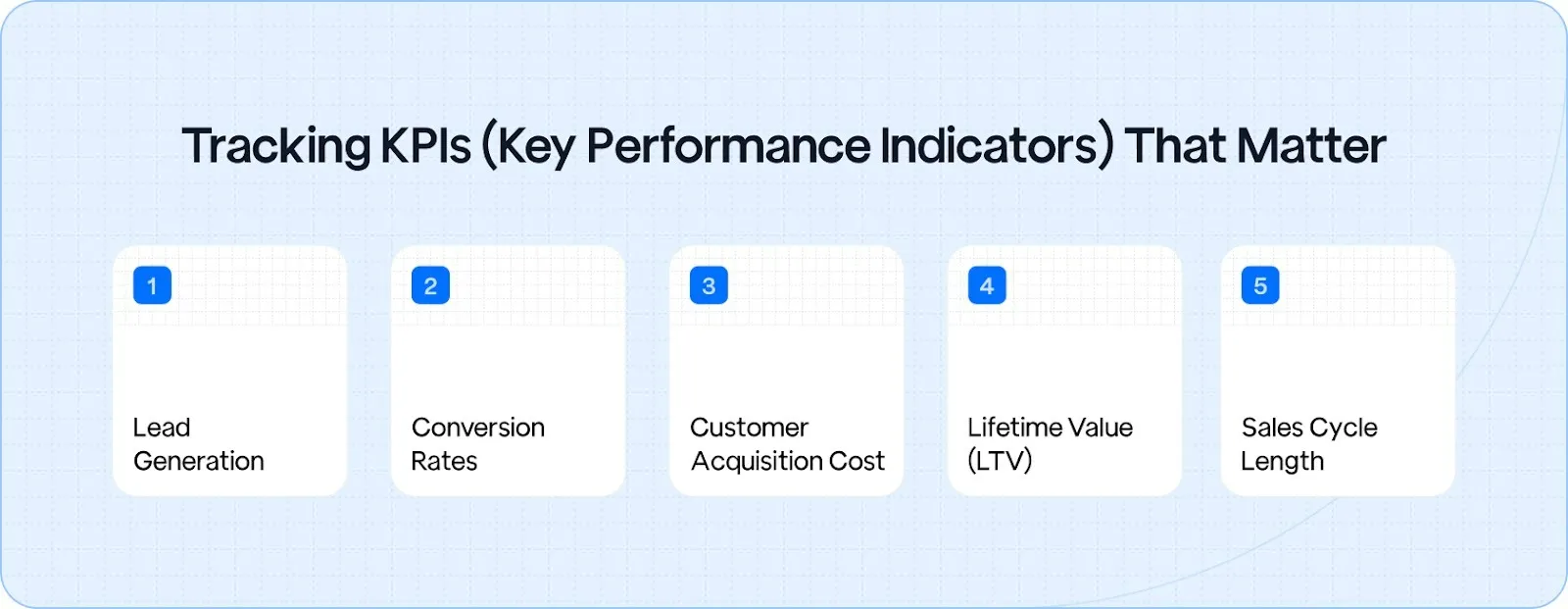
Focus on key metrics that directly impact your marketing and sales:
- Lead Generation: Track how many quality leads you’re attracting.
- Conversion Rates: Measure how many leads turn into paying customers.
- Customer Acquisition Cost (CAC): Know how much you’re spending to acquire each customer.
- Lifetime Value (LTV): Understand the long-term value of each customer.
- Sales Cycle Length: Track how long it takes to convert a lead into a sale.
These KPIs help you assess the effectiveness of your marketing and adjust as needed.
Tools for Tracking Performance
Use these tools to measure your KPIs:
- Google Analytics: Track traffic, user behavior, and conversion paths.
- HubSpot: Monitor leads, sales, and campaign performance.
- SEMrush: Track SEO performance and keyword rankings.
- LinkedIn Analytics: Measure engagement with your professional audience.
These tools offer valuable insights to optimize your strategy.
A/B Testing and Optimization
A/B testing helps you improve key elements of your marketing:
- Test one element: Focus on a single aspect, like CTAs or headlines.
- Measure results: Track engagement and conversion rates to see what works.
- Optimize: Use the insights to refine your campaigns and improve performance over time.
Start Optimizing Your Industrial Marketing Strategy Today
Industrial marketing demands a targeted approach that combines positioning, account-based marketing (ABM), valuable content, and the right digital tools to drive meaningful results.
If you’re still relying on outdated methods or hoping for a DIY fix, it’s time to shift gears. The real challenge is ensuring you’re reaching the right decision-makers with content that resonates.
Ready to elevate your industrial marketing?
Gushwork streamlines workflows and automates lead generation. Start your free trial today and optimize your processes.
Get Started with Gushwork

SEO
Oct 24, 2025
5 mins
HVAC SEO for Manufacturers: 15 Tips to Improve Visibility & Leads
Batul Beawarwala
Buyers today are more informed, comparison-driven, and focused on reliability; they look for brands that demonstrate expertise and trust before making a purchase.
Many businesses invest in SEO but fail to attract qualified leads because their strategies don’t reflect how technical buyers actually search.
Effective HVAC SEO connects your brand with people actively seeking your systems and solutions, turning visibility into measurable growth.
The Basics of HVAC SEO
HVAC SEO (Search Engine Optimization) is the process of improving your website so potential customers can easily find your HVAC solutions online.
For manufacturers, this means ranking for specific terms related to HVAC systems, components, and services while targeting industries and regions that matter most to your business.
When done right, SEO transforms your website into a 24/7 lead-generation channel that reaches decision-makers at every stage of their buying journey.
How HVAC SEO Drives Results for Manufacturers
If your products or services are difficult to find online, you are missing direct opportunities to convert high-intent buyers.
An optimized website attracts visitors, builds credibility and trust, helping your brand become the go-to choice for HVAC solutions in your target markets.
Consistent visibility reinforces authority, improves brand recall, and keeps your business ahead of competitors bidding for the same customers.
Key Elements of HVAC SEO
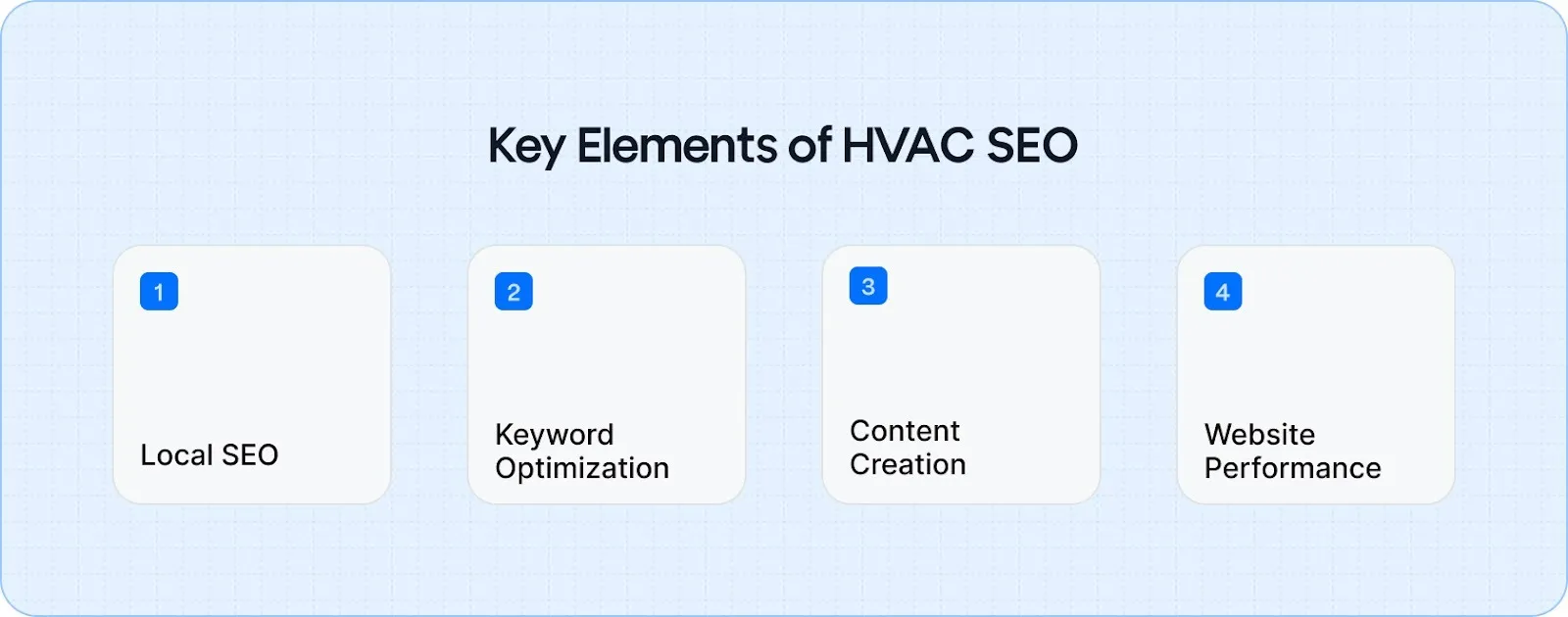
Local SEO: Appear in location-based searches like “HVAC manufacturers near me” to connect with distributors, contractors, and businesses in your service areas.
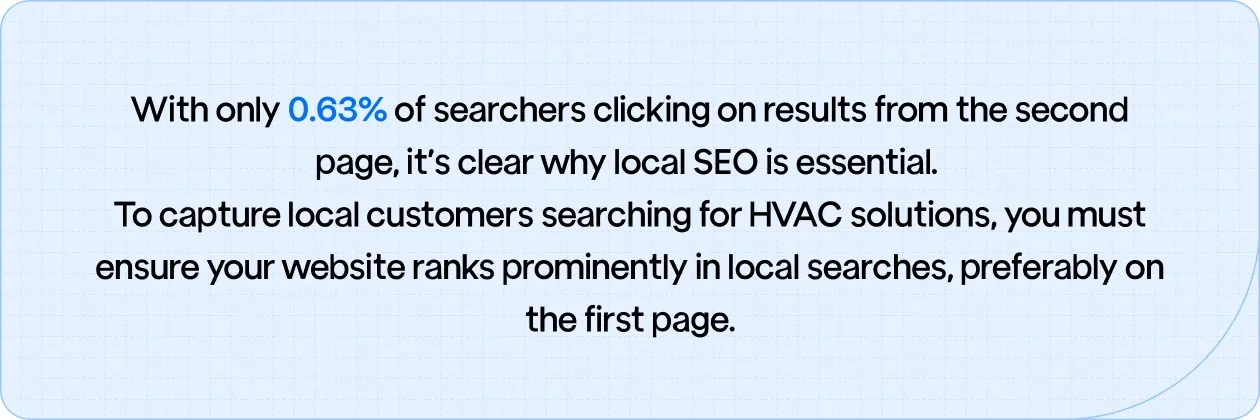
- Keyword Optimization: Target search terms engineers and procurement professionals actually use, such as “industrial HVAC systems” or “air handling units for manufacturing plants.”
- Content Creation: Build authority through blogs, product guides, and case studies that answer technical questions and demonstrate your expertise.
- Website Performance: A fast, mobile-optimized site enhances user experience and keeps visitors engaged longer, both critical ranking factors that drive conversions.
15 Essential HVAC SEO Tips to Drive Leads
Boosting your HVAC business’s online visibility starts with the right SEO strategies. Here are 15 proven tips that can help you drive local traffic and generate more qualified leads.
1. Optimize Your Google Business Profile
Your Google Business Profile acts as your digital storefront for local customers.
- Keep your business name, address, and phone number consistent across all listings.
- Add updated photos of your manufacturing facilities or products to boost credibility.
- Post regularly about new offerings or certifications to maintain visibility in the Local Pack.
2. Claim and Optimize Local Listings
Local directories such as Yelp, Angi, and the Better Business Bureau help you build local trust signals.
- Claim your listings on all relevant platforms.
- Use identical contact details across them to improve consistency.
- Add product descriptions and verified photos to attract serious buyers in your area.
3. Use Location-Based Keywords
Target keywords specific to your service areas, like “AC repair in [City]” or “furnace installation near me.”
- Capture local customers: Localized keywords make it easier for nearby customers to find you.
- Increase relevance: Ensure your content matches what potential customers are searching for.
4. Create Dedicated Service Area Pages
For every location you serve, create a page optimized for that specific area.
- Improve local SEO: Multiple pages help you rank for several locations.
- Reach more customers: These pages increase your chances of appearing in various local searches.
5. Perform Comprehensive Keyword Research
Use keyword tools like SEMrush or Google Keyword Planner to discover what your target audience is searching for.
- Prioritize high-intent commercial keywords, such as “industrial HVAC systems supplier.”
- Avoid vanity keywords that drive traffic but no conversions; focus on search terms used by engineers, procurement managers, and facility heads.
6. Target Long-Tail Keywords
Long-tail phrases attract buyers who are closer to making a purchase.
- Examples: “Energy-efficient HVAC units for factories” or “industrial air conditioning systems in Texas.”
- These searchers typically have a clear intent and convert at a higher rate than generic visitors.
7. Produce High-Quality Content
Build trust by educating your audience instead of selling to them.
- Publish case studies, engineering blogs, and product comparison guides.
- Focus on solving real-world challenges like “Reducing energy costs in large manufacturing facilities.”
- Consistent, authoritative content turns your website into a knowledge hub for HVAC buyers.
8. Use Video Content for Better Engagement
Videos allow buyers to see your products in action, a powerful differentiator for manufacturers.
- Create videos demonstrating assembly, product testing, or on-site installations.
- Host them on YouTube and embed them on your website to improve engagement and dwell time.
9. Optimize Page Speed
A slow website signals poor performance to both users and Google.
- Compress large images, use caching, and eliminate unnecessary code.
- Even a one-second delay in load time can reduce conversions, especially for mobile users.
Fast-loading websites reflect professionalism and keep potential customers engaged.
10. Ensure Mobile Optimization
With more searches happening on mobile devices, ensure your site is mobile-friendly.
- Reach more customers: A mobile-friendly site increases your reach, especially for local customers.
- Better SEO: Google prioritizes mobile-optimized websites in its rankings.
11. Write Compelling Meta Titles and Descriptions
Your metadata determines whether someone clicks your link or scrolls past.
- Use clear, keyword-rich language that matches user intent.
- Example: “Industrial HVAC Manufacturing Solutions | Energy-Efficient Systems for Businesses.”
- Keep it concise, informative, and customer-focused.
12. Leverage Social Media for SEO
Social platforms amplify your visibility and drive referral traffic.
- Share behind-the-scenes manufacturing videos, product launches, and client success stories.
- LinkedIn, in particular, helps you connect directly with contractors, distributors, and facility managers.
13. Encourage Positive Customer Reviews
Reviews strengthen both trust and search rankings.
- Ask clients to leave feedback on Google, Angi, or industry-specific directories.
- Highlight top reviews on your website to demonstrate credibility to new prospects.
14. Build Quality Local Backlinks
Partnerships and collaborations can power your SEO.
- Get featured on supplier websites, local business directories, or trade association pages.
- Quality backlinks act as “votes of confidence,” improving your domain authority and helping you rank higher for competitive HVAC terms.
15. Track and Analyze SEO Performance
Regularly monitor your website’s traffic, keyword rankings, and conversions using tools like Google Analytics.
- Refine your strategy: Analyzing your SEO performance helps identify areas for improvement.
- Stay on track: Regular adjustments ensure you’re consistently improving your website’s SEO and lead generation efforts.
Your HVAC business deserves to be found by the people who actually need your solutions.
Stop guessing and start growing.
Get Expert SEO Insights
How to Track and Measure HVAC SEO Success
Tracking and measuring your HVAC SEO efforts is crucial for understanding what’s working and what needs improvement.
Here’s how you can effectively track your SEO success and optimize your strategy.
1. Use Analytics Tools
Use analytics tools to identify which HVAC product or service pages drive the highest conversion rates.
Look for traffic sources, such as organic search vs referral, to understand where your most qualified leads originate. For example, if your “commercial HVAC units” page receives steady traffic but low inquiries, the content may need better CTAs or technical specifications.
2. Measure Local Visibility
Track your presence across different regions or distributor zones using tools like BrightLocal or GeoRanker.
For HVAC manufacturers, visibility in multiple territories matters; evaluate rankings for city clusters where you want to expand (e.g., Chicago, Milwaukee corridor) rather than a single city.
3. Conversion Tracking
Track which product pages or keywords drive inquiries from your ideal customers (e.g., OEMs, contractors, or procurement teams).
Use CRM integrations or call-tracking tools to connect digital leads with actual orders, helping quantify SEO’s ROI.
A Reddit user shared their experience of investing $20,000 in SEO services, only to achieve a return of $6,800 over four months. They expressed frustration with the lack of results and considered taking a course to manage SEO independently
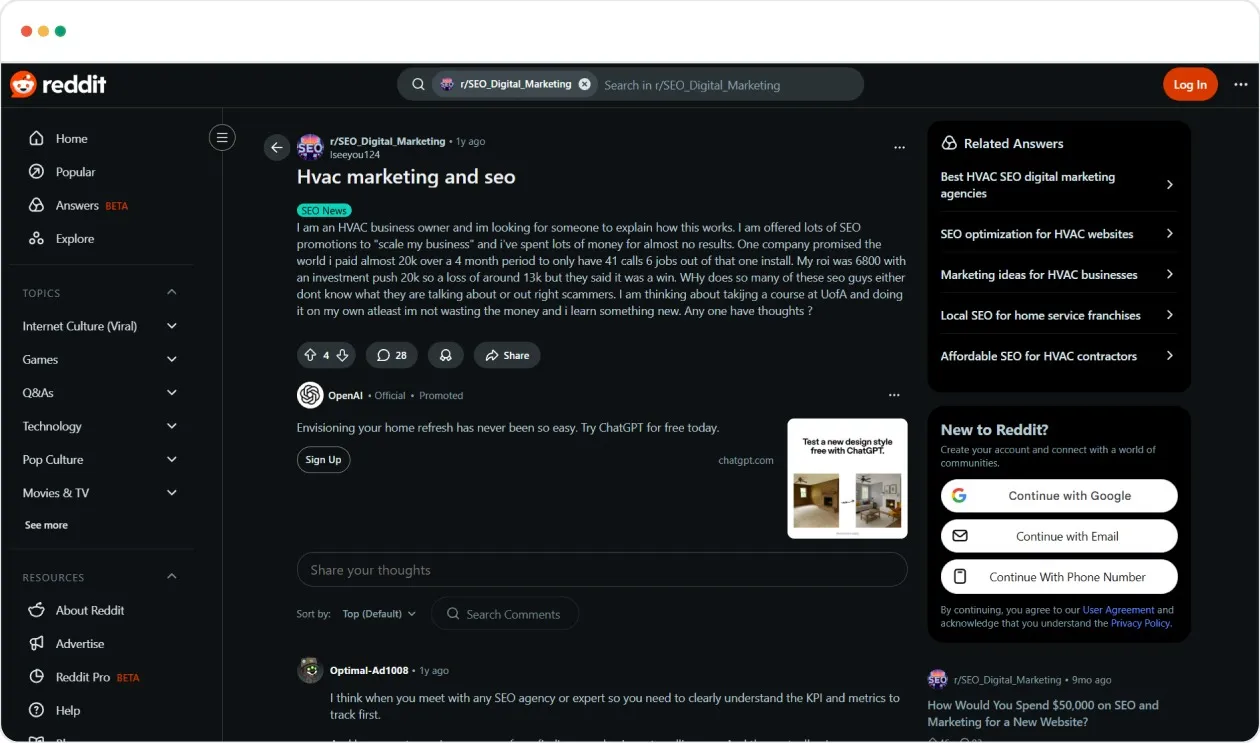
This highlights the importance of selecting an SEO partner who understands the HVAC industry's unique needs and can deliver measurable results.
Drive Sustainable Growth for HVAC Manufacturers with SEO
To drive sustainable growth for your HVAC business, implementing effective SEO strategies is crucial. By optimizing for local search and targeting industry-specific keywords, you can reach decision-makers like contractors and facility managers actively seeking your services.
Enhancing website speed, mobile responsiveness, and user experience not only improves rankings but also increases customer engagement.
These efforts translate into higher-quality leads, better conversion rates, and strengthened brand authority, giving you a competitive edge in a crowded market.
The right SEO strategy transforms visibility and drives growth.
Partner with Gushwork to discover what’s holding your rankings back and how to fix it fast.
Get Your Free SEO Consultation
FAQs
Q1. What is HVAC SEO, and why is it important for my business?
A1. HVAC SEO (Search Engine Optimization) involves optimizing your website to rank higher in search engine results, making it easier for potential customers to find your HVAC products and services.
For manufacturers, effective SEO increases online visibility, attracts qualified leads, and drives long-term growth.
Q2. How can I improve my HVAC website's local search rankings?
A2. To enhance local SEO:
- Optimize your Google Business Profile with accurate business information and regular updates.
- Use location-based keywords like “HVAC systems in [City]”.
- Create dedicated service area pages for each location you serve.
- Encourage positive customer reviews to build credibility.
Q3. What are the best keywords to target for HVAC SEO?
A3. Focus on long-tail, location-specific keywords such as “affordable HVAC installation in [City]” or “emergency furnace repair near me”. Tools like Google Keyword Planner and SEMrush can help identify high-intent keywords relevant to your services.
Q4. How do I track the effectiveness of my HVAC SEO efforts?
A4. Utilize tools like Google Analytics and Google Search Console to monitor:
- Website traffic and user behavior.
- Keyword rankings and impressions.
- Conversion rates from leads to customers.
Regular analysis helps refine strategies and improve ROI.
Q5. Should I hire an SEO agency or handle HVAC SEO in-house?
A5. If you have the resources and expertise, managing SEO in-house can be effective. However, partnering with an experienced HVAC SEO agency can provide specialized knowledge, save time, and potentially yield faster results.
Q6. How long does it take to see results from HVAC SEO?
A6. SEO is a long-term strategy. Typically, it takes 3 to 6 months to see significant improvements in search rankings and lead generation. Consistent effort and optimization are key to sustained success.
Q7. What common mistakes should I avoid in HVAC SEO?
A7. Avoid:
- Neglecting technical SEO, such as slow website speed or poor mobile optimization.
- Keyword stuffing; instead, use keywords naturally within valuable content.
- Ignoring local SEO; ensure your business appears in local search results.
- Not updating your Google Business Profile regularly.
- Overlooking analytics; regularly monitor and adjust your SEO strategy.

“For the first time, we’re proud to add SEO services. Six months in, impact evident.”
Read Case Study

In Conversation with

Abhijith HK
Founder & CEO of Codewave
Want us to do the same for your business?
Talk to an Expert
.svg)
.svg)

