Buyers today are more informed, comparison-driven, and focused on reliability; they look for brands that demonstrate expertise and trust before making a purchase.
Many businesses invest in SEO but fail to attract qualified leads because their strategies don’t reflect how technical buyers actually search.
Effective HVAC SEO connects your brand with people actively seeking your systems and solutions, turning visibility into measurable growth.
TL;DR
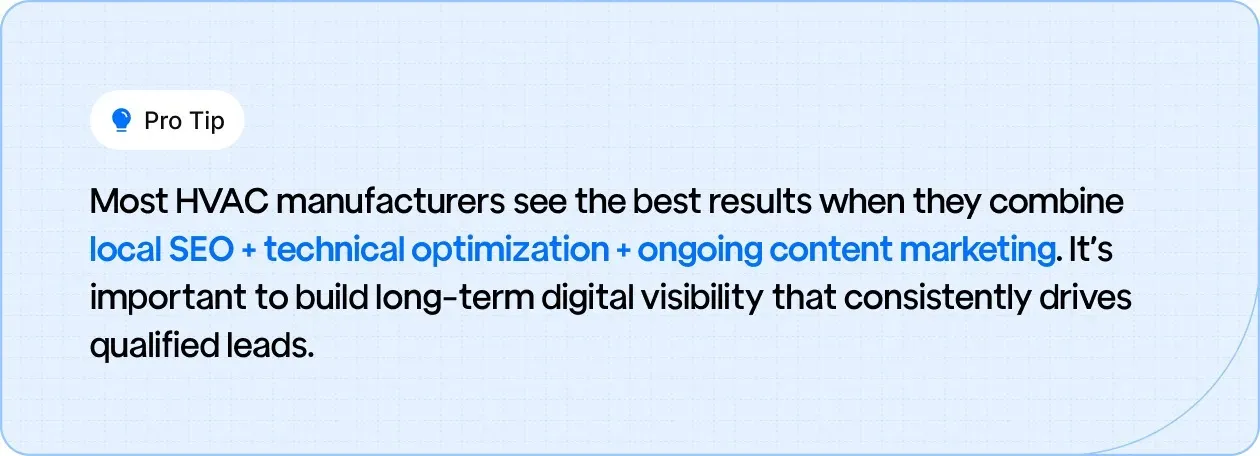
HVAC SEO is crucial for improving online visibility, driving qualified leads, and ensuring long-term growth for your HVAC business.
- Local SEO is essential: optimize your Google Business Profile, use location-based keywords, and create service area pages to attract local customers.
- Keyword optimization and content creation are key strategies to make your business discoverable and position you as an industry leader.
- Mobile optimization, website performance, and video content enhance user experience and improve search rankings.
- Regular tracking with tools like Google Analytics helps you refine strategies, measure success, and improve SEO outcomes.
The Basics of HVAC SEO
HVAC SEO (Search Engine Optimization) is the process of improving your website so potential customers can easily find your HVAC solutions online.
For manufacturers, this means ranking for specific terms related to HVAC systems, components, and services while targeting industries and regions that matter most to your business.
When done right, SEO transforms your website into a 24/7 lead-generation channel that reaches decision-makers at every stage of their buying journey.
How HVAC SEO Drives Results for Manufacturers
If your products or services are difficult to find online, you are missing direct opportunities to convert high-intent buyers.
An optimized website attracts visitors, builds credibility and trust, helping your brand become the go-to choice for HVAC solutions in your target markets.
Consistent visibility reinforces authority, improves brand recall, and keeps your business ahead of competitors bidding for the same customers.
Key Elements of HVAC SEO
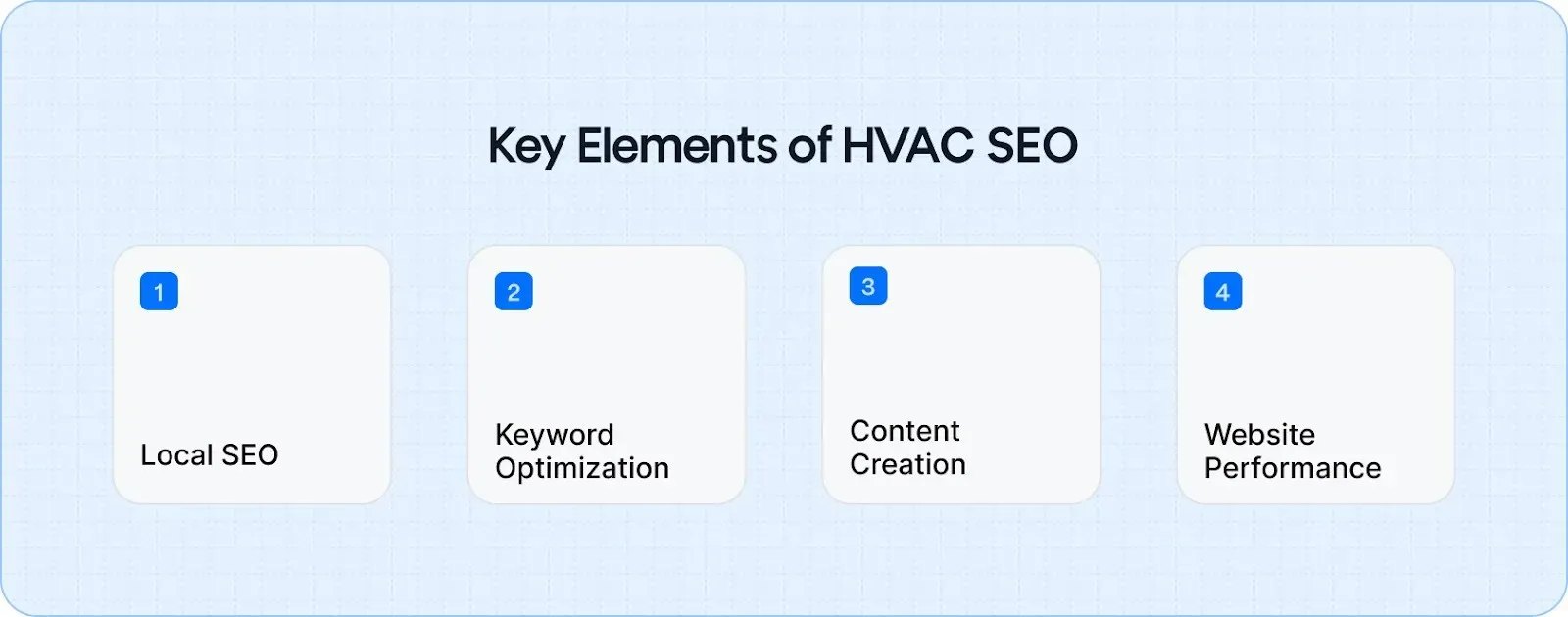
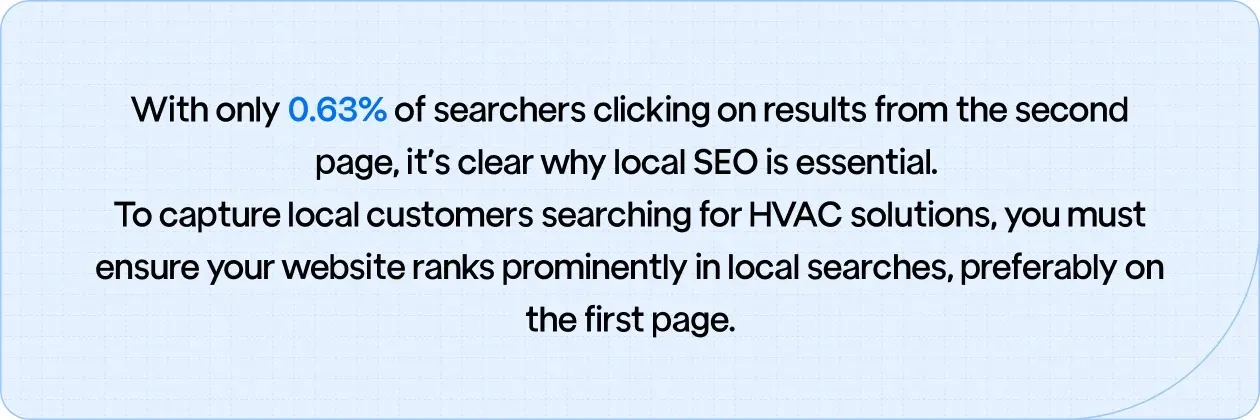
Local SEO: Appear in location-based searches like “HVAC manufacturers near me” to connect with distributors, contractors, and businesses in your service areas.
- Keyword Optimization: Target search terms engineers and procurement professionals actually use, such as “industrial HVAC systems” or “air handling units for manufacturing plants.”
- Content Creation: Build authority through blogs, product guides, and case studies that answer technical questions and demonstrate your expertise.
- Website Performance: A fast, mobile-optimized site enhances user experience and keeps visitors engaged longer, both critical ranking factors that drive conversions.
15 Essential HVAC SEO Tips to Drive Leads
Boosting your HVAC business’s online visibility starts with the right SEO strategies. Here are 15 proven tips that can help you drive local traffic and generate more qualified leads.
1. Optimize Your Google Business Profile
Your Google Business Profile acts as your digital storefront for local customers.
- Keep your business name, address, and phone number consistent across all listings.
- Add updated photos of your manufacturing facilities or products to boost credibility.
- Post regularly about new offerings or certifications to maintain visibility in the Local Pack.
2. Claim and Optimize Local Listings
Local directories such as Yelp, Angi, and the Better Business Bureau help you build local trust signals.
- Claim your listings on all relevant platforms.
- Use identical contact details across them to improve consistency.
- Add product descriptions and verified photos to attract serious buyers in your area.
3. Use Location-Based Keywords
Target keywords specific to your service areas, like “AC repair in [City]” or “furnace installation near me.”
- Capture local customers: Localized keywords make it easier for nearby customers to find you.
- Increase relevance: Ensure your content matches what potential customers are searching for.
4. Create Dedicated Service Area Pages
For every location you serve, create a page optimized for that specific area.
- Improve local SEO: Multiple pages help you rank for several locations.
- Reach more customers: These pages increase your chances of appearing in various local searches.
5. Perform Comprehensive Keyword Research
Use keyword tools like SEMrush or Google Keyword Planner to discover what your target audience is searching for.
- Prioritize high-intent commercial keywords, such as “industrial HVAC systems supplier.”
- Avoid vanity keywords that drive traffic but no conversions; focus on search terms used by engineers, procurement managers, and facility heads.
6. Target Long-Tail Keywords
Long-tail phrases attract buyers who are closer to making a purchase.
- Examples: “Energy-efficient HVAC units for factories” or “industrial air conditioning systems in Texas.”
- These searchers typically have a clear intent and convert at a higher rate than generic visitors.
7. Produce High-Quality Content
Build trust by educating your audience instead of selling to them.
- Publish case studies, engineering blogs, and product comparison guides.
- Focus on solving real-world challenges like “Reducing energy costs in large manufacturing facilities.”
- Consistent, authoritative content turns your website into a knowledge hub for HVAC buyers.
8. Use Video Content for Better Engagement
Videos allow buyers to see your products in action, a powerful differentiator for manufacturers.
- Create videos demonstrating assembly, product testing, or on-site installations.
- Host them on YouTube and embed them on your website to improve engagement and dwell time.
9. Optimize Page Speed
A slow website signals poor performance to both users and Google.
- Compress large images, use caching, and eliminate unnecessary code.
- Even a one-second delay in load time can reduce conversions, especially for mobile users.
Fast-loading websites reflect professionalism and keep potential customers engaged.
10. Ensure Mobile Optimization
With more searches happening on mobile devices, ensure your site is mobile-friendly.
- Reach more customers: A mobile-friendly site increases your reach, especially for local customers.
- Better SEO: Google prioritizes mobile-optimized websites in its rankings.
11. Write Compelling Meta Titles and Descriptions
Your metadata determines whether someone clicks your link or scrolls past.
- Use clear, keyword-rich language that matches user intent.
- Example: “Industrial HVAC Manufacturing Solutions | Energy-Efficient Systems for Businesses.”
- Keep it concise, informative, and customer-focused.
12. Leverage Social Media for SEO
Social platforms amplify your visibility and drive referral traffic.
- Share behind-the-scenes manufacturing videos, product launches, and client success stories.
- LinkedIn, in particular, helps you connect directly with contractors, distributors, and facility managers.
13. Encourage Positive Customer Reviews
Reviews strengthen both trust and search rankings.
- Ask clients to leave feedback on Google, Angi, or industry-specific directories.
- Highlight top reviews on your website to demonstrate credibility to new prospects.
14. Build Quality Local Backlinks
Partnerships and collaborations can power your SEO.
- Get featured on supplier websites, local business directories, or trade association pages.
- Quality backlinks act as “votes of confidence,” improving your domain authority and helping you rank higher for competitive HVAC terms.
15. Track and Analyze SEO Performance
Regularly monitor your website’s traffic, keyword rankings, and conversions using tools like Google Analytics.
- Refine your strategy: Analyzing your SEO performance helps identify areas for improvement.
- Stay on track: Regular adjustments ensure you’re consistently improving your website’s SEO and lead generation efforts.
How to Track and Measure HVAC SEO Success
Tracking and measuring your HVAC SEO efforts is crucial for understanding what’s working and what needs improvement.
Here’s how you can effectively track your SEO success and optimize your strategy.
1. Use Analytics Tools
Use analytics tools to identify which HVAC product or service pages drive the highest conversion rates.
Look for traffic sources, such as organic search vs referral, to understand where your most qualified leads originate. For example, if your “commercial HVAC units” page receives steady traffic but low inquiries, the content may need better CTAs or technical specifications.
2. Measure Local Visibility
Track your presence across different regions or distributor zones using tools like BrightLocal or GeoRanker.
For HVAC manufacturers, visibility in multiple territories matters; evaluate rankings for city clusters where you want to expand (e.g., Chicago, Milwaukee corridor) rather than a single city.
3. Conversion Tracking
Track which product pages or keywords drive inquiries from your ideal customers (e.g., OEMs, contractors, or procurement teams).
Use CRM integrations or call-tracking tools to connect digital leads with actual orders, helping quantify SEO’s ROI.
A Reddit user shared their experience of investing $20,000 in SEO services, only to achieve a return of $6,800 over four months. They expressed frustration with the lack of results and considered taking a course to manage SEO independently
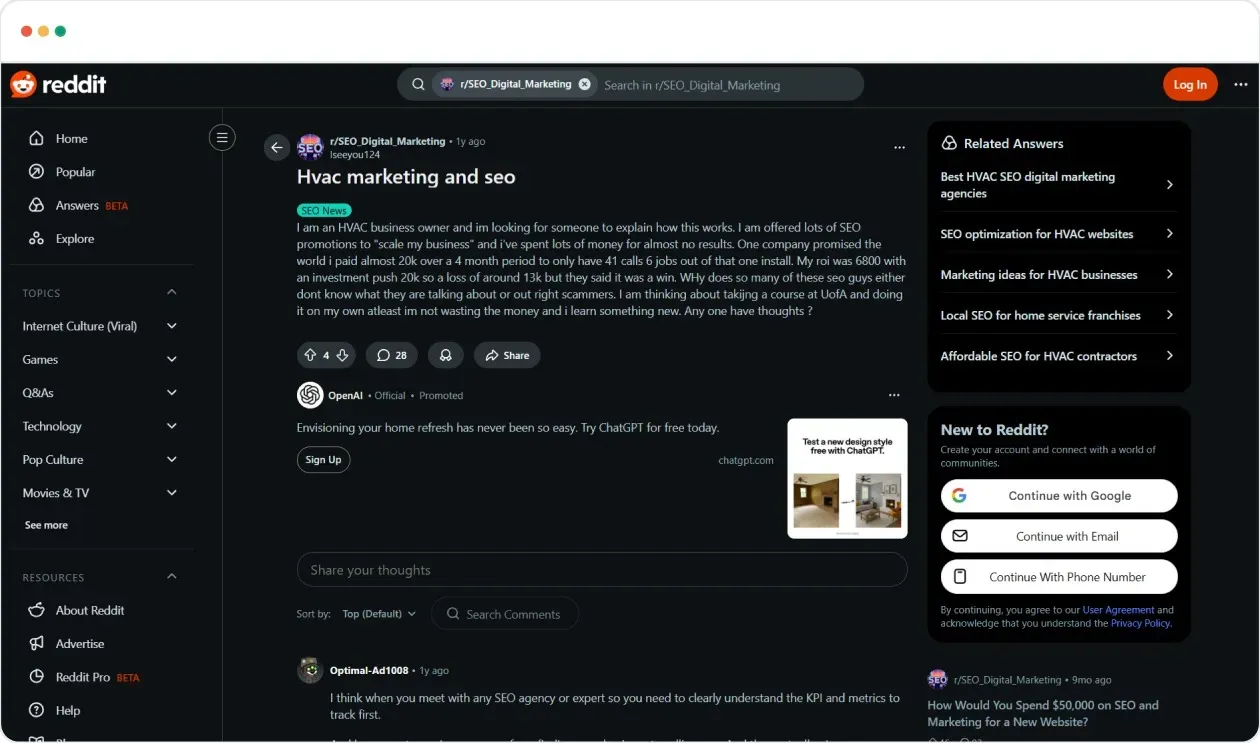
This highlights the importance of selecting an SEO partner who understands the HVAC industry's unique needs and can deliver measurable results.
Drive Sustainable Growth for HVAC Manufacturers with SEO
To drive sustainable growth for your HVAC business, implementing effective SEO strategies is crucial. By optimizing for local search and targeting industry-specific keywords, you can reach decision-makers like contractors and facility managers actively seeking your services.
Enhancing website speed, mobile responsiveness, and user experience not only improves rankings but also increases customer engagement.
These efforts translate into higher-quality leads, better conversion rates, and strengthened brand authority, giving you a competitive edge in a crowded market.