Building Search Demand for a New Kind of Skin Stapler
Healthcare/Medical Devices
.
USA
120+ pages
built around core keywords with buyer intent
11+ countries
surfaced inbound demand, despite the initial US-only go-to-market focus
1 week
to receive the first real inbound after pages started going live
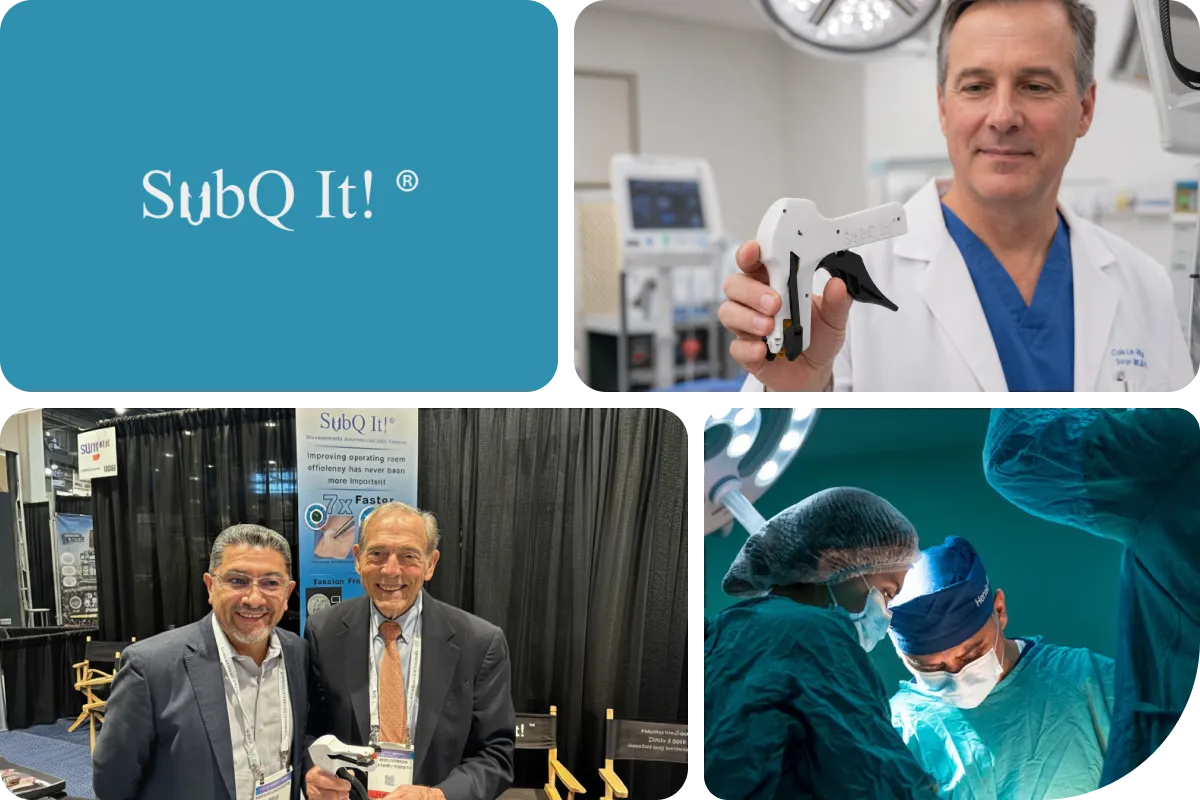
Chuck Rogers had already done the hard part. His company SubQ It! had FDA clearance. It had patents. It had a clear clinical use case: a bioabsorbable skin stapler designed for small and laparoscopic incisions, where traditional closure methods can be slower, less precise, or leave visible staple marks.
The product was not the problem. Awareness was.
As Chuck put it on the onboarding call:
“They don’t know it exists. It is not known.”
That was the core challenge. Surgeons, hospitals, surgical centers, and medical distributors could not evaluate a product they had never heard of.
Chuck was also clear about the channel problem.
“I’m at a crossroads where I need to generate leads and hiring salespeople is very expensive.”
SubQ It! needed a channel that met those buyers where they searched.
Problem
SubQ It! had a niche FDA-cleared medical device, but many surgeons and medical buyers did not know the product existed.
Challenge
Medical device buyers search by procedure, use case, clinical problem, and product category. A generic website was not enough to capture that intent.
Solution
Gushwork built a Resource Hub around high-intent surgical closure searches, covering bioabsorbable skin staplers, laparoscopic incision closure, plastic and reconstructive surgery, hernia repair, bariatric surgery, and product-specific education.
Before Gushwork
Before Gushwork, Chuck was trying to create awareness without hiring an expensive sales team. He had looked at paid social, but Facebook and Instagram did not feel right for his buyer. SubQ It! is sold into hospitals, surgical centers, and medical institutions. Surgeons and medical buyers are more likely to research products during work, from a browser, while looking for a specific closure method.
Chuck said surgeons usually understood it quickly after a demo. The issue was getting to that conversation in the first place.
If a surgeon was searching for a better way to close small incisions, a no-removal closure option, or an absorbable alternative to metal staples and sutures, SubQ It! needed to show up in that moment.
He understood that without search visibility, even if the product is clinically useful, it still remain unknown.
What Gushwork built
Gushwork built the Resource Hub around the exact use cases Chuck described during onboarding.
The first layer focused on procedure and use-case pages: bioabsorbable skin closure for plastic and reconstructive surgery, no-removal wound closure, laparoscopic and trocar site incision closure, hernia repair closure, and bariatric surgery.
The second layer focused on product-specific education for the SubQ It! device family, including the newer version designed to support longer closures and save surgeons more time per case.
The third layer covered long-form educational content around surgical staplers, absorbable closure, autoclavability, wound closure techniques, and comparisons with traditional suturing.
The strategy was focused on the US. Chuck was explicit about that. His international distributors had their own regional priorities, and he did not want to interfere with them. The search channel was built to support US demand first.
What happened next showed that the demand was broader than the original plan.
What the channel surfaced
The first real inbound arrived within a week of publication. Then the channel started surfacing interest from surgeons, medical centers, wound care buyers, and distributors across multiple countries.
Buyers returned to the website multiple times and explored different procedures and product pages before reaching out, suggesting a more deliberate evaluation rather than casual browsing.
Some came from the US, including plastic surgery, wound care, and healthcare organizations. Others came from outside the US, including Australia, South Korea, Israel, Nepal, the UAE, the UK, Singapore, Greece, Denmark, and Turkey.
That does not mean SubQ It! could sell into every market immediately.
Medical device sales depend on regulatory clearance, distributor coverage, and regional approvals. Chuck’s team responded carefully where clearances were not yet in place.
But the signal mattered. The channel was showing that people outside the original US-only plan were actively looking for a product like SubQ It!. That demand had been invisible before.
What made it work
The pages matched how the buyer searches. Surgeons and medical device buyers do not always start with a brand name, especially when the product category is still unfamiliar. They search around the procedure, closure problem, incision type, and clinical use case.
Gushwork built pages around those entry points. That was the important shift. SubQ It! was no longer dependent only on direct outreach, demos, or existing awareness. Buyers could now discover the product while researching the problem it solved.
Why it mattered
SubQ It! had a solution-awareness problem. The product existed. The use case was real. Surgeons understood it once they saw it. But too many potential buyers did not know to look for it by name.
Gushwork helped create a search-led channel around the problems, procedures, and product categories those buyers were already researching.
Discover AI agents that help businesses get more qualified leads.







.svg)