










In contracting businesses, delivering high-quality work is just part of the equation. The other half is making sure the right people know about your services, and that’s where digital marketing comes in.
A great reputation and flawless execution can go unnoticed if your business isn’t visible online. Digital marketing helps you stand out, attract the right leads, and build a reputation that keeps your phone ringing.
For contractors, the key is being present where potential clients are searching. With the right digital marketing strategies, you can grow your online presence, convert leads into clients, and build long-term business success.
In this blog, you’ll learn the key components of digital marketing and the mistakes many contractors make in it, and how you can avoid them to grow your business smarter and faster.
Why You, as a Contractor, Must Embrace Digital Marketing?
Clients go online first, search for someone nearby, check reviews, compare quotes. If your business isn’t visible where they’re looking, you’re missing out.
Here are clear reasons why digital marketing for contractors is important:
- You Get Found When People Are Actively Searching
Most customers now start online. If you only rely on referrals, you miss people searching for terms like “contractor in Ohio” or “home renovation California.” Local SEO puts you in front of buyers in your service area without wasting effort outside it.
- You Build Trust Before the First Call
A professional online presence, clear website, project photos, reviews, testimonials, makes new clients feel confident choosing you. Many competitors still ignore this, which gives you an instant credibility advantage.
- You Can Track What Works and Improve Fast
Digital marketing shows exactly where your leads come from, unlike flyers or print ads. When you see which pages, listings, or ads drive calls, you can invest more in what performs and cut what doesn’t. This makes your budget far more efficient.
- You Stay Ahead of Competitors as the Market Shifts
Homeowners expect to research contractors online. If you show up consistently with good reviews and proof of work while others don’t, you win more jobs. Digital strategies can grow with you, from SEO to ads to social content.
- You Open the Door to Better Opportunities
A strong online presence attracts higher-value projects, subcontracting opportunities, and even better hires. As you expand services or service areas, your digital footprint helps you grow faster.
Take the First Step Toward Digital Growth
Don’t wait for clients to find you! Ensure they can find you easily. Embrace SEO marketing and put your business on the map.


By embracing digital marketing, you’re setting your contracting business up in a better position, with more qualified leads, better trust, and a stronger future.
How To Create a Digital Marketing Plan for Contractors?
According to a 2024 study, 57% of businesses with a strong online presence say their marketing efforts significantly impact sales, compared with fewer than 2% of those with weak or no online presence.
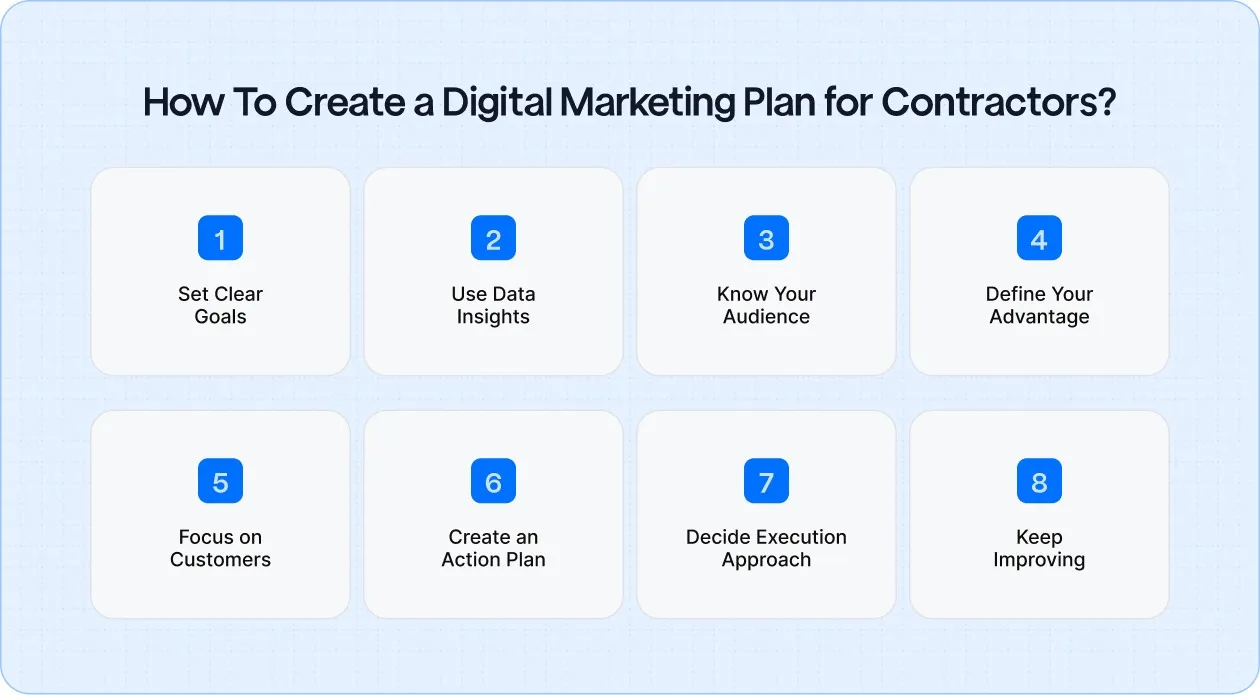
A strong digital marketing plan gives your business structure, direction, and clarity. Here’s how to build one, step by step:
1. Start With Clear, Purposeful Goals
Your marketing plan needs goals that actually mean something for your business. Goals give your strategy a destination and help you measure whether your efforts are working.
How to put this into action:
- Define what success looks like: Decide whether you want more qualified leads, stronger local visibility, more booked jobs, or better brand recognition.
- Set measurable targets: Instead of saying “increase traffic,” define a number or percentage you want to reach within a specific timeframe.
- Match goals to capacity: Make sure your goals align with the size of your team, available budget, and how much work your business can realistically handle.
- Prioritize the essentials: Focus on two or three core goals at first so your efforts stay tight and effective.
2. Use Data To Shape Your Path Forward
Data tells you what is already working, where you’re losing opportunities, and what needs attention first.
How to put this into action:
- Audit your current marketing: Review website traffic, search visibility, social engagement, and conversion rates.
- Identify gaps and bottlenecks: Look for pages with high traffic but low conversions, keywords you rank poorly for, or channels that aren’t contributing meaningful results.
- Benchmark against competitors: See where they appear in search, how often they publish content, and what kind of messaging they use.
- Turn insights into steps: Use your data to decide which strategies deserve investment and which ones need refining or replacing.
3. Understand Exactly Who You Want to Reach
Your digital marketing becomes far more effective when it's built around the people you want to attract. This is where clarity about your ideal customer matters.
How to put this into action:
- Build detailed buyer profiles: Include job role, industry, challenges, goals, budget constraints, and decision factors.
- Learn how they research: Identify the keywords they search for, the type of content they read, and the objections they commonly have.
- Document their buying journey: Map out the early-stage questions they ask, mid-stage comparisons they make, and final concerns that determine their decision.
- Shape messaging around their needs: Speak directly to their pain points and provide solutions that feel practical and easy to understand.
4. Define What Makes Your Business the Better Choice
Your positioning explains why someone should choose your business instead of a competitor. Strong positioning keeps your marketing consistent and persuasive.
How to put this into action:
- Identify your real strengths: Highlight the specific things you do better: faster service, quality workmanship, specialized expertise, or local presence.
- Connect strengths to customer value: Explain why your strengths matter and how they make life easier, safer, or more efficient for your customer.
- Clarify what you stand for: Your tone, messaging, and visual identity should reinforce the way you want to be perceived.
- Repeat it across every channel: Consistency builds recognition, trust, and credibility.
5. Build Strategies That Put Your Customer First
Your digital marketing should revolve around helping your ideal customer reach a decision comfortably and with clarity.
How to put this into action:
- Choose channels based on buyer behaviour: If your audience is searching online, focus on SEO. If they research visually, invest in strong content and social proof.
- Create content that solves real problems: Offer explanations, examples, comparisons, checklists, and guides that help them understand their options.
- Match content to their journey: Provide introductory content early, detailed content mid-journey, and decision-driving content when they’re close to choosing.
- Remove friction: Make it easy to contact you, request a quote, view pricing, or learn about services.
6. Turn Strategy Into a Clear, Actionable Plan
A strategy becomes useful only when translated into specific tasks, owners, and timelines.
How to put this into action:
- Create a simple execution calendar: Plan when content will be published, when ads will run, and when pages will be updated.
- Assign responsibilities: Decide who handles writing, design, optimization, social posts, and reporting.
- Set review checkpoints: Evaluate progress weekly or monthly so you can adjust quickly instead of losing momentum.
- Use tools to stay organized: Project boards, content calendars, and dashboards help you track everything in one place.
7. Choose Whether To Execute In-House or With Outside Help
Not every business can execute a full marketing plan internally. Choosing the right path saves time, stress, and unnecessary expense.
How to put this into action:
- Evaluate your team’s skills: Identify what you can realistically handle and what might require expertise.
- Understand the value of an agency: Agencies bring systems, experience, and speed, especially when you want consistent growth.
- Blend both approaches if needed: Many businesses handle basic tasks internally while outsourcing advanced SEO, design, or content.
- Prioritize long-term fit: Choose the option that keeps your plan consistent, not the one that only works for a month.
8. Maintain and Improve Your Marketing System Over Time
A marketing plan is never finished. It should evolve based on results, market changes, and customer feedback.
How to put this into action:
- Track performance consistently: Monitor traffic trends, keyword rankings, conversions, and engagement.
- Adjust strategies based on results: Double down on what works and replace what isn’t moving the needle.
- Stay adaptable: Industry trends, buyer behaviour, and platforms shift, your plan should evolve with them.
- Review goals quarterly: Make sure your plan continues to support your business direction and capacity.
Suggested read: Digital Marketing Problems Manufacturers Face (and How to Fix Them)
Key 12 Strategies of Digital Marketing for Contractors
Digital marketing is a powerful tool to grow your business, attract local clients, and stand out from the competition. But with so many aspects to manage, it can be overwhelming to know where to start.
The good news is, by focusing on a few key components, you can create a solid foundation for your digital marketing efforts that will deliver real results.
Below are the main building blocks you should focus on.
1. A Professional Website That Converts
Your website is your digital storefront. It needs to be:
- Easy to navigate on mobile and desktop.
- Showcasing your services clearly (e.g., “Electrical wiring”, “Bathroom renovation”), with dedicated pages.
- Featuring your portfolio: photos of past jobs, before/after pictures, client testimonials.
- Having clear contact info: phone number, form, address. Including a “Call now” button is critical because many users search on mobile.
Recommended read: Redesigning Your Manufacturing Website? Here’s How To Ensure It Becomes A Growth Engine
2. Local SEO & Your Google Business Profile
For contractors, local SEO is the most important. Here’s what to do:
- Create or claim your Google My Business (now Google Business Profile) listing and fill in all details: business name, address, phone, service area.
- Use keywords like “contractor in [region]” or “home renovation services in [region]” on your site and in your profile.
- Collect and display reviews: asking satisfied clients to leave reviews helps strengthen trust and ranking.
- Add high‑quality photos of work, your team, your office.
- Make sure your website and listings mention your service area, so Google knows your locality.
Get Found Locally with Google Business Profile
Stand out in local searches and attract more customers by optimizing your Google Business Profile today.
3. SEO (Search Engine Optimization)
Beyond local SEO, you’ll want your website pages to be optimized so you show up when people search for your services. Important elements include:
- Keyword research: find what clients are searching for (e.g., “roof replacement contractor Denver”).
- On‑page SEO: use those keywords in page titles, headings, meta descriptions, image alt tags.
- Off‑page SEO: build authority through quality links and testimonials.
- Link‑building/authority: Get relevant links from local business directories or partner sites (this helps SEO but is less urgent at the start).
4. Paid Advertising (PPC & Local Ads)
Since SEO takes time, you can use paid advertising to get faster results:
- Use Google Ads (Pay‑per‑click) targeting your service area with keywords like “book contractor near me”.
- Target your service area, pick keywords with intent (e.g., “hire electrical contractor Seattle”), and track your spend vs. leads to make sure you’re getting value.
- Use strong calls to action (CTA) in your ads: “Get Free Estimate”, “Schedule Today.” Make sure your landing page matches the ad promise.
- Be clear about your budget, target area, and measure cost per lead so you know what is working.
5. Multi-Channel Social Media Marketing
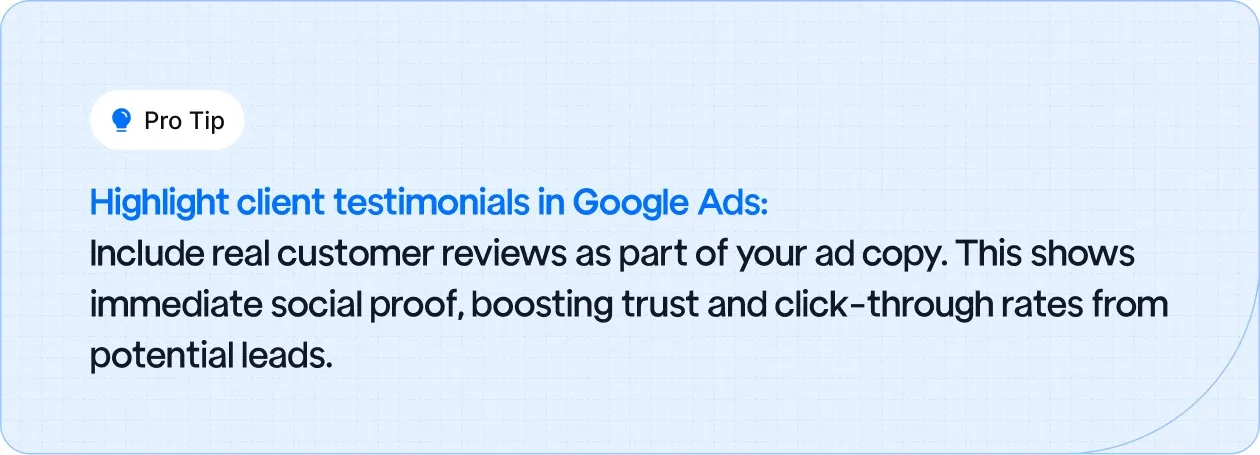
Contractors who grow fast today treat social media as a real business asset. Accounts like @contractors.of.insta and @justaconstructionguy prove it. They cracked the formula of showing real work, posting often, and staying visible where homeowners already spend time.
Here’s how you can apply the same approach:
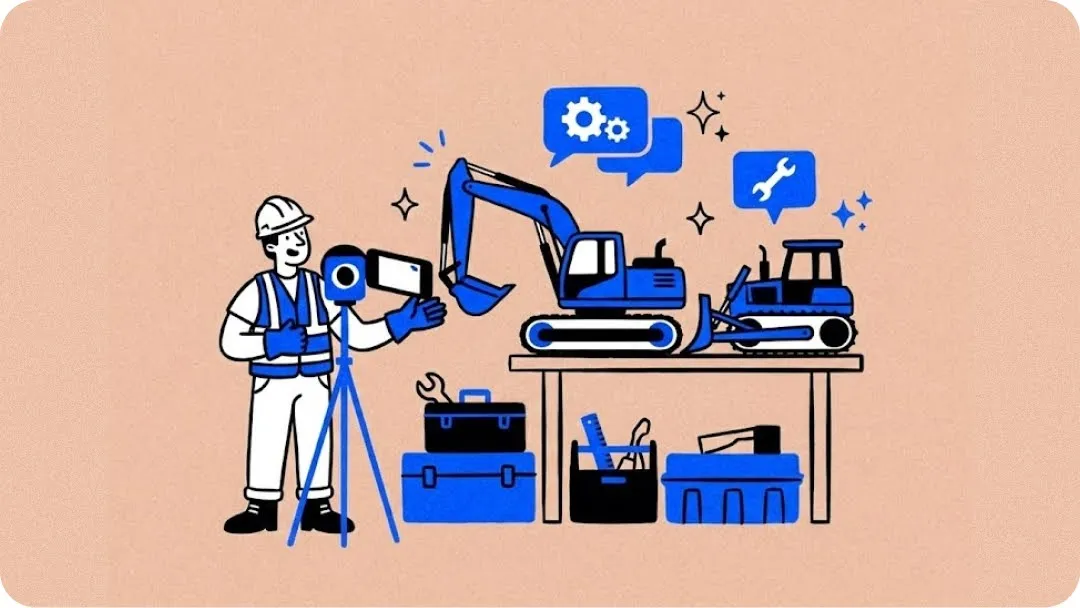
- Share real project visuals: Post before-and-after photos, progress videos, and short clips of your team at work. This shows skill, quality, and professionalism in a way text never can.
- Stay active where your customers already are: Facebook and Instagram remain strong for homeowners, while YouTube is ideal for walkthroughs and tutorials. Pick channels that match your audience.
- Engage consistently: Respond to comments, answer questions, and interact with local community groups. Activity signals reliability.
- Use location tags and service-based hashtags: Tags like #ClevelandContractor or #KitchenRemodelSeattle help people in your region discover your work.
- Repurpose content across platforms: A project photo can become a Google Business Profile update, a Facebook post, and an Instagram reel. More reach with less effort.
6. Reviews & Reputation Management
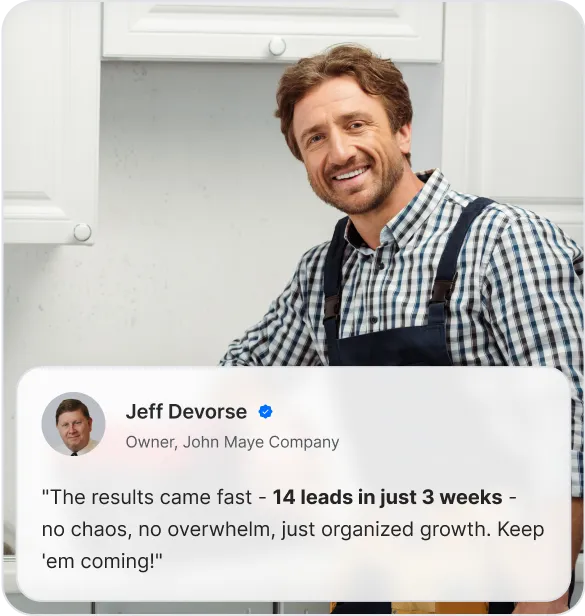
Reviews matter a lot. With many contractors vying for work, clients check ratings and reviews before they hire. Make sure you ask satisfied clients to leave reviews on Google, Yelp, or other relevant platforms. You can:
- Ask past clients to leave reviews (Google, Facebook).
- Display testimonials on your website.
- Respond to any negative feedback promptly and professionally.
- Consistent good reviews improve trust and local search ranking.
7. Analytics, Tracking & Continuous Improvement
- One of the big advantages of digital marketing is that you can track what’s working. Use tools like Google Analytics and phone‑call tracking to understand where leads are coming from and which campaigns are delivering results.
- Review your data regularly (monthly at minimum): what keywords led to calls, which service pages convert best, which ads are costing too much.
- Based on what you learn, adjust your strategy: update keywords, tweak ads, improve page design, or focus more on the service categories that deliver the best ROI.
8. Consistent Content & Engagement
- Regular content helps maintain a strong presence. This includes blog posts, social media updates, email newsletters, and project highlight posts.
- Engagement means responding to comments, answering questions, being active on social media, showing behind‑the‑scenes of your work. This builds a connection with your target audience and nurtures trust.
9. Email Marketing
Email is one of the most reliable channels for contractors because it keeps your business in front of homeowners who may not be ready today but will need you later.
What to focus on:
- Build a simple email list: Add email capture forms on your website, estimate pages, and project galleries. Offer something valuable like a maintenance checklist or seasonal reminders.
- Send useful updates: Share tips, project highlights, promotions, and reminders about seasonal work (roof inspections, HVAC tune-ups, drainage checks).
- Segment your audience: Send different emails to past customers, new leads, and high-value prospects for more personalized communication.
- Automate follow-ups: Set up automated flows for quote follow-ups, post-project check-ins, and review requests.
Email marketing helps contractors stay top-of-mind, build trust between projects, and increase repeat business with very little cost.
10. Advanced Technology and Automation
Contractors often lose leads because of slow responses, missed follow-ups, or scattered communication. Automation tools help you stay organized and respond faster.
What to focus on:
- Automated lead responses: Use tools that send instant replies when someone fills out your website form or calls after hours.
- Appointment scheduling tools: Let customers book estimates directly using automated calendars.
- Project updates: Automate status updates to customers for transparency and professionalism.
- Review requests: Trigger automatic review requests after completing a job to grow your ratings without manual effort.
11. Must-Have Marketing Tools for Contractors
Good digital marketing for contractors needs the right tools behind it. These tools help you manage your website, track leads, measure performance, and improve your online visibility.
Tools worth using:
- Google Analytics: Tracks website traffic, conversions, and engagement.
- Google Search Console: Shows search rankings, keywords, and site errors.
- CRM platforms (HubSpot, Housecall Pro): Manage leads, estimates, and customer communication.
- Email tools (Mailchimp, Klaviyo): Create automated email sequences and newsletters.
- Social media schedulers: Keep your posts consistent without manual effort.
12. The KPIs Every Contractor Should Track
Knowing your numbers ensures you don’t waste money on the wrong strategies. KPIs show which efforts bring real leads and which ones need improvement.
Important KPIs to monitor:
- Cost per lead (CPL): How much you pay to get each inquiry from ads or marketing efforts.
- Lead-to-booking rate: How many leads turn into scheduled estimates.
- Organic traffic: How many visitors reach your site through Google search.
- Local rankings: Where your Google Business Profile appears in the map pack for key services.
- Conversion rate: What percentage of visitors call, fill out forms, or request estimates.
- Email engagement: Open rates, click-through rates, and responses.
- Return customer rate: How many clients hire you again for additional work.
Tracking KPIs helps you invest in strategies that produce real revenue and cut the ones that drain your budget.
While implementing these components is crucial, it’s equally important to avoid common digital marketing mistakes that can slow down your progress.
Also read: 16 Digital Strategies That Separate Growing Manufacturers From The Old-School Pack
Final Thoughts
Gone are the days when a simple sign on the side of the road or a business card handed out at the local coffee shop was enough. Now, your future clients are online, searching for help with their next big project.
But don’t worry, getting it right doesn’t have to be complicated. Digital marketing doesn’t just help you get more work; it helps you build trust, show off your skills, and connect with clients who need your expertise.
Your next client is out there searching right now. Let’s make sure they find you. Contact us today!
Ready to Stand Out in a Digital World?
Digital marketing helps you connect with clients, showcase your expertise, and grow your business. It's time to make sure you're not invisible.


.webp)







.webp)


.svg)


