









Construction marketing is harder than most industries because your buyers do not impulse-buy. They shortlist contractors based on trust, proof, timelines, safety, and whether you can deliver. That decision happens across multiple people, owners, project managers, procurement teams, architects, and sometimes even lenders.
In 2026, the companies that win are the ones that show up consistently online, prove credibility fast, and make it easy for serious prospects to take the next step. That means SEO, reviews, proof-led content, and smart follow-up systems, plus a few offline tactics that still work when your market is local.
This guide breaks down 10 construction industry marketing strategies that help you build visibility, earn trust, and turn interest into real enquiries.
What is Construction Industry Marketing?
Construction industry marketing is done using customized strategies to promote your services, build credibility, and connect with the right clients. It goes beyond simple advertising and focuses on positioning your business as a trusted expert.
Effective marketing blends both digital and offline methods, each playing a vital role in reaching different audiences.
Core Elements
- Digital Marketing: Focuses on building an online presence through SEO, proof-led content (case studies, project pages, service pages), and social media engagement. This helps you reach a larger audience and stay visible in search results.
- Offline Marketing: Includes local advertising, event sponsorships, and community involvement. These methods help you build trust and recognition in your local area.
Why Both Matter?
- Digital Strategies allow construction firms to create personalized experiences and expand their reach.
- Traditional Methods help maintain local connections, ensuring your business stays relevant and trusted in your community.
10 Highly Effective Marketing Strategies for Construction Firms
Standing out in the construction market requires getting noticed, building trust, and forming long-lasting relationships. The right marketing strategies help your business grow by combining digital and offline methods, ensuring you reach the right clients at the right time.
Below are 10 key strategies that will help you stay ahead in a competitive industry.
1. Search Engine Optimization (SEO)
SEO ensures that your construction business is visible when potential clients search for services like yours. A well-optimized website means you’re easily found by the right audience, and local SEO ensures you’re visible to those searching within your service area.
- Why SEO Matters: SEO makes sure your business appears on the first page of search results, helping you gain visibility and attract high-quality leads
- Local SEO: Focus on location-specific keywords like “construction marketing firms in Miami” to ensure you show up in local search results. Optimize your Google Business Profile and Apple Business Connect to improve visibility in local searches.
Want to be found by the right clients?
A solid SEO strategy ensures your business ranks higher and gets noticed by clients searching for your services.


2. Social Media Marketing
Social media allows you to connect with potential clients, showcase your work, and build trust. Platforms like Instagram, LinkedIn, and Facebook are great for sharing updates, projects, and engaging with your audience.
a) Best Platforms:
- LinkedIn: Professional networking and industry updates.
- Instagram and Facebook: Visual showcases of your completed projects.
- Twitter: Industry news and quick updates.
- Pinterest: Design ideas and inspiration for future clients.
- Snapchat: Behind-the-scenes content, especially for a younger audience.
b) Engagement Tactics:
- Behind-the-scenes content to build transparency.
- Project updates that show progress and milestones.
- Client testimonials to build credibility and trust.
3. Email Marketing
Email marketing is a cost-effective way to stay in touch with clients and leads. By building an email list and sending personalized content, you can nurture relationships and keep your business top of mind.
a) Building Email Lists: Offer valuable resources like guides, consultations, or industry insights in exchange for email sign-ups.
b) Personalized Campaigns:
- Segment your email list to send personalized messages, such as follow-ups after a project or special offers for new services.
- Send regular newsletters with updates on recent projects, new offers, or industry trends.
4. Content Marketing
Content marketing allows you to educate your audience, demonstrate your expertise, and answer common questions. By publishing high-quality blogs, case studies, and videos, you can showcase your knowledge and attract clients seeking expert guidance.
a) Educational Content:
- Write how-to guides, tips, and project case studies.
- Share industry insights and best practices to show your expertise.
b) Building Authority: Consistently publishing valuable content will position your company as a trusted authority in construction, driving more traffic to your website.
Want to show your expertise and attract more clients?
Consistently publishing valuable content can position your business as a trusted leader in the industry. Let’s create content that engages and converts.
5. Pay-Per-Click Advertising
PPC advertising is a great way to quickly get in front of potential clients who are actively searching for your services. This strategy allows you to target specific keywords that your audience is using, ensuring that your ads are reaching the right people.
Targeted Ads:
- Use Google Ads to target construction-related keywords such as “best general contractors in San Francisco” or “construction marketing firms near me”.
- Advertise on social media platforms like Facebook and Instagram to reach a wider local audience with geo-targeting.
6. Networking and Relationship Building
Networking helps build trust and credibility in the construction industry. By connecting with potential clients and industry peers at events and conferences, you create valuable relationships that often lead to business opportunities.
a) Industry Events: Attend construction trade shows, local business networking events, and professional conferences to connect with potential clients and partners.
b) Client Relationships:
- Follow up with past clients to check in on their satisfaction, offer maintenance services, or keep them updated on new services.
- Regularly engage with clients to encourage repeat business and referrals.
7. Direct Mail and Flyers
Direct mail remains a strong tool in local marketing. Sending targeted postcards or flyers can increase your visibility and remind clients of your services, especially in local areas with high demand for construction services.
Targeted Campaigns:
- Design personalized postcards that highlight your completed projects, offer special promotions, or introduce new services.
- Send mail to local neighborhoods where construction projects are likely to be underway, such as new housing developments or commercial areas.
8. Outdoor Advertising
Outdoor ads like billboards, site signage, and vehicle wraps are highly visible, especially in high-traffic areas. These ads are seen repeatedly, helping increase brand awareness and keeping your company top of mind.
Billboards and Site Signage:
- Place billboards in high-traffic areas or near job sites where people are likely to see them regularly.
- Vehicle wraps are another great way to advertise your business, especially as you travel between job sites.
9. Reputation Management
Your reputation is everything. Managing online reviews and client feedback can directly impact your ability to attract new business. Actively respond to reviews and build trust by showcasing positive client experiences.
Building Trust:
- Encourage happy clients to leave reviews on Google, Apple Business Connect, and Yelp.
- Respond to both positive and negative reviews to show your commitment to client satisfaction.
10. Referral Marketing
Referral marketing taps into the power of word-of-mouth to generate new leads. Happy clients are your best advocates, and by creating a structured referral program, you can encourage them to recommend your services to others.
Client Referrals:
- Offer discounts or rewards for clients who refer new business.
- Set up a simple referral program that makes it easy for clients to refer their contacts and get rewarded.
Want to create content that truly resonates with your audience?
Aligning content with the right SEO strategy is key to driving visibility and client trust.
3 Key Marketing Trends for Construction in 2026
As the construction industry evolves, staying ahead of the curve is crucial for long-term success. The marketing trends shaping 2026 will focus on the integration of innovative technologies and a shift toward sustainability.
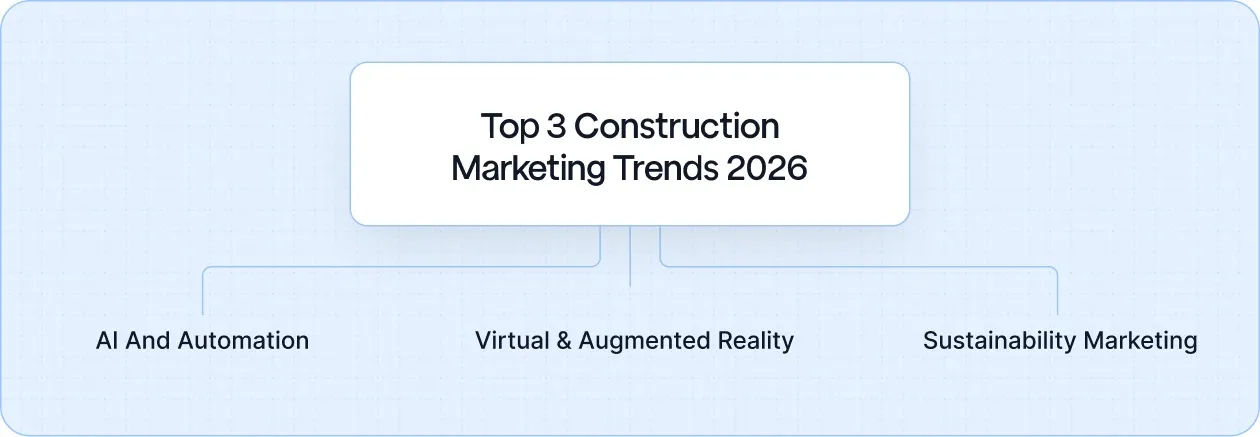
By embracing these trends, construction businesses can increase their visibility, build credibility, and strengthen relationships with clients. Below are the key trends to watch for:
1. AI and Automation
Artificial intelligence (AI) is becoming an essential tool for construction marketers. AI helps streamline several critical aspects of marketing, making it more efficient and effective:
- Content Creation: AI tools can help generate engaging content faster, assisting in writing blogs, social media posts, and ad copy personalized to your audience.
- SEO Optimization: AI-driven tools analyze real search queries, keyword clusters, and topic relationships to guide content structure, improve keyword targeting, and strengthen on-page optimization, reducing manual guesswork while improving search performance.
- Lead Follow-Up Automation: AI-powered workflows trigger instant follow-up emails or messages when someone fills out a contact form, downloads a guide, or requests a quote. Faster responses increase the chances of moving inquiries into active discussions.
- Review Response Workflows: AI-assisted tools help draft and organize responses to client reviews across platforms, ensuring timely engagement while maintaining a consistent brand tone.
- Bid Funnel Nurture: Automation can schedule reminder emails, share case studies, or send capability documents to prospects who have requested bids but haven’t responded, keeping your firm top-of-mind during long decision cycles.
By incorporating AI into your marketing strategy, construction firms can save time, increase accuracy, and focus more on high-level strategy.
2. Virtual and Augmented Reality (VR/AR)
Virtual Reality (VR) and Augmented Reality (AR) are increasingly being used in construction marketing to improve client engagement and showcase projects before they’re built:
- Virtual Walkthroughs: With VR, potential clients can take immersive virtual tours of their future buildings, helping them visualize the project long before construction begins.
- AR Integration: AR overlays virtual elements onto the real world, allowing clients to see how their new construction will look in its real-world environment through their smartphones or AR glasses.
These technologies make your marketing more interactive and build trust by allowing clients to see your capabilities firsthand.
3. Sustainability Marketing
Sustainability is no longer a trend; it's an expectation. Eco-conscious clients are actively seeking construction firms that align with their values. Marketing efforts focused on sustainability help attract these environmentally-minded clients. Highlighting your company's green certifications, energy-efficient materials, and eco-friendly building practices can set you apart from competitors.
- Eco-Friendly Materials: Showcase your use of sustainable materials such as recycled steel, bamboo flooring, or solar panels to emphasize your commitment to sustainability.
- Green Certifications: Highlight certifications like LEED or Energy Star to establish credibility in the eco-conscious space.
Marketing sustainability in a way that feels authentic rather than just “trendy” will resonate with clients who value long-term environmental impact.
Ready to align your content with the latest industry trends?
Seamless content structures can help you stay ahead of emerging trends and ensure your messages resonate with your audience in 2026.
Build a Construction Marketing Strategy
A solid marketing strategy serves as the backbone for your construction business, helping you stand out in a competitive industry. Developing an effective construction marketing strategy involves understanding your audience, clearly defining your brand, and using the right channels to reach potential clients.
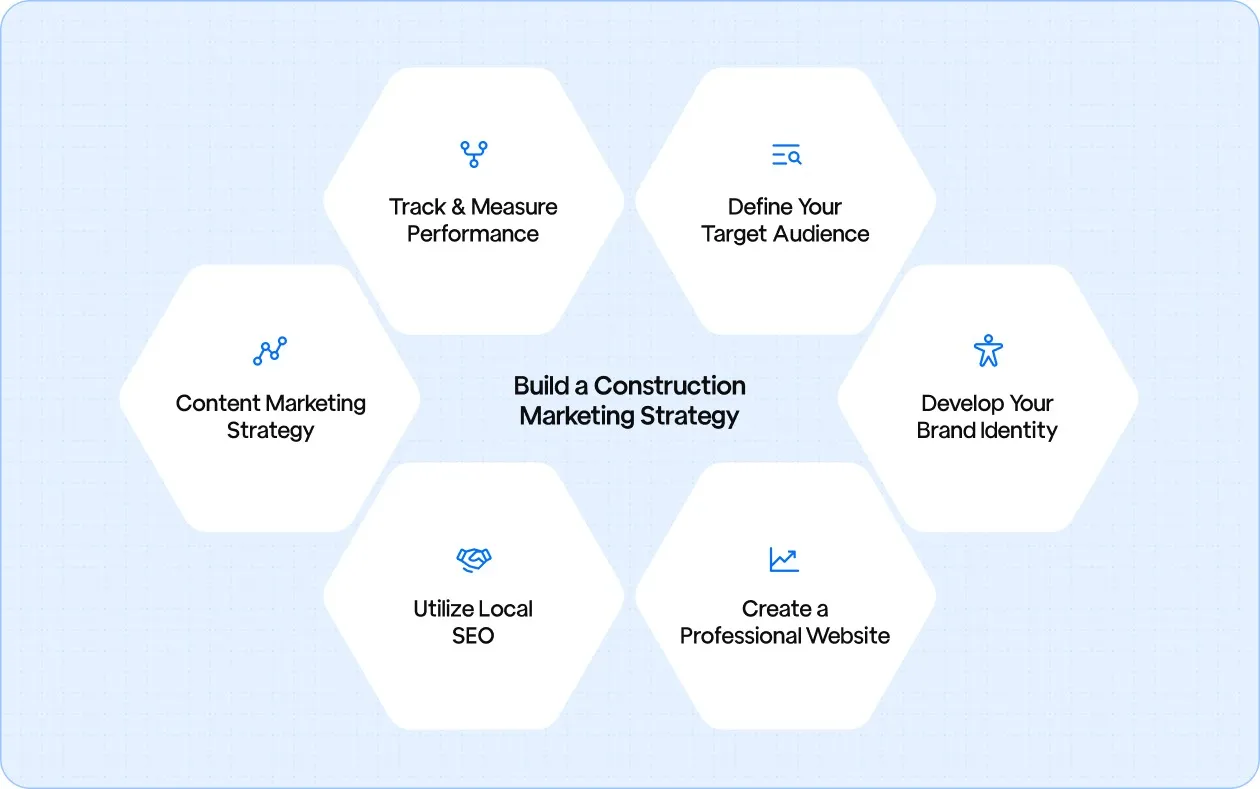
The following steps provide a clear guide to building a marketing approach that brings real results.
Step 1. Define Your Target Audience
Your marketing efforts will only be as effective as your understanding of who you’re targeting. Defining your target audience ensures that you focus your resources on reaching those most likely to need your services.
- Key Client Segments: Identify the types of construction projects you specialize in, such as residential, commercial, or industrial. Personalize your marketing approach to meet the unique needs of each client segment.
- Understand Client Needs: Determine what clients in each segment look for in a construction partner, such as timeliness, reliability, sustainability, or innovation. This helps refine your messaging to speak directly to their concerns.
By clearly defining your audience, you ensure that your marketing messages resonate with those most likely to become clients.
Step 2. Develop Your Brand Identity
Your brand identity is the personality of your business. It's what sets you apart and helps you connect with clients on a deeper level. Building a strong brand identity ensures you stand out in the minds of potential clients.
- Craft Your Brand Message: Communicate your company’s values, mission, and unique strengths. For example, if you focus on sustainable building practices, make sure that’s reflected in your messaging.
- Consistent Branding: Ensure that your brand is consistent across all platforms, website, social media, business cards, and brochures. This creates a unified and professional image that clients will recognize and trust.
A strong, consistent brand identity helps potential clients quickly understand what your company stands for and what makes you different.
Step 3. Create a Professional Website
Your website is often the first impression potential clients will have of your business. It’s crucial that it effectively showcases your capabilities and makes it easy for users to learn more and get in touch.
- SEO Optimization: Make sure your website is optimized for SEO to appear in search results when potential clients are looking for construction services in your area. Include relevant keywords related to your services and location.
- Mobile-Friendly and Easy Navigation: Ensure that your site is mobile-friendly (as many clients search for services on their phones) and easy to navigate. This includes having clear menus, fast loading times, and easy access to contact information.
- Key Elements: Highlight your best projects, client testimonials, and an easily accessible contact form to encourage visitors to reach out directly.
A professional website is a powerful tool for attracting and converting potential clients.
Step 4. Utilize Local SEO
Local SEO ensures that your construction business shows up in searches relevant to your area. Optimizing for local search is a must for construction companies targeting clients within a specific region.
- Claim Your Google Business Profile: This is one of the most important steps in local SEO. Make sure your Google Business Profile is fully optimized with accurate contact details, service areas, and photos of your projects. Don't forget to encourage clients to leave reviews.
- Claim Your Apple Business Connect Profile: Apple Business Connect is another key tool for local SEO. Ensure that your business details are accurate and up-to-date on Apple Business Connect. This ensures visibility for iPhone and iPad users who are searching for local services, particularly in areas where Apple Maps is widely used.
- Consistency Across Directories: Ensure your business information is consistent across all online directories (e.g., Yelp, Angi, Yellow Pages). This consistency increases your visibility and helps search engines trust your business.
- Local Keywords: Use location-based keywords throughout your website and content. For example, if you’re located in Los Angeles, use keywords like “Los Angeles construction services” or “contractor in LA”.
Optimizing for local SEO increases your chances of appearing in relevant local search results, helping clients in your area find and contact you faster.
Step 5. Content Marketing Strategy
Content marketing allows you to engage with your target audience by providing valuable insights that address their needs. Regularly updating your content builds your authority and keeps your business top of mind.
- Personalized Content: Create blog posts, case studies, and videos that speak to the specific needs of your audience. For example, if you're targeting commercial builders, write about cost-effective construction solutions or project management tips.
- Regular Updates: Post content regularly to keep your audience engaged. Share updates on your projects, industry trends, and any innovative approaches your company is using.
- Lead Generation: Use content as a tool for lead generation. For example, offer a free e-book or guide in exchange for email sign-ups, allowing you to stay in touch with potential clients.
Content marketing is an ongoing process that builds trust over time. By continuously providing value, you keep potential clients engaged and increase the likelihood of conversion.
Step 6. Track and Measure Performance
Marketing efforts need to be measured so that you can make informed decisions and continually improve your strategies. Using the right tools helps you track performance and identify areas for improvement.
- Google Analytics: Track website traffic, bounce rates, and conversion rates using tools like Google Analytics. This will help you see which pages and content are most effective in driving leads.
- Adjusting Strategies: Regularly review your performance data to see what’s working and what’s not. If a particular strategy isn’t yielding the desired results, adjust your approach by optimizing your website, changing your social media tactics, or focusing on a different marketing channel.
By tracking your performance, you ensure that your marketing efforts are continually refined to meet your business goals.
A solid marketing strategy can drive real growth for your construction business.
With the right approach, your marketing efforts will attract more clients, boost visibility, and fuel your success.
Platforms for Streamlining Construction Marketing
To help your construction business optimize marketing efforts and improve client engagement, consider these essential tools:
- Gushwork: Specializes in content-led SEO by creating structured, optimized content like service pages, location pages, and decision-stage content.
- HubSpot: A comprehensive CRM platform that helps you manage leads, automate email campaigns, and track client interactions for a seamless marketing workflow.
- SEMrush: Perfect for increasing your SEO and tracking keywords to increase visibility on search engines.
- Hootsuite: Simplifies social media management, allowing you to schedule posts, monitor engagement, and track the success of your campaigns across platforms.
- Procore: A project management tool personalized for construction firms, helping streamline communication, budgeting, and scheduling for seamless operations.
These tools and platforms can help you streamline processes, stay organized, and drive better outcomes for your marketing strategy, ultimately making your construction firm more competitive in a fast-paced market.
Streamline Construction Marketing: The Role of Strategic Content
In the construction industry, staying visible and relevant is crucial to success. With numerous touchpoints and client needs, managing content efficiently can be overwhelming. A well-defined content strategy, focusing on consistency and precision, is key to maximizing your marketing efforts and ensuring long-term success.
How Strategic Content Powers Construction Marketing
Content drives traffic, builds credibility, and converts prospects into loyal clients. Strategic content ensures that your messaging is aligned with your audience's needs, helping your construction business stand out.
- Driving Traffic: SEO-optimized content helps your website rank higher in search engines, making it easier for clients to find you. Target relevant keywords based on your services, location, and target audience to increase visibility.
- Building Credibility: High-quality, well-researched content positions your business as a trusted industry leader. By sharing case studies, project highlights, and insights, you demonstrate expertise and build trust with potential clients.
- Converting Prospects: Use content strategically across the buyer’s journey, service pages, location pages, and decision-stage content to address potential clients' needs and concerns, helping them make informed decisions.
Why Content Matters?
In a highly competitive industry like construction, quality content can be the deciding factor between winning and losing a client. Construction clients expect to be educated about the businesses they choose to partner with. Here’s why content is critical:
- Service Pages: Service pages are the backbone of your SEO strategy. These pages explain your offerings and should target key service-related keywords, presenting your business’s expertise and value proposition clearly.
- Location Pages: For multi-location businesses, location-specific pages are essential for local SEO. They help clients in specific areas find your services. Include local keywords, case studies, and project highlights to enhance local relevance.
- Decision-Stage Content: Potential clients in the final decision-making stages need to see proof of your past success. Case studies, testimonials, and project portfolios are key to showing them your ability to deliver. Ensure your calls to action are clear and easy for them to take the next step.
How Gushwork Helps
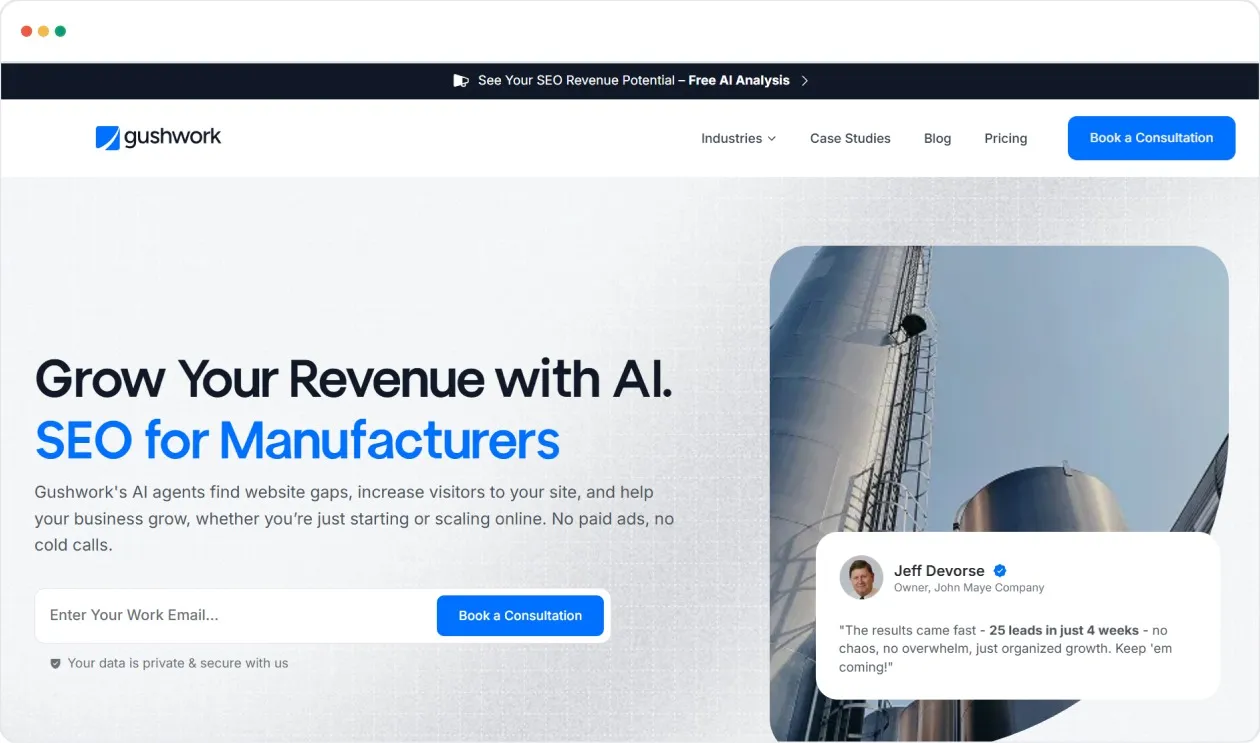
At Gushwork, we specialize in content-led SEO for the construction industry. We create structured, optimized content that fits seamlessly into your broader marketing strategy, driving better results.
- AI-Powered Content: Gushwork combines human strategy with AI-assisted research to identify high-intent topics, service gaps, and location opportunities. This ensures your content plan is based on real search behavior.
- Content Planning: Gushwork ensures your content speaks to your audience’s needs while aligning with your business goals, helping guide potential clients through the decision-making process.
- Content Writing & Optimization: Our expert team creates SEO-optimized, high-quality content that appeals to both users and search engines, enhancing your online visibility.
- Internal Linking: We ensure your content is properly interlinked, making your site more accessible to users and helping search engines crawl your site more efficiently for better rankings.
What’s your content doing for you right now?
Stop letting underperforming content hold you back. Let’s create a strategy that drives real results, more visibility, more clients, and more growth.
Take Action: Transform Your Construction Marketing Strategy Today
As we've explored, the construction industry is evolving, and so must your marketing strategy. To stay competitive and attract the right clients, it’s essential to focus on the strategies that drive results, SEO, local marketing, compelling content, and client engagement.
The construction industry has never been more competitive, but by implementing these strategies and optimizing your content, you’re positioning your business for long-term success. Don’t wait for opportunities to come to you; take action now and refine your marketing to meet the demands of today’s market.
If you’re ready to elevate your construction marketing strategy, it’s time to make your content work for you.
Your next projects start with how clearly your business shows up.
Gushwork builds structured, search-focused content that helps your services get found, understood, and chosen by the right clients.


.webp)






.webp)


.svg)


